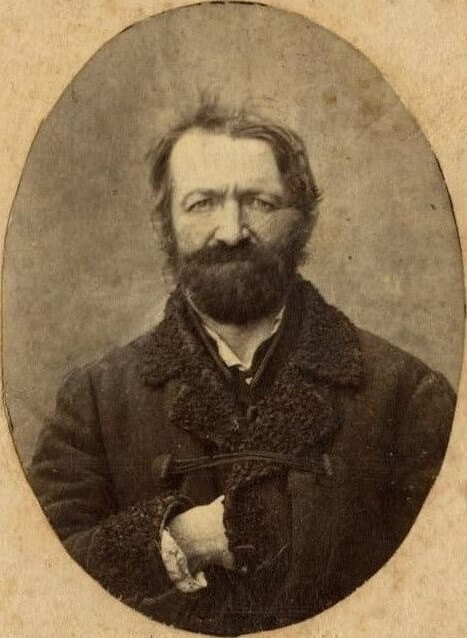
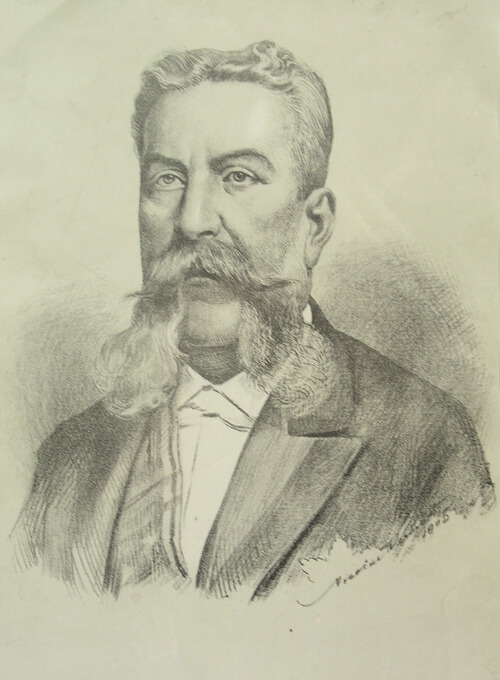
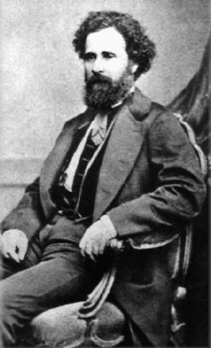
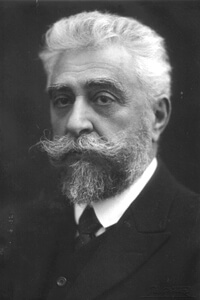
Avram Iancu (1824-1872) was a Romanian lawyer and revolutionary who became the principal military leader of the Romanian movement in Transylvania during the Revolution of 1848-1849. Leading armed forces from the Apuseni Mountains, he fought for the political recognition of Transylvania’s Romanian population and for the social rights of peasants, becoming one of the most prominent Romanian figures of the revolutionary era.
Iancu was born in Vidra de Sus, today the commune of Avram Iancu in Alba County, into a relatively prosperous family of Moți from the Apuseni Mountains. Although his family owned land and livestock, they still lived within the obligations of the feudal system. Iancu received an unusually extensive education for someone from this rural background, studying in Zlatna and Cluj before completing law studies and working at the Royal Court in Târgu Mureș. He qualified as a lawyer in 1848, just as revolution was spreading across Europe.
The revolution in Transylvania quickly became complicated by competing political goals. Hungarian revolutionaries sought the union of Transylvania with Hungary and greater independence from Habsburg rule, while Romanian leaders demanded recognition as a political nation, representation in government, and an end to the social inequalities that affected the overwhelmingly Romanian peasant population. Iancu emerged as one of the strongest voices among the Romanians of the Apuseni region and helped mobilize thousands of participants for the great assemblies held at Blaj in 1848.
As relations between the Romanian and Hungarian revolutionary movements deteriorated, the conflict turned into open warfare. Iancu organized armed forces throughout the Apuseni Mountains and became commander of the Auraria Gemina Legion, based around Câmpeni. His knowledge of the mountainous terrain and his strong support among the local Moți allowed the Romanian forces to hold much of the region even as Hungarian armies gained control over large parts of Transylvania.
The fighting of 1848-49 was brutal and included attacks on civilians, reprisals, and destruction carried out by forces on both sides. Iancu’s troops fought several campaigns against Hungarian revolutionary forces attempting to penetrate the Apuseni Mountains, while the Romanian movement increasingly relied on cooperation with the Habsburg authorities. For Iancu, that alliance was primarily a means of securing recognition and political rights for Transylvania’s Romanians rather than an expression of loyalty to imperial rule.
By 1849 it had become clear that continued fighting between the Romanian and Hungarian revolutionaries was weakening both sides. Nicolae Bălcescu, himself an exile after the failed Wallachian Revolution, entered the Apuseni Mountains and tried to negotiate a reconciliation between Iancu and Hungarian leader Lajos Kossuth. An agreement was eventually reached, but too late to change the course of the war. Russian military intervention helped the Habsburg monarchy defeat the Hungarian Revolution later that year.
The outcome proved deeply disappointing for Iancu. The Habsburg authorities had benefited from Romanian military support, but the broad political autonomy and national recognition that Romanian leaders had hoped for did not follow. Iancu increasingly withdrew from public life and refused honors offered by Emperor Franz Joseph. He was later arrested and questioned by Austrian authorities, further damaging his faith in the political settlement that followed the revolution.
His later years were very different from the period that had made him famous. Iancu abandoned a conventional legal or political career and spent much of his time wandering through the villages and mountains of Transylvania, often carrying a flute. His declining health and increasingly solitary life became part of the popular image that grew around him after the revolution.
The landscape of the Apuseni Mountains remains inseparable from his story. His birthplace survives as the Avram Iancu Memorial House in the village of Incești, preserving the traditional Moț house in which he grew up along with objects connected with his life and the revolution. Câmpeni, where he organized his forces and commanded the Auraria Gemina Legion, also became one of the principal places where his memory is commemorated.
Iancu died at Baia de Criș in 1872. He was buried nearby at Țebea, beneath the historic oak traditionally connected with Horea, one of the leaders of the Transylvanian peasant uprising of 1784. His grave became an important place of commemoration, linking Iancu with a longer Romanian memory of resistance and demands for social and political rights in Transylvania.
Statues, streets, schools, and public squares bearing Avram Iancu’s name can now be found throughout Romania, while Cluj-Napoca International Airport also carries his name. His image remains especially powerful in Transylvania and the Apuseni Mountains, where he is remembered as the leader who organized the Moți during the revolutionary crisis of 1848–49 and defended Romanian political demands at a time when the future of Transylvania was being fiercely contested. His birthplace, the towns and mountain communities where he organized his forces, and his grave at Țebea continue to anchor that memory in the landscape where his story unfolded.