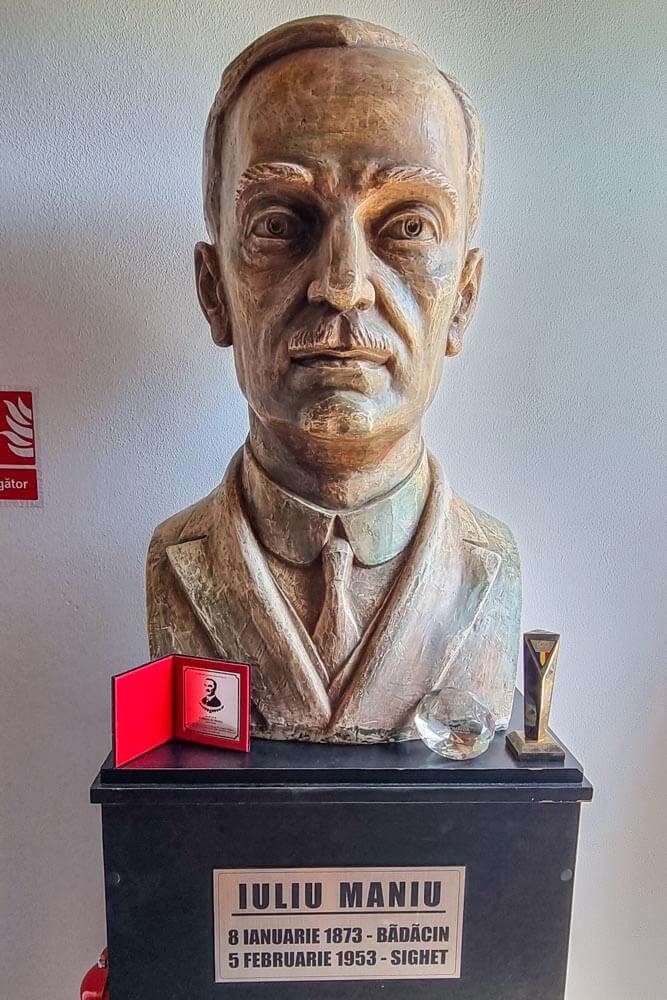
Iuliu Maniu (1873-1953) was a Romanian lawyer and politician who played a central role in the union of Transylvania with Romania in 1918, led the National Peasants’ Party during the interwar period, and later became one of the most important democratic opponents of authoritarian and communist rule. He served several times as prime minister, but his historical importance rests as much on the principles he defended outside government as on the offices he held.
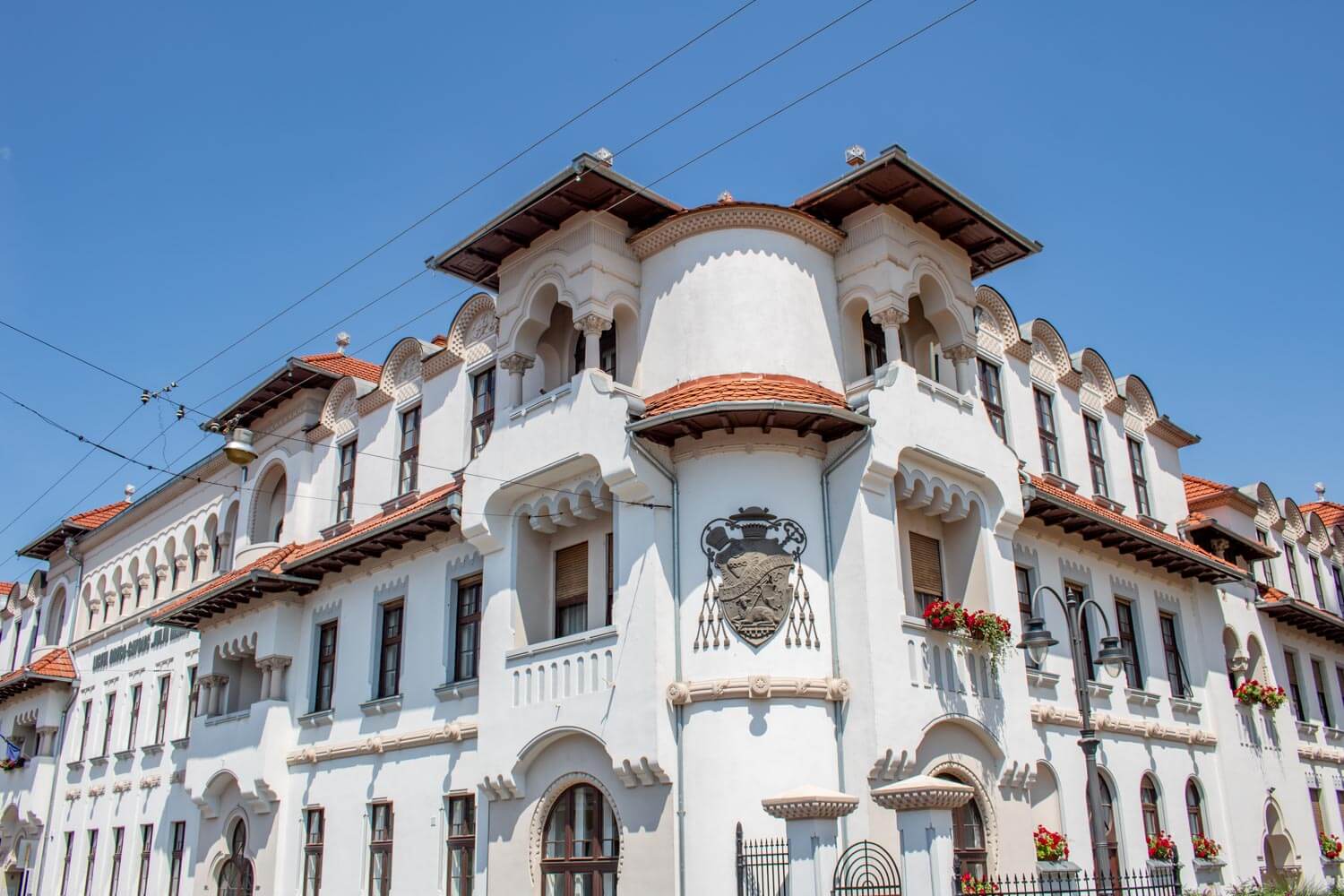
Maniu was born in Șimleu Silvaniei and spent much of his childhood in nearby Bădăcin, where his family home later became one of the main places preserving his memory. After studying law in Cluj, Budapest, and Vienna, he built his early career within the Romanian political movement of Transylvania, then part of Austria-Hungary. As a lawyer for the Greek Catholic Metropolitan Church in Blaj and later a deputy in the Hungarian Parliament, he became increasingly involved in efforts to secure greater political rights and recognition for the Romanian population of Transylvania.
The collapse of Austria-Hungary in 1918 brought Maniu to the center of events. He helped organize the Romanian National Council in Transylvania and took part in the political process that culminated in the Great National Assembly at Alba Iulia on December 1, 1918, where union with Romania was proclaimed. Afterward he became president of the Governing Council of Transylvania, the provisional administration that managed the province during its integration into the Romanian state.
Once the immediate work of unification was complete, Maniu moved into national politics and gradually emerged as one of the strongest alternatives to the dominant National Liberal Party. In 1926 his Romanian National Party merged with the Peasants’ Party to create the National Peasants’ Party, and Maniu became its first president. Two years later the party won a sweeping electoral victory, bringing him to the premiership and ending a long period of Liberal dominance.
His governments faced difficult conditions almost from the beginning. Romania was still trying to integrate provinces with different administrative and legal traditions, while the onset of the Great Depression placed enormous pressure on agriculture, public finances, and employment. Maniu also struggled with the return of Carol II, whom he initially accepted as king in 1930 but soon opposed as Carol increasingly interfered in political life and built a personal system of power.
That conflict became one of the defining features of Maniu’s later career. After Carol established a royal dictatorship in 1938, Maniu remained outside the regime and continued opposing the erosion of parliamentary government. He also rejected collaboration with the Legionary State and later criticized Ion Antonescu’s dictatorship, even while supporting the recovery of territories lost in 1940. During the Second World War he maintained contacts with the Western Allies and became one of the political leaders involved in the preparations that led to King Michael’s coup of August 23, 1944, which removed Antonescu and took Romania out of its alliance with Nazi Germany.
The return to constitutional politics proved brief, because the Soviet occupation and the rapid expansion of communist power soon created a much greater threat to the opposition parties. Maniu refused to cooperate with the new political order and turned the National Peasants’ Party into one of the principal centers of resistance to communist domination. Between 1944 and 1947 he became one of the most visible symbols of the attempt to preserve multiparty democracy in Romania.
That resistance ended with the destruction of the party in 1947. After the Tămădău affair was used by the authorities to accuse National Peasant leaders of attempting to flee the country and organize opposition abroad, Maniu was arrested, tried for high treason and espionage, and sentenced to life imprisonment. He was first held at Galați and later transferred to Sighet Prison, where he died on February 5, 1953. His body was buried anonymously, and his remains have never been conclusively identified.
The final years of his life are preserved particularly powerfully at the Memorial of the Victims of Communism and of the Resistance in Sighetu Marmației. The former prison includes the cell in which Maniu died as well as several rooms devoted to his political career and opposition to communism, making the museum one of the most direct places to understand how his life ended.
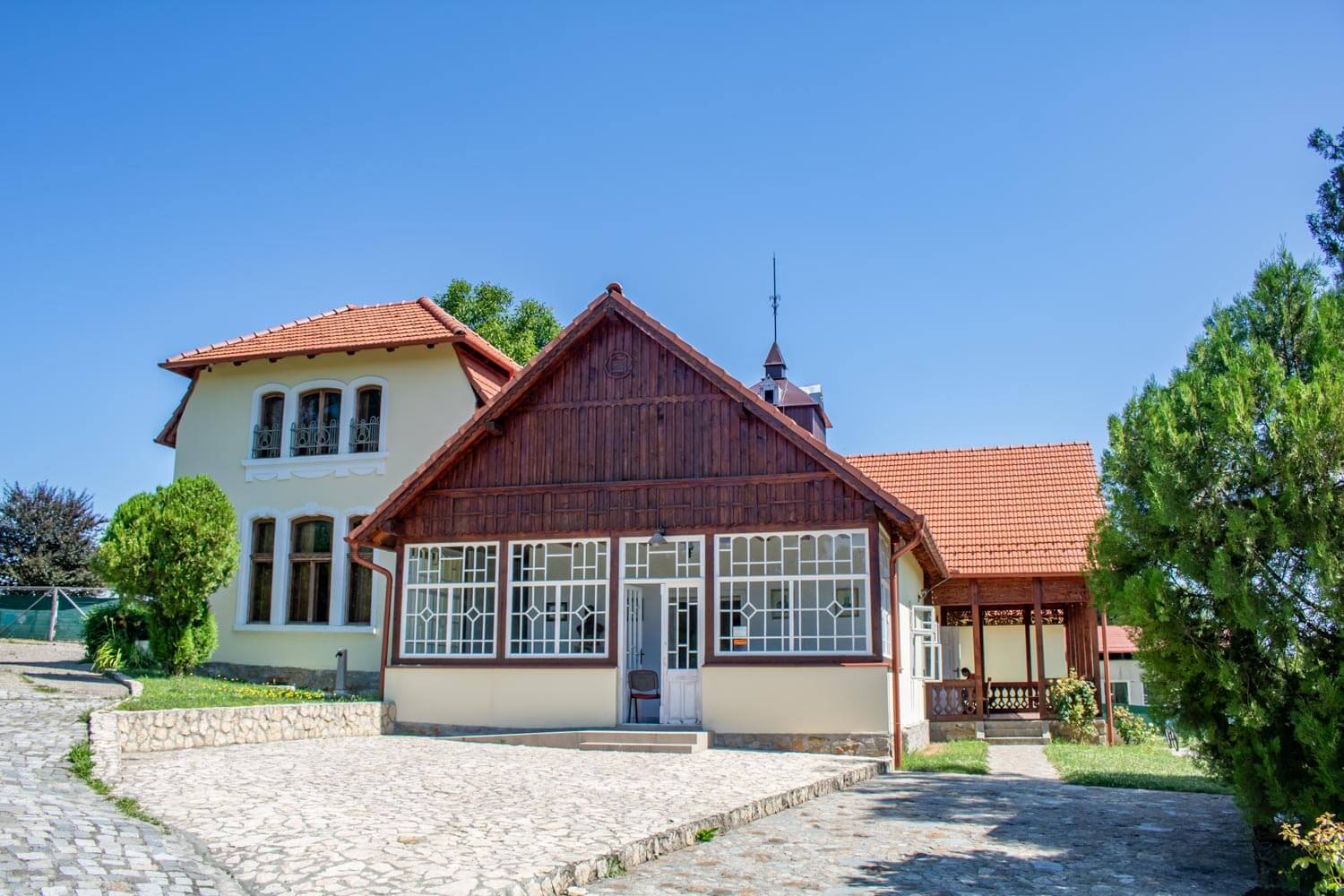
His earlier life is remembered at the Iuliu Maniu Memorial House in Bădăcin, the family home begun by his father in the nineteenth century. The communist authorities confiscated the property after Maniu’s arrest and subjected it to decades of different uses and severe alteration, but it was restored in the 2010s and reopened as a memorial museum in 2019.
Maniu’s place in Romanian history therefore stretches across several very different political eras. He helped guide Transylvania into the Romanian state in 1918, led one of the country’s major democratic parties between the wars, resisted successive authoritarian regimes, and ultimately died in prison after refusing to accept communist rule. That unusually long continuity of political opposition explains why he is remembered not only as an interwar prime minister, but as one of the enduring symbols of Romanian parliamentary democracy.