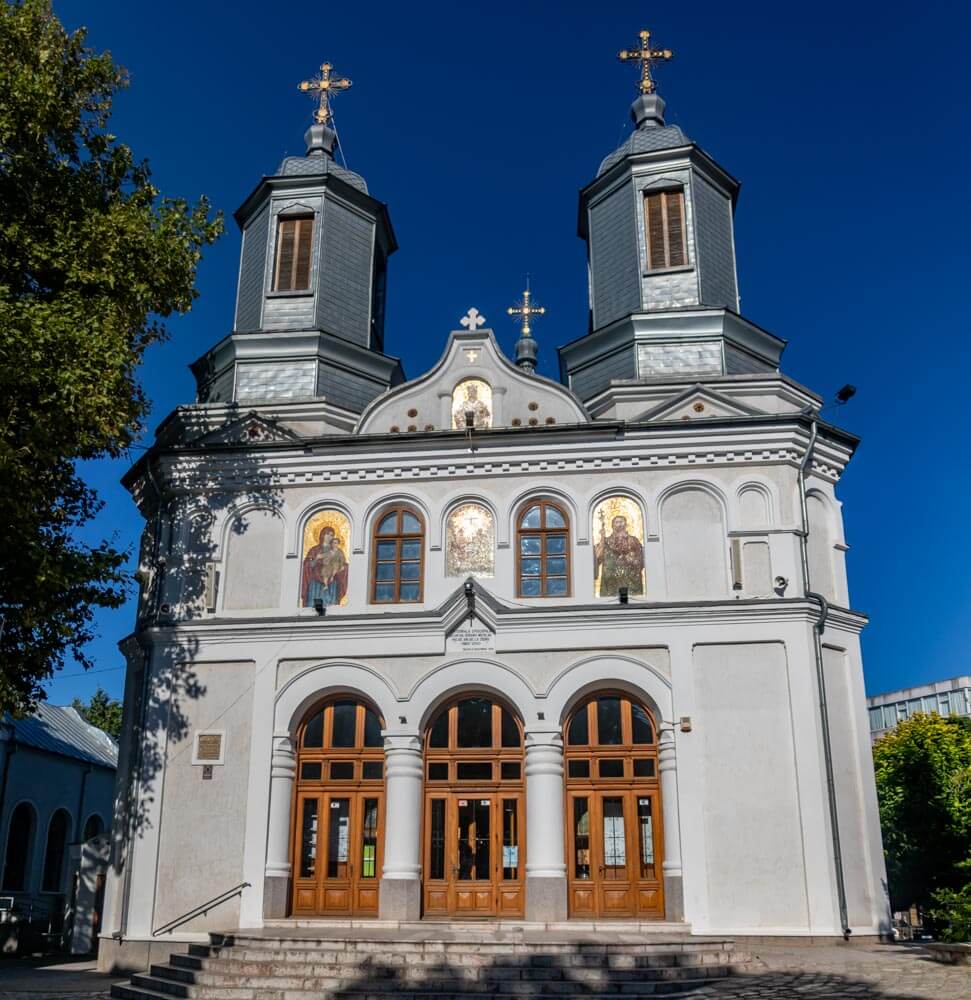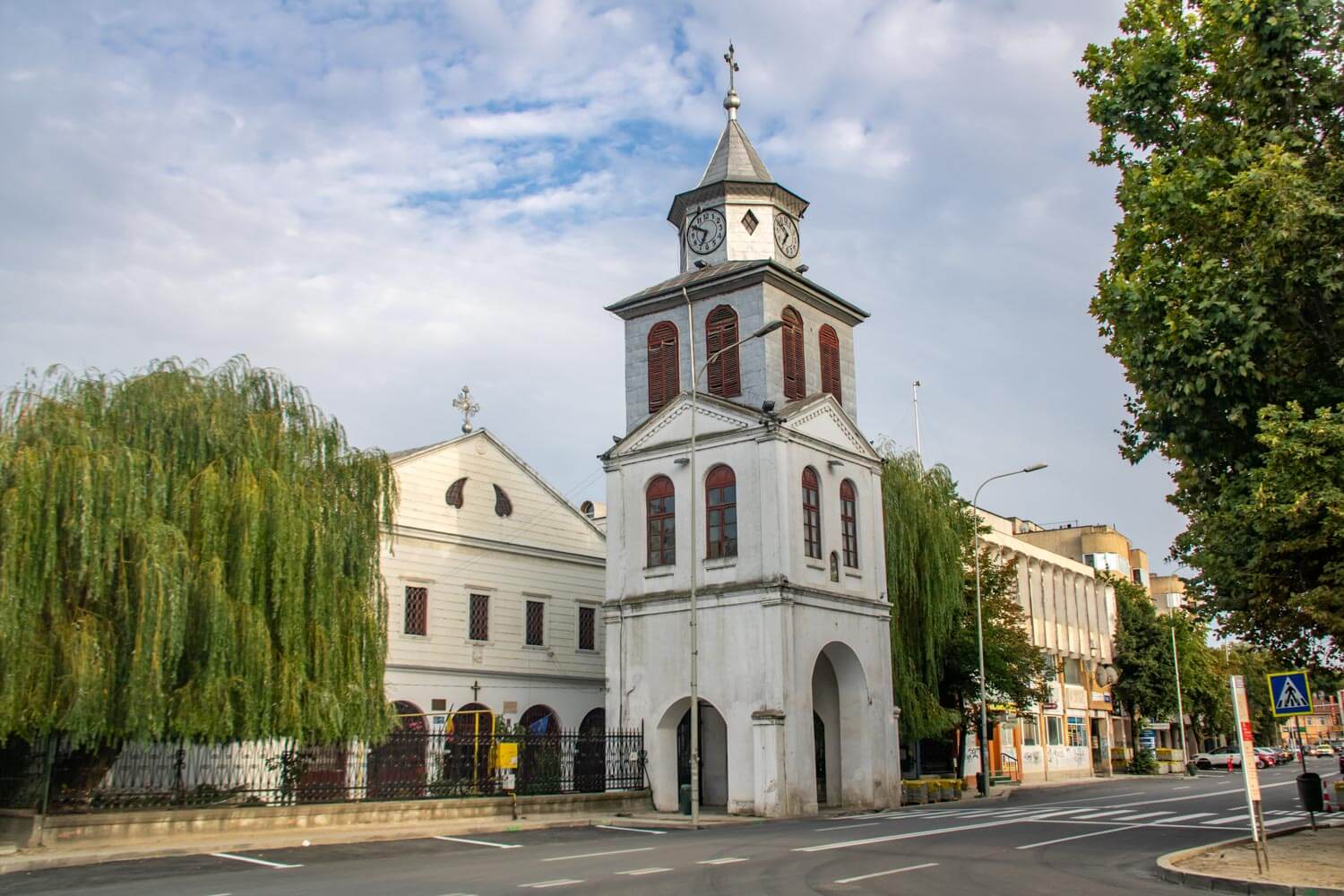
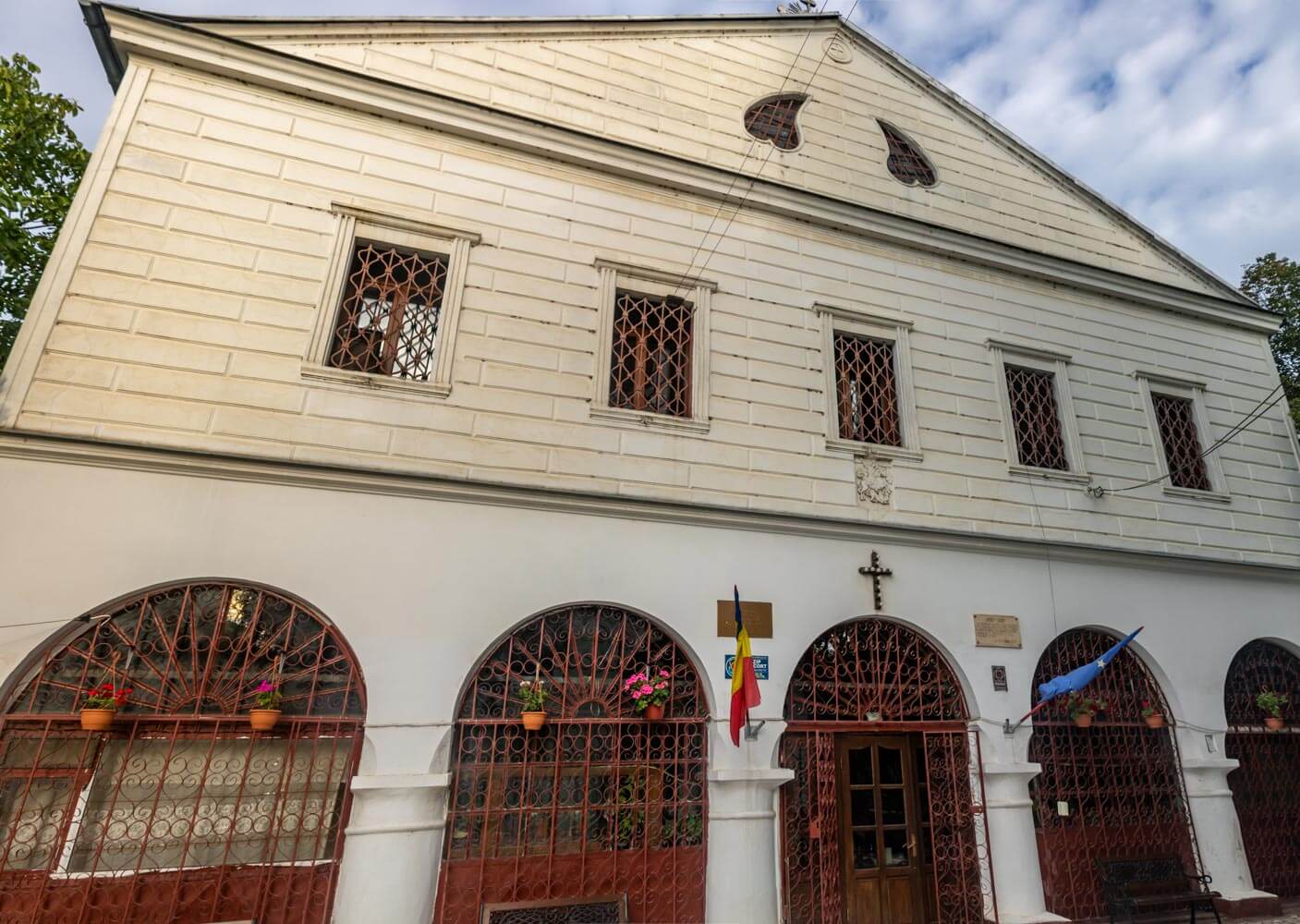
The Saint George Church (Biserica Sfântul Gheorghe) is a historic Orthodox church in Tulcea, built in the mid-19th century for the city’s Bulgarian community and still commonly known as the Bulgarian Church (Biserica Bulgărească) or the Church with the Clock (Biserica cu Ceas).
The first Bulgarian settlers arrived in Tulcea during the 1830s and 1840s and initially worshipped in a small wooden church built near the low-lying waterfront. Flooding repeatedly affected that part of the city, and the growing community eventually replaced the wooden building with the present masonry church, completed and consecrated in 1857. Several leading members of the Bulgarian community helped finance the new church, including Dumitrache Teodorof and Hagi Veliu, whose tombstones remain in the churchyard.
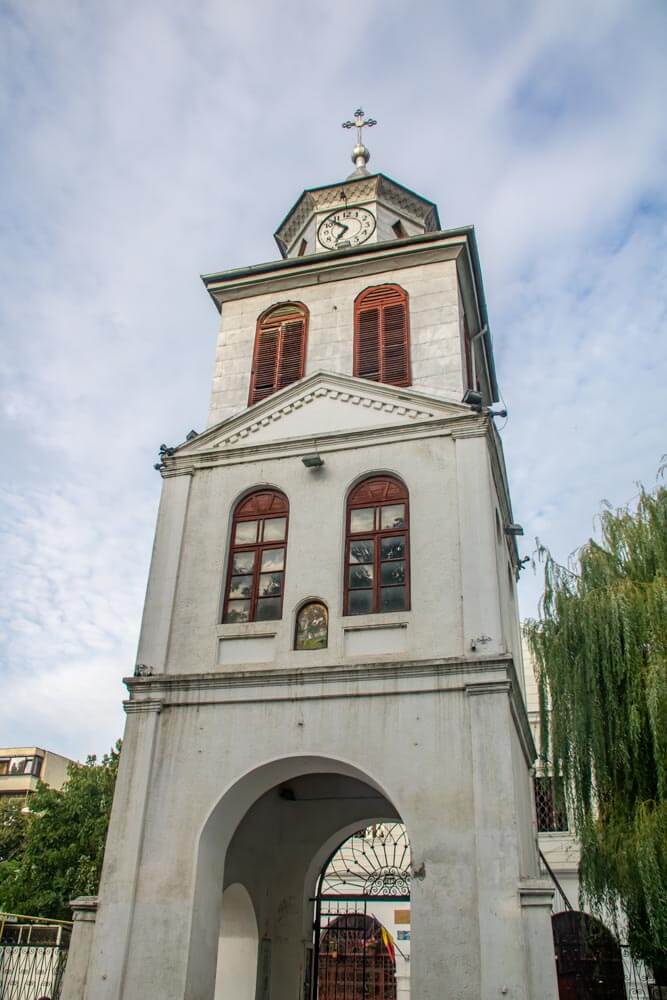
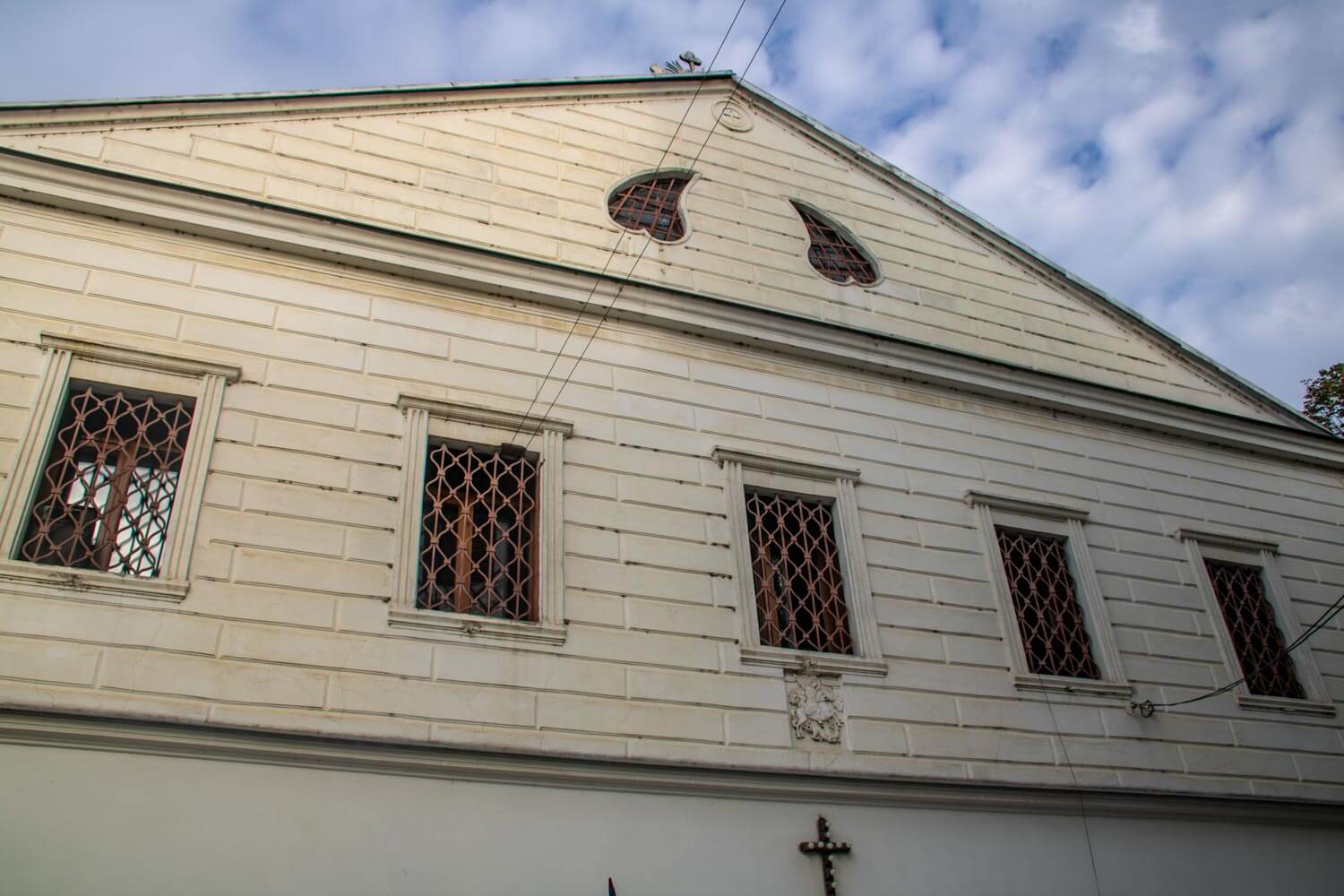
The church was built in a long nave form with a bell tower at the western end. Its best-known feature, however, came later: after 1877 the tower was raised and fitted with the clock that gave the building its popular name. The church underwent major repairs in 1897, while the interior paintings were created mainly between 1925 and 1927 and later restored.
Inside, the most important historic feature is the richly carved iconostasis, whose icons were painted over several decades during the second half of the 19th century. The collection includes works by painters such as the monk Sofronie, Stanislav Dospevski, Enache Cardaș, and other artists active across the Orthodox communities of Dobrogea and the Balkans. The royal doors are also elaborately carved, while an ambo dating from 1867 survives among the older furnishings.
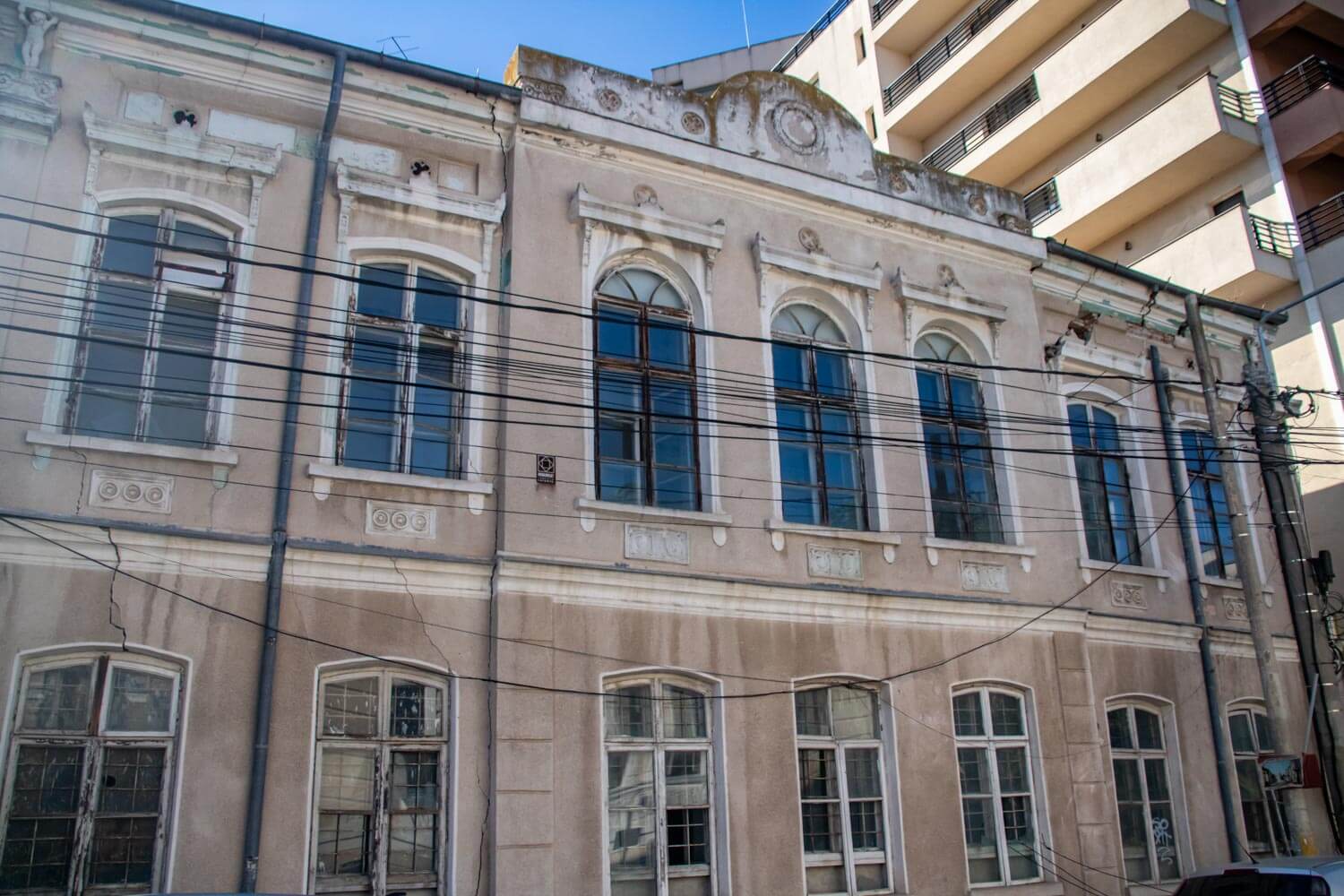
The church also became a center of Bulgarian education in Tulcea, with a school and gymnasium established in its grounds between 1859 and 1862. As the community expanded its educational institutions, a separate Bulgarian girls’ school was built beside the church in 1881-1882. The earlier school has disappeared, but the girls’ school still survives immediately north of the church.
The church remained in the hands of the Bulgarian community until the Romanian-Bulgarian population exchange of 1940, after which the property passed into Romanian Orthodox use. It continues to function as an active parish church, while the clock tower, iconostasis, churchyard monuments, and surviving school building preserve much of the history of Tulcea’s former Bulgarian community.