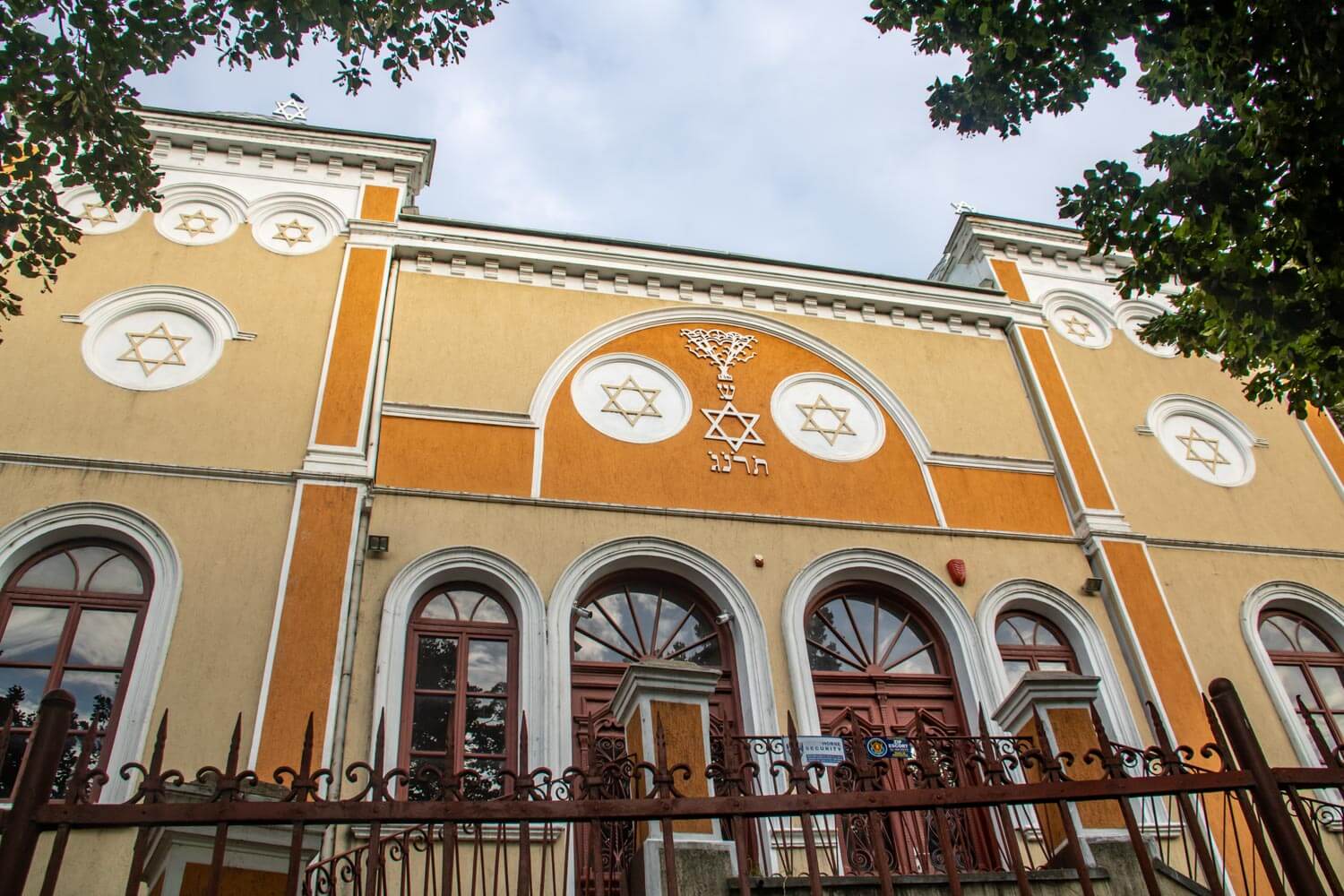
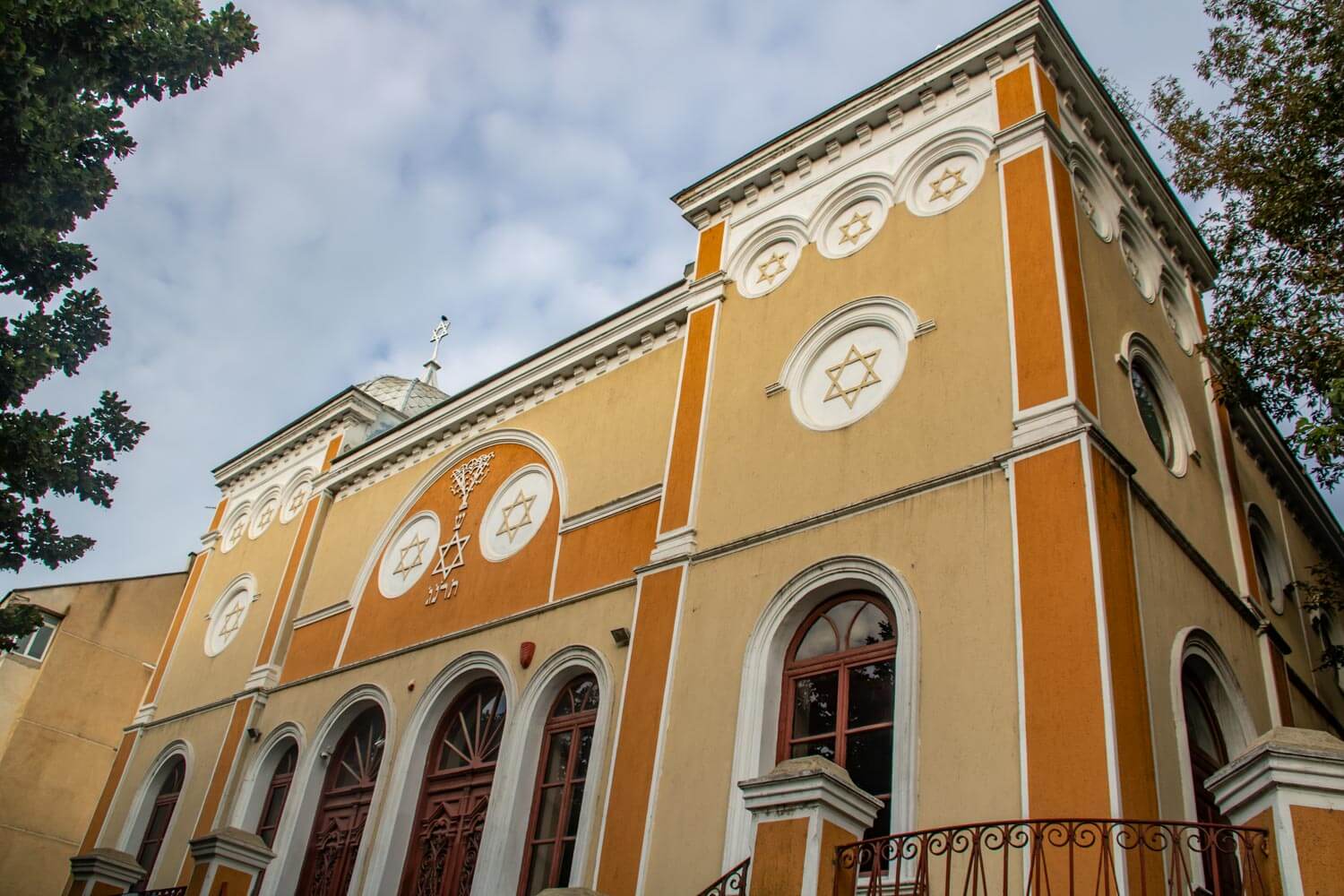
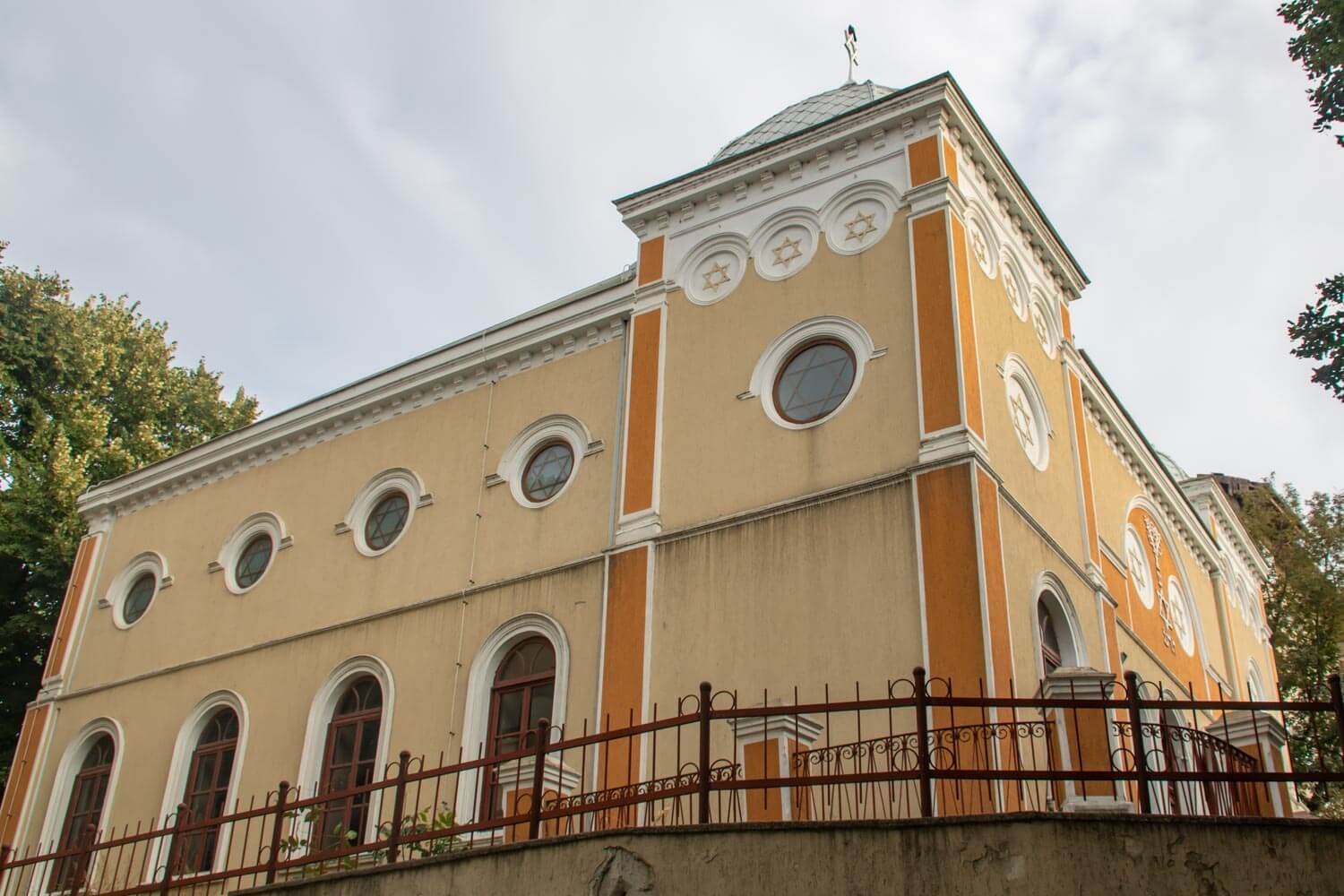
The Tulcea Synagogue (Sinagoga din Tulcea), also known as the Choral Temple (Templul Coral), is the only surviving synagogue in Tulcea and one of the few remaining buildings from the city’s former Jewish quarter.
Jewish settlement in Tulcea grew during the 19th century, with the first synagogue established in 1843 and further congregations appearing as the community expanded. By the end of the century, almost 2,000 Jews lived in the city, many of them involved in commerce and crafts, and the streets around today’s Babadag Boulevard had developed into the center of the Jewish neighborhood. The present synagogue was built between 1888 and 1893, replacing the smaller places of worship that had served the growing community.
Its architecture is unusual among Romanian synagogues. A broad symmetrical façade is framed by two robust towers, while rows of round-arched windows bring light into the prayer hall. Inside, the focal point is the large Neo-Gothic Aron Kodesh, or Torah ark, crowned by a representation of Mount Sinai with the Tablets of the Law, trumpets, and lightning. Original chandeliers and sections of the mosaic floor also survive from the historic interior.
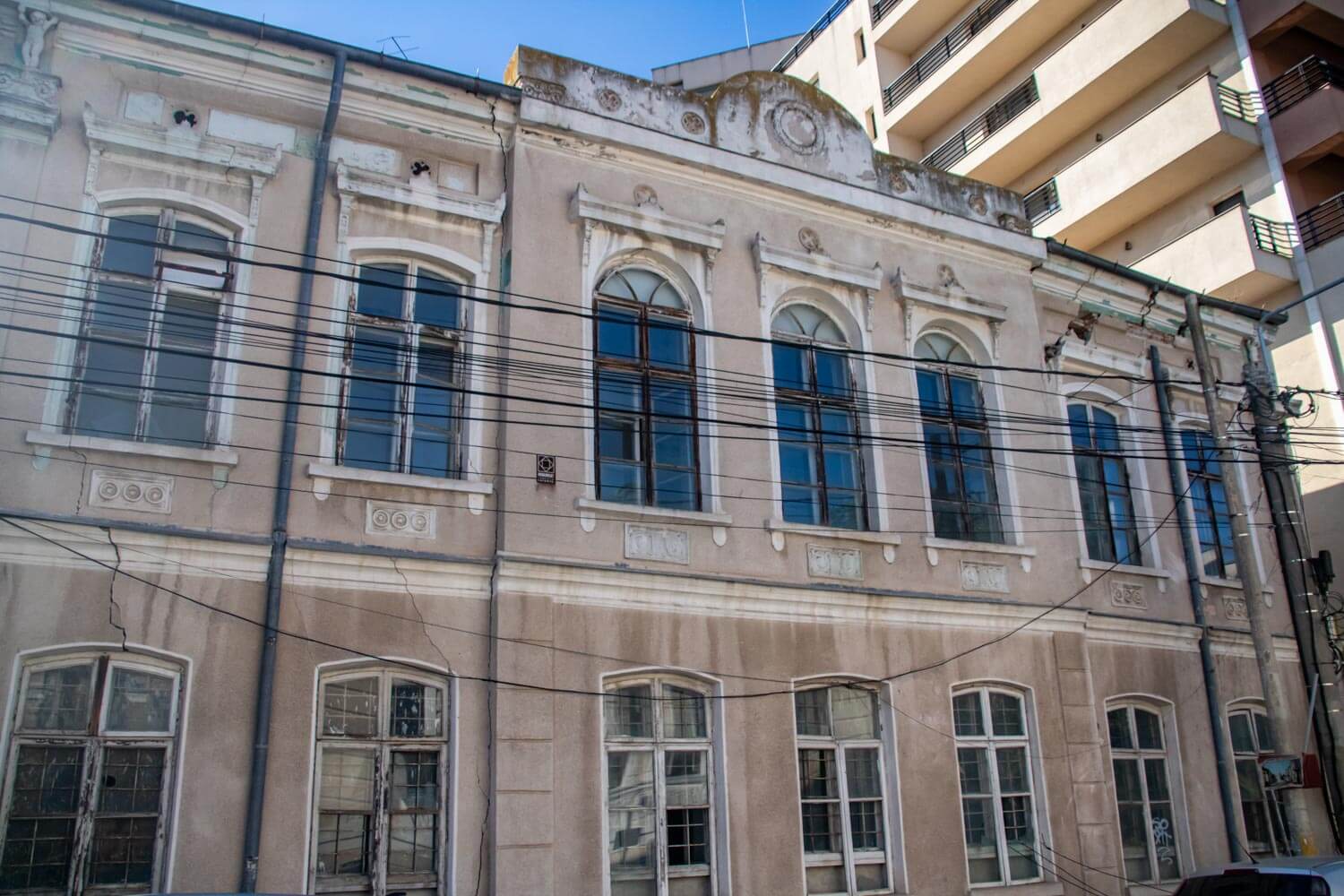
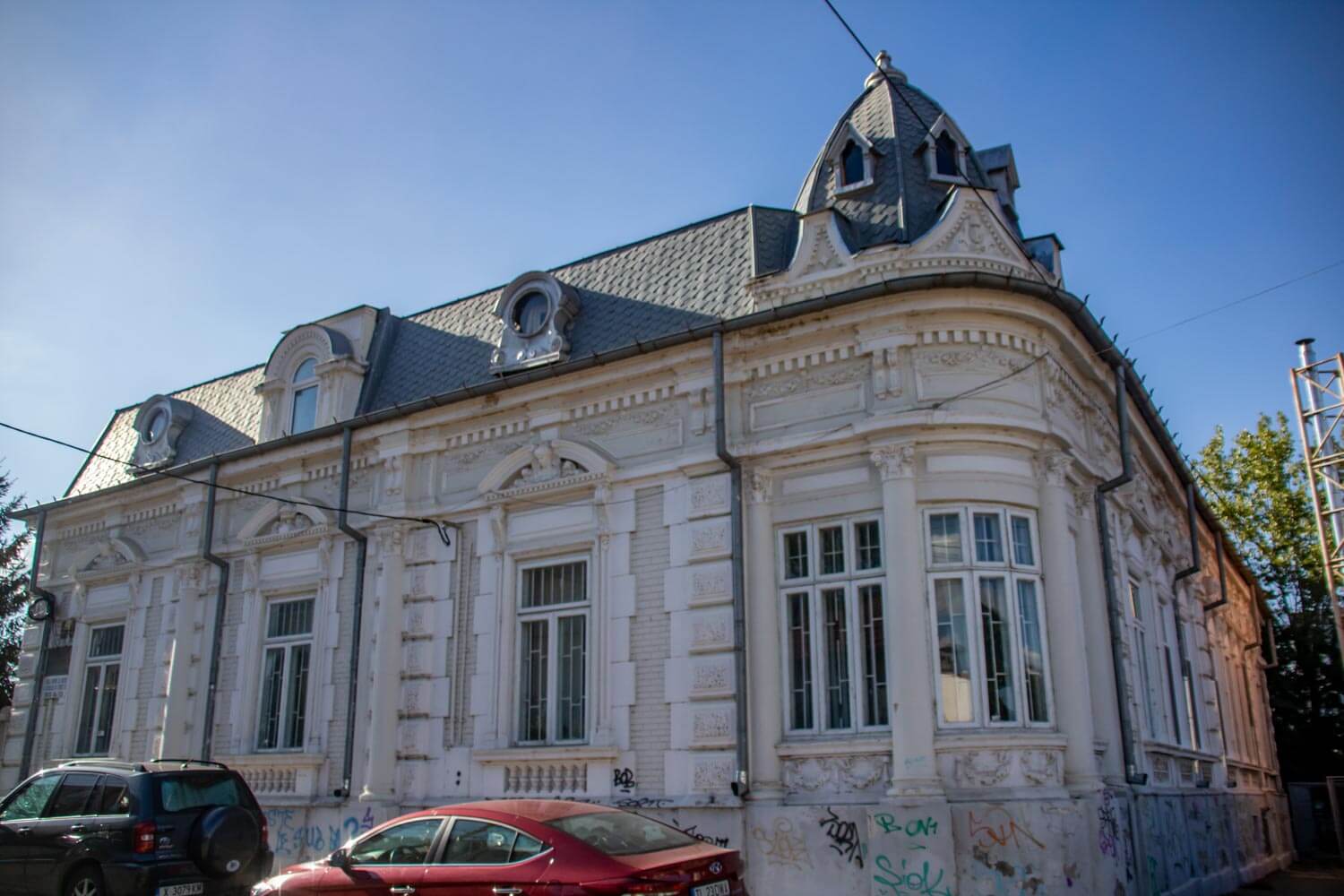
Tulcea’s Jewish population declined steadily during the 20th century, and much of the old Jewish quarter disappeared when Babadag Street and the surrounding area were redeveloped with apartment blocks during the communist period. The synagogue survived while the other synagogues closed or disappeared, leaving it as the principal architectural reminder of a community that had once formed a significant part of the city.
The building continued to serve the remaining congregation, although regular religious life became increasingly difficult as the community shrank. Rabbi Isac Ițhac officiated here until 1954, and Jewish ceremonies became much less frequent afterward; a wedding held in 1977 was the first celebrated in the synagogue since 1958.
After decades of deterioration, the synagogue was extensively restored between 2010 and 2014. It still serves Tulcea’s small Jewish community, while a museum inside presents the history of Jewish life in Tulcea and the surrounding county. The restored building also hosts concerts and other cultural events, allowing visitors to see both the historic prayer hall and the surviving interior decoration.