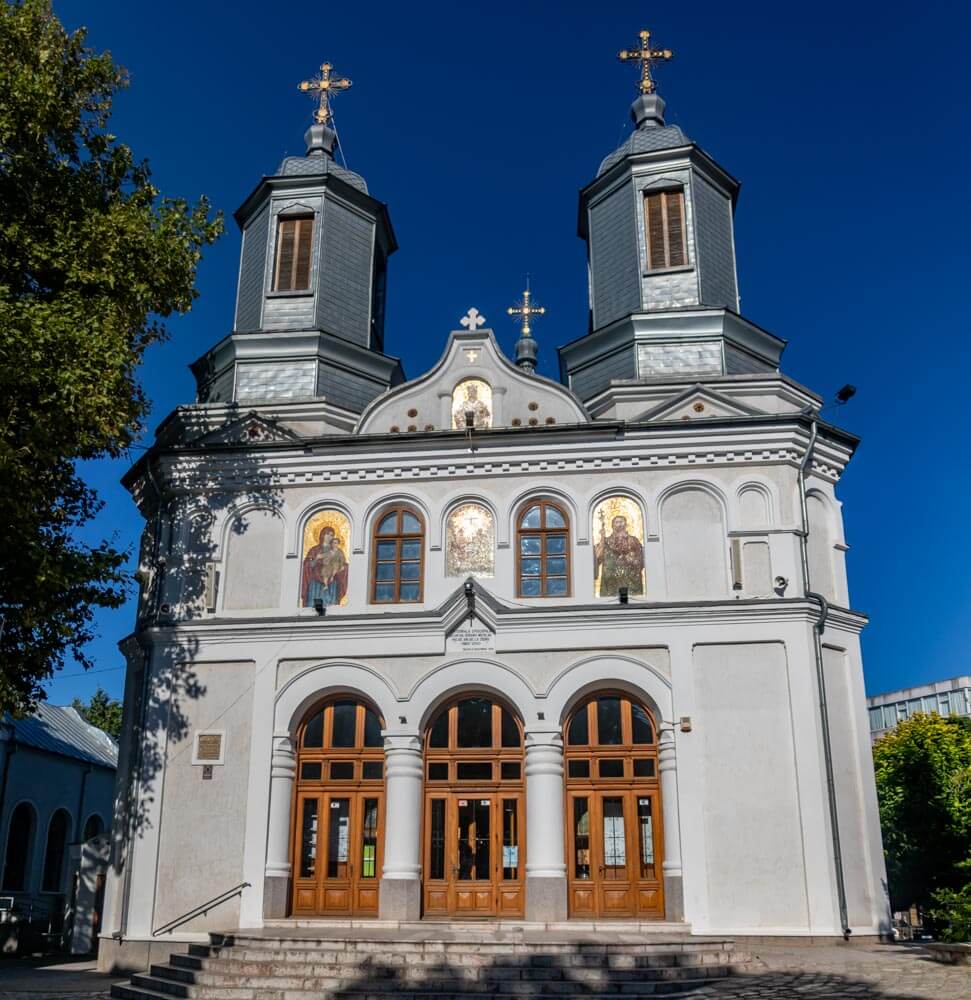
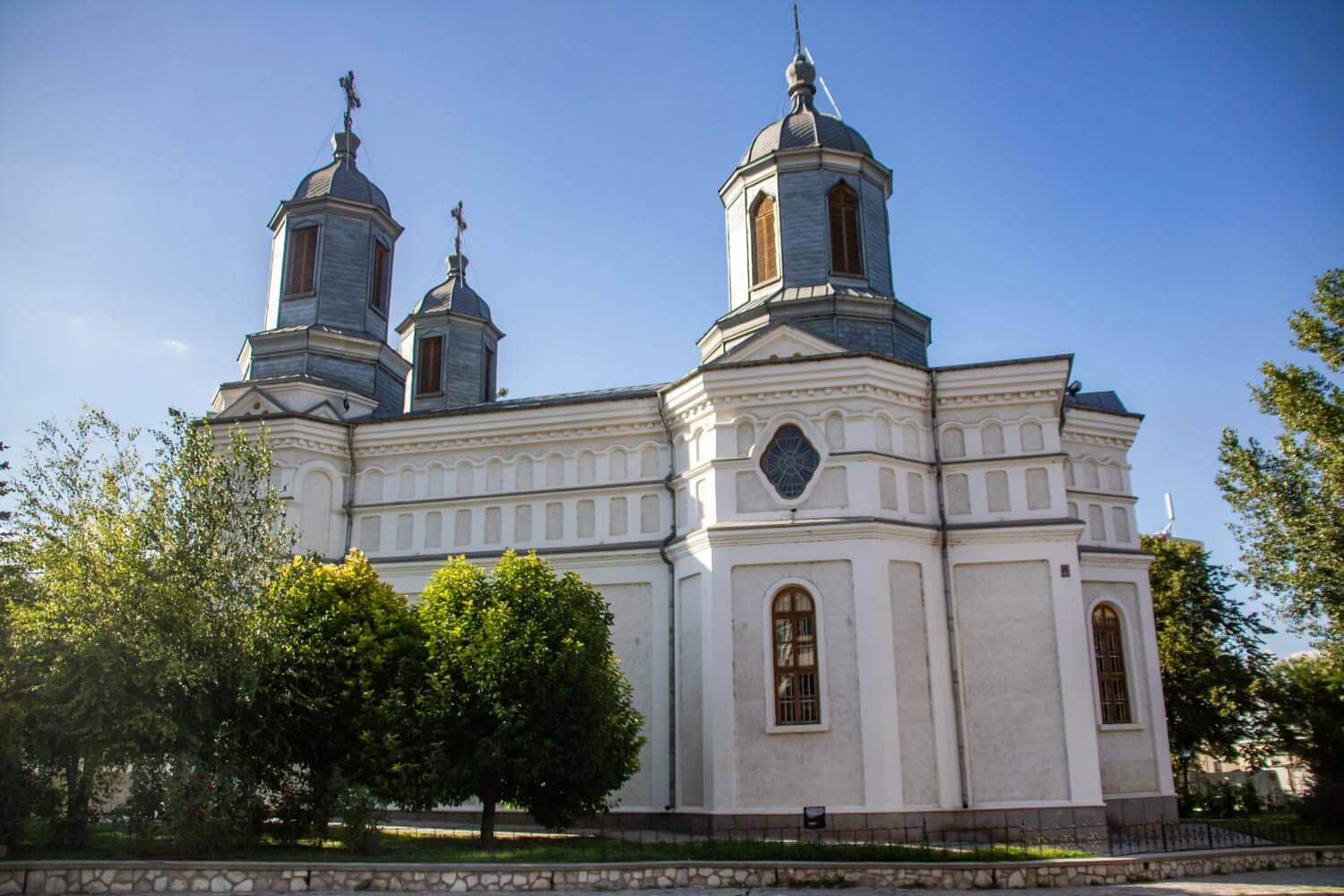
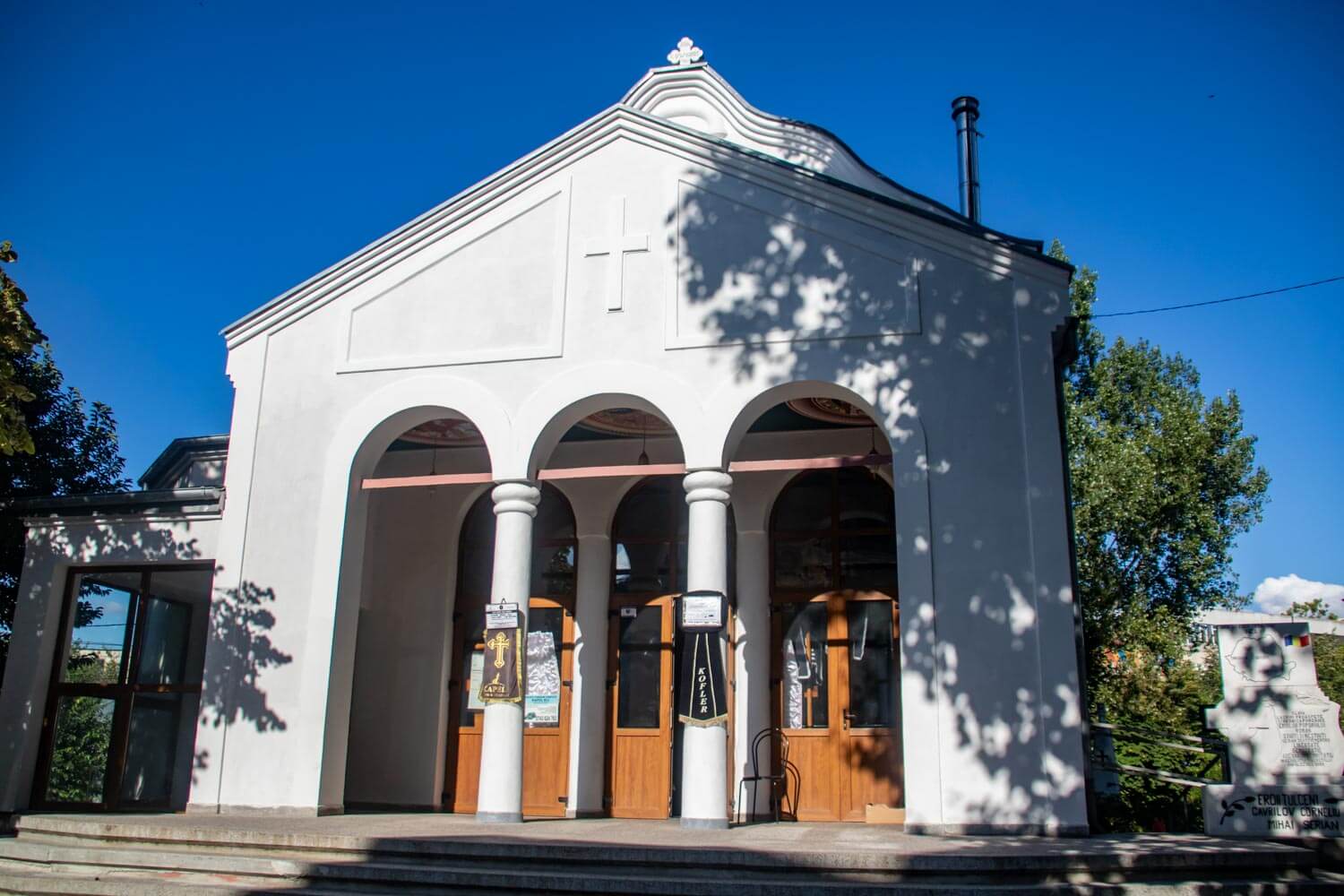
The Saint Nicholas Cathedral (Catedrala Sfântul Nicolae) is the Romanian Orthodox cathedral of Tulcea, built in the 1860s for the city’s growing Romanian community and serving as the episcopal cathedral of the Diocese of Tulcea since 2008.
Its history began with a much smaller wooden church erected by Romanians who had settled in Tulcea after the Treaty of Adrianople in 1829, many of them arriving from villages such as Beștepe in the Danube Delta. That first church stood just north of the present building and also became an early center of Romanian education, with a small school operating beside it by the middle of the 19th century.
Construction of the present cathedral began in 1862, when Metropolitan Dionisie of Durostor laid the foundation stone. An inscription records the church as built in 1865, although work continued afterward and the building was not fully completed and brought into regular use until the following decade. Its construction was unusual for Ottoman Tulcea because special permission from the sultan allowed the church to be built with three domes rising directly above the main structure. Christian churches in the city were normally subject to stricter height restrictions, which is why several other 19th-century churches received prominent bell towers only later.
The church became caught up in the ecclesiastical rivalry between Greek church authorities and the newly established Bulgarian Exarchate, and Ottoman authorities closed it between 1872 and 1877. Services resumed in November 1877, shortly before northern Dobrogea passed from Ottoman to Romanian administration. The old wooden church was subsequently removed, and in 1894 a commemorative monument was erected on the site of its former altar.
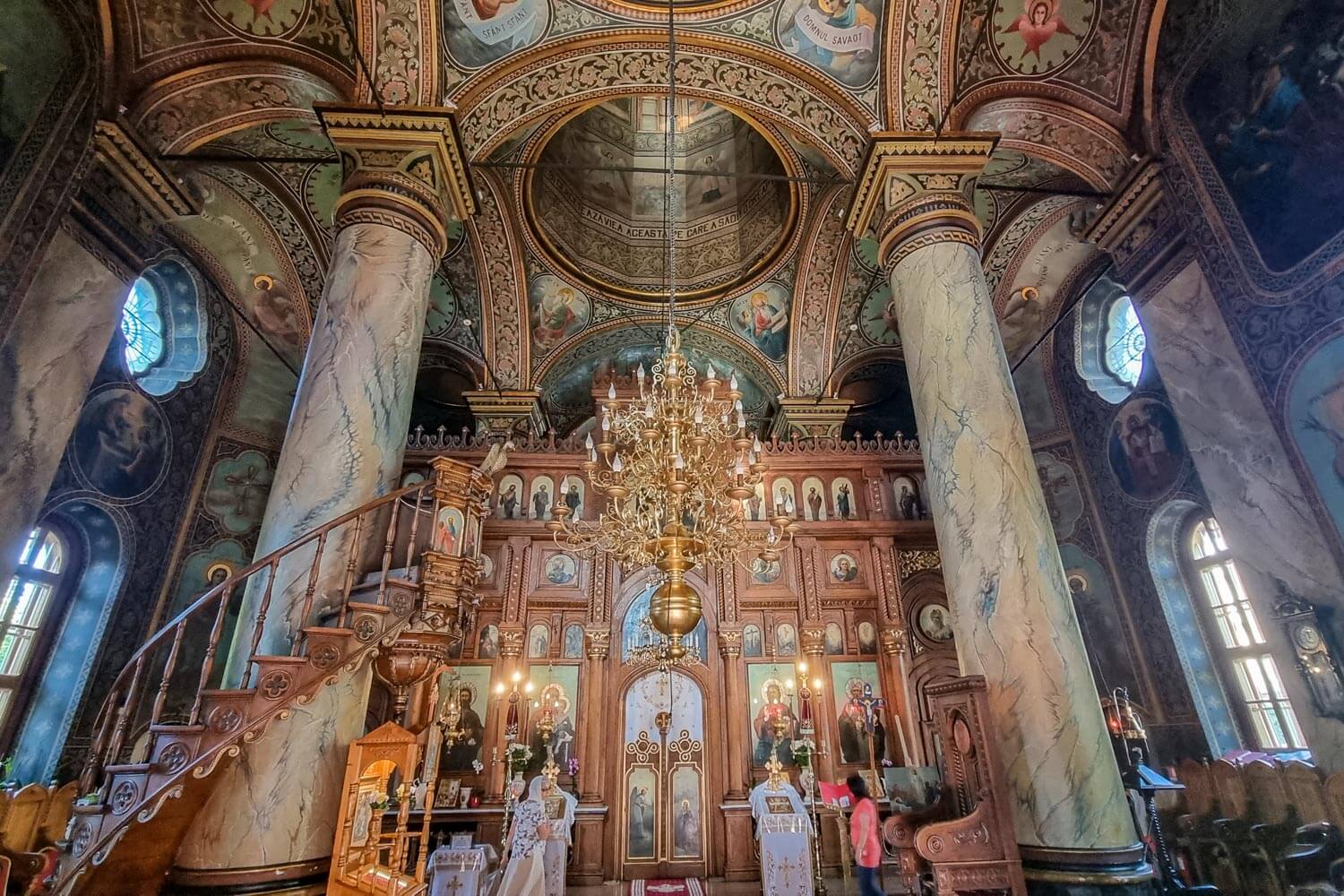
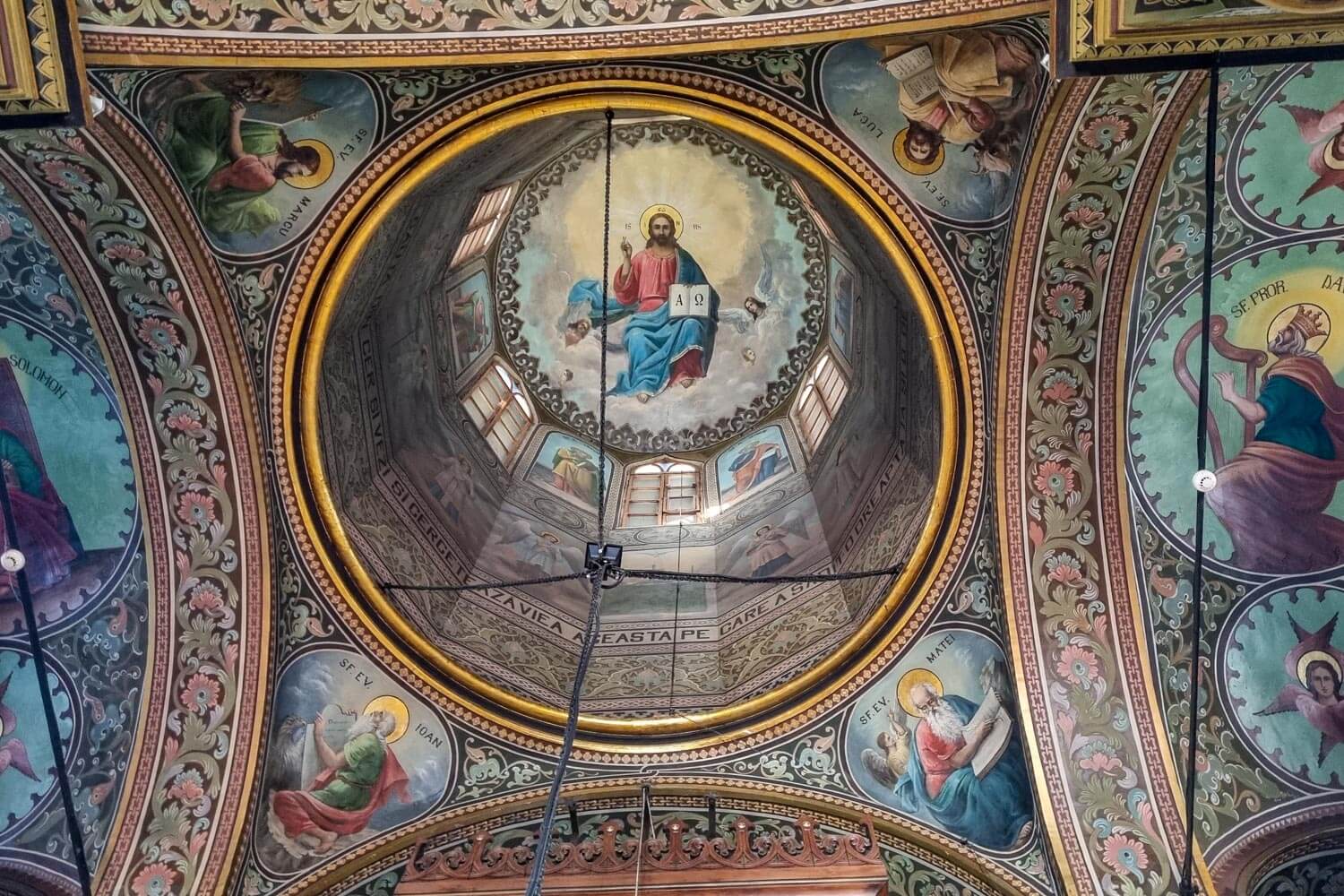
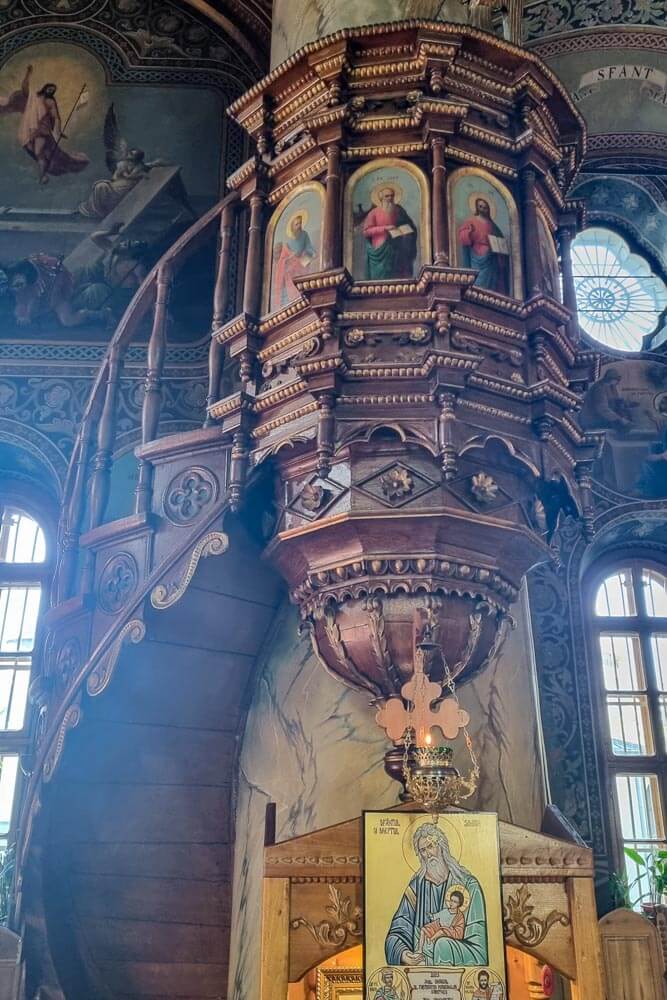
Built of stone and brick, the cathedral follows a Byzantine-inspired cruciform plan and rises to around 30 meters beneath its three domes. Inside, 15 vaults rest on eight massive masonry pillars, while the carved oak iconostasis, episcopal throne, choir stalls, and ambo form some of the principal historic furnishings. The present wall paintings were created in 1905-1906 by Dumitru Marinescu, a painter and professor at the School of Fine Arts in Bucharest.
The cathedral also preserves a collection of historic liturgical objects and books, including Greek, Slavonic, and Romanian religious volumes, silver vessels, and an 1888 Gospel later given a silver cover. Two bells cast in Bavaria in 1882 remain among the older fittings associated with the church.
When the Diocese of Tulcea was established in 2004, Saint Nicholas eventually became its episcopal cathedral, a role formally assumed on 25 March 2008. It remains the principal Romanian Orthodox church of the city and the seat of the Bishop of Tulcea.