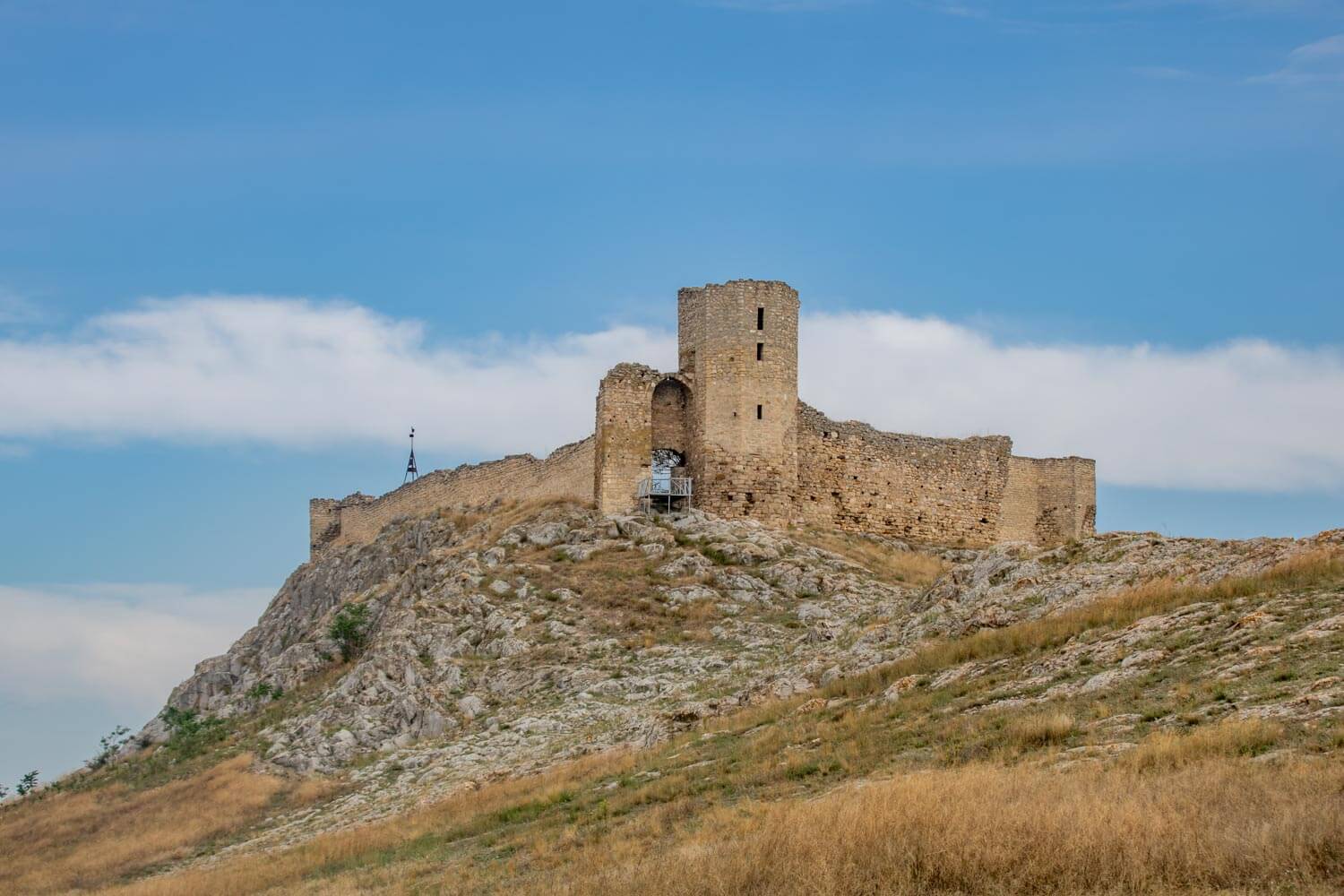
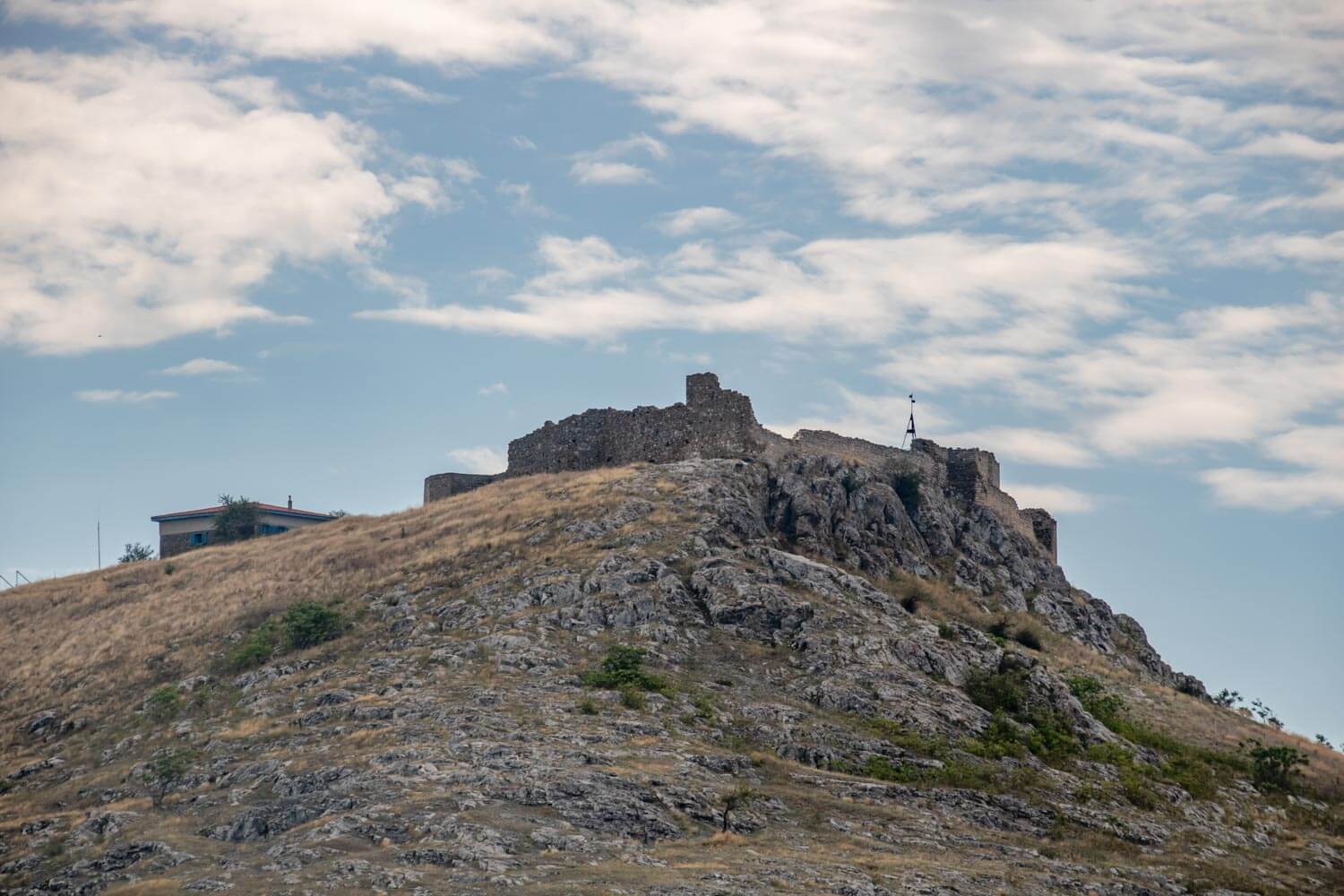
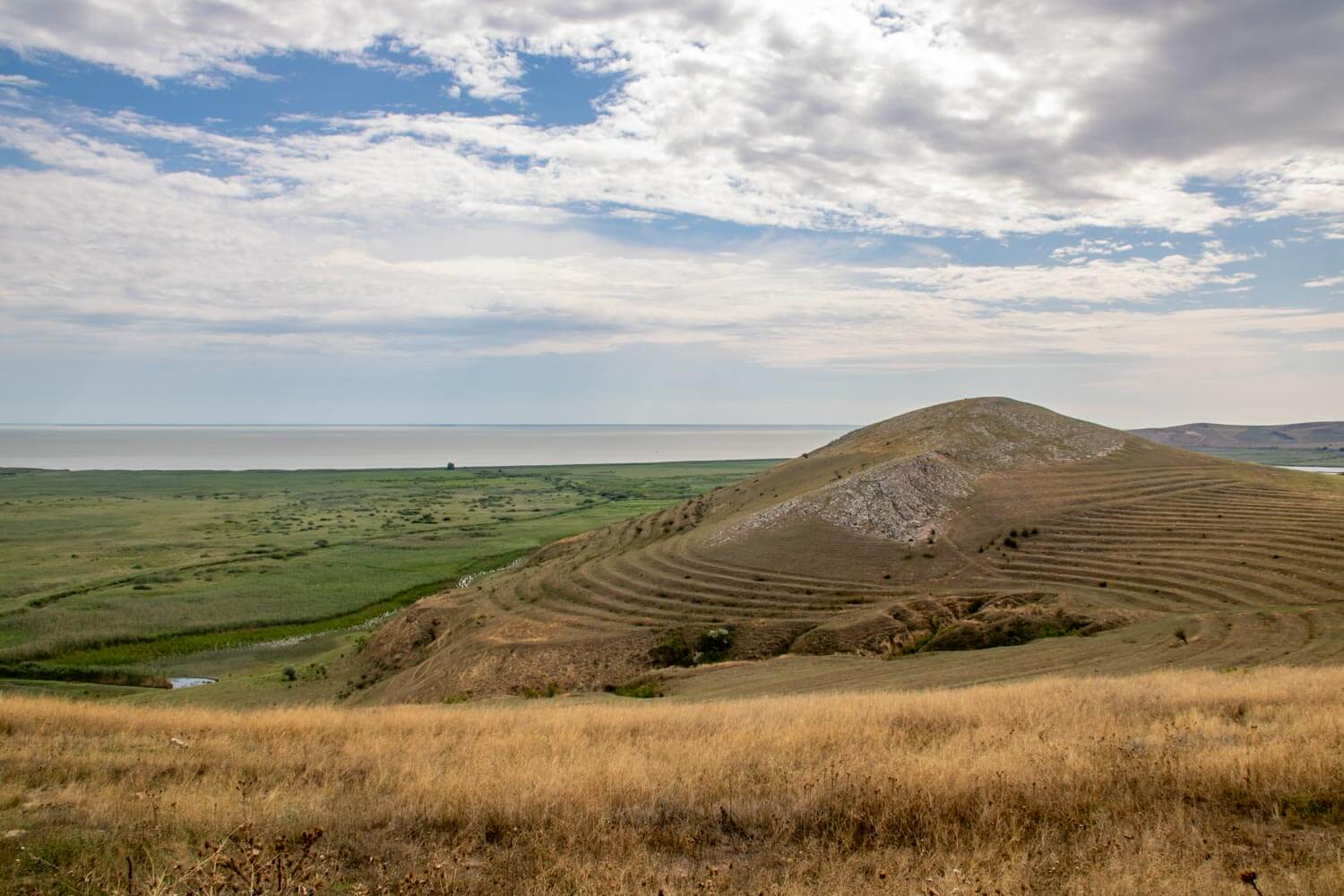
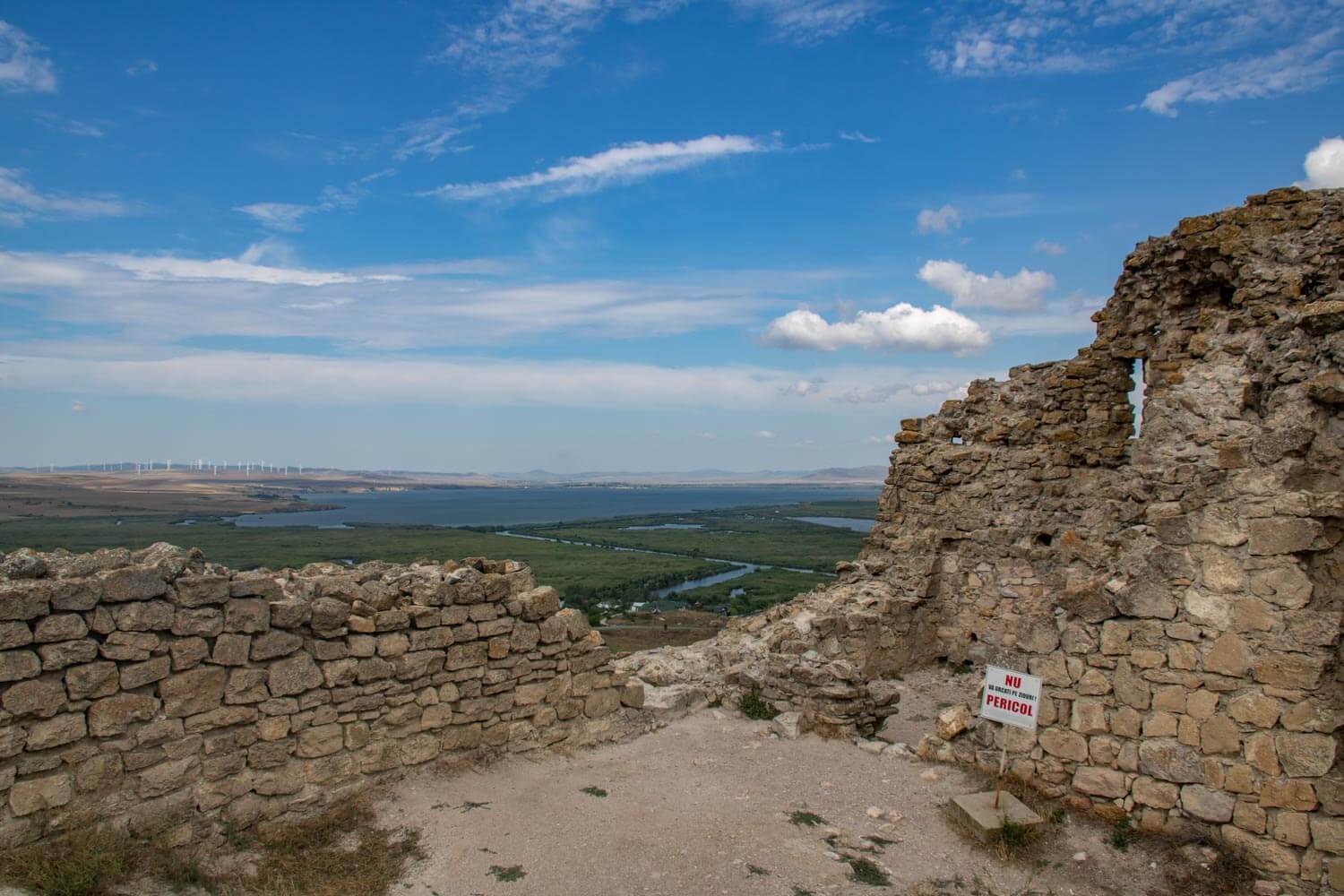
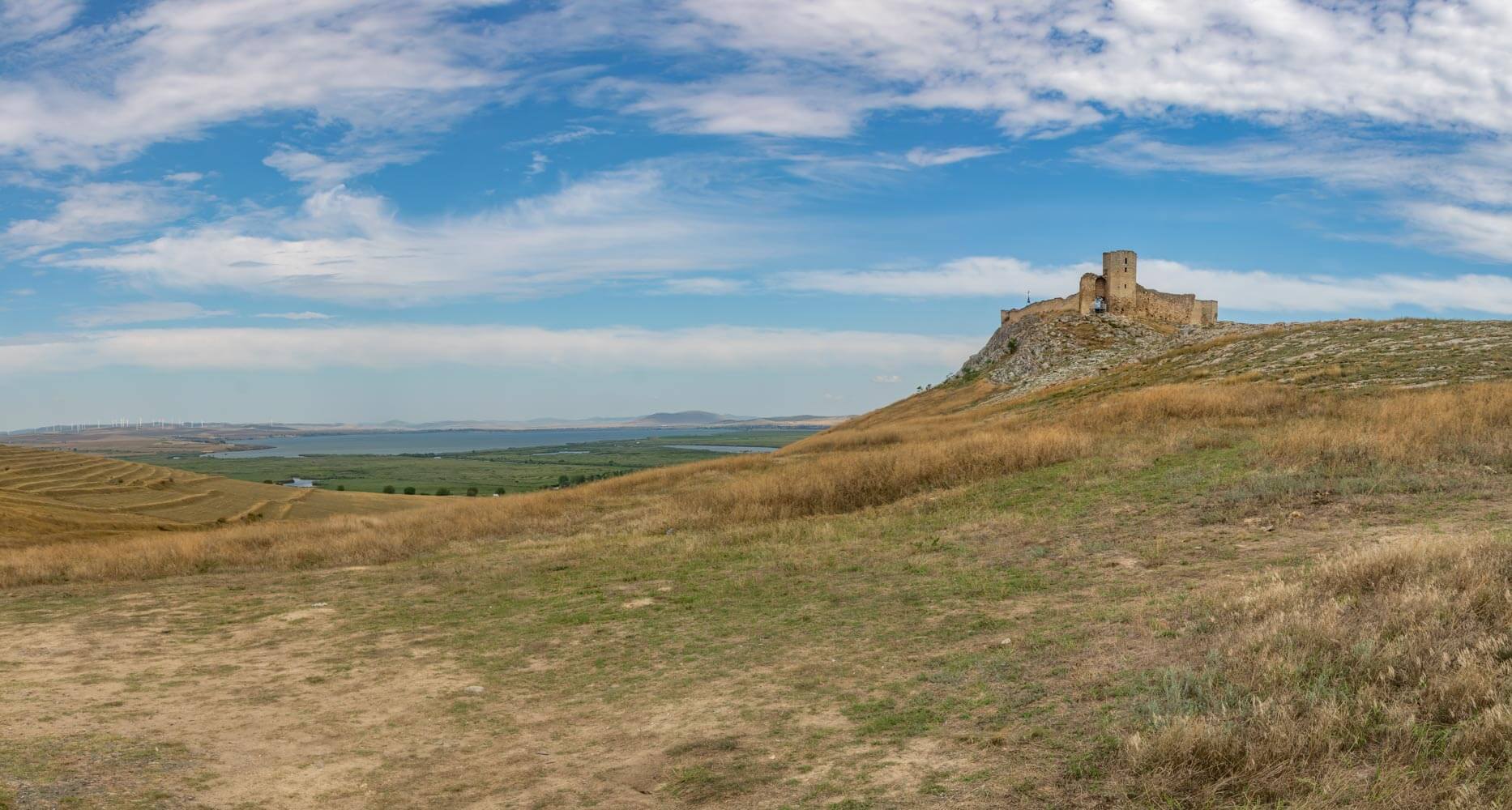
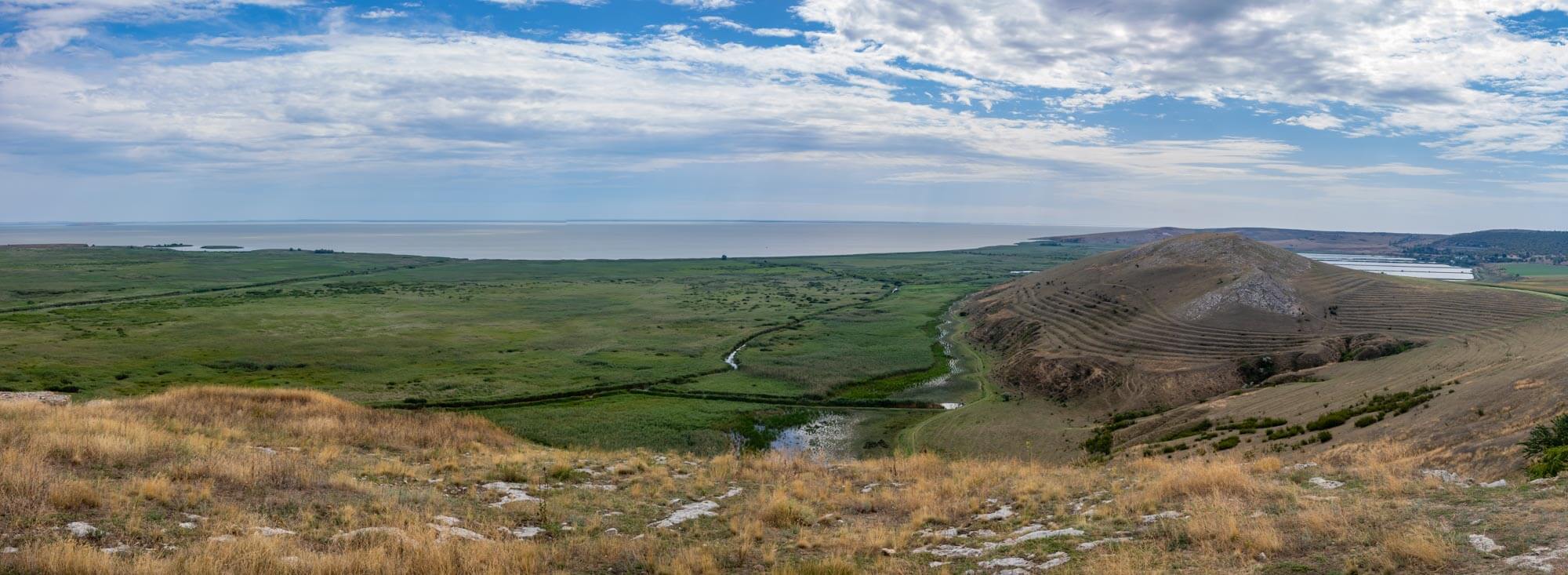
Enisala Fortress (Cetatea Enisala) is a ruined medieval fortress on a limestone hill near Enisala, overlooking Lakes Razim and Babadag in Tulcea County. Built in the second half of the 14th century, it occupied a strategic position above waterways that were then connected much more directly with the Black Sea, allowing its garrison to watch movement through an important commercial and military corridor.
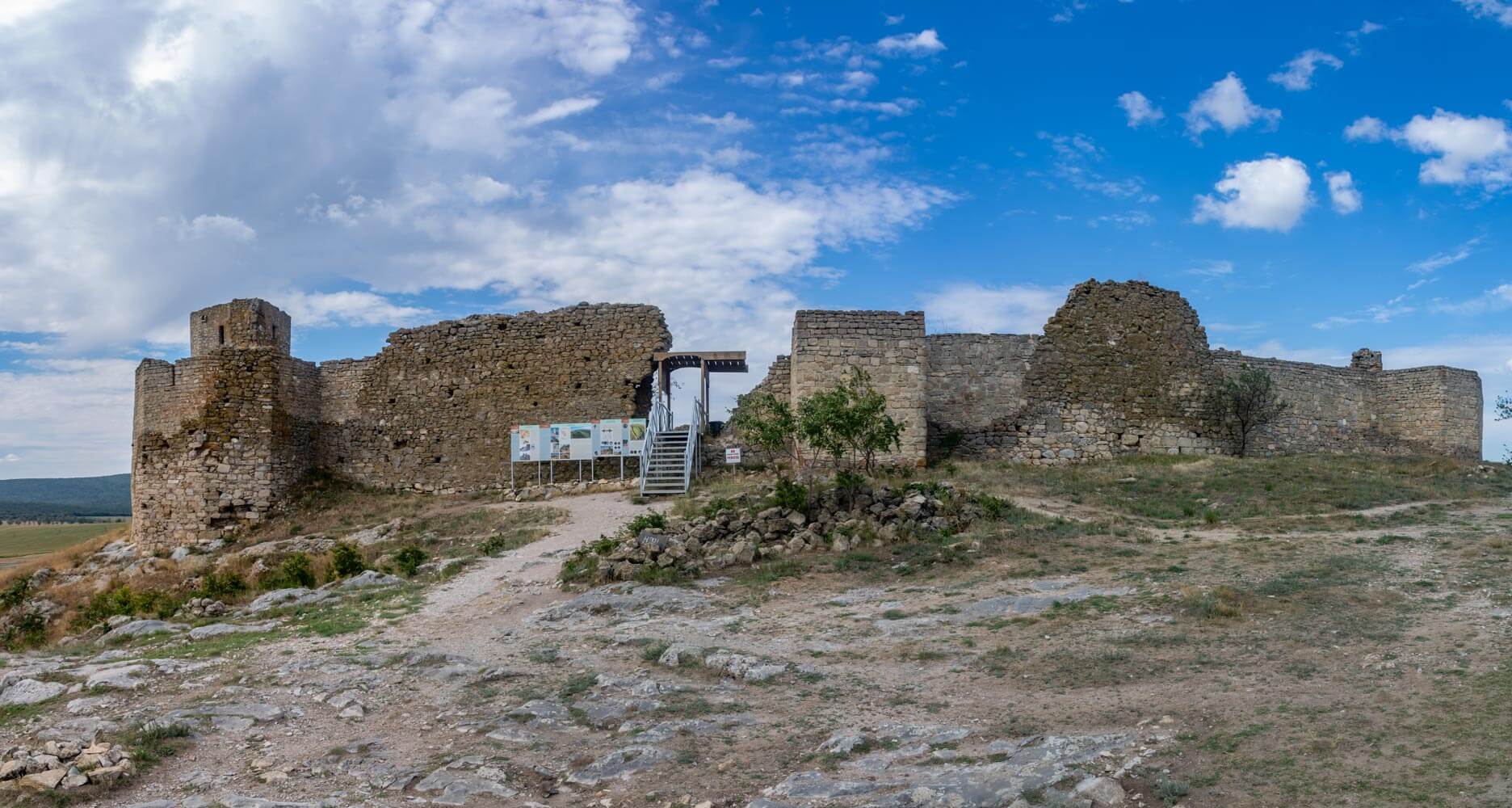
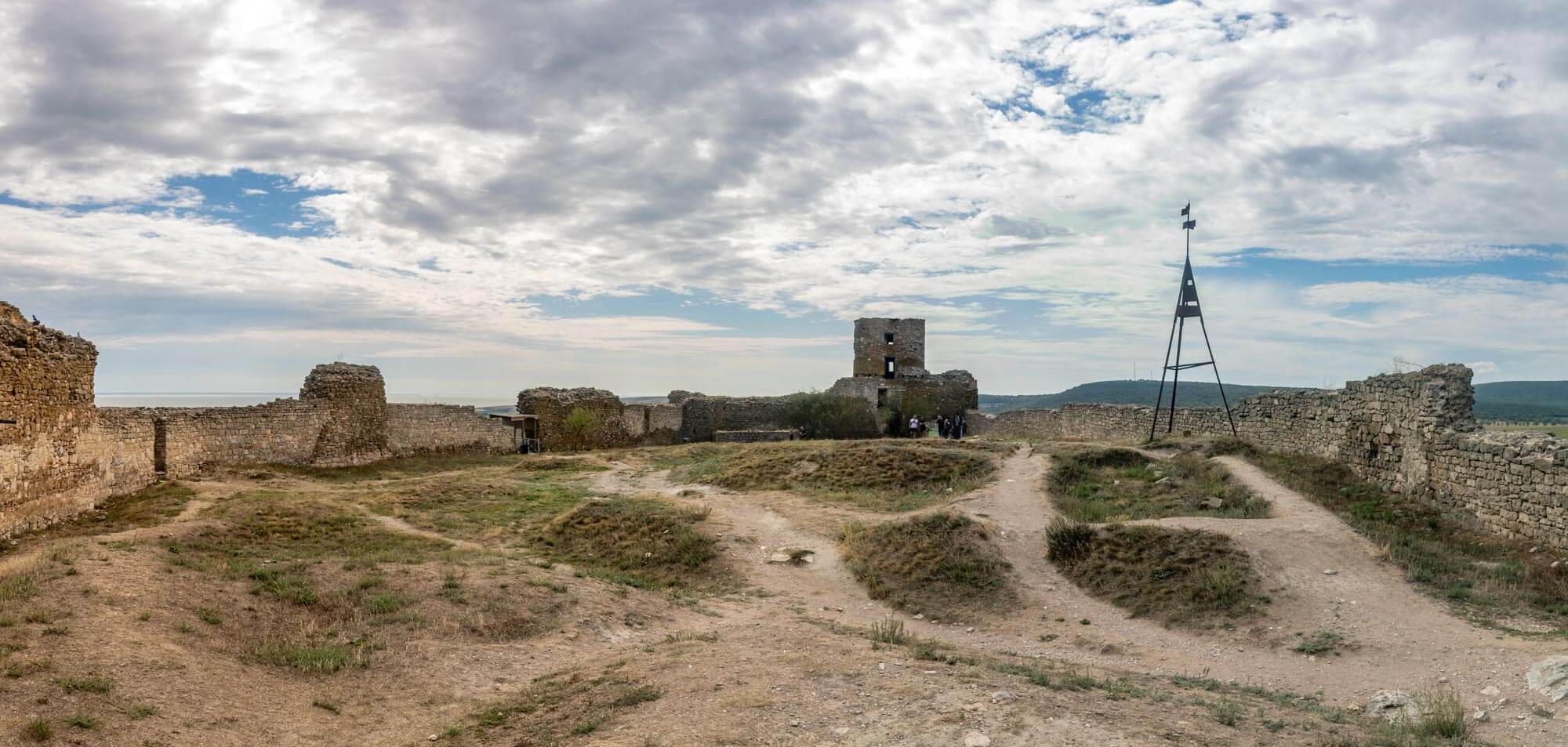
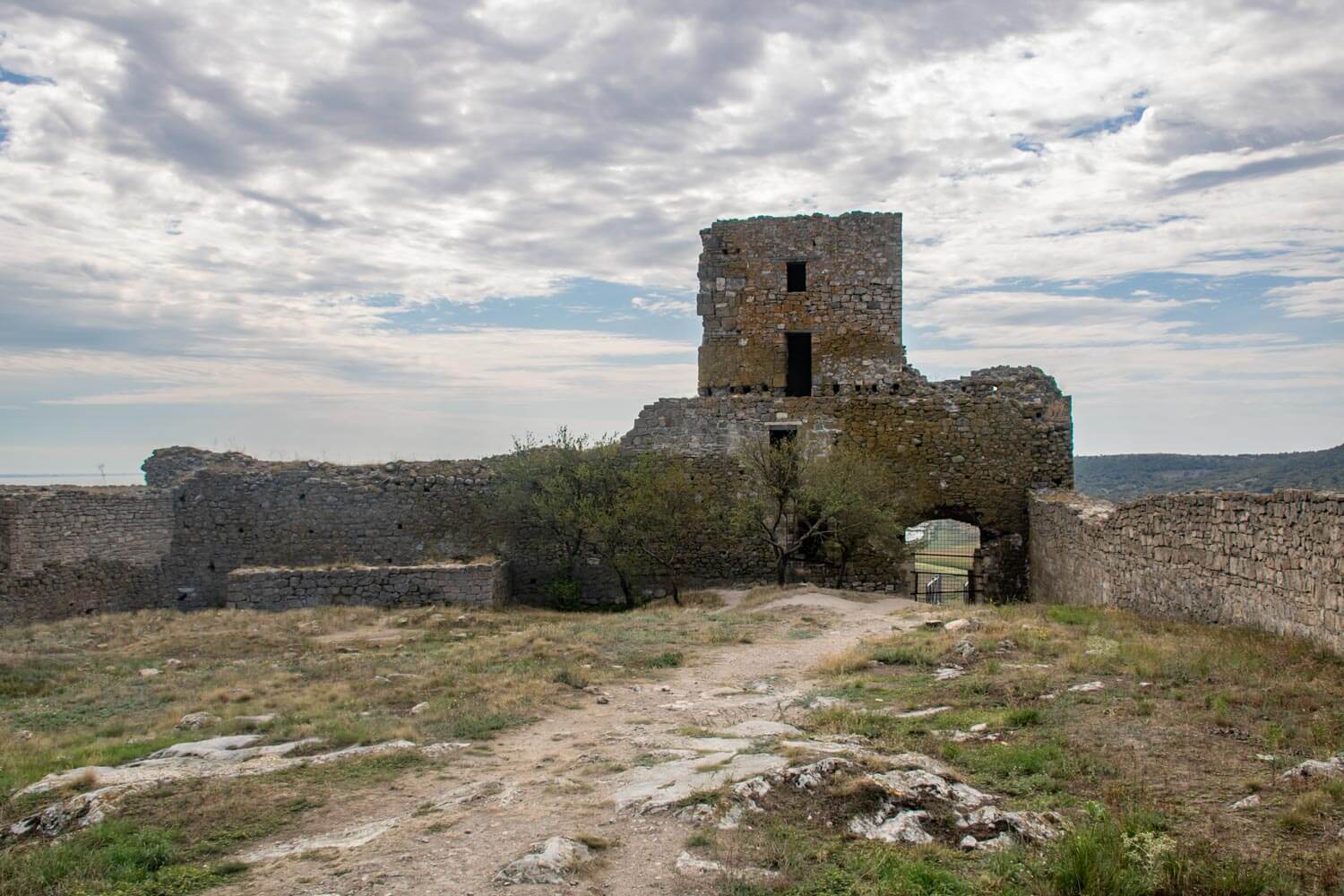
The fortress was probably built by Genoese merchants, who were heavily involved in Black Sea trade during this period, although the precise authority responsible for its construction remains uncertain. Its irregular polygonal plan follows the contours of the rocky hilltop, with defensive walls and projecting bastions enclosing the summit. Some sections still rise between 5 and 10 meters, giving the ruins a much stronger presence than their relatively compact footprint suggests.
Control of the region shifted repeatedly during the late Middle Ages. By the reign of Mircea the Elder, Enisala had been incorporated into the defensive system of Wallachia as his rule extended into Dobrogea. Ottoman expansion eventually brought the area under Turkish control, and by the end of the 15th century the fortress had been abandoned. Its decline was not only political: the gradual formation of sandbars along the coast separated Lake Razim from the Black Sea, reducing the importance of the water route the fortress had originally been positioned to control.
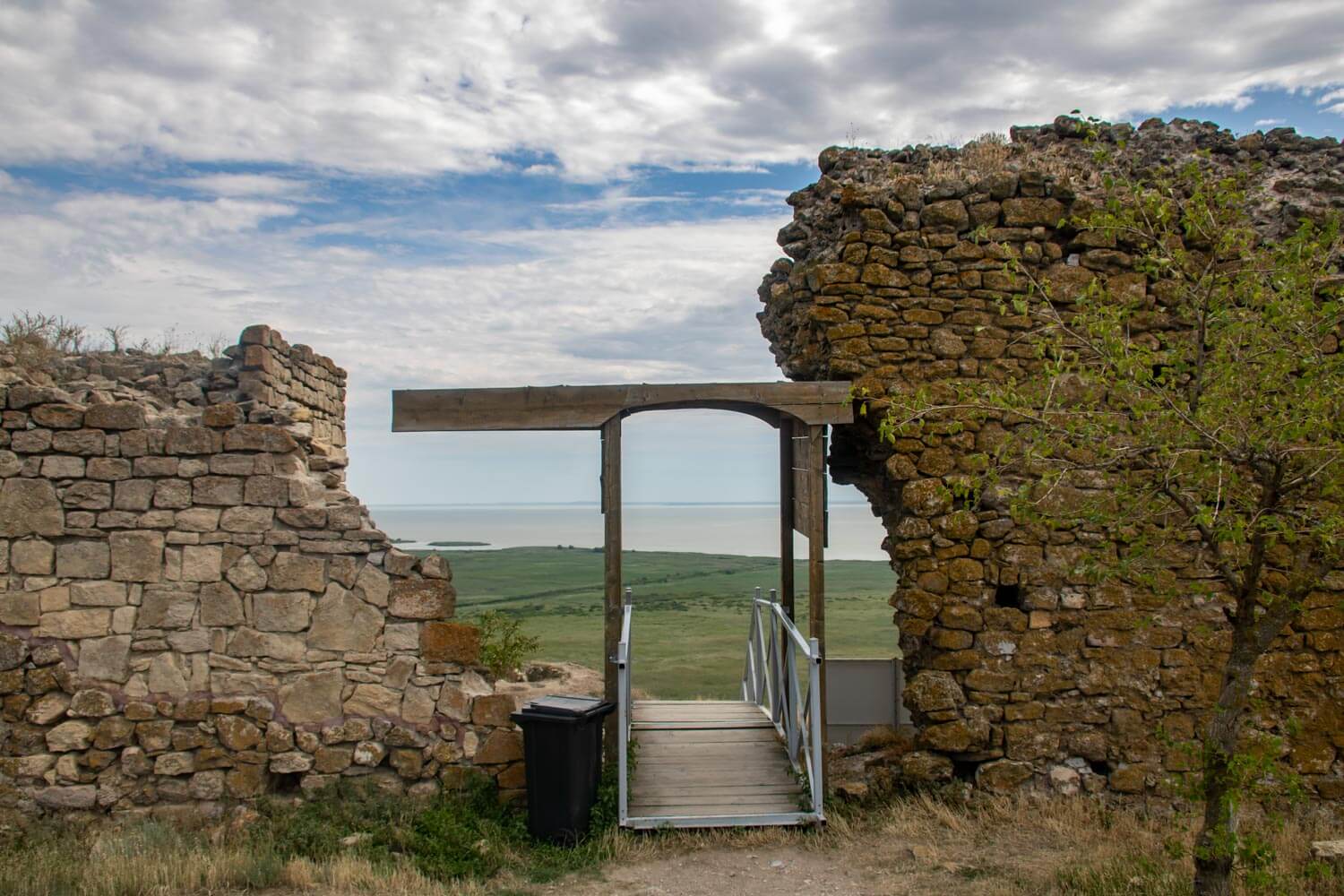
Today visitors enter the surviving enclosure through the restored gateway and can walk among substantial sections of curtain wall and several remaining towers and bastions. The interior is largely open, making the original shape of the fortification easy to understand while leaving the surrounding landscape visible through and above the ruins. The elevated position is one of the main reasons to visit: from the hilltop there are broad views across Lake Razim, Lake Babadag, the wetlands and low hills of northern Dobrogea.
The fortress stands about 2 kilometers outside Enisala and is reached by road followed by a short uphill approach to the entrance. It is operated as a museum site by the Institute for Eco-Museum Research in Tulcea, with paid admission during opening hours.