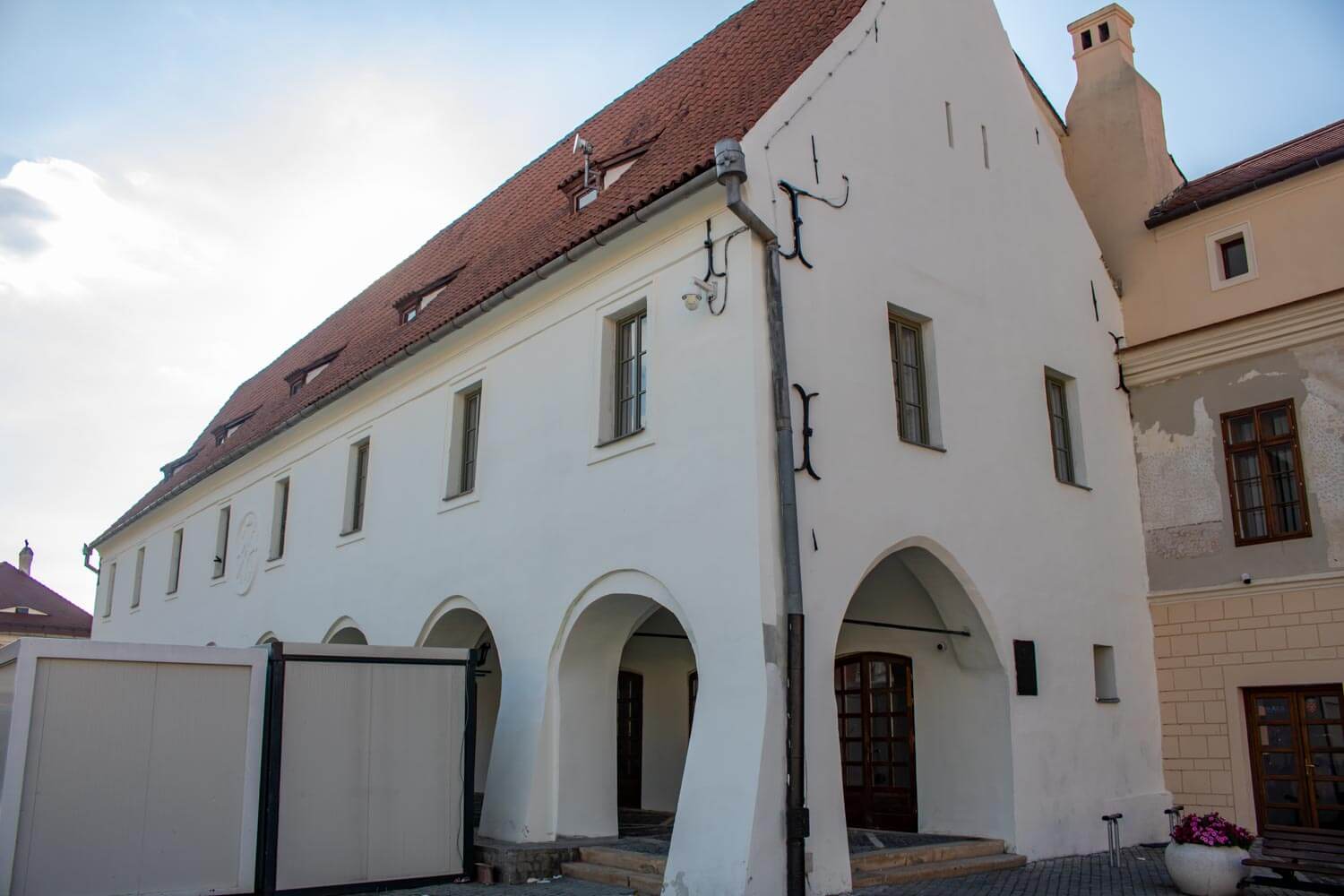
The House of Arts (Casa Artelor) is an ASTRA Museum cultural center and exhibition space on the Small Square in Sibiu, housed in the medieval former Butchers’ Hall. Its permanent exhibition focuses on the traditional crafts of Transylvania, while the building is also used for temporary exhibitions, workshops and other craft-related activities.
History and Architecture of the Butchers’ Hall
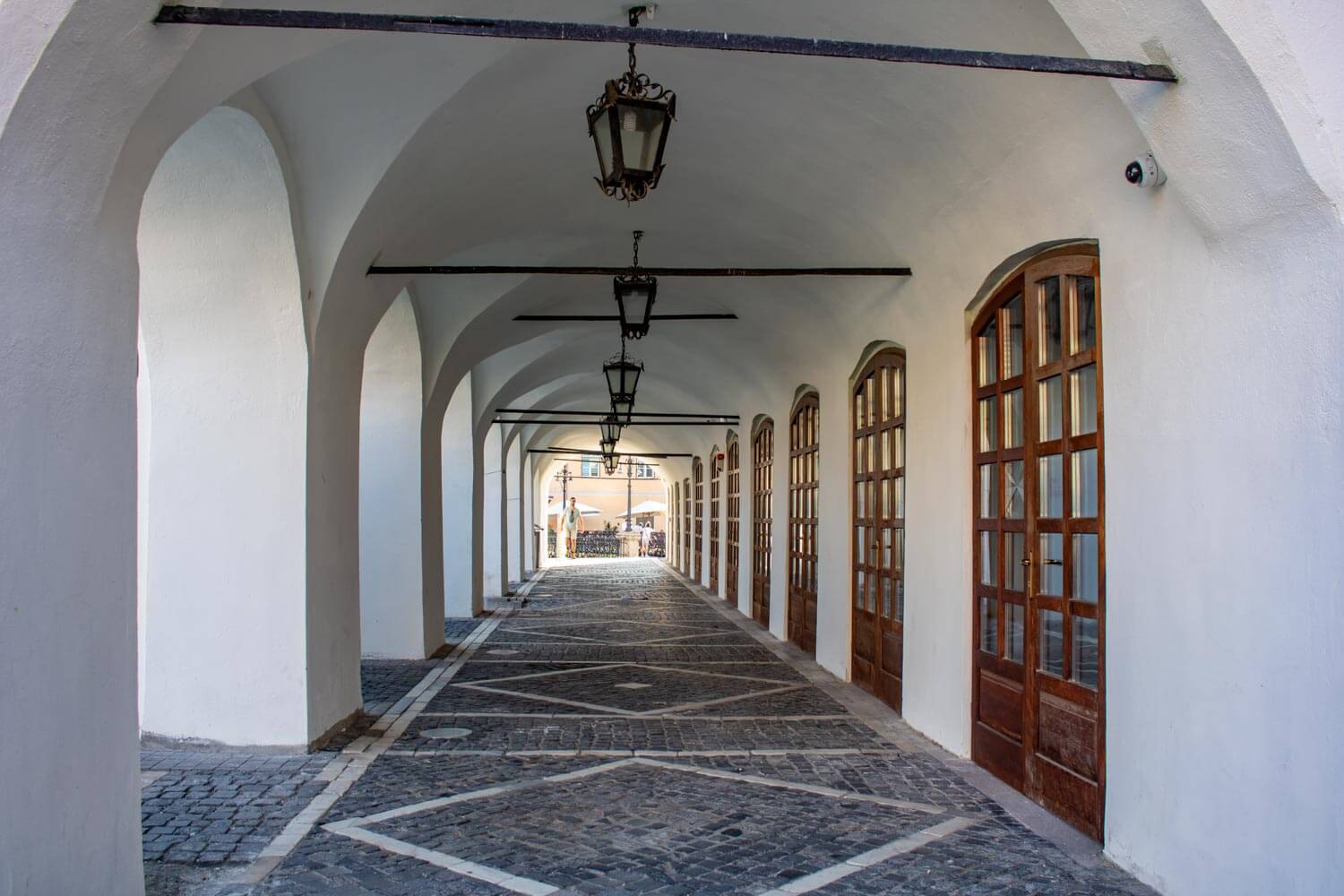
The building is one of the oldest surviving commercial structures on the Small Square and is documented as a butchers’ market from 1370. Its ground floor was arranged as an open arcade facing the square, with a series of vaulted spaces behind it, while a large hall occupied the upper floor. The structure was created for trade rather than as a private residence, which sets it apart from many of the neighboring historic houses.
Its function changed repeatedly over the following centuries. Cloth merchants later used the building, while in the 18th century it served as a grain warehouse and briefly hosted theatrical performances. In the 19th century, the butchers’ guild once again used the building, returning it to the trade that had originally given the hall its identity.
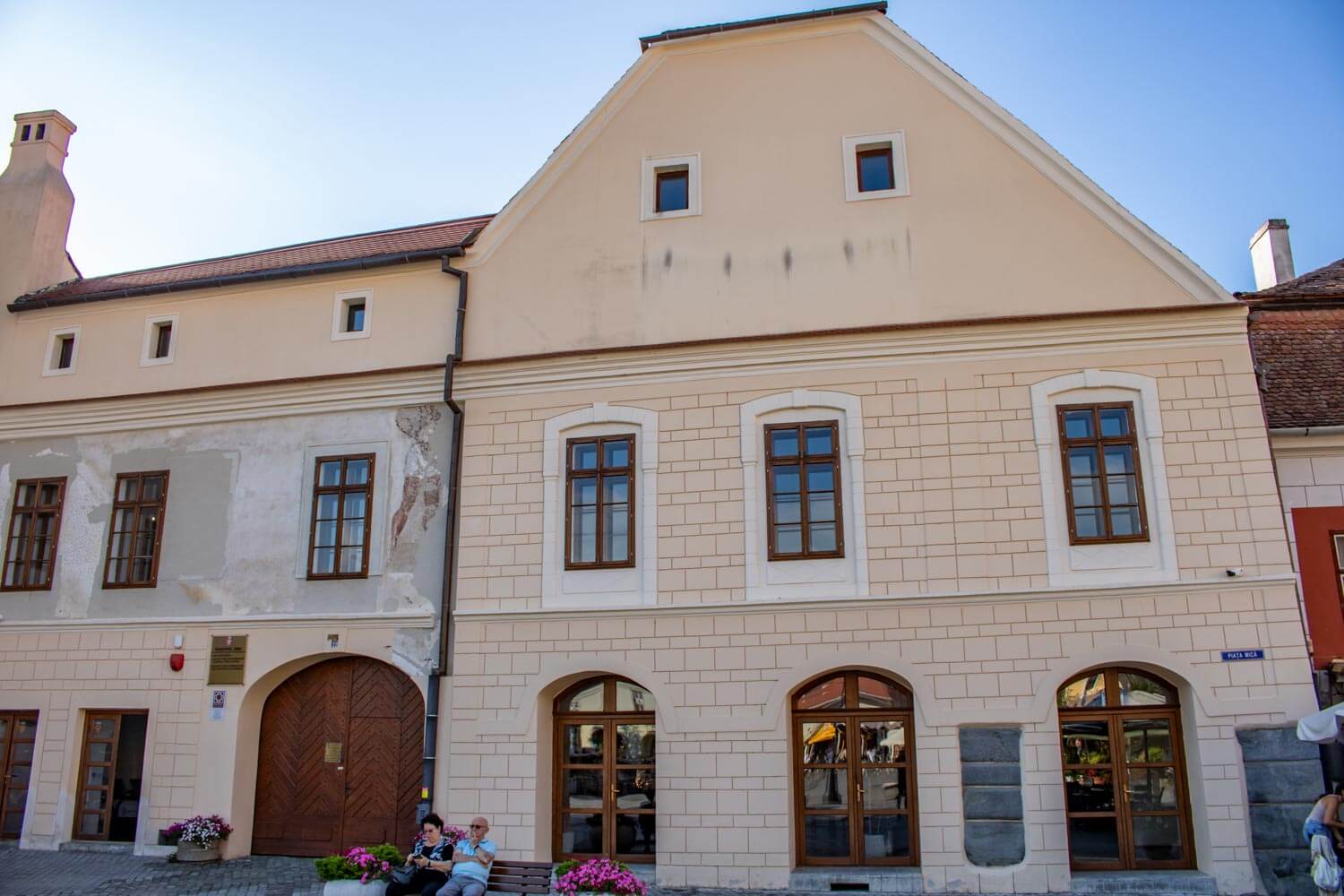
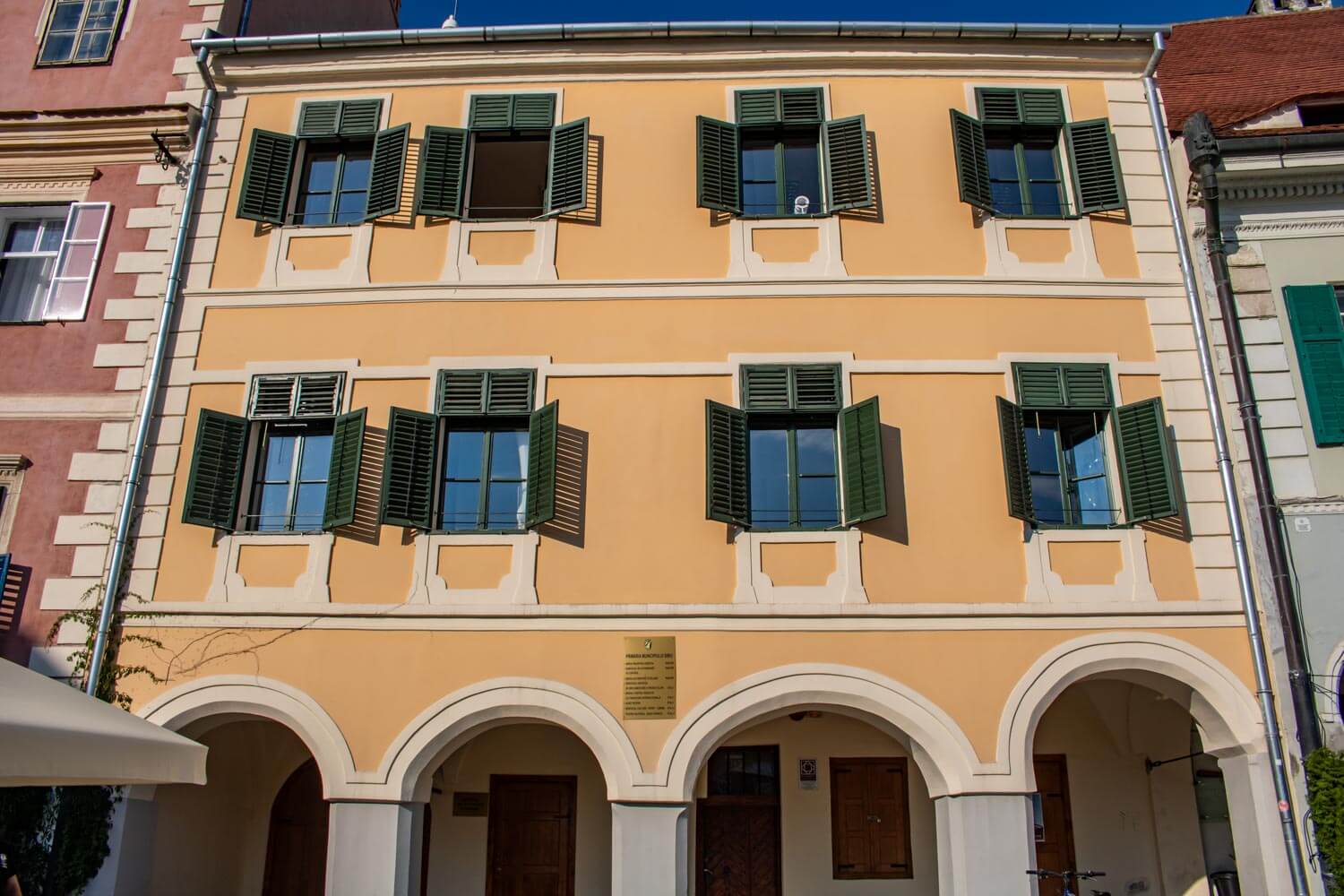
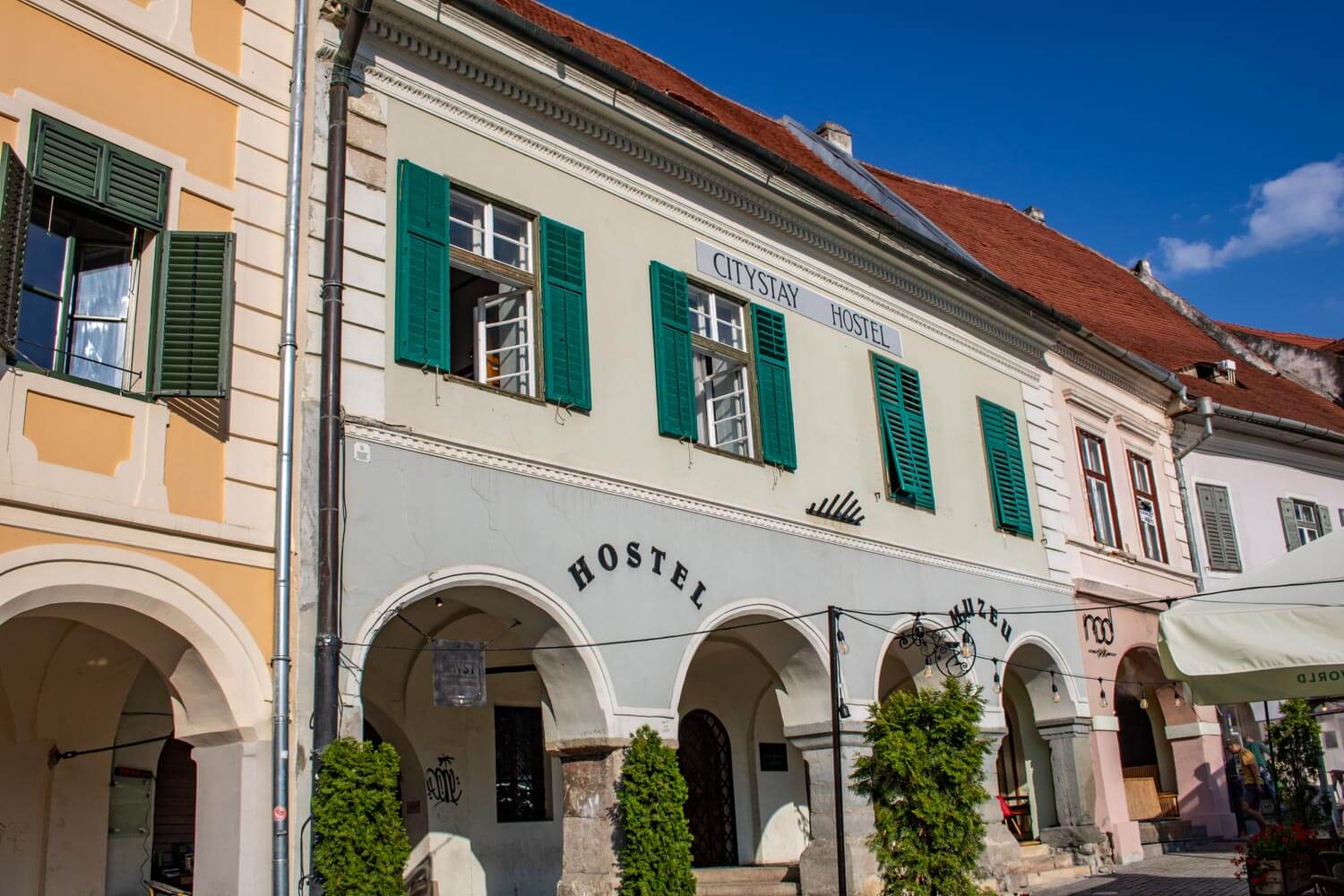
The long façade facing the square is still defined by its row of eight ground-floor arches, one of the most recognizable architectural features on the Small Square. Behind them, the vaulted former market spaces lead into the deeper parts of the building, while the upper floor retains the broad hall that has been repeatedly adapted for exhibitions and cultural use.
Exhibitions And Current Use
The building became known as the House of Arts through its later use as an exhibition venue, including temporary exhibitions organized by the Brukenthal Museum and activities connected with the ASTRA Museum. After a major restoration, it reopened as an ASTRA Museum center devoted especially to traditional crafts, regional cultural heritage and contemporary makers.
The permanent exhibition, Crafting Transylvania. People and Crafts, presents traditional crafts through objects from the ASTRA Museum’s collections, tools, documentary material and multimedia displays. Woodworking, ceramics, textiles and other crafts are shown not only as historic occupations, but as skills that continue to be practiced and adapted by contemporary craftspeople.
Other parts of the building are used for temporary exhibitions, workshops, educational programs and craft-related events. This combination makes the House of Arts more than a conventional museum gallery, using the former medieval market building as a place to present both historic material culture and the living craft traditions connected with it.