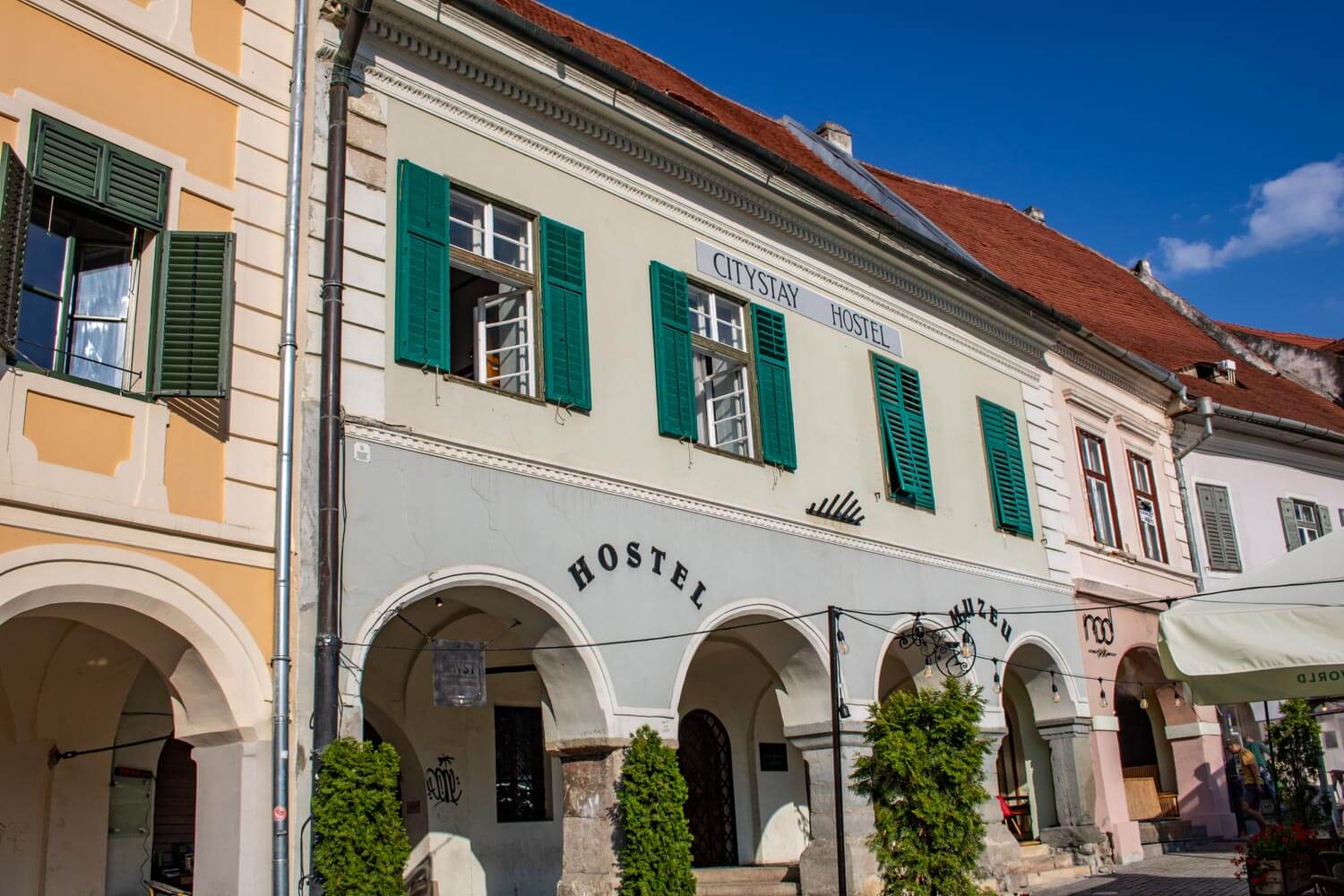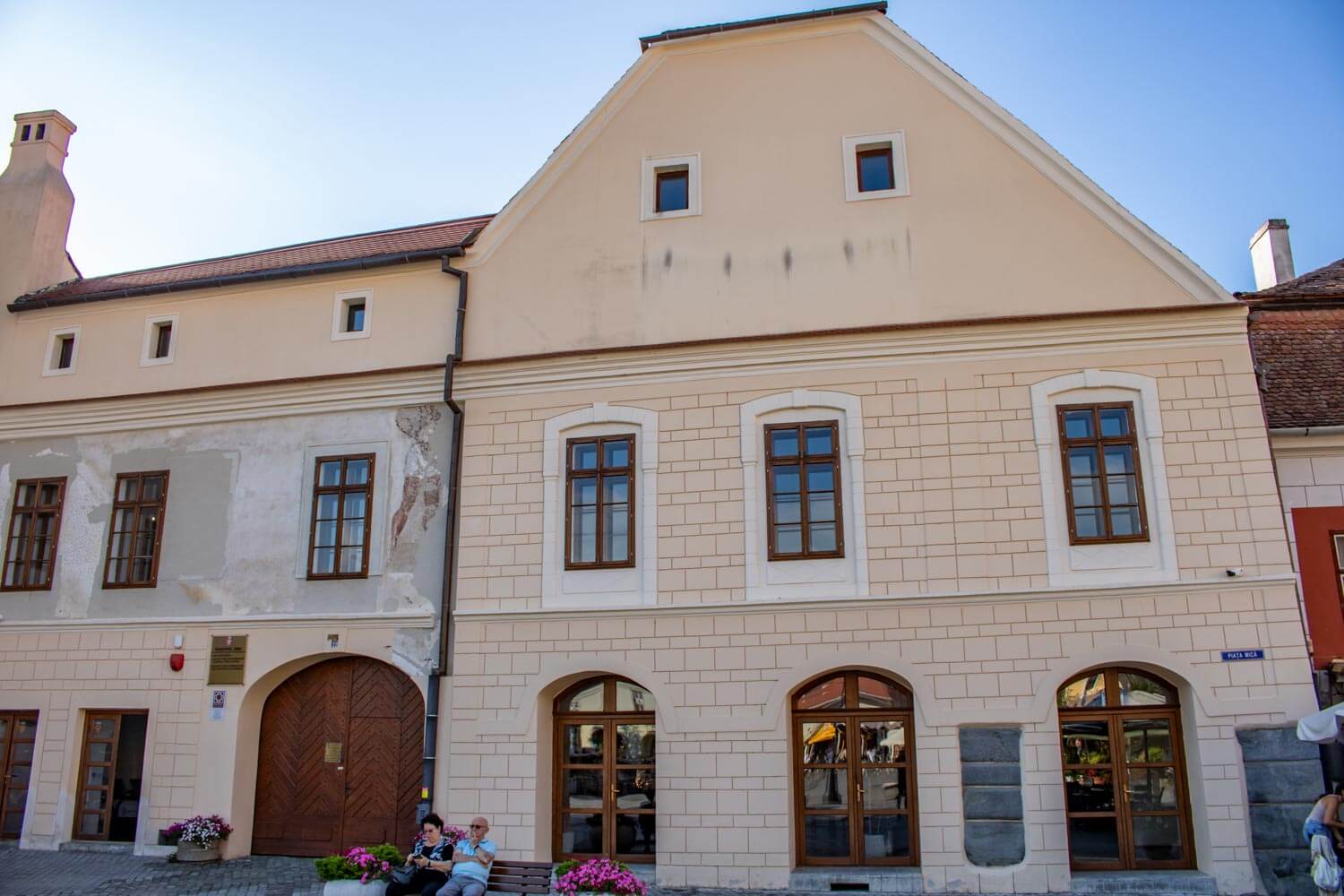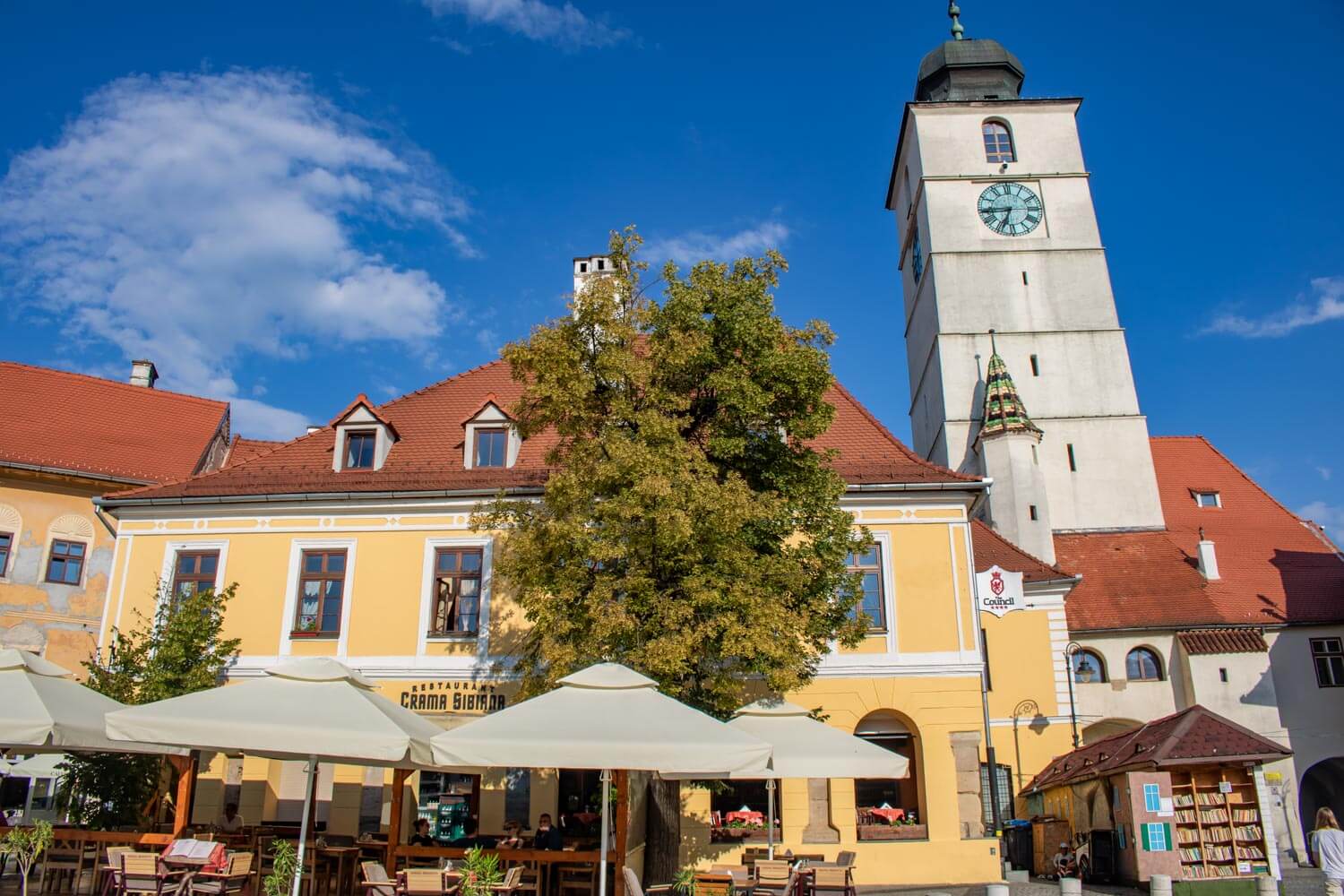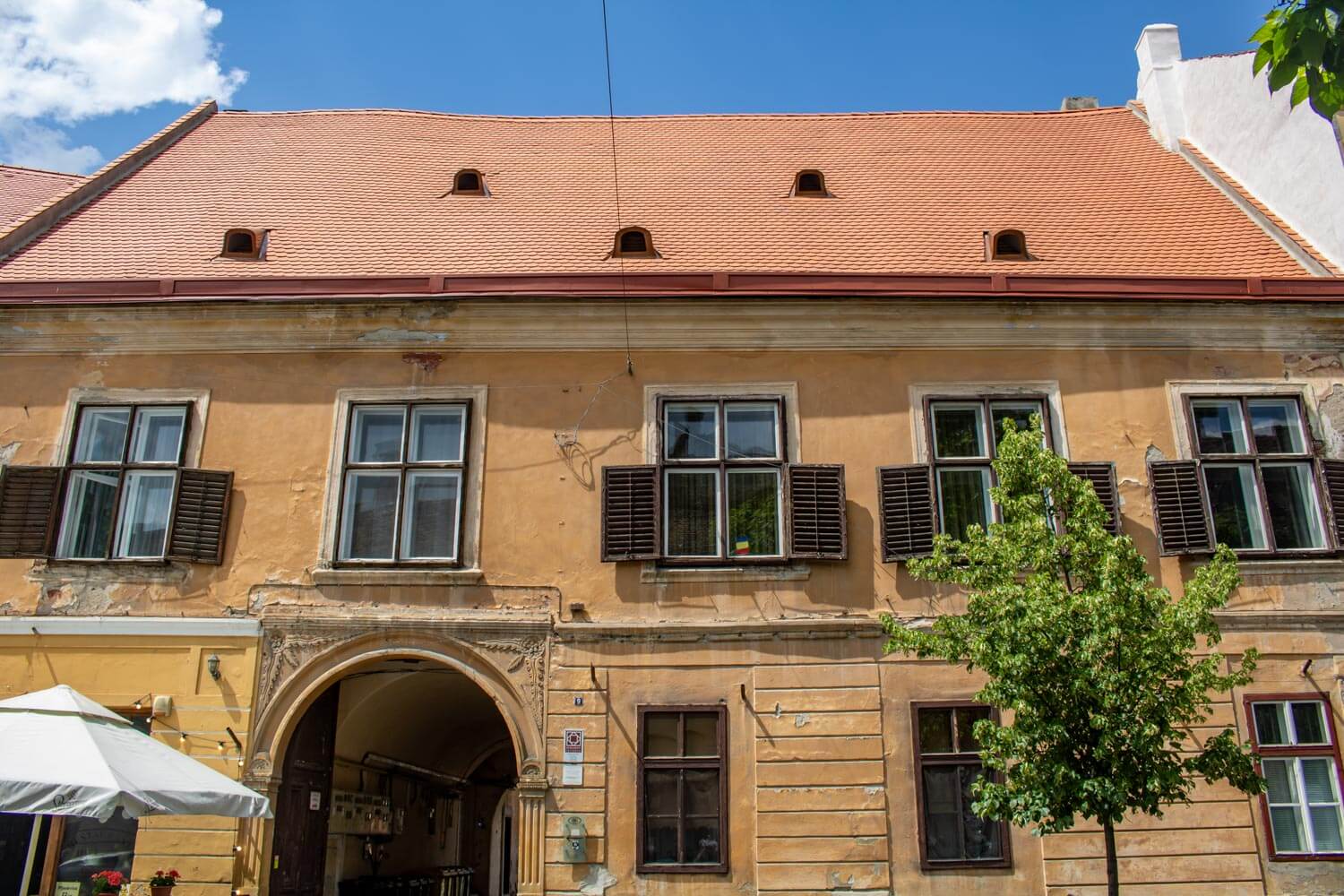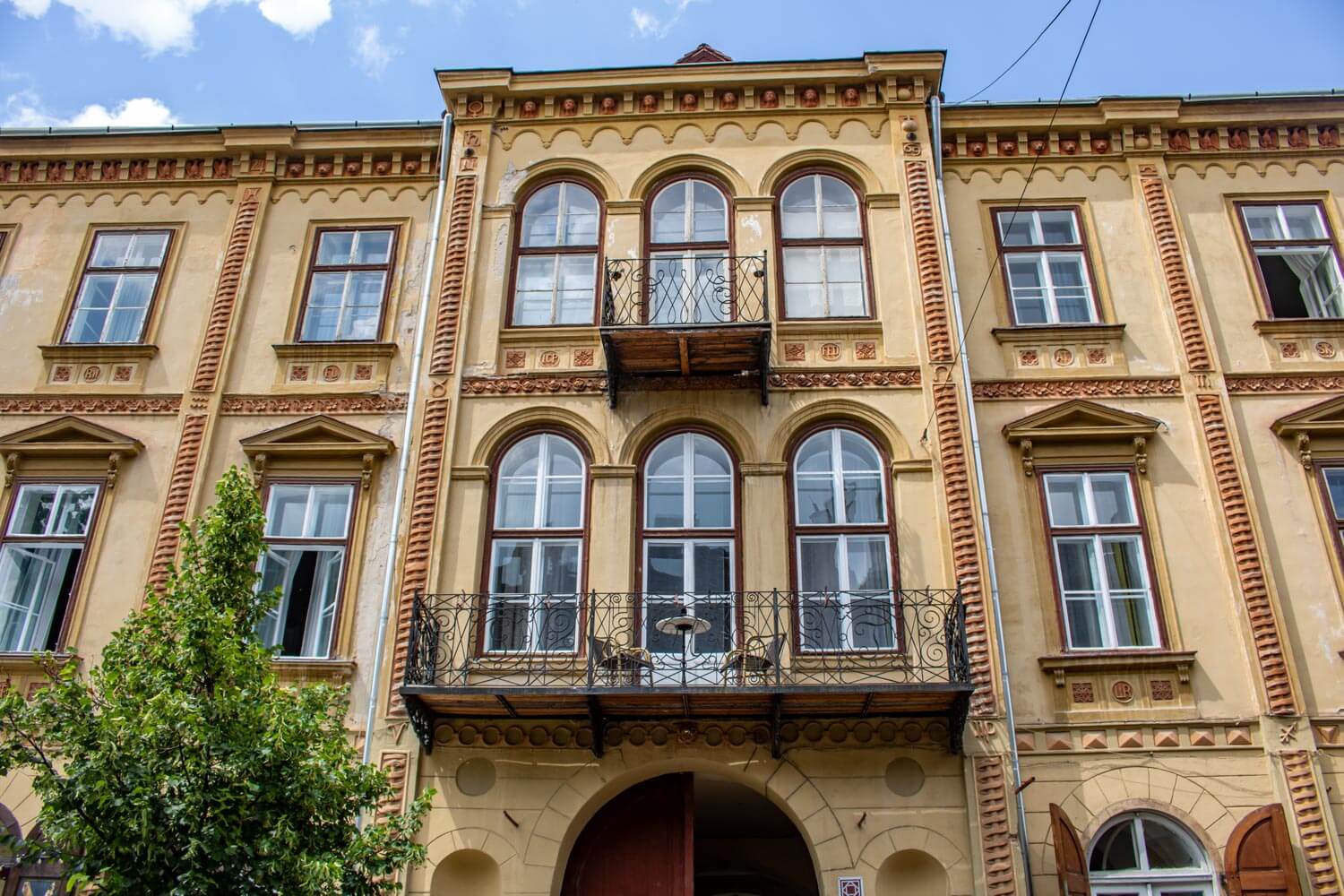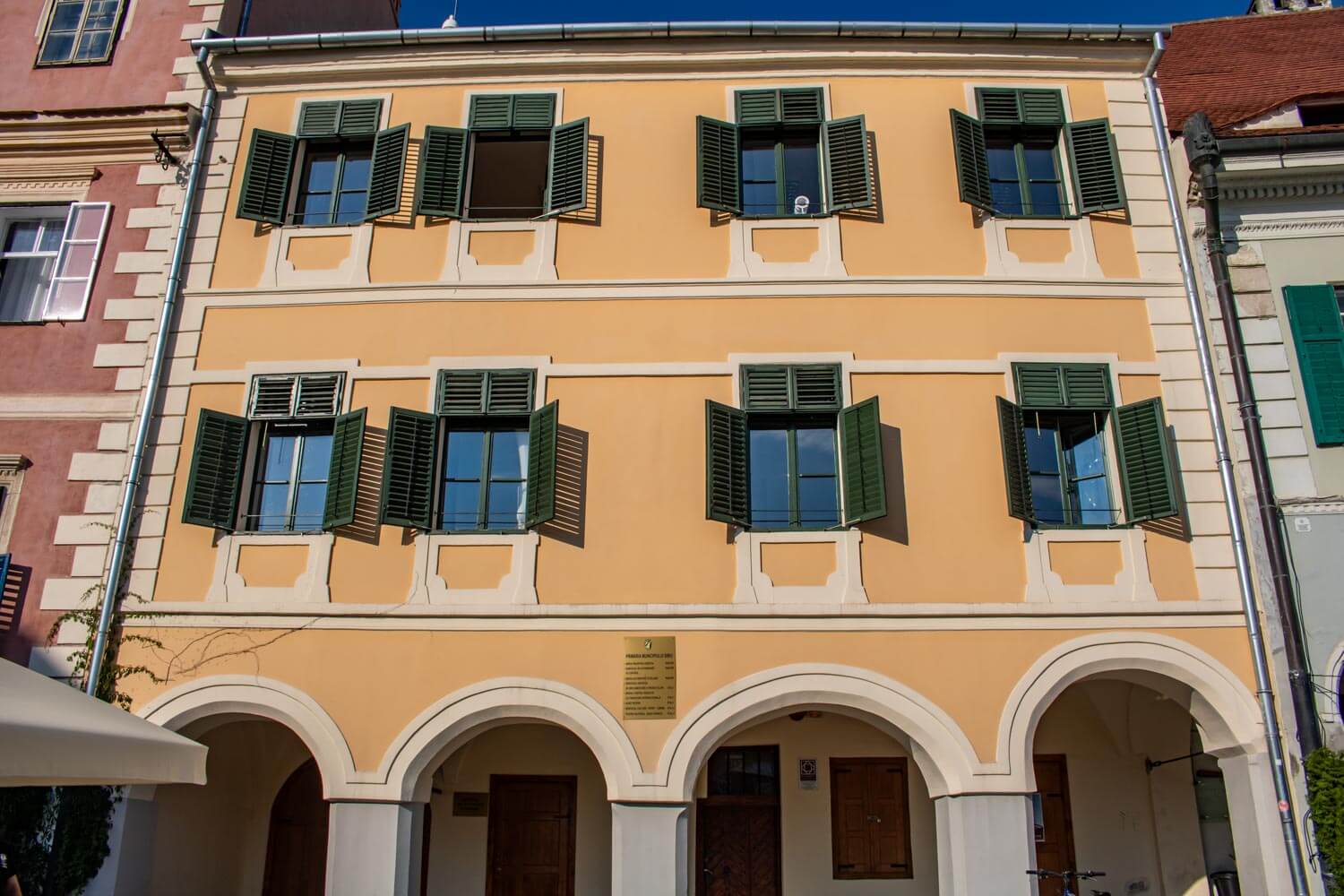
The Goldsmiths’ Guild House (Casa Breslei Aurarilor) is a historic guild house on the Small Square in Sibiu, dating mainly from the 15th and 16th centuries. Built for one of the city’s most important craft guilds, it preserves medieval fabric, later Baroque decoration and part of Sibiu’s 13th-century defensive wall in its basement.
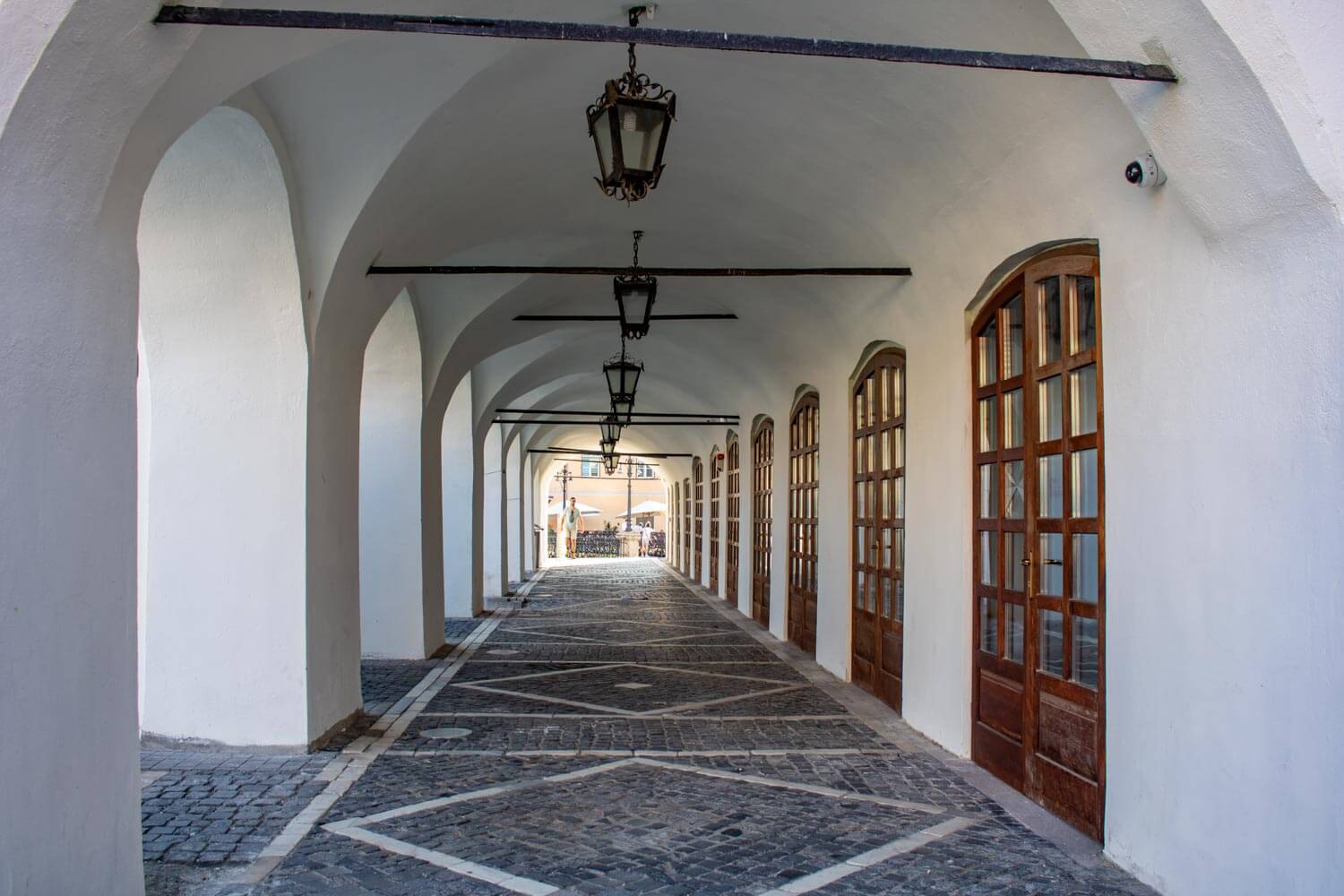
The building developed in several stages, with its present irregular plan probably formed by joining older sections and adding a rear wing in the 18th century. Its open ground-floor loggia formed part of the covered passage that once ran along this side of the Small Square, while the rooms above were used by the guild itself. One of the large first-floor chambers served as the official guild room, where meetings were held and the guild’s archive, seals and statutes were kept. Its cross-vaulted ceiling still carries a polychrome stucco coat of arms of the goldsmiths, dated 1745 and marked with the monogram G.K.
The guild house was later adapted to new uses as Sibiu’s traditional craft organizations declined. In 1826, Samuel Filtsch opened a printing house, publishing business and bookshop here, beginning another important period in the building’s history. Ion Heliade-Rădulescu’s Gramatica românească was printed here in 1828, while the building later housed the newspaper Siebenbürgische Blätter and the editorial office of Schul- und Kirchenbote. The business passed to Filtsch’s sons-in-law Wilhelm Johann Krafft and Julius Spreer, with Krafft eventually moving the printing operation elsewhere while the publishing house and bookshop continued here into the late 19th century.
Commercial premises occupied the ground floor during the 20th century, including textile shops, a factory showroom and a fish shop. The loggia facing the Small Square had already been enclosed for shops by the end of the 19th century, but it was reopened during restoration work in 1958, restoring one of the building’s most distinctive architectural features. Its four arches, high roof with eye-shaped dormers and surviving guild room still make the house one of the clearest reminders of the craft guilds that once shaped commercial life around the Small Square.