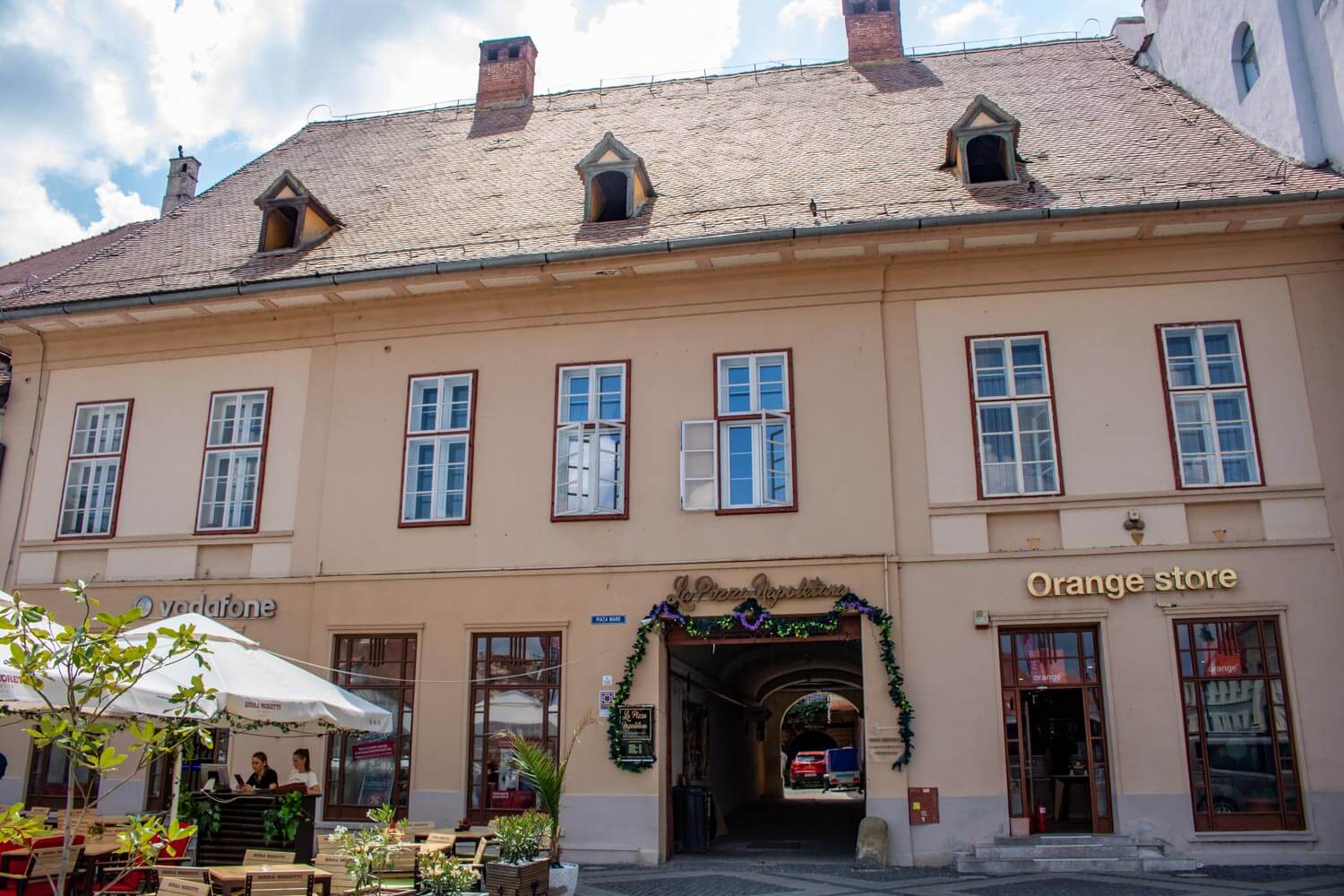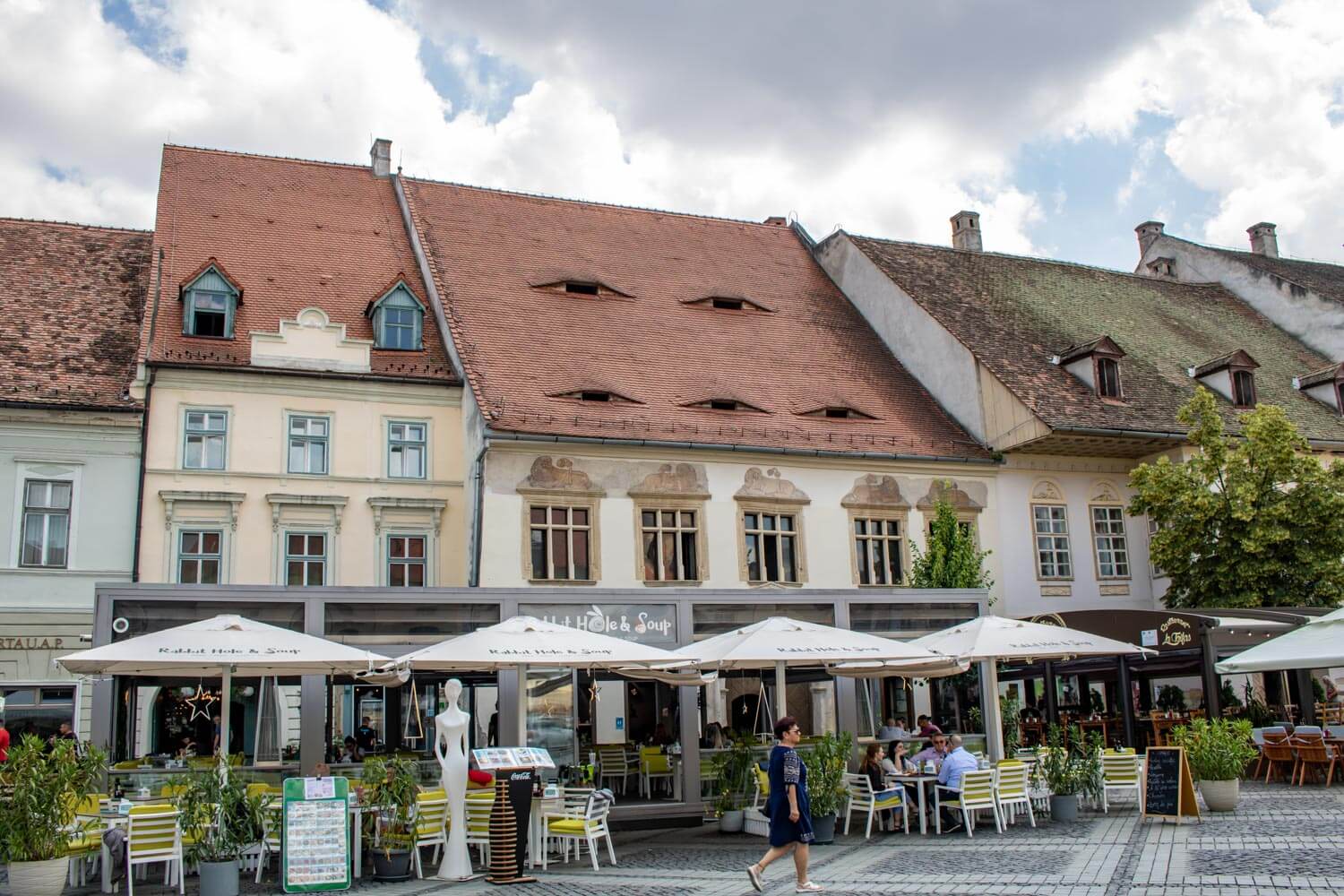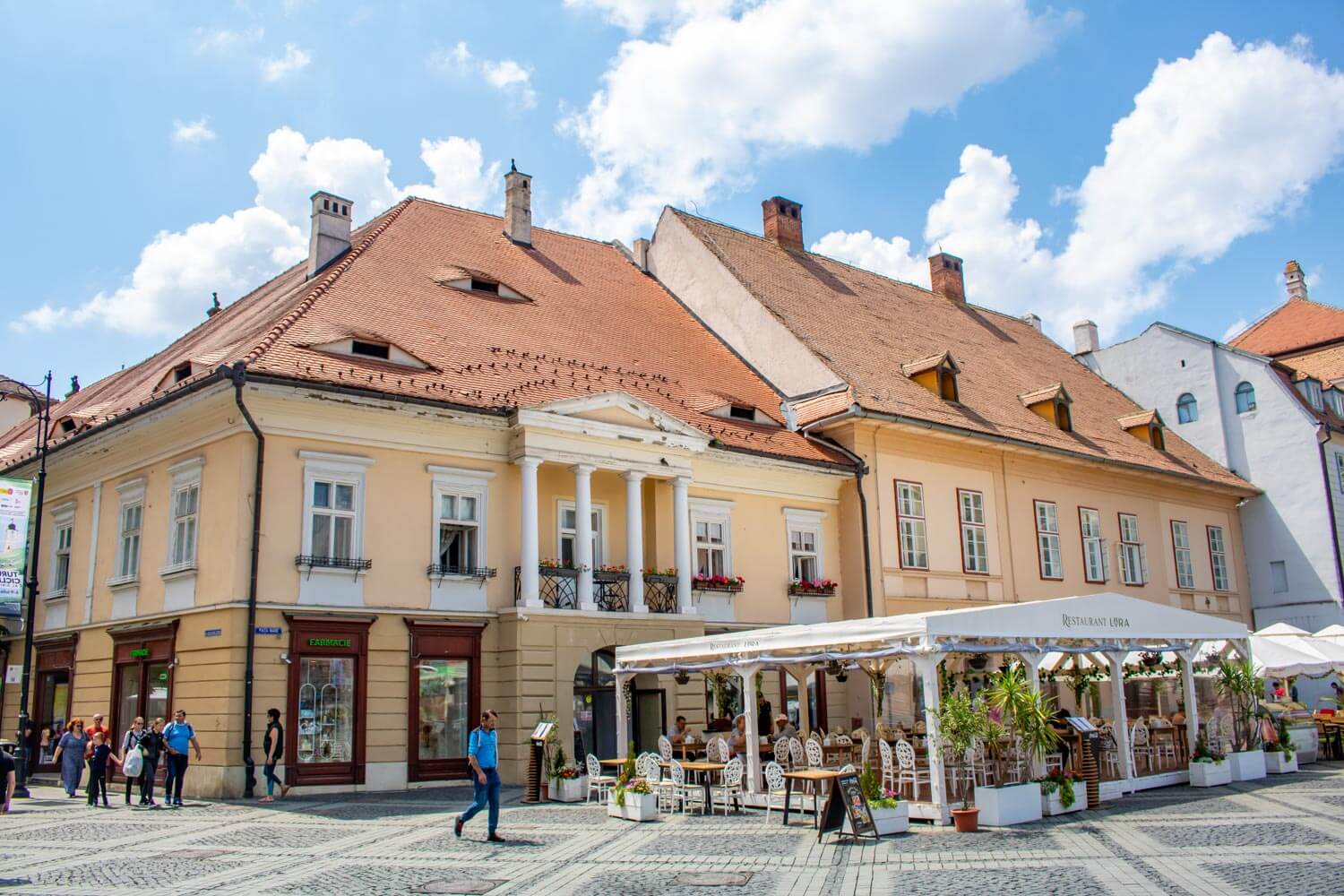
The Frank von Frankenstein House on Strada Nicolae Bălcescu 2 is one of two adjacent namesake buildings facing the Large Square in the historic center of Sibiu. Both belonged to the 17th-century Saxon statesman and humanist Valentin Frank von Frankenstein, but each developed differently over time, with its own architectural changes, occupants, and uses.
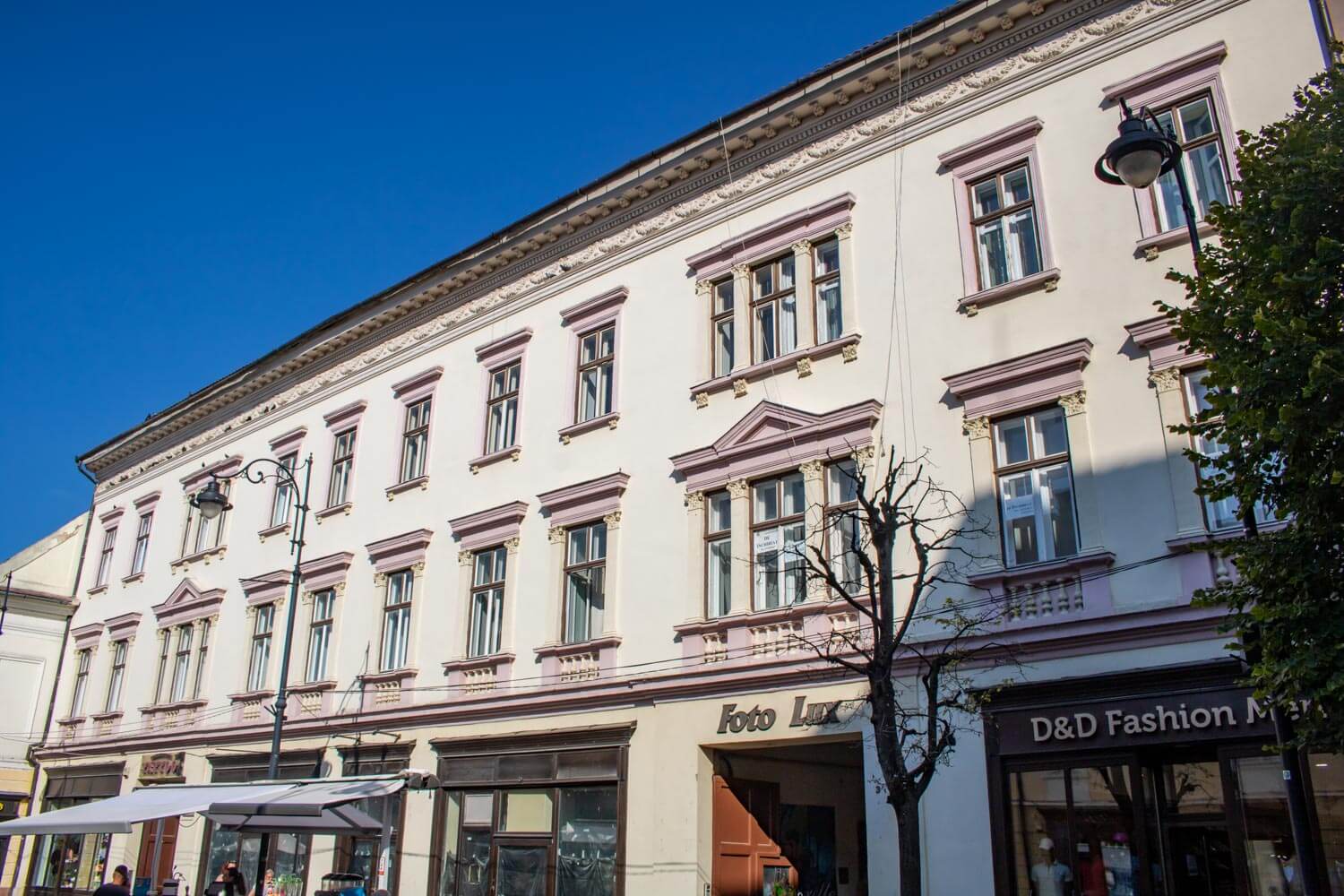
The corner property between the Large Square and Nicolae Bălcescu Street incorporates several older structures that were gradually brought together into a single building. Parts date from the 15th and 16th centuries, while the long façade along Nicolae Bălcescu Street still reflects this composite origin, with the roofline revealing the outlines of three earlier buildings. The section facing the square was substantially remodeled in the early 19th century and given a balcony supported by Doric columns beneath a triangular pediment.
By the 19th century the property had passed to the Sonnenstein family, before the Hermannstädter Allgemeine Sparkasse acquired it toward the end of the century. Rather than using it as the bank’s main headquarters, which stood next door at Piața Mare 6, the Sparkasse adapted the upper floor of the section facing the square as the official residence of its director. Carl Wolff lived here until 1919 while leading the institution through one of its most influential periods.
At street level, the long frontage developed alongside Nicolae Bălcescu Street as one of Sibiu’s principal commercial areas. Different sections accommodated fashion shops, a tobacconist and newspaper seller, a watchmaker and other retailers, while Julius Wermescher ran a prominent clothing business at the corner with the square from the late 19th century until nationalization. The same corner premises later continued in commercial use as the Romarta department store.
Other parts of the building took on social and institutional roles as its uses became increasingly mixed. A café opened in the section facing the square in the late 19th century and continued under later owners during the interwar period, while offices elsewhere in the property were used at different times by the public finance administration and the Siebenbürgischer Karpatenverein.