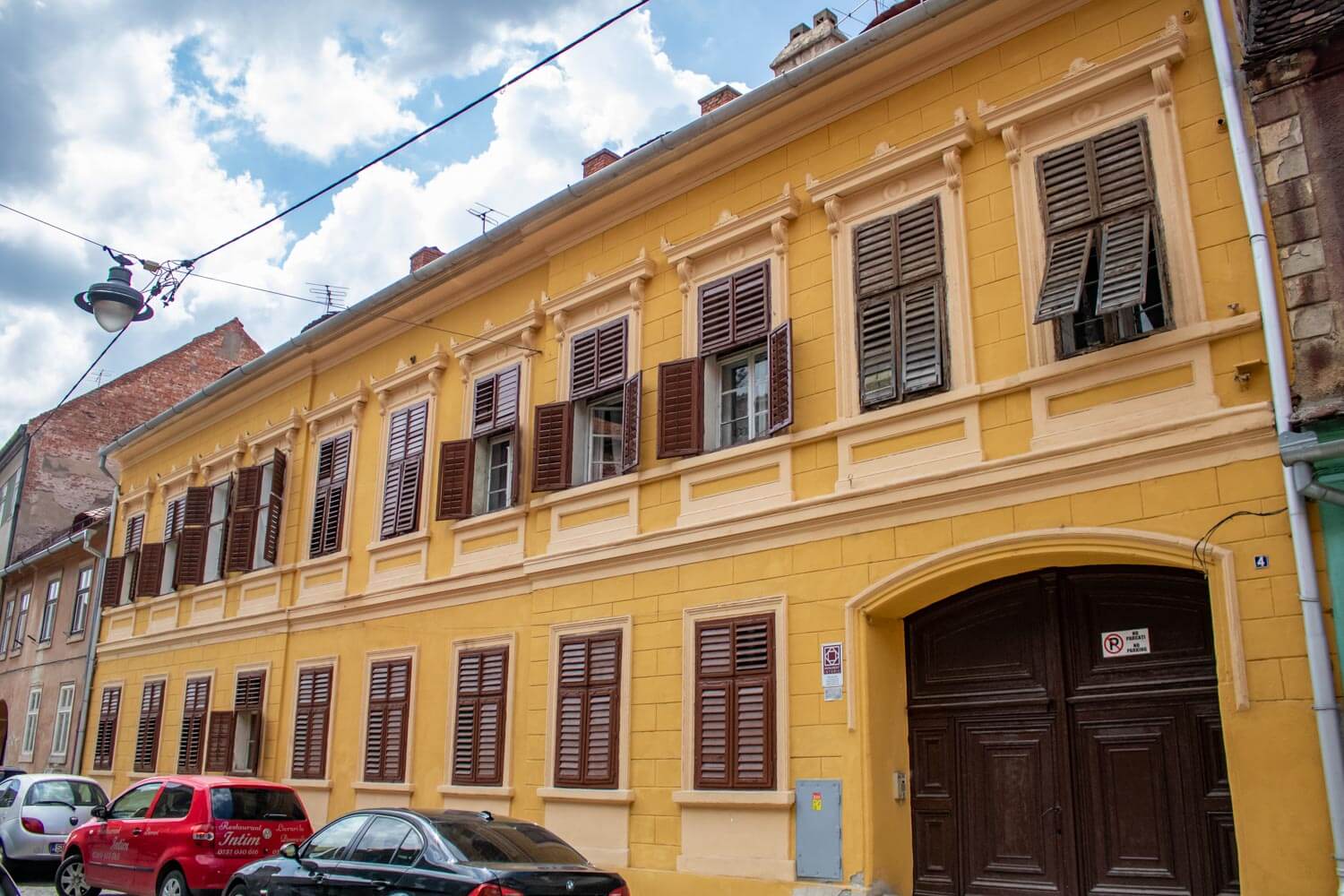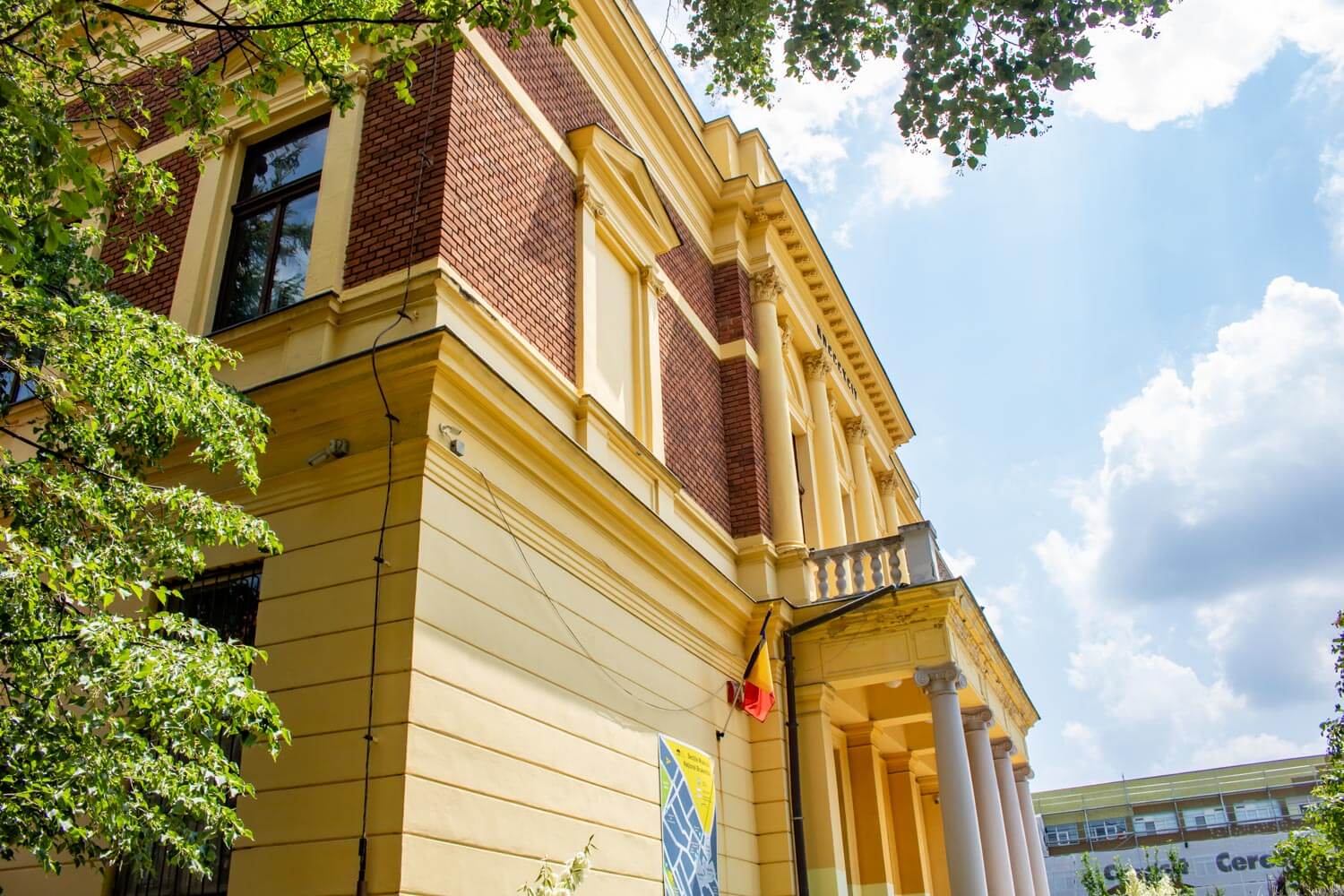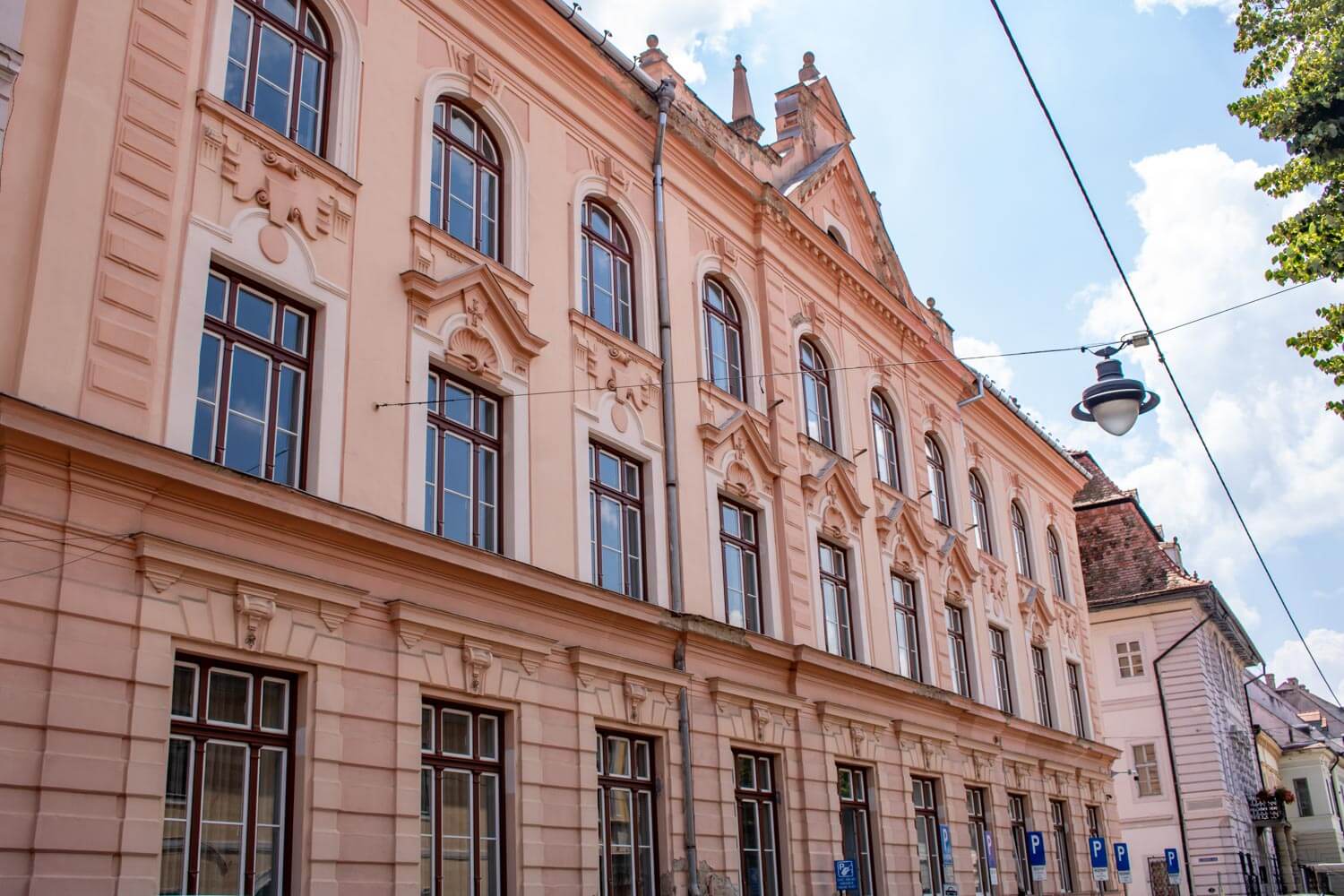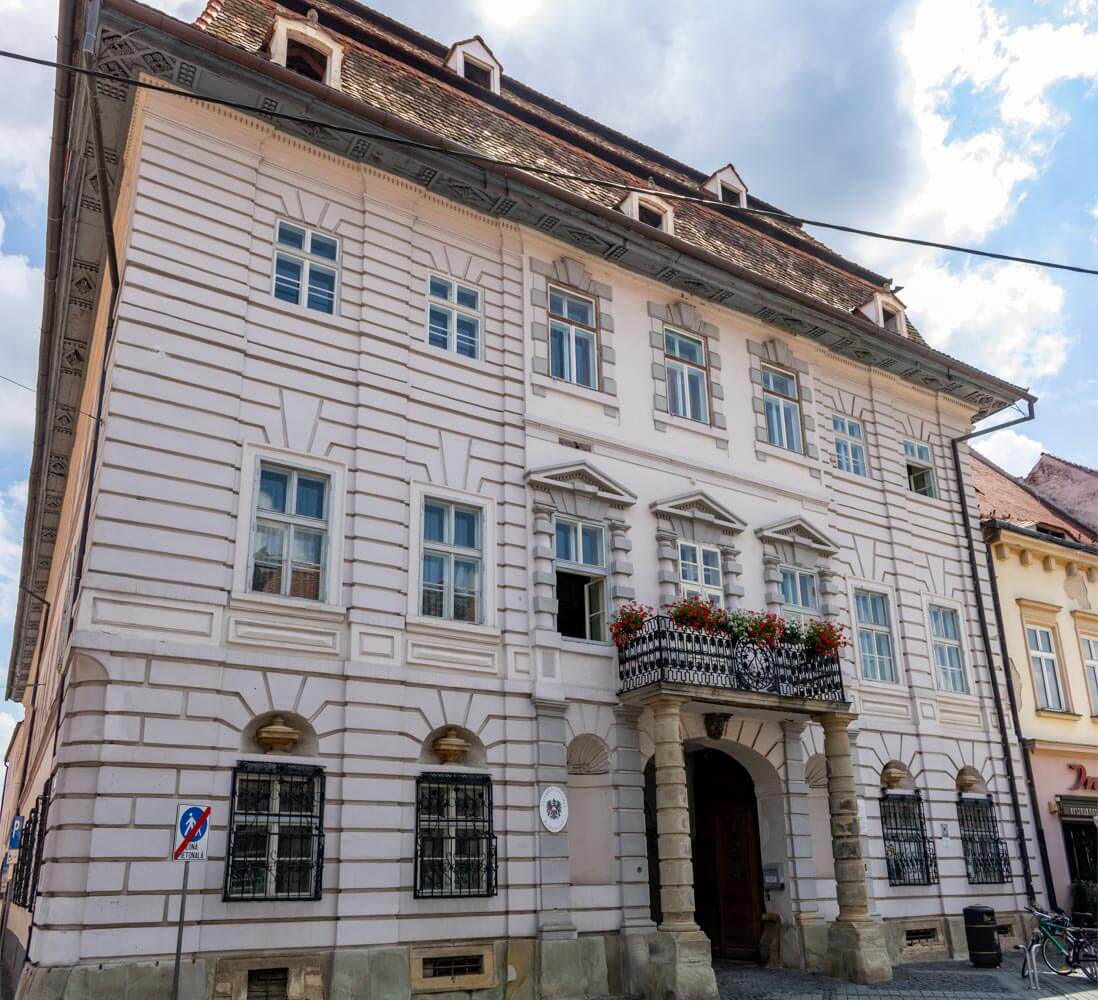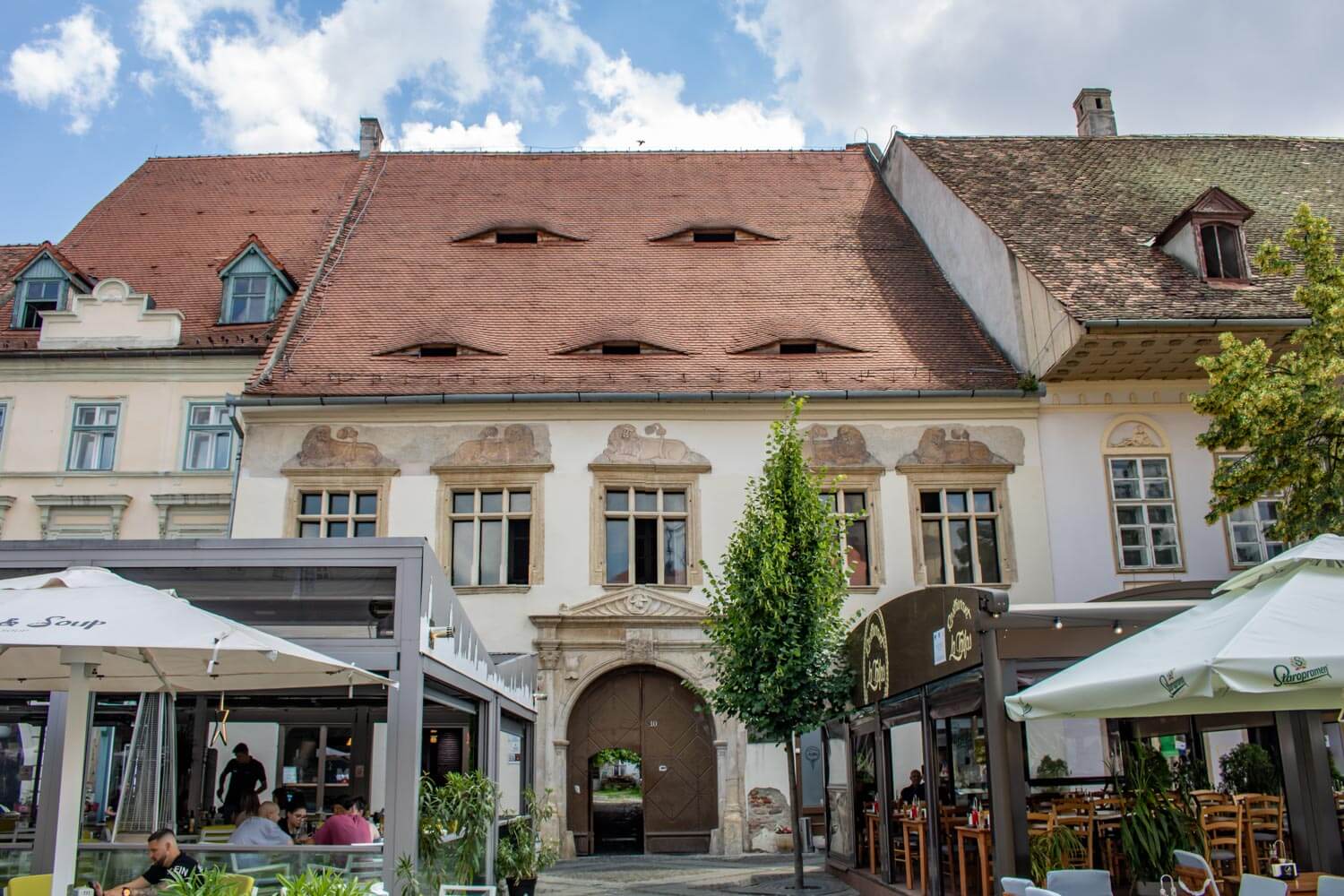
The Oskar Pastior House (Casa Oskar Pastior) is an 18th-century historic house in the center of Sibiu, best known as the birthplace and childhood home of German-language poet and translator Oskar Pastior. Born here in 1927 into a Transylvanian Saxon family, Pastior later became one of the most distinctive experimental poets in postwar German literature.
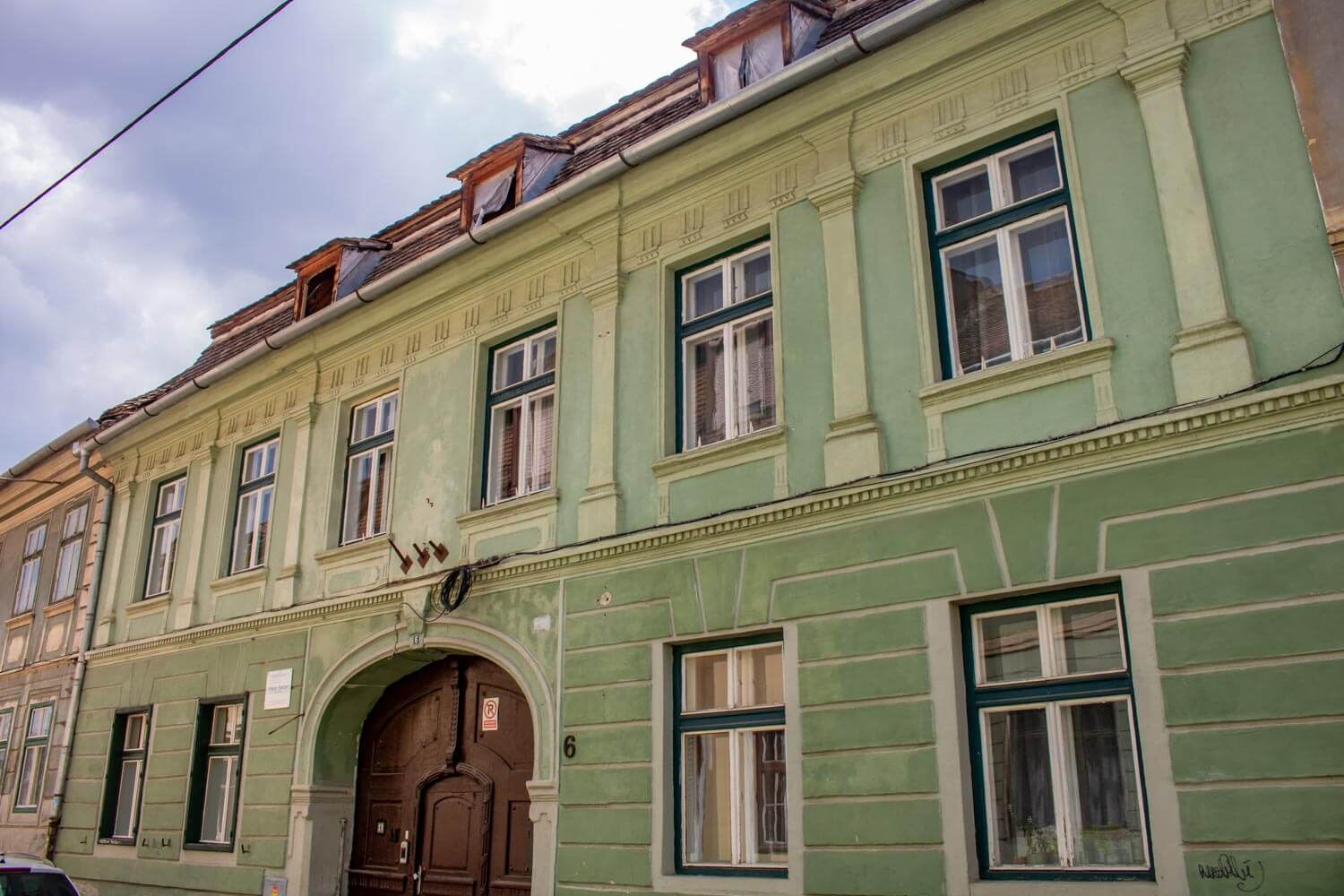
The house itself is a substantial two-story building with a mansard roof and a broad arched passage through the center of the ground floor. Horizontal bands emphasize the lower level, while the upper floor is articulated by pilasters with Doric capitals beneath a classical entablature. Three square dormers rise from the steep roof, giving the building much of its present character.
Pastior spent his early years in Sibiu before his life was violently interrupted at the end of World War II. In January 1945, at the age of seventeen, he was deported with other ethnic Germans from Romania to the Soviet Union for forced labor and did not return until 1949. He later studied German language and literature in Bucharest and worked for the German-language service of Romanian radio before leaving Romania in 1968 and settling in West Berlin the following year.
His poetry became known for wordplay, formal experimentation and an intense focus on the possibilities of language. Pastior was the only German member of the experimental literary group Oulipo and received numerous literary awards during his career, including the Georg Büchner Prize, which was awarded posthumously after his death in 2006.