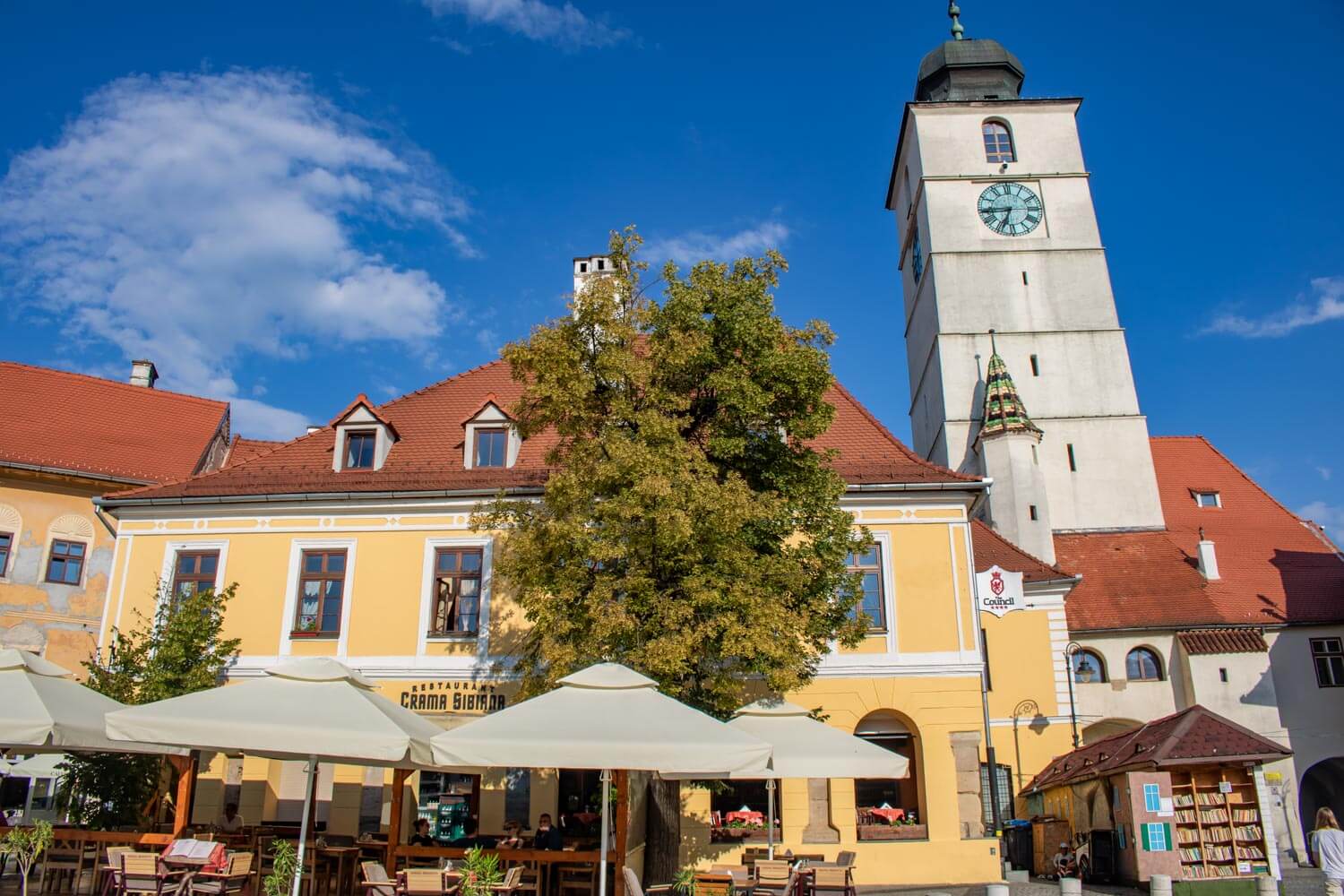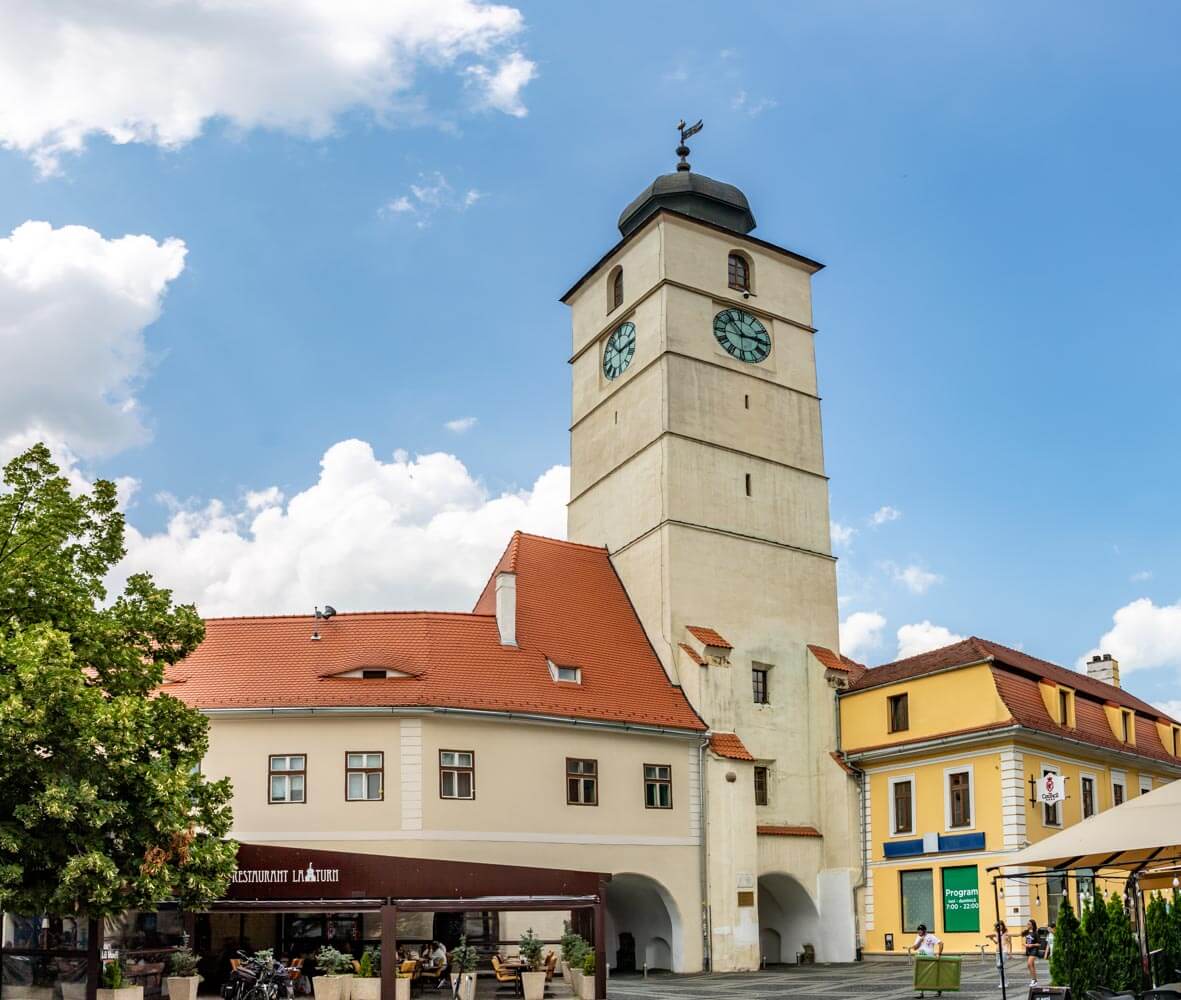
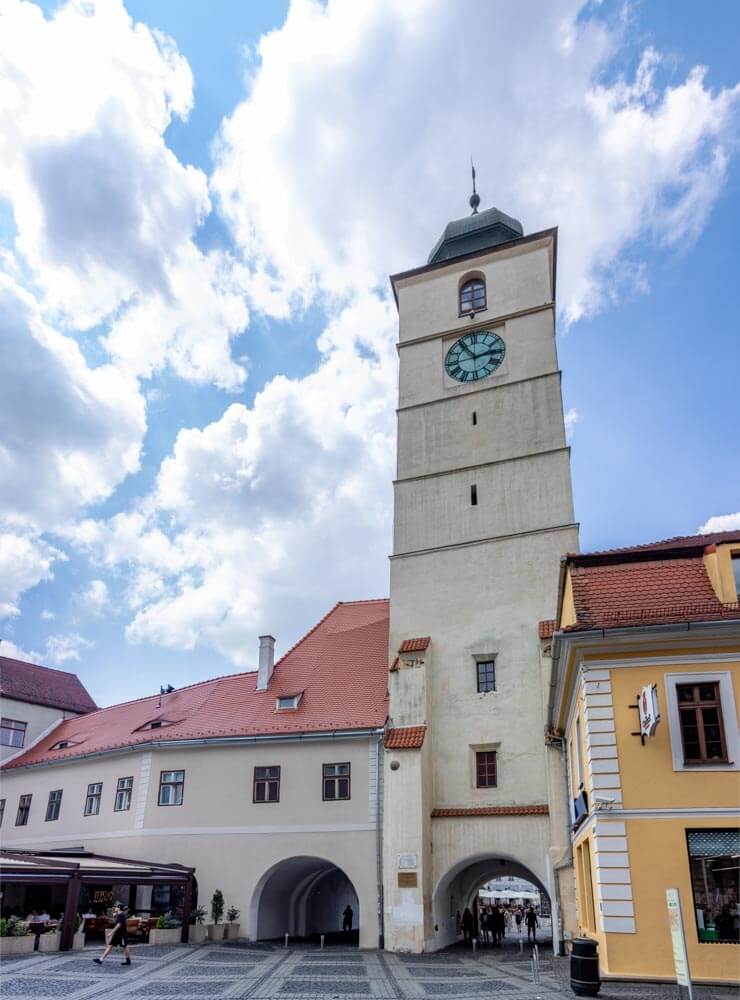
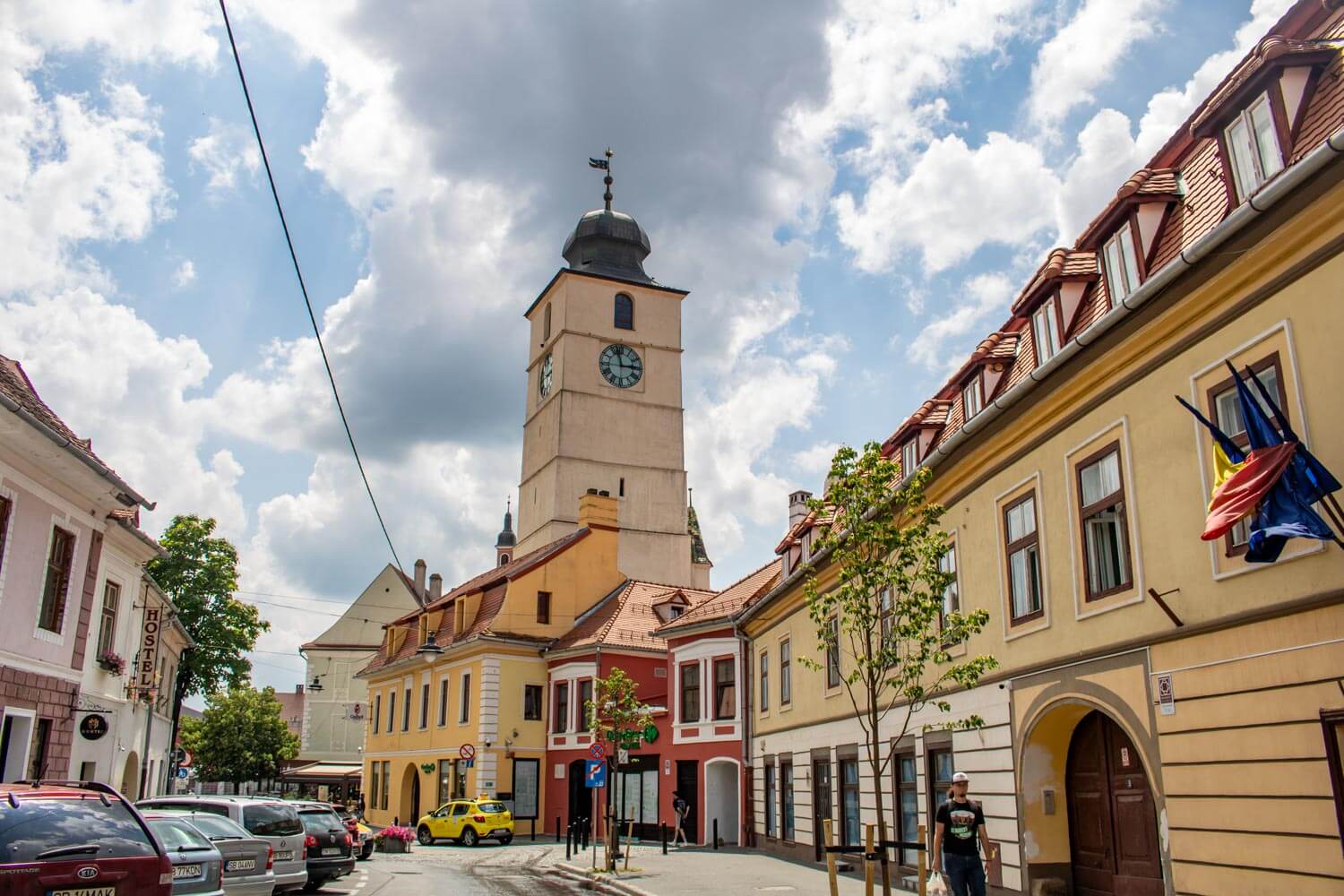
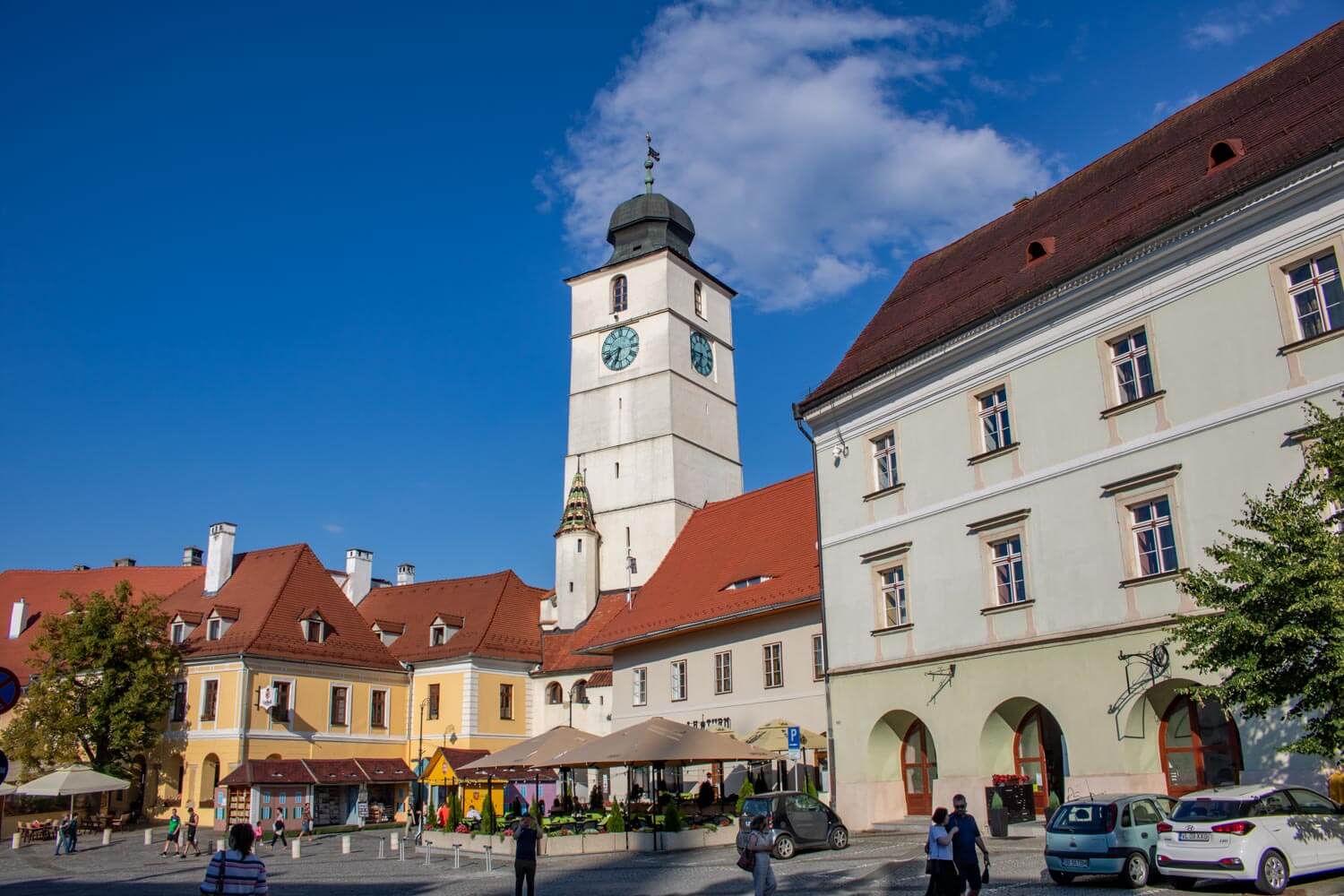
The Council Tower (Turnul Sfatului) is a medieval clock tower between Piața Mare and Piața Mică in the historic center of Sibiu, rising above one of the main passages between the two squares.
The tower originated between 1224 and 1241 as part of Sibiu’s second fortified enclosure, when the growing settlement expanded beyond the earlier defenses around Huet Square. It guarded a gateway into the new precinct beside the medieval town hall, which gave the tower its present name. The original structure was much lower than today, probably no more than four stories, and only its lower core survives from this earliest phase.
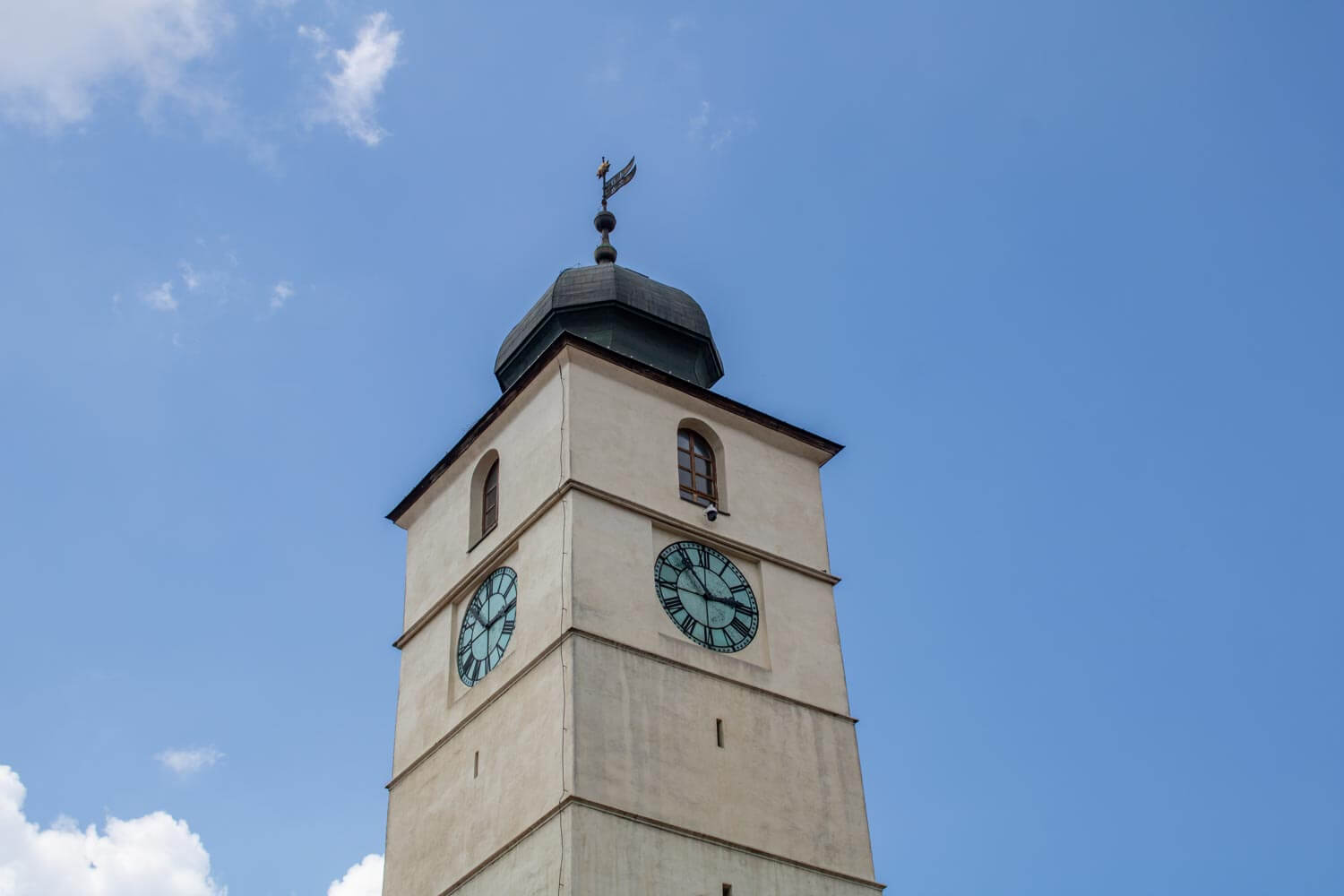
Much of the tower had to be rebuilt after February 1585, when the upper floors collapsed while painter Johann David was working on the vaulted passage below. Reconstruction followed between 1586 and 1588, and further alterations gradually produced the tall landmark seen today. The uppermost story and present copper-covered roof date from 1826, replacing an earlier pyramidal roof with four corner turrets and bringing the tower to its current seven levels.
As the city expanded beyond this part of the fortifications, the gateway lost its defensive role but the tower remained in use. Over the centuries it served as a grain store, fire lookout, temporary prison and exhibition space, while its elevated position increasingly made it one of Sibiu’s principal observation points. The large vaulted passage through the ground floor still connects Piața Mică with Piața Mare, and two stone lion reliefs set into the southern wall are thought to survive from the 13th-century structure.
Visitors can climb 141 steps through the tower, passing the clock mechanism on the penultimate level before reaching the viewing floor at the top. From there, the windows look across Piața Mare, Piața Mică and the rooftops of the historic center, with the Făgăraș Mountains visible on clear days.