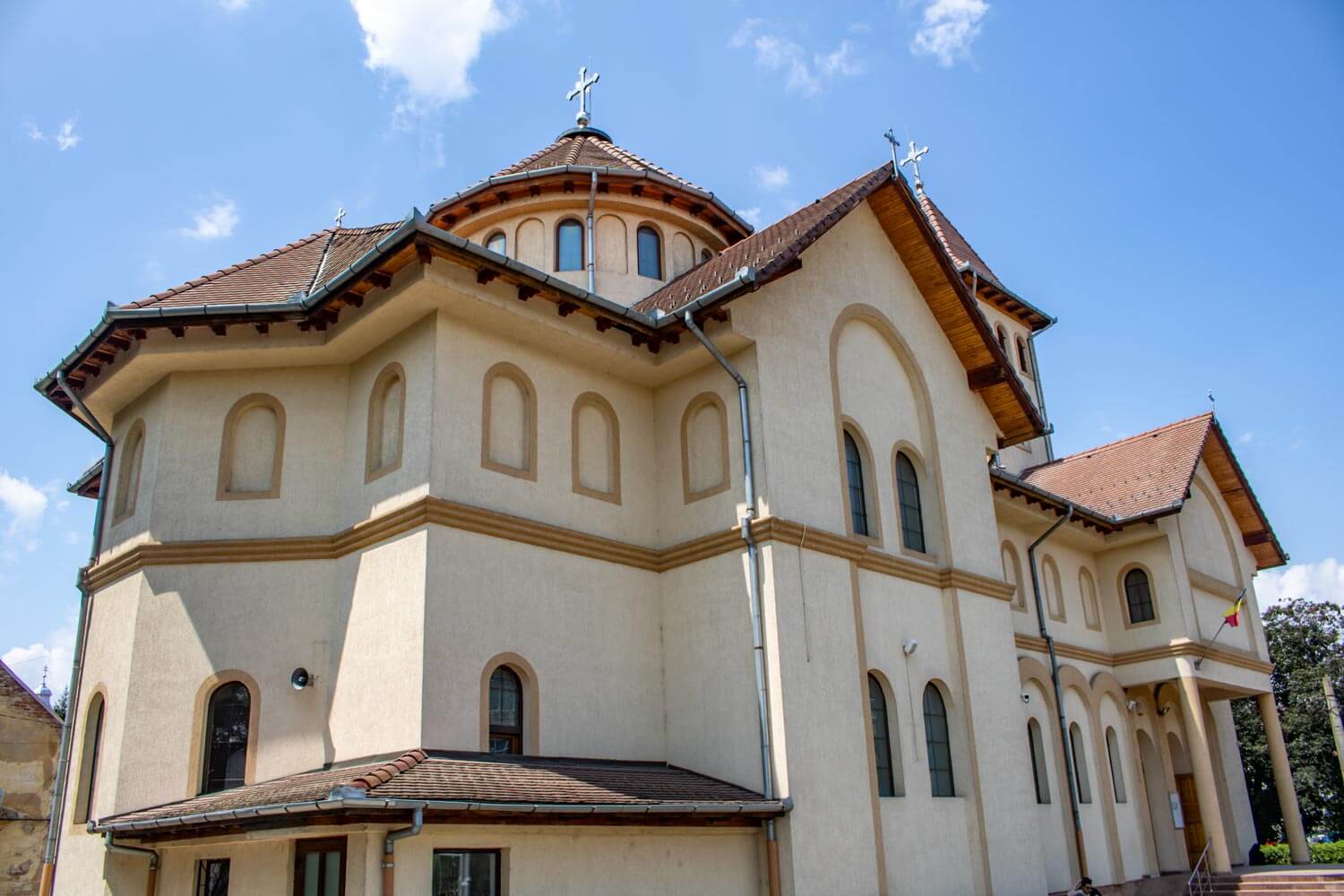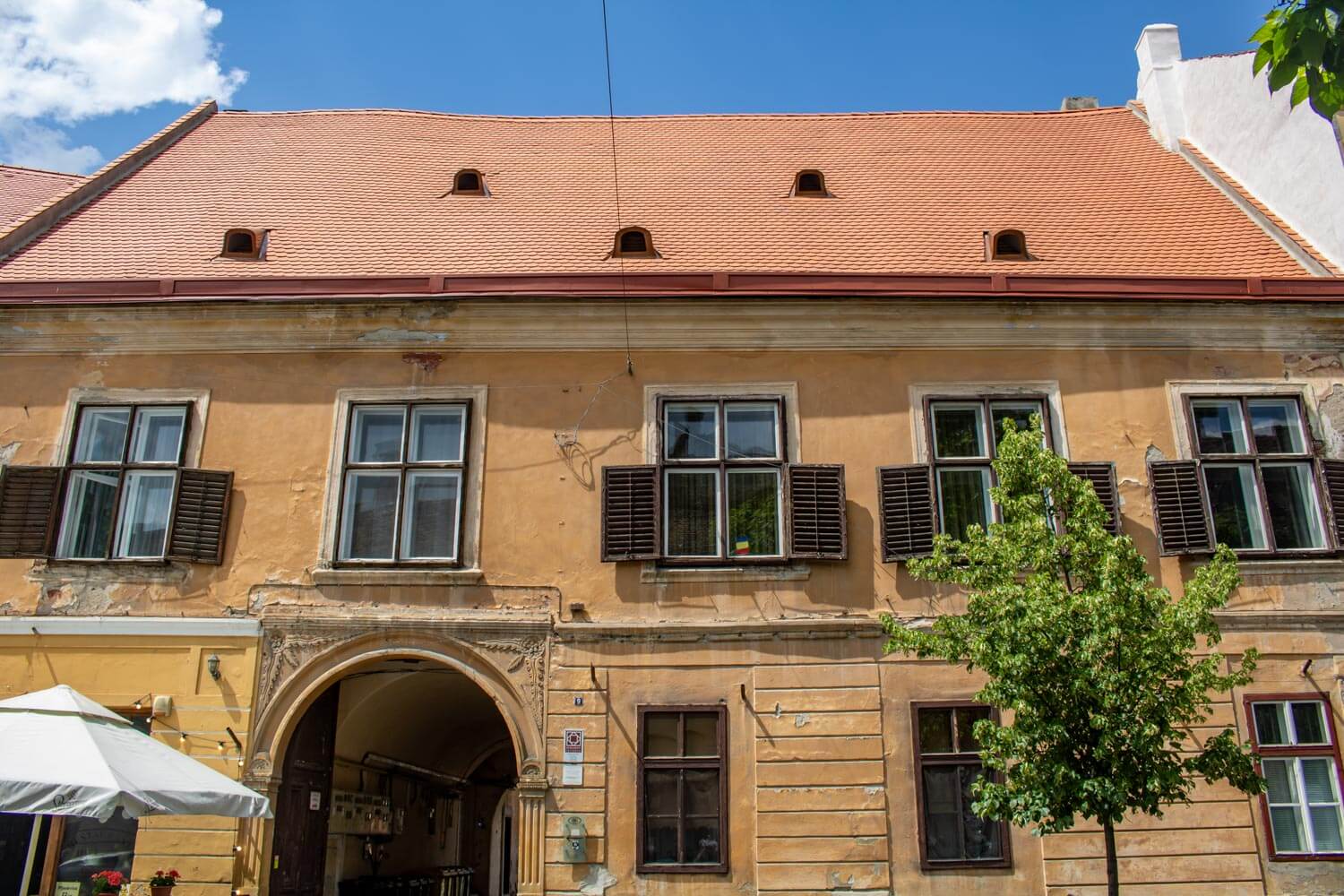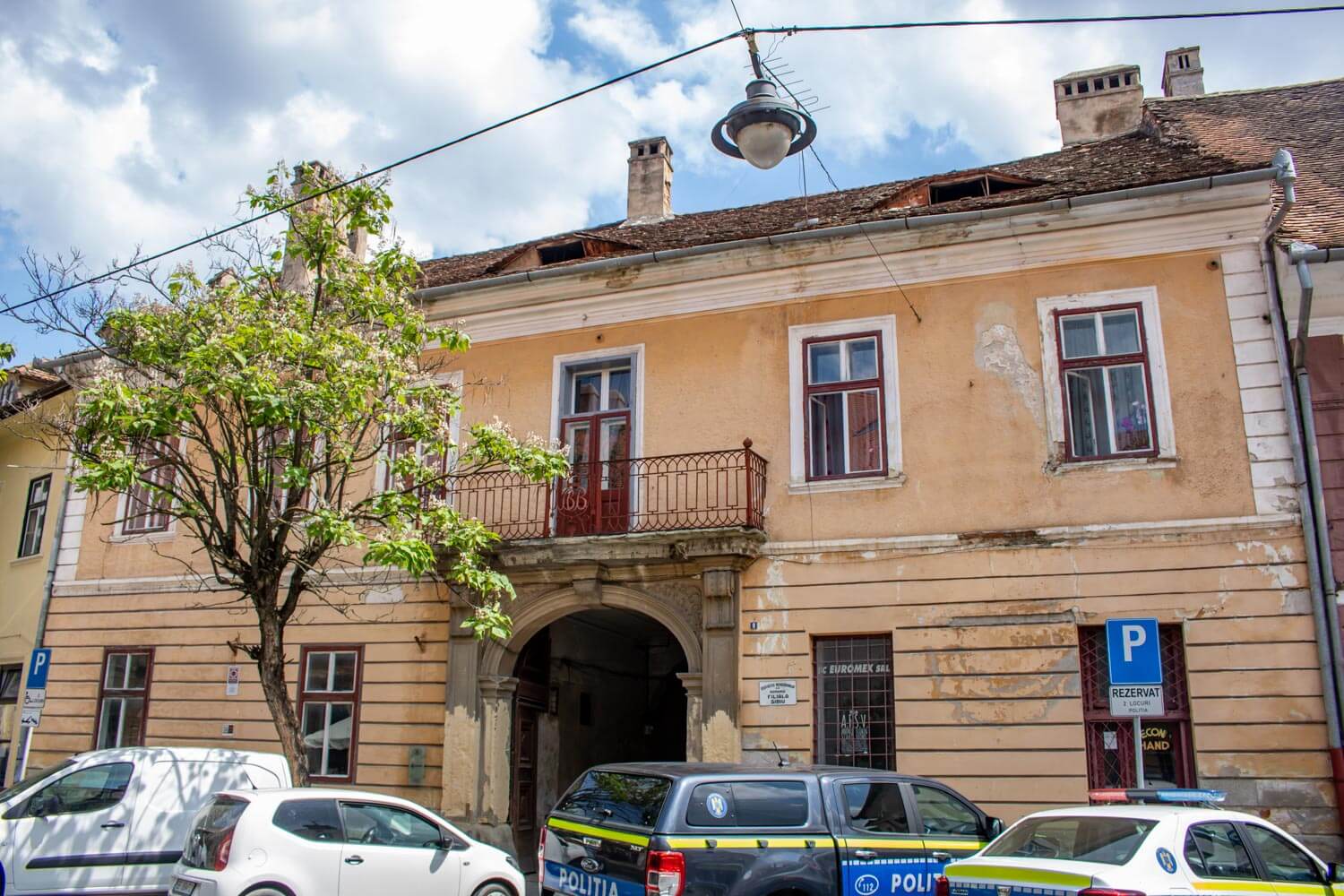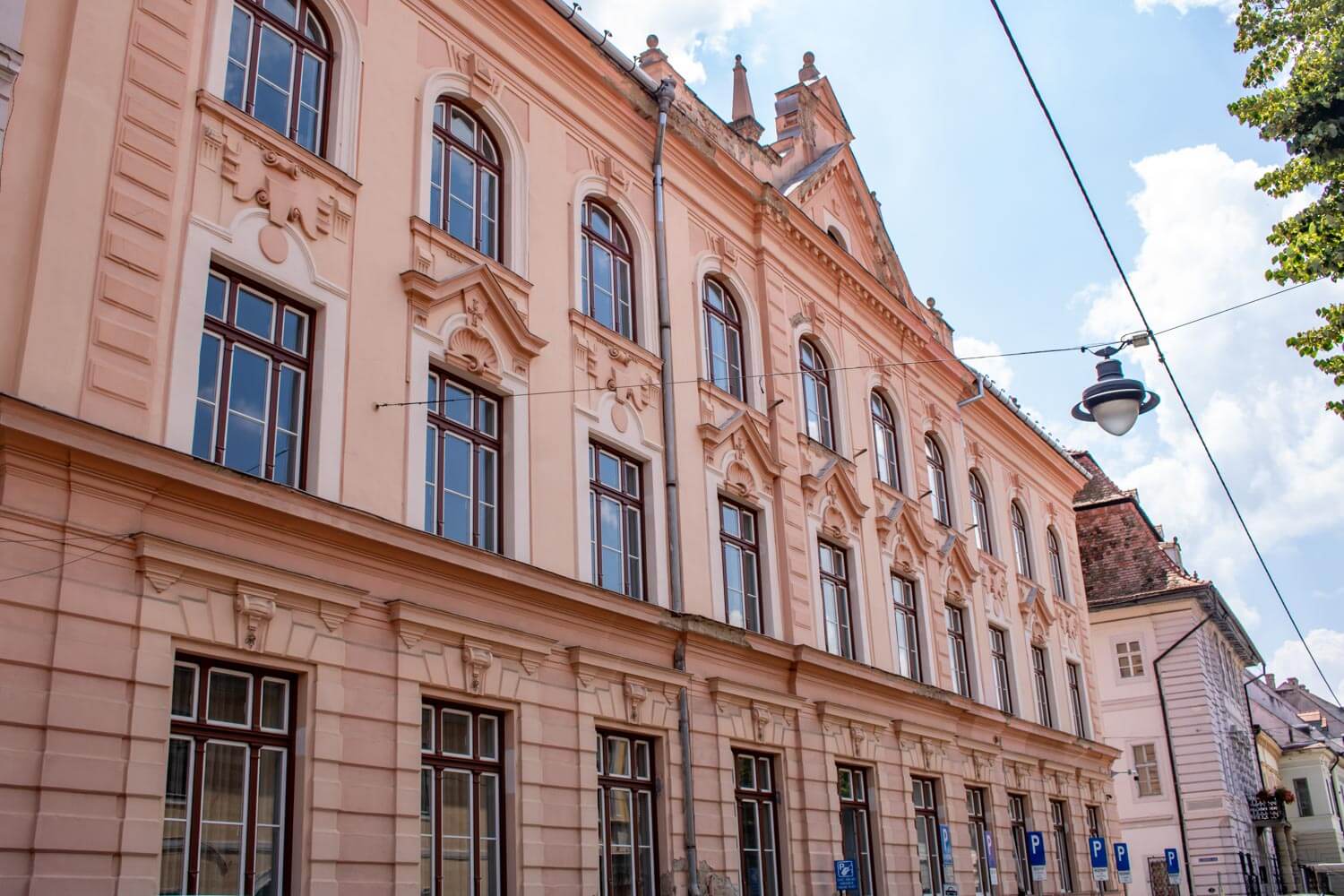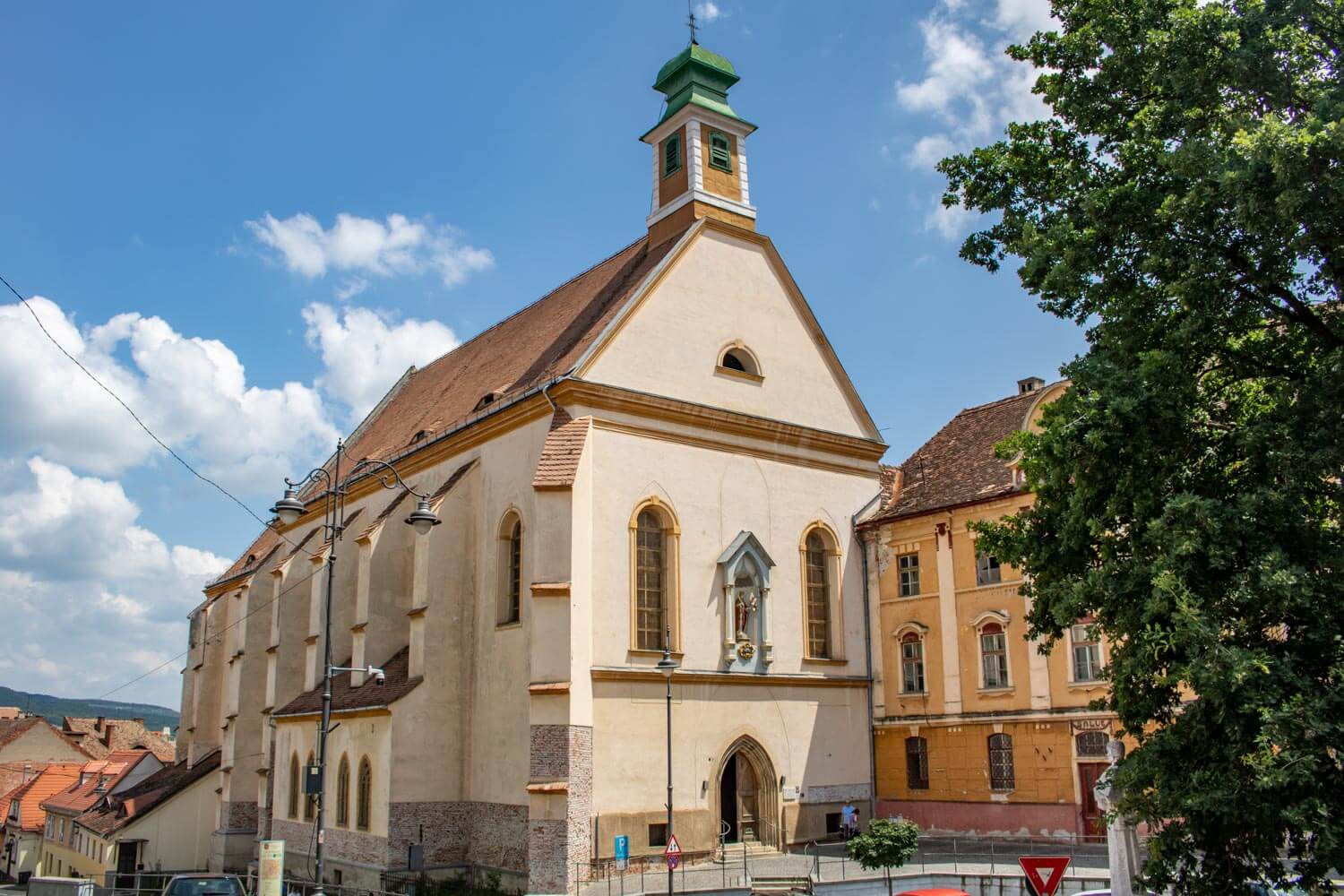
The Ursuline Church (Biserica Ursulinelor) is a historic Catholic church in Sibiu, forming the surviving religious center of a former Dominican and later Ursuline monastery complex near the eastern edge of the historic center.
The complex began with a Dominican monastery established here in the 1470s after the order moved inside Sibiu’s fortifications. Its church was built in the Gothic style, but the Reformation brought monastic life to an end in 1543 and the building subsequently passed to the Lutheran community. Catholic religious life returned under Habsburg rule, and in the early 18th century the former Dominican complex was entrusted to the Ursuline order. The nuns rebuilt the church between 1728 and 1733 while establishing a convent and school beside it, beginning an educational tradition that would continue here for more than two centuries.
The rebuilding transformed most of the church interior into the Baroque space seen today without completely erasing its medieval origins. Gothic features remain particularly visible on the exterior, including the pointed windows, buttresses and main portal, while a side chapel and sacristy also preserve elements of the earlier church. Inside, the single broad nave is lined with Baroque altars and statues, and an inscription above the triumphal arch commemorates Empress Maria Theresa, whose financial support contributed to later work on the complex. The highlighted letters within the Latin inscription form the date 1774.
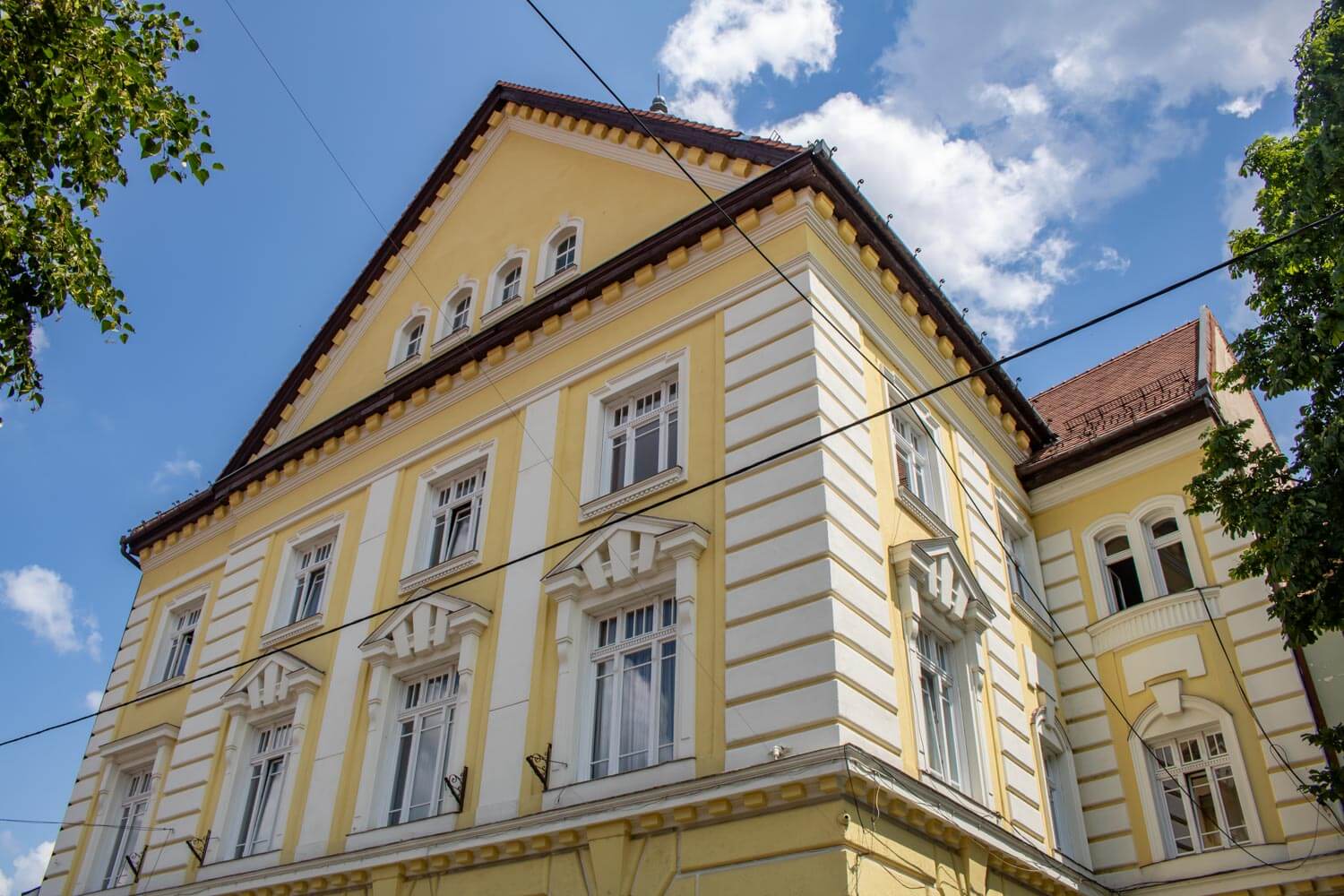
Education became one of the defining activities of the Ursuline community. The adjoining monastery was enlarged during the 18th century to accommodate the growing school, which developed into one of Sibiu’s prominent institutions for girls and attracted pupils from beyond Transylvania. The Ursuline school continued until its nationalization in 1948, after which the former convent buildings were used for teacher training and later housed the Andrei Șaguna Pedagogical College.
The church itself continues to serve a religious function. Since 1992 it has been used for Catholic worship by both Roman Catholic and Romanian Greek Catholic communities, while the adjoining former monastery has followed a separate history after the departure of the school.