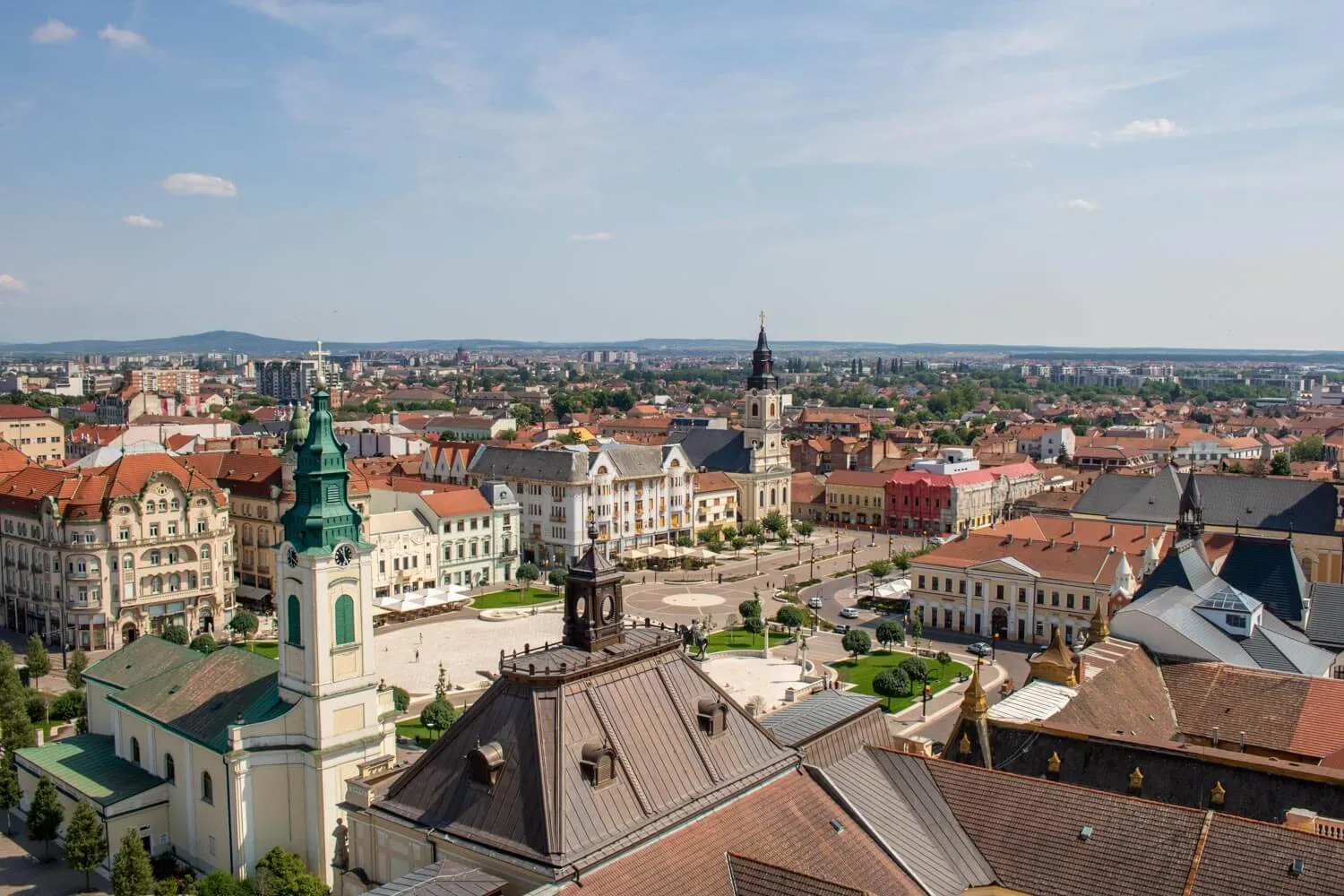
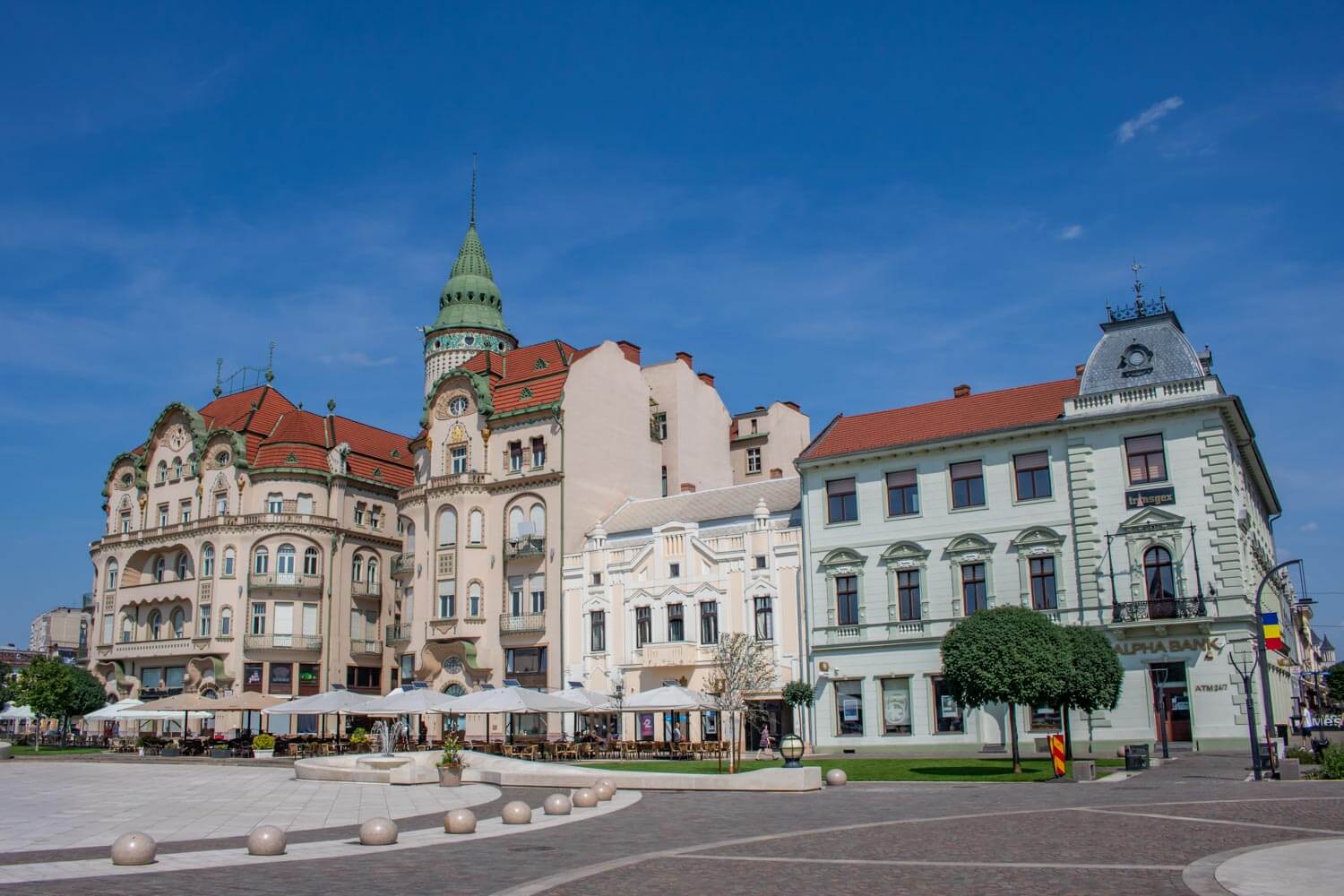
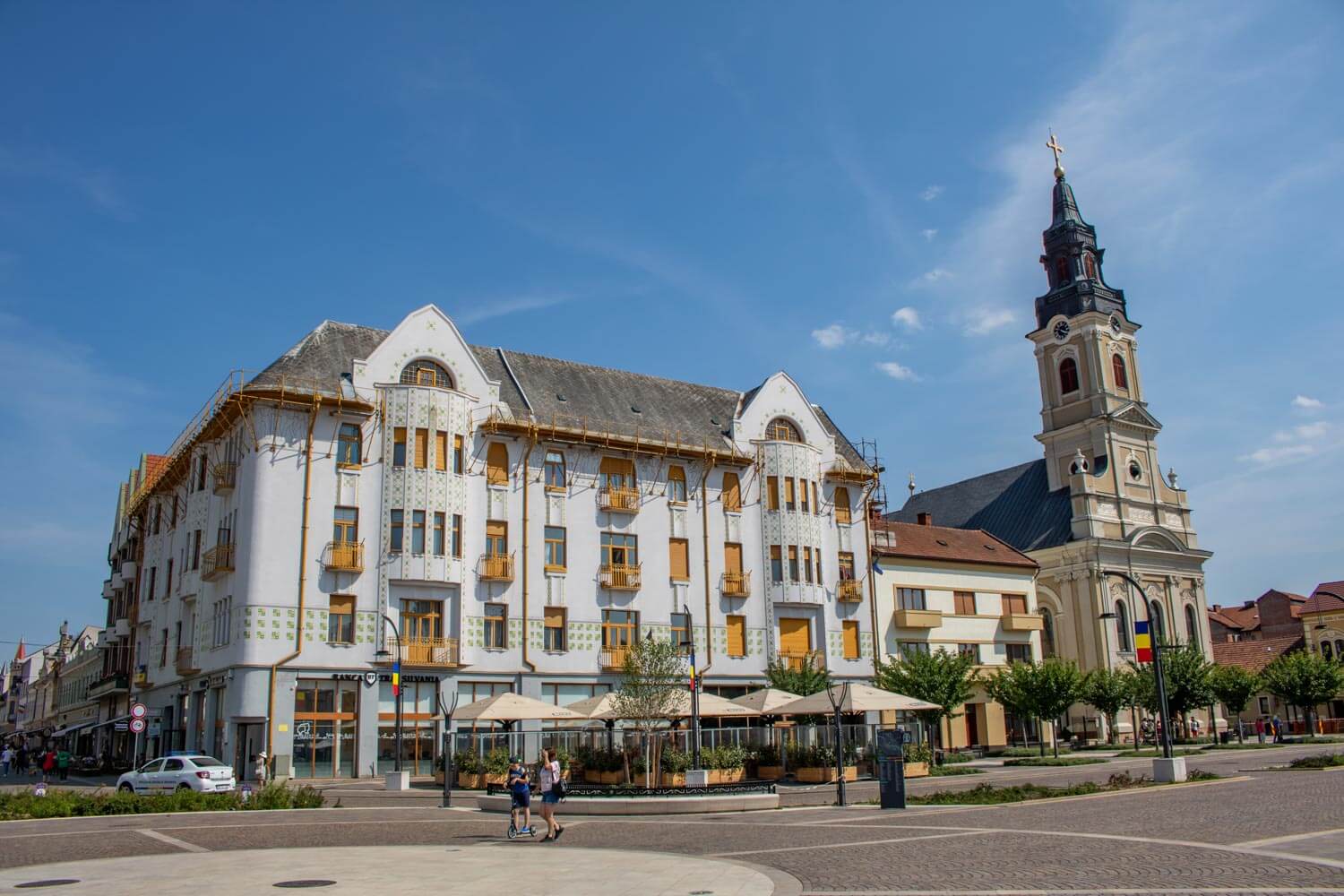
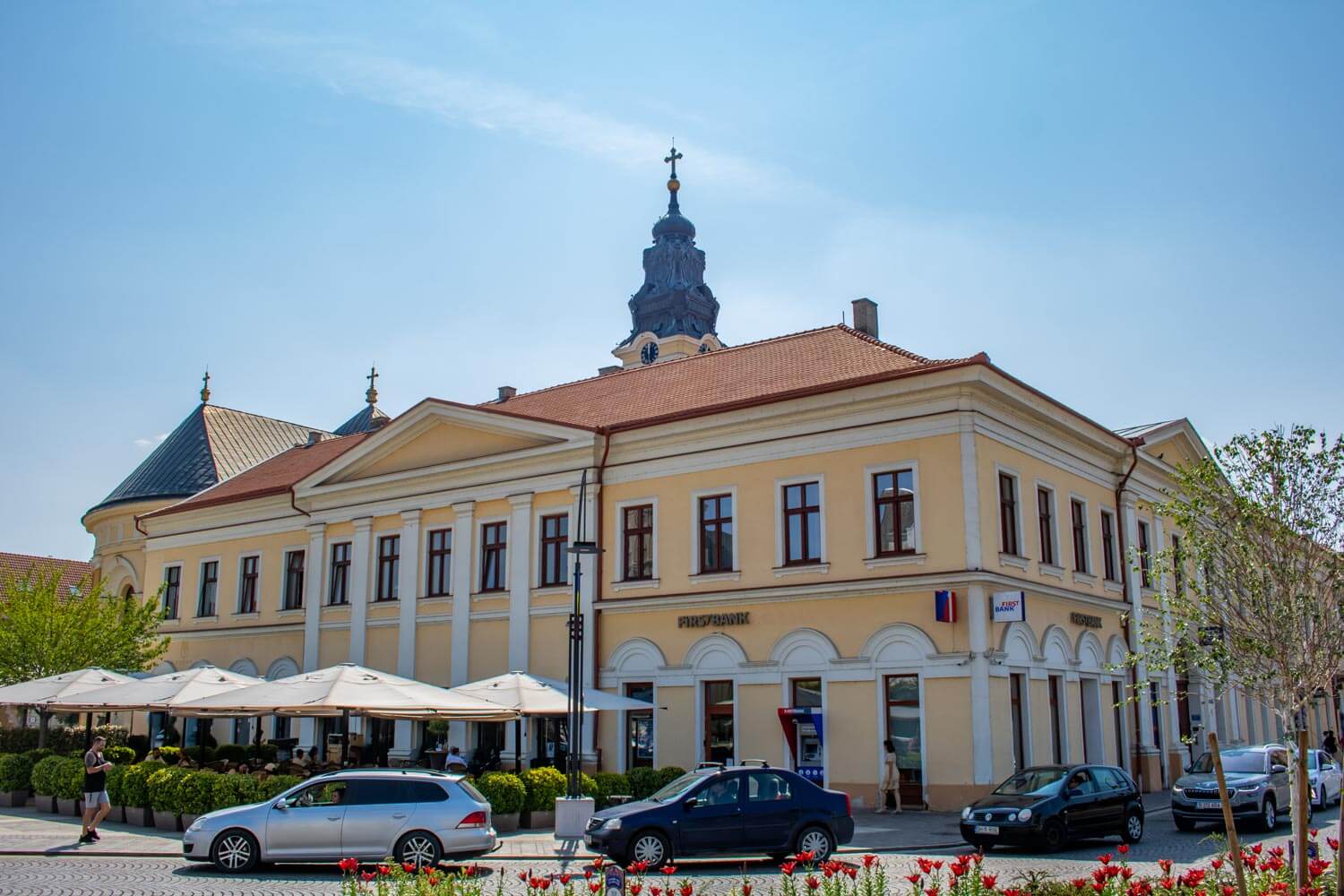
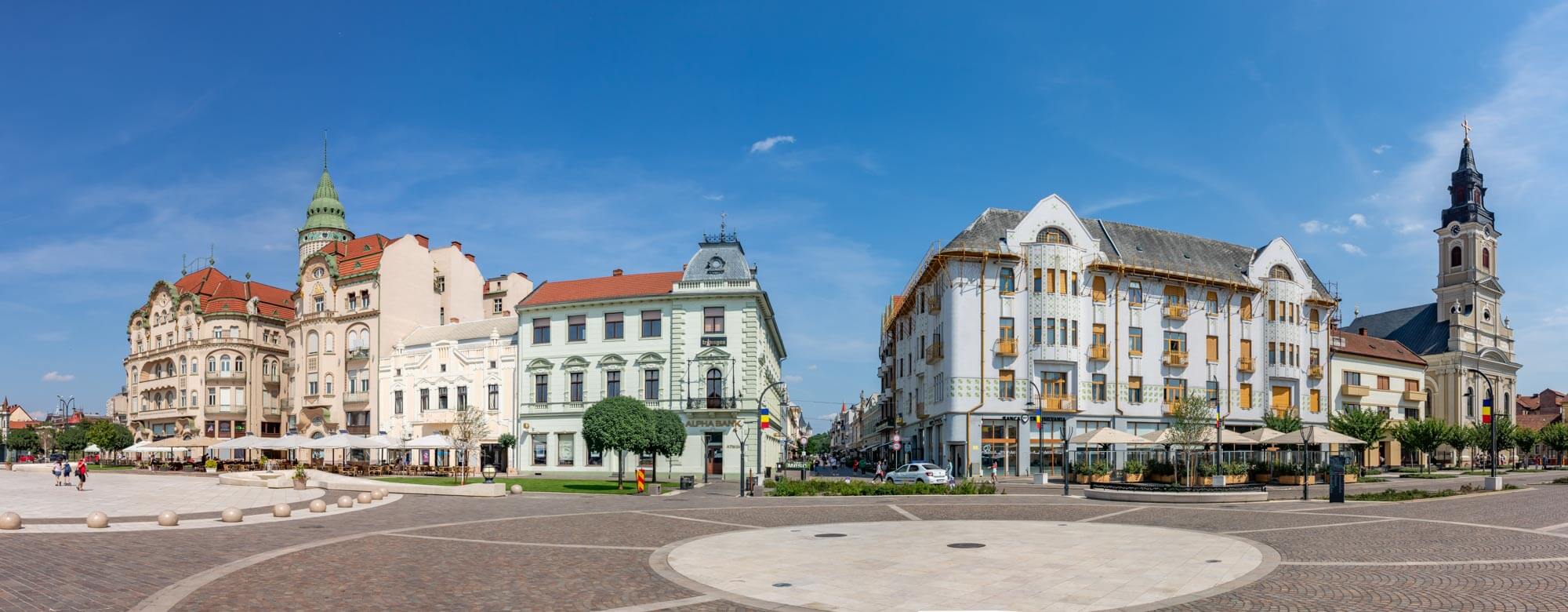
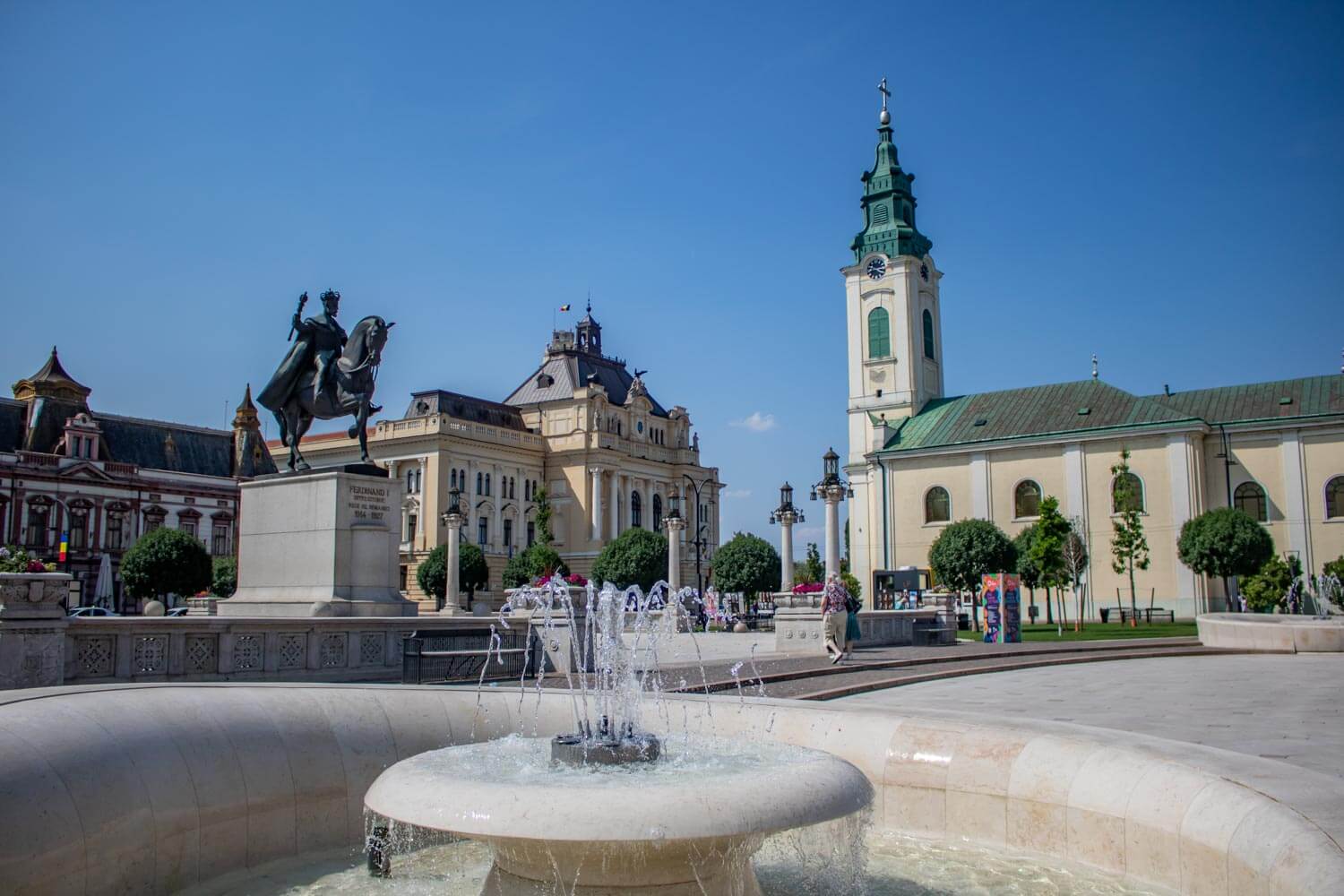
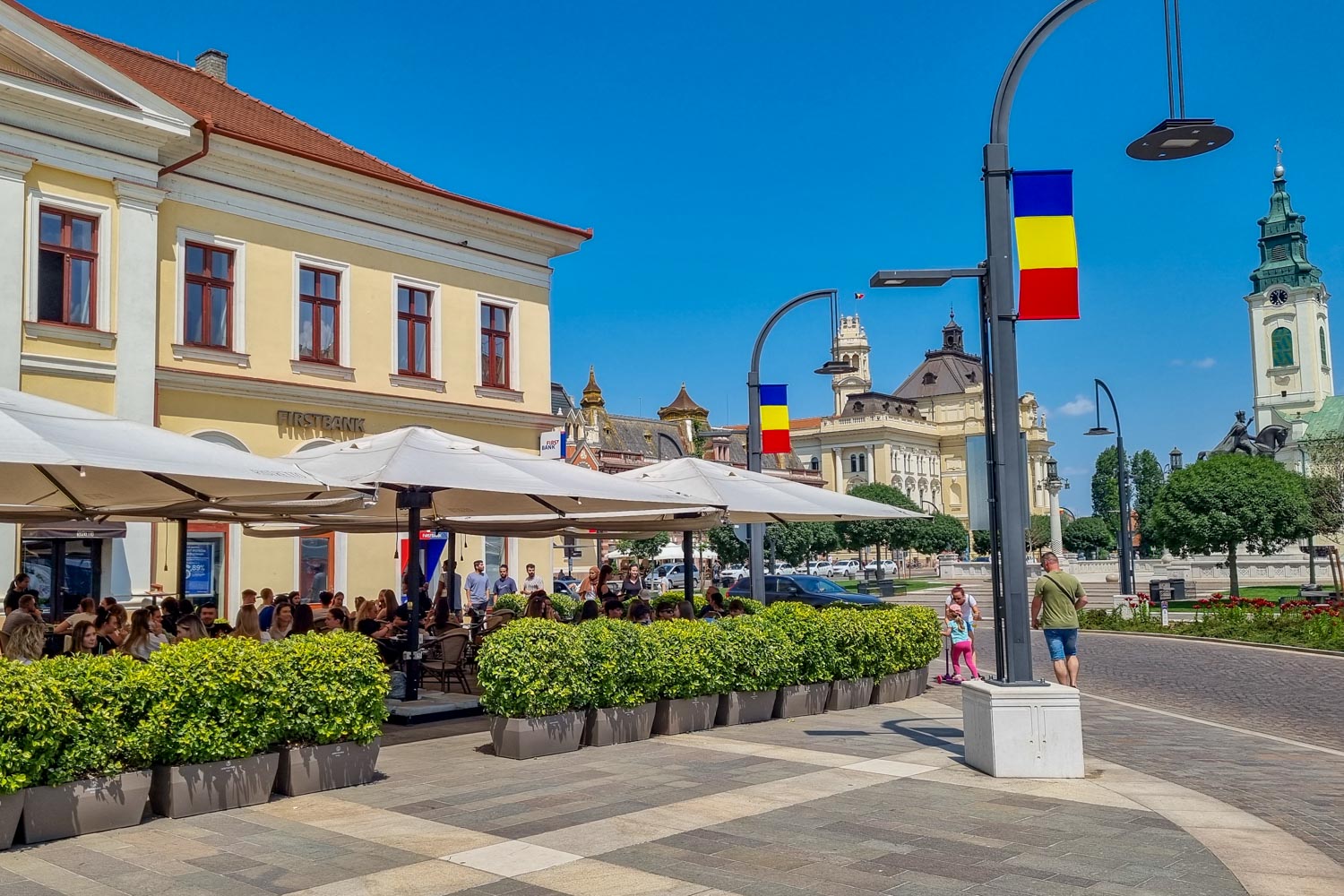
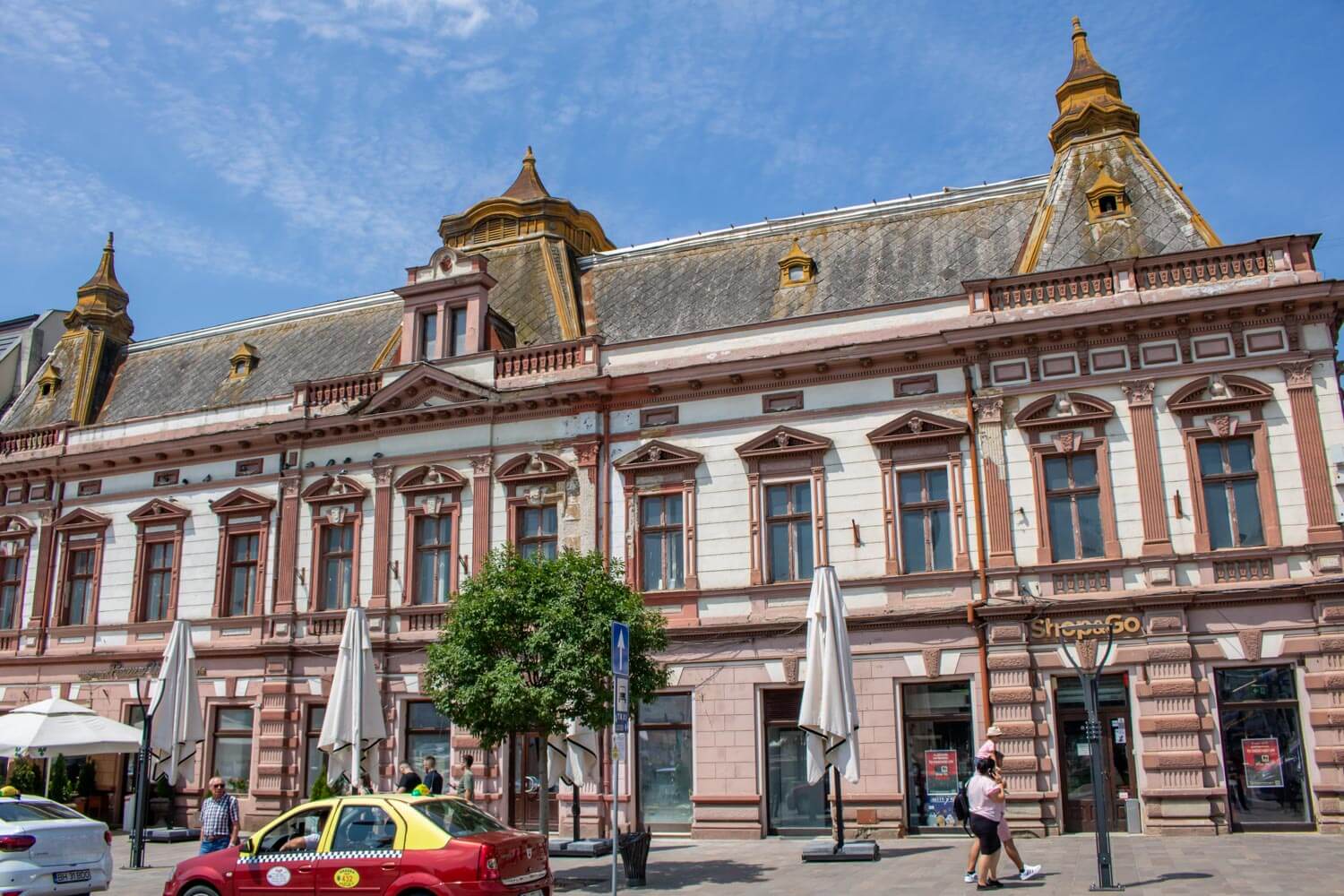
Union Square (Piața Unirii) is the largest central square in Oradea, Bihor County. It is located in the historical center of the New Town (Orașul Nou) district on the southern bank of the Crișul Repede River. The square is connected with King Ferdinand I Square on the northern side of the river via the Saint Ladislaus Bridge.
History Of Union Square
The square was created when the New Town (Orașul Nou) was formed between 1714 and 1740 and was initially called Little Square (Piața Mică / Kispiac tér) and later Saint Ladislaus Square (Piața Sfântul Ladislau / Szent László tér). The current appearance of the square started to take shape after a fire had destroyed many buildings surrounding the square in 1836 and the area started to be redeveloped.
The square has always had an important role in the city but was never paved and in 1869 it was decided to turn it into a park. The park had alleyways, lime trees, and sycamores, and was considered the most beautiful park in the city. With the construction of several new buildings at the beginning of the 20th century, the park was turned back into a paved square.
In 2015, Union Square was rehabilitated and it is now the historical and cultural center of Oradea. It is the main reference point in the city with the most important central tram and bus stop.
Sights And Landmarks On Union Square
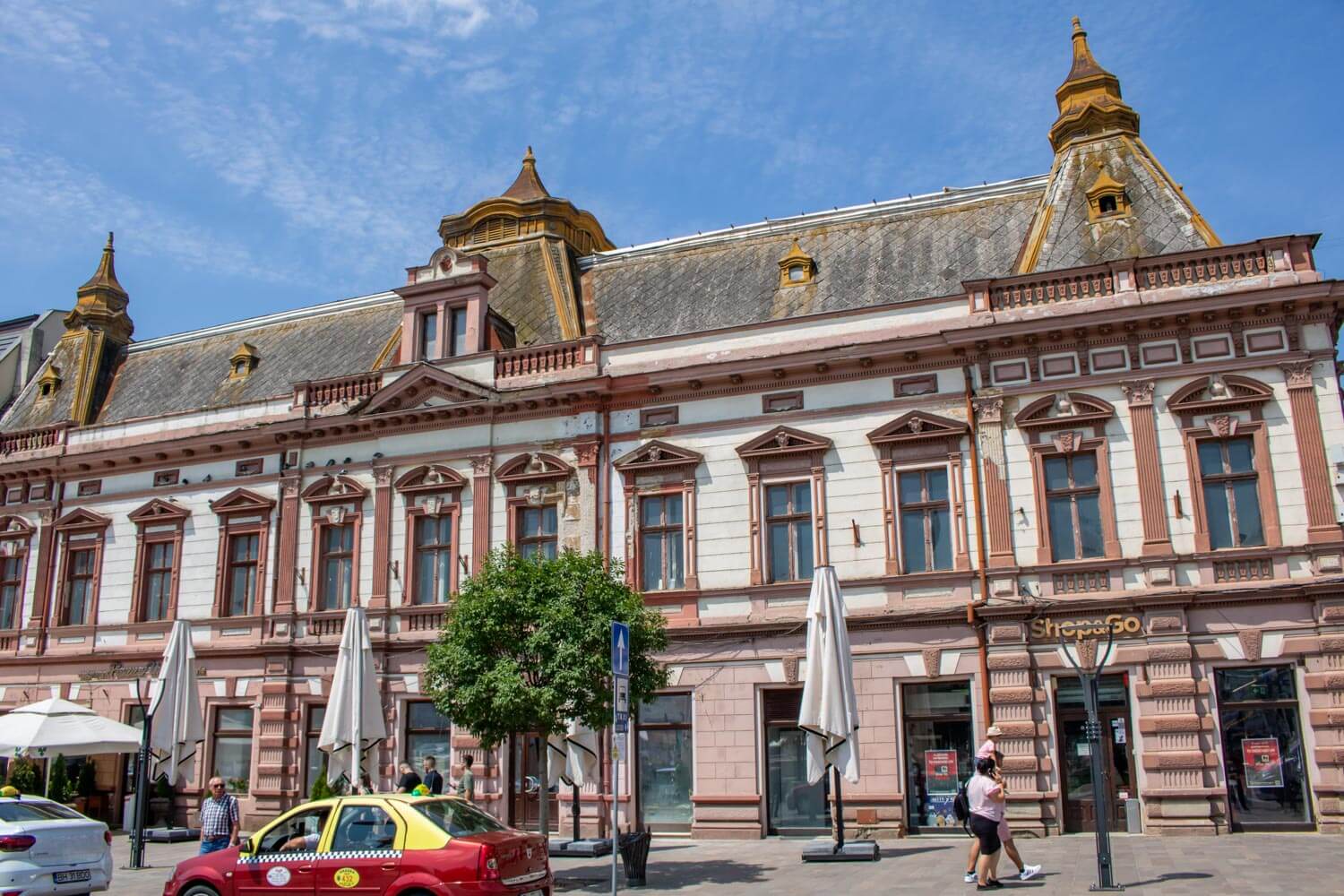
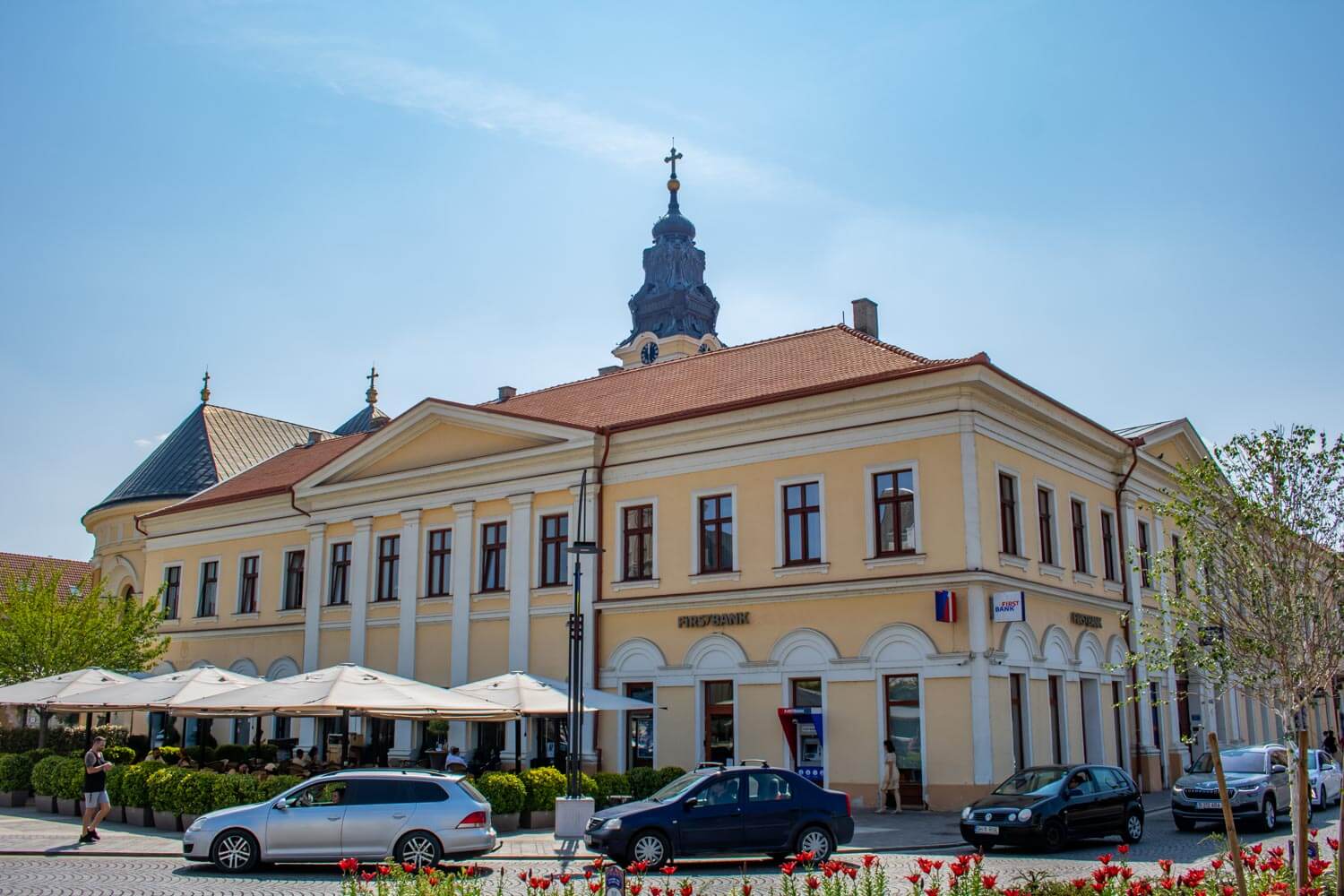
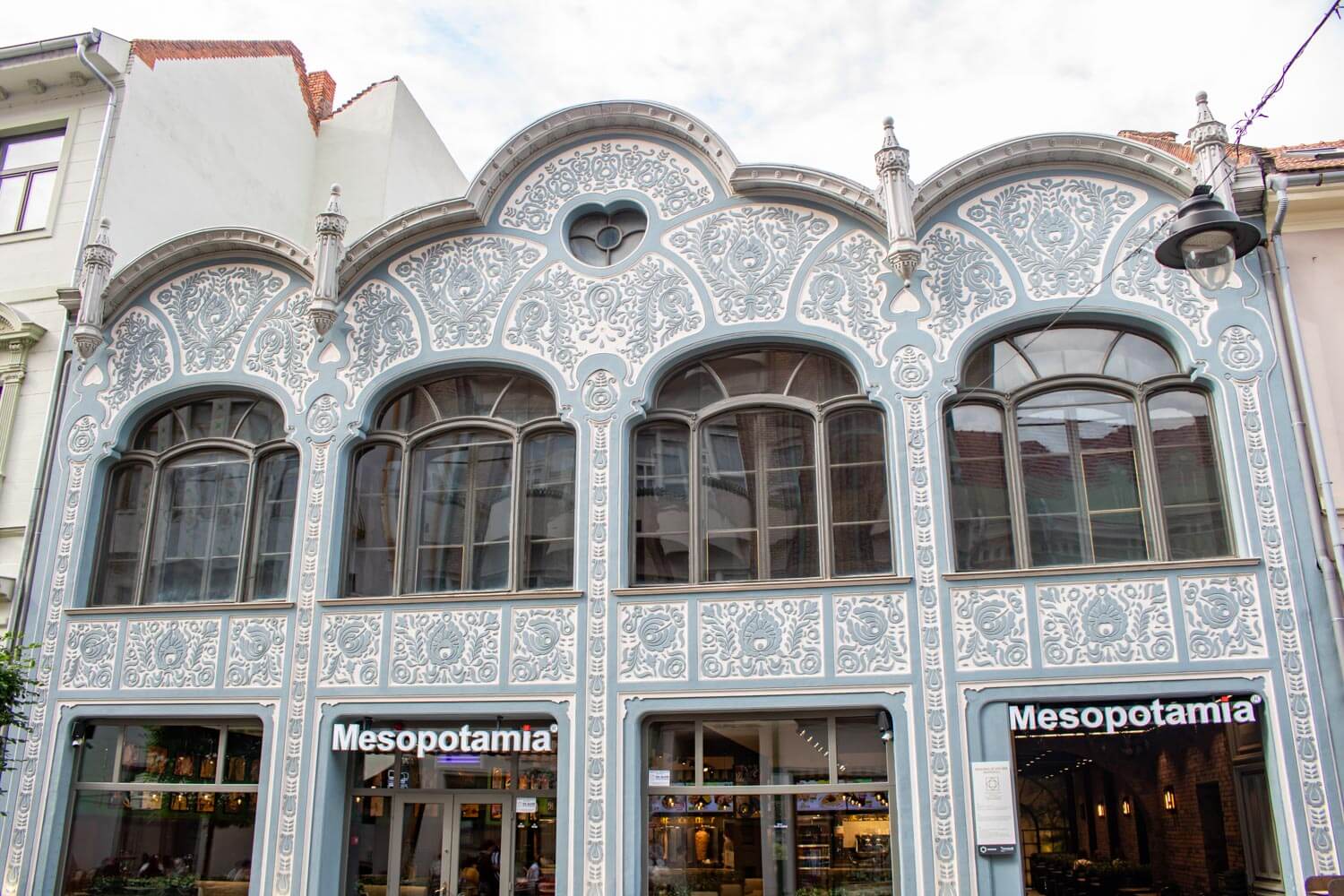
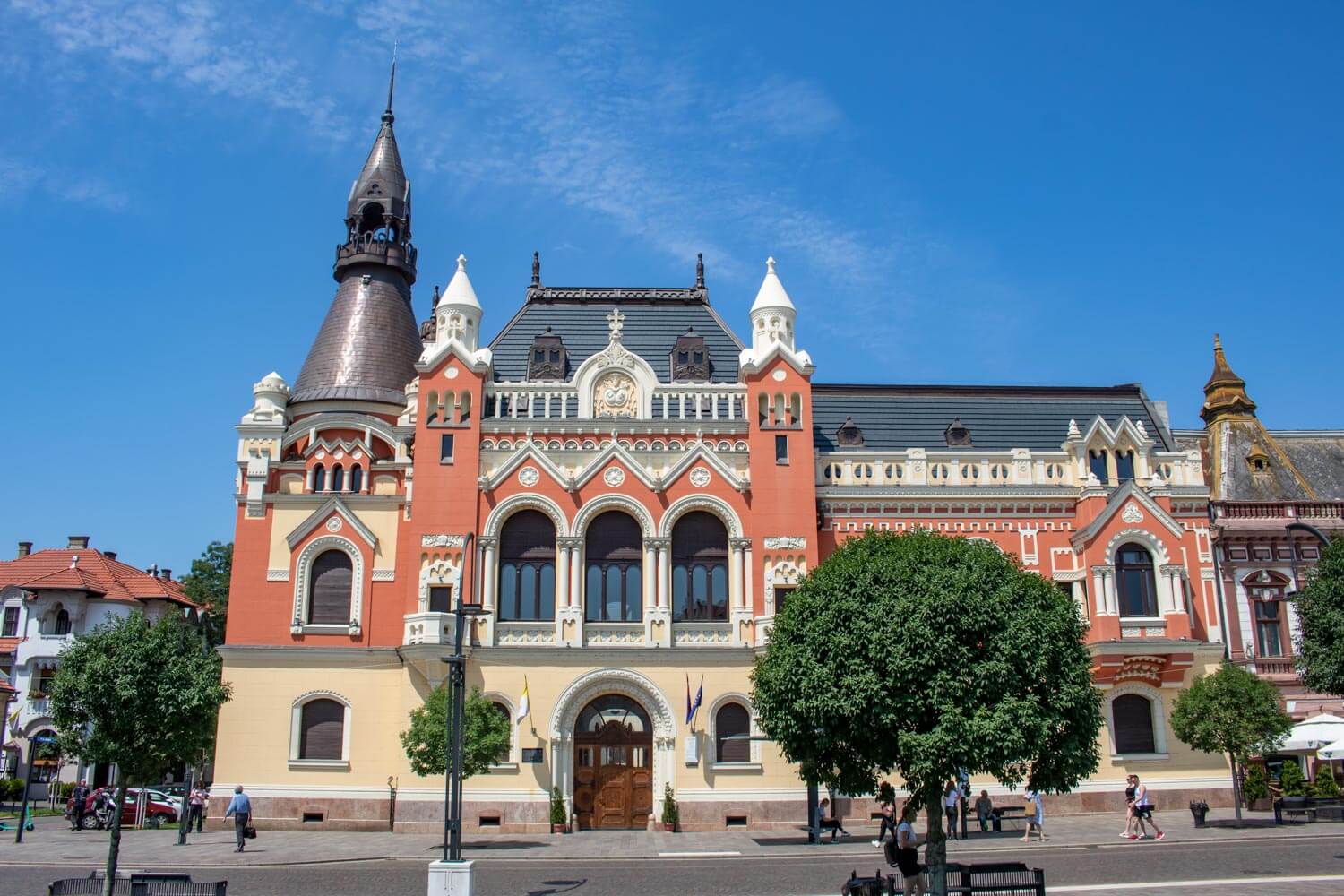
Union Square is surrounded by impressive landmarks with beautiful facades in several architectural styles, including Classicist, Baroque, Secessionist, Neo-Romanian, and Romantic. Most of the buildings date from the beginning of the 20th century.
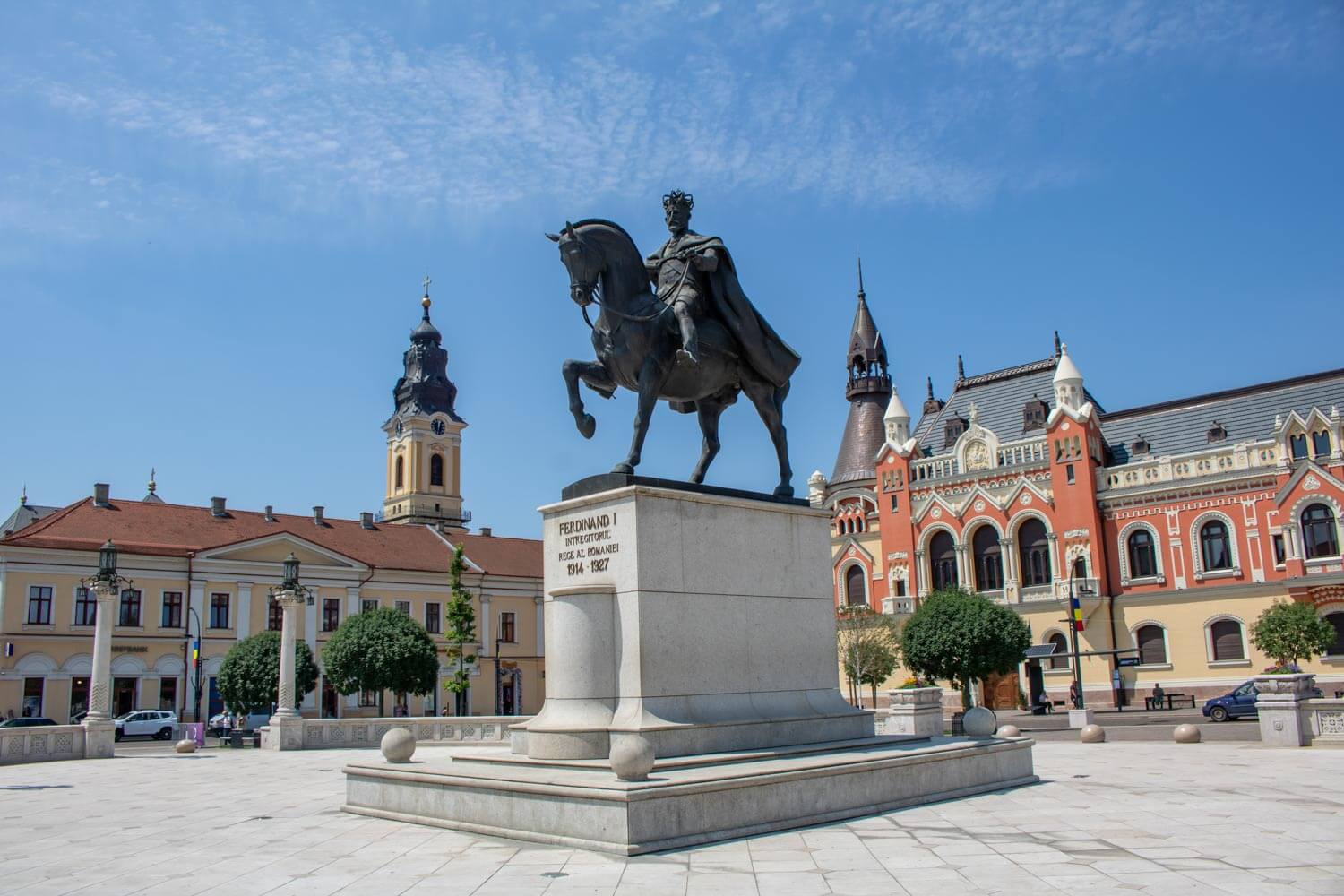
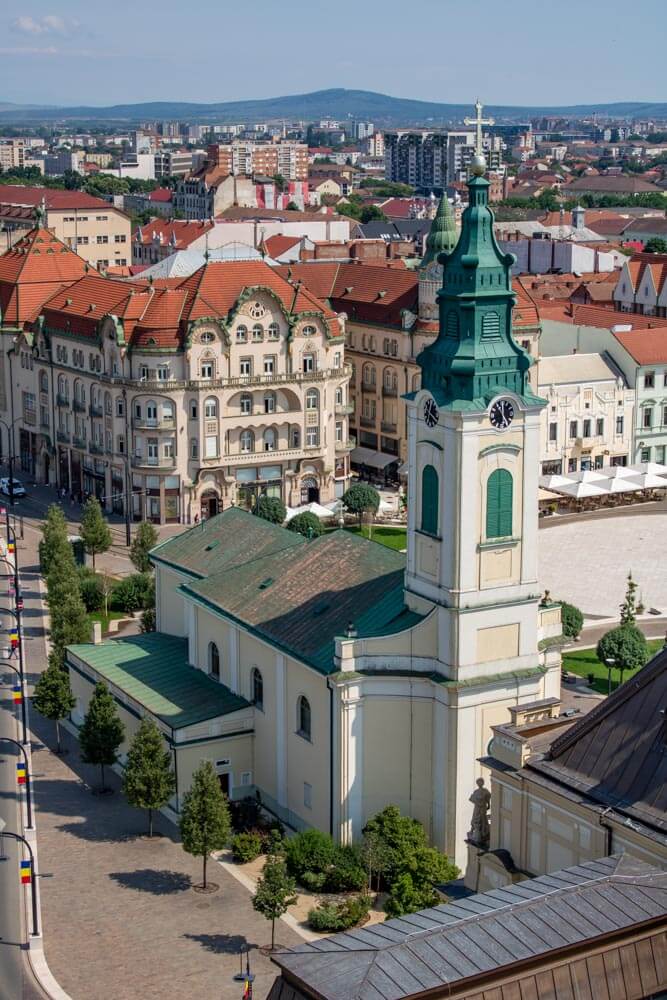
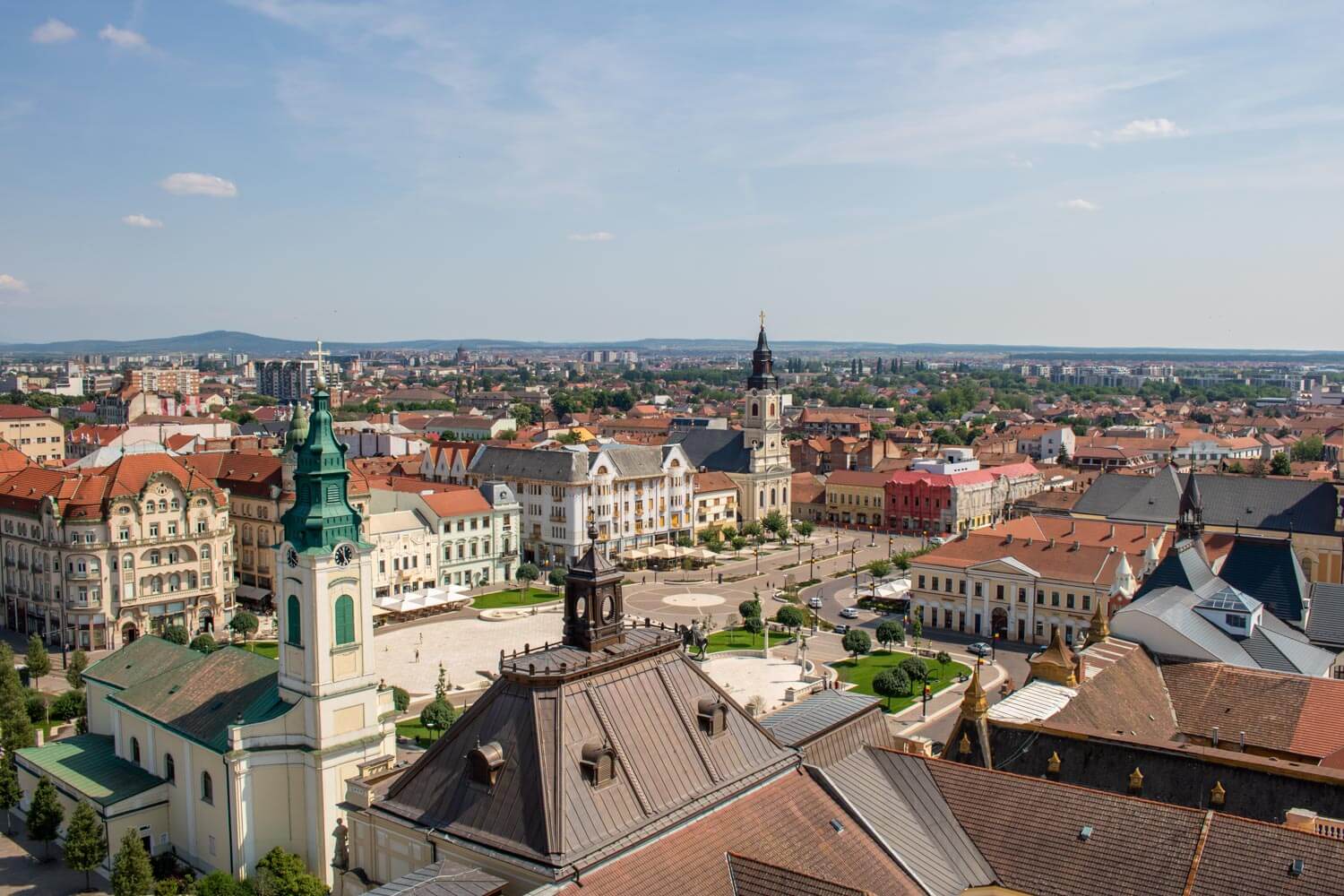
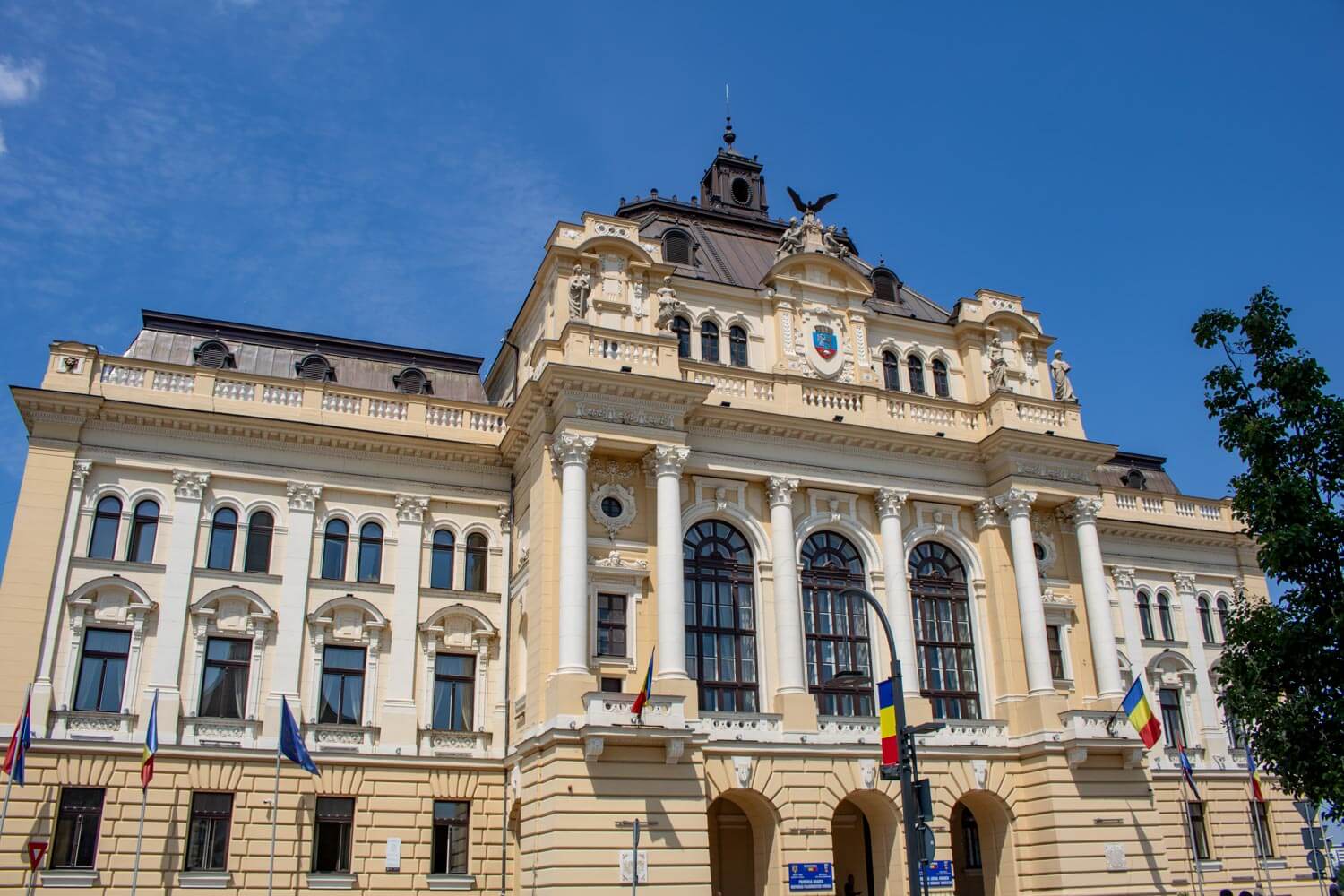
In the middle of the square stands the large equestrian Statue of King Ferdinand I. To the north stands the Saint Ladislaus Church near the riverfront. In the northwestern corner of the square is the Oradea City Hall with the 50-meter-high clocktower you can climb for spectacular views over the city.
Also on the western side of the square (from north to south) are the former Deposits and Savings House of Oradea, the Greek Catholic Episcopal Palace, the Kováts House, and the Saint Nicholas Church.
Opposite the church, on the southeastern corner, is the Moon Church followed by the Adolf Moskovits and Sons Palace on the corner of the vibrant Vasile Alecsandri Street. On the northeastern corner of the square stands the Black Eagle Palace, which is considered the most impressive Secession building in the city.