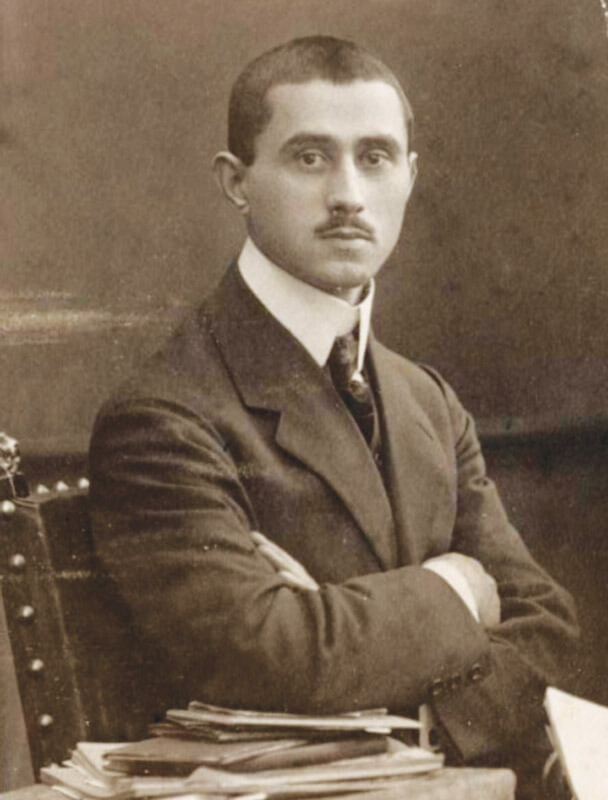
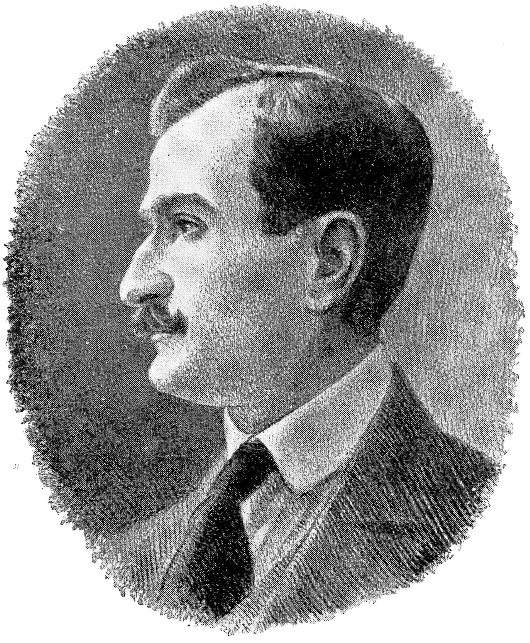
Henri Coandă (1886-1972) was a Romanian engineer, inventor, and aviation pioneer whose work ranged from experimental aircraft to aerodynamics and new propulsion concepts. He is best known for the unusual aircraft he presented in Paris in 1910 and for the Coandă effect, the tendency of a fluid jet to follow a nearby curved surface, a phenomenon that later found applications far beyond aviation.
Born in Bucharest, Coandă grew up in a family with strong military and technical connections; his father, Constantin Coandă, later became a general and prime minister. Henri initially attended military school before turning increasingly toward engineering and aeronautics, studying in Germany and then in France. In Paris he joined the first graduating class of the École Supérieure d’Aéronautique et de Constructions Mécaniques, one of the earliest higher-education institutions devoted specifically to aviation engineering.
That training led directly into the experimental work for which he became famous. At the 1910 International Aeronautical Exhibition in Paris, Coandă presented an unconventional aircraft without a conventional propeller. Its propulsion system used a piston engine to drive a compressor that accelerated air through a duct, with fuel then added to the airflow. The machine is often described as the world’s first jet aircraft, although it was not a turbojet in the modern sense and the extent of its actual flight testing remains debated. What is clear is that Coandă was exploring a radically different form of aircraft propulsion decades before jet engines became practical.
Coandă continued working in aviation after 1910, including periods with aircraft manufacturers in France and Britain, but his interests soon spread far beyond a single airplane. He experimented with aerodynamic forms, propulsion systems, construction materials, prefabricated buildings, transport concepts, and other engineering problems, accumulating numerous patents over the course of his career. This unusually broad range made him less a conventional aircraft designer than an inventor who repeatedly moved between different branches of engineering.
The phenomenon that now carries his name grew from those aerodynamic experiments. Coandă observed that a moving jet of fluid could be drawn toward and remain attached to a nearby curved surface, and he later developed and patented applications based on the effect. The Coandă effect subsequently became important in the study of fluid dynamics and has been applied in areas ranging from aircraft control and ventilation to medical and industrial systems.
After spending much of his professional life abroad, Coandă returned permanently to Romania in the late 1960s and became involved in efforts to strengthen Romanian aeronautical research. He was elected a full member of the Romanian Academy in 1970 and died in Bucharest two years later.
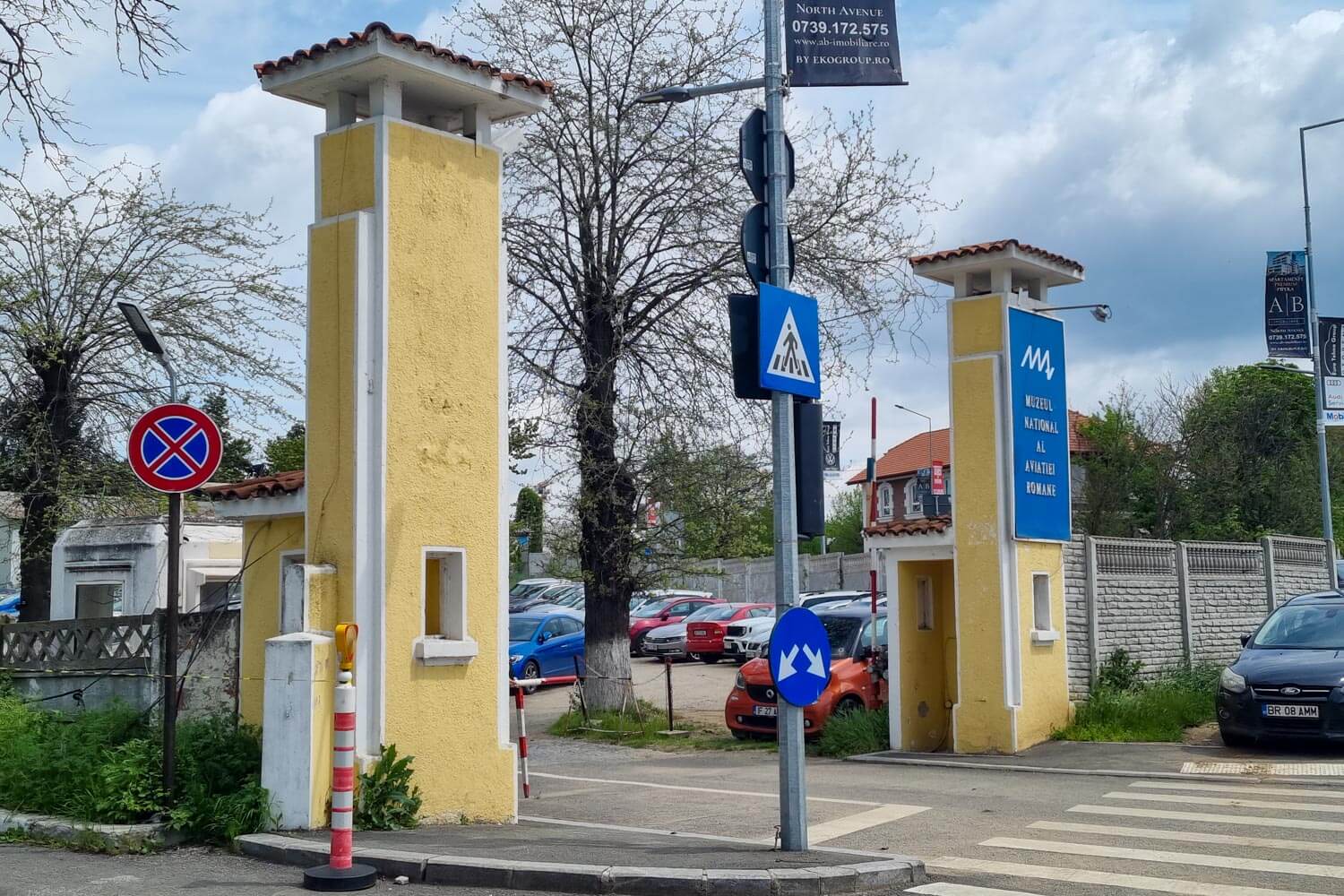
His name remains especially visible in Romanian aviation today. Bucharest International Airport, the country’s principal international airport, bears his name, while the National Romanian Aviation Museum presents him alongside Traian Vuia and Aurel Vlaicu as one of the three major pioneers of Romanian aviation. Its displays include models connected with their aircraft and place Coandă’s experiments within the broader development of Romanian flight.
The Dimitrie Leonida National Technical Museum broadens that context further by placing Coandă among Romania’s major inventors and engineers rather than treating him only as an aviation figure. That wider view suits his career well: although the 1910 aircraft and the Coandă effect remain his best-known achievements, his lasting significance comes from a much broader habit of experimentation across aerodynamics, propulsion, materials, and engineering design.