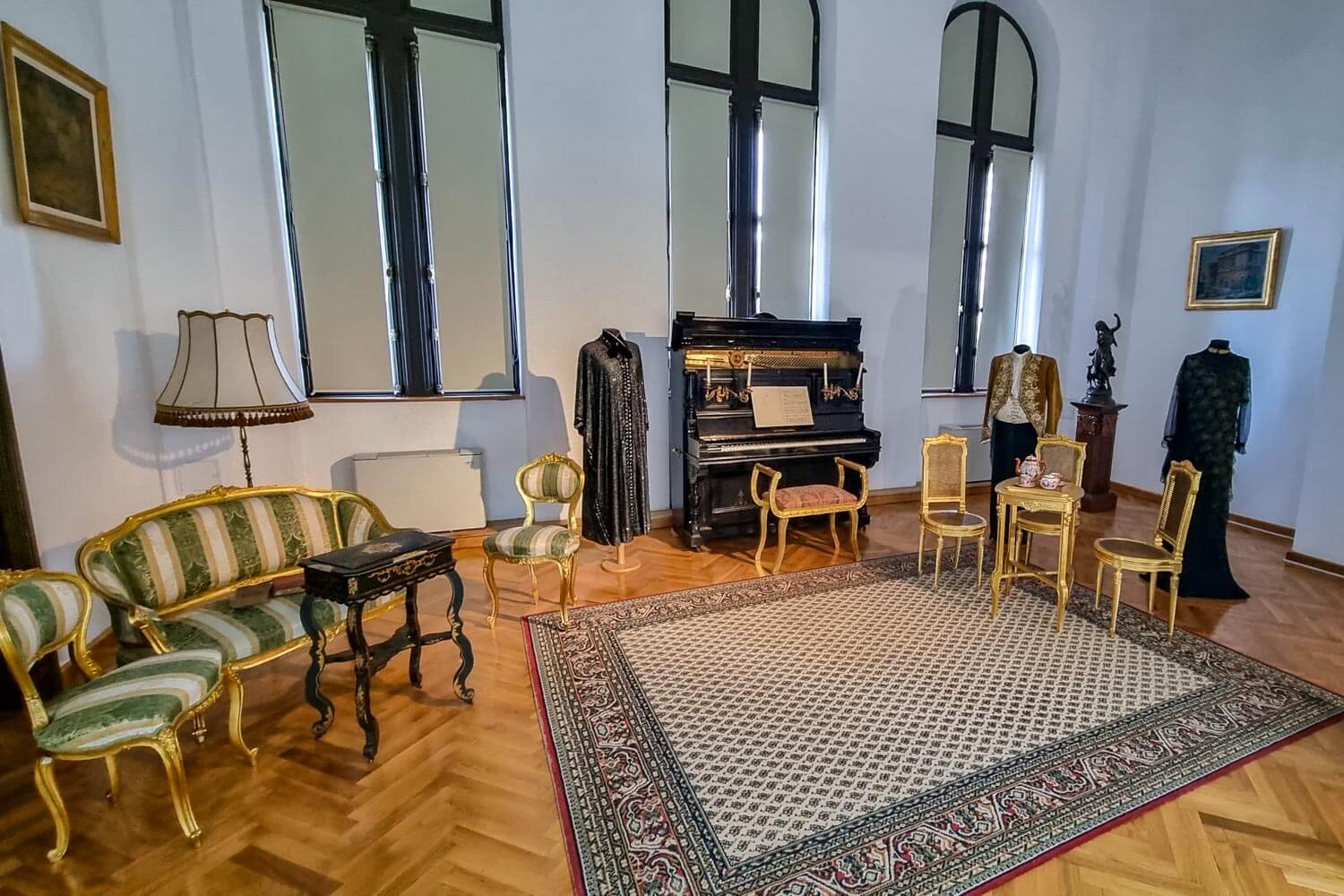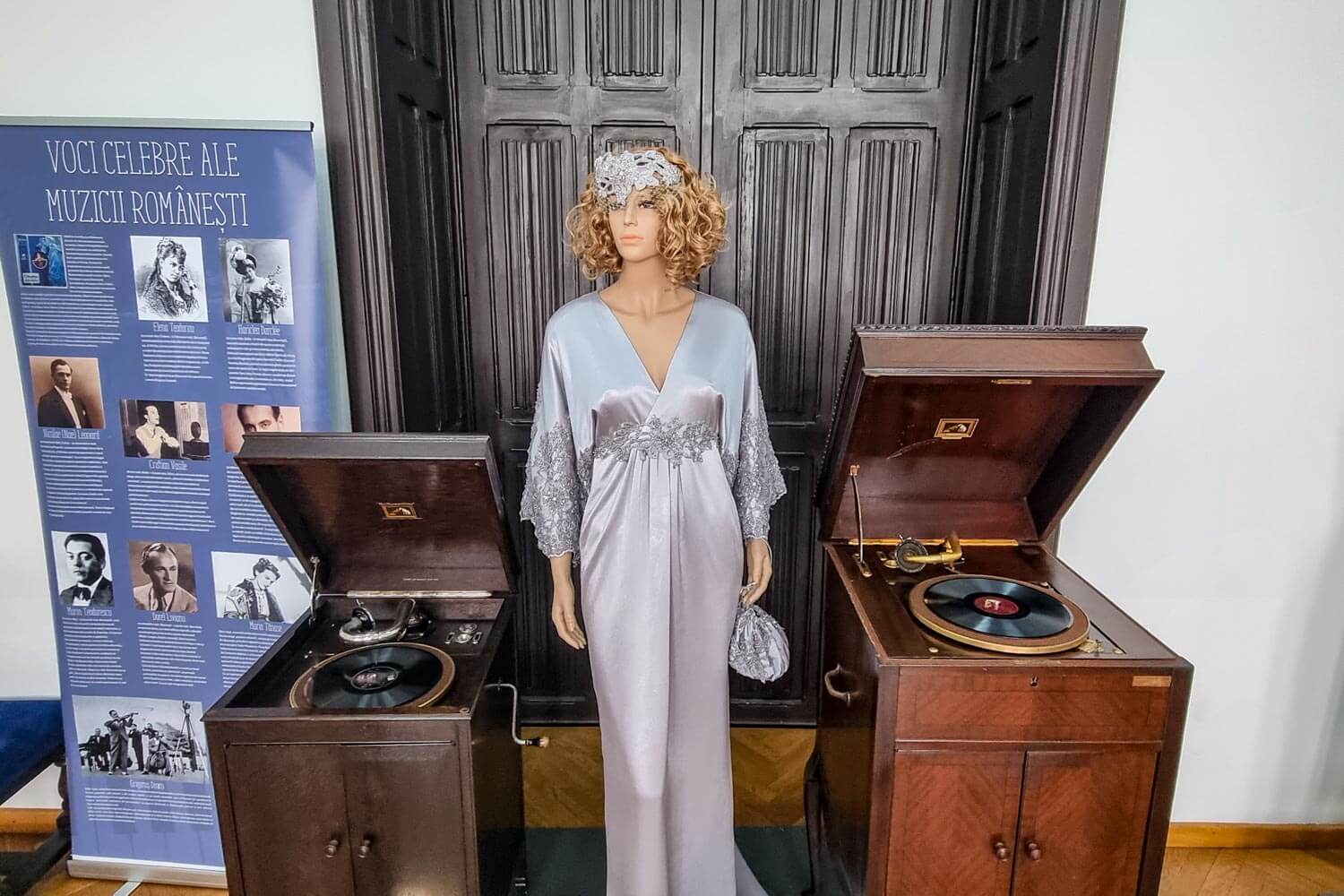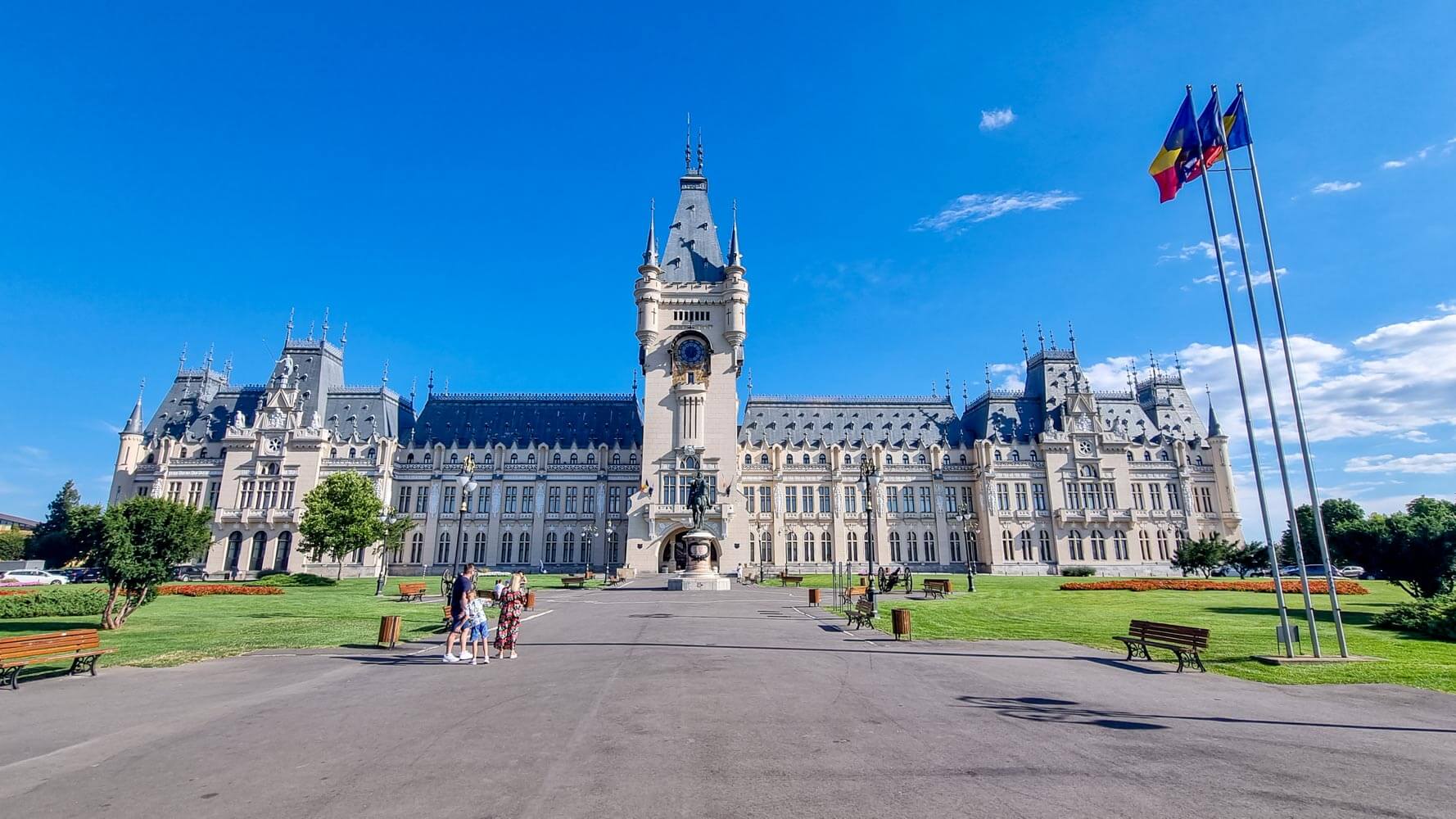


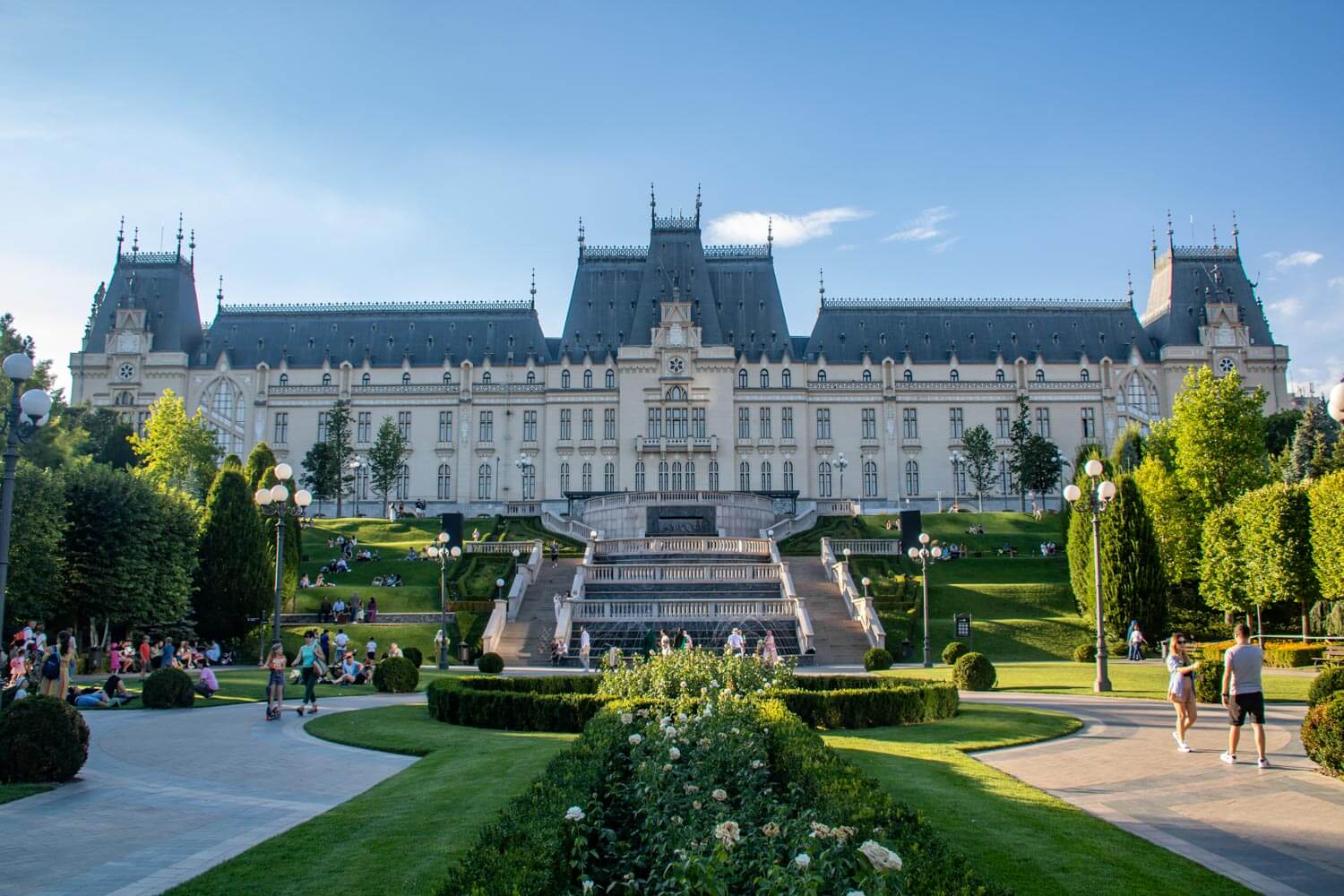

The Palace of Culture (Palatul Culturii) is the most well-known landmark in Iași, Iași County, and served as the Administrative and Justice Palace until 1955. Nowadays, it is used as a cultural center hosting four museums that are part of the Moldavia National Museum Complex of Iași, a heritage and conservation center, and also regularly hosts exhibitions and other cultural events.
History Of The Palace Of Culture
The Palace of Culture was built between 1803 and 1806 on the site of the former Princely Court from 1434, which is why the building is sometimes also called the Princely Palace (Palatul Domnesc). The architect was Johan Freywald and at the time of construction, Alexandru Moruzi was a Grand Dragoman of the Ottoman Empire who served as the Prince of Moldavia.
After the palace caught fire, it was rebuilt and renovated by Prince Mihail Sturdza between 1841 and 1843, following the plans of the architect Nicolae Singurov. According to a legend, at this time the building had 365 rooms, one for each day of the year. After the Union of Moldavia and Wallachia in 1859, the capital moved to Bucharest in 1862, and the building became an administrative palace.
In 1880, the building caught fire again, after which it was rebuilt between 1880 and 1883. At the beginning of the 20th century, the palace was renovated and extended, which gave it an entirely new style. The project started in 1906 but was interrupted by the First World War, during which it was used as a military shelter and hospital. After the war, the construction continued and the new palace was completed in 1925 and inaugurated by King Ferdinand I in 1926. The new building was designed in a neo-Gothic style by the architect Ion D. Berindey with the assistance of architects Filip Xenopol and Grigore Cerchez.
Until 1955, the Administrative Palace housed the Iași County Court and several other public institutions, except during World War II, when it was used as military barracks by German troops and later by Soviet troops. In 1955, the building was turned into a cultural center, and until 2010, it also housed the Iași County Library.
Architecture Of The Palace Of Culture
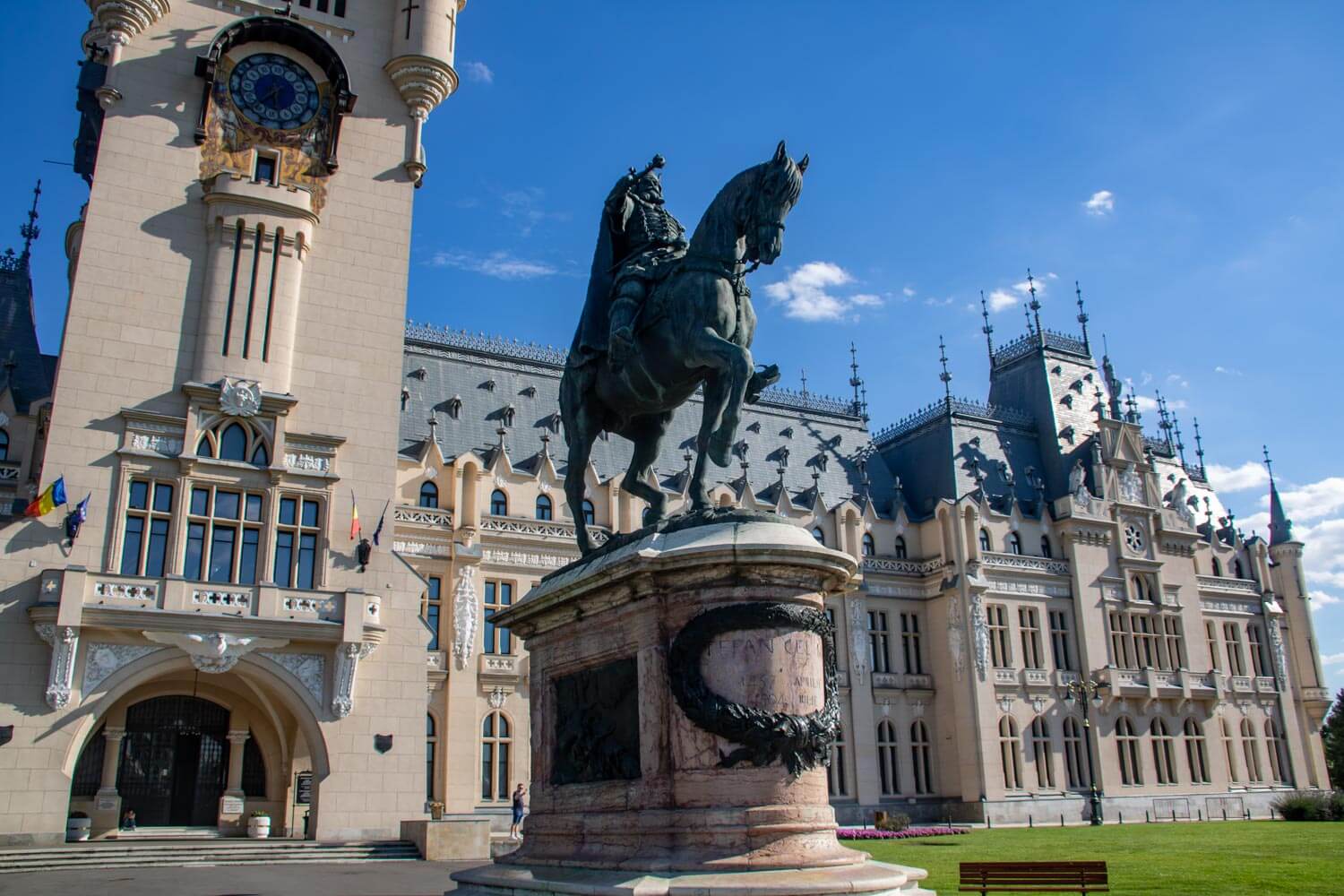
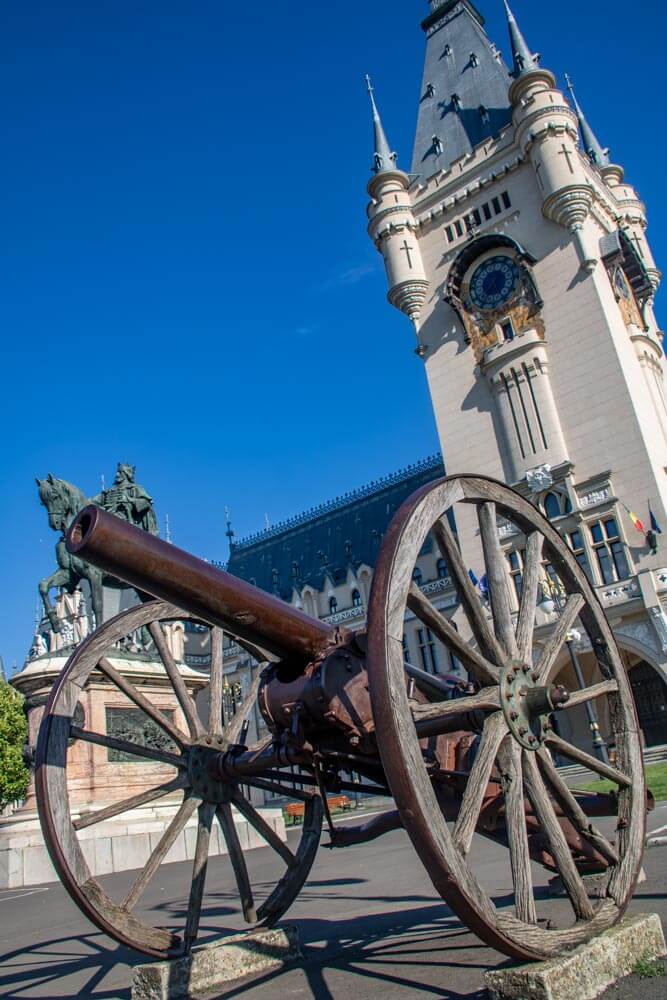
The palace has a rectangular shape and a neo-Gothic style, with ornamental details and heraldic elements on the outside. The main entrance is built as a fortified tower with a pyramid shaped roof and four turrets. Two more entrances are built in the form of vaulted towers on the sides.
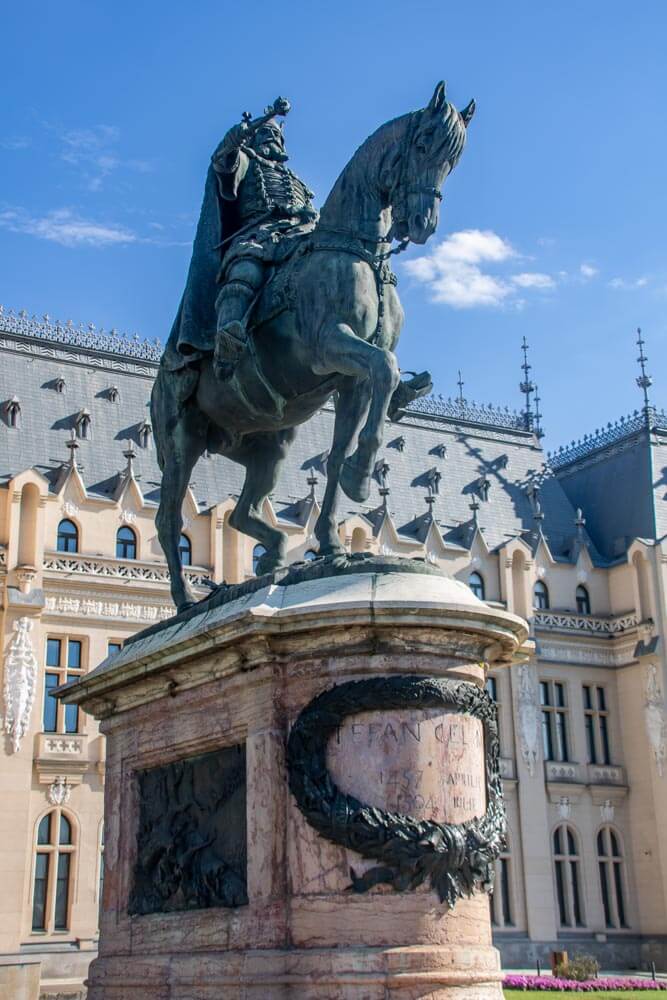
The building currently has 298 rooms with a total surface area of 34,236 square meters, 92 windows on it’s main facade, and another 36 windows in the attic of the building. Above the main entrance, you can see a decorative eagle with open wings and right in front of the palace stands the equestrian Statue of Stephen the Great.
Clock Tower
The clock tower above the main entrance reaches a height of 55 meters, with which it was the tallest building in the city at the moment of construction. The architectural centerpiece of the palace has a clock with a diameter of 3.25 meters on three of its sides. The clock is decorated with stained glass windows representing the 12 zodiac signs. Besides each clock are fresco paintings of two soldiers guarding the clock, a scene inspired by the decorations on Peleș Castle. The guards represent the servants of Dragoș Vodă, the first prince of Moldavia.
On its fourth floor, the tower has a carillon with 8 bells which can be played by a drum with 69 pins. Every hours, you can hear the song Hour of the Union (Hora Unirii), a reference to the Union of 1859 and the Great Union of 1918.
It’s only possible to visit the clock tower with a guided tour, which takes place at specific hours. You can best inform about this at the ticket office inside the palace. The tour takes you up inside the tower to look at the mechanism of the clocks and the carillon, but you won’t be able to enjoy a panoramic view from the tower.
Hall Of Honor
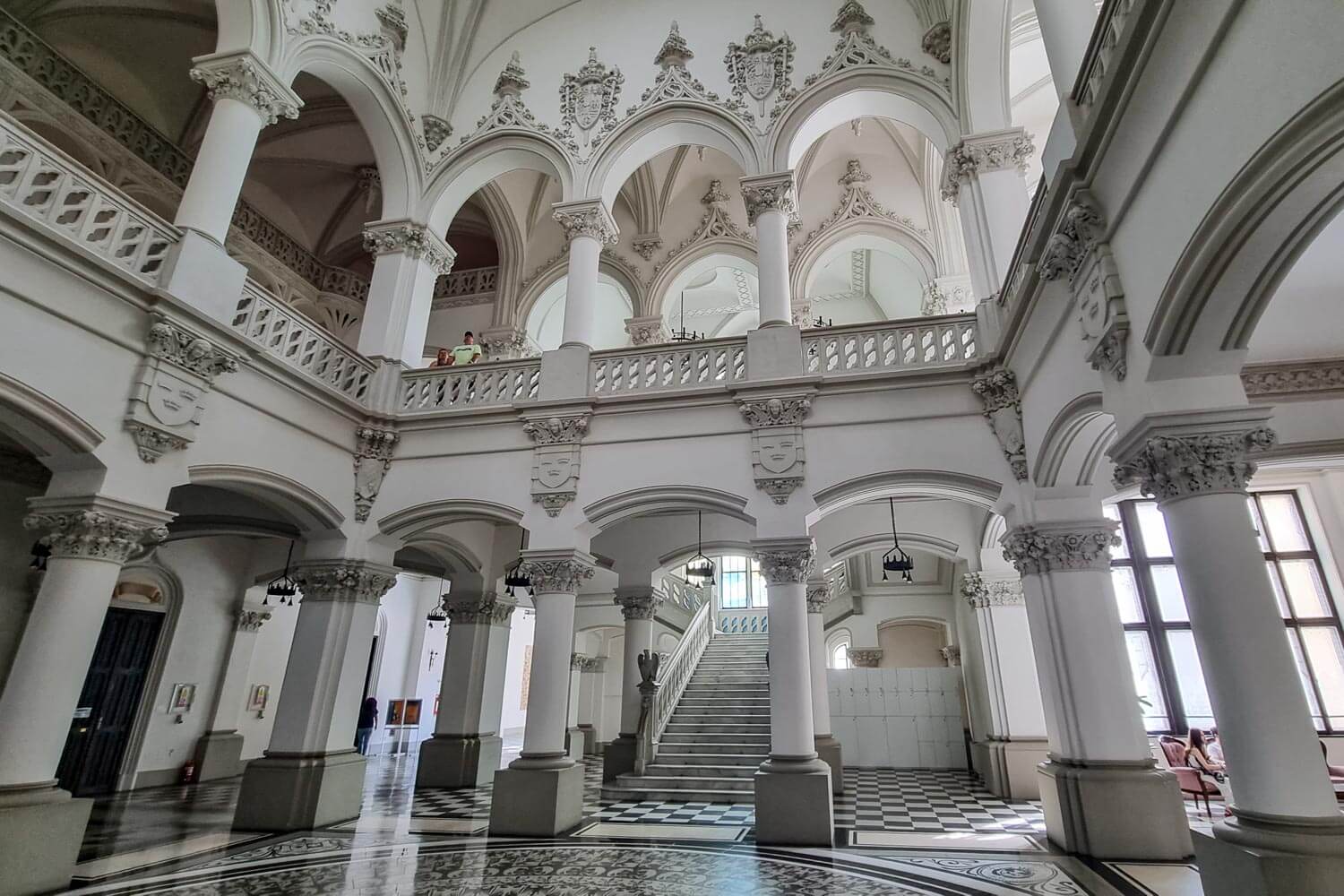
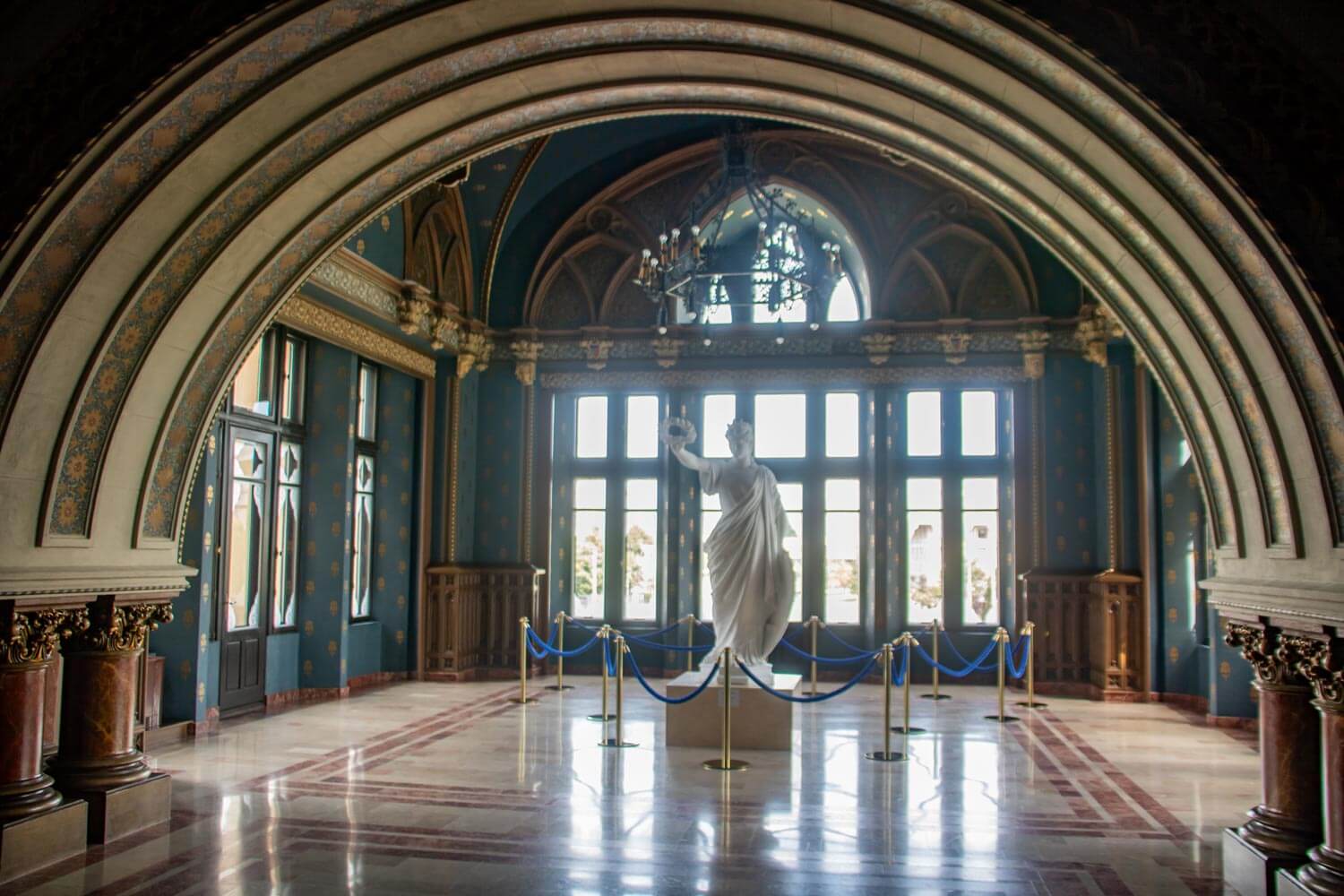
Below the clock tower is the main entrance which brings you into the Hall of Honor that is designed in a Gothic style. The floor of the hall is decorated with a mosaic which pictures a Gothic bestiary, including two-headed eagles, dragons, lions, and griffons, but also heraldic, floral, and other decorations.
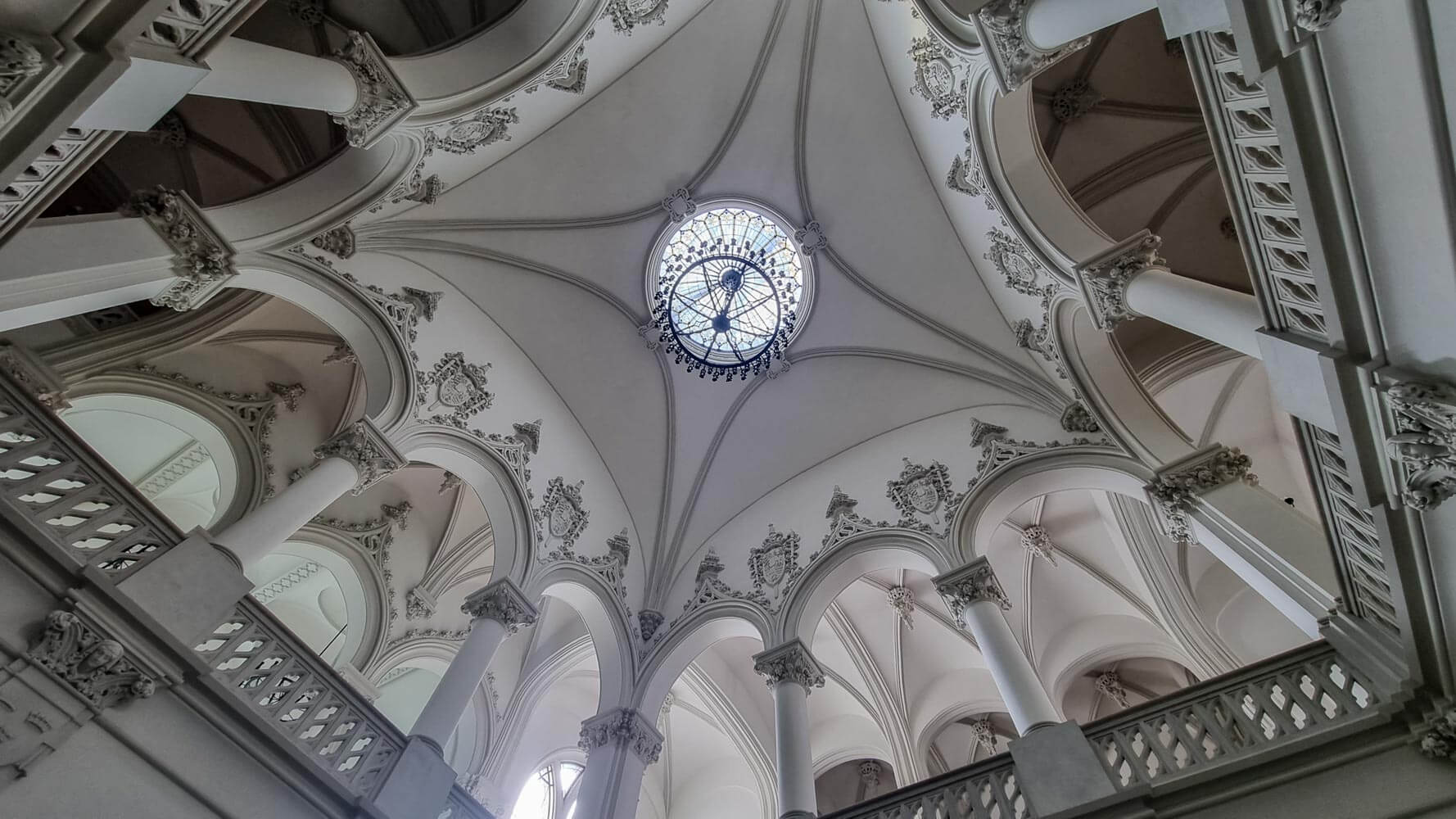
The vaulted hall is overlooked by a balcony with arches resting on pillars which are beautifully decorated with floral ornaments. Right above the mosaic in the middle of the Hall of Honor there’s a chandelier. Two symmetrical monumental stairs made of Carrara marble lead up to the first floor. The balusters are decorated with eagles with shields, which symbolizes the opening of roads.
Hall Of The Voivodes
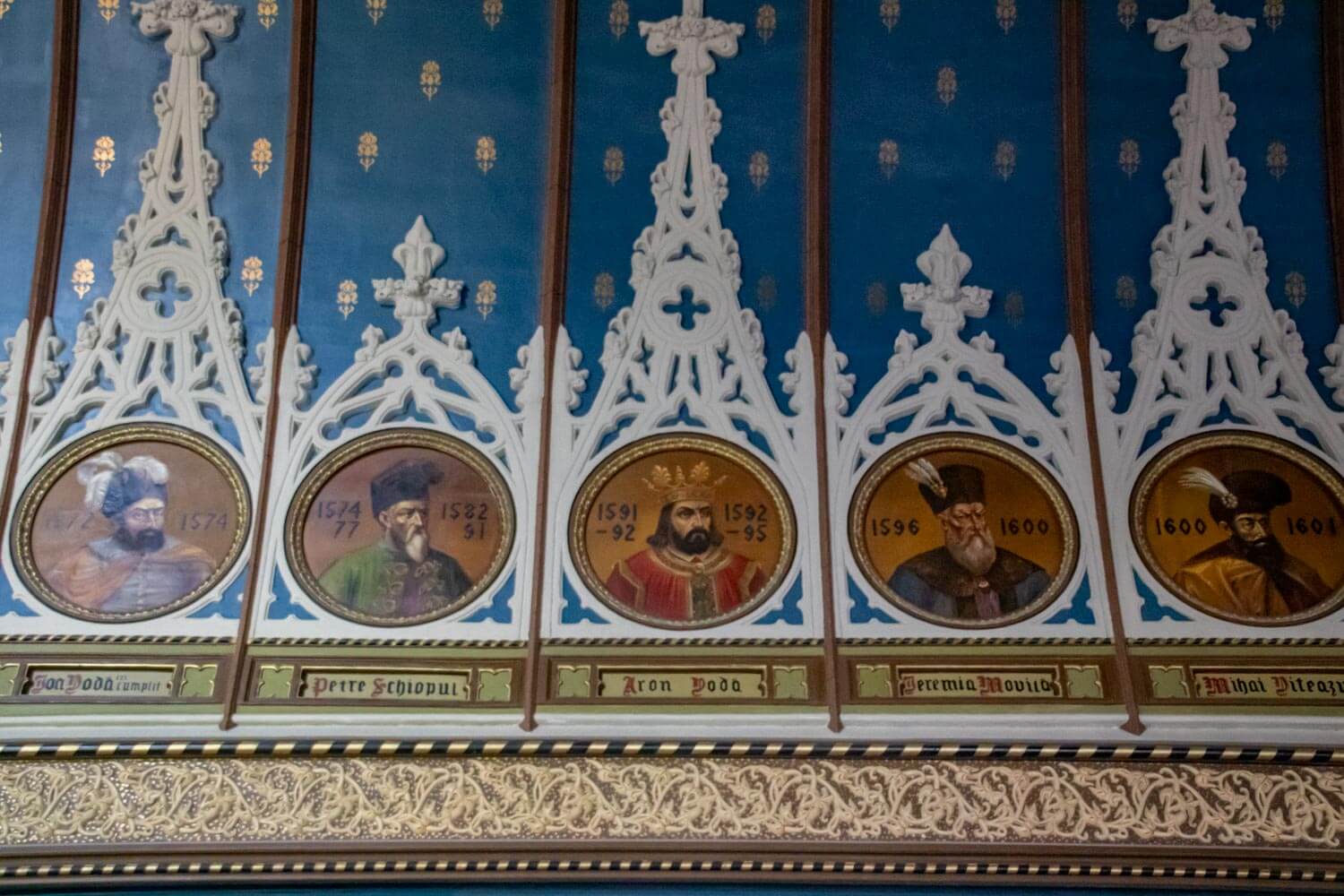
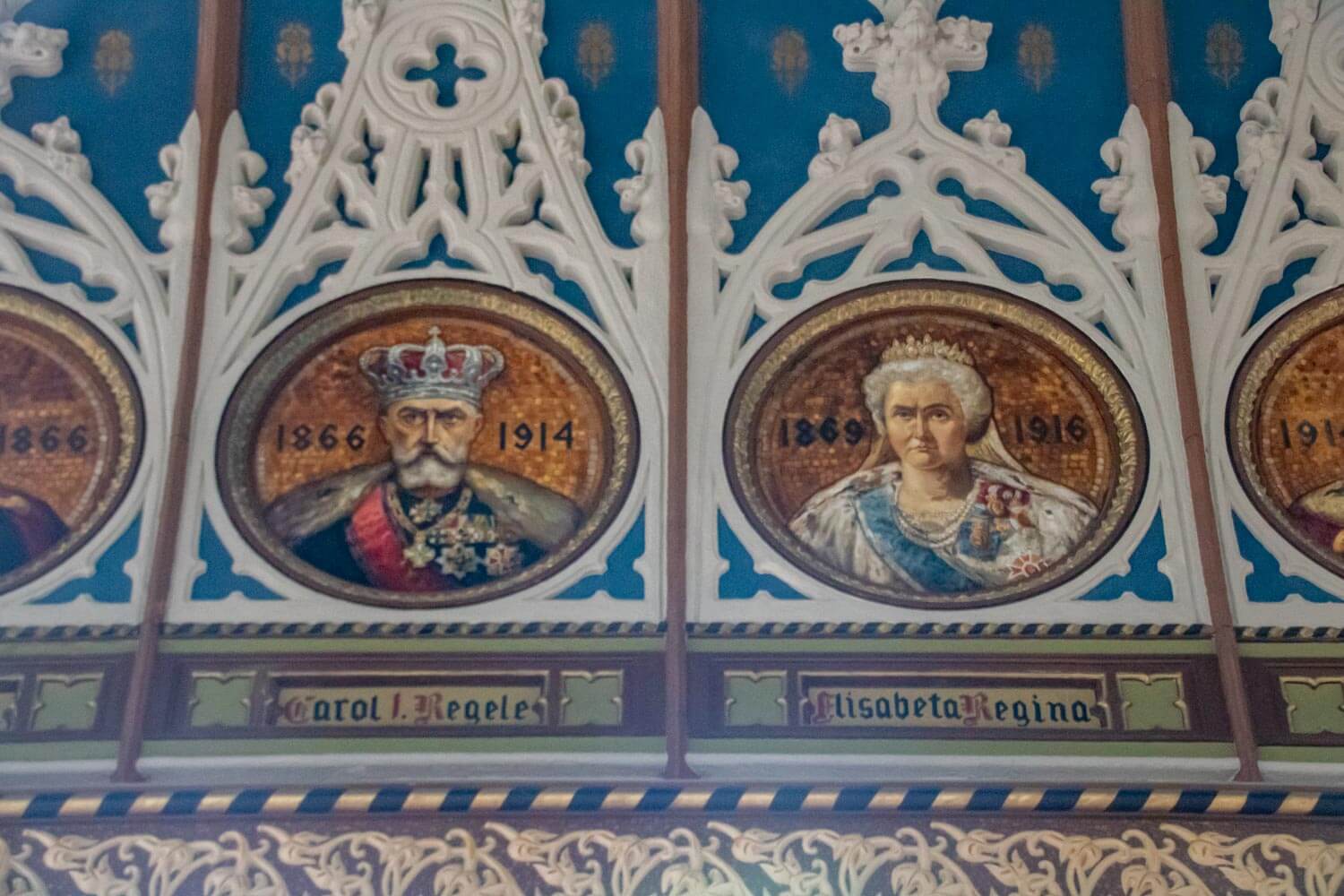
The most beautiful room of the palace is arguably the Hall of the Voivodes, which is located in the center of first floor. In this richly decorated room you can see the portraits of the rulers of Romania, including the Dacian rules, the princes (voivodes) of Moldavia and the kings of Romania. The paintings are the work of Ștefan Dimitrescu and his students and start with the Dacian king Decebalus and the Roman emperors Trajan and Aurelian, and continue with the rulers of the area up to King Carol II of Romania.
On the western side of the hall there is a monumental marble fireplace which is decorated with a bas-relief representing a historical tree, adorned with portraits of the most important rulers of Moldavia.
Henri Coandă Hall
Another room to visit is the Henri Coandă Hall which is the former court room. The decorations on the ceiling of his room were inspired by the Westminster Hall in London, but the architect Ion D. Berindey was looking for a cheaper material that imitates the texture and sound of oak wood. The famous Romanian inventor Henri Coandă invented such material, called beton-bois, which is used in various rooms in the palace.
Moldavia National Museum Complex of Iași
Nowadays the main function of the Palace of Culture is to house the Moldavia National Museum Complex of Iași. The museum organization administers several museums in Iași, four of which are located inside the Palace of Culture:
- History Museum of Moldavia
- Ethnographic Museum of Moldavia
- Art Museum of Iași
- Ștefan Procopiu Science and Technology Museum
Visiting The Palace Of Culture
You can enter the Palace of Culture for free to admire the main reception hall (Hall of Honor), but you’d need to buy a ticket to visit other parts of the complex, including the museums and the clock tower. You can buy an individual ticket for each museum, or a combi ticket for all four, including access to the main halls of the palace.