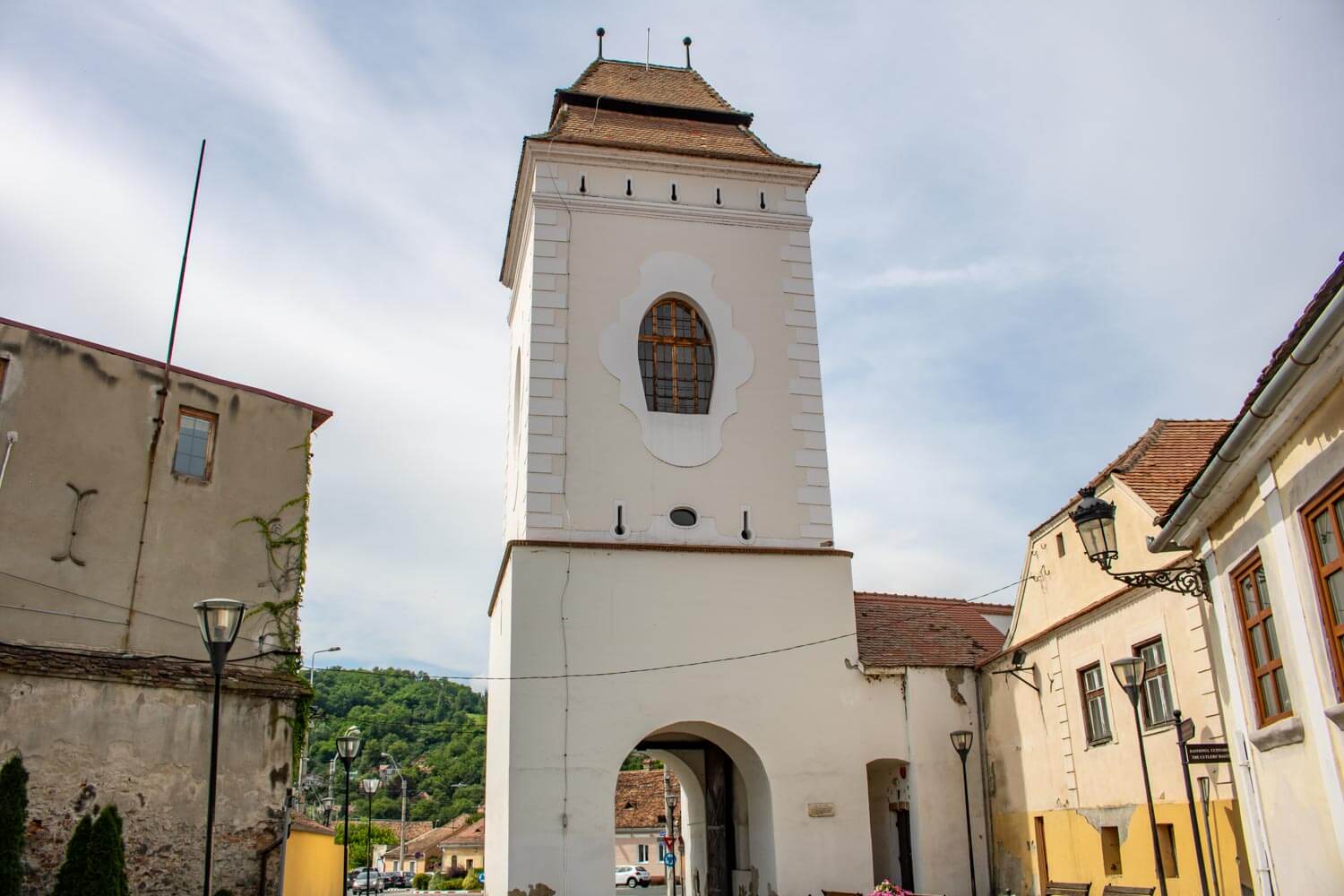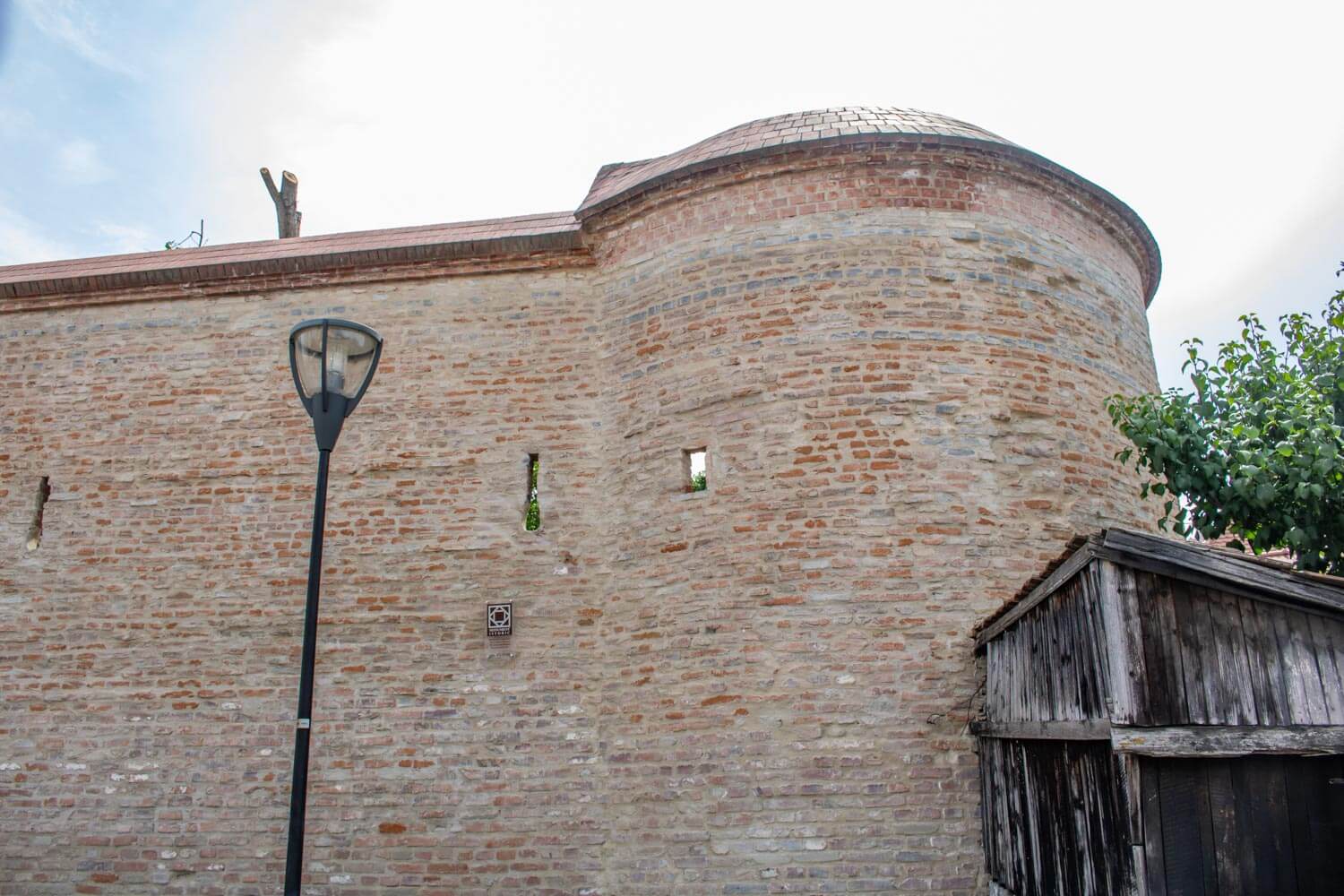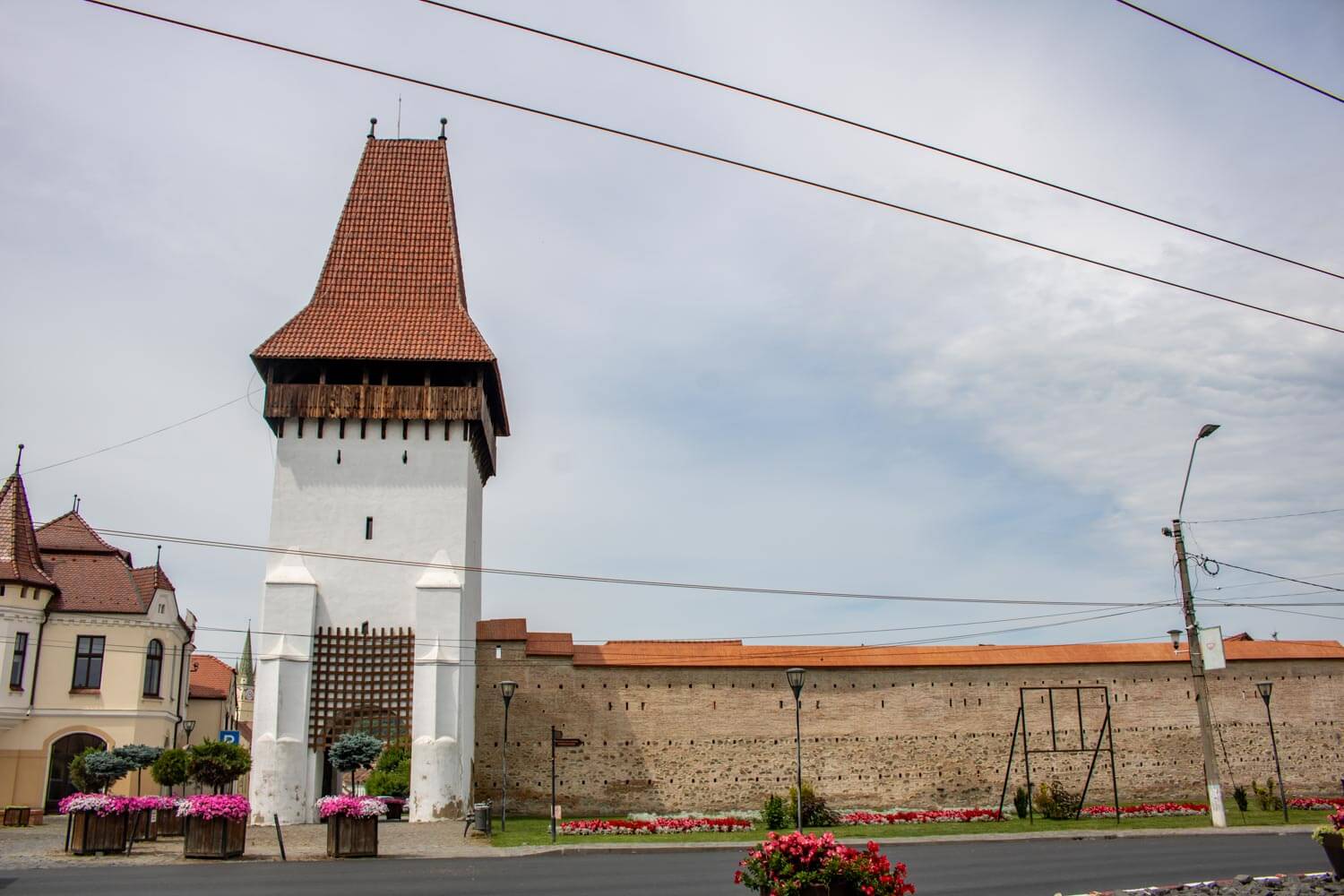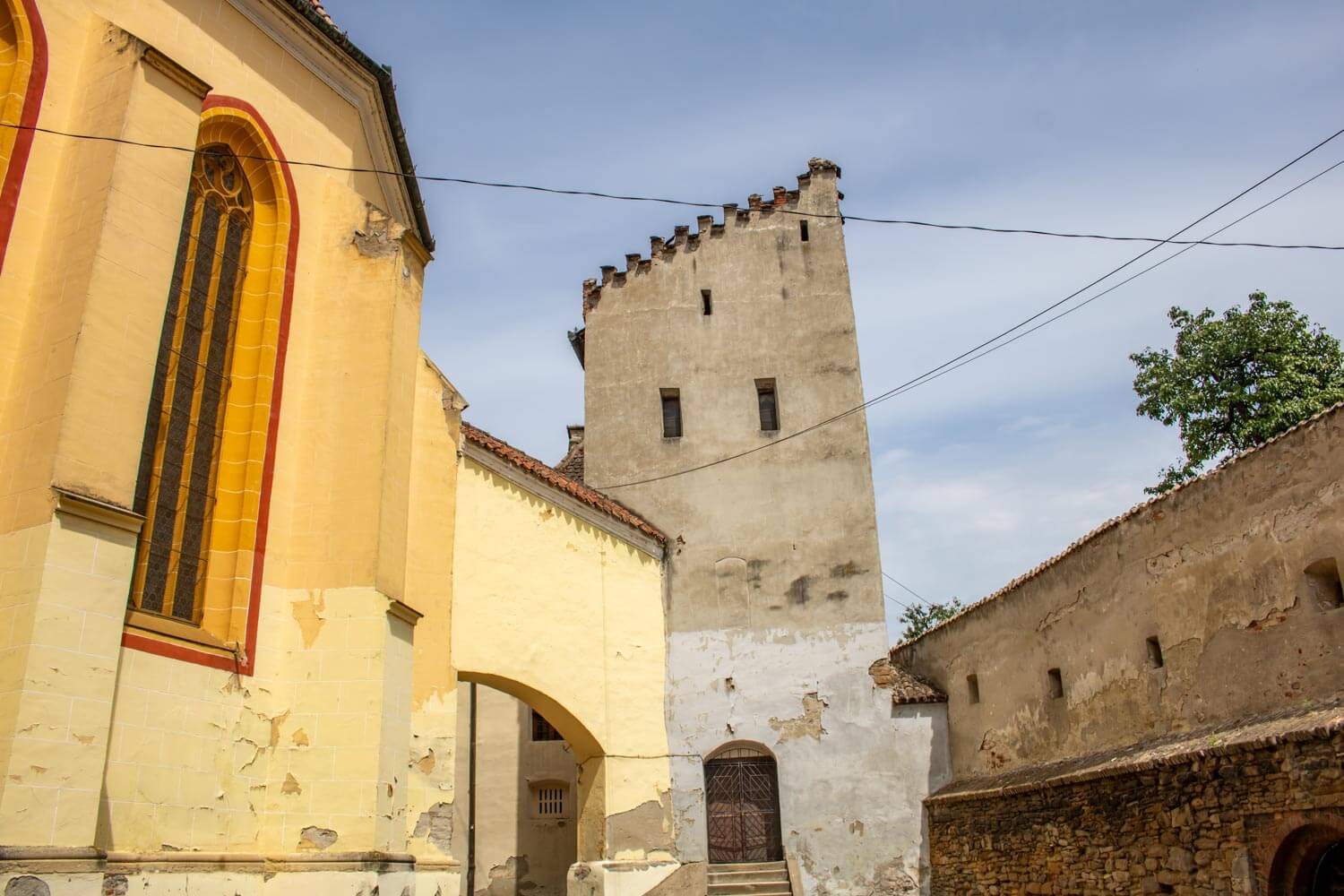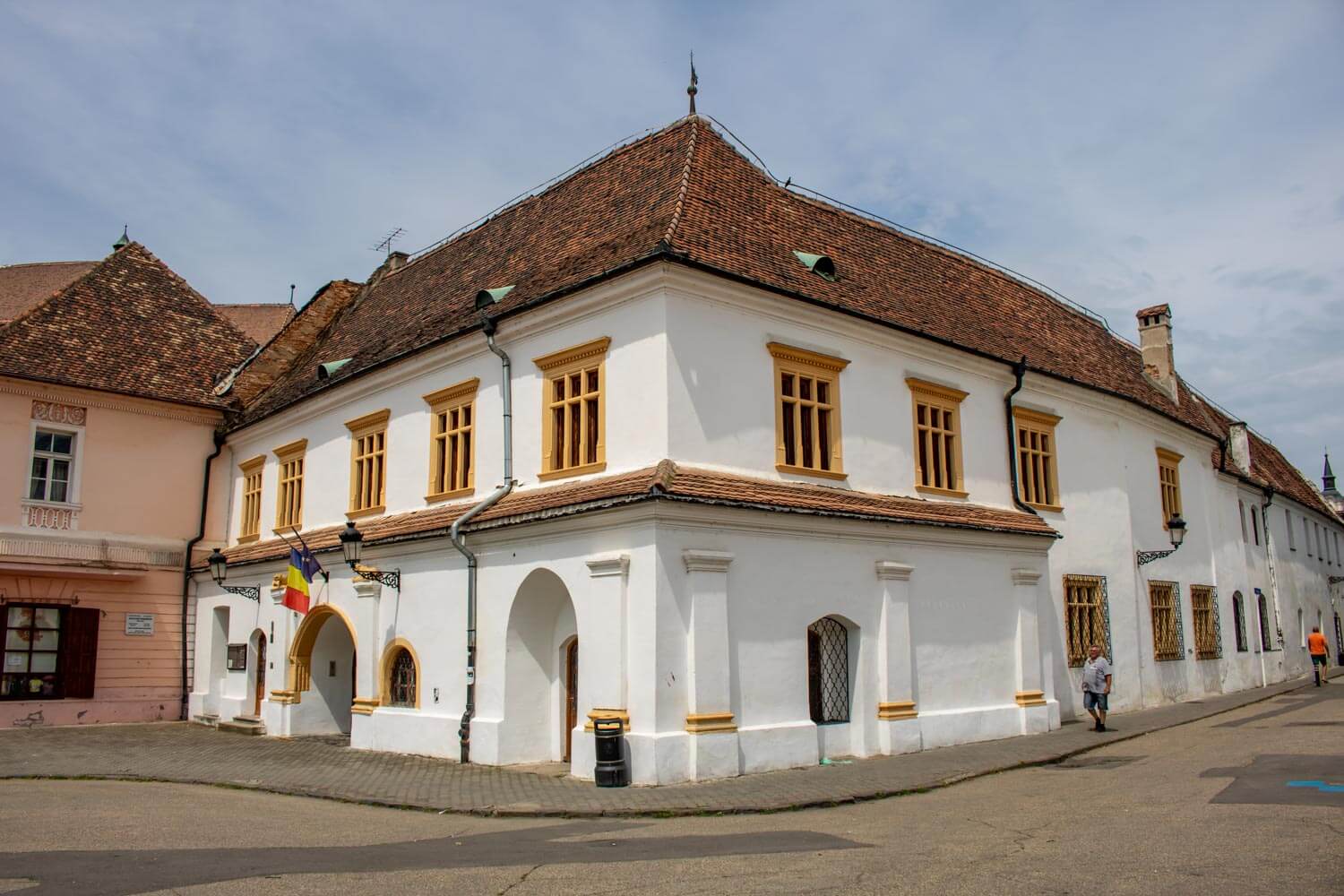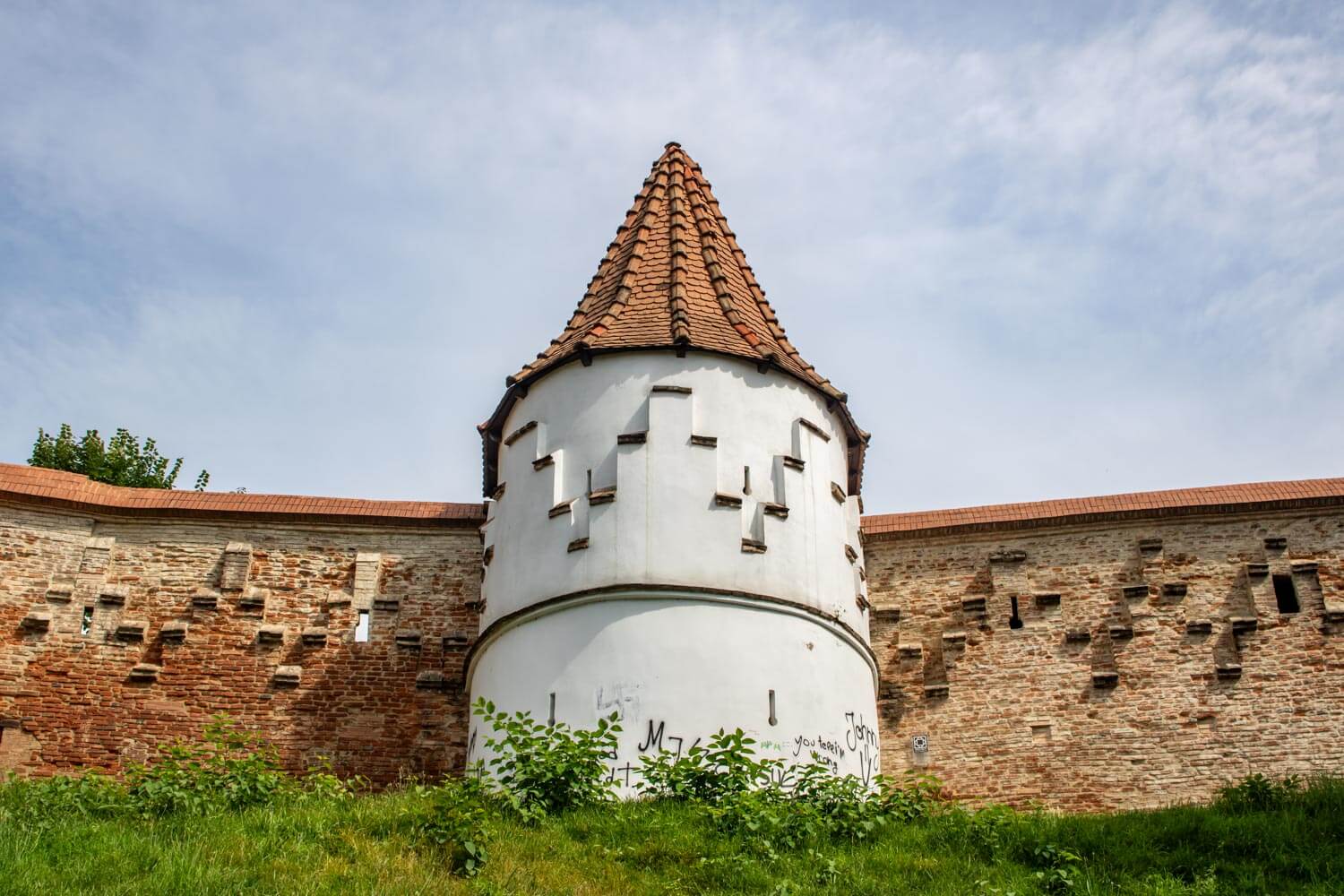
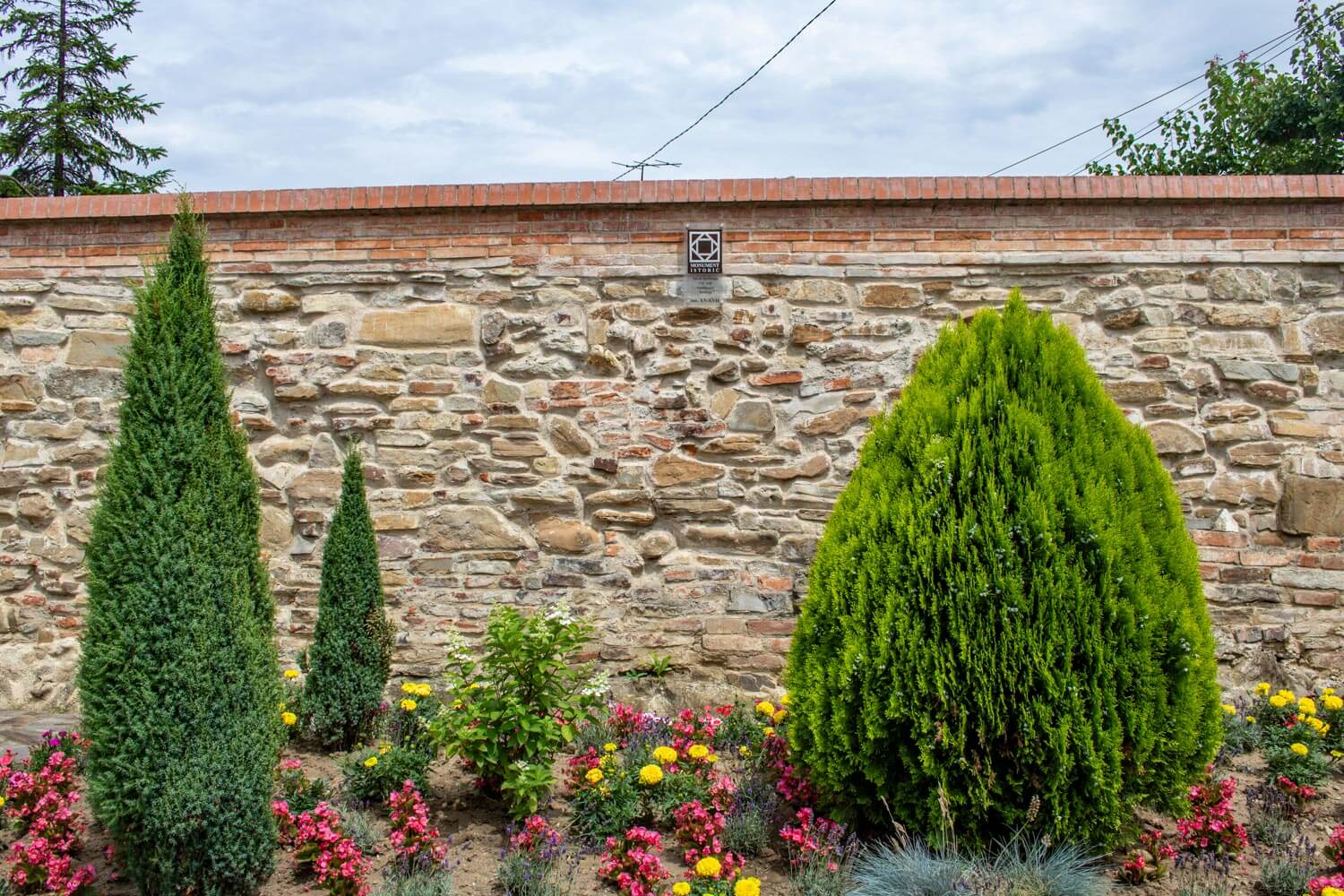
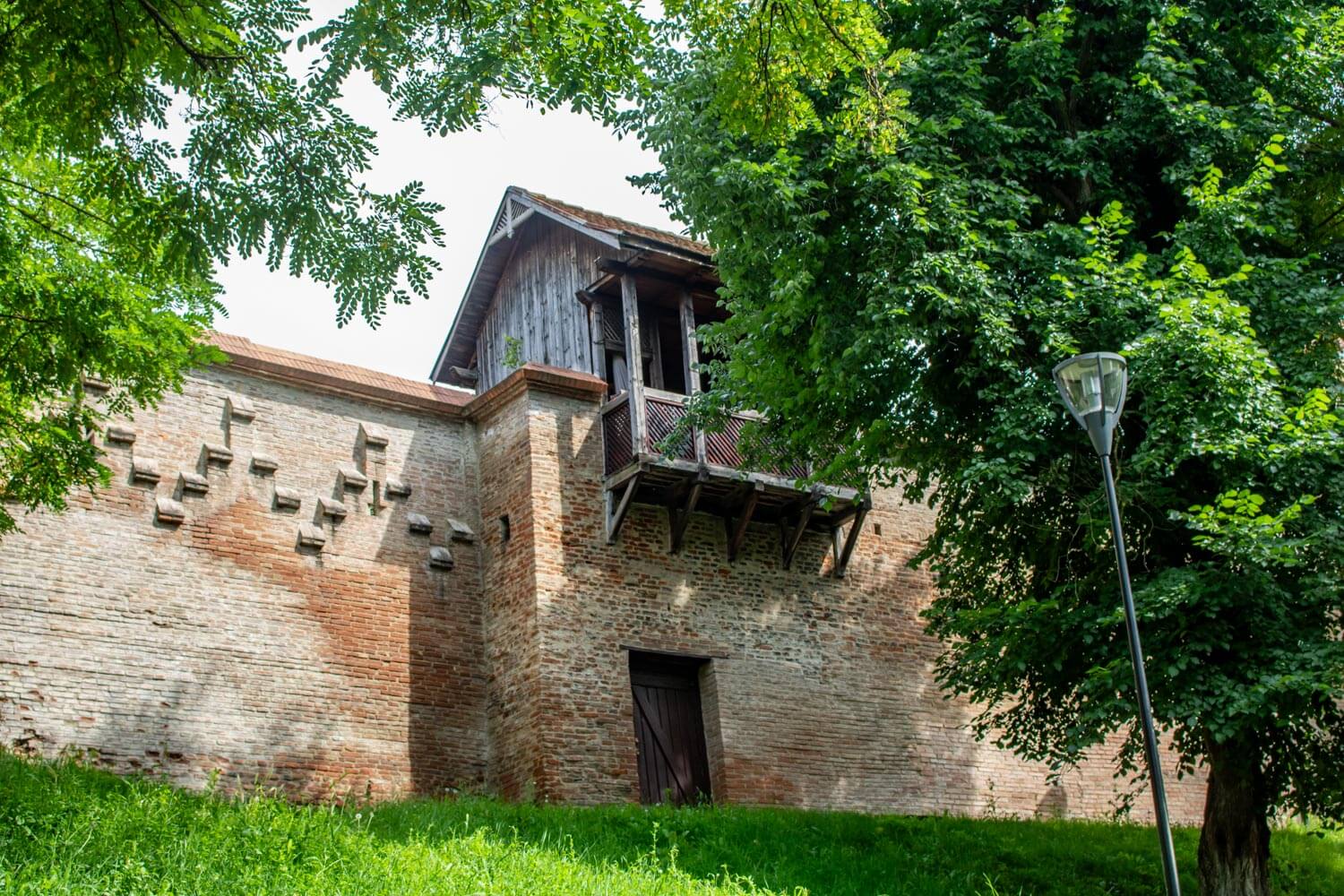
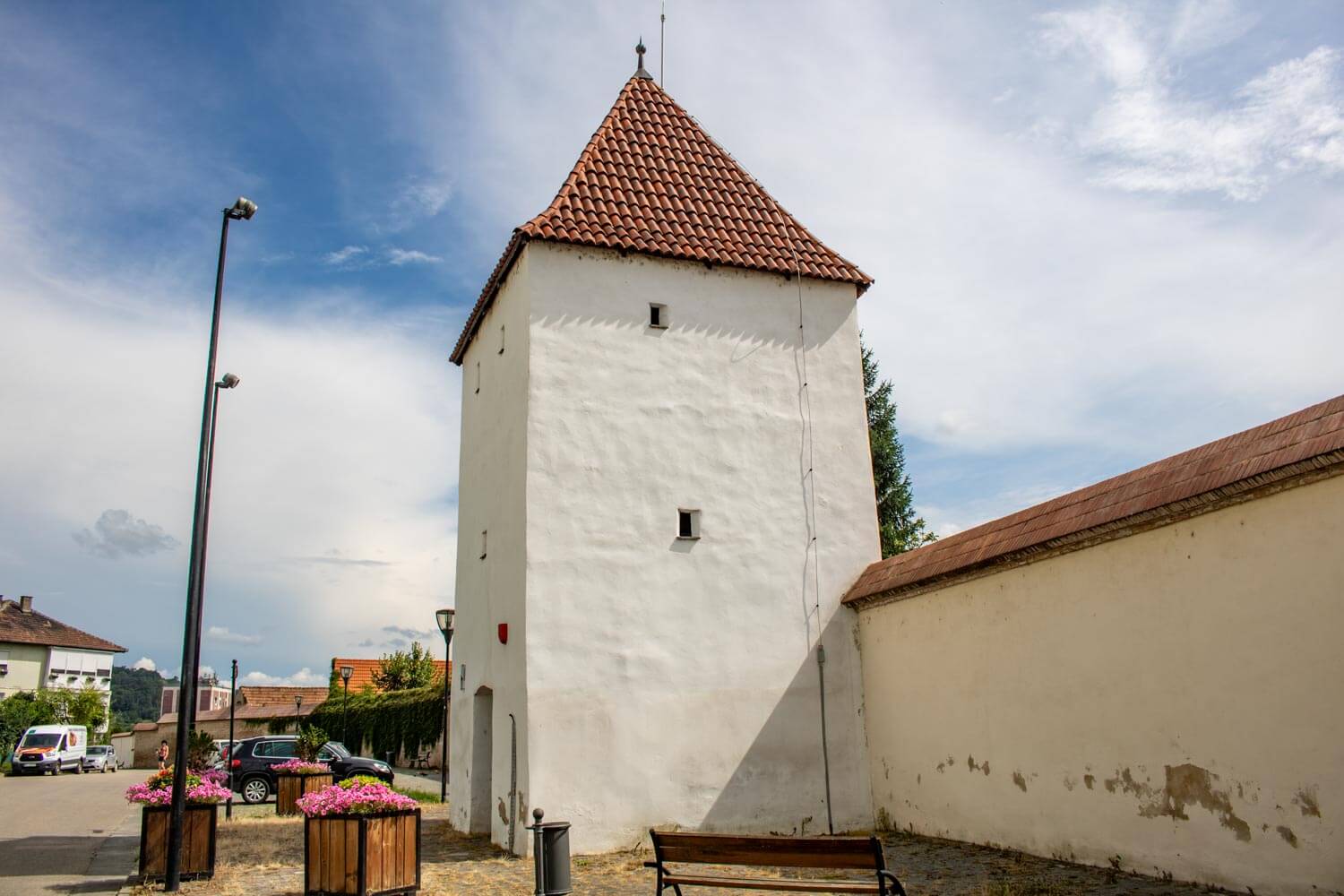
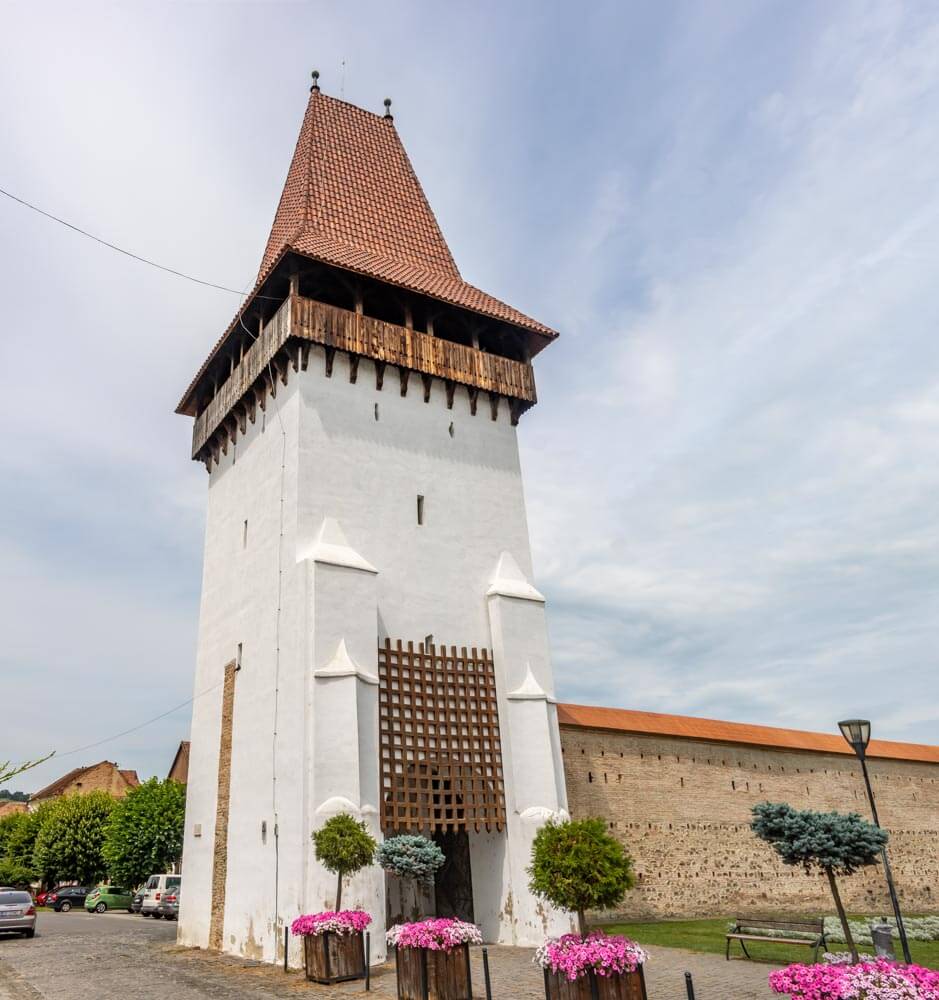
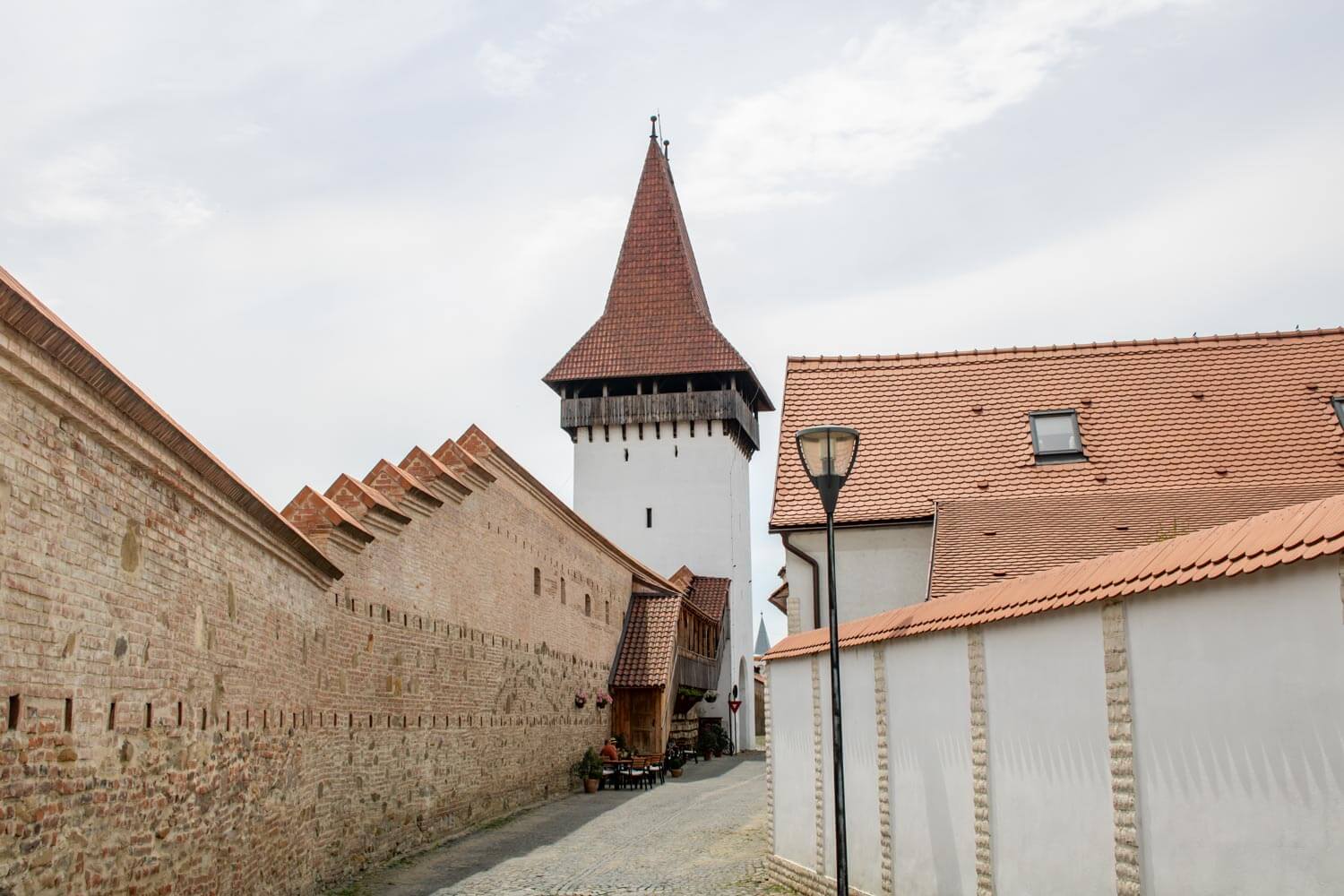
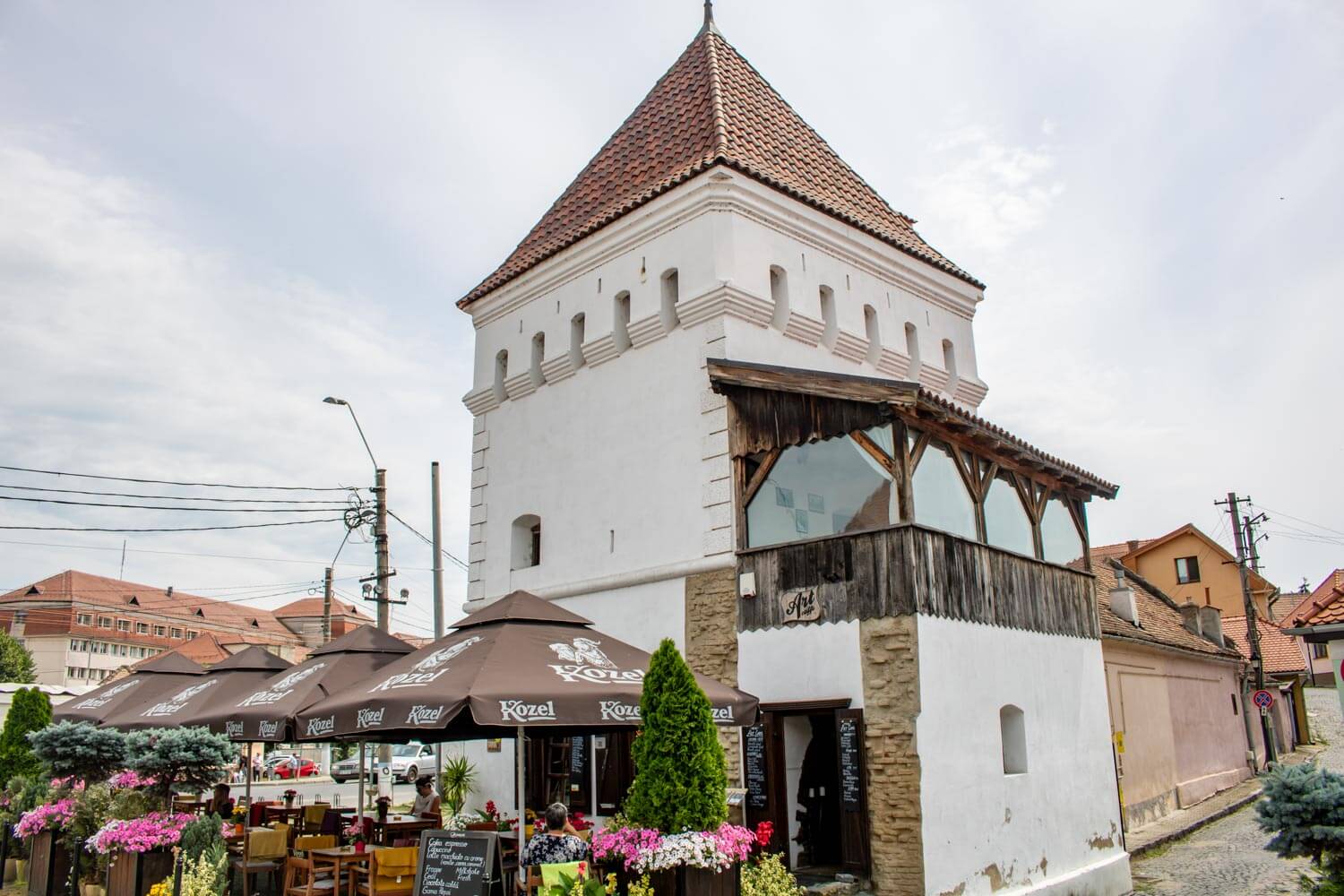
The Medieval Fortifications of Mediaș (Fortificațiile Medievale ale Mediașului) are the surviving remains of the defenses that once protected the historic town of Mediaș. The earliest of these grew around Saint Margaret’s Church, where the inner Citadel (Castelul) formed a fortified refuge, before the expanding town was later enclosed by a much larger circuit of walls, gates, towers and bastions. Today these defenses survive in fragments across the historic center, from the compact church enclosure to isolated towers and stretches of wall incorporated into later buildings.
History
Like many Saxon communities in medieval Transylvania, Mediaș first concentrated its defenses around the parish church. Protecting a compact enclosure required fewer walls and defenders than surrounding the entire settlement, while still giving the population somewhere to retreat when danger approached. Around Saint Margaret’s Church, this gradually developed into the inner Citadel, where the church, school, parish buildings and other structures stood behind their own walls.
The enclosure was already fortified by the 14th century and became progressively stronger as towers, ditches and additional defensive lines were added. Its importance was reinforced by the Ottoman raid of 1438, when Mediaș and the surrounding region suffered extensive destruction. During the decades that followed, the Citadel continued to serve as the town’s principal refuge, but Mediaș itself was growing well beyond the area it could protect.
By the late 15th century, the town therefore began moving toward a much larger defensive system. King Matthias Corvin ordered Mediaș to strengthen its defenses in 1486, and work on a stone-and-brick circuit around the entire settlement followed. The project required considerable manpower, and in 1495 King Vladislaus II ordered inhabitants of Mediaș and the surrounding Saxon districts to participate in the construction.
The new walls eventually formed a circuit of roughly 2.4 kilometers around the town, entered through three principal gates at Forkesch in the south, Steingasse in the north and Zeckesch in the east. Towers and bastions were built along the perimeter, with many sections entrusted to craft guilds that were responsible for maintaining and defending them. Further towers and secondary entrances were added over time as the system continued to develop.
Even after the outer walls were completed, the older Citadel remained an important defensive position inside them. Writing in 1534, the traveler Tranquillo Andronico described Mediaș as a walled town with a smaller fortified stronghold at its center, protected by its own ditch, walls and towers. The two systems therefore worked as successive layers: the outer circuit defended the settlement as a whole, while the Citadel provided a more compact stronghold around the church.
Although the outer walls gave Mediaș a much stronger defensive perimeter, they were repeatedly tested during the conflicts that followed. Forces supporting John Zápolya besieged and captured the town in 1529, and further fighting around the turn of the 17th century brought occupation, plundering and damage that required repeated repairs to the walls, gates and towers.
Those defenses were tested most severely during the Kuruc siege of 1705, when fighting continued for several months and the older Citadel was drawn directly into the defense once again. Saint Margaret’s Church, the school and the churchyard were used for military purposes, while further sections of the walls and bastions were destroyed before the Kuruc forces withdrew in 1706.
The damage came at a time when medieval walls were already becoming increasingly vulnerable to modern artillery. Plans for a completely new bastioned system were drawn up but never carried out, and the old defenses gradually lost their military role. As Mediaș expanded, gates were removed, new routes opened through the old perimeter, and houses were built against or into surviving sections of wall. What remains today is therefore a fragmented defensive landscape, with towers, bastions and stretches of wall surviving in separate parts of the historic center.
Surviving Fortifications
The surviving fortifications scattered around Mediaș can be divided into two main groups: the inner Citadel around Saint Margaret’s Church and the later outer defenses that once enclosed the wider town.
Inner Citadel
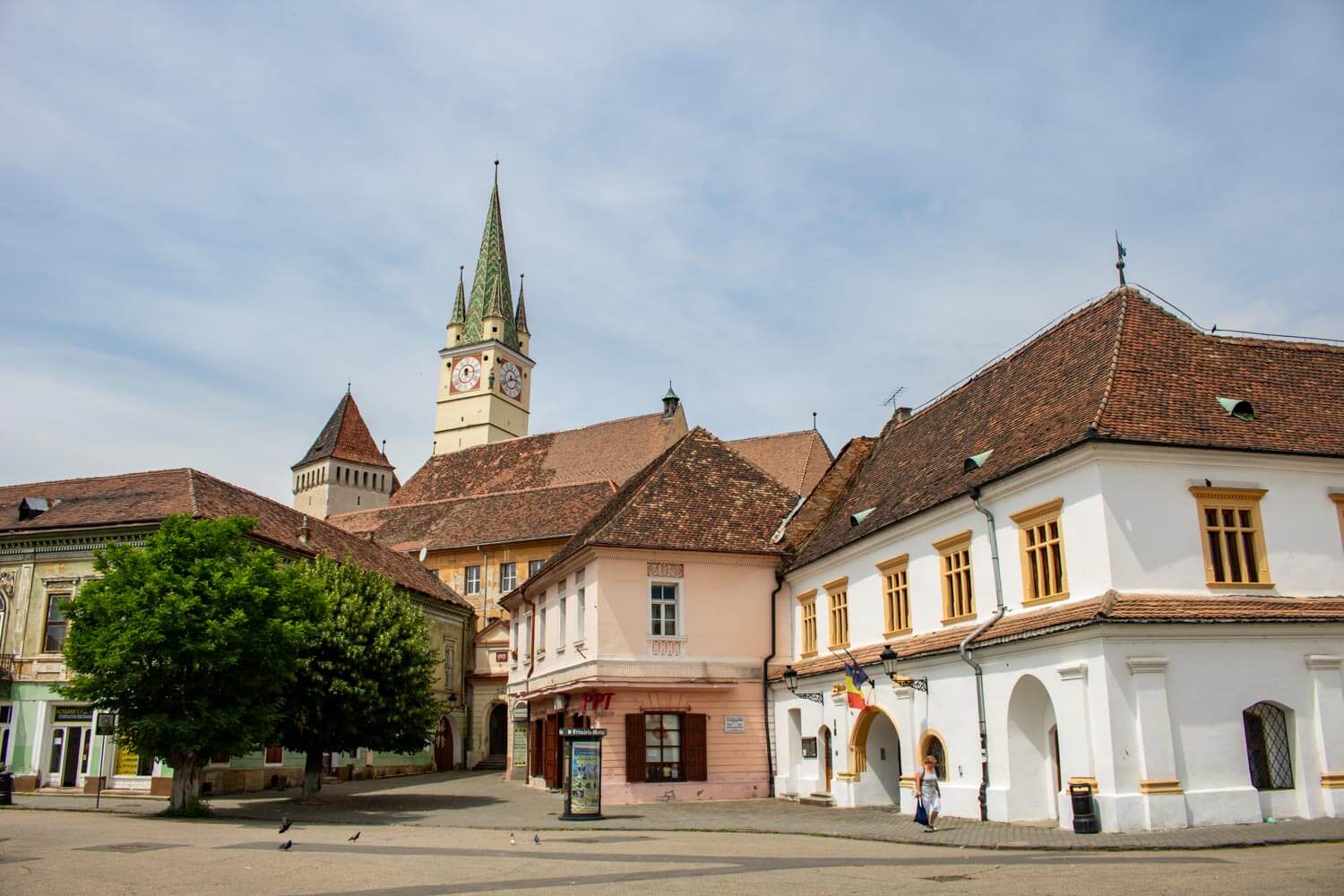
The Citadel is still easy to recognize as a compact enclosure around Saint Margaret’s Church. Its surviving walls and buildings crowd closely around the church, preserving the feeling of a protected center within the larger medieval town.
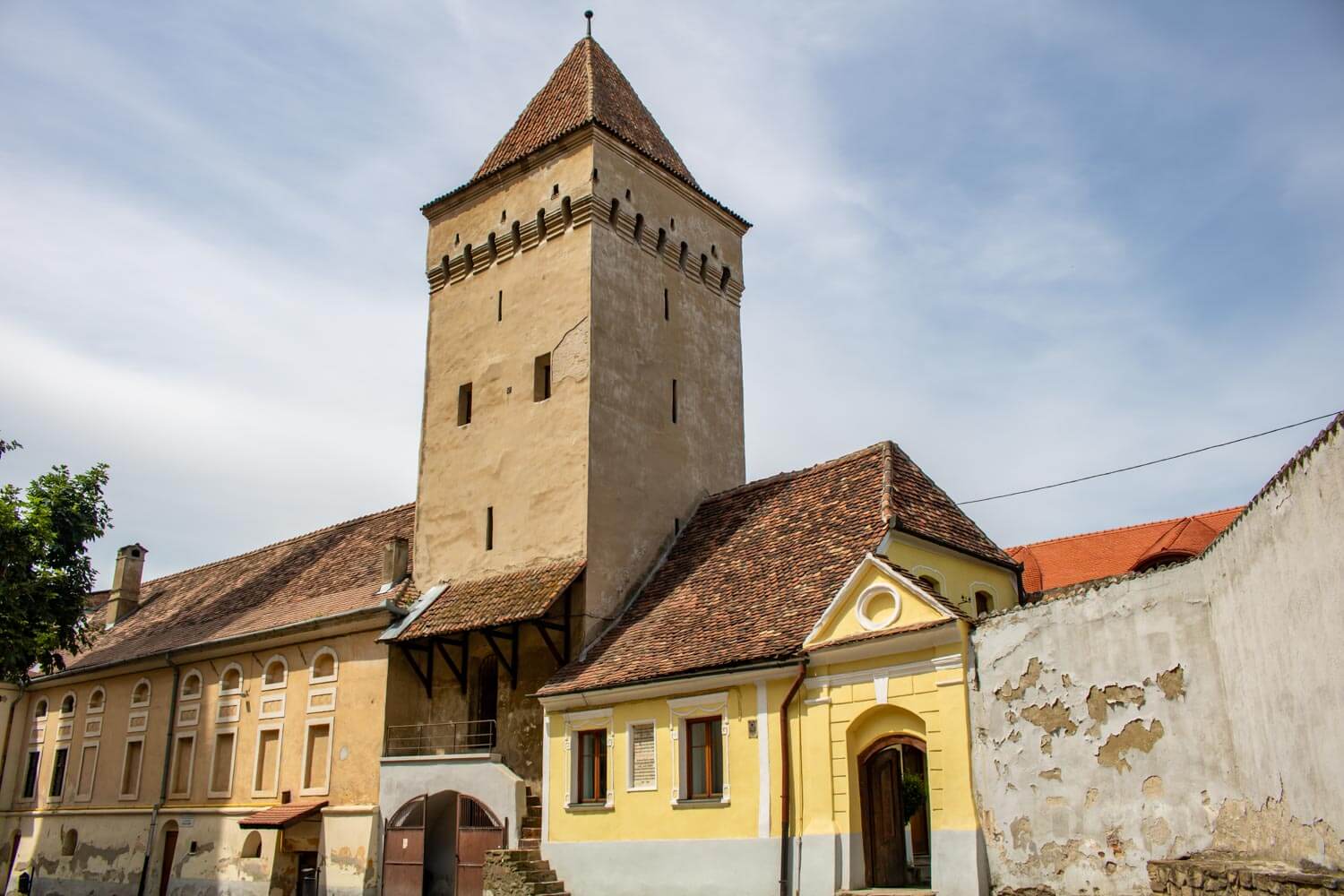
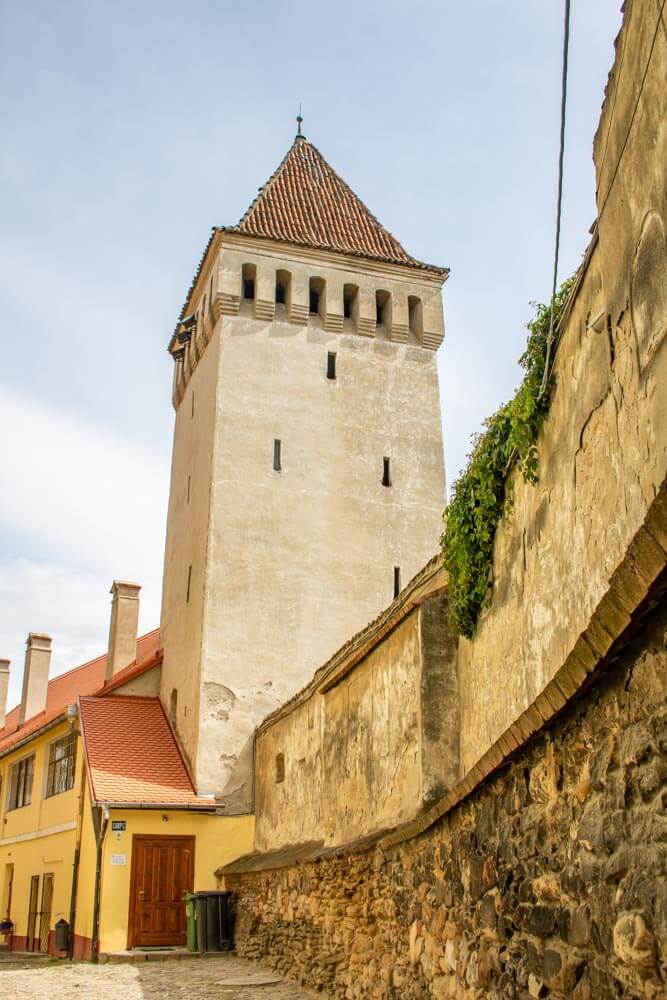
Four defensive towers remain around the enclosure: the Bell Tower at the western entrance, the Ropemakers’ Tower to the north, Mary’s Tower on the southeastern side and the Tailors’ Tower to the south. The tall Trumpeters’ Tower belongs to the church itself and dominates the entire complex. On the southern side, the Covered Stairway climbs into the Citadel through the former Old Town Hall buildings, passing beside rooms once used as a prison.
Outer Fortifications
Outside the Citadel, the later city defenses survive as a broken ring around the historic center. Walking through the surrounding streets reveals how differently each section has survived, from complete gate towers and long walls to bastions almost hidden inside later buildings.
Southern Fortifications
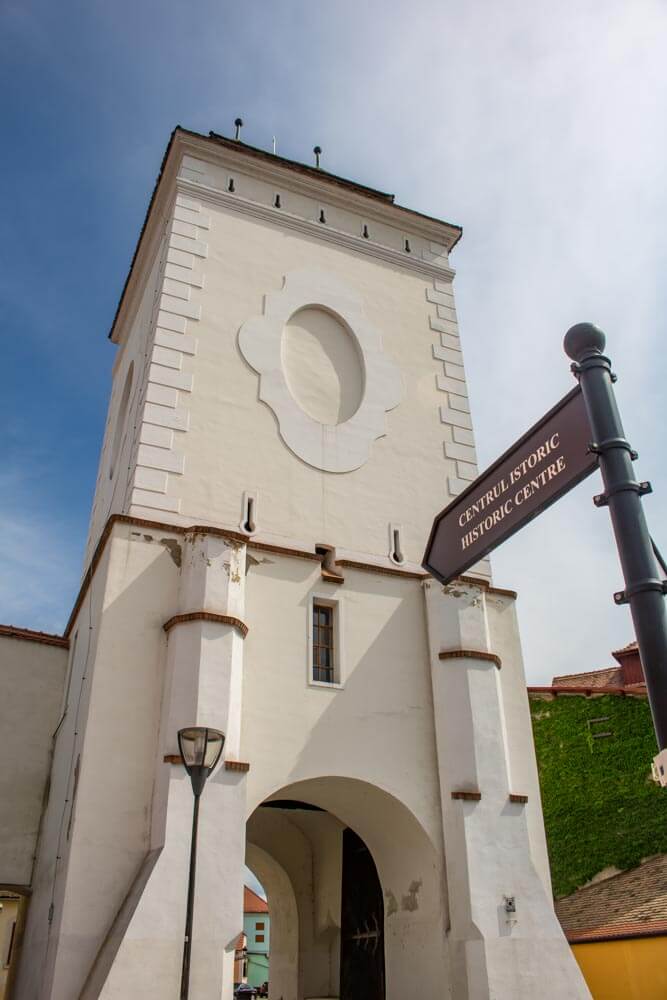
Approaching the old town from the train and bus station side brings you toward the Forkesch Gate Tower, one of the most impressive surviving entrances into medieval Mediaș. A substantial section of the southern wall continues east from the tower, with its reconstructed wooden wall-walk visible on the inner side.
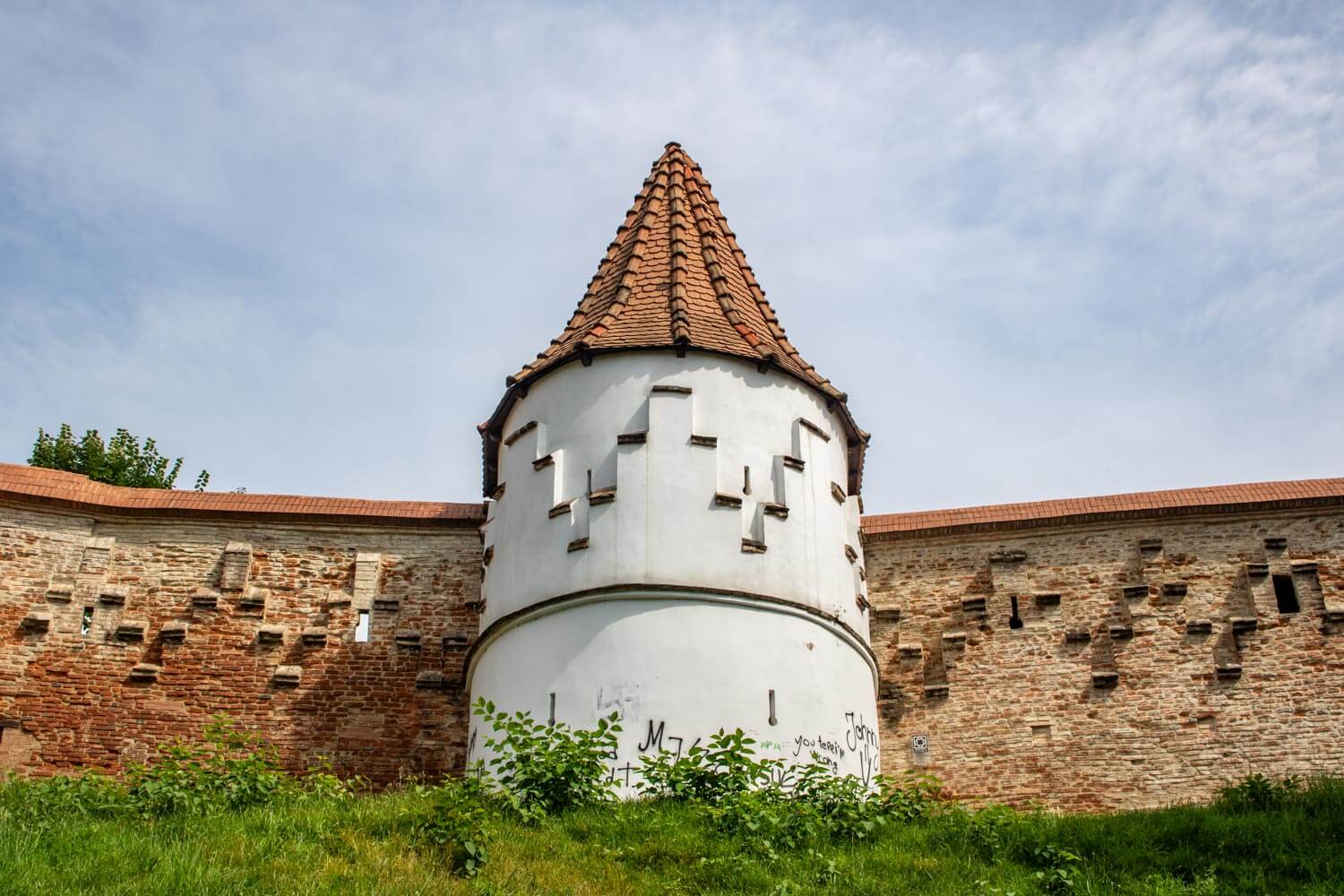
Following the wall toward the southeastern corner leads to the Furriers’ Bastion. Unlike the tall towers elsewhere in the city, this broad wedge-shaped bastion has been incorporated into later buildings and is surprisingly easy to overlook from street level.
Eastern Fortifications
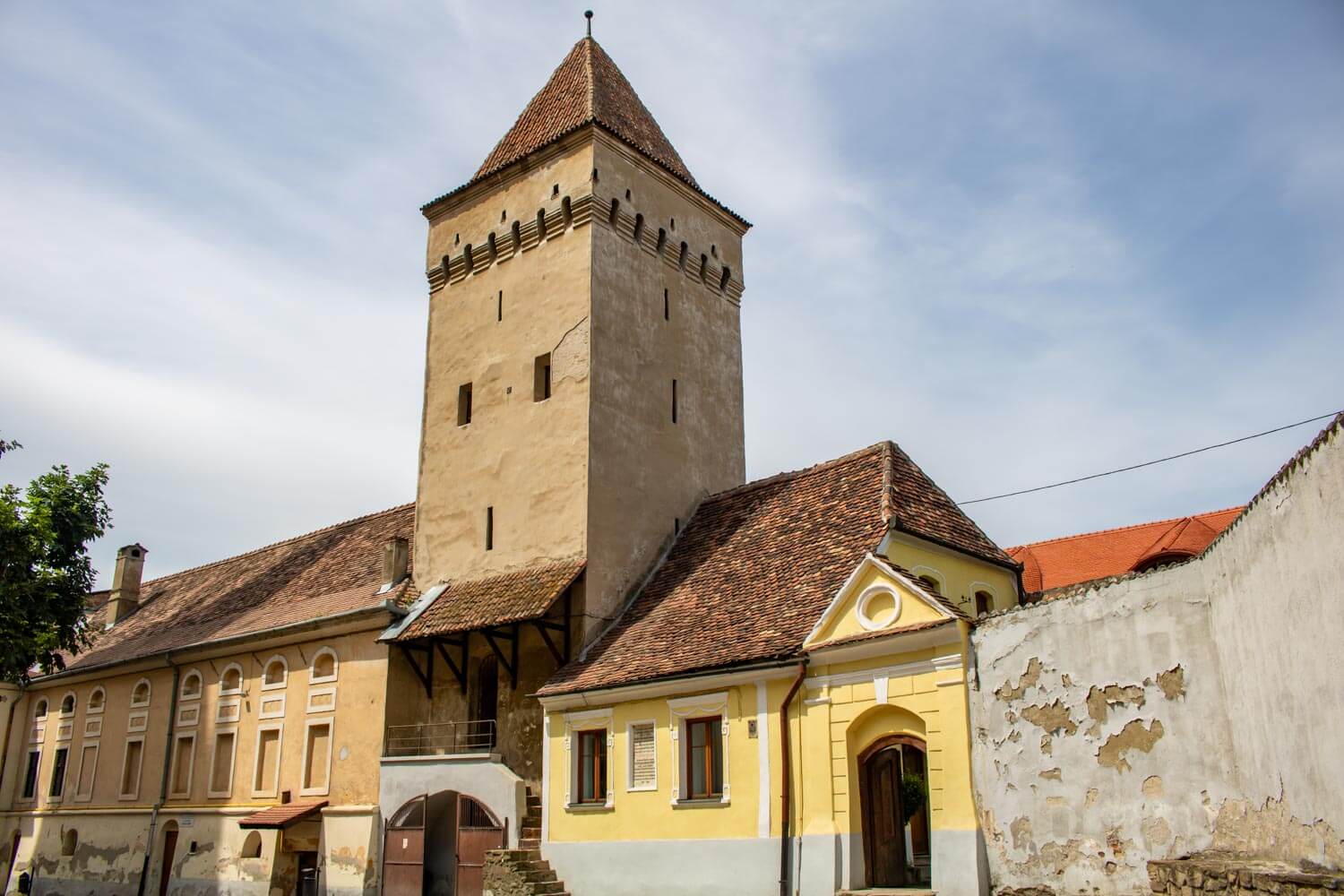
The eastern side preserves several separate defensive structures along with substantial stretches of wall. The Blacksmiths’ Tower stands beside the former entrance from Blacksmiths’ Street and still retains the compact form of a guild tower despite its later alterations.
Farther north, a much more continuous section survives around the Wheelmakers’ Tower, the former Franciscan church and monastery, and the Cutlers’ Bastion. The monastery complex developed at roughly the same time as the outer fortifications, and its buildings were incorporated directly into the defensive line, with the church tower also serving a military role. From the Wheelmakers’ Tower, the wall continues through this ensemble to the Cutlers’ Bastion at the northeastern corner, where the defenses turn toward the northern side of the old town.
Northern Fortifications
The Cobblestone Street Gate Tower marks the most substantial surviving feature on the northern side. Historically known from the German street name Steingasse, meaning “Cobblestone Street,” it guarded one of the three principal entrances into the town.
Only fragments of the northern wall survive around it today, so this part of the circuit feels more open than the better-preserved southern and eastern sides.
Western Fortifications
The western side preserves one of the longest continuous stretches of the medieval city wall, running along the edge of the historic center for several hundred meters. Only one major defensive structure survives along this section: the Round Bastion.