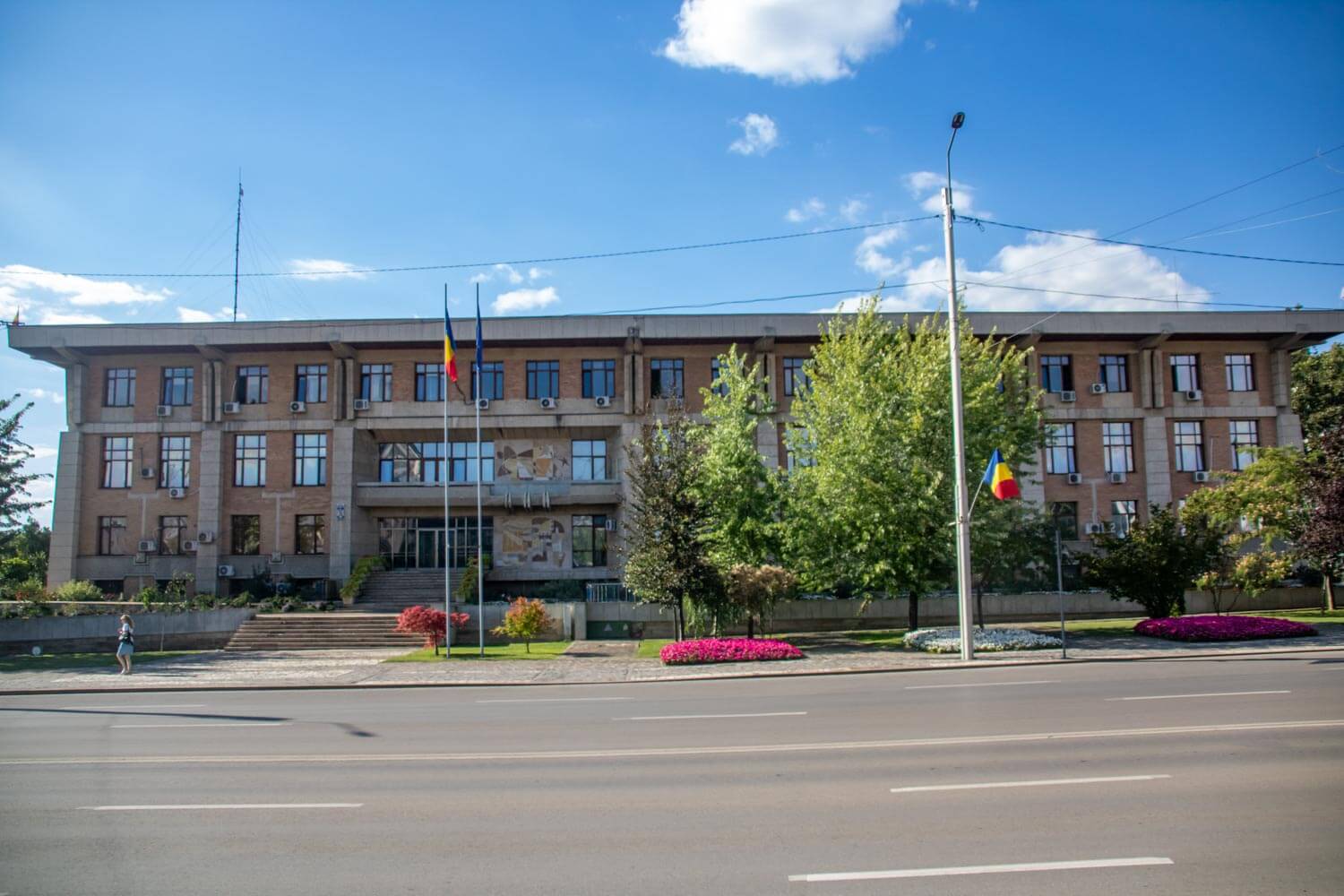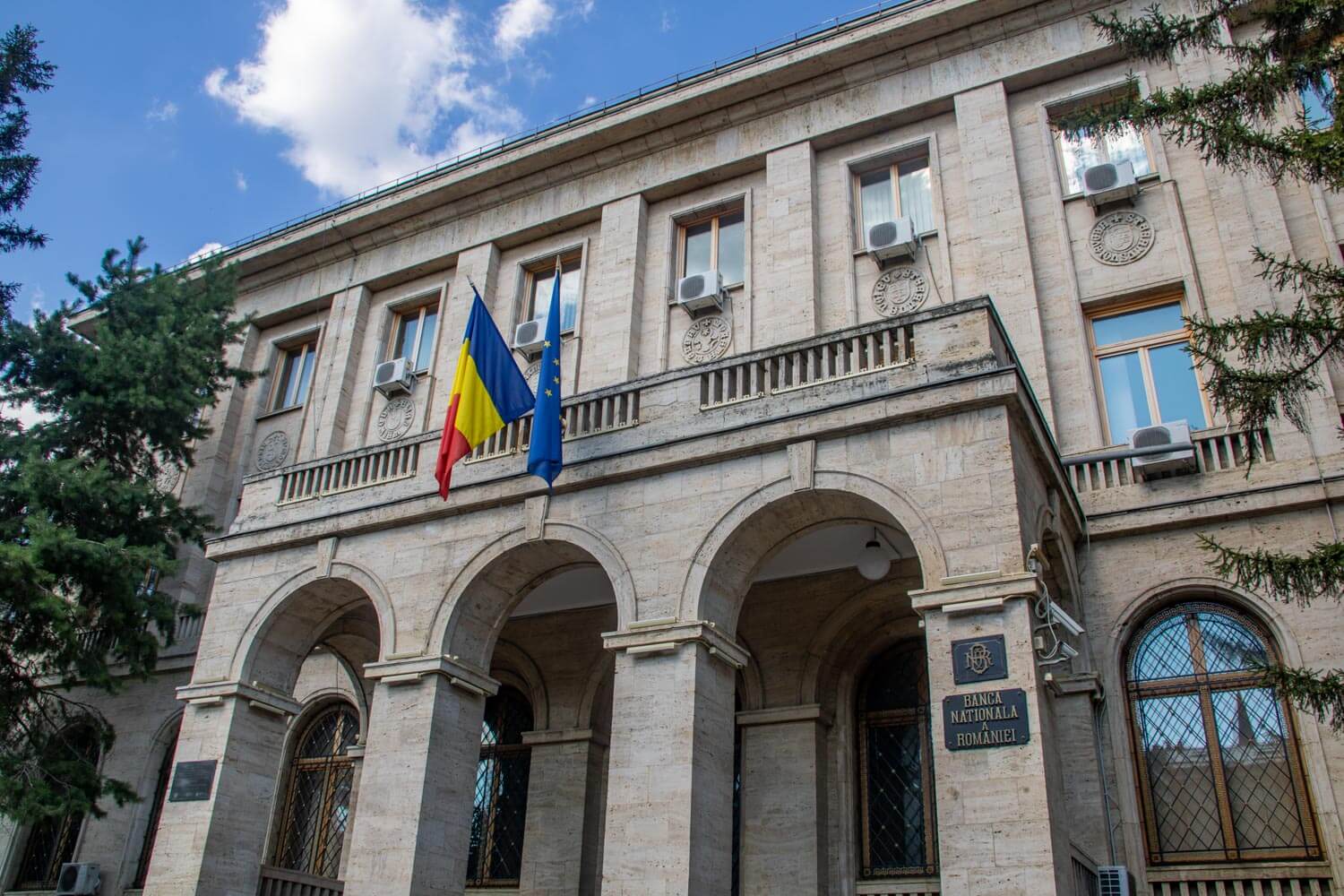
The Iași branch of the National Bank of Romania (Banca Națională a României) is housed in a monumental Neoclassical building on Stephen the Great and Saint Boulevard. Its travertine-clad façade, decorated with representations of old Moldavian coins, belongs to the postwar reconstruction of the city, although the bank’s presence on this site dates back to the 19th century.
Iași was among the first cities to receive a branch of the National Bank of Romania, which began operating here in March 1881, shortly after the institution was founded. Following an initial period in rented premises, the bank acquired a property on the city’s principal boulevard and commissioned architect Nicolae Cerchez to design a permanent headquarters. During World War I, when the Romanian government and royal court took refuge in Iași, the building temporarily accommodated the bank’s central administration and safeguarded its treasury before the valuables were evacuated to Moscow.
The original headquarters was completely destroyed during the bombardments of 1944, leaving the bank to continue its operations in a neighboring rented building. In 1946, architect Radu Dudescu began designing a replacement with his colleagues Nicolae Crețoiu and Spiridon Spirescu. Construction started that autumn and, despite the shortages and economic difficulties of the immediate postwar years, the new headquarters was completed in 1949.
The architects chose a restrained Neoclassical design that complements the older monumental buildings along the boulevard. Its symmetrical façade is finished in light-colored travertine, with nine carved stone medallions depicting Moldavian coins from the 15th and 16th centuries. These details provide a reference to the region’s monetary history and are among the building’s most distinctive exterior features.
The original layout combined public banking facilities and offices with secure basement vaults, meeting rooms, and accommodation for bank officials. Between 1994 and 2002, the building underwent consolidation and restoration to preserve its architectural features. It retains its original banking function as the Iași regional headquarters of the National Bank of Romania.