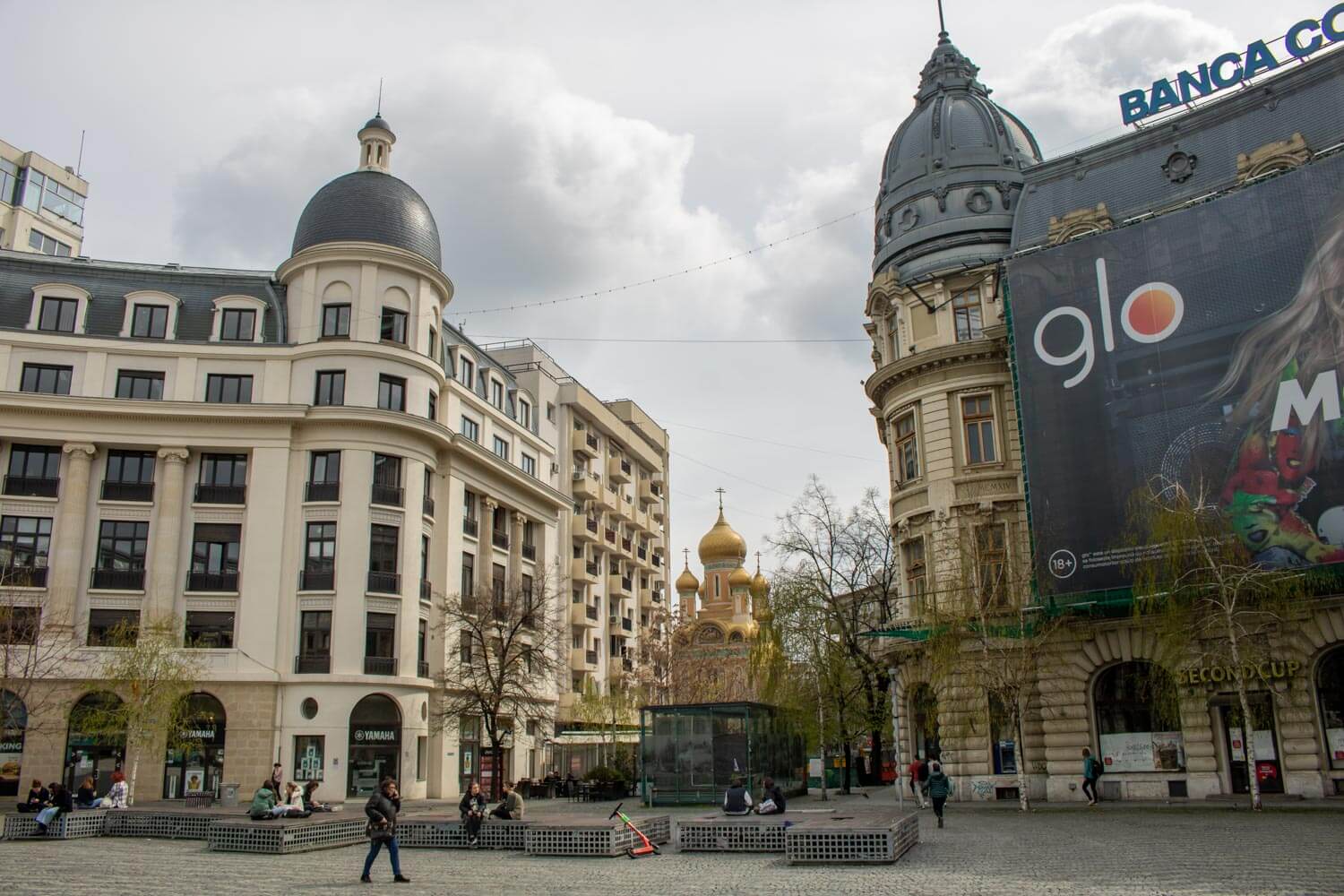

University Square (Piața Universității) is a public square in the historic old town of Bucharest, named after the University of Bucharest which dominates the square. The square is a major transportation hub and thoroughfare with a pedestrian underpass and a metro station, but it’s also a tourist attraction with several important historical and cultural landmarks.
History Of University Square
Until the 15th century of the middle ages Bucharest was not much larger than the area of the current old town, and what is now known as University Square was the northern city limit. When the city grew further in the following centuries, the location of the current square became known as the “great crossroad” (marea intersecție) of the north-south and east-west axes at the geometric center of the city.
Although it wasn’t a monumental square, it emerged as the most important junction of the city that became known as Ion C. Brătianu Square, after a large monument of the 19th century politician was placed in the center. The junction started to get the character of a square with the constuction of the University of Bucharest, after which it is nowadays named.
On 24 October 1987, the Universitate metro station was opened together with the University Passage, a pedestrian underpass to cross the 4-way intersection.
During the Romanian Revolution of December 1989, University Square was one of the places where demostrations and riots took place which led to the overturning of the communist regime at the expense of many civilian casualties.
A few months later, in April 1990, another protest took place, which is known as the Golaniad (Golaniada). Before the first post-communist elections took place in May, students and professors of the university gathered to protest against the participation of Communist Party members in the elections.
The demonstration went on for days and despite attempts to repress the protestors, more people gathered together reaching an estimated 50,000. Interim president Ion Iliescu realised that repressing the demonstration with force was no longer going to work, but refused to negotiate with the protestors and instead started demonizing them in the state-controlled media by calling them hooligans (golani), extremists, fascists and similar names, which later gave the protest its name.
Transportation Hub
University Square is a major transportation hub for traffic, public transport, and pedestrians and there’s an underground car park which has its entrance on Academy Street (Strada Academiei) and its exit onto the roundabout.
The square is served by the Universitate metro station that connects it in north-south direction via the M2 line. More information about the Bucharest metro can be found here or you can check out our Bucharest Transportation Guide.
University Square is also a major traffic intersection. The following roads are connected to the square:
- Queen Elisabeth Boulevard (Bulevardul Regina Maria) in western direction.
- Nicolae Bălcescu Boulevard (Bulevardul Nicolae Bălcescu) in northern direction.
- Carol I Boulevard (Bulevardul Carol I) in eastern direction.
- Ion C. Brătianu Boulevard (Bulevardul Ion C. Brătianu) in southern direction.
Underneath the roundabout that connects the abovementioned roads, there is a pedestrian underpass called University Passage (Pasaj Universitate). Inside the passage are a few shops and one of the entrances to the metro station.
Sights And Landmarks On University Square
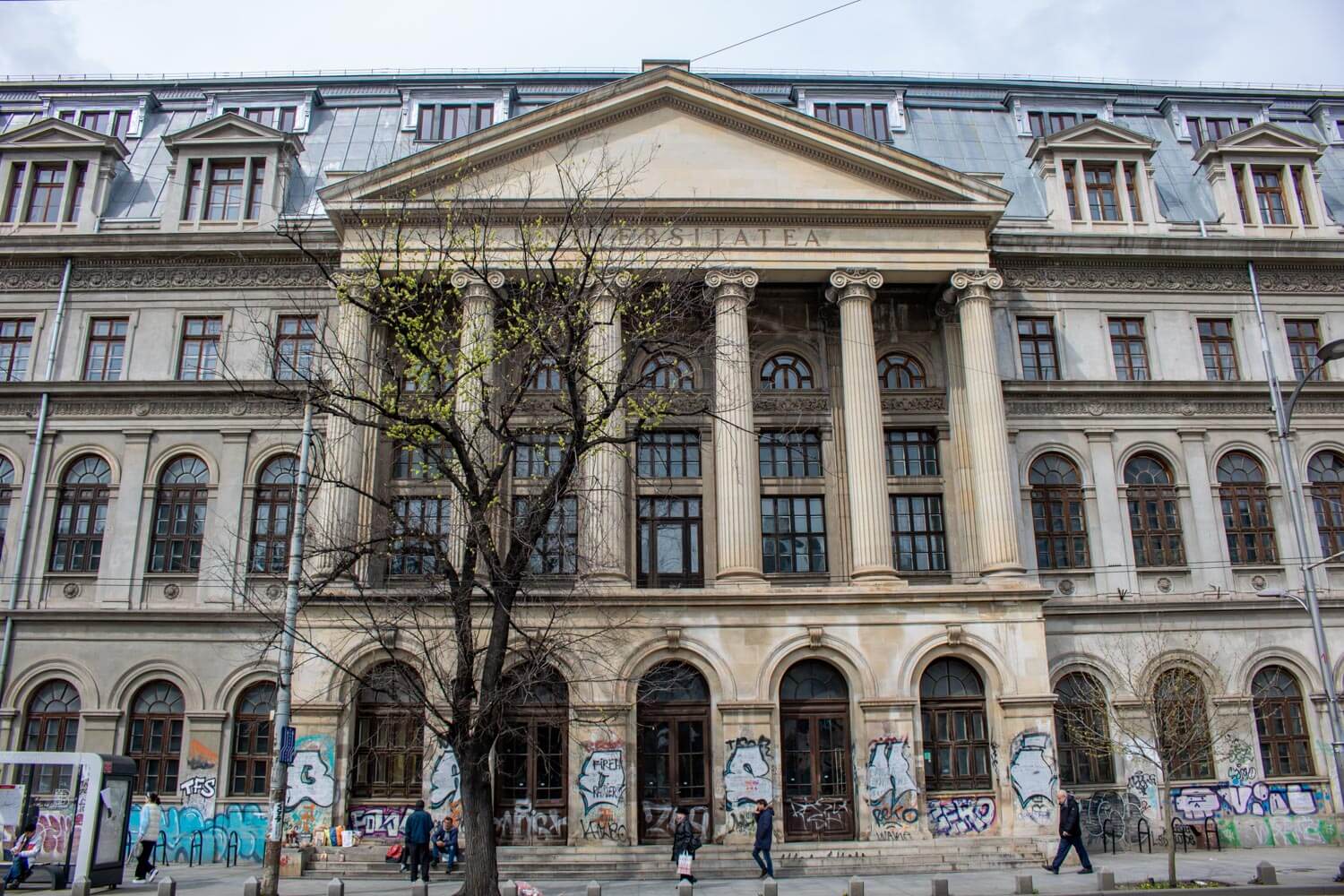
The northern side of the square is dominated by the University of Bucharest. The building called the University Palace was constructed between 1857 and 1869 as the first building of the university, which nowadays has locations all over the city.
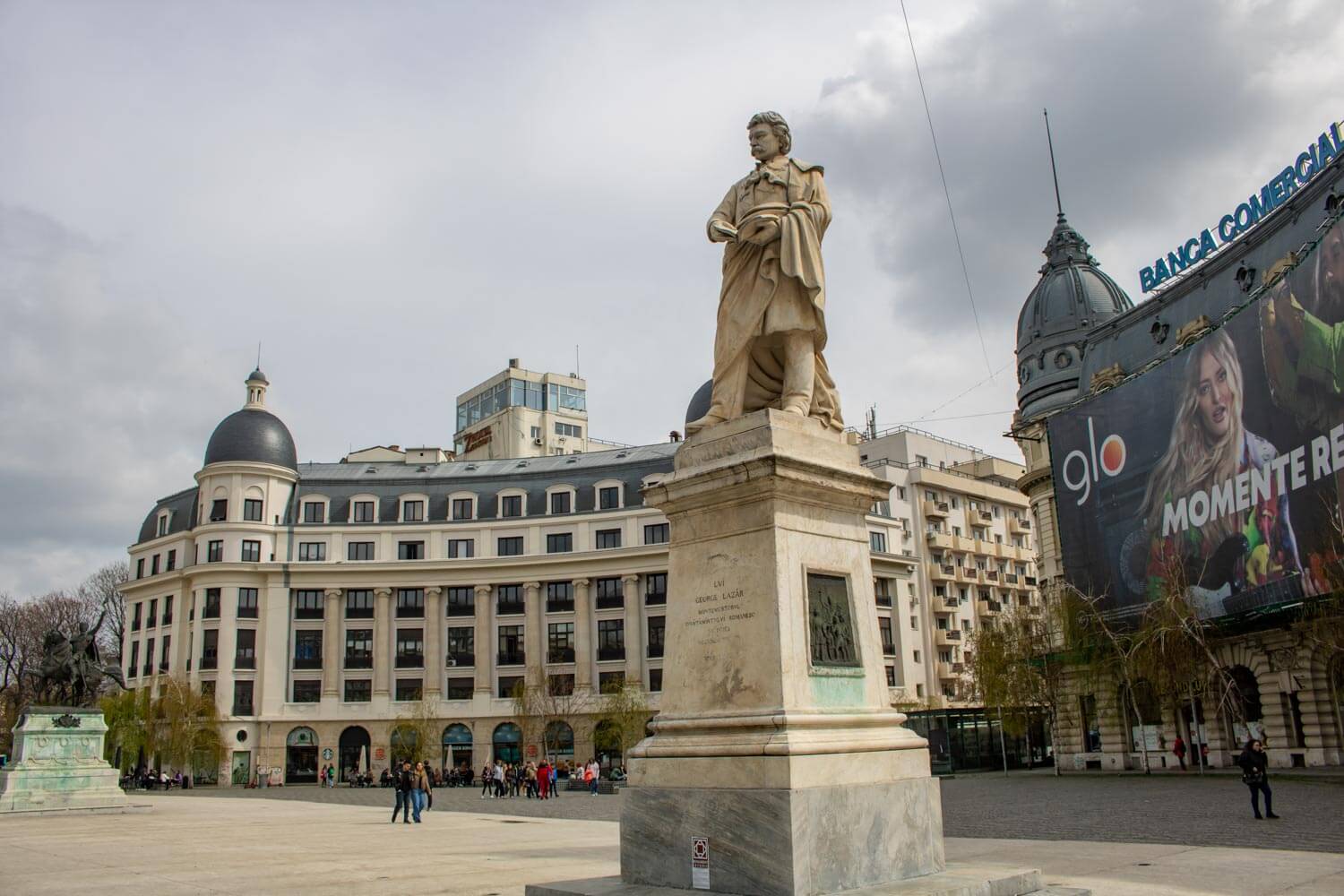
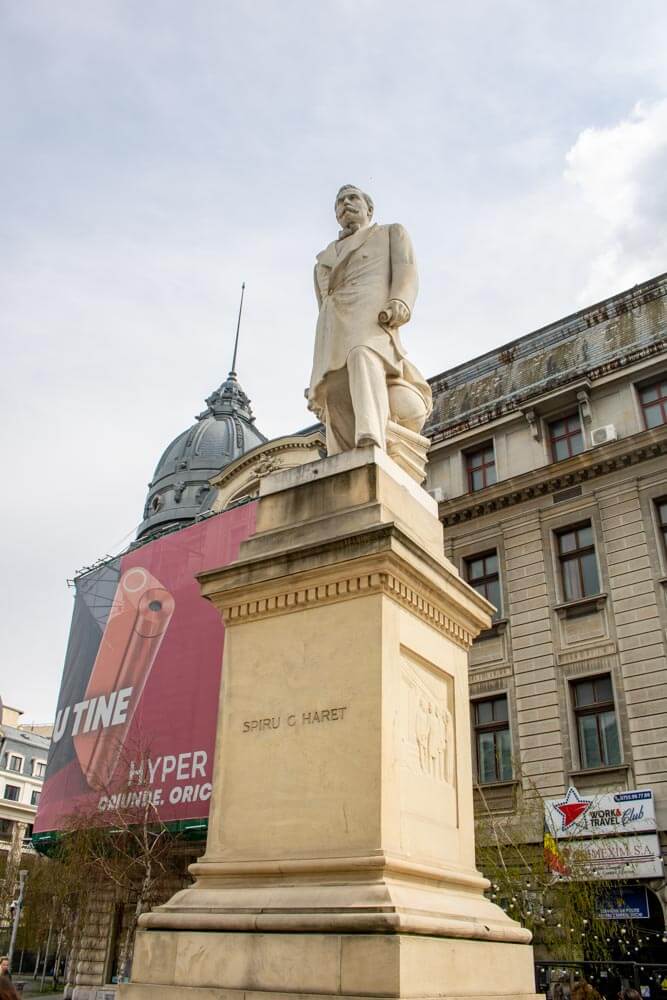
In the center of the square, four monuments are lined up:
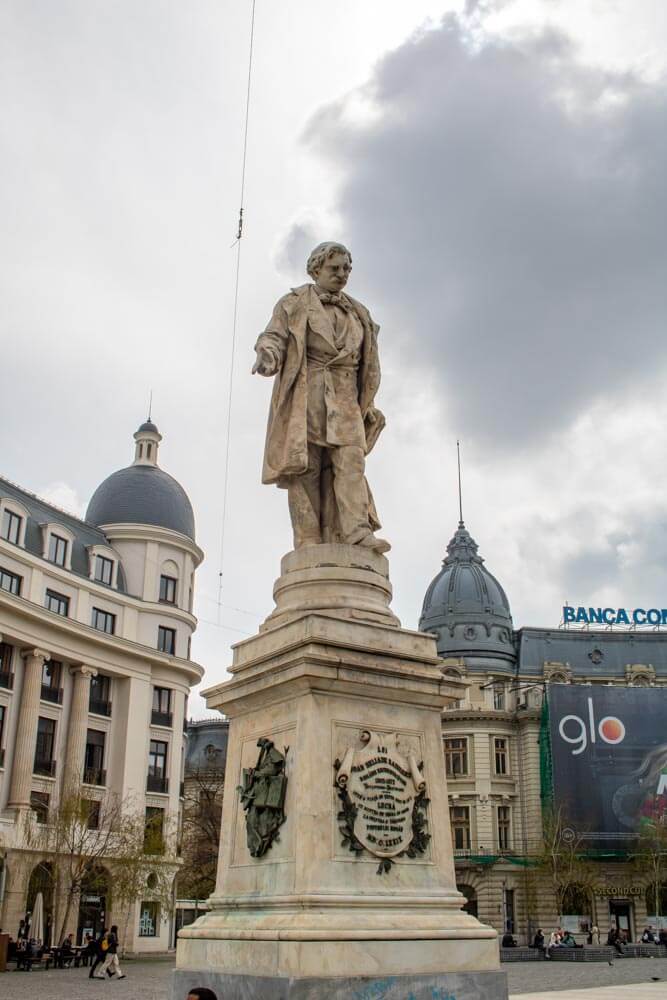
- Statue of Ion Heliade Rădulescu (1802-1872), founder of the Romanian Academy, sculpted by Ettore Ferrari and unveiled on 21 November 1880.
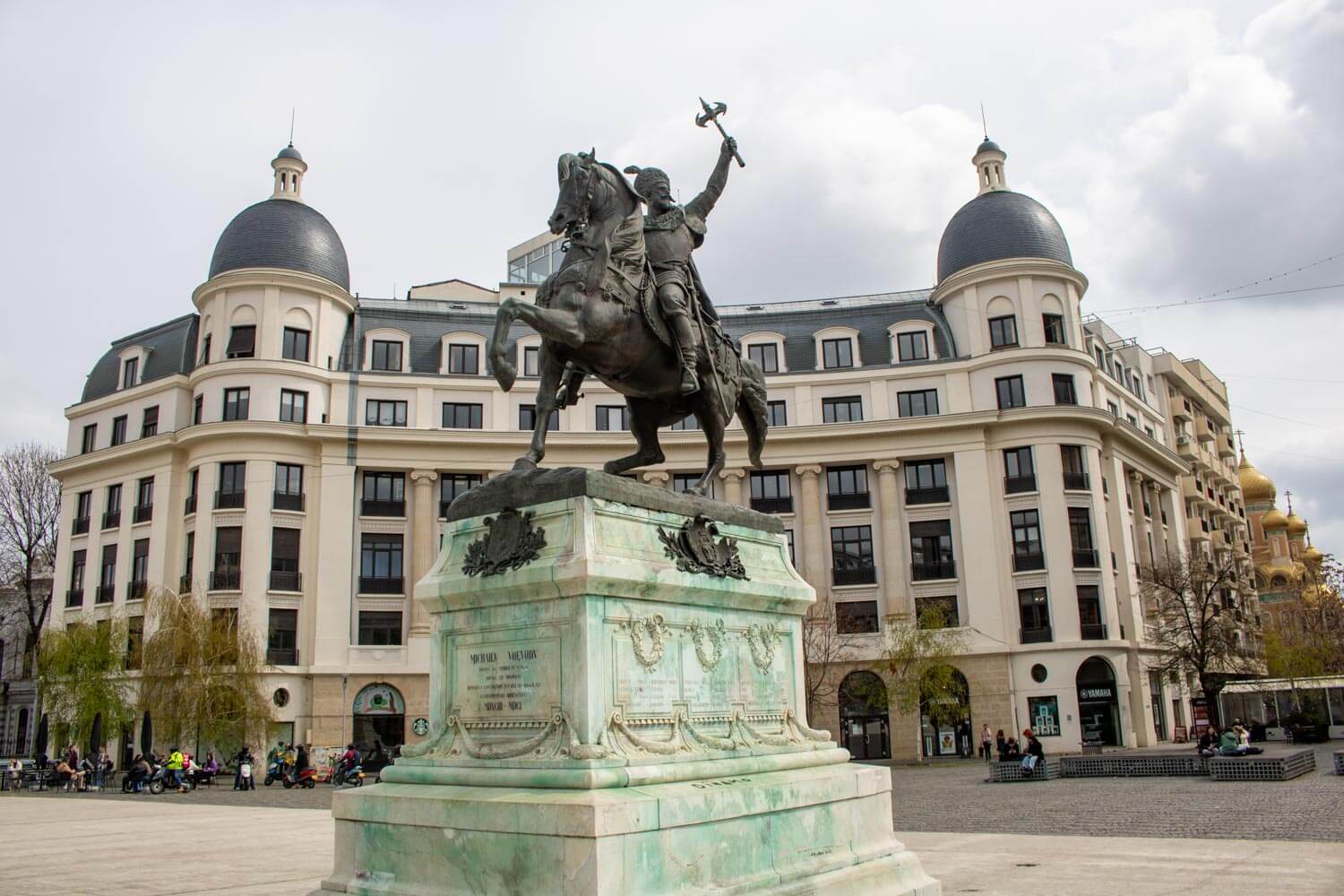
- Equestrian Statue of Michael the Brave (Mihai Viteazul, 1558-1601), Price of Wallachia and Moldavia and de factor ruler of Transylvania, sculpted by Albert Ernest Carrier Belleuse and unveiled in 1876.
- Statue of Gheorghe Lazăr (1779-1823), founder of the first Romanian language school in Bucharest in 1817, sculpted by Ion Georgescu and unveiled in 1886).
- Statue of Spiru C. Haret (1851-1912), mathematician, astronomer, and polititian, sculpted by Ion Jalea and unveiled in 1935.
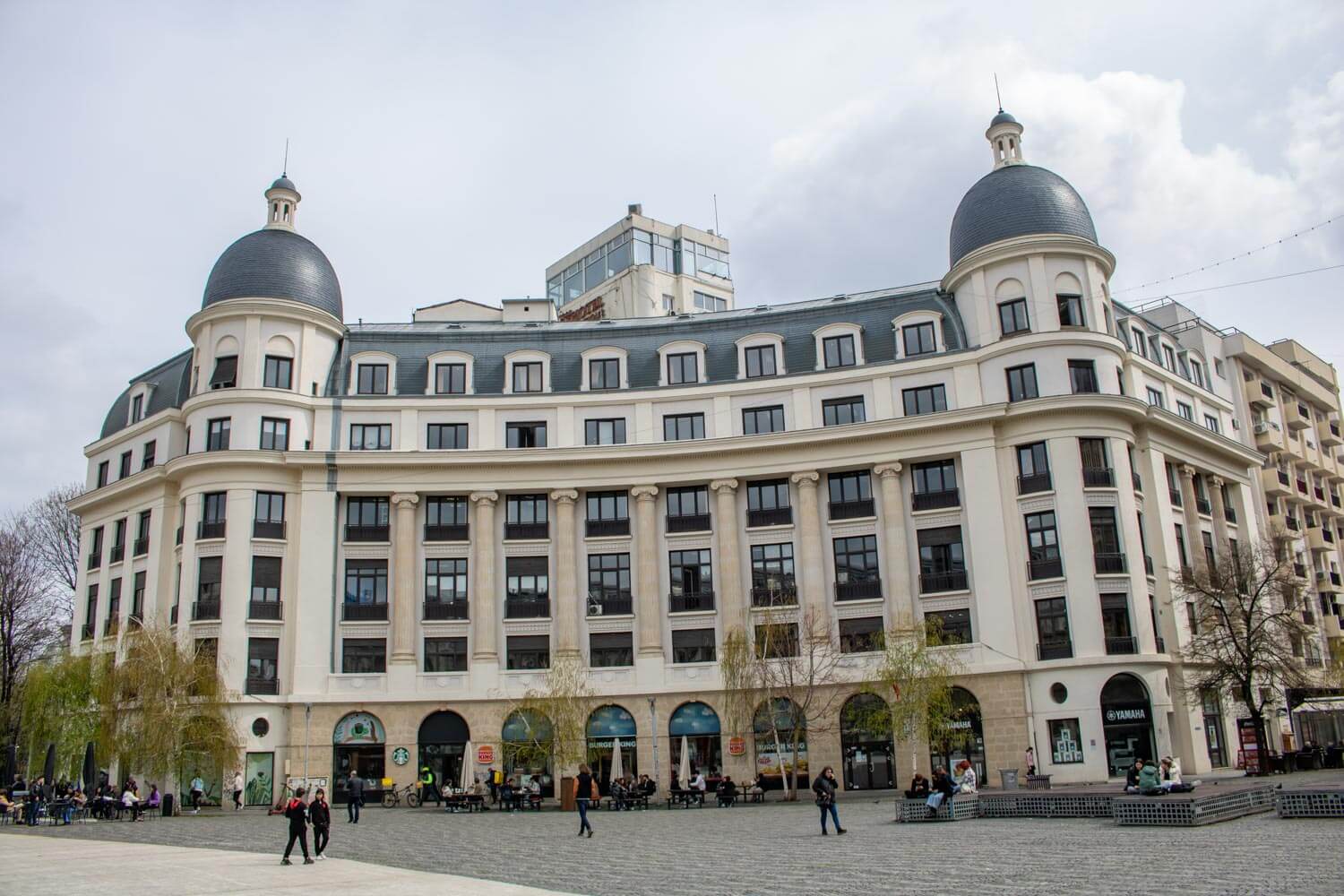
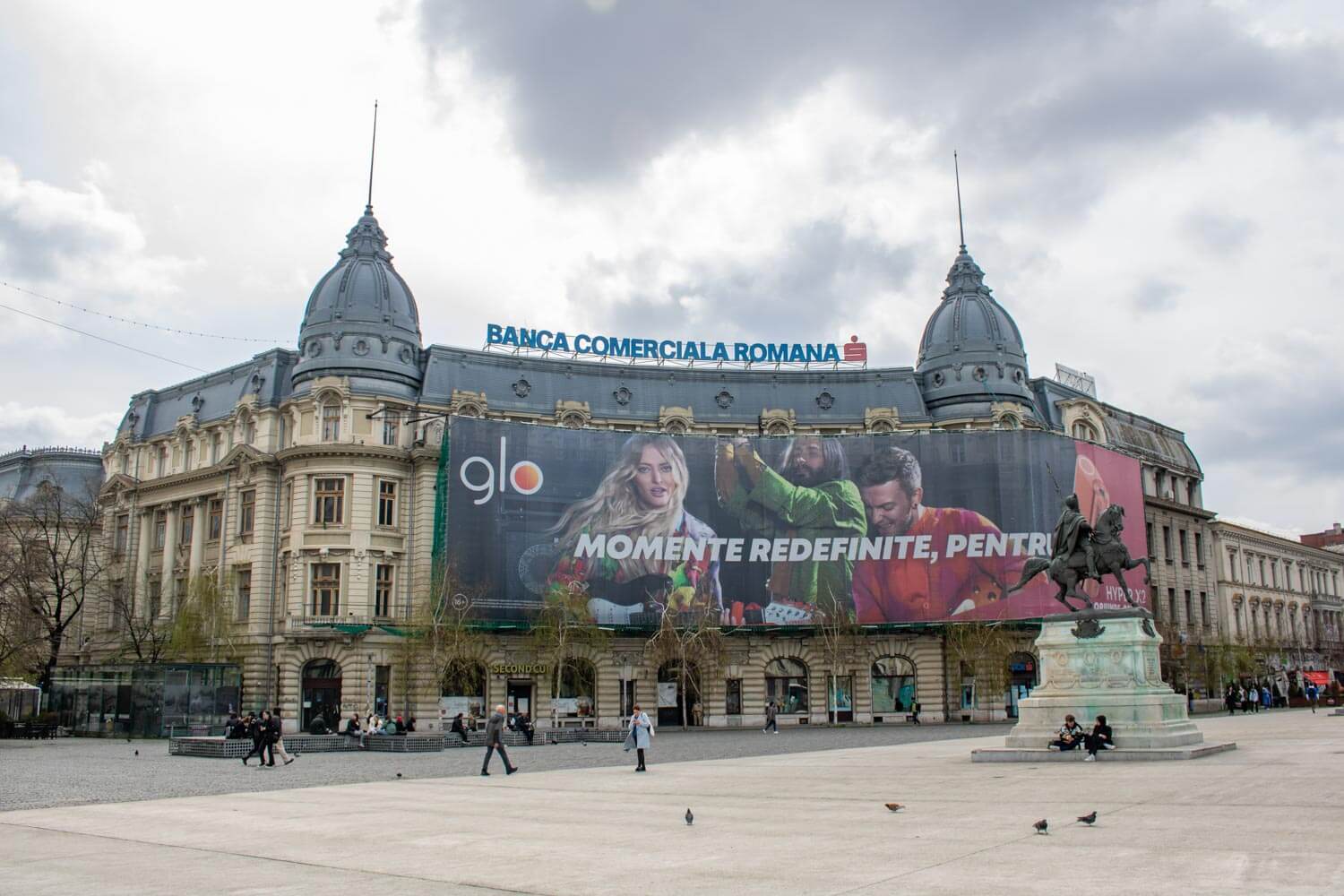
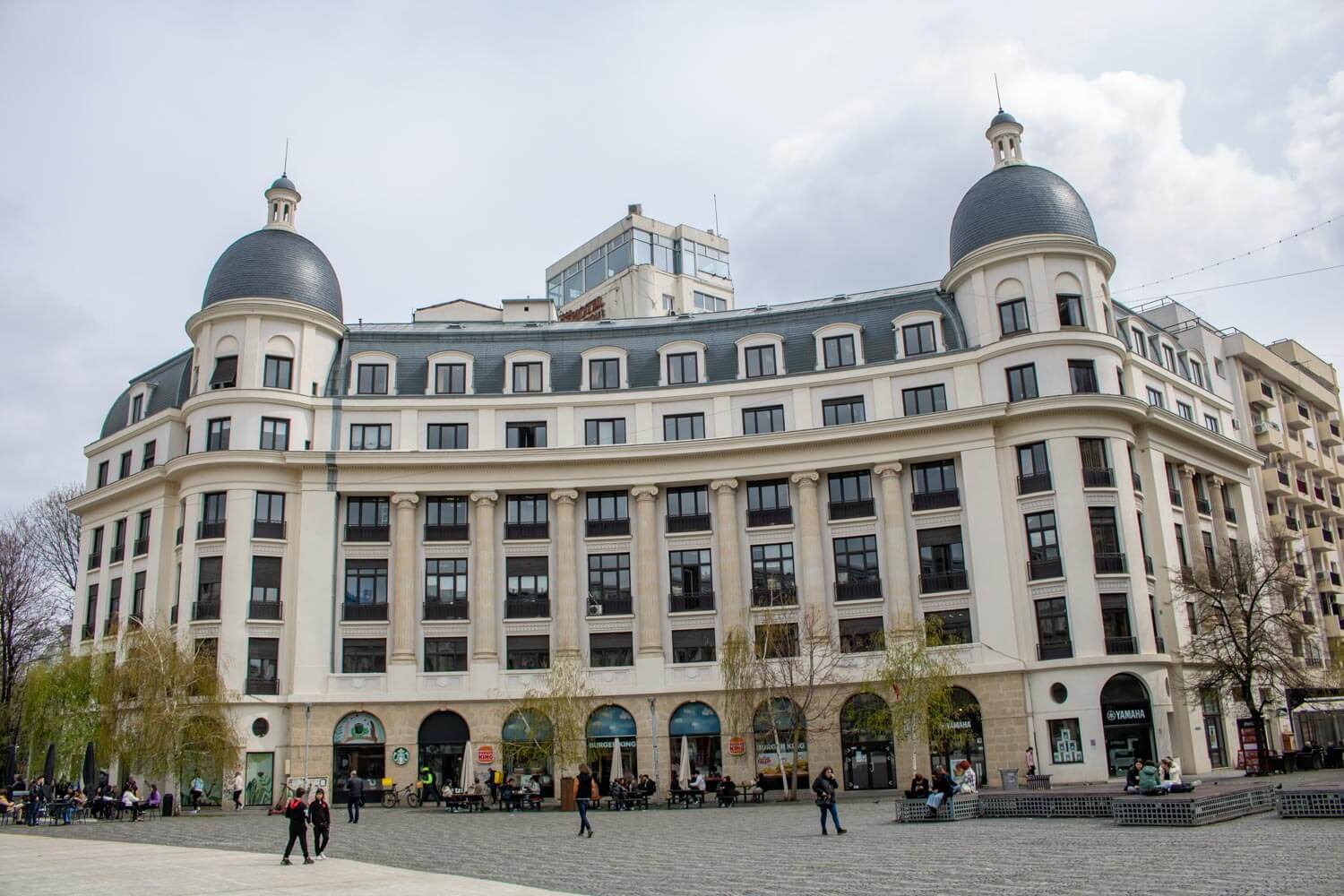
On the southern side, behind the monuments stands an architectural ensamble of two buildings that form a semi-circle around the square: the Generala Palace and the Industrial Credit Palace, both built in the first decades of the 19th century.
On the western side of the square, on the corner of Academy Street and Queen Elisabeth Boulevard, stands the historic building of the former Hotel Bristol. To the east, on the corner of Queen Elisabeth Boulevard and Ion C. Brătianu Boulevard stands the Suţu Palace from 1835 which houses the Bucharest Municipality Museum.
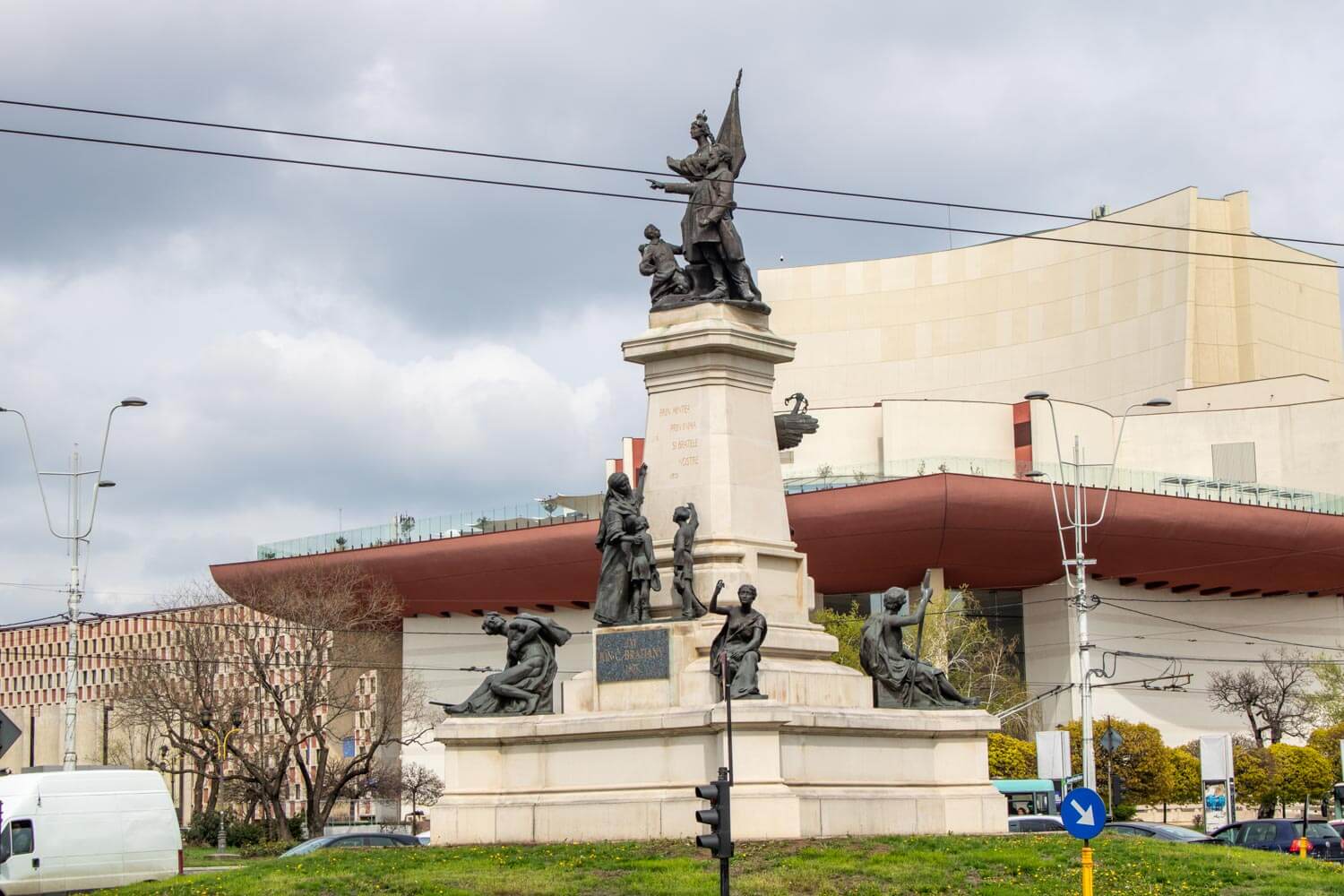
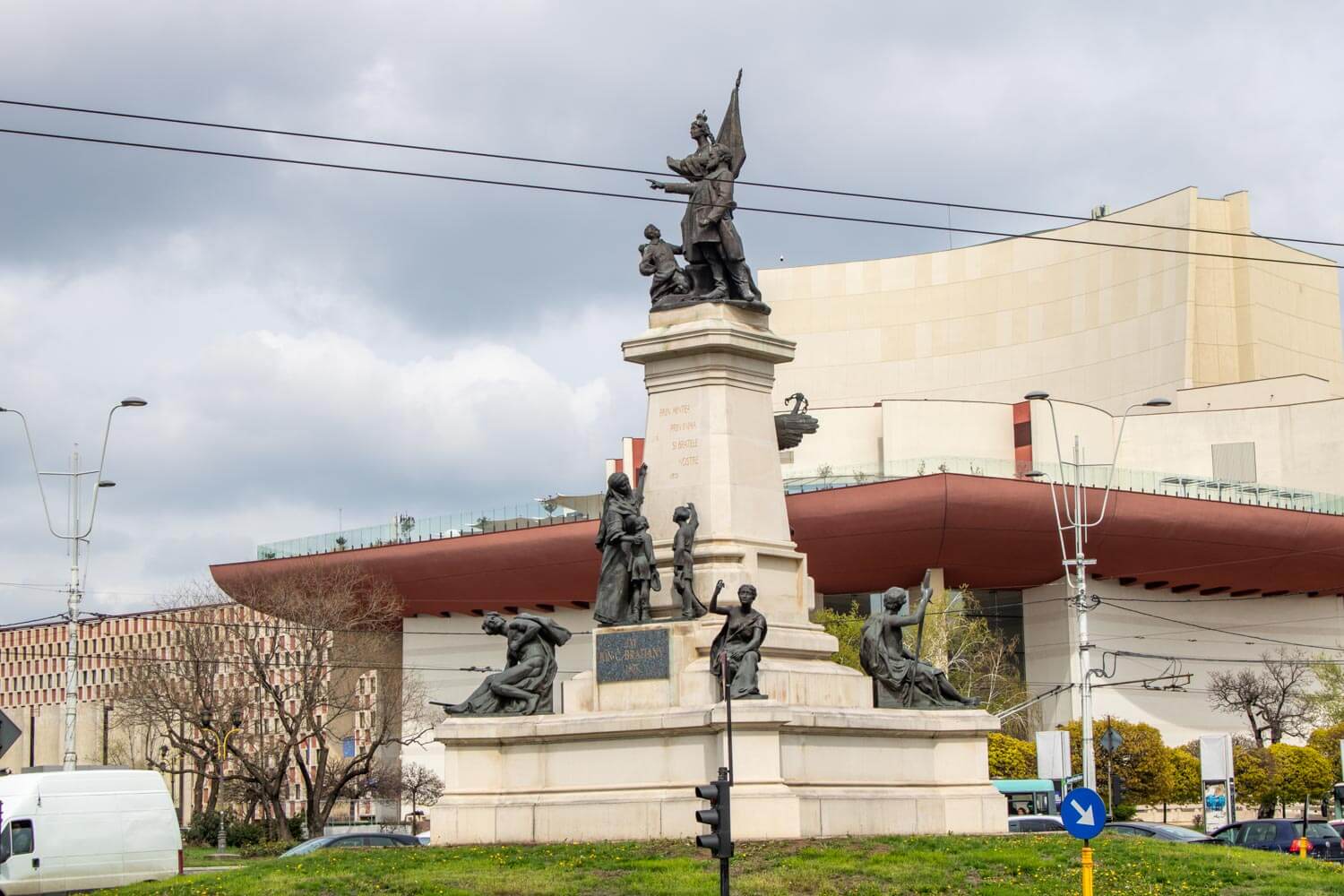
In the center of the roundabout between the main traffic thoroughfares stands the Ion C. Brătianu Monument, which was designed by Petre Antonescu, sculpted by Ernest Henri Dubois, and unveiled in 1903. On the center diversion on Nicolae Bălcescu Boulevard to the north stands the Revolution Heroes Monument, a small commemorative to the victims that fell on this location during the Romanian Revolution of 1989.
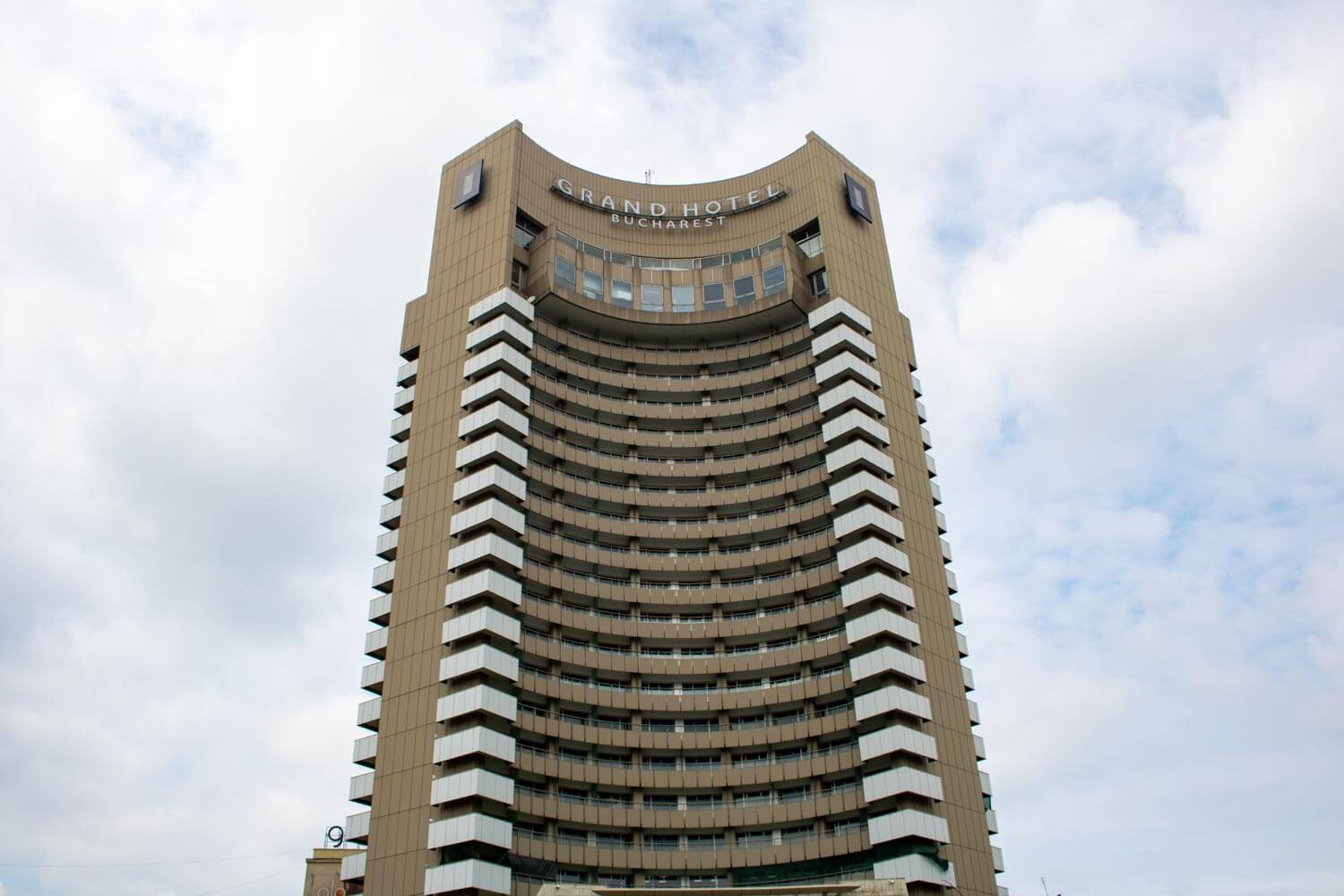
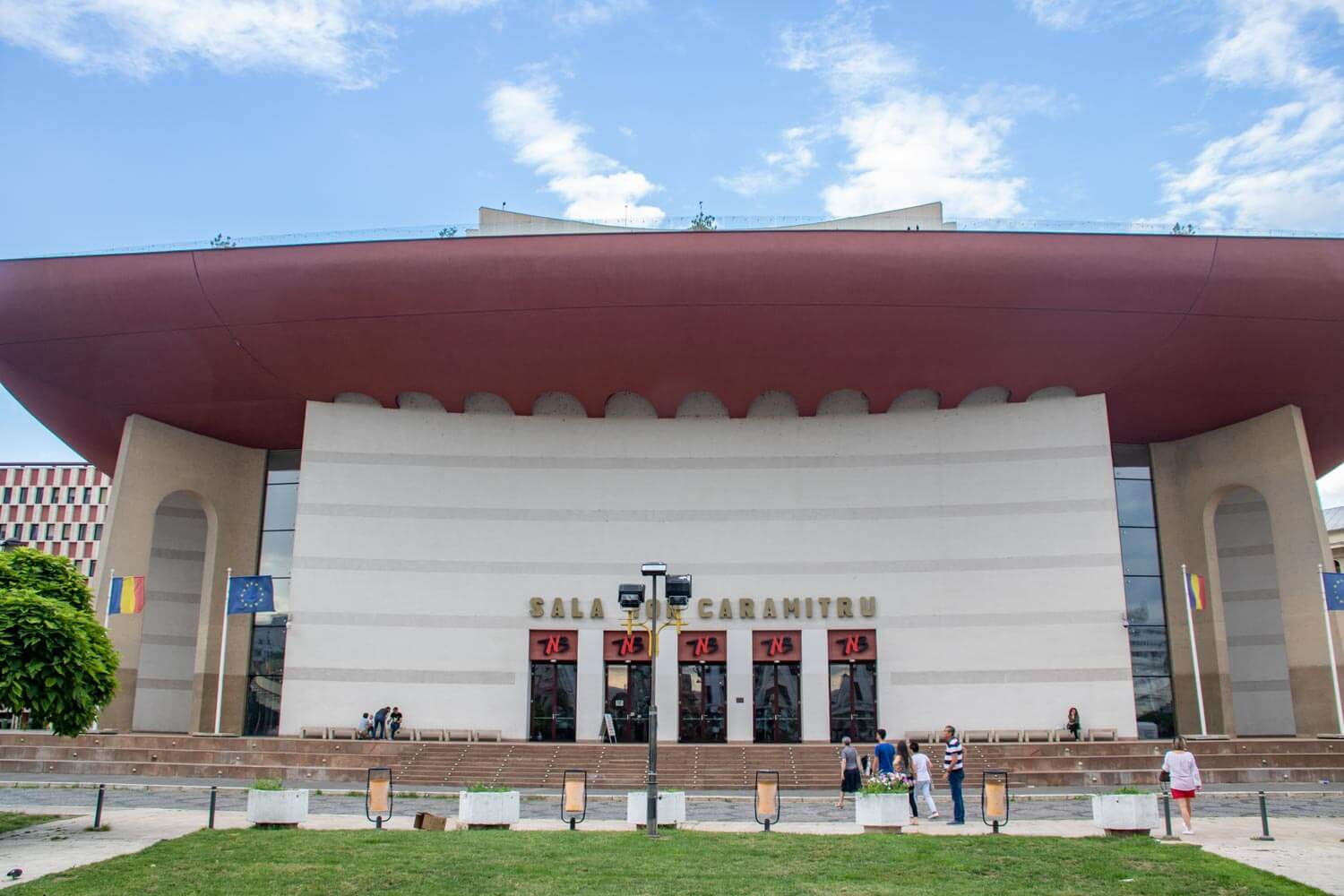
On the corner of Nicolae Bălcescu Boulevard and Carol I Boulevard you can see the National Theater Bucharest “Ion Luca Caragiale” with in front the the Monumental Ensemble “The Wheelbarrow” and to the north the Grand Hotel Bucharest which accommodated many journalists who reported from the balcony about the events of the 1989 Revolution.
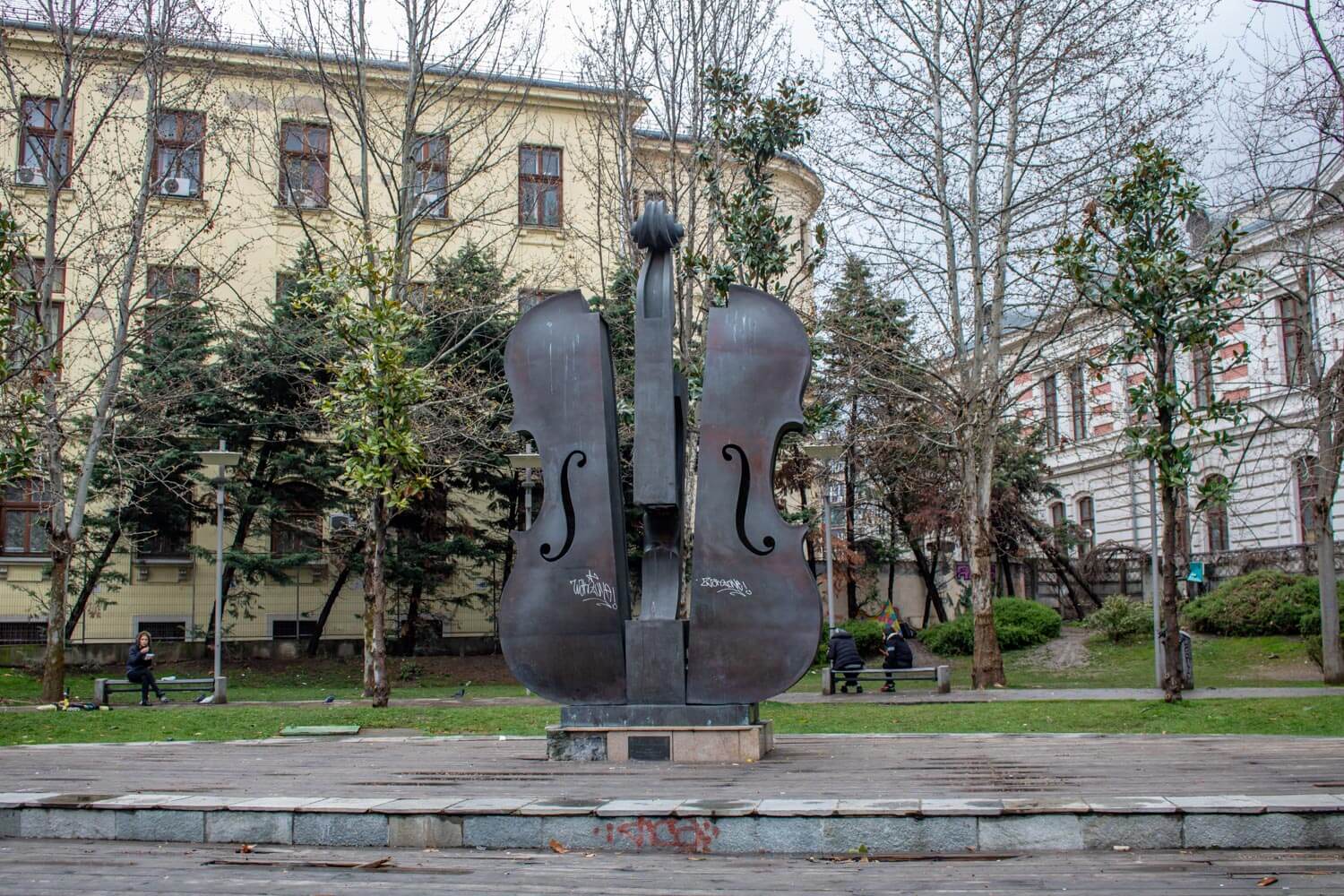
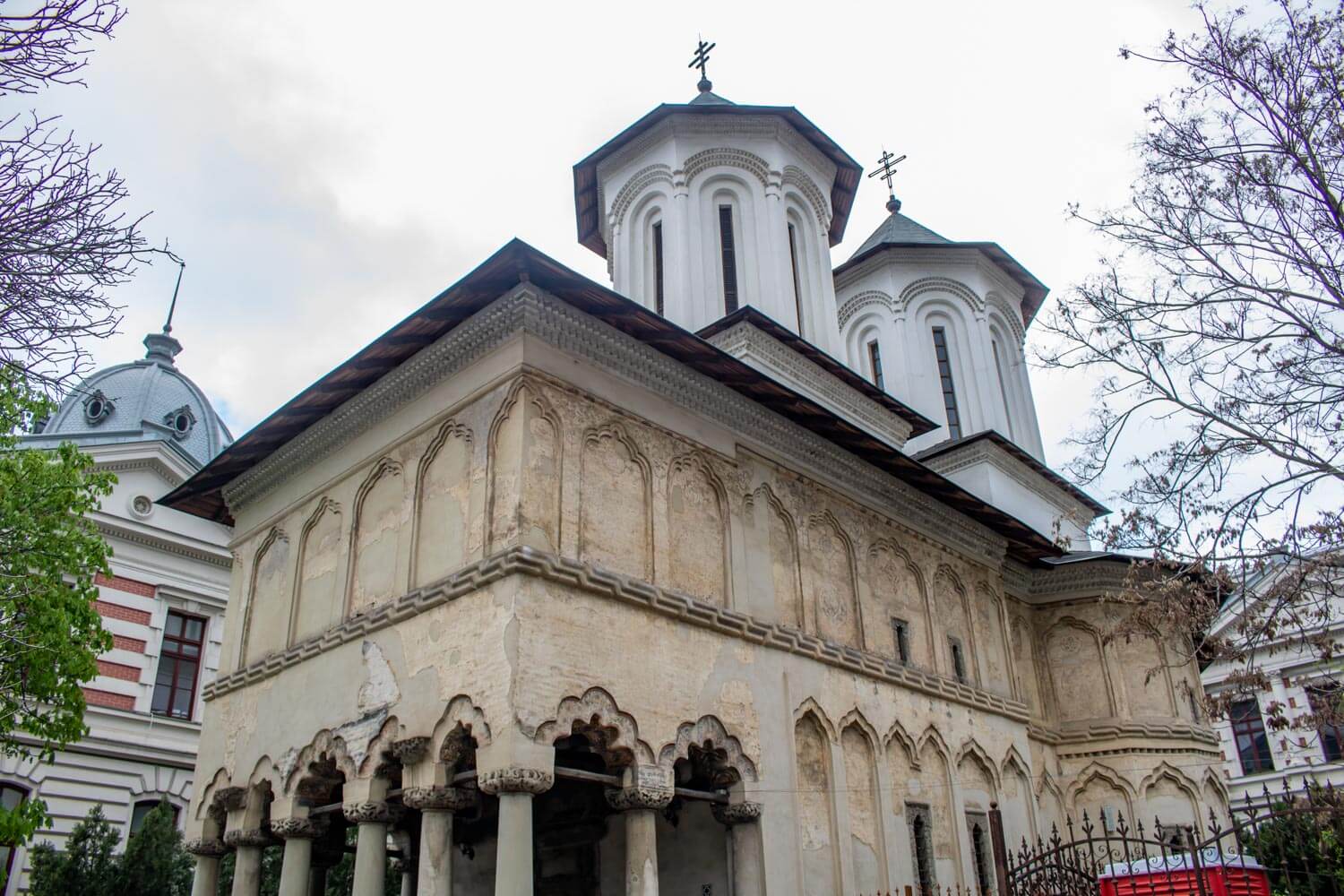
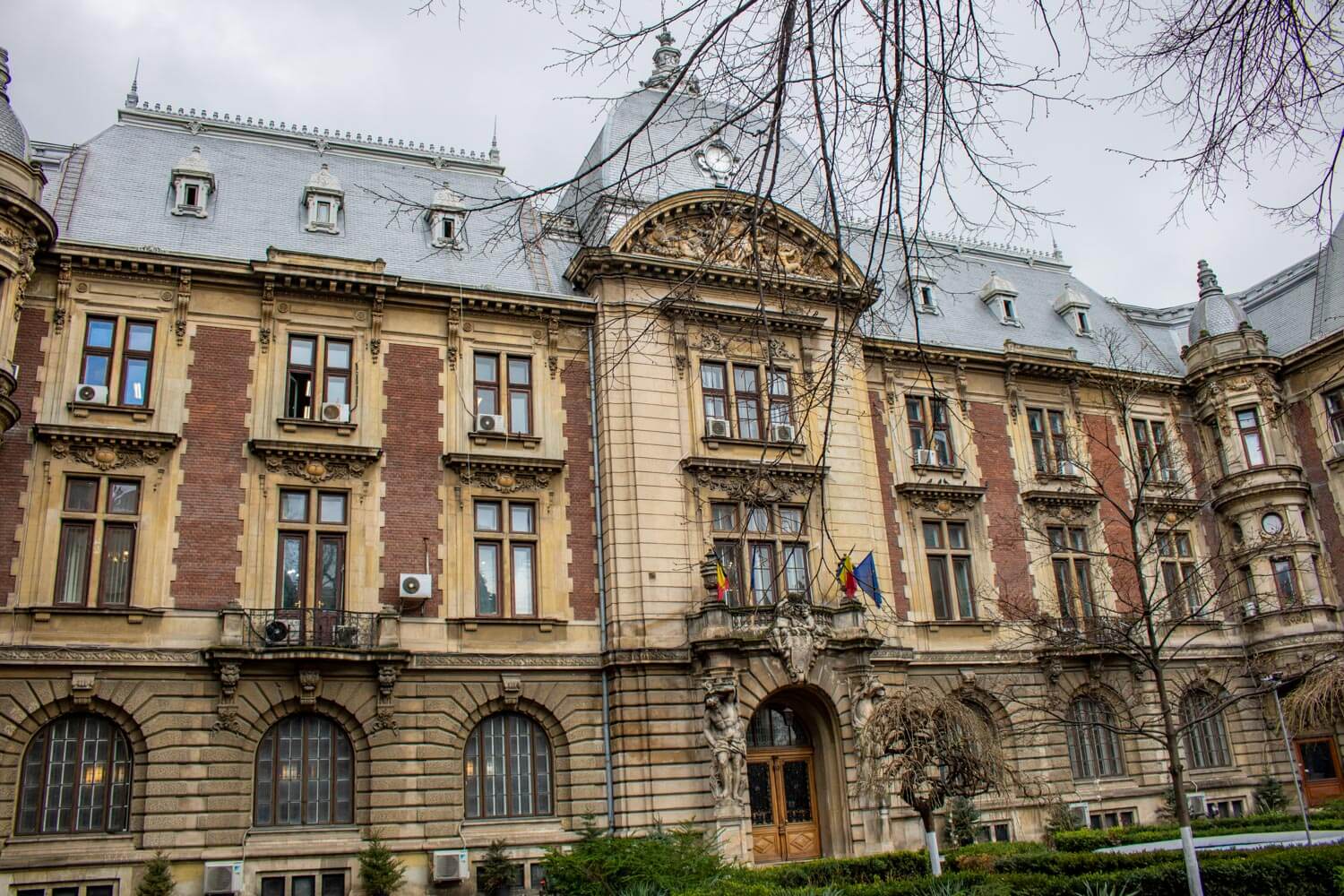
On the corner of Carol I Boulevard and Ion C. Brătianu Boulevard is a small park with the Broken Violin Fountain and the Palace of the Ministry of Agriculture to the east, and Colţea Hospital with the Colţea Church to the south.