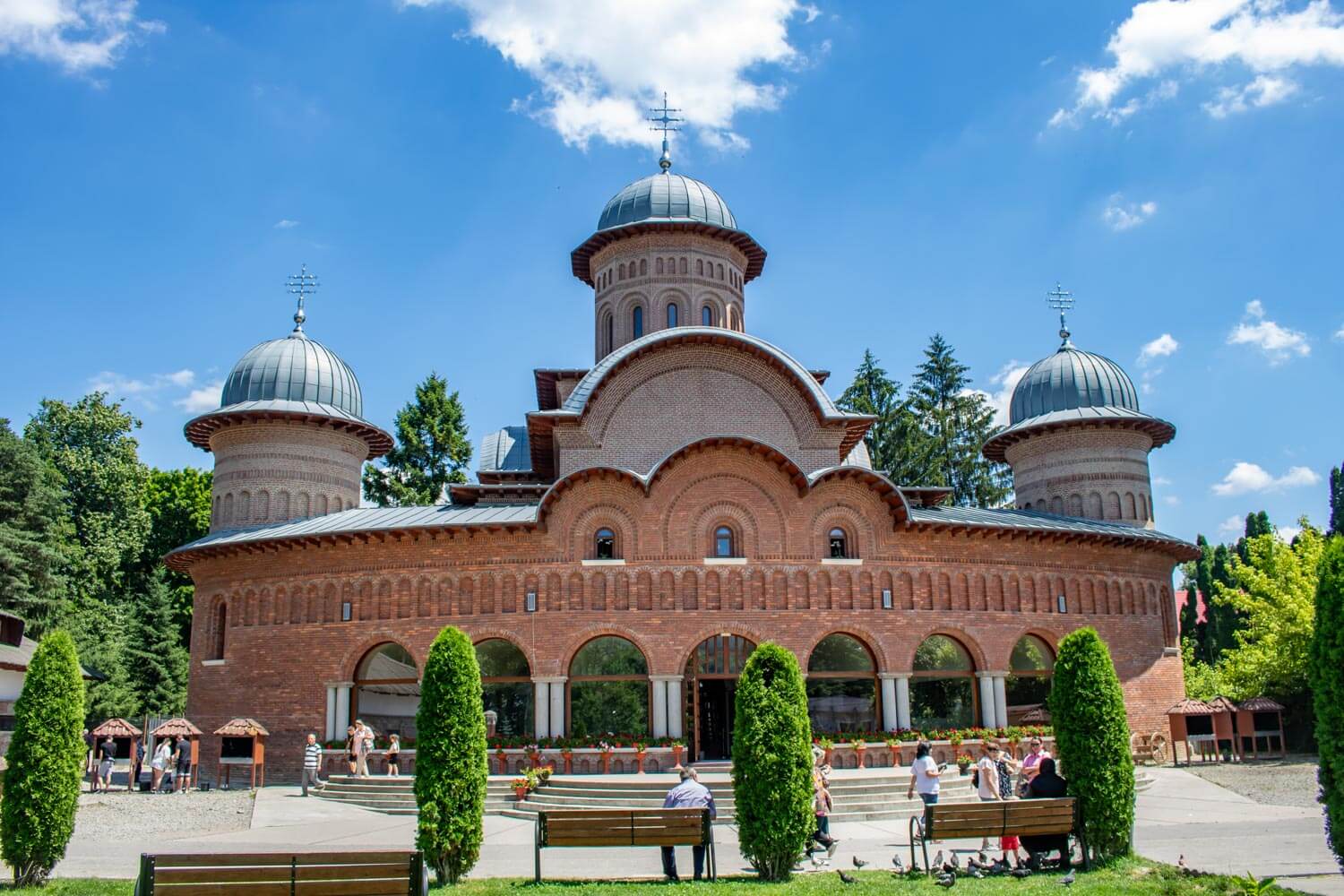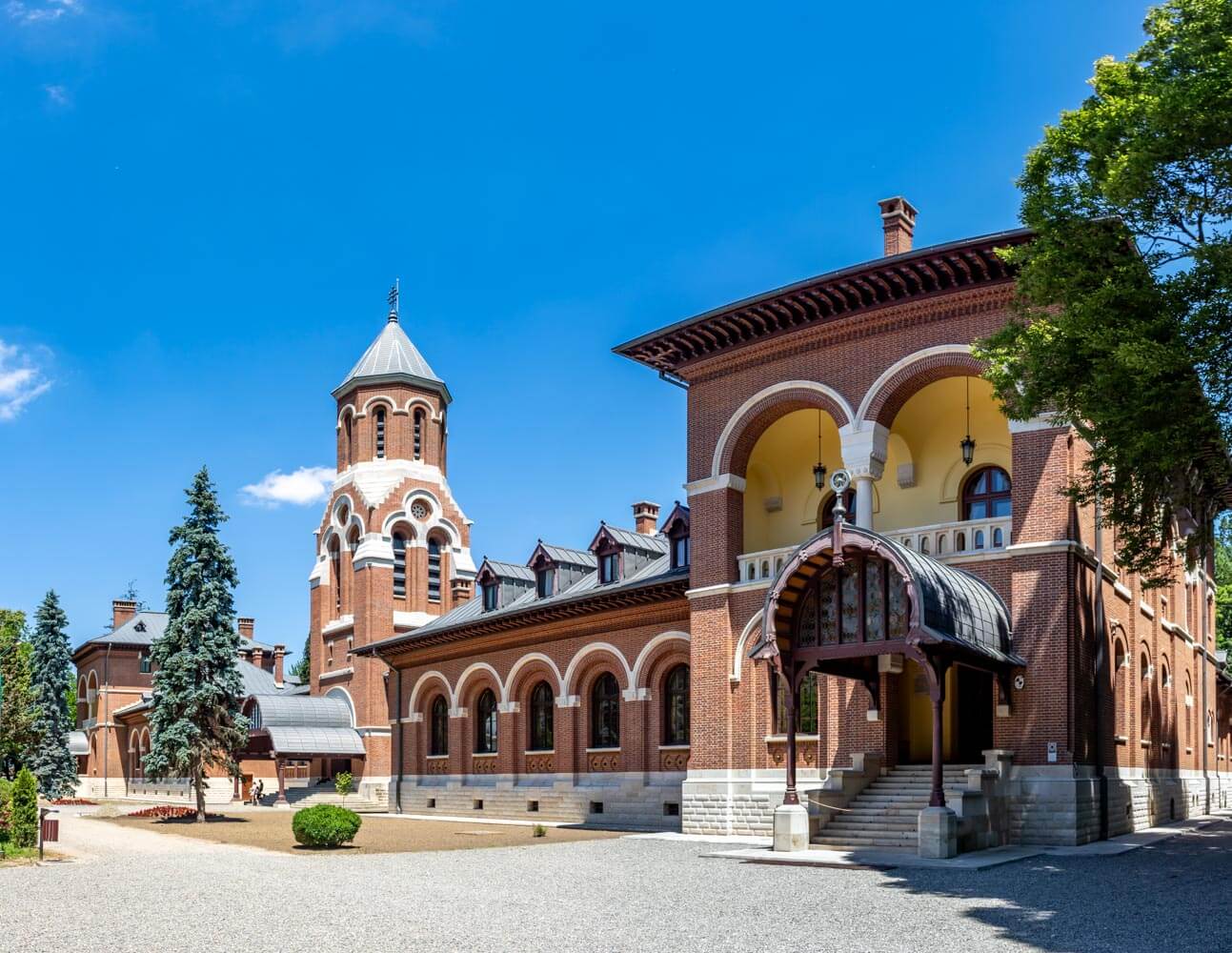
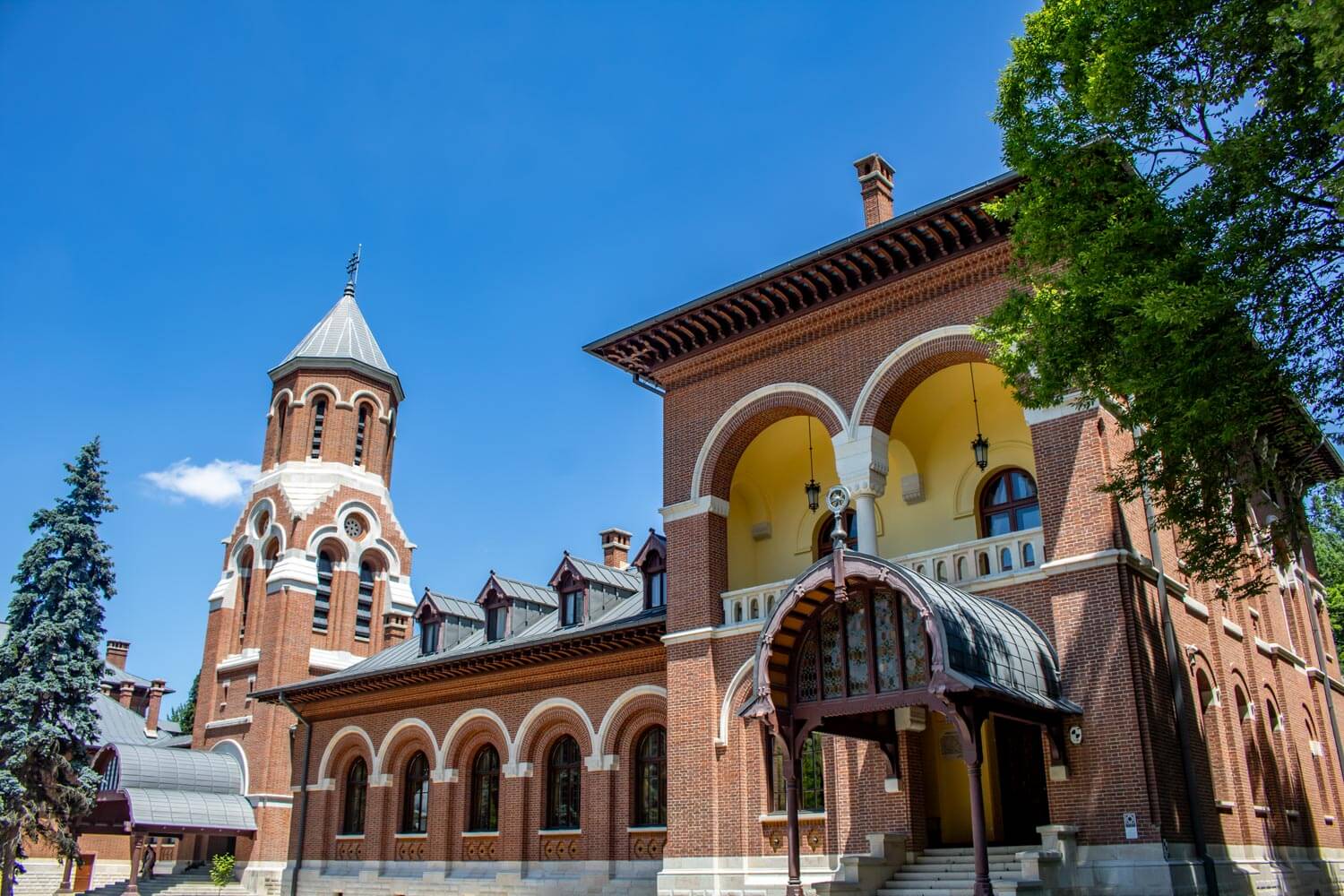
The Episcopal Palace (Palatul Episcopal) is a 19th-century religious and former royal residence within Curtea de Argeș Monastery. Built between 1886 and 1890 under King Carol I, it stands behind the historic cathedral and incorporates an Archiepiscopal Chapel dedicated to the Nativity of the Mother of God. The palace was designed by French architect André Lecomte du Noüy and also contains historic reception rooms and a museum of religious art.
The palace was constructed as part of the extensive restoration and redevelopment of the monastery undertaken during the reign of Carol I. After completing the reconstruction of the cathedral, Lecomte du Noüy was commissioned to design new residential and administrative buildings to replace the older monastic structures that had been damaged by fires and demolished during the restoration. The foundation stone was laid on October 13, 1886, the day after the cathedral’s reconsecration, and construction was largely completed by the end of 1889.
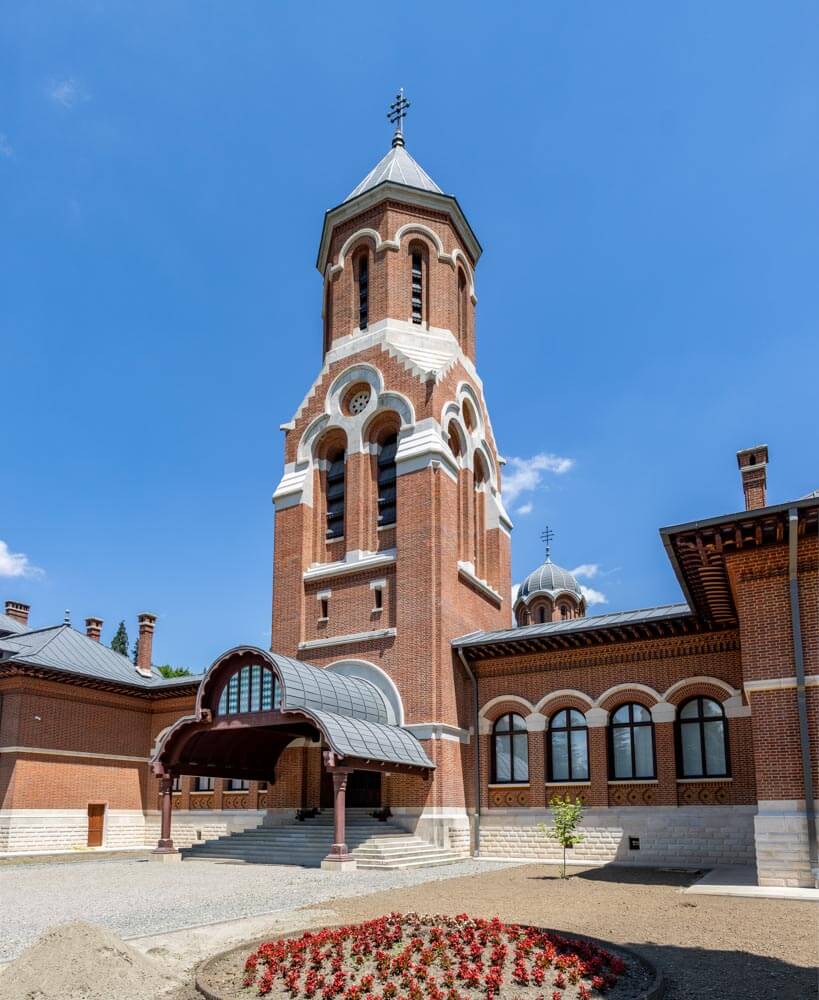
The building was designed in a German-inspired historicist style, with two symmetrical wings extending from a central chapel crowned by a bell tower. Its red-brick façades, arched windows, and steep roofs distinguish it from the elaborate limestone architecture of the neighboring cathedral. The palace was arranged to accommodate both the clergy and the Romanian royal family, with reception rooms and residential apartments distributed between its wings.
King Carol I and Queen Elisabeth used the palace as a summer residence, and the royal apartments on the upper floor included rooms where Elisabeth pursued her literary and artistic interests. When her health deteriorated, a lift was installed to help her move between floors, making it one of the earliest such installations in Romania. The palace also contained reception rooms used for official gatherings, including meetings of the Crown Council. One of its best-known interiors is Manole Hall, whose wall paintings illustrate the legend of the master builder responsible for the monastery’s construction in Romanian folklore.
The central chapel, dedicated to the Nativity of the Mother of God, served the religious needs of the palace and became an important pilgrimage destination after the relics of Saint Philothea were placed there. The relics had previously been kept in the monastery’s historic cathedral and were venerated in the chapel for more than a century before their transfer to the New Archiepiscopal and Royal Cathedral.
The palace also houses the Archiepiscopal Museum, whose collections include religious paintings, icons, historic church furnishings, and objects documenting the monastery’s history. Among its most significant exhibits are fragments of the original 16th-century frescoes by Dobromir of Târgoviște and an iconostasis donated by Prince Șerban Cantacuzino. The basement contains carved stone fragments removed from the historic cathedral during Lecomte du Noüy’s restoration, preserving architectural details that were replaced during the 19th-century reconstruction.