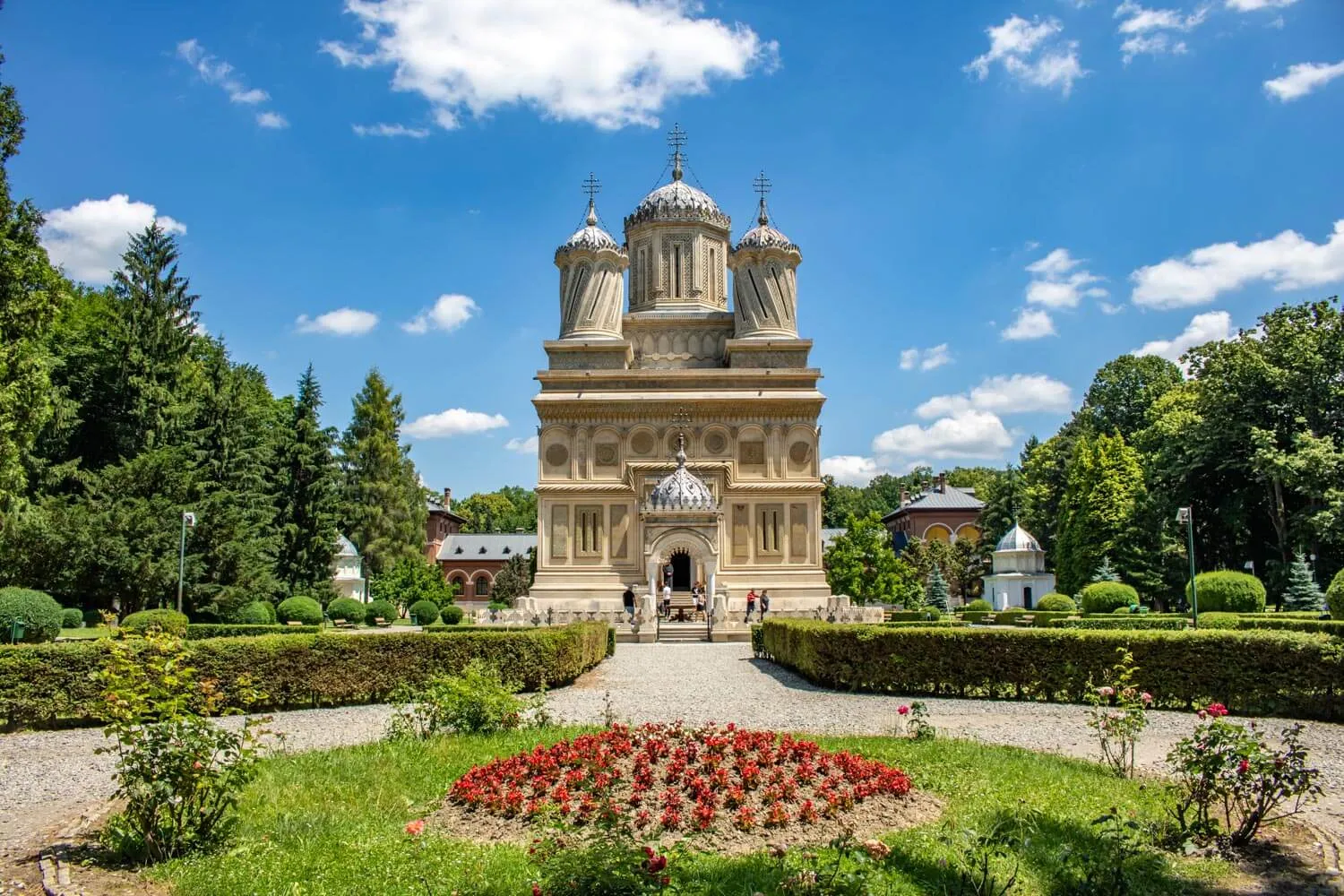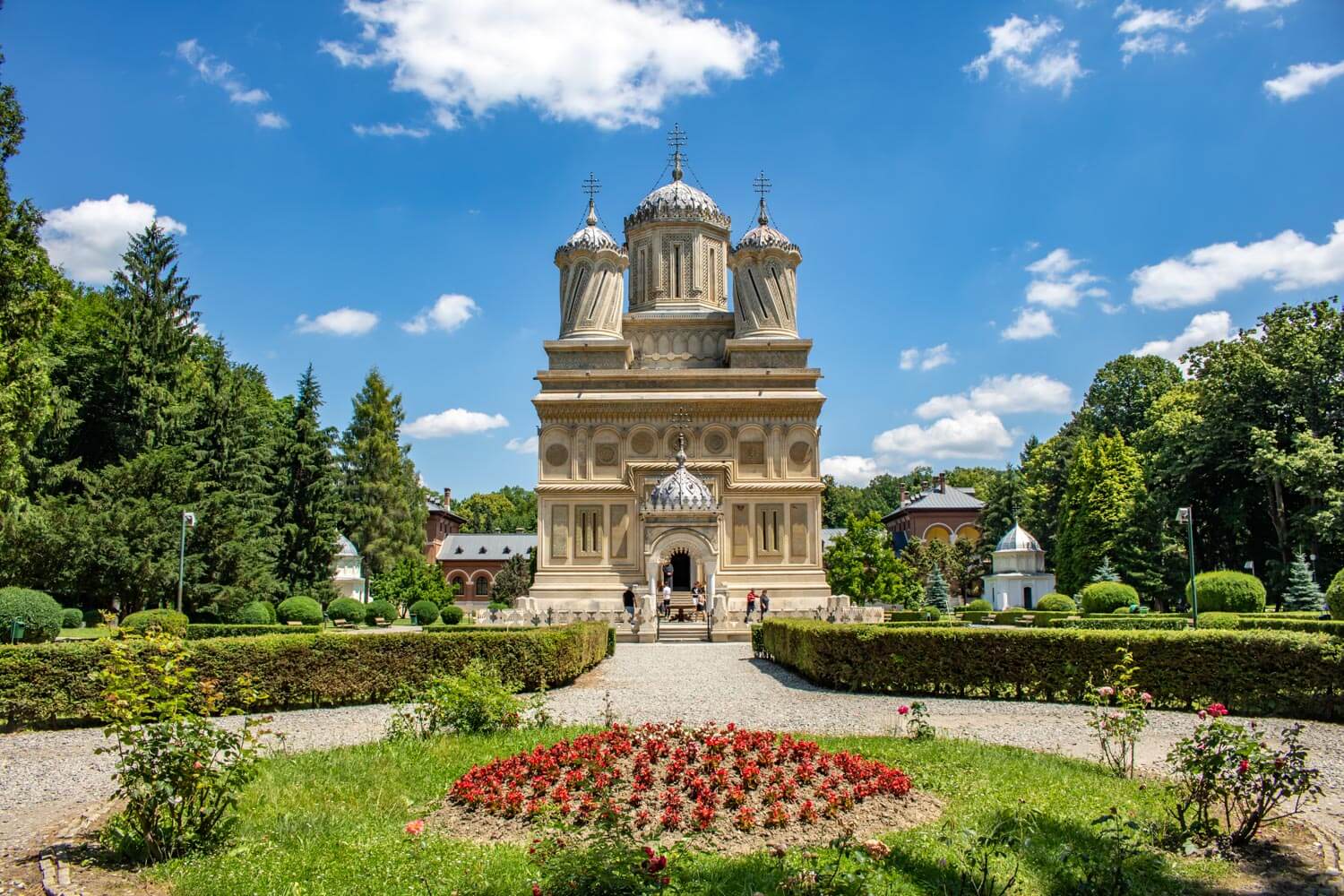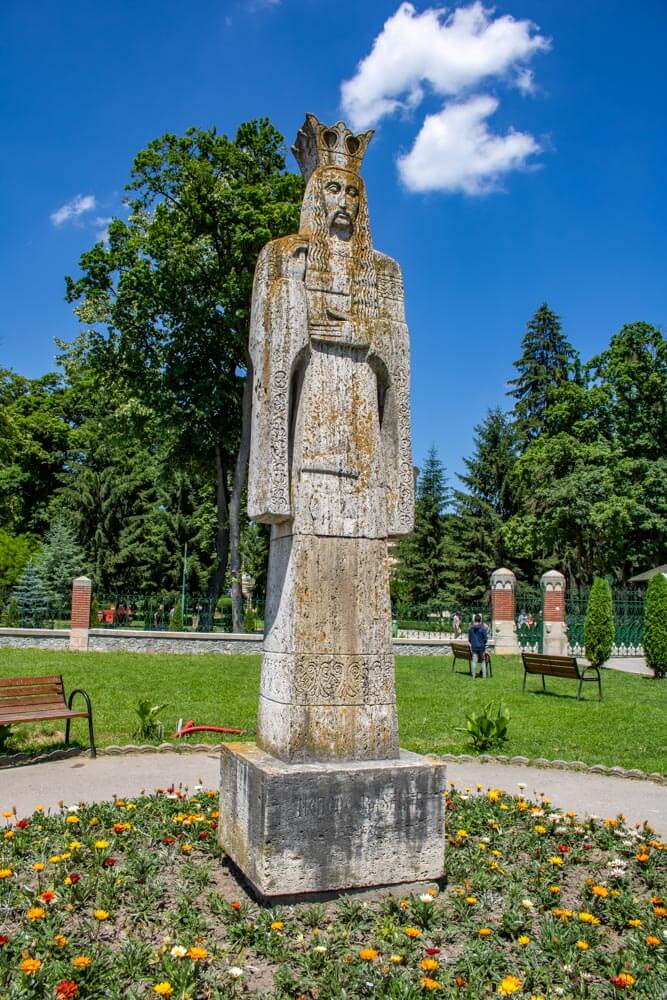
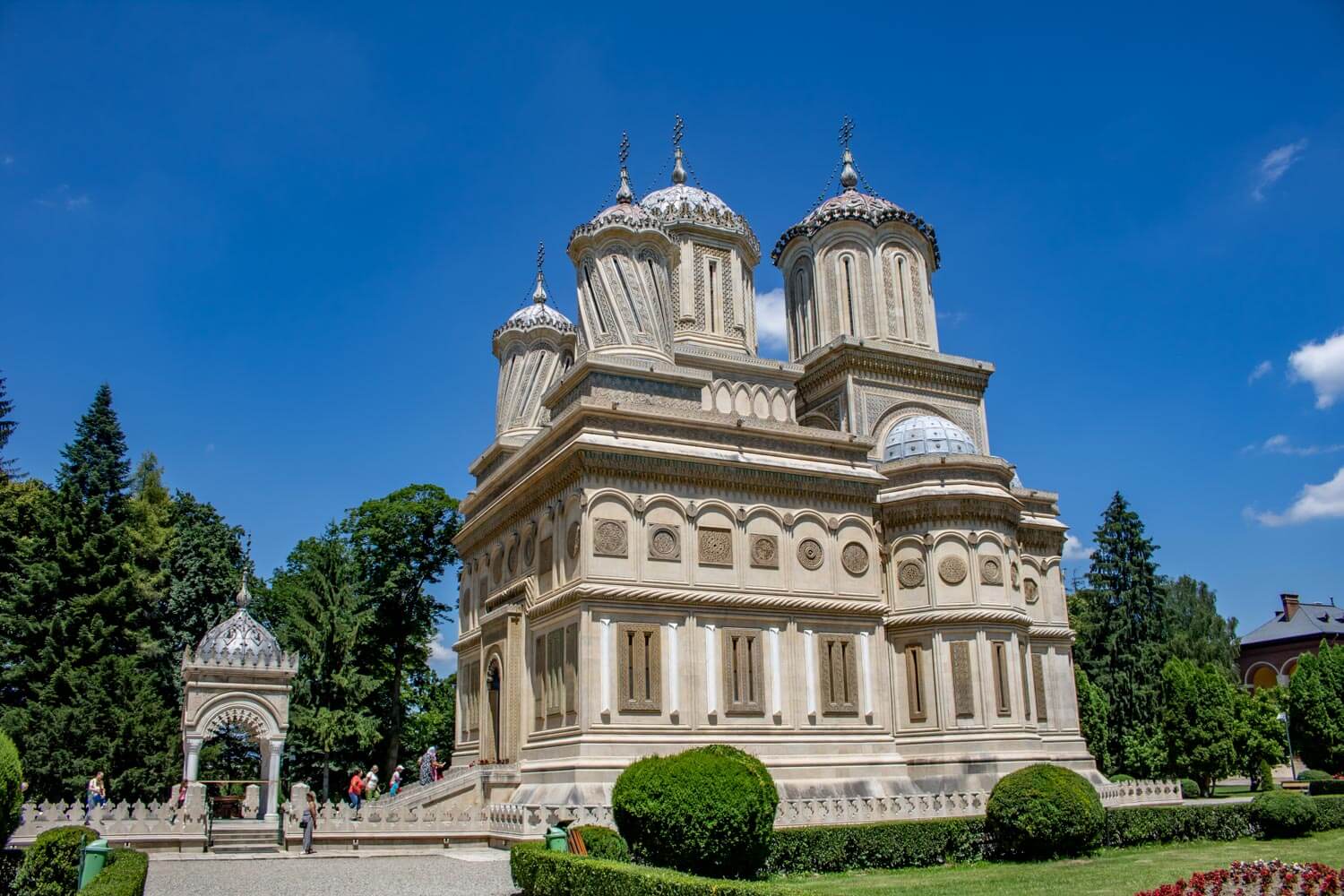
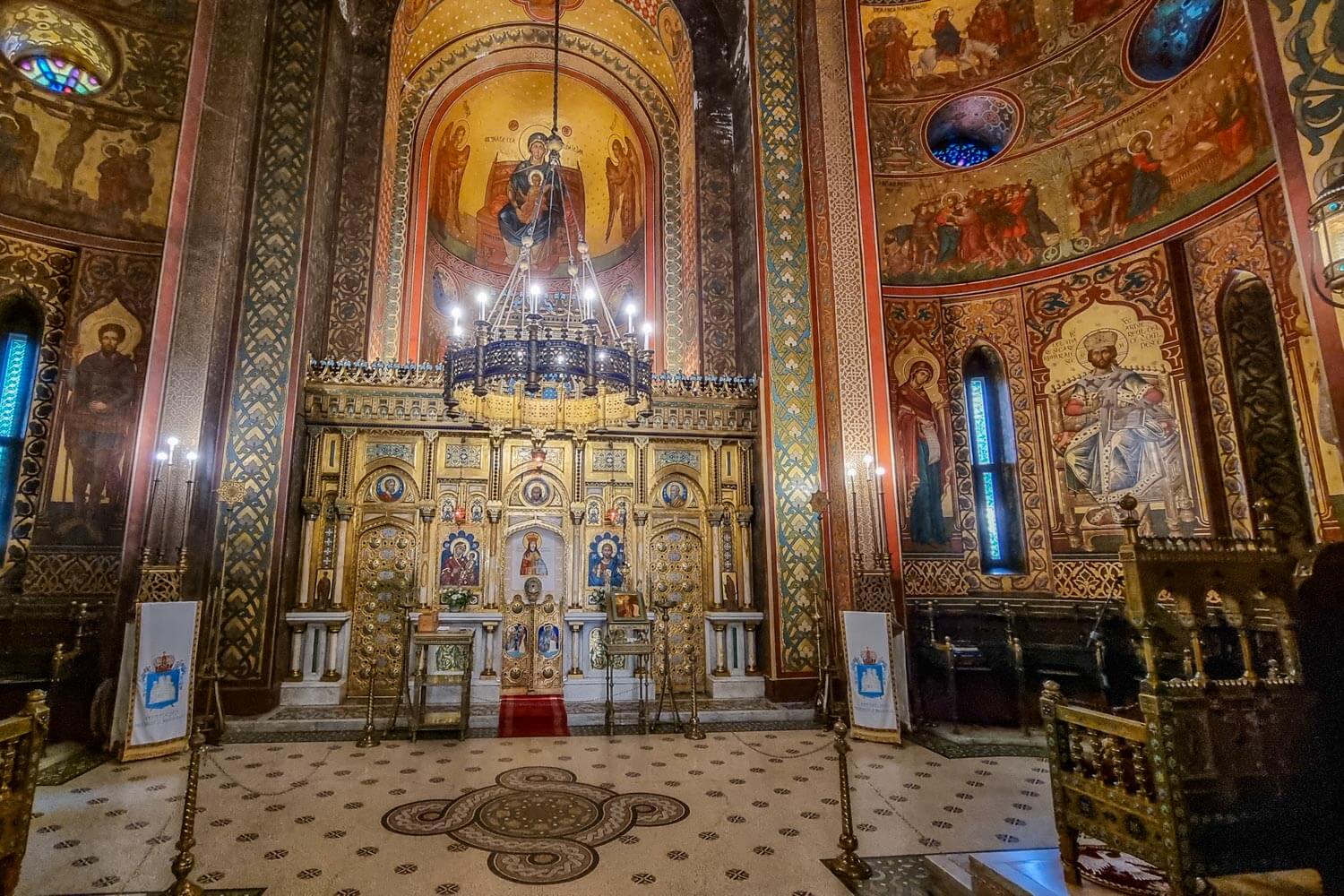
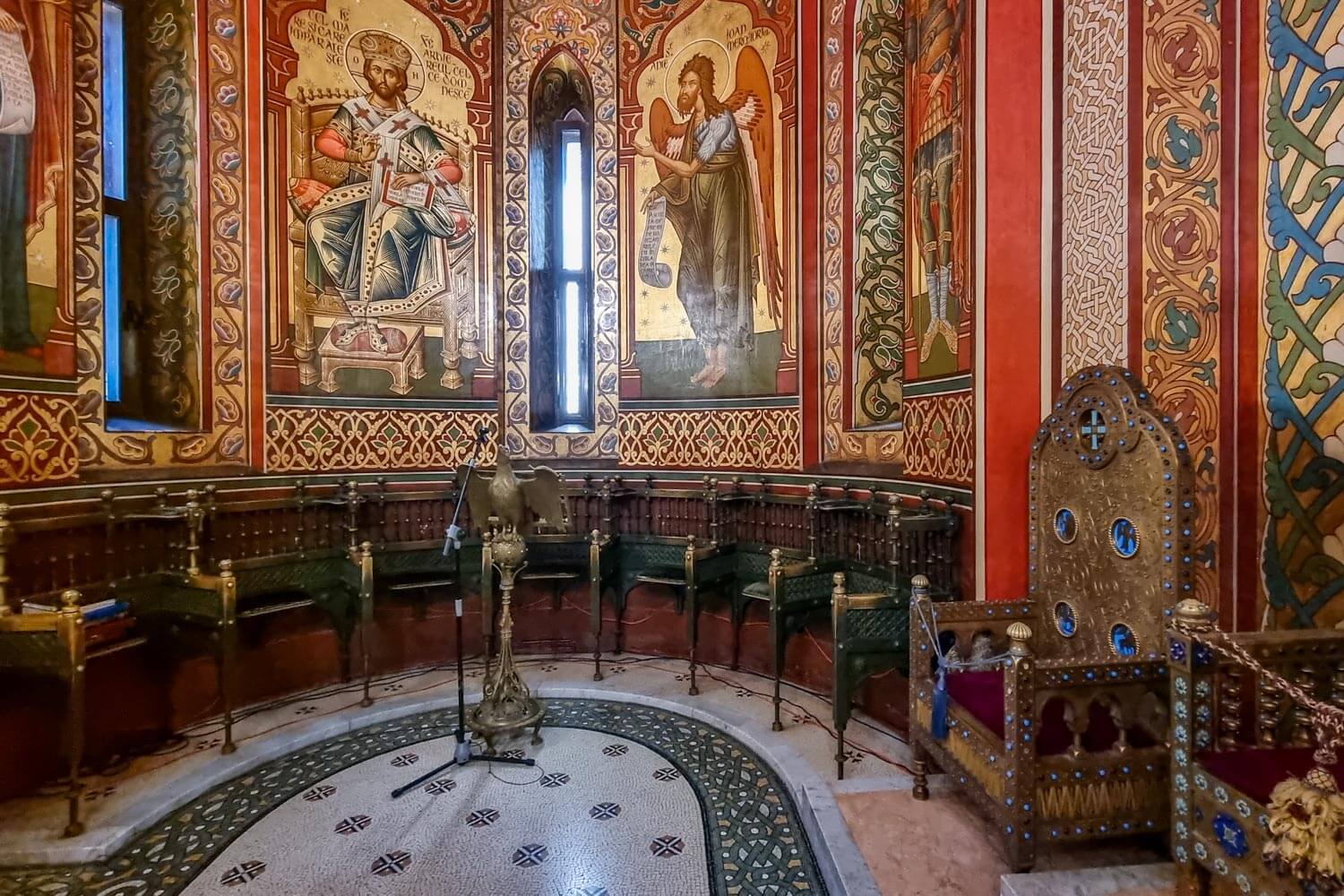
The Old Cathedral (Catedrala Veche) is the 16th-century church of Curtea de Argeș Monastery, dedicated to the Dormition of the Mother of God. Built between 1512 and 1517 by Prince Neagoe Basarab, it is celebrated for its intricately carved limestone façades, four distinctive towers, and richly decorated interior. The cathedral also contains the tombs of Wallachian rulers and Romania’s first two royal couples, making it both an architectural landmark and an important royal burial place.
History And Construction
Neagoe Basarab commissioned the church shortly after becoming Prince of Wallachia in 1512, replacing an earlier religious building that had fallen into disrepair. Curtea de Argeș had served as one of Wallachia’s earliest princely capitals, and the new foundation was intended to express the ruler’s religious devotion and provide a burial place for his family. Its construction brought together architectural traditions from Wallachia, the Byzantine world, and territories south of the Danube. Although the identities of the master builders are unknown, historical accounts suggest that Neagoe Basarab took a close interest in its design.
The church was consecrated on August 15, 1517, during an elaborate ceremony attended by Patriarch Theoleptus of Constantinople and numerous Orthodox clergy and dignitaries. The interior decoration continued after Neagoe’s death in 1521, with the frescoes completed in 1526 under his successor Radu of Afumați. The paintings were executed by Dobromir of Târgoviște and his workshop, covering the walls with biblical scenes, saints, and portraits of the ruling family.
Architecture And Interior
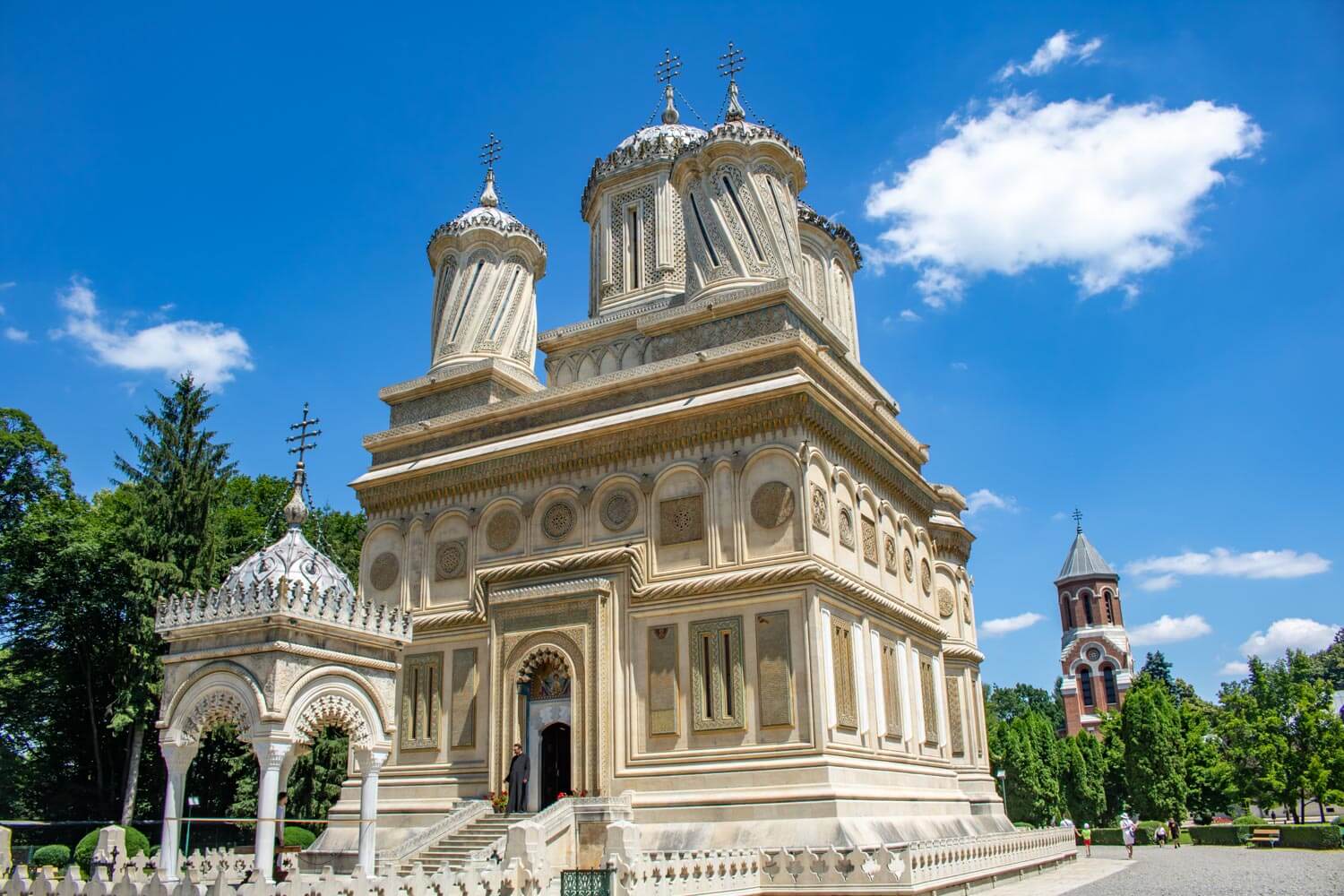
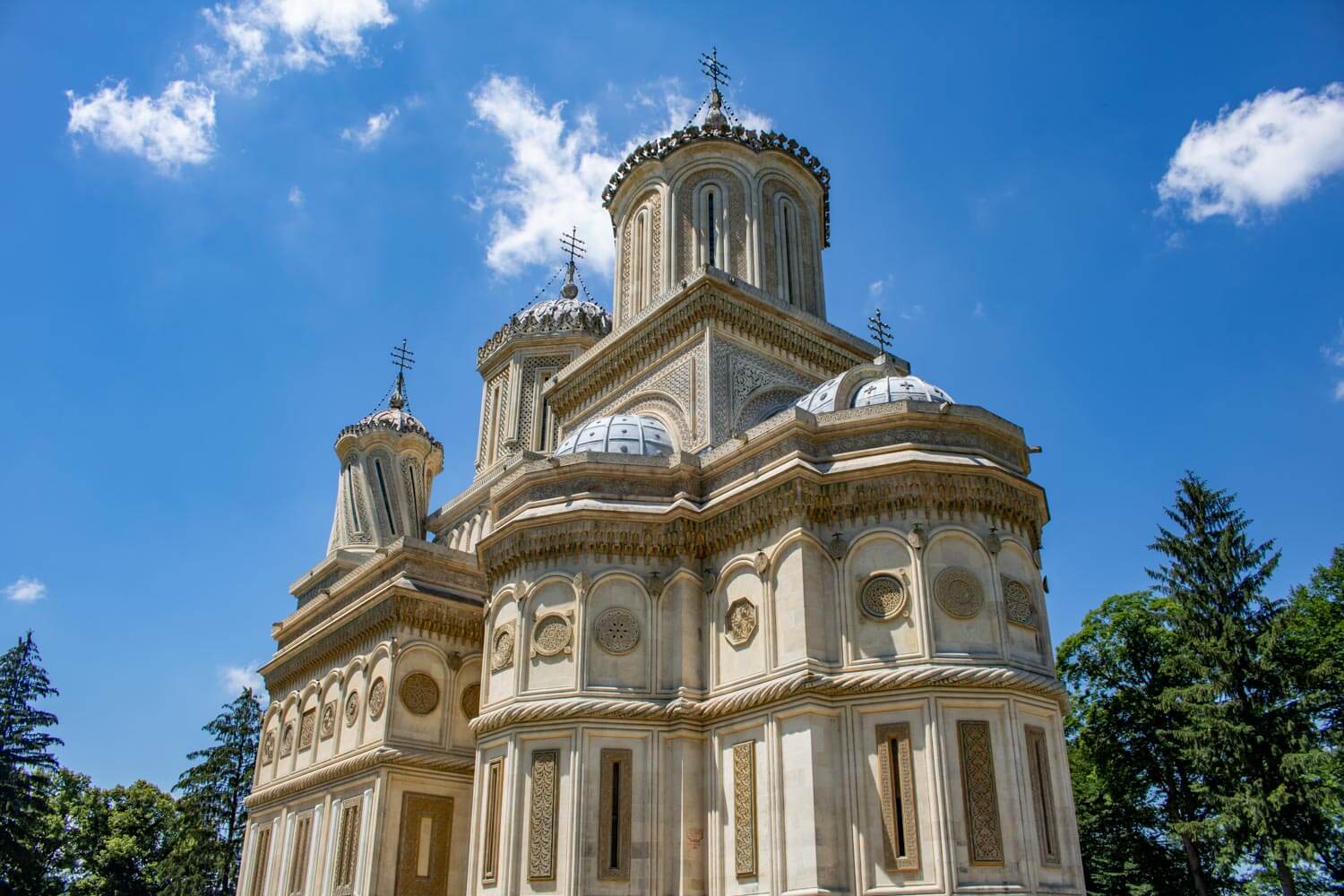
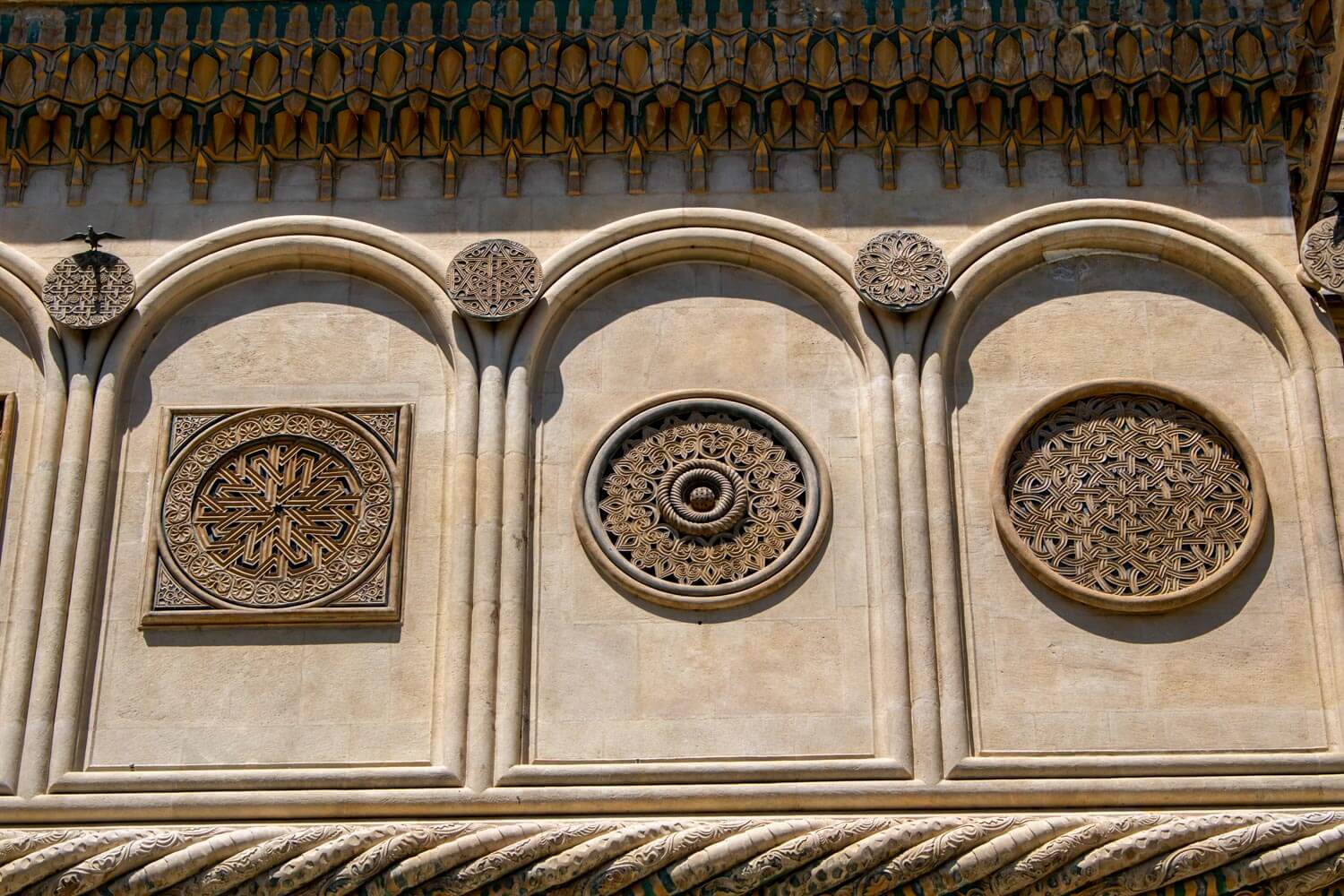
The cathedral was built from locally quarried limestone on a traditional three-apsed plan, but its architectural arrangement is unusually elaborate. The nave is crowned by a tall central dome, while the enlarged narthex supports three additional towers. Two of these have spiraling stone decoration that creates the illusion of twisting upward, giving the church its most recognizable silhouette. The walls are divided horizontally by a carved stone band, with rows of recessed panels, floral ornaments, geometric patterns, and intricate cornices covering nearly every part of the exterior. The decoration incorporates motifs found in Ottoman and Armenian architecture alongside Wallachian and Byzantine elements.
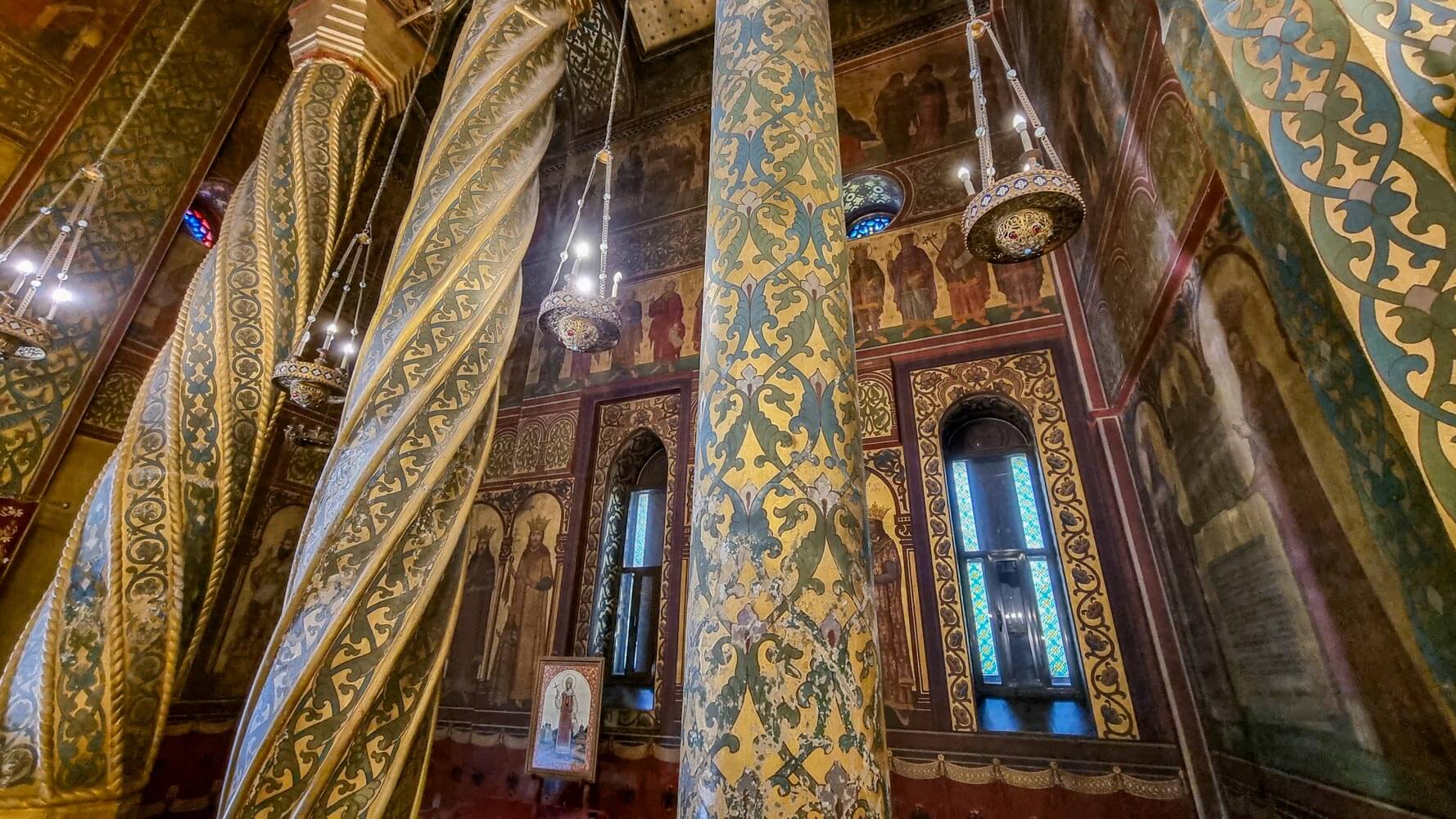
The western entrance is approached by a flight of steps and a small open pavilion supported by stone columns. This structure, known as an agheasmatar, is used for the blessing of water and was reconstructed during the 19th-century restoration. The entrance leads into the exceptionally spacious narthex, where twelve stone columns divide the central area from the surrounding funerary galleries. Their carved capitals and bases contribute to the richly decorated interior, while the arrangement was designed to accommodate the tombs of the founder and his descendants.
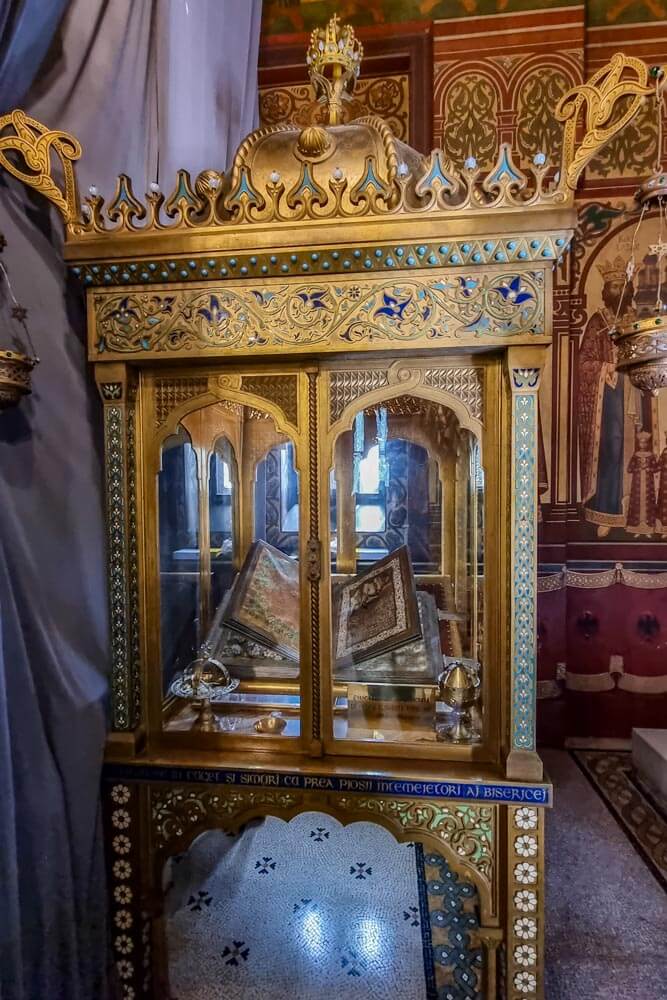
The original frescoes were among the church’s most valuable artistic features, but only a limited portion survived the extensive reconstruction of the 19th century. The present interior decoration dates largely from that restoration, when new paintings and furnishings replaced earlier works. Fragments of Dobromir’s original frescoes were removed and transferred to museums, preserving important examples of 16th-century Wallachian religious painting.
The Legend Of Master Manole
The cathedral is also the setting of the famous Romanian ballad of Master Manole (Meșterul Manole), which tells the story of a master builder whose work repeatedly collapsed during the night. After learning that the building could only stand if someone were sacrificed within its walls, Manole and his craftsmen agreed to entomb the first wife who brought food to the construction site. When Manole’s own wife Ana arrived, he reluctantly enclosed her in the masonry, allowing the church to be completed.
According to the legend, the ruler then stranded the craftsmen on the roof to prevent them from creating another building of equal beauty. They attempted to escape with wings made from wooden shingles, but fell to their deaths. A spring is said to have appeared where Manole landed, giving rise to the nearby Master Manole’s Fountain. Although the story is folklore, it has become an inseparable part of the cathedral’s cultural history and one of the best-known legends in Romanian literature.
Restoration And Royal Burials
The cathedral suffered repeated damage from earthquakes, fires, and military incursions over the following centuries. Repairs were undertaken during the reigns of several Wallachian princes, including Șerban Cantacuzino in 1682, but the earthquakes of 1802 and 1838 severely weakened its structure. A devastating fire in 1867 destroyed much of the interior decoration and furnishings, prompting an extensive restoration program under King Carol I.
The French architect André Lecomte du Noüy directed the reconstruction between 1875 and 1886, rebuilding damaged domes, replacing eroded stone carvings, and modifying several architectural details. The project preserved substantial portions of the original building but also introduced new elements intended to recreate an idealized version of its 16th-century appearance. Most of the original frescoes were removed, and the interior was redecorated by painters working under the architect’s brother, Jean-Jules-Antoine Lecomte du Noüy. The restored cathedral was consecrated on October 12, 1886, in the presence of King Carol I and Queen Elisabeth.
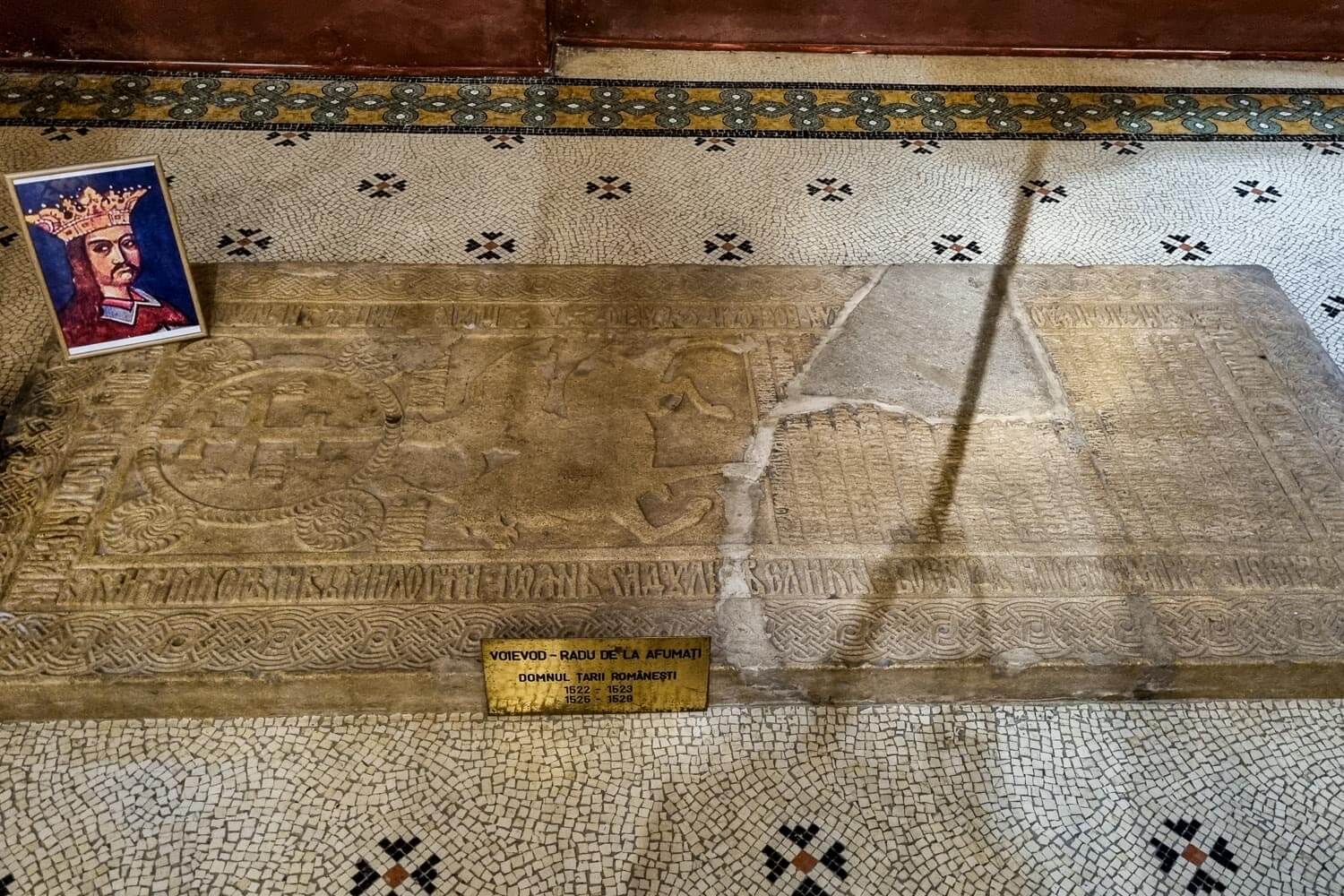
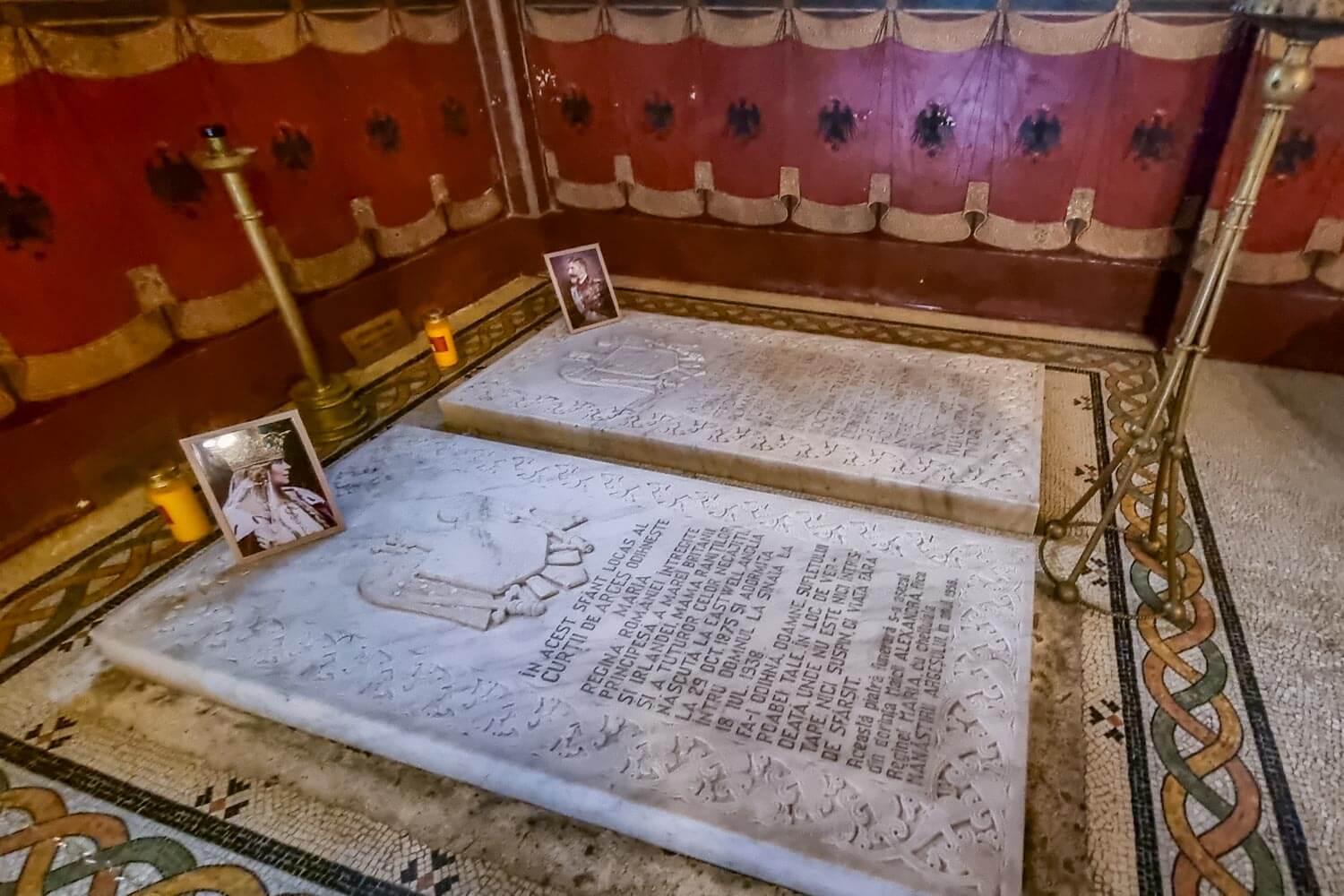
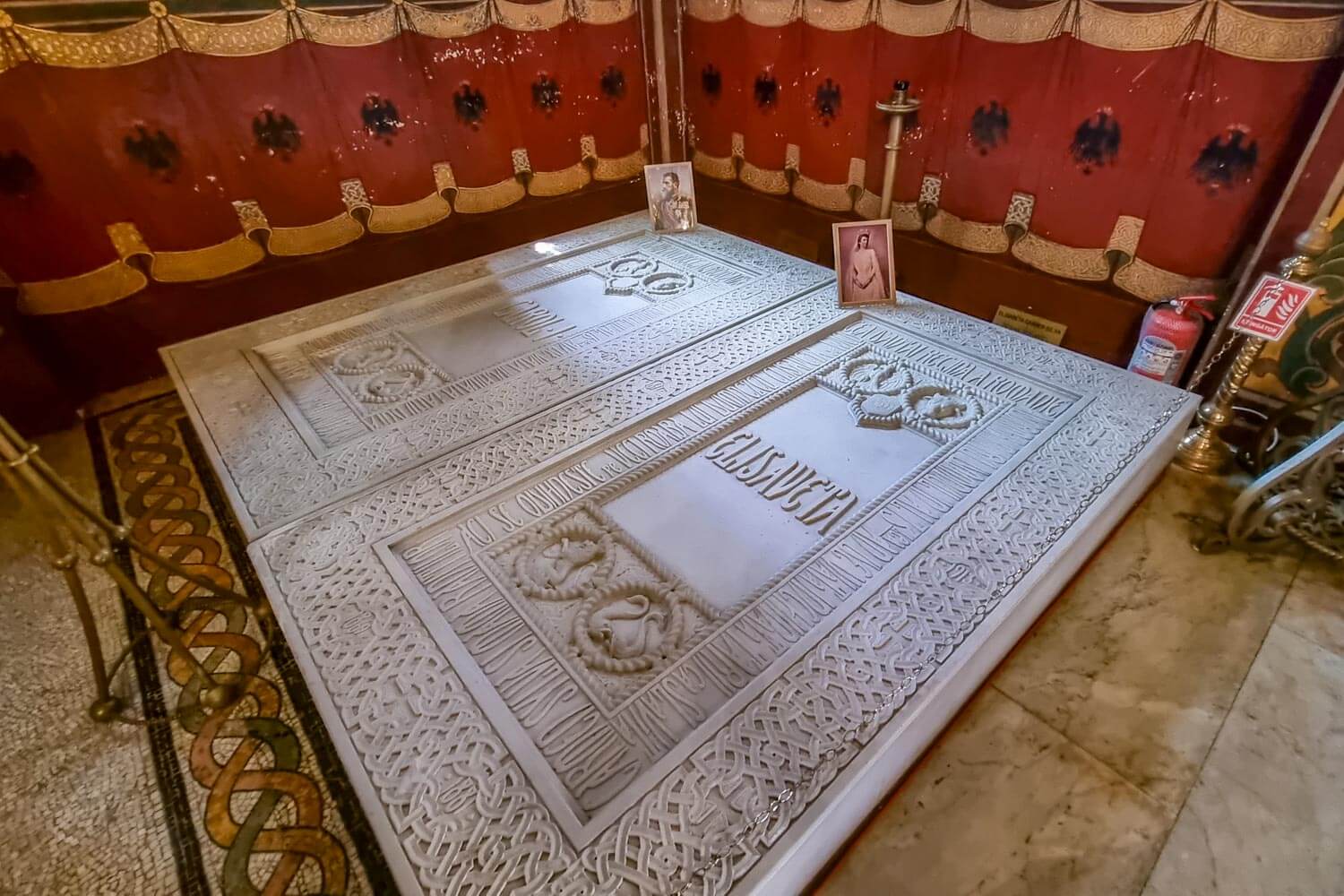
The funerary galleries in the narthex contain the tombs of Neagoe Basarab, his wife Despina, and several members of their family. Among the most remarkable monuments is the carved tombstone of Prince Radu of Afumați, who died in 1529, depicting him on horseback with a scepter. These medieval burials were joined during the 20th century by those of Romania’s first two royal couples. King Carol I was buried here in 1914, followed by Queen Elisabeth in 1916, King Ferdinand I in 1927, and Queen Marie in 1938. Their marble tombs occupy opposite sides of the narthex, establishing a royal necropolis beside the resting places of Wallachia’s medieval rulers.