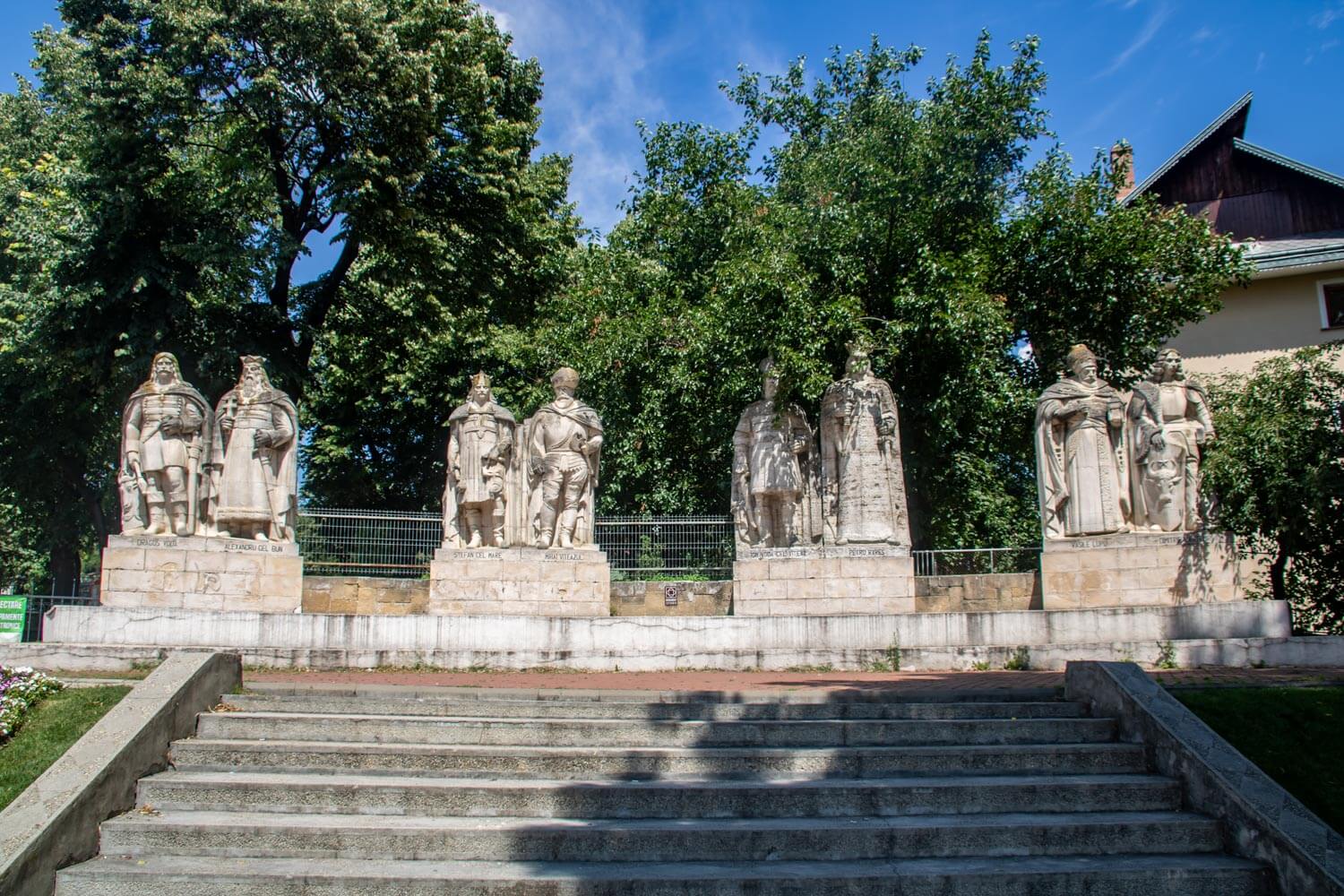
Alexander I (ca. 1375-1432), commonly known as Alexander the Good (Alexandru cel Bun), was the Prince of Moldavia from 1400 until his death and one of the rulers who helped consolidate the young principality during the early fifteenth century. His reign brought an unusual period of political stability, stronger institutions, expanding trade, and closer organization of the Orthodox Church, creating foundations that later rulers such as Stephen the Great would build upon.
Alexander came to the throne after a period of instability and spent much of his reign balancing Moldavia between its more powerful neighbors, particularly Poland, Hungary, and the growing Ottoman presence farther south. Rather than pursuing constant expansion, he relied heavily on diplomacy and alliances, maintaining especially close relations with the Polish crown while preserving Moldavia’s autonomy.
This relative stability allowed the principality’s administration and economy to develop. Alexander strengthened the network of princely officials and helped formalize the responsibilities of positions that became important in Moldavian government. Trade also expanded, particularly along routes connecting Moldavia with Poland and Central Europe. In 1408, he granted extensive commercial privileges to merchants from Lviv, regulating customs duties and facilitating trade through Moldavian towns and toward the Black Sea.
Religion was another important part of his reign. Moldavia had been involved in a long dispute with the Ecumenical Patriarchate in Constantinople over recognition of its own metropolitan. That conflict was finally resolved in 1401, when Metropolitan Iosif Mușat was recognized as head of the Moldavian church with his seat at Suceava. The settlement gave the principality a more firmly established ecclesiastical structure and strengthened the connection between the princely court and the Orthodox Church.
Alexander also encouraged the growth of monasteries and religious centers. His most important surviving foundation is Bistrița Monastery in Neamț County, where he replaced an earlier wooden church with a stone church in 1402 and later endowed the monastery with villages and estates. Bistrița developed into an important religious and cultural center, closely connected with the Moldavian court.
His reign also strengthened the position of Suceava as the political and religious center of Moldavia. The relics of Saint John the New were brought there during Alexander’s rule, reinforcing the city’s importance as a center of Orthodox devotion and princely authority. The association between ruler, church, and capital became an increasingly important feature of Moldavian political life.
Alexander remained involved in regional warfare when necessary. Moldavian troops supported Poland and Lithuania in conflicts with the Teutonic Order, including the wider struggle that culminated in the Battle of Grunwald in 1410. These campaigns were important for Moldavia’s alliances, but they did not define his reign in the same way that warfare would define the careers of several later rulers.
By the time Alexander died in 1432, Moldavia had enjoyed more than three decades of comparatively stable rule. That stability did not survive him immediately, as struggles between his descendants opened another period of political conflict, but many of the administrative, economic, and religious structures strengthened during his reign endured.
Alexander was buried at Bistrița Monastery, beside his wife Ana, making the monastery the place most directly associated with him today. His tomb remains inside the church, while the monastery’s later development continued under rulers including Stephen the Great and Petru Rareș.
Alexander’s reign became an important formative period in medieval Moldavia. The stronger administration, expanding trade, recognized metropolitan church, and growing importance of Suceava all helped shape the principality that his fifteenth-century successors inherited. Bistrița Monastery and his tomb there remain the clearest surviving reminders of that long and comparatively stable reign.