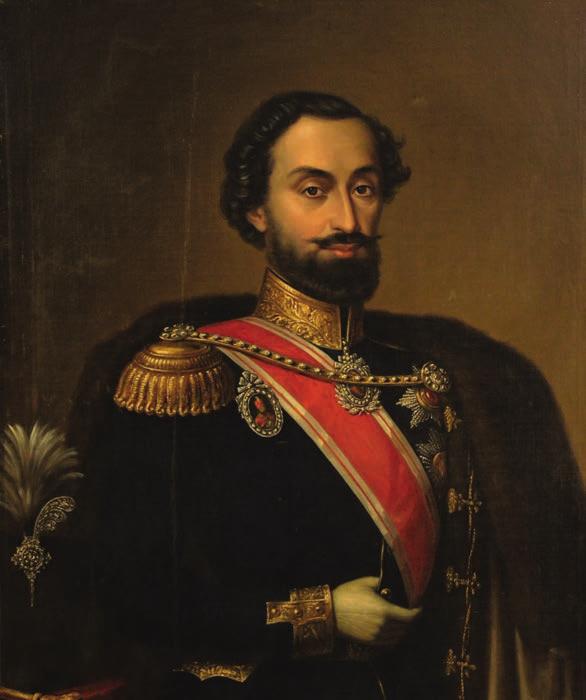
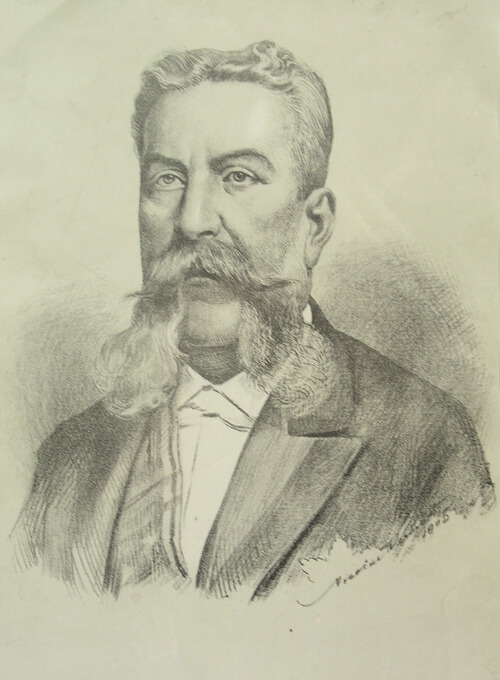
Barbu Dimitrie Știrbei (1799-1869) was the Prince of Wallachia from 1849 to 1853 and again from 1854 to 1856, governing the principality during the unsettled years between the Revolution of 1848 and the union with Moldavia in 1859. His reign was marked by administrative reform, investment in education and public works, military reorganization, and the final abolition of Roma slavery in Wallachia.
Știrbei was born into the Bibescu family and was the elder brother of Gheorghe Bibescu, who had ruled Wallachia before the Revolution of 1848. He received part of his education in Paris and built a long career in the Wallachian administration before becoming prince. By the time he reached the throne, Wallachia had just emerged from revolution and foreign military intervention, while its political freedom remained tightly constrained by both the Ottoman Empire and Russia.
His appointment followed the Convention of Balta Liman in 1849, which allowed the Ottoman sultan, with Russian approval, to appoint the rulers of Wallachia and Moldavia for seven-year terms. The revolutionary institutions of 1848 were dismantled and many former revolutionaries remained in exile, leaving Știrbei to govern within a conservative political settlement intended to restore order after the upheaval of the previous year.
Within those limits, he pursued a broad program of modernization. Education was reorganized, Romanian was restored as the language of instruction, and the courses at Saint Sava in Bucharest were expanded. New institutions included an agricultural school at Pantelimon and a school of arts and crafts, while military education was strengthened through the creation of an officers’ school. He also reorganized frontier troops, gendarmes, and fire brigades.
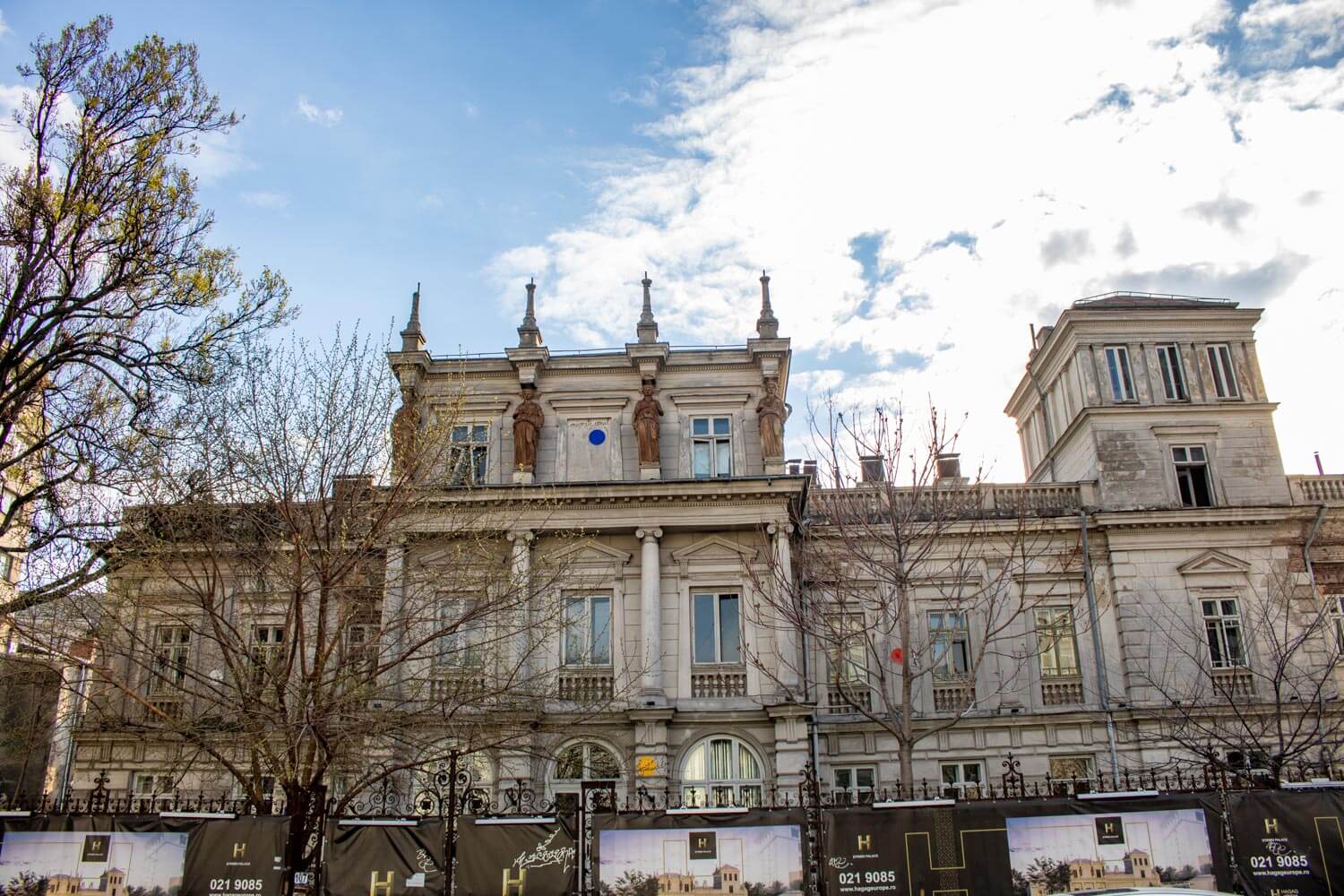
Bucharest continued to change during his rule. Markets were reorganized, roads and bridges improved, public lighting expanded, and work continued on the city’s water supply and the regulation of the Dâmbovița. Știrbei had already left his own architectural mark on the capital before becoming prince through the Știrbei Palace on Calea Victoriei, built for him in the 1830s. During his reign it also served as a princely residence, making it one of the clearest surviving buildings directly connected with his life in Bucharest.
One of the most important social reforms of Știrbei’s reign came near its end. Roma had lived in slavery in Wallachia for centuries, owned by the state, monasteries, and private individuals. Earlier reforms had gradually freed some groups, but the institution itself survived until 1856. Under Știrbei, Wallachia adopted the final emancipation law, abolishing legal slavery throughout the principality.
His reign was interrupted by the Crimean War. Russian troops occupied Wallachia in 1853, forcing Știrbei to leave the country. After the Russians withdrew and Austrian forces entered the principality, he returned in 1854 and resumed his rule. The war fundamentally changed the international position of Wallachia and Moldavia, and the Treaty of Paris of 1856 ended Russia’s special protectorate over the principalities.
Știrbei left the throne that same year as his original mandate came to an end. The political debate now shifted increasingly toward the future relationship between Wallachia and Moldavia. Știrbei supported closer union between the two principalities, although it was Alexandru Ioan Cuza who would become ruler of both in 1859 and begin the creation of the modern Romanian state.
After leaving office, Știrbei remained part of the political and aristocratic world he had helped shape but never returned to the throne. He died in 1869, a decade after the union of Wallachia and Moldavia and only a few years after Carol I had replaced Cuza as ruler.
Știrbei’s legacy is most clearly visible in the reforms carried out during his reign and in the surviving places directly tied to his life. The Știrbei Palace in Bucharest preserves the strongest architectural connection with him, while his name also remains attached to streets, monuments, and institutions elsewhere in Romania. His years in power belong to the final phase of old Wallachian princely rule, when the principality was still constrained by Ottoman and Russian influence but was already undergoing many of the administrative, educational, and social changes that would shape the Romanian state created soon afterward.