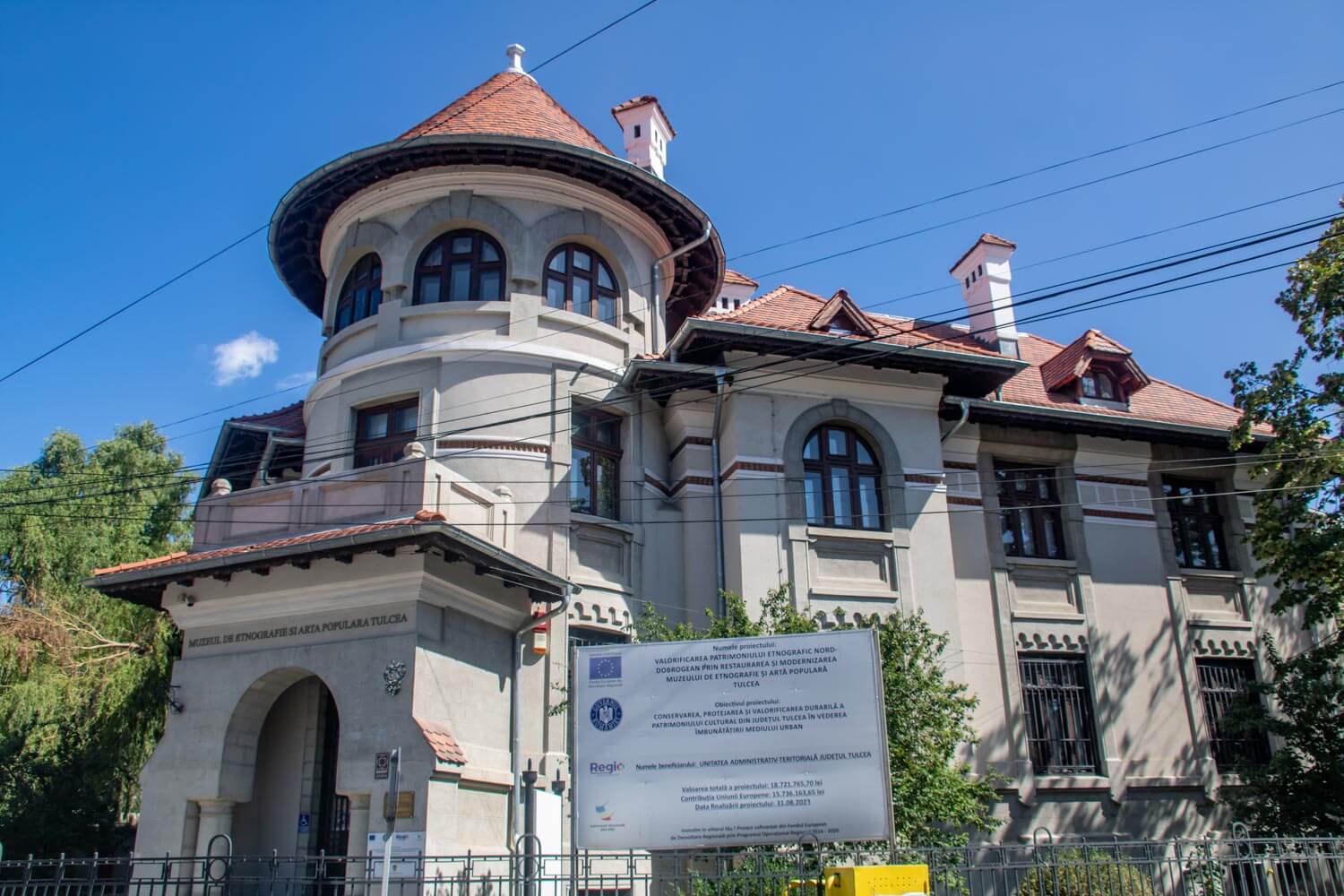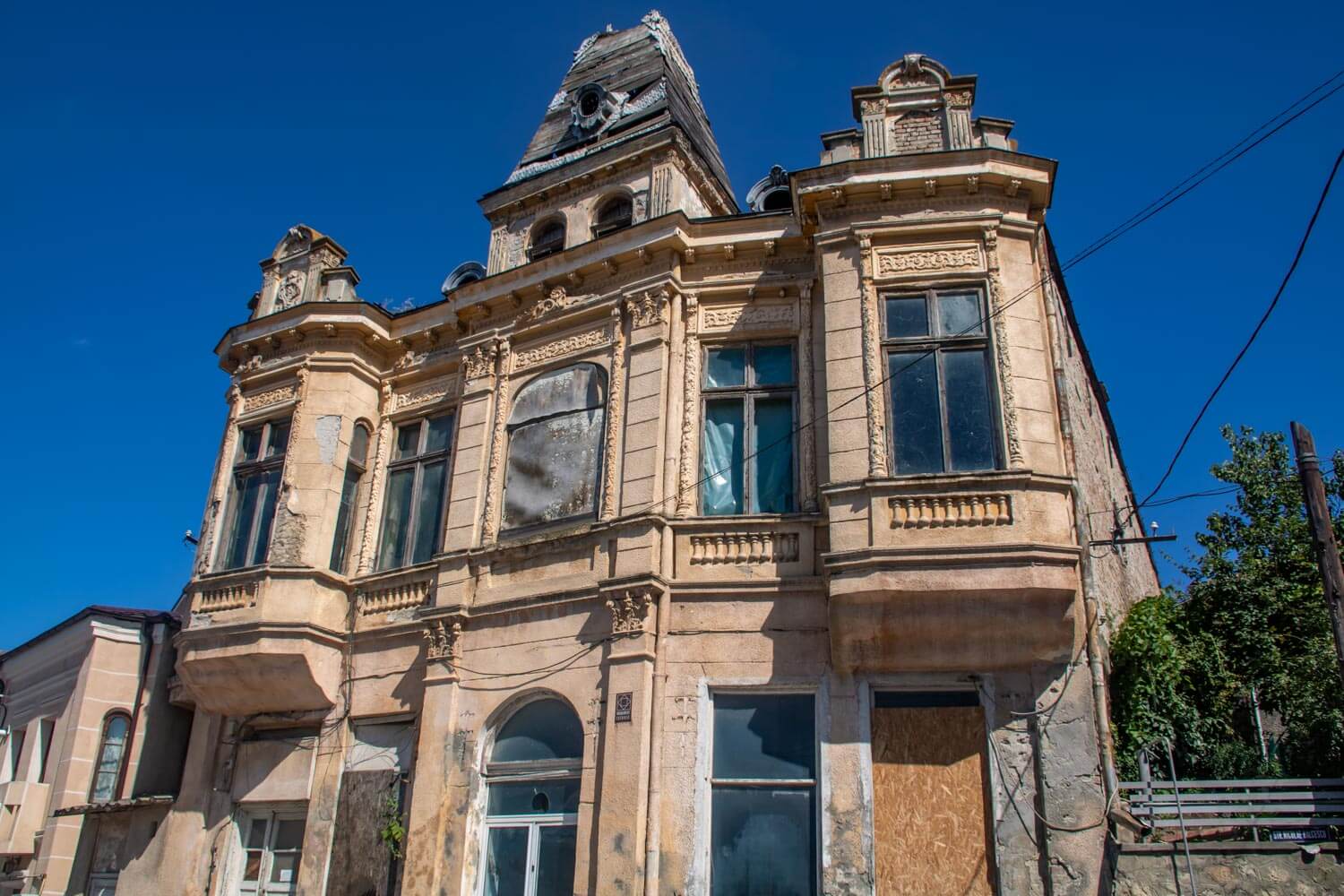
The Former Ottoman Consulate (Fostul Consulat Otoman) is a historic building on Strada Gloriei in Tulcea, known for its early 20th-century ornate eclectic façade and its later use as a sausage factory.
After northern Dobrogea became part of Romania in 1878, the Ottoman Empire established a consulate in Tulcea to represent its interests and serve the city’s Turkish community. In March 1879, the consulate moved into the house on Strada Gloriei, which also became the residence of Paul Naum Efendi, the first Ottoman consul in the city. At that time, it was a two-story residence with wooden and glazed balconies and a monumental Ottoman-style entrance gate.
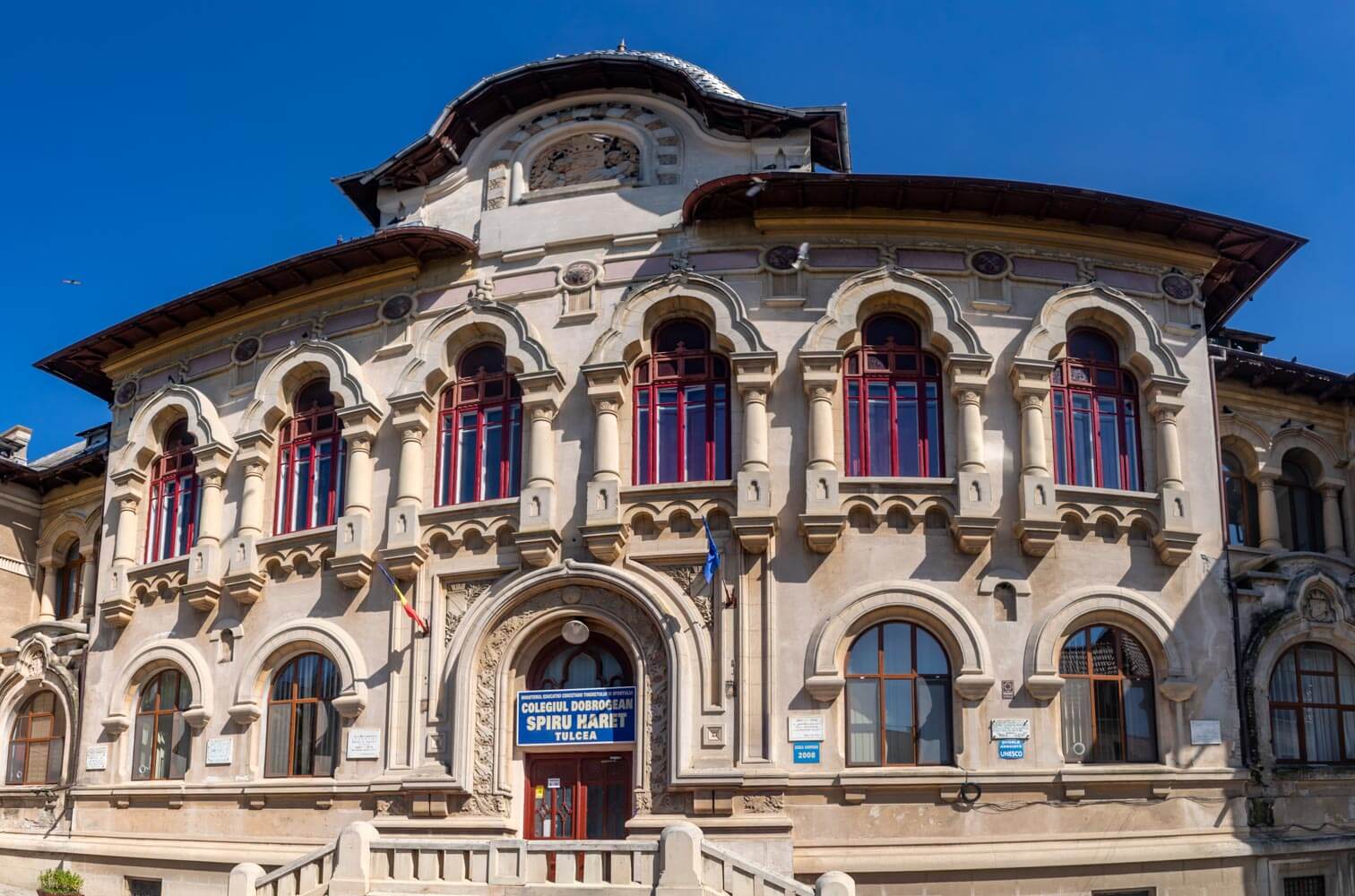
The house took on much of its present appearance during the tenure of consul Dimitraki Teododosyadi Efendi, who arrived in Tulcea in 1902. Around 1913, he commissioned a major remodeling and brought in a Levantine craftsman to redesign the exterior with neoclassical, Baroque, and Ottoman Gothic elements, creating the elaborate façade that still distinguishes the building today.
After the First World War, the former consulate passed through several private owners before being converted to industrial use in 1943. The Romanian joint-stock company Praga began producing sausages and canned meat here, with its Tulcea operation represented by Ioan and Virginia Teodoru. Following nationalization in 1948, production continued briefly under the name Delfinul.
The factory closed the following year, and in 1949 the building became a neighborhood tavern called Cireșica. The tavern became well known in Tulcea and gave the house the popular name Casa Cireșica. After 1989, the property passed through several other commercial and private uses, including a refrigeration-repair business, while the historic building gradually fell into poor condition.