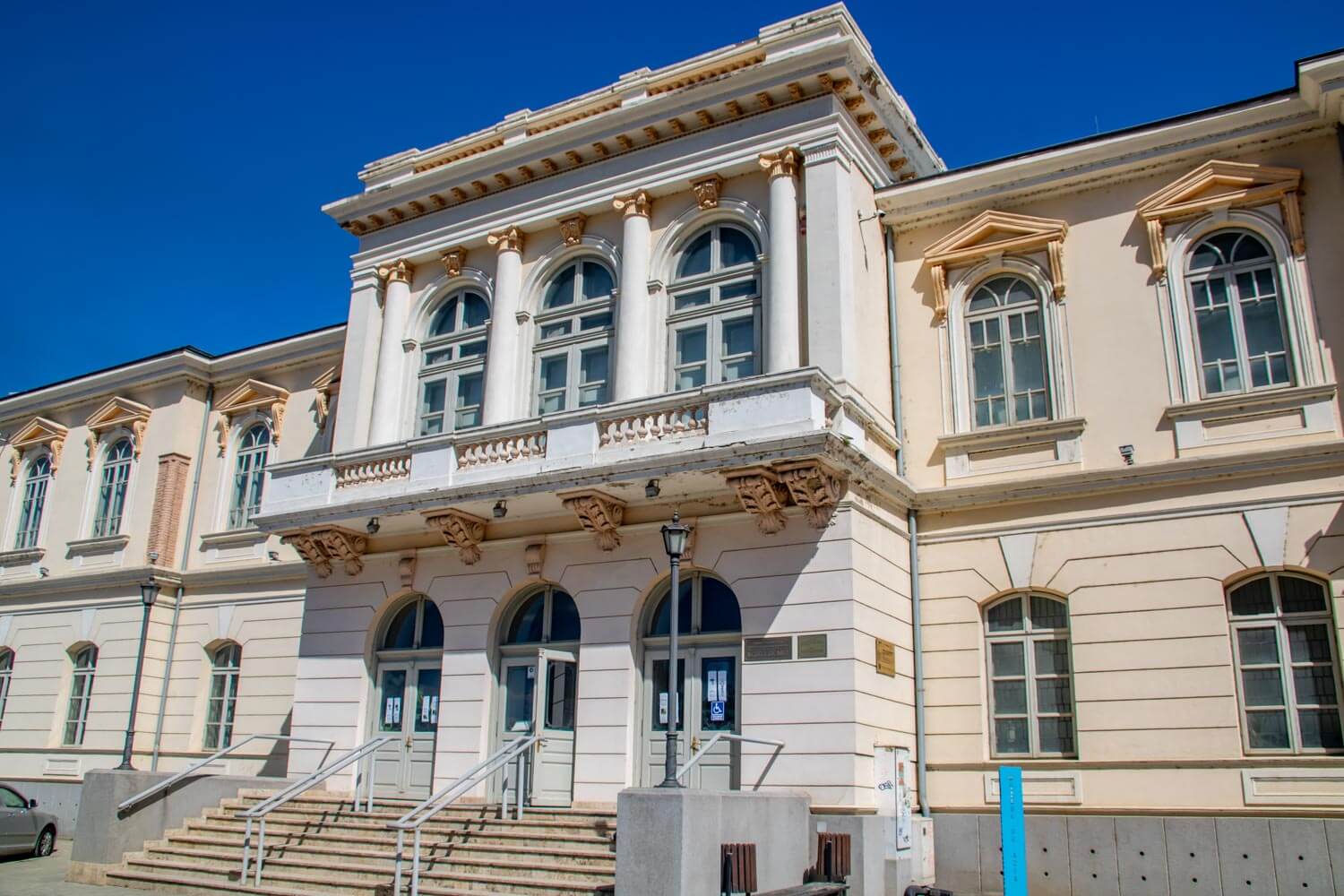
The Danube Delta Museum of Ecotourism (Centrul Muzeal Eco-Turistic Delta Dunării) is a natural-history museum and public aquarium in central Tulcea, dedicated to the landscapes, wildlife and traditional life of the Danube Delta. Opened in 2009, it combines museum displays, reconstructed habitats and live aquariums in a purpose-built center designed to introduce visitors to the delta before or after exploring the reserve itself.
The center developed from Tulcea’s much older natural-history collections, which formed part of the city’s postwar museum system before the different disciplines were separated into specialized branches. Today its scientific collections contain tens of thousands of specimens, including plants, insects, mollusks, birds, mammals, fish, fossils and mineralogical material gathered from Dobrogea and the Danube Delta. Only a fraction of this material is displayed at any one time, but it underpins the permanent exhibitions and the museum’s research work.
The Danube Delta Exhibitions
The museum galleries explain how the Danube Delta formed and how its habitats differ from one another, moving from open water and reed beds to floating reed islands, marshes, forests and dry sandy areas. Dioramas recreate characteristic landscapes with preserved animals and plants arranged within their ecological setting, helping visitors understand where species live rather than presenting them as isolated specimens. The displays also extend beyond the delta itself to other protected landscapes in northern Dobrogea, including the Razim-Sinoie lagoon complex and the Măcin Mountains.
Human life in the delta forms another part of the exhibition. Displays cover the long history of settlement, traditional occupations and the ways communities adapted to an environment dominated by water. A reconstructed cherhana, the traditional fish collection and processing point, introduces the importance of fishing, while other material looks at local livelihoods and the relationship between people and the wetlands. Interactive maps, multimedia displays and documentary material supplement the physical collections.
The Aquarium
The lower level contains the public aquarium, one of the most distinctive parts of the museum. Its tanks include native fish from the Danube Delta and Black Sea alongside tropical reef species, marine invertebrates and corals. The collection has included 24 indigenous fish species and 23 reef-fish species, allowing visitors to compare the aquatic life of the Lower Danube with very different marine ecosystems.
The largest displays are designed to be experienced from inside the aquarium environment rather than simply viewed through small windows. A tunnel passes through the main tank, where sturgeon, eels and other fish swim overhead and alongside visitors, while a pair of concentric cylindrical tanks creates another immersive viewing area surrounded by reef fish and corals. These installations make the aquarium particularly effective for understanding the size and movement of species that are difficult to observe closely in the wild.