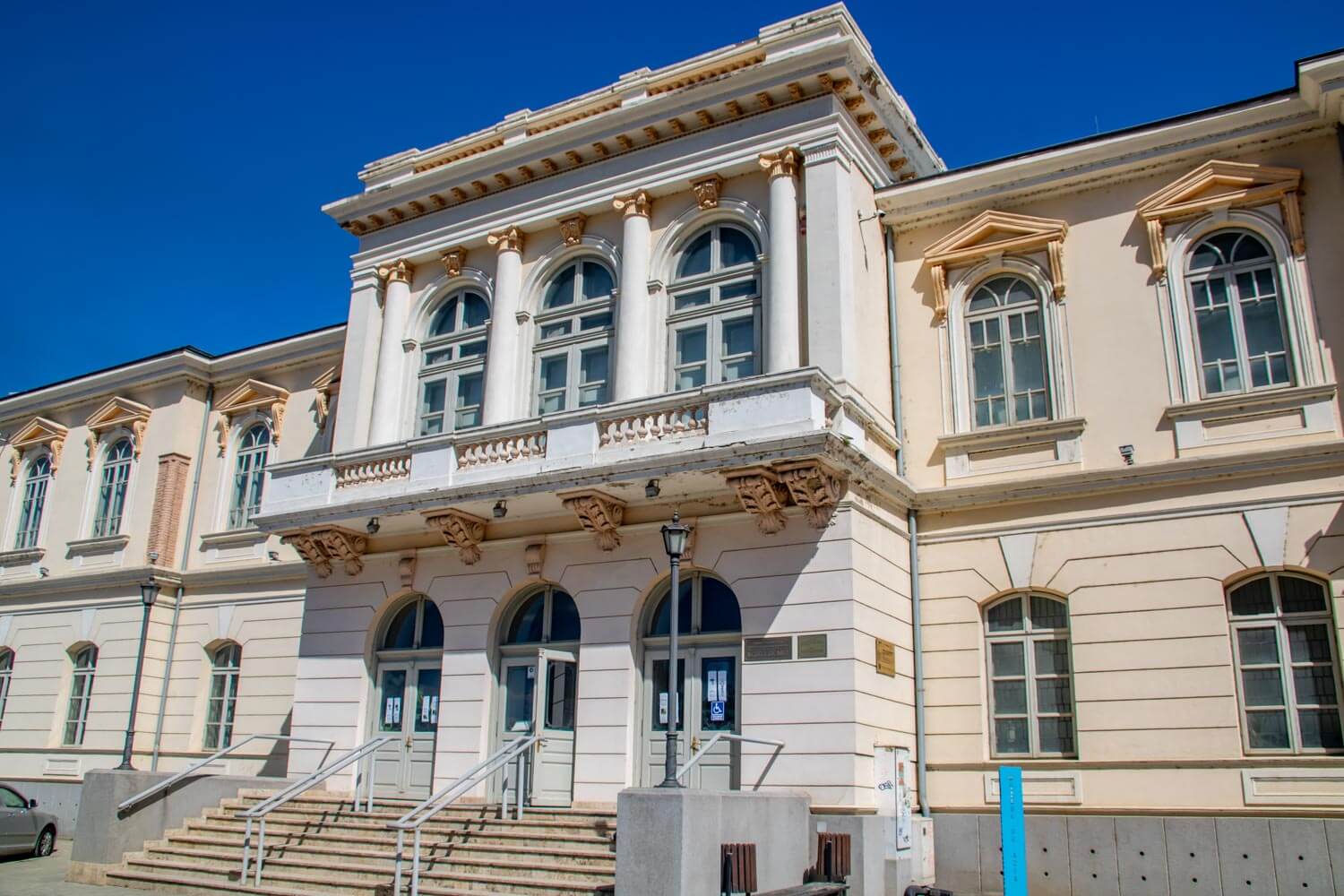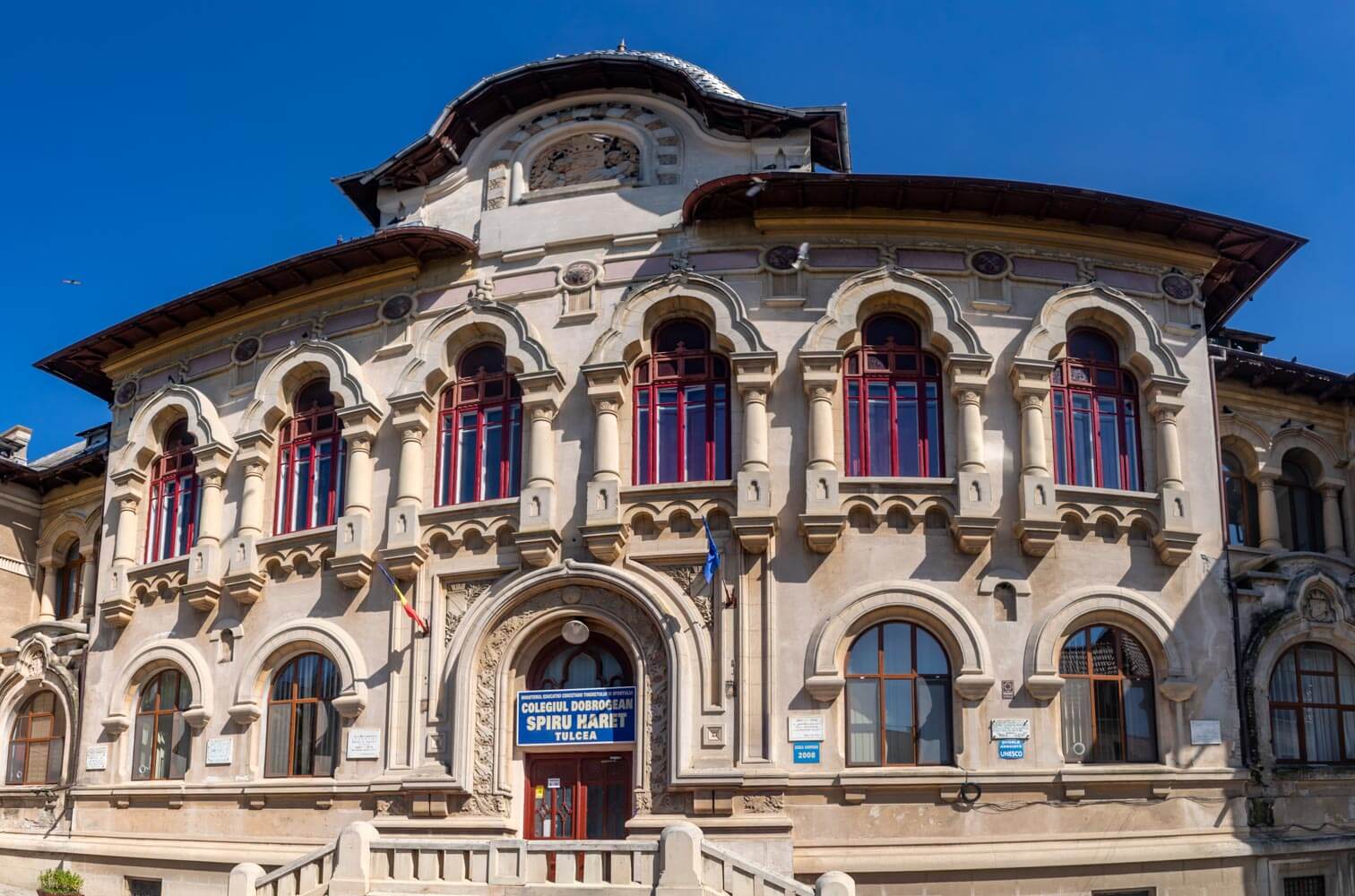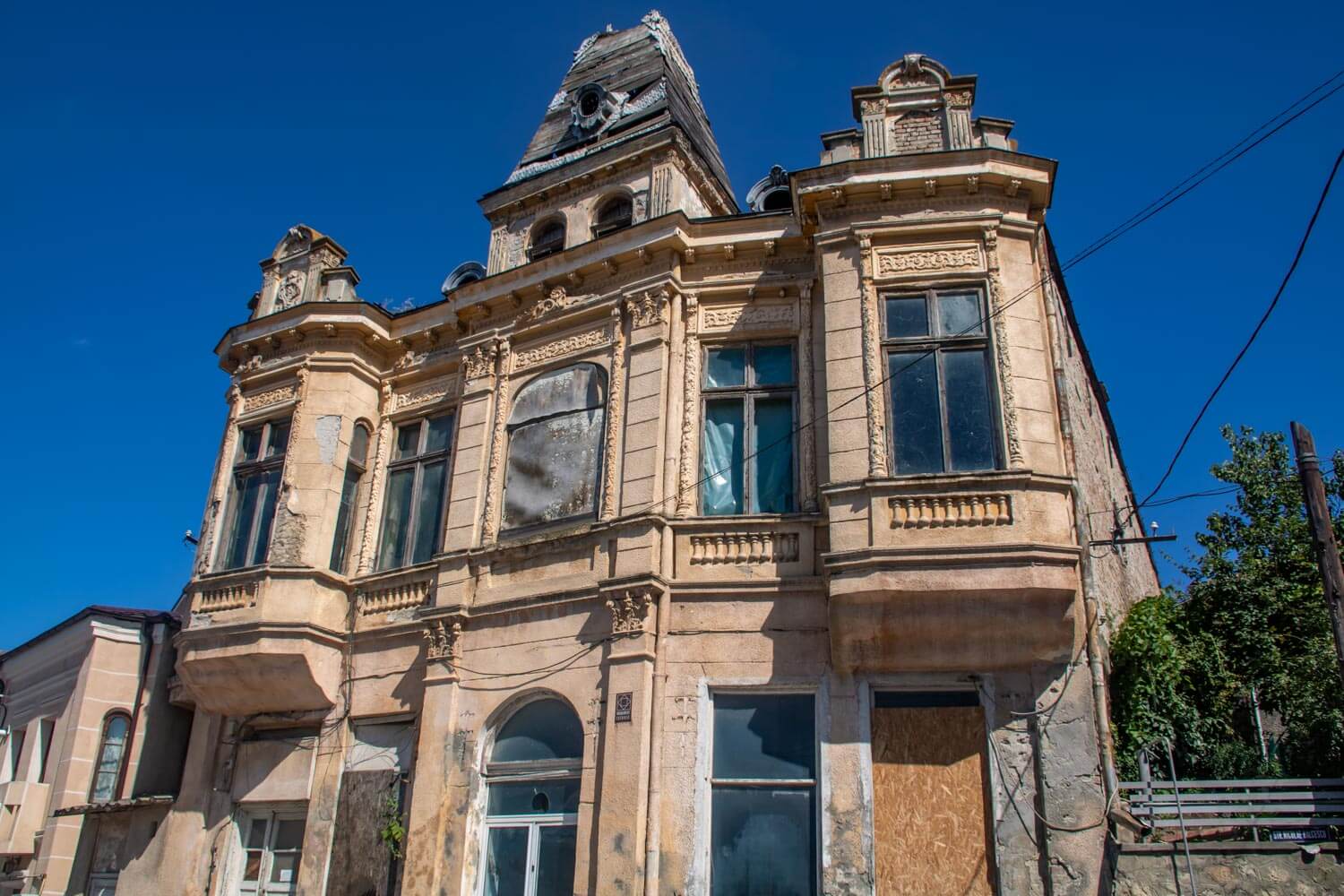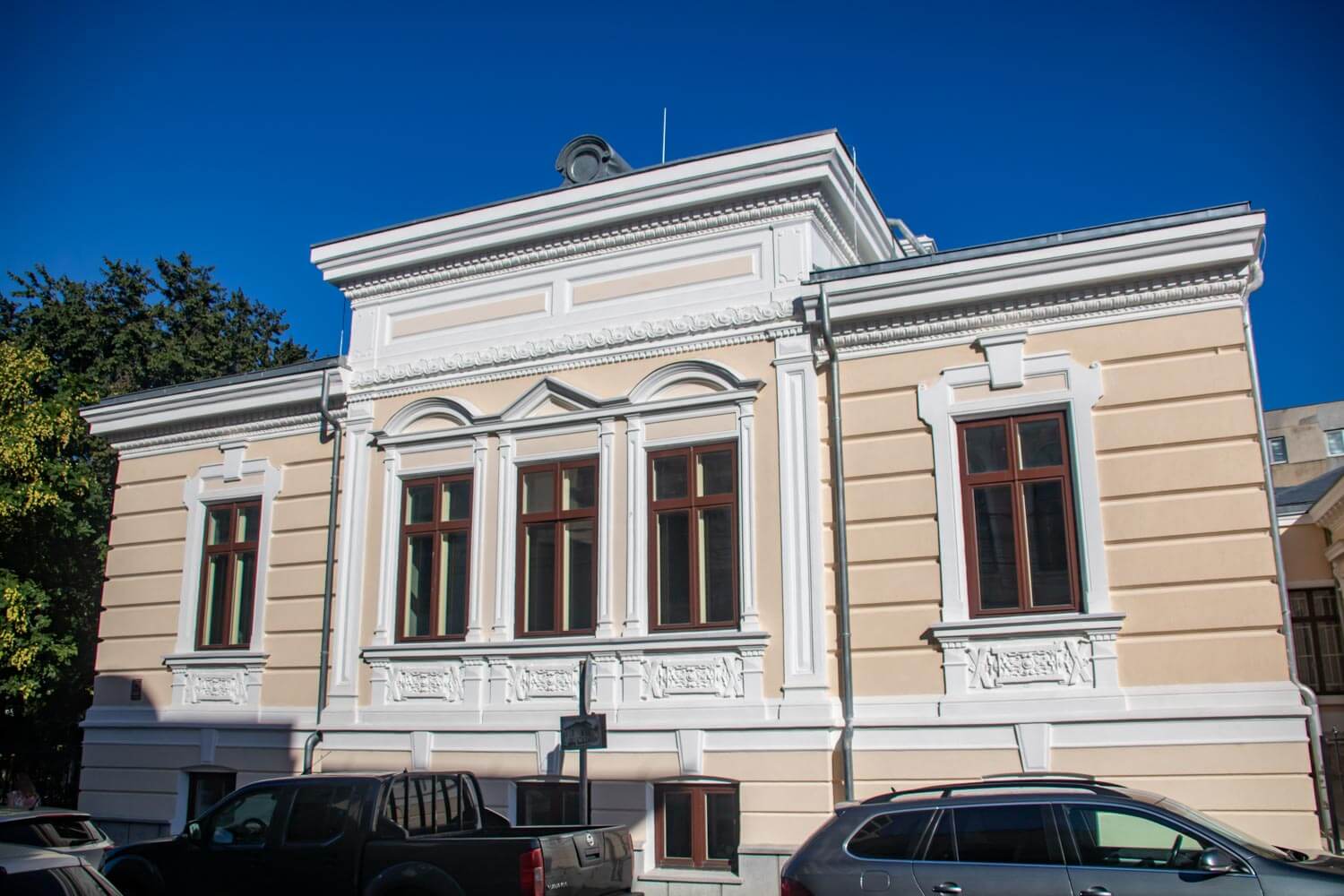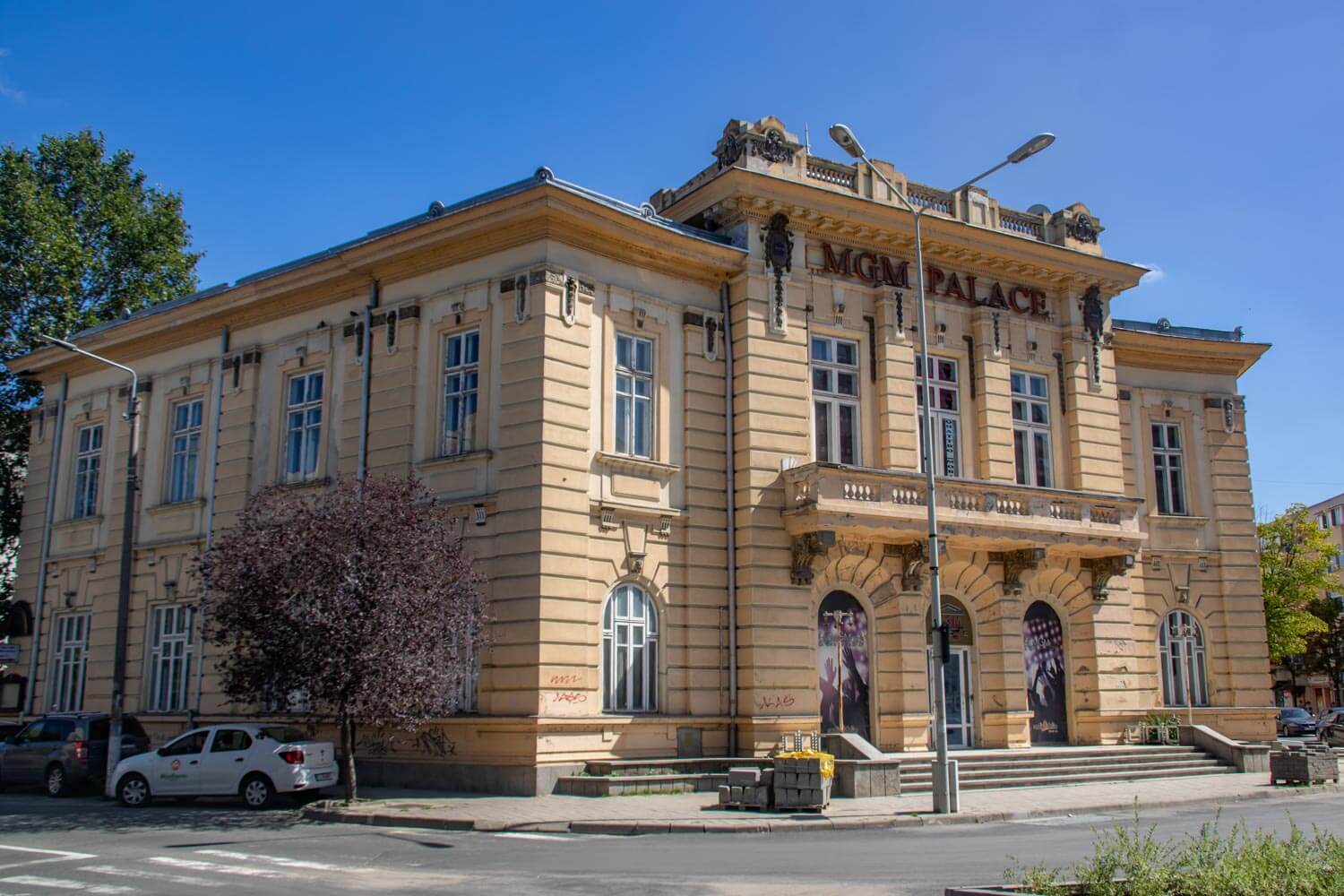
The Palace of Fisheries (Palatul Pescăriilor) is a historic administrative building in Piața Republicii in central Tulcea, constructed between 1910 and 1914 for the State Fisheries Administration. Its imposing scale reflected the importance of fishing to Tulcea and the Danube Delta at a time when the Romanian state was reorganizing the management and commercial use of the region’s aquatic resources.
The building grew out of reforms led by naturalist Grigore Antipa, who had become general administrator of the State Fisheries in 1895 and developed a new system for managing fisheries along the Danube and in the delta. Tulcea became an important center for this work, and Antipa was closely involved in the creation of the new administrative headquarters. Construction was carried out by Ștefan Borș and Robert Flamm under a contract signed with the Ministry of Agriculture and Domains in March 1910.
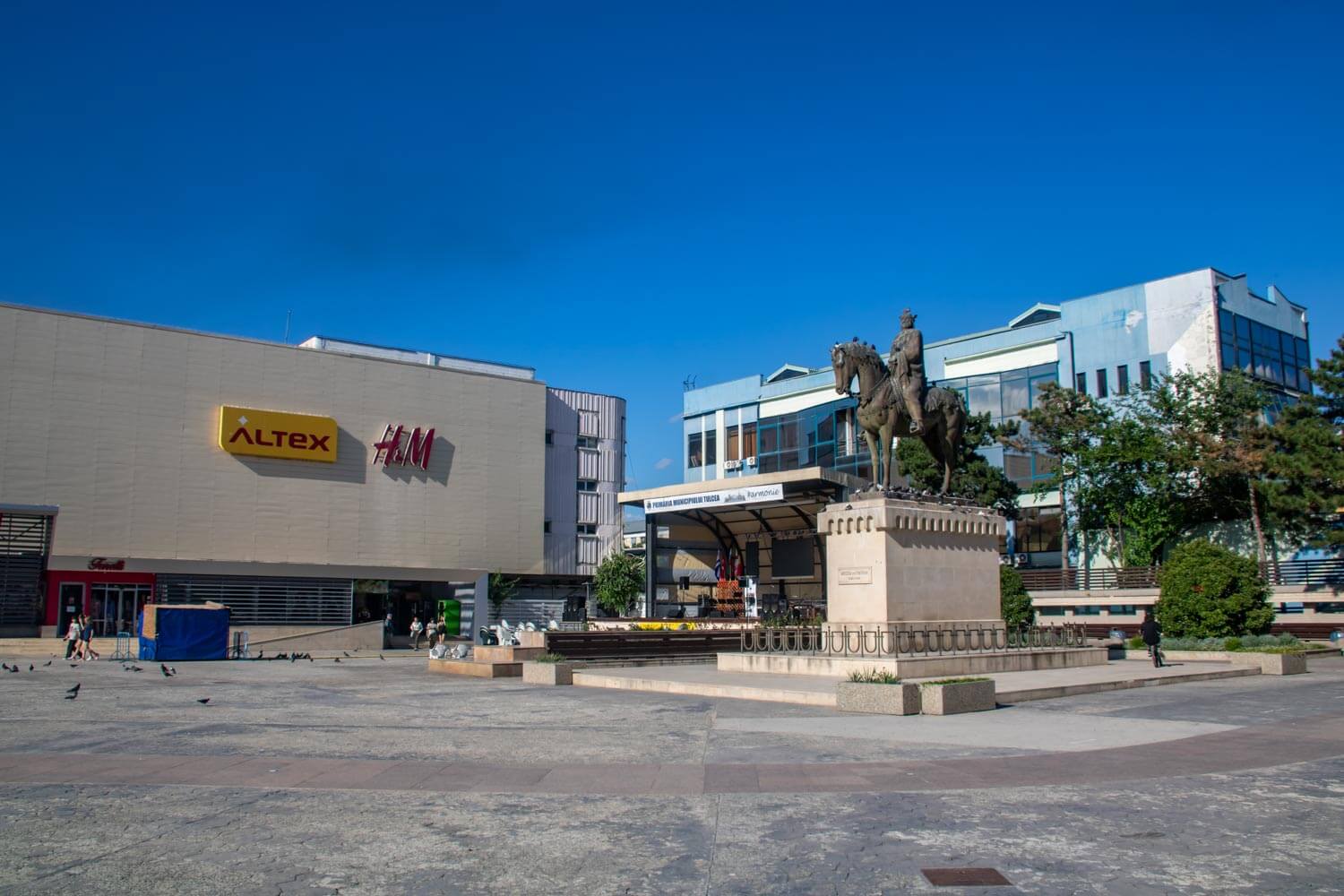
The palace was built in what was then Piața Mircea cel Bătrân, part of Tulcea’s developing civic center. The land belonged to the municipality, which transferred it to the Ministry of Agriculture and Domains in exchange for the area around Lake Ciuperca. The resulting building was conceived on a scale appropriate to a major state institution, with a symmetrical early-20th-century façade and eclectic architectural detailing that gave the fisheries administration a prominent presence among the public buildings surrounding the square.
The headquarters handled the administration of fisheries across a region where fish formed both an important food source and a major part of the local economy. Antipa also established a zoological and archaeological museum within the building, adding a scientific and educational role to its administrative work. After the reorganization of state institutions in 1948, the Regional Fisheries Inspectorate and the state company Compescaria operated here, taking over the commercialization and industrial processing functions of the former administration. The building later housed the Danube Delta Central Administration.
After the fisheries institutions left, the palace passed into private use and was eventually converted into a nightclub, a function it retained for a number of years. Although the interior is no longer used for its original purpose, the exterior still preserves the monumental character of the building that once coordinated one of the defining industries of Tulcea and the Danube Delta.