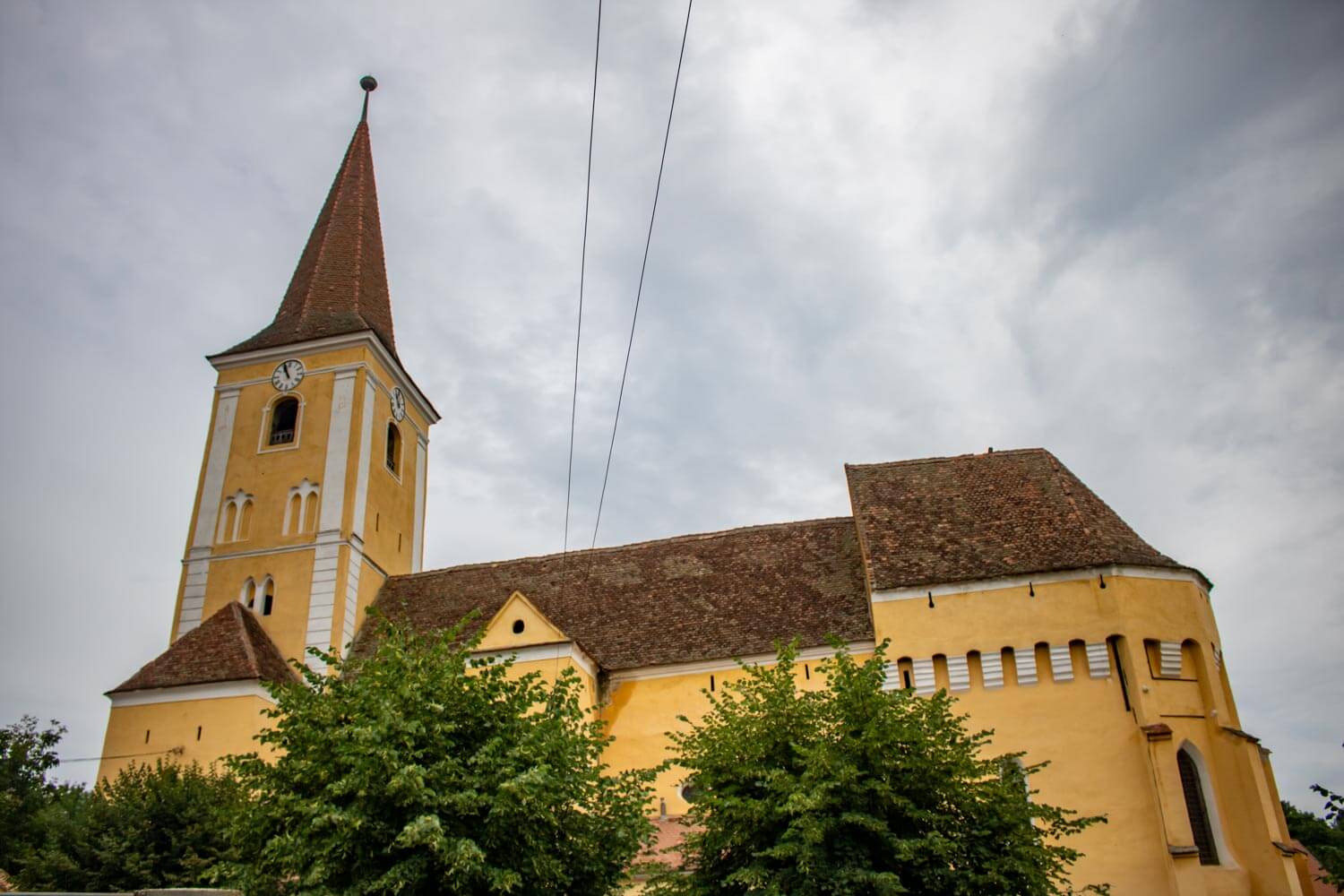
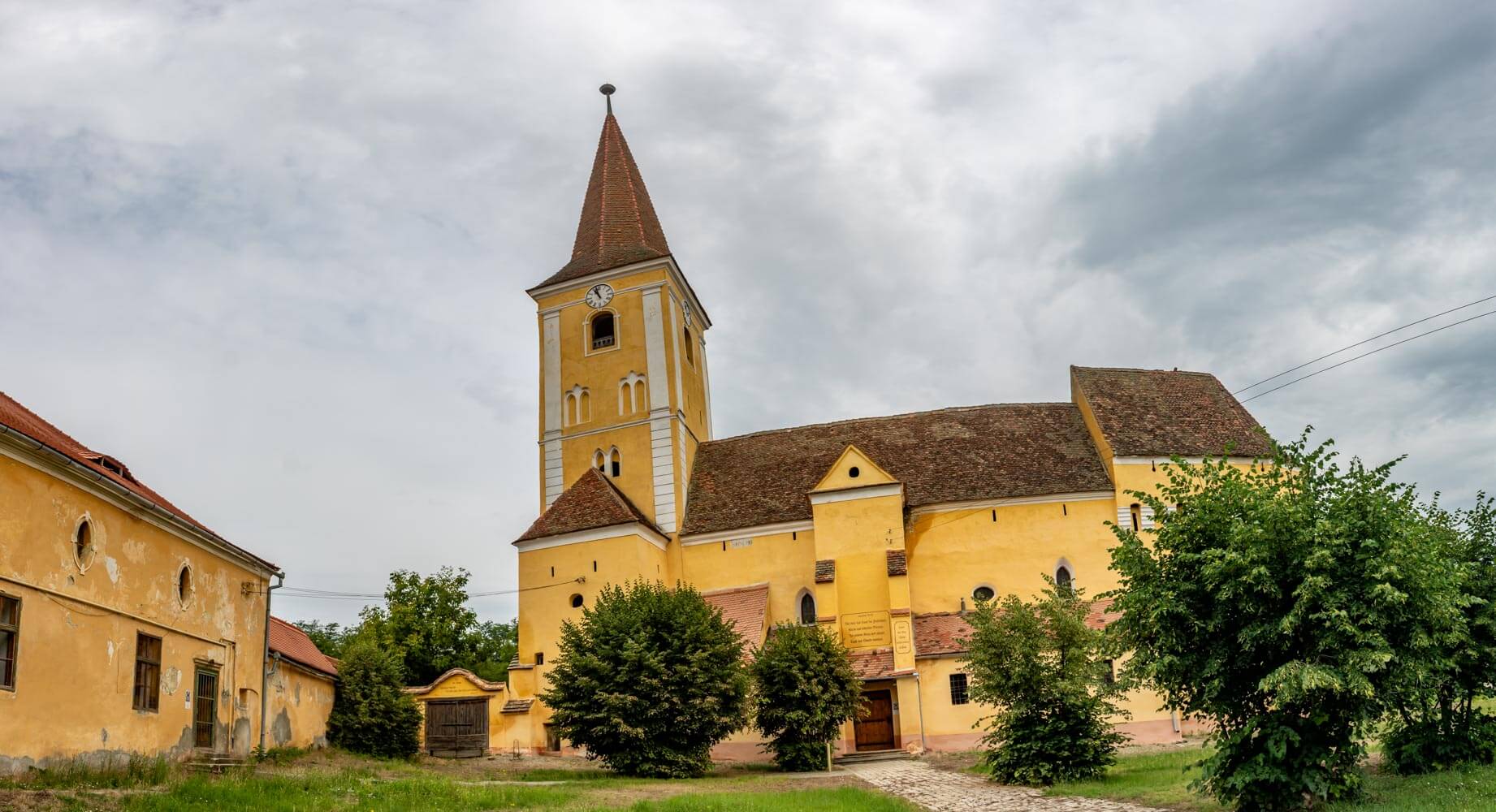
The Fortified Church of Șura Mare (Biserica Fortificată din Șura Mare) is a historic Lutheran church in the village of Șura Mare, Sibiu County. Built in the first half of the 13th century as a Romanesque basilica, it was substantially fortified after the Ottoman attacks of the late 15th century and still preserves major elements from both periods.
The original church had three aisles, a semicircular apse and smaller apses at the eastern ends of the side aisles, a layout characteristic of some of the earliest Saxon churches around Sibiu. A western bell tower was added around 1300, while parts of the Romanesque masonry, early Gothic openings and original choir remain embedded in the present building.
After the settlement was attacked in 1493, the church was extensively strengthened. The choir was raised with a defensive level above it, while the nave received a new lierne vault and the choir a ribbed vault. The western tower was also adapted for defense, and a flanking tower was built above the southern entrance. An inscription records the completion of an important rebuilding phase in 1497, while further work on the fortified choir continued into the 16th century.
Most of the surrounding defensive enclosure has since disappeared, leaving only fragments of wall and a surviving defensive tower. The church itself therefore carries much more of the site’s medieval character today than the reduced fortifications around it.
Inside, the church is notable for its brightly painted wooden galleries and furnishings. Floral-painted choir stalls date from the early 18th century, the pulpit from 1716 and the marble baptismal font from 1758, while the present Neo-Gothic altar was added in 1903. The organ was built in 1807 by Melchior Achxs. Painted pews now preserved in the aisles were transferred here from the church at Drăușeni for safekeeping.