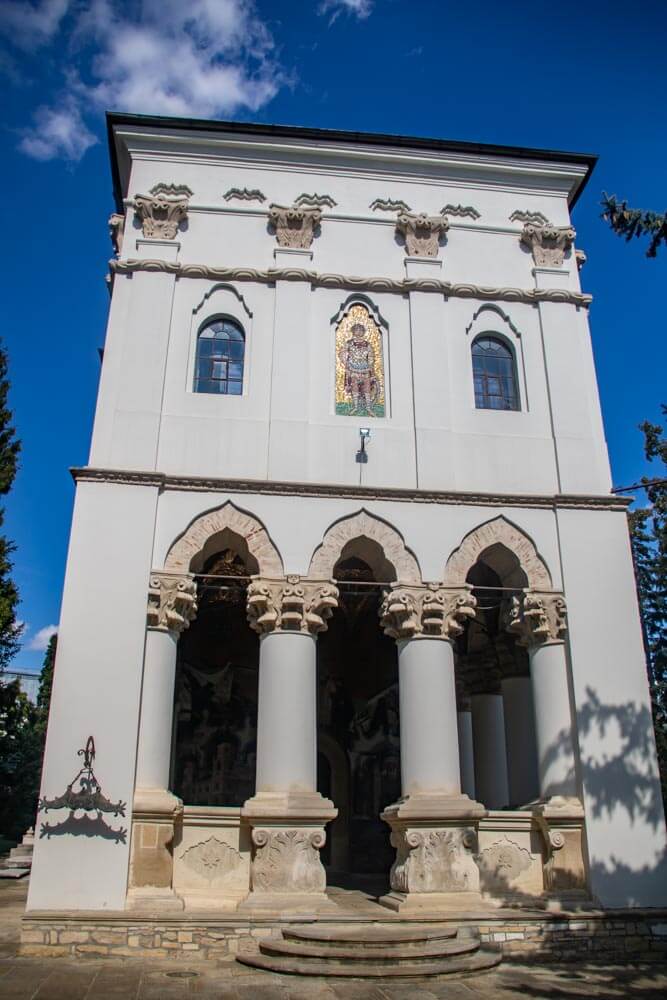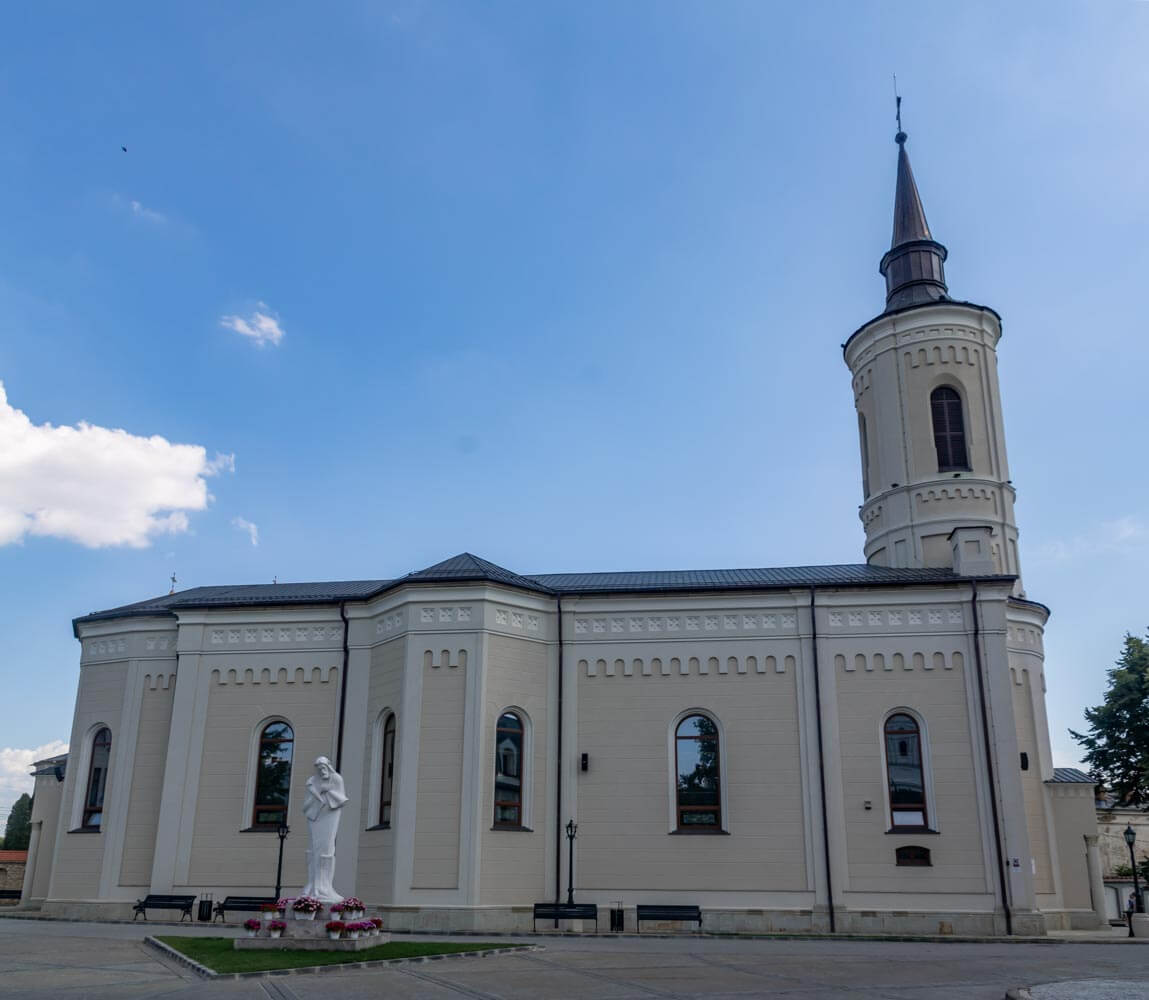
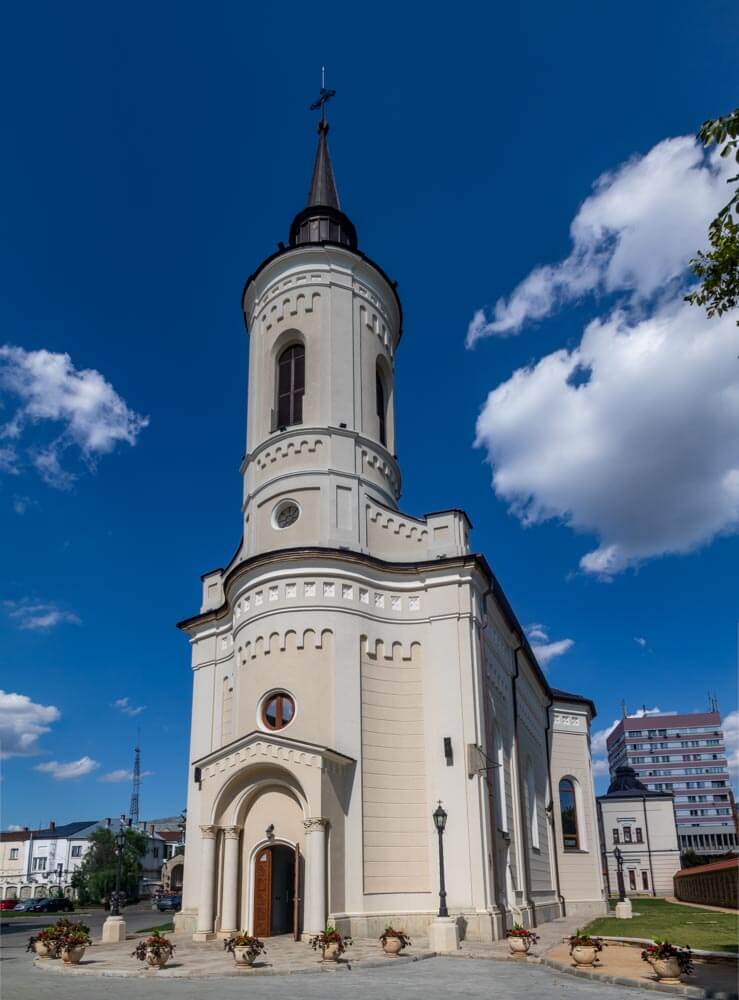
The Old Catholic Cathedral of Iași (Catedrala Romano-Catolică Veche din Iași) is a historic Roman Catholic church dedicated to the Assumption of the Virgin Mary, standing within the Catholic diocesan complex on Stephen the Great and Saint Boulevard in central Iași. Built in the late 18th century, it is distinguished by its Baroque interior and its cylindrical bell tower rising above the entrance.
Catholic worship on this site dates back at least to the 16th century, when a wooden Franciscan church served the city’s community. Repeated invasions and fires damaged the earlier building, which was eventually destroyed in 1766. After obtaining permission from Prince Grigore III Ghica to replace it with a permanent stone church, the Franciscans began construction in 1782 under priest Anton Mauro. His successor Fidelis Rochi completed the work, and the new church was consecrated on August 15, 1789.
The new stone church was damaged by the earthquake of 1802 and the great fire of Iași in 1827, requiring repairs during the following decades. Its appearance changed considerably during a major reconstruction initiated by Bishop Giuseppe Salandari in the 1860s, when the sanctuary was enlarged and the interior received much of its present decoration. In 1884, when the Roman Catholic Diocese of Iași was formally established, the church became its episcopal cathedral.
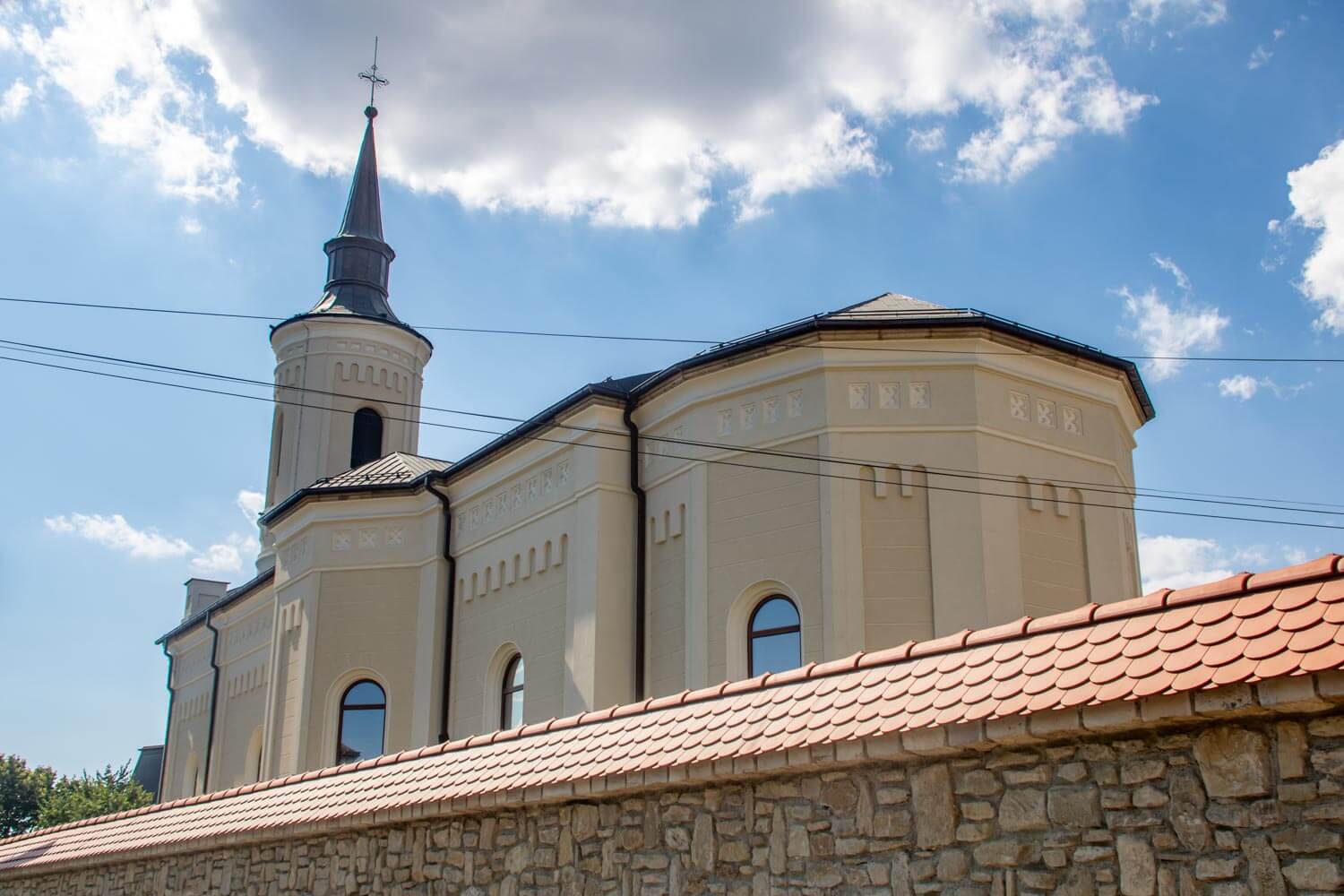
The exterior has relatively simple proportions, with a trefoil plan, a rounded bell tower above the western entrance, and decorative rows of small arches beneath the roof. Inside, the Baroque character becomes much more pronounced through the vaulted ceilings, elaborate paintings, marble altars, gilded furnishings, and sculpted religious ornament. Italian Franciscan painter Giuseppe Carta decorated the interior in 1869, creating a large composition of the Assumption of the Virgin Mary above the principal altar, accompanied by scenes of the Annunciation, the Marriage of Mary and Joseph, and the Coronation of the Virgin.
The three marble altars were made in Padua using stone brought from Venice and installed in the 1870s. The central altar is dedicated to the Assumption, while the side altars honor Saint Francis of Assisi and Saints Bonaventure, Joseph of Cupertino, and Anthony of Padua. Other historic furnishings include the gilded metal pulpit installed in 1868, paintings of the Stations of the Cross brought from Vienna, and a large bronze chandelier manufactured in Paris in the early 20th century.
The cathedral also preserves the memory of several bishops who shaped Catholic life in Moldavia. Four memorial slabs are incorporated into the pillars supporting the central vault, including the tombs of Giuseppe Salandari and Nicolae Iosif Camilli, the first residential bishop of Iași. Another commemorates Bishop Mihai Robu, whose remains were transferred here in 1964, while a fourth honors Anton Durcovici, who died in communist imprisonment in 1951. His burial place remains unknown.
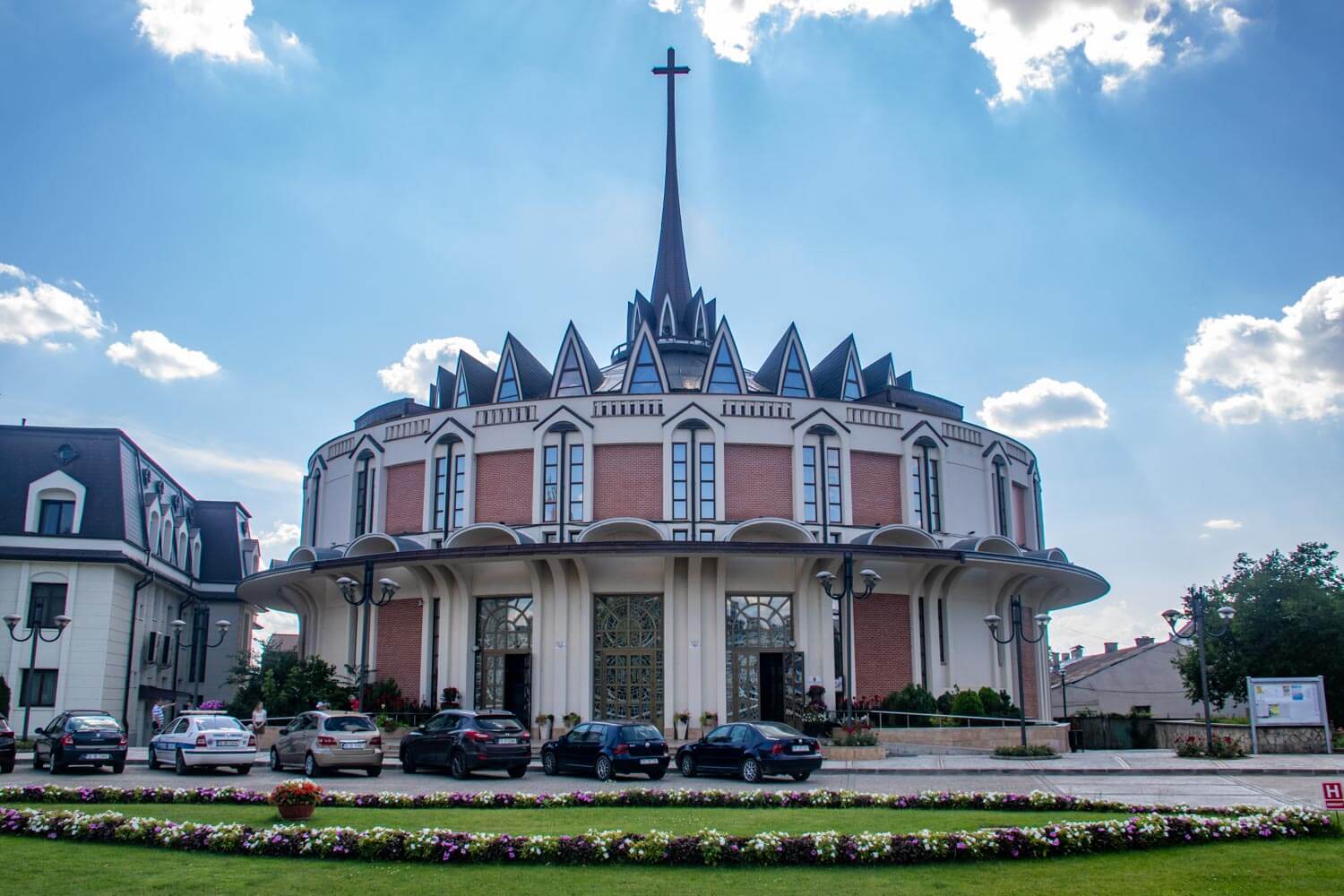
The adjoining New Catholic Cathedral was consecrated in 2005, providing a larger space for major diocesan celebrations, while the older building retained its religious function and historical significance. An extensive restoration completed in 2021 consolidated the structure and restored its decorative features, while introducing a new altar, stained-glass windows depicting the apostles, and a renovated crypt. The cathedral was reopened and its altar consecrated on September 15, 2021.