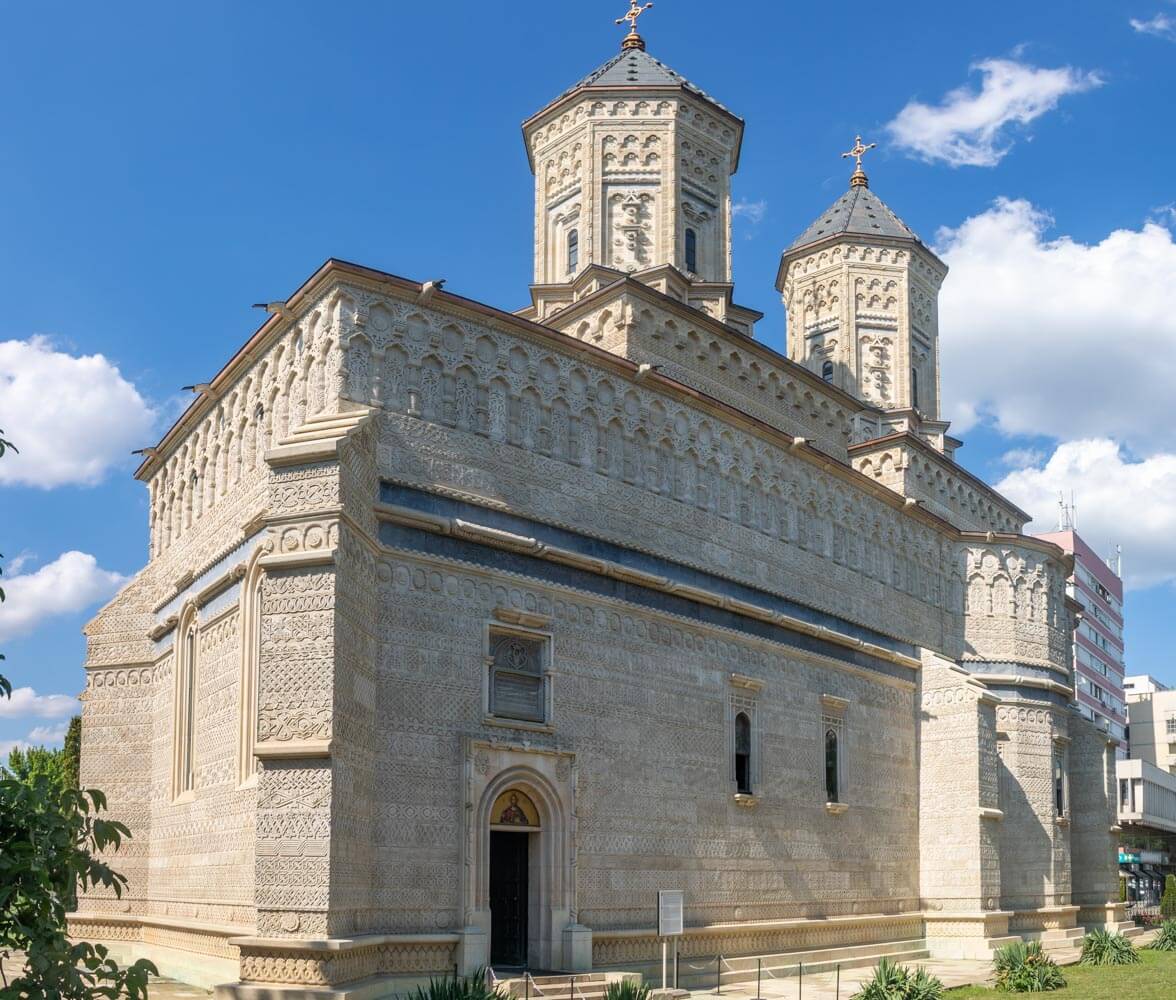
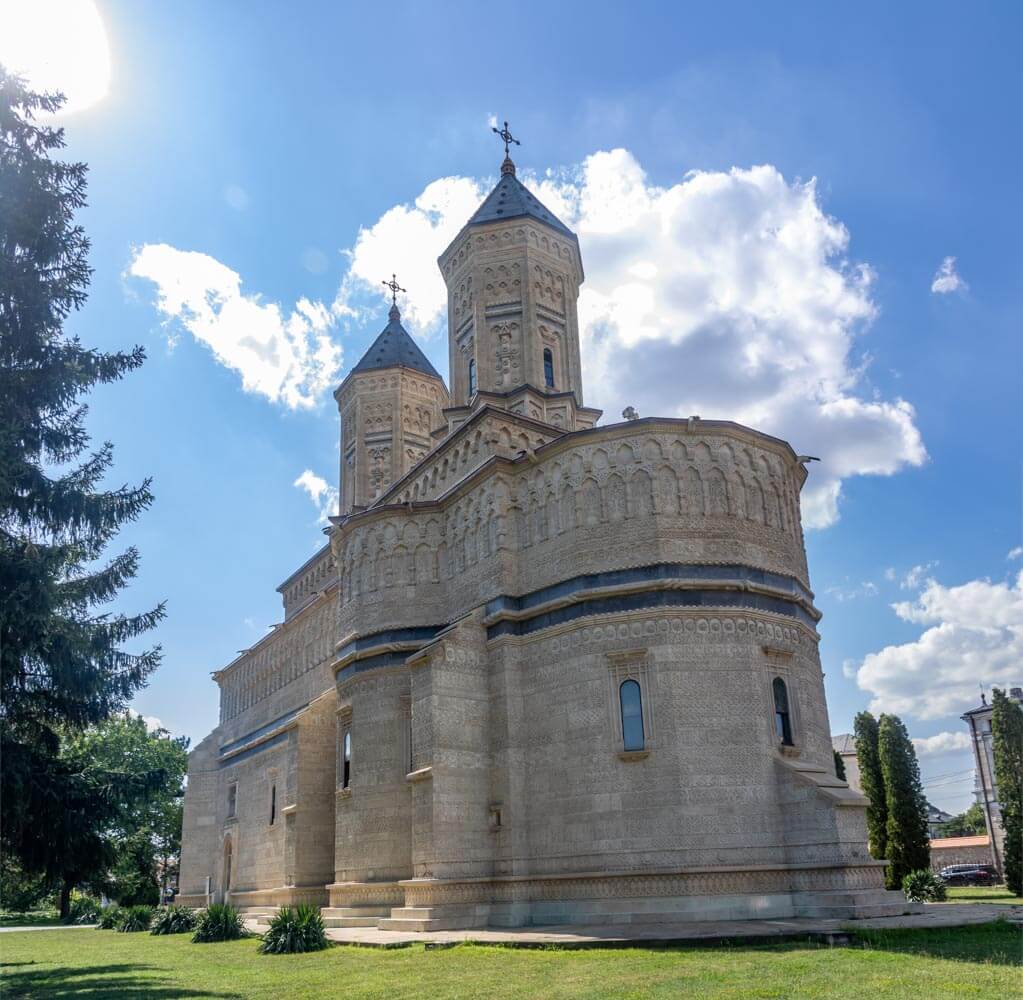
The Holy Three Hierarchs Monastery (Mănăstirea Sfinții Trei Ierarhi) is a historic Orthodox monastery on Stephen the Great and Saint Boulevard in central Iași. Founded by Prince Vasile Lupu, it is distinguished by its extraordinary church, whose exterior is almost entirely covered in intricate stone carvings. The monastery is dedicated to three major theologians of the Eastern Orthodox Church: Saint Basil the Great, Saint Gregory the Theologian, and Saint John Chrysostom.
History Of The Monastery
Vasile Lupu established the monastery shortly after becoming ruler of Moldavia, commissioning a religious complex that would also serve as a princely burial place and a center of learning. The church was built between 1637 and 1639 and consecrated by Metropolitan Varlaam on May 6, 1639. Around it developed a substantial monastery with monks’ cells, an abbot’s residence, a refectory, a printing house, and a fortified enclosure with a tall entrance tower and clock.
The monastery soon became an important center of education and religious publishing. In 1640, Vasile Lupu established a higher school here, later known as the Vasilian School, and introduced Moldavia’s first printing press. Working with Metropolitan Varlaam, the press produced the Book of Romanian Teachings (Cazania) in 1643, an influential collection of sermons and one of the earliest major books printed in Romanian in Moldavia. Other publications included religious texts and Vasile Lupu’s law code.
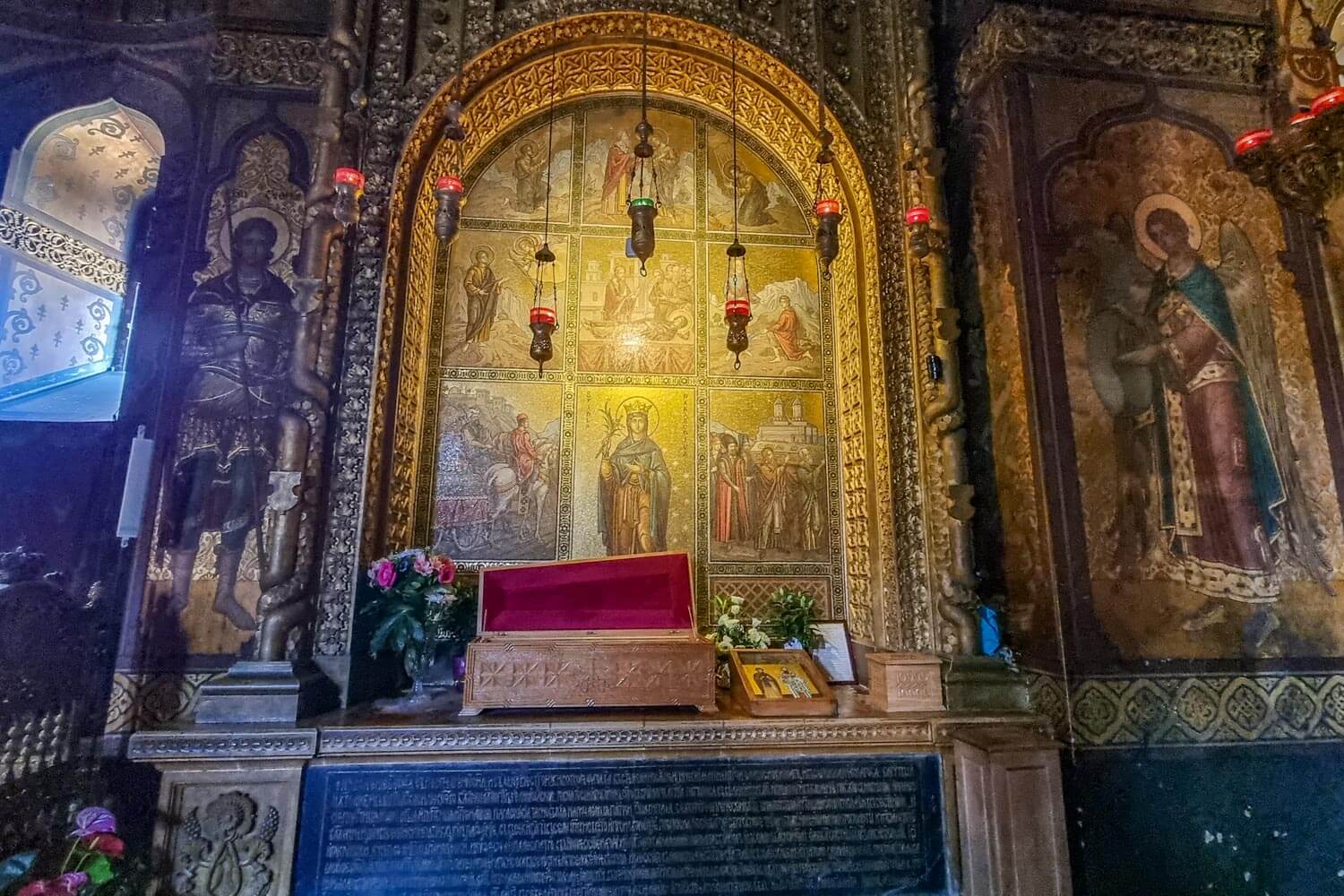
The prince also sought to make his foundation an important pilgrimage destination. In 1641, he obtained the relics of Saint Paraskeva from Constantinople after helping to settle the debts of the Ecumenical Patriarchate. They were placed in a specially decorated niche inside the church, where pilgrims venerated them for almost 250 years. Following a fire in the monastery’s Gothic Hall in 1888, during which the reliquary survived, the relics were transferred to the Metropolitan Cathedral of Iași in 1889.
Despite its wealth and religious importance, the monastery suffered repeated damage. It was plundered and burned during invasions in 1650 and 1686, while several subsequent earthquakes weakened the buildings. By the 19th century, extensive reconstruction had become necessary. French architect André Lecomte du Noüy directed a major restoration beginning in 1882, rebuilding much of the church and substantially redesigning its interior. New furnishings and decorations were commissioned with support from King Carol I and Queen Elisabeth, and the church was reconsecrated in 1904.
The monastery’s original enclosure, bell tower, and most of its residential and educational buildings have since disappeared, leaving the church and Gothic Hall as its two principal surviving historic structures. Following decades without an established monastic community, religious life was restored in 1994.
Architecture And What To See
The church follows a traditional Moldavian plan, with three projecting apses and two slender towers, but its exterior decoration is unlike that of any other church in the region. More than thirty horizontal bands of carved limestone cover the walls, incorporating twisted ropes, floral patterns, small arches, columns, geometric figures, and ornamental motifs drawn from several Eastern and Western artistic traditions. Byzantine, Armenian, Georgian, Persian, and Ottoman influences appear together in an exceptionally intricate composition that gives the stonework the appearance of embroidery.
The decoration originally included gilded surfaces and colored details, particularly blue backgrounds between the carved ornaments. Although these finishes have largely disappeared, the elaborate stonework survives and is best appreciated by walking around the church, where the patterns change from one section of the façade to another.
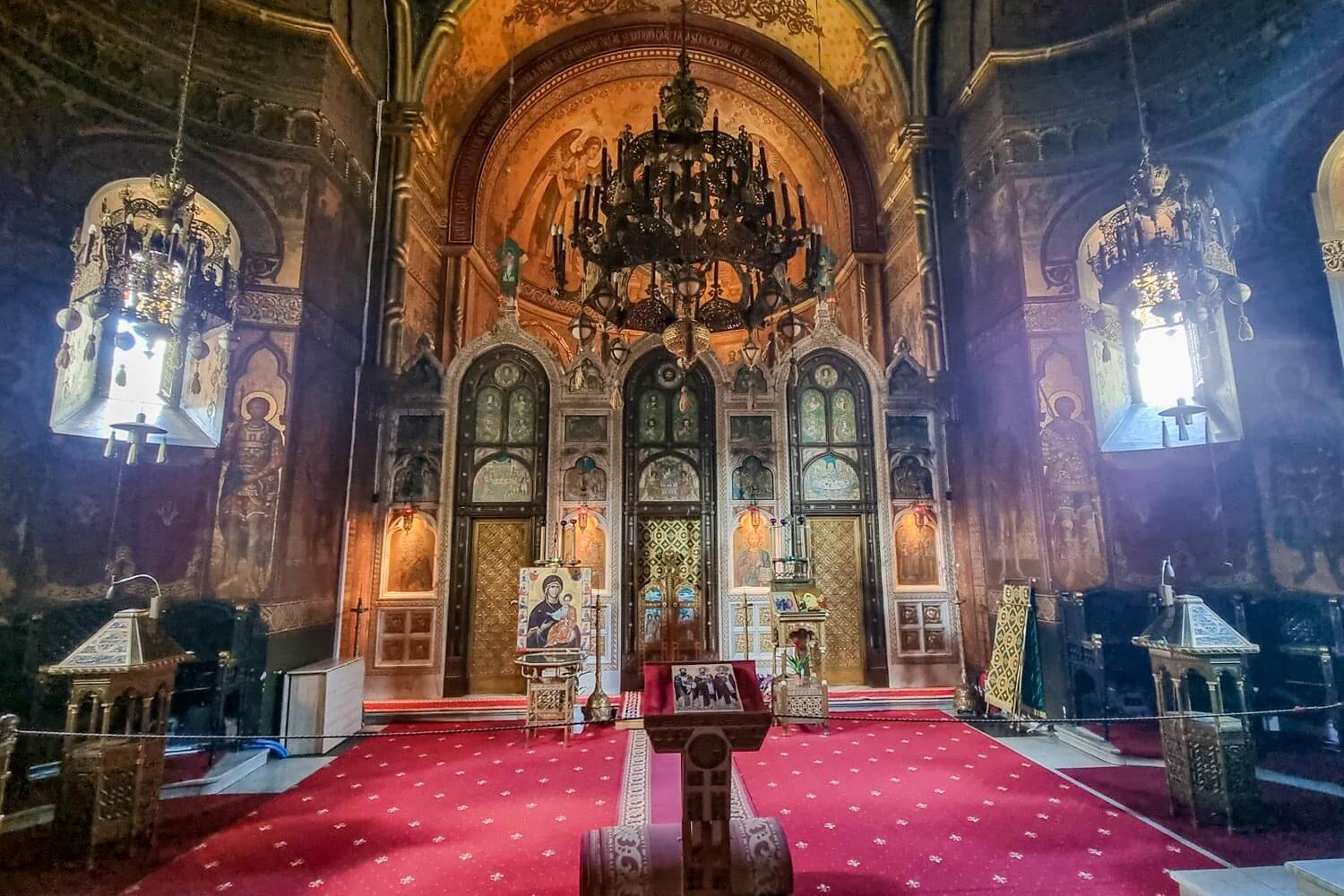
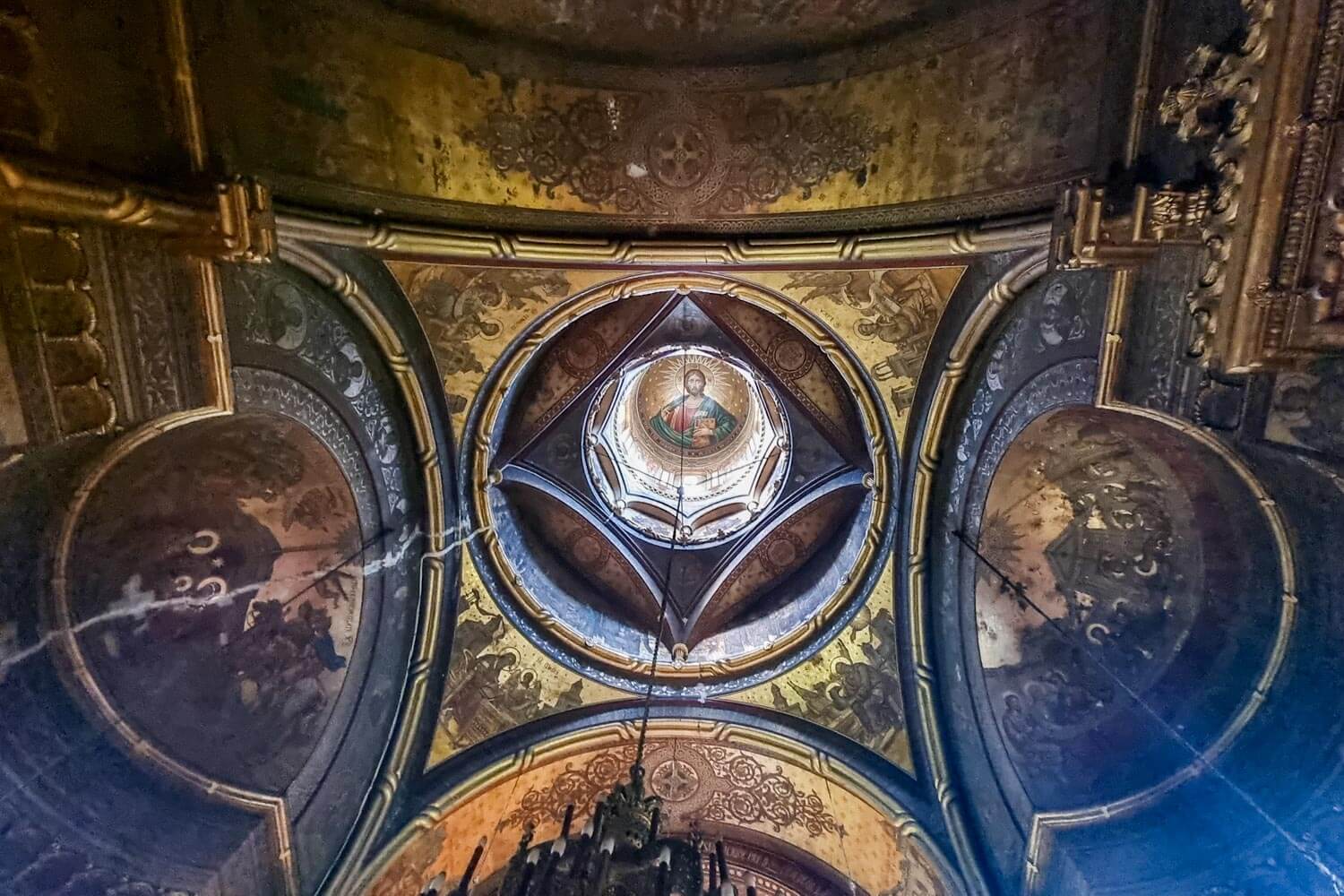
The interior was considerably altered during the restoration of the late 19th century, when much of the original painting was replaced and the entrance chamber was opened toward the nave through a series of arches. The present iconostasis is carved from Carrara marble and decorated with mosaics and enamel, while the bronze chandeliers, ceremonial seats, and other elaborate furnishings largely belong to the same restoration campaign. Several were produced in Vienna and Paris through the patronage of King Carol I and Queen Elisabeth.
In the entrance chamber are the tombs of Vasile Lupu and members of his family, together with those of two other Romanian rulers. Dimitrie Cantemir, Prince of Moldavia and a noted scholar, was brought here for burial in 1935, while Alexandru Ioan Cuza, the ruler who united Moldavia and Wallachia in 1859, was also reinterred in the church. Their burial niches are covered by decorated black-marble slabs, reinforcing the monastery’s original role as a princely burial place.
Another detail worth examining is the richly decorated niche originally created for Saint Paraskeva’s relics, with marble, precious stones, and mosaics illustrating episodes from her life and their arrival in Iași. It now houses relics of Saint Basil the Great, which were presented to Vasile Lupu in 1650 and returned to the monastery in 2000.
Gothic Hall And Museum
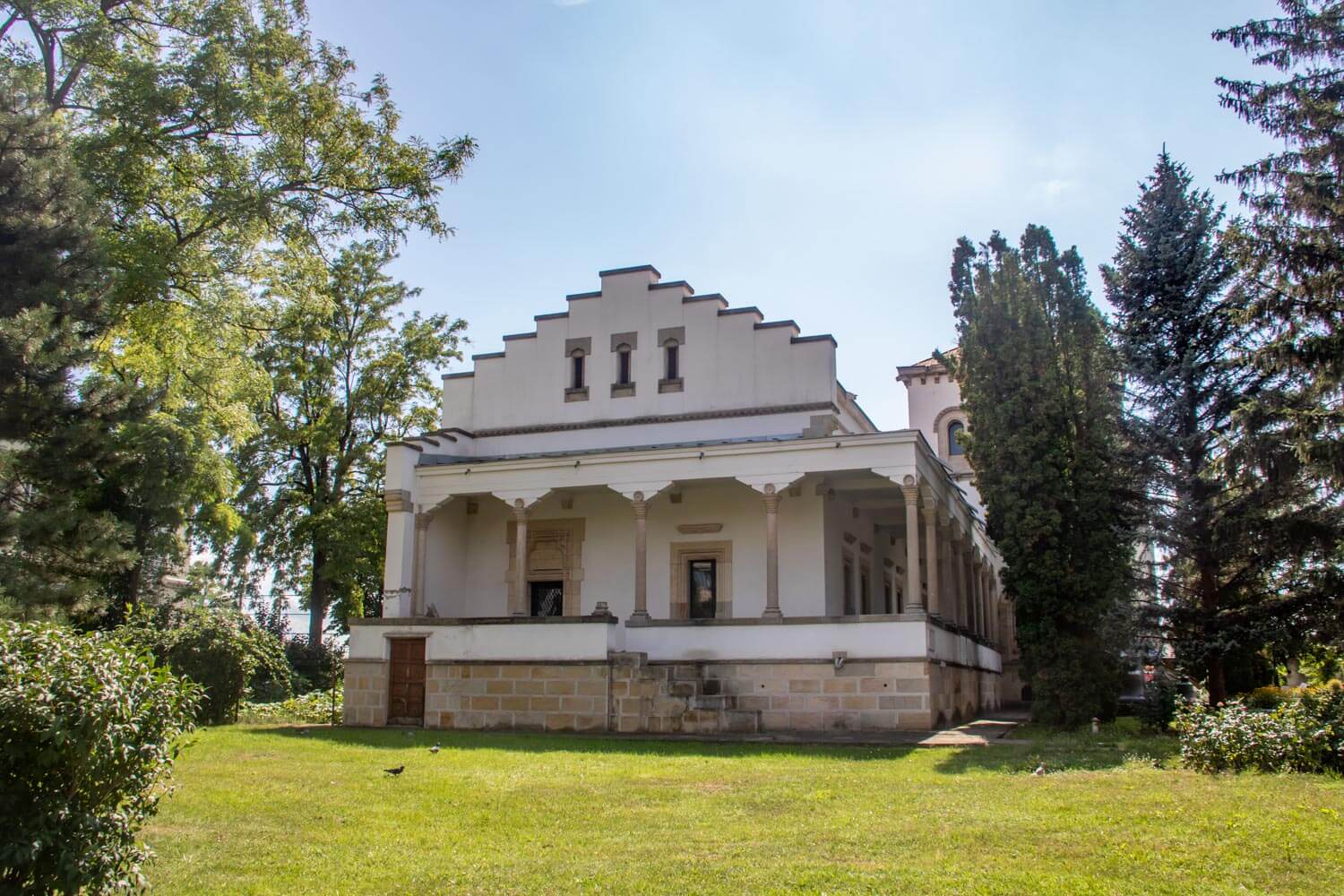
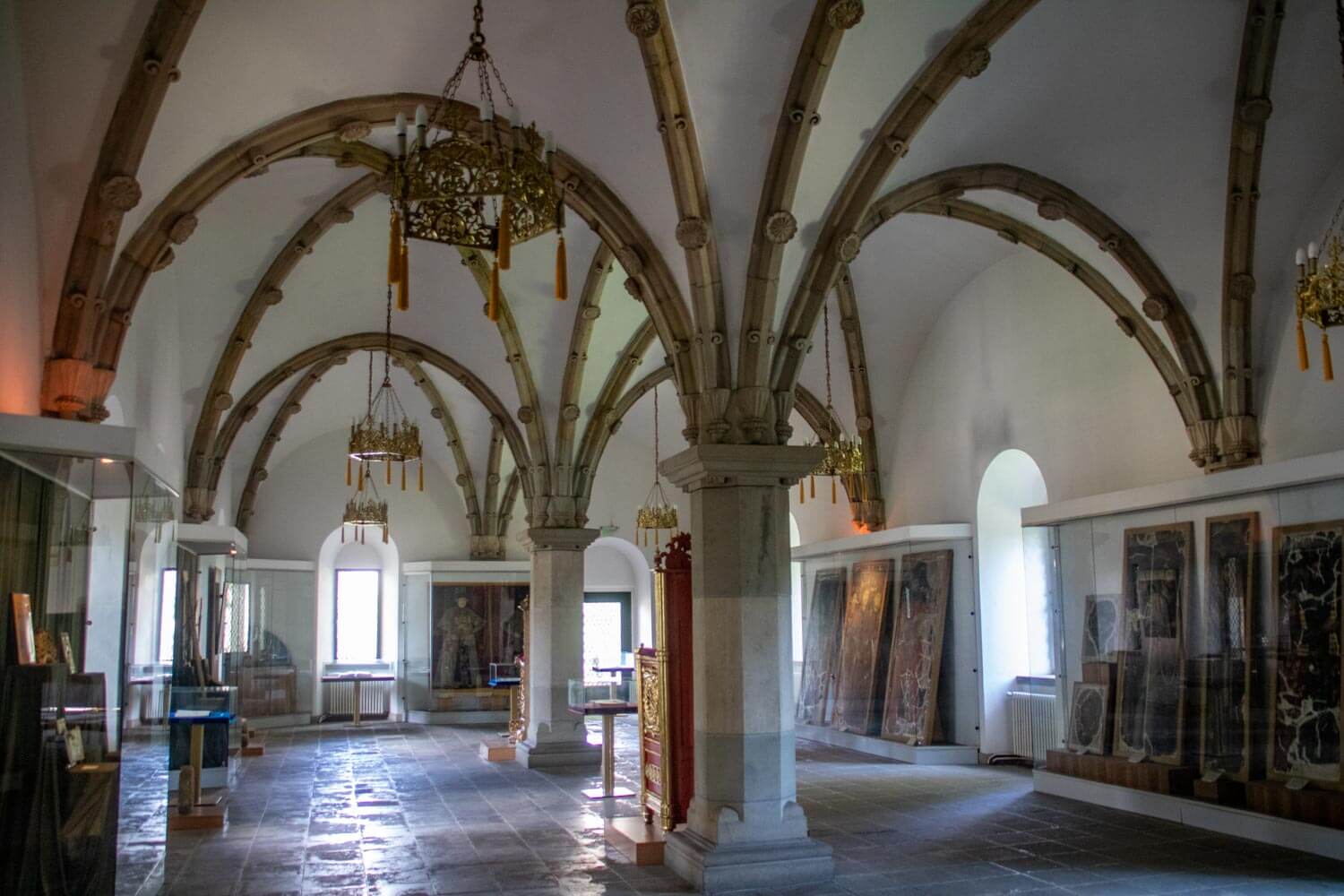
Beside the church stands the Gothic Hall (Sala Gotică), originally built as the monastery’s refectory during Vasile Lupu’s foundation. Its name comes from the pointed interior vaults and stone ribs, while the exterior includes a gallery supported by twelve cylindrical stone columns. During the restoration of the monastery in the late 19th century, a smaller tower was also added near its entrance to replace the demolished historic bell tower.
The hall played an important role in the monastery’s religious history. In 1642, Orthodox theologians gathered here for the Synod of Iași, which approved the Orthodox Confession of Faith written by Metropolitan Peter Mogila of Kyiv. During the 19th century, part of the building served as a chapel, temporarily accommodating Saint Paraskeva’s reliquary while repairs were carried out in the main church. A devastating fire broke out there in December 1888, destroying much of the chapel’s interior, although the reliquary and its contents survived.
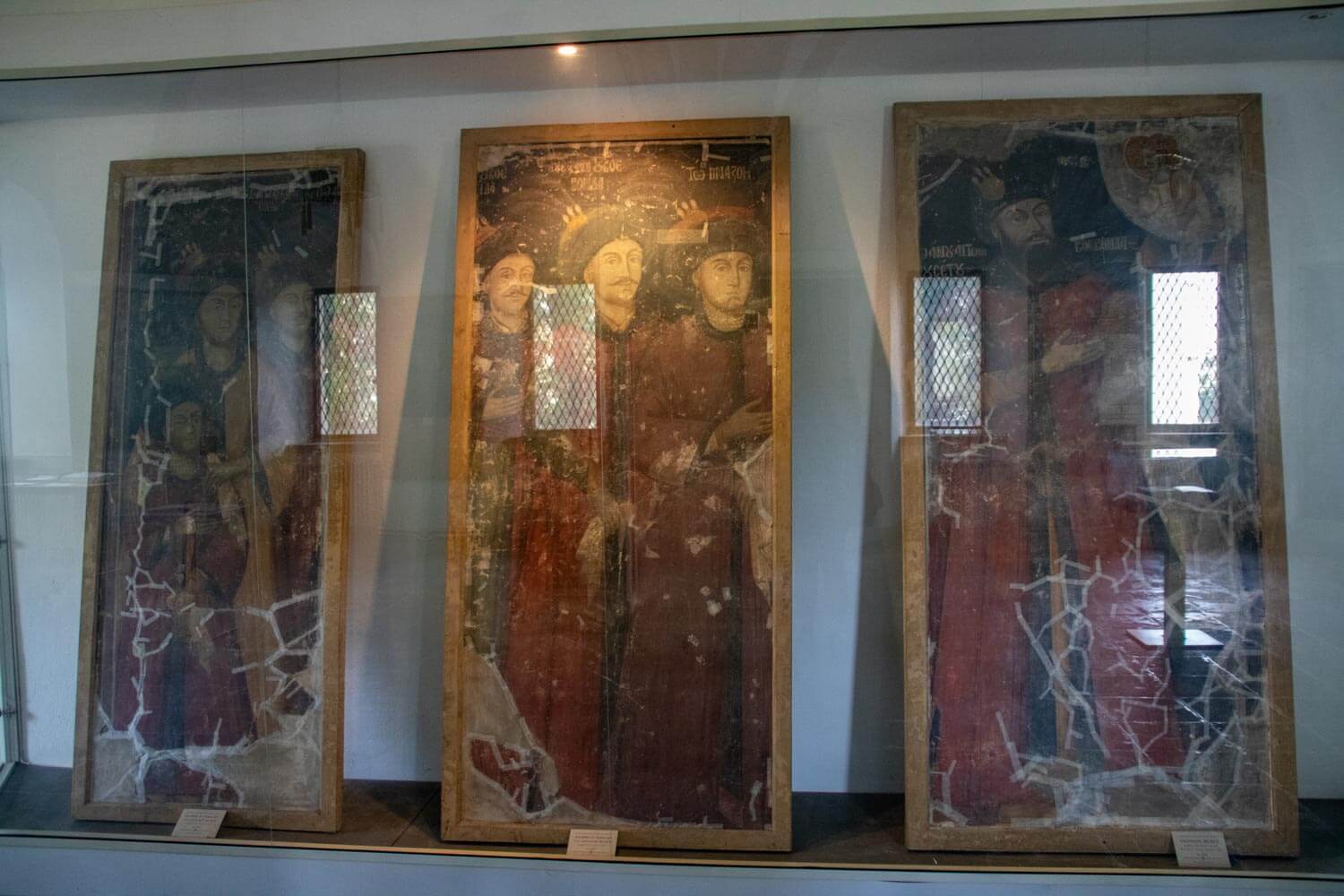
Restored several times, most notably in 1960, the Gothic Hall subsequently became a museum of religious art devoted to the monastery’s history and the artistic heritage of Moldavia. Its collections include fragments of the church’s original 17th-century frescoes, a votive portrait depicting Vasile Lupu and his family, and an icon of the Three Holy Hierarchs from the original iconostasis commissioned in Moscow in 1639. These works offer a rare glimpse of the church’s decoration before the extensive reconstruction undertaken by Lecomte du Noüy.
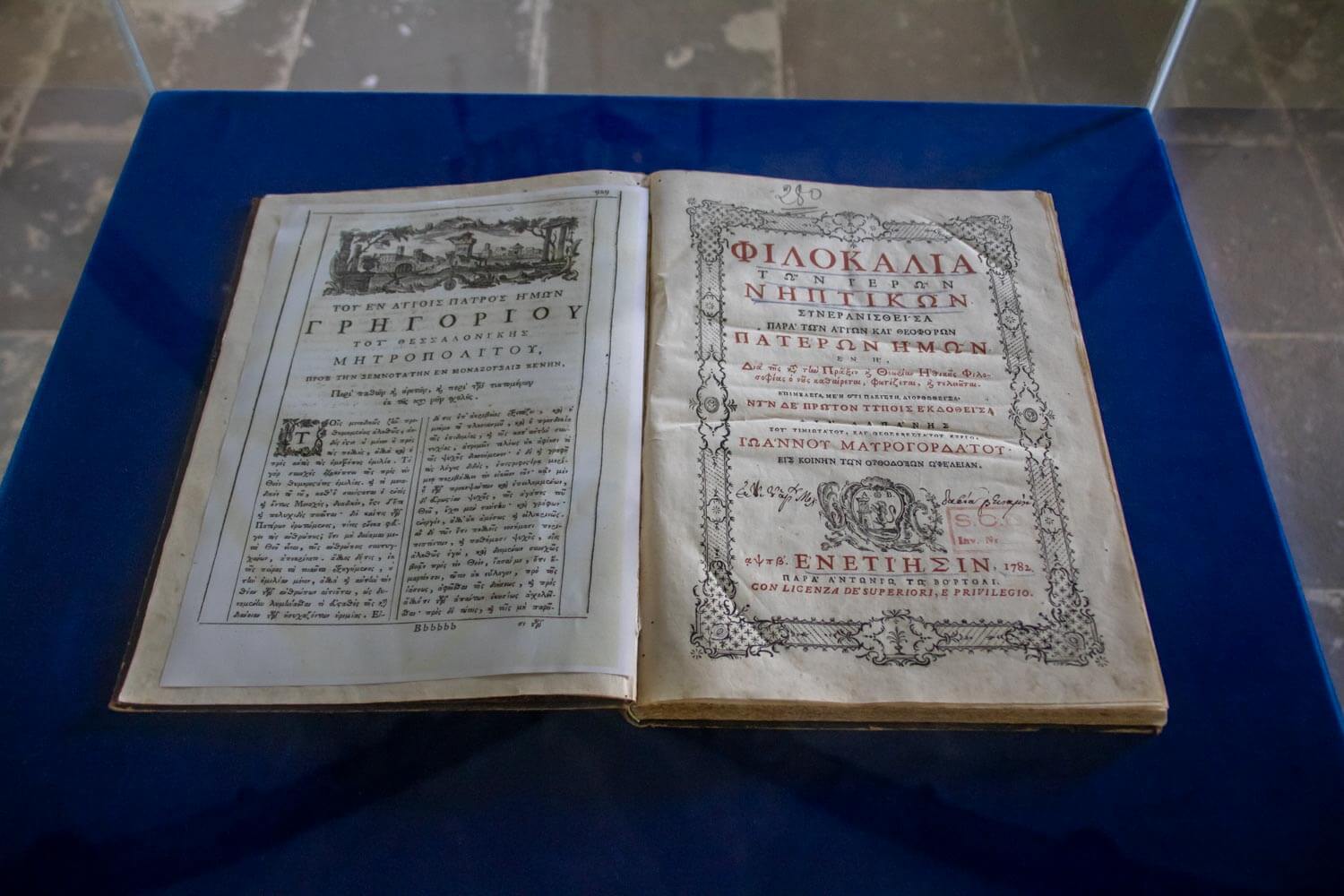
Other historic objects include embroidered burial coverings depicting Vasile Lupu’s wife Tudosca and their son Ioan, liturgical textiles, gilded silver vessels, and an example of Metropolitan Varlaam’s Cazania, printed at the monastery in 1643. The collection brings together objects from the monastery’s early years and later history, complementing the architecture and furnishings preserved in the adjoining church.