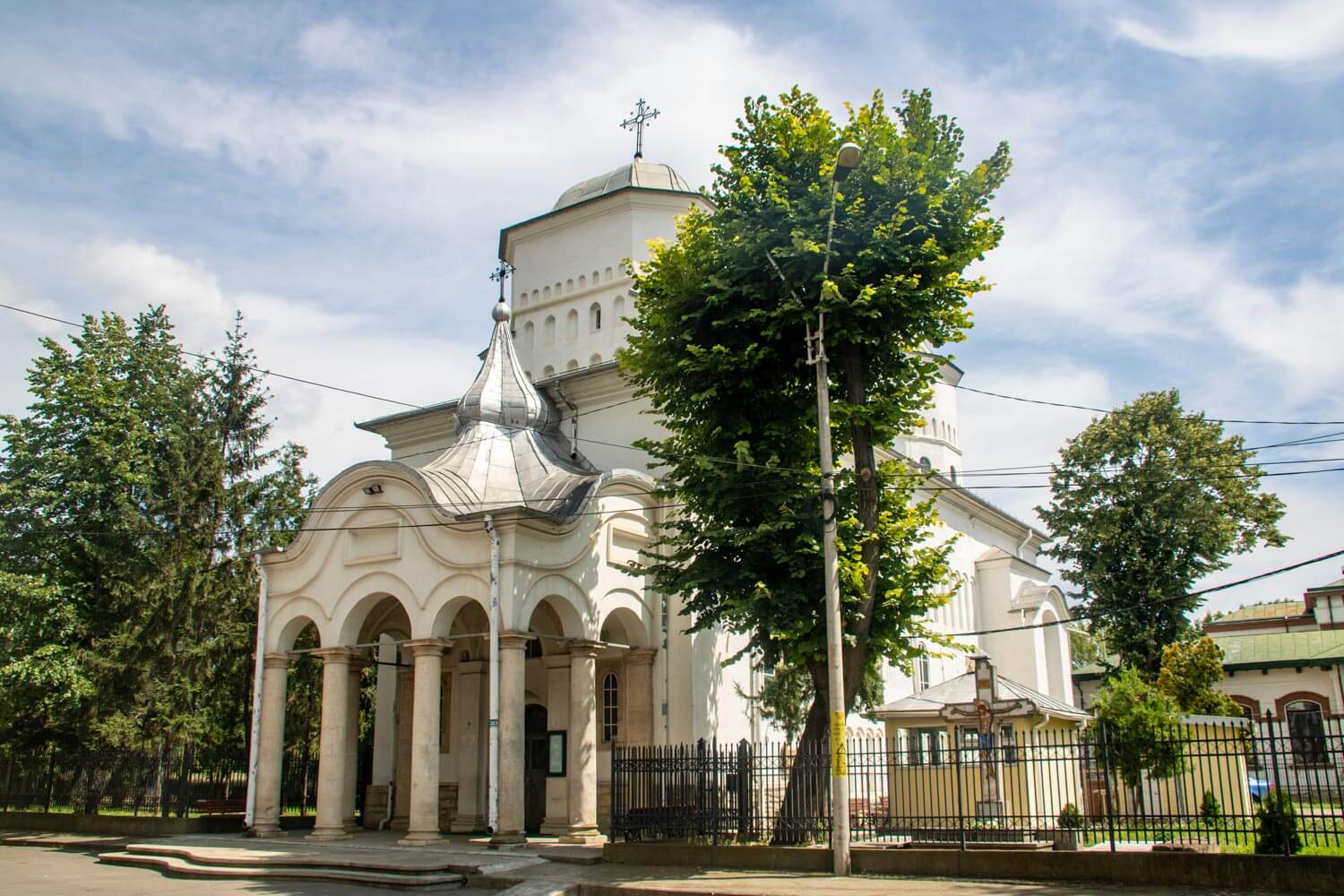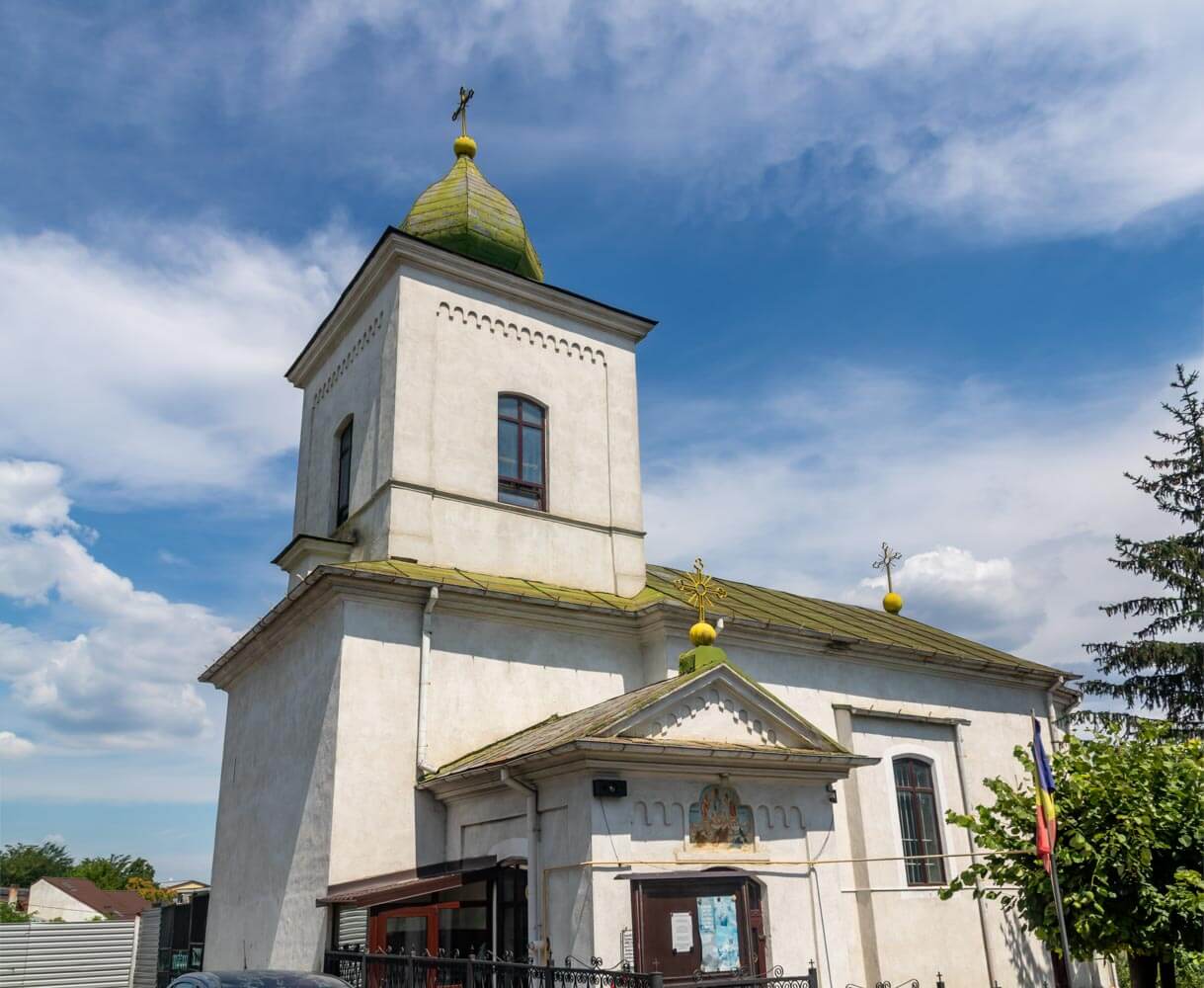
The White Church (Biserica Albă) is a historic Orthodox church in the former Târgu Cucului district of Iași, dedicated to the Transfiguration of the Lord. Its familiar name dates back to an earlier wooden church whose plastered exterior was painted white, distinguishing it from the surrounding religious buildings.
The original church stood at the edge of the old Flour Market (Târgul Făinii), a commercial neighborhood that developed as craftsmen, merchants, and princely servants settled beyond the center of Iași. Dedicated to the Nativity of the Lord, it was already documented in 1682, although its exact foundation date is unknown. Around 1750, priest Velișco and members of the local merchants’ guild replaced the deteriorating wooden structure with the present masonry church.
Further rebuilding took place in 1885, supported by parishioners and the municipality under Metropolitan Iosif Naniescu. The metropolitan reconsecrated the church in 1901, formally establishing its dedication to the Transfiguration. The surrounding churchyard had previously served as a cemetery, but the graves were removed in 1887 and the remains transferred to Eternitatea Cemetery.
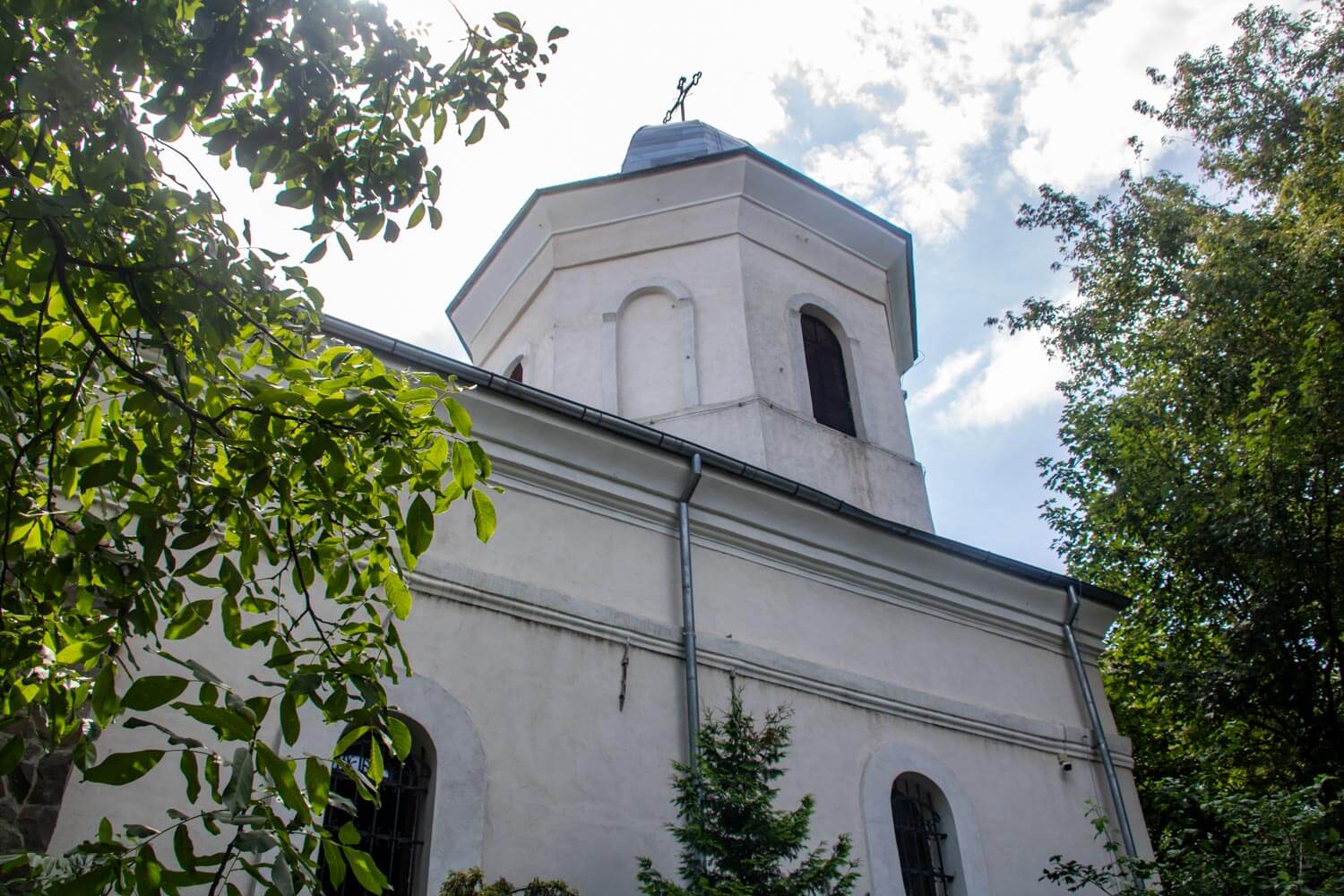
The church has a compact cruciform plan, with a square bell tower rising above its western section and a porch attached to the southern side. Its stone and brick walls are decorated with a horizontal band beneath the cornice and rows of small recessed niches above the porch windows and bell tower.
The interior was extensively renovated between 1974 and 1978, when Constantin Călinescu and Iulia Handragel painted the frescoes and a new iconostasis was installed. The earlier iconostasis was transferred to the Golia Monastery for safekeeping. Among the church’s older possessions is a collection of 41 religious icons donated by Zoița Aramă, who died in 1818, while a cross in the churchyard commemorates aviators killed during World War II.