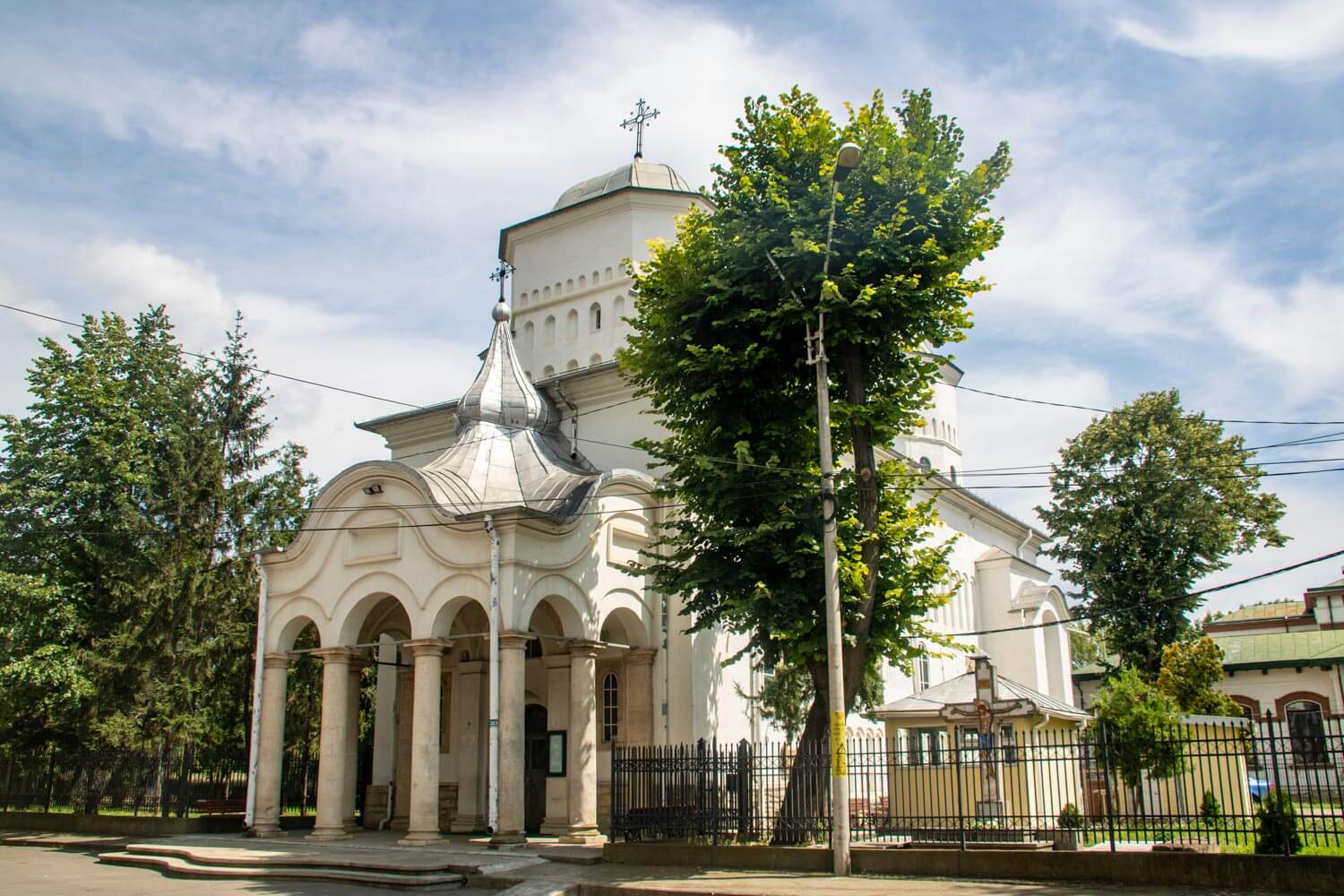
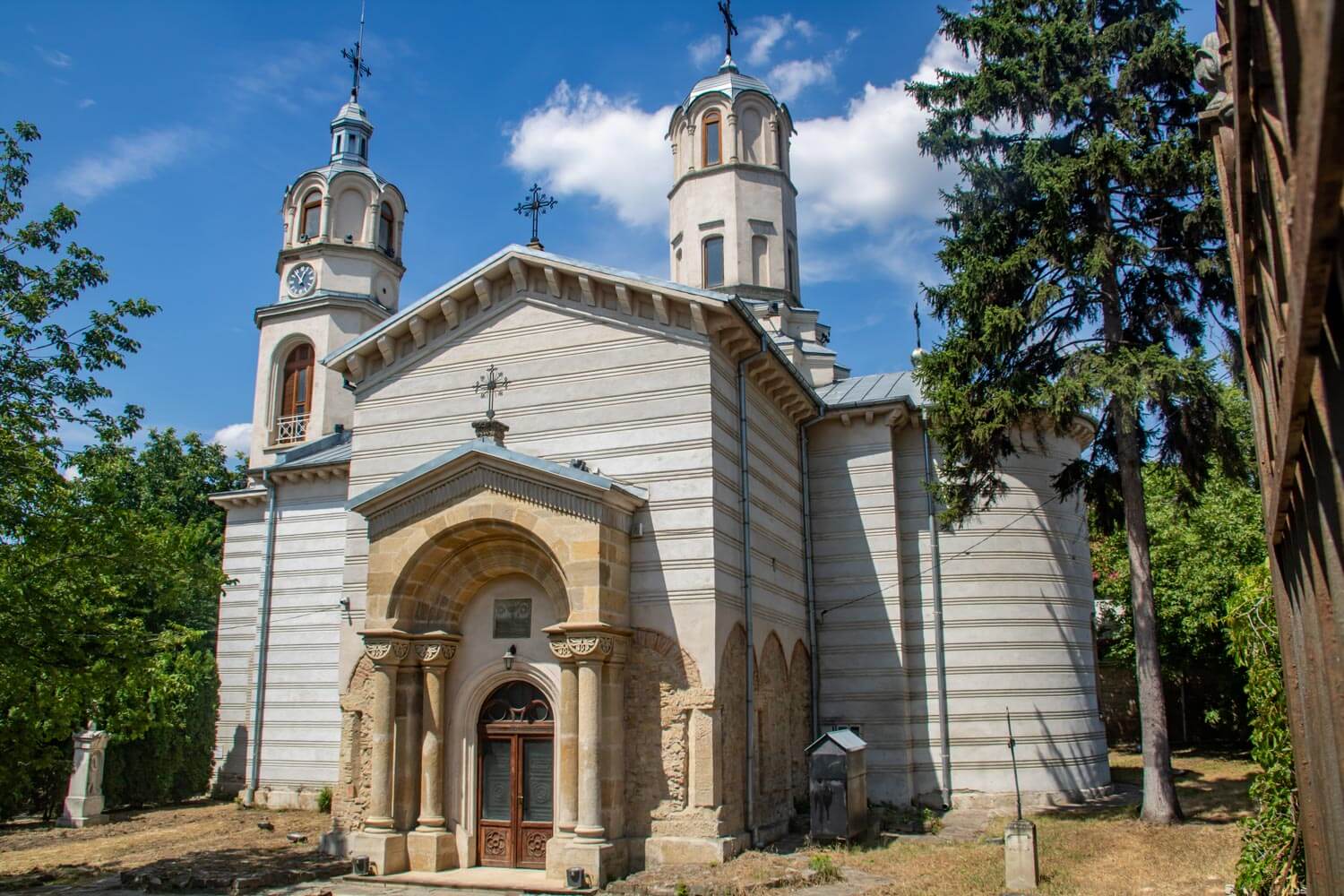
Bărboi Monastery (Mănăstirea Bărboi) is a historic Orthodox church and former monastery in central Iași, dedicated to Saints Peter and Paul. Its distinctive five-towered church stands within an old enclosed courtyard, alongside a separate clock tower and surviving monastic buildings.
The monastery takes its name from Ioan Ursu Bărboi, a Moldavian nobleman from the Sturdza family who founded the first church here between 1613 and 1615. Shortly afterward, he was executed for taking part in a rebellion against Prince Ștefan Tomșa II, leaving the foundation in the care of his descendants. In 1669, they transformed the church into a monastery and placed it under the authority of Vatopedi Monastery on Mount Athos. A surrounding wall and additional buildings gradually developed around it, including a bell tower erected during the reign of Grigore II Ghica in the early 18th century.
The original church suffered extensive earthquake damage, particularly in 1829, prompting Dimitrie Sturdza and his wife Elena to finance its complete reconstruction between 1841 and 1844. Greek architect Andrei Karidis designed the new building, assisted by craftsmen Atanasie and Gheorghe. Its unusual Greek-cross plan draws on the architecture of Mount Athos, with a large central dome surrounded by four smaller towers. The exterior combines alternating courses of dressed stone and brick with Neoclassical elements, most noticeably the open entrance porch supported by Doric columns.
The interior is arranged around a central space divided by marble columns, beneath a series of vaulted ceilings. Its 19th-century paintings include Christ Pantocrator in the main dome and a portrait of Metropolitan Grigorie Irinopoleos, who supervised the rebuilding. A carved and gilded wooden iconostasis, made by Ilie Moldovan from Bessarabia, separates the altar from the congregation.
Several notable figures are buried here, including Ioniță Sandu Sturdza, who ruled Moldavia from 1822 to 1828 as its first native prince following the Phanariot period, and writer Alecu Russo. Another important literary connection is Ion Creangă, who served as a deacon at Bărboi between 1863 and 1865 and lived for a time in the parish house within the grounds.
Following the secularization of monastery estates in 1863, Bărboi became a parish church. Its buildings subsequently accommodated various educational and cultural activities, while major restoration work in the 1980s repaired damage from the 1977 earthquake.
The courtyard preserves several elements of the former monastery, including the old abbot’s residence, sections of the enclosure wall, and the separate bell tower with its clock. The tower forms the monumental entrance to the grounds, while a small wayside cross commemorates the demolished Saint Friday Church that once stood nearby.