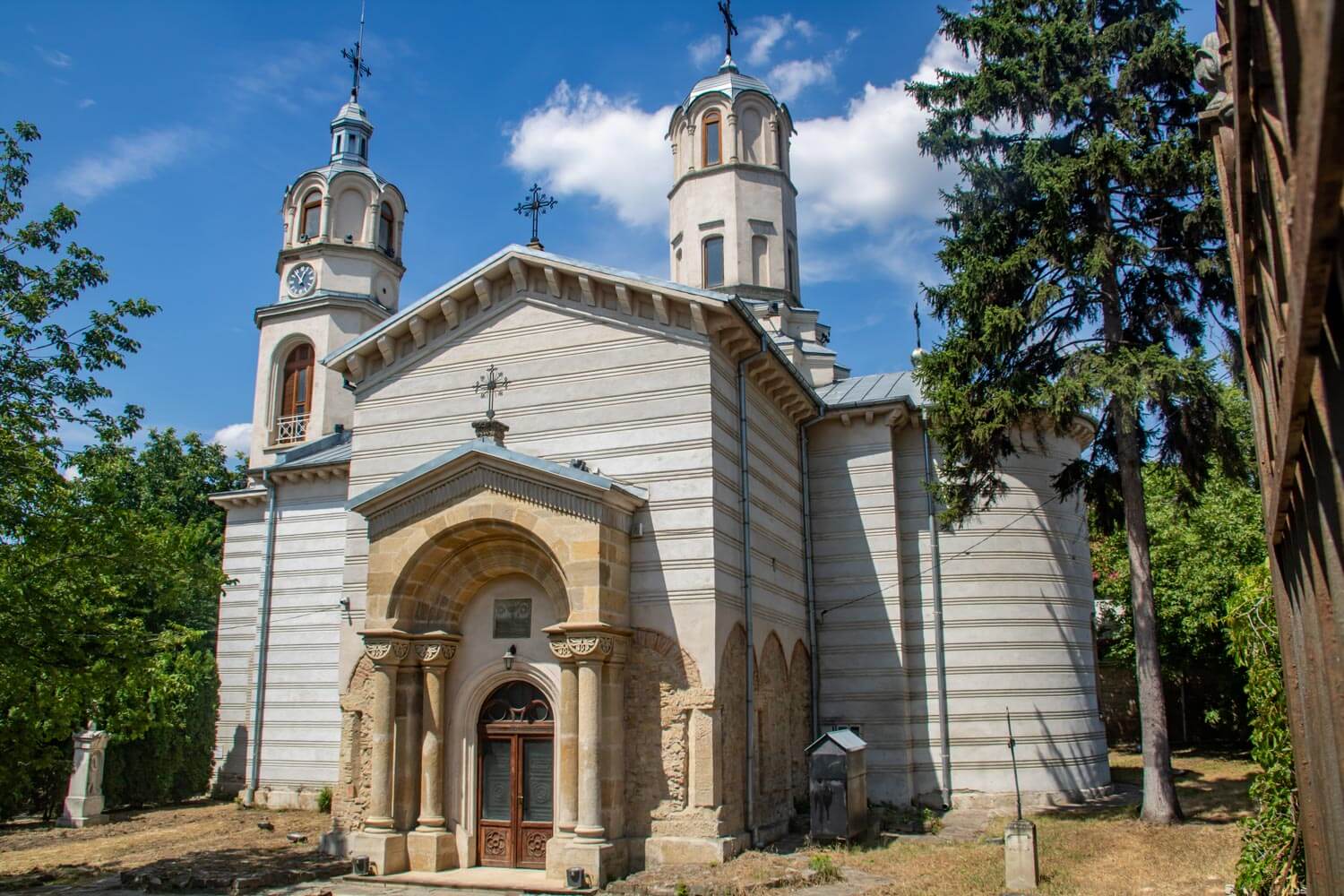
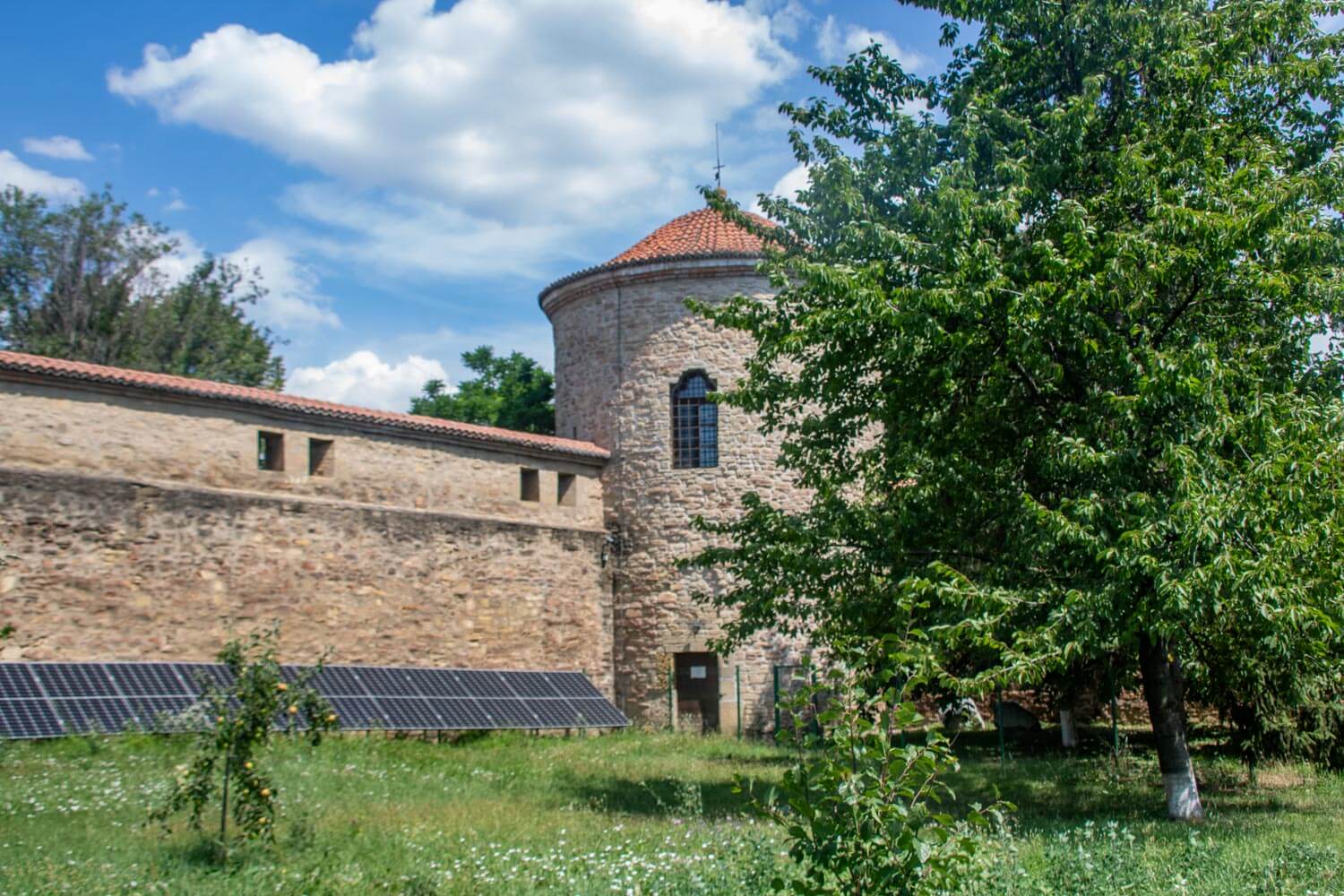
The Golia Monastery (Mănăstirea Golia) is a fortified Orthodox monastery in the former Târgu Cucului district of Iași, dedicated to the Ascension of the Lord. Its monumental church, surrounded by high defensive walls and four corner towers, combines the appearance of a medieval fortress with an unusual mixture of Renaissance, Baroque, and Byzantine architecture.
The monastery takes its name from Ioan Golia, a Moldavian nobleman who founded a church here during the 16th century. The religious settlement subsequently developed into a monastery and was placed under the authority of Vatopedi Monastery on Mount Athos in 1606. By the middle of the 17th century, however, its buildings had deteriorated, prompting Prince Vasile Lupu to undertake an ambitious reconstruction. Work on the present church began around 1650 and was completed in 1660 by his son and successor, Ștefăniță Lupu. Prince Gheorghe Duca subsequently strengthened the enclosure with its four circular corner towers.
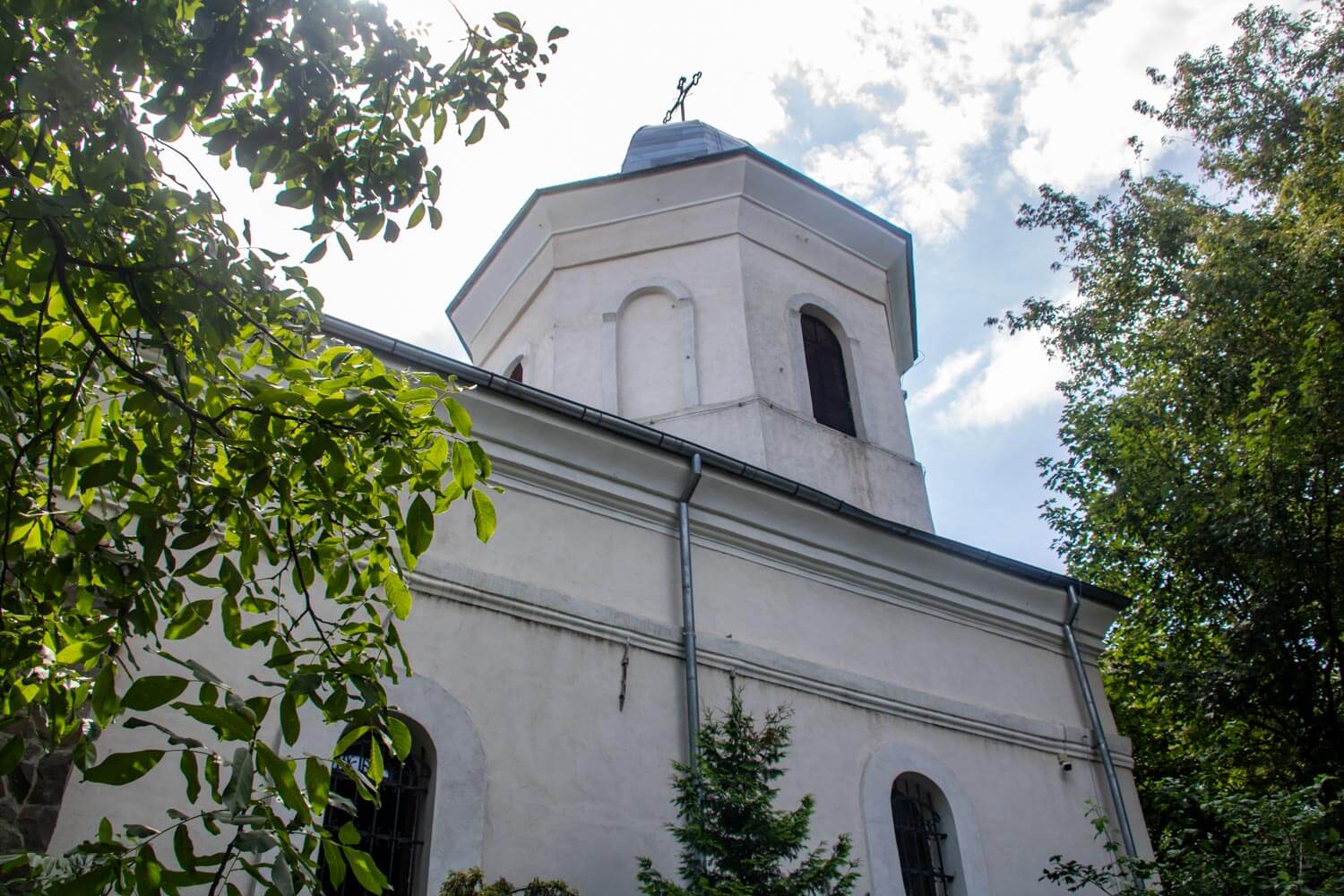
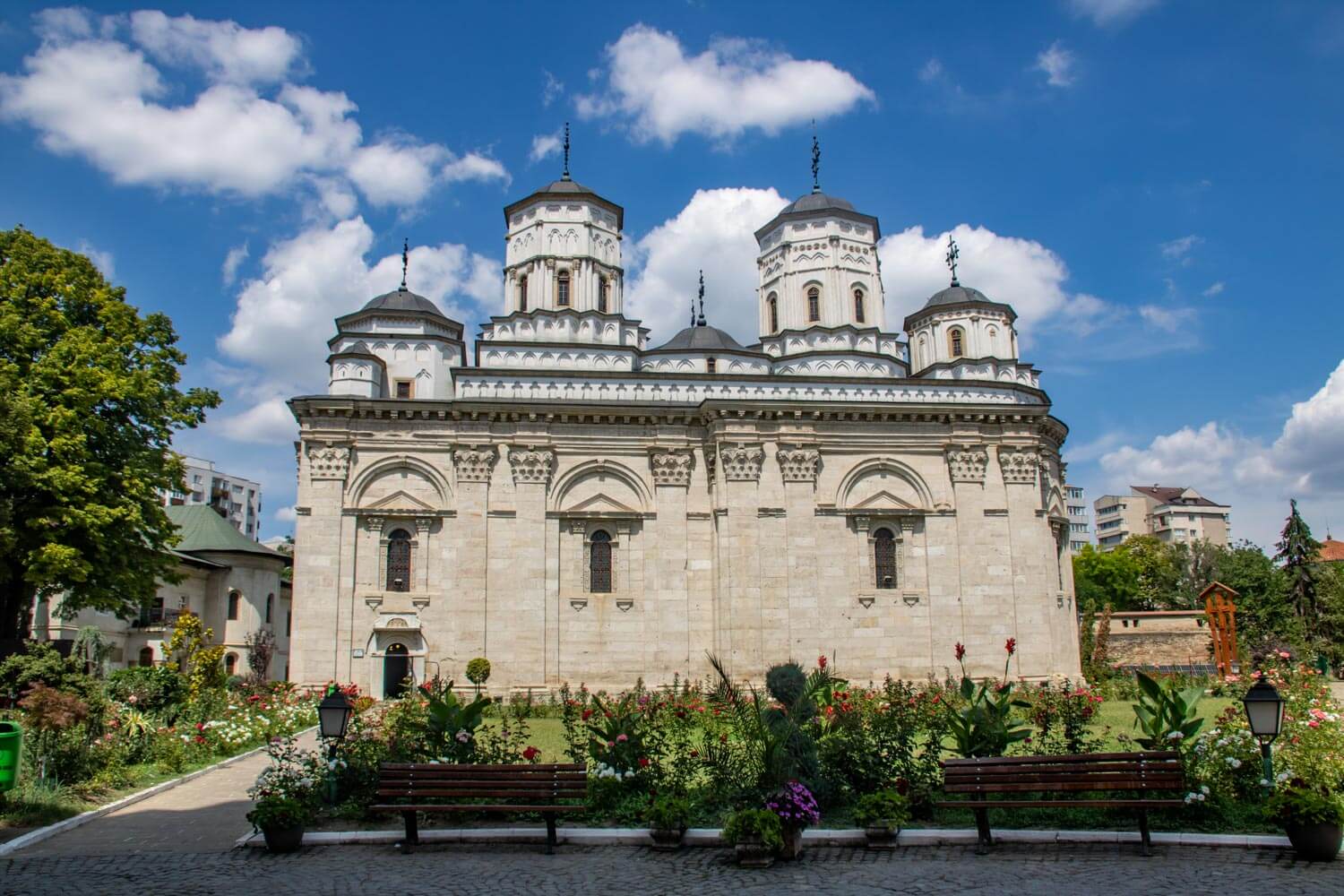
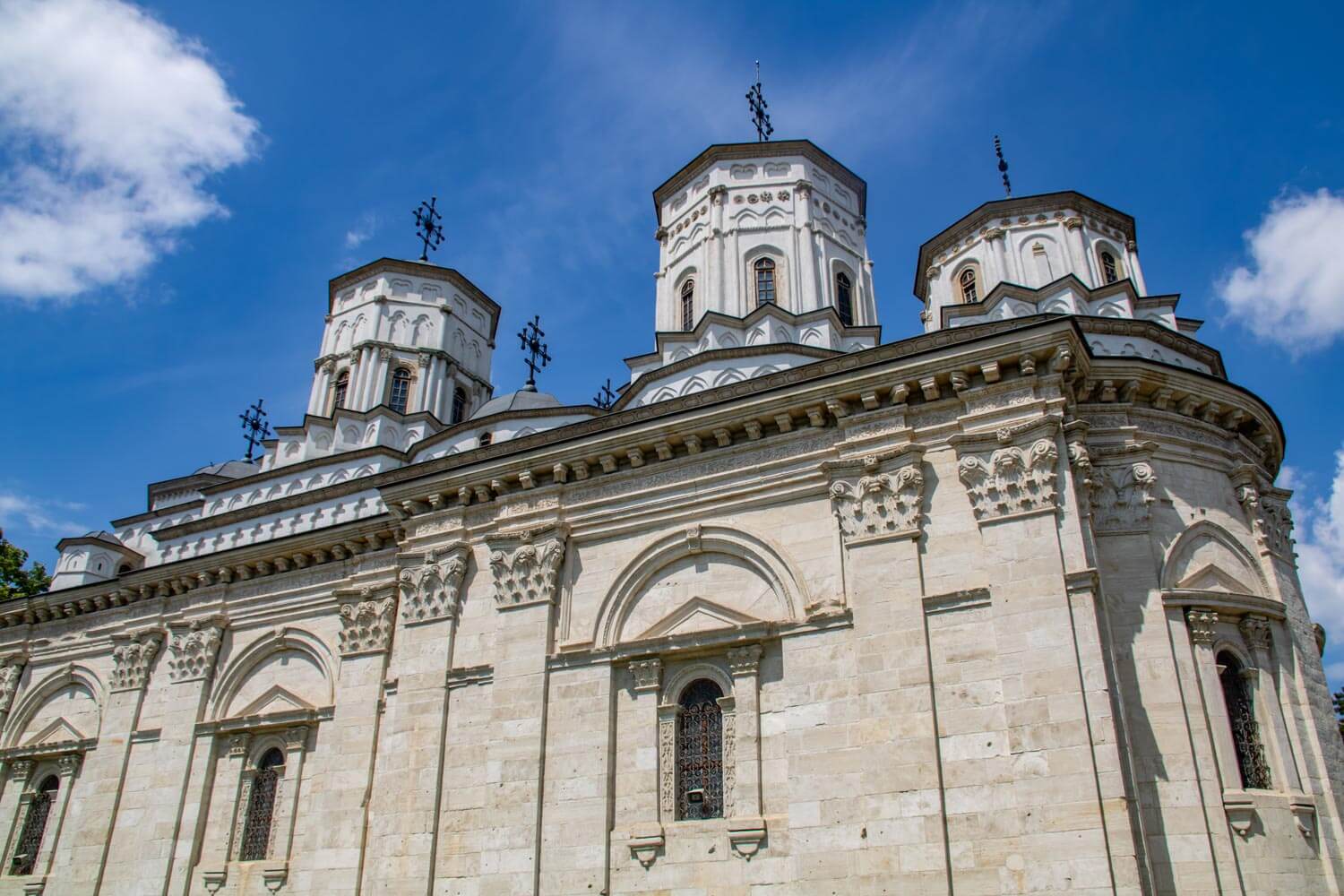
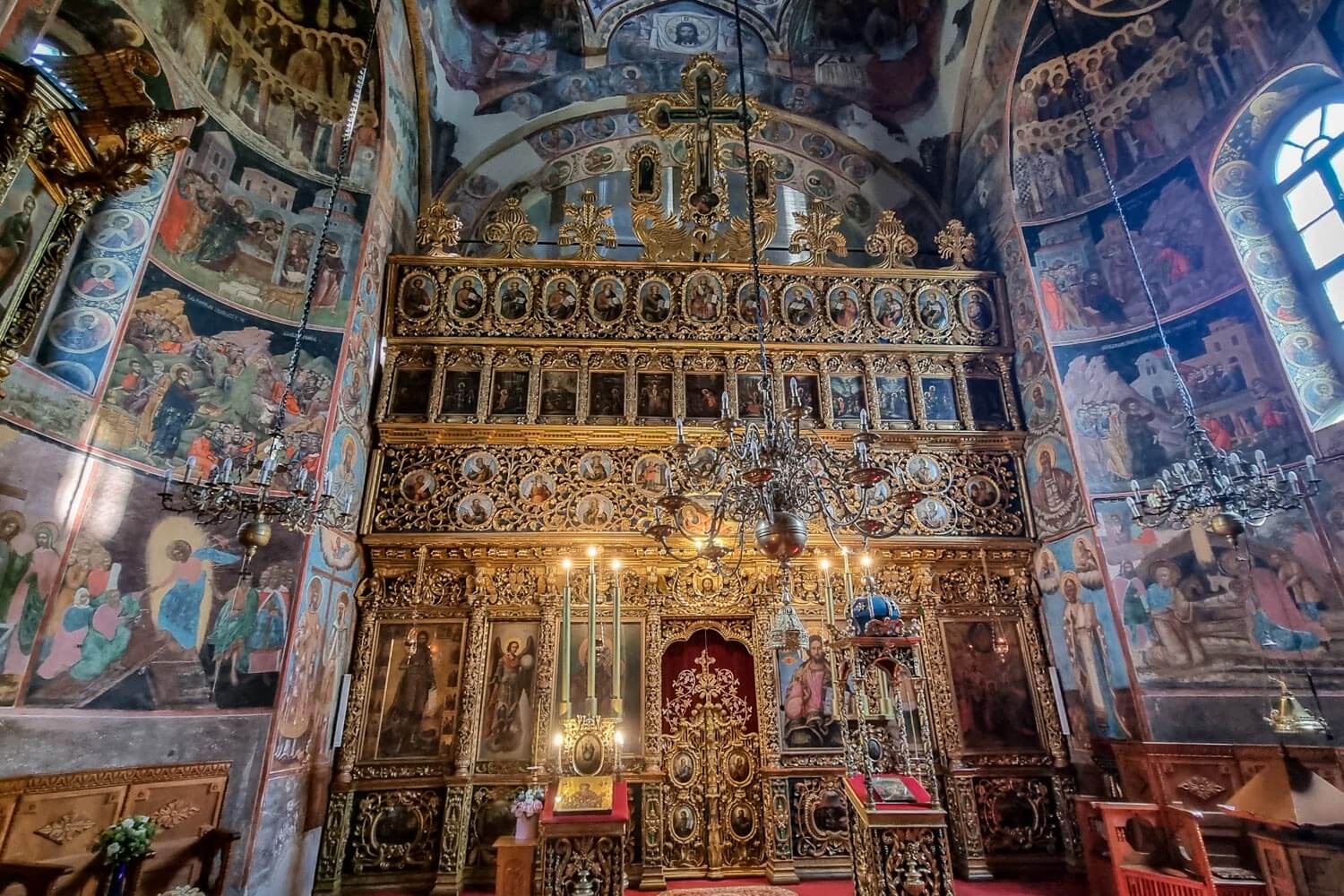
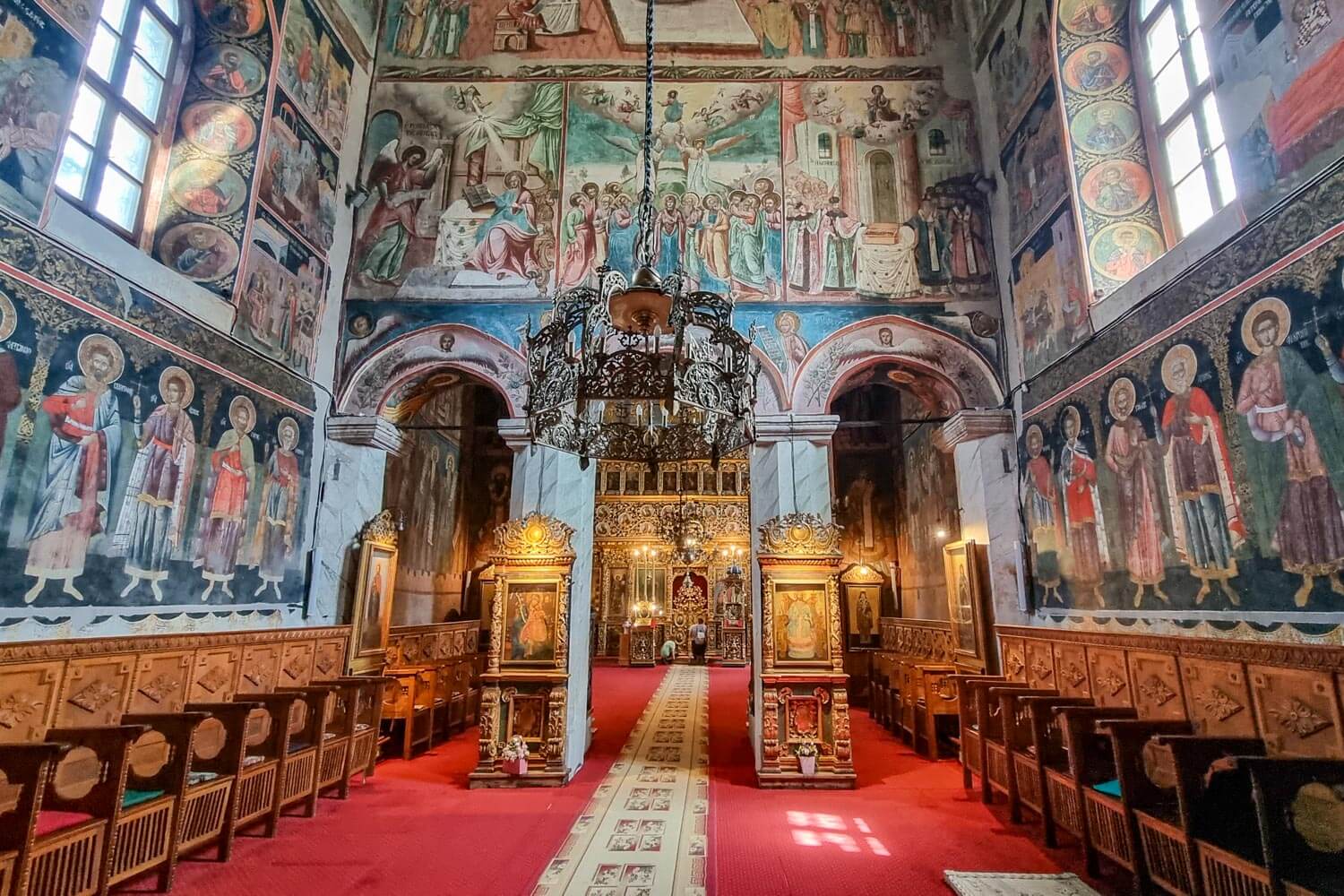
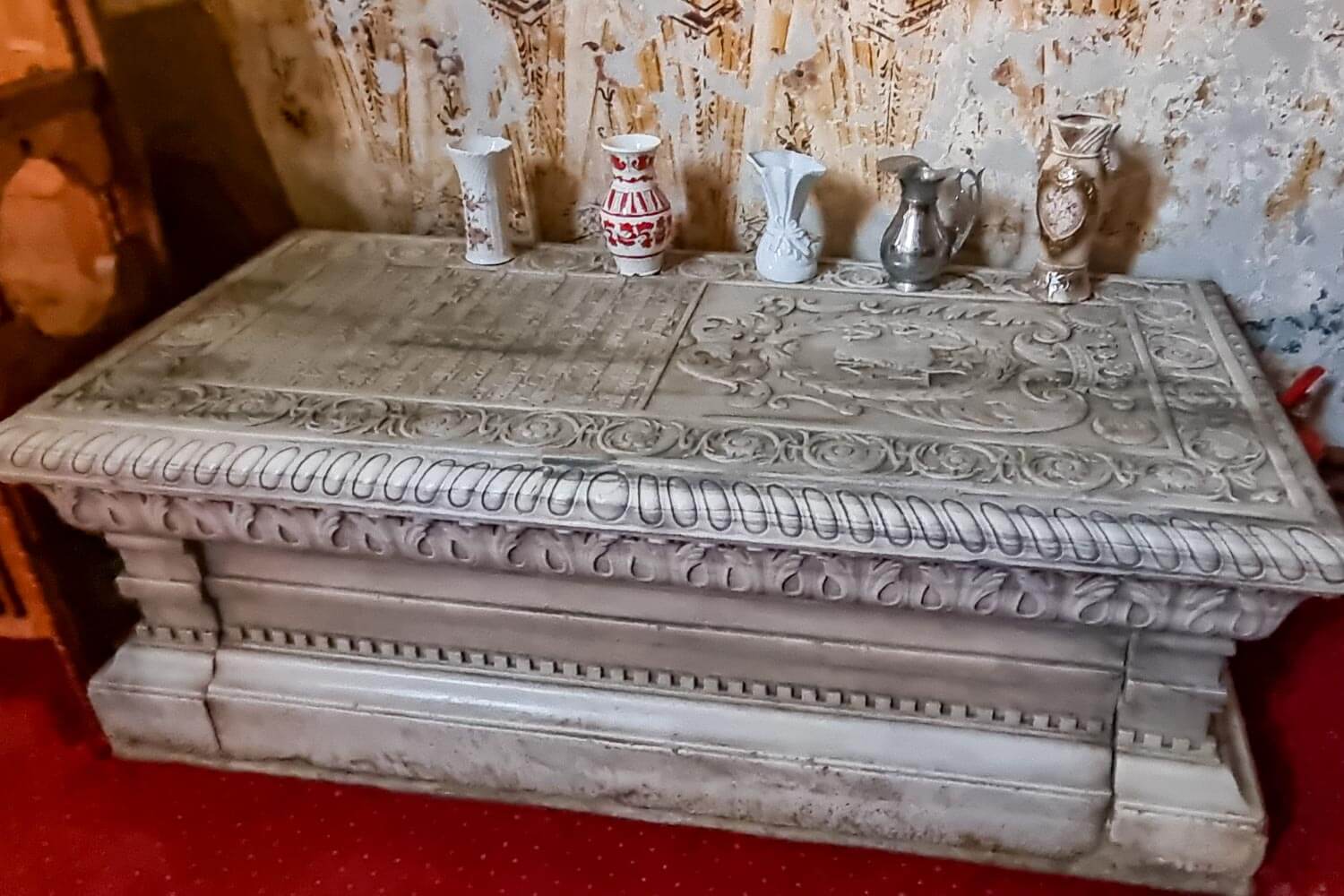
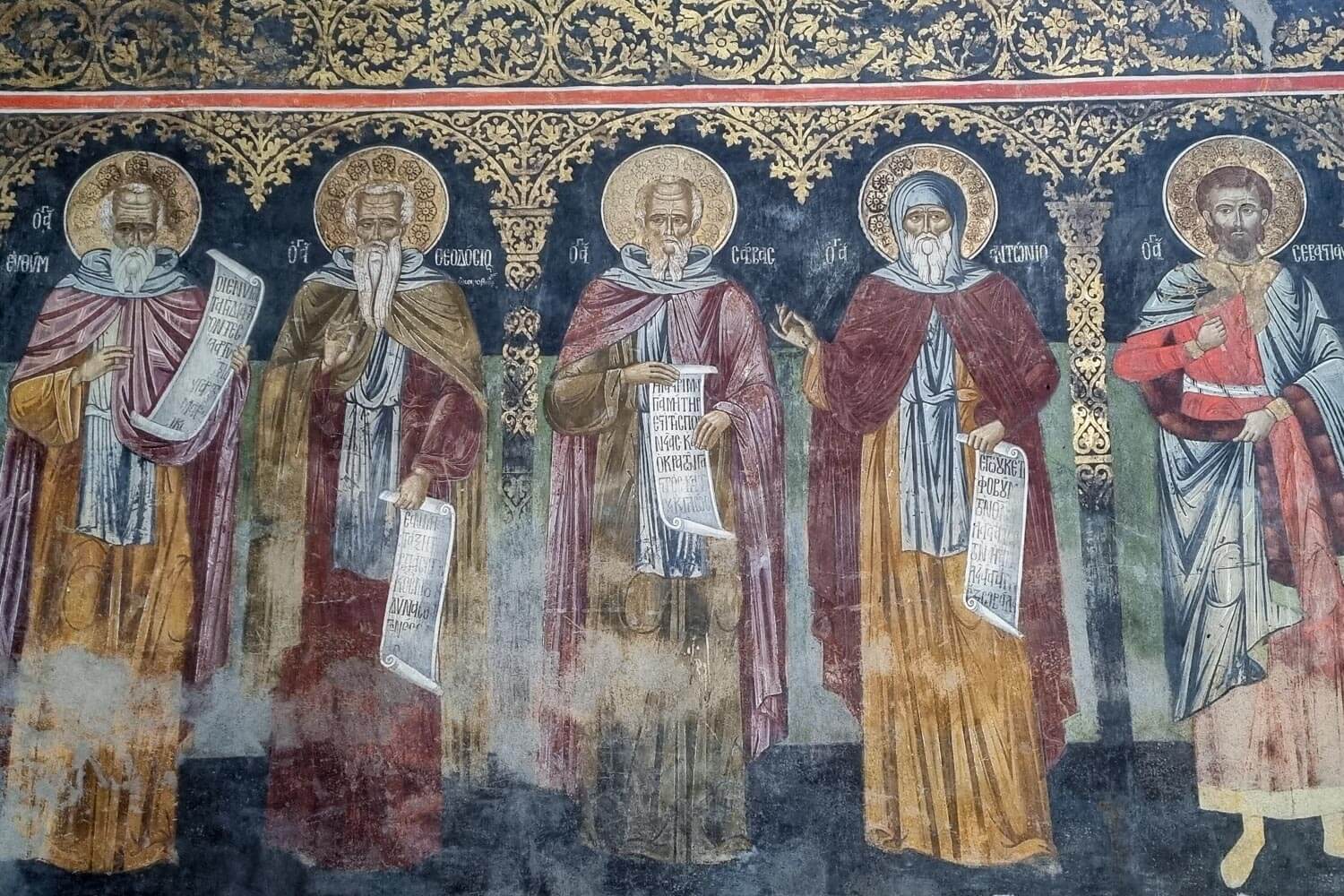
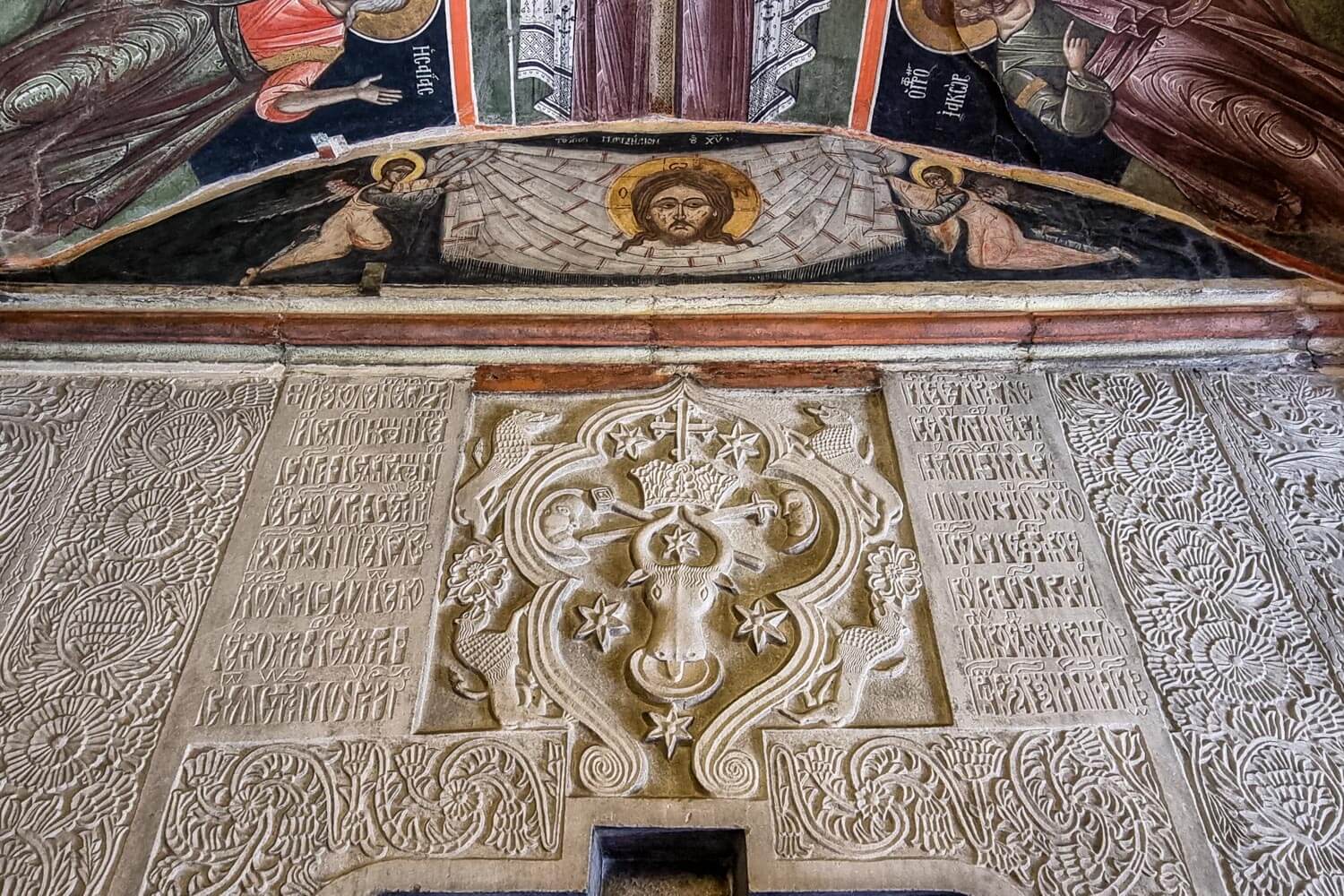
The church stands out for its rectangular exterior, built from carefully dressed stone blocks and decorated with tall Corinthian pilasters, an elaborate cornice, and seven towers rising above the roof. Its design draws on architectural traditions rarely combined in Moldavian churches of the period. Inside, the arrangement follows the Orthodox tradition, with a vaulted entrance area leading into the richly decorated prayer hall. Carved marble doorframes display the Moldavian coat of arms, while the surviving paintings include portraits of the monastery’s founders and benefactors. Among its historic furnishings are a chandelier and ceremonial candlesticks donated by Vasile Lupu, together with a gilded iconostasis and several old tombstones in the entrance chamber.
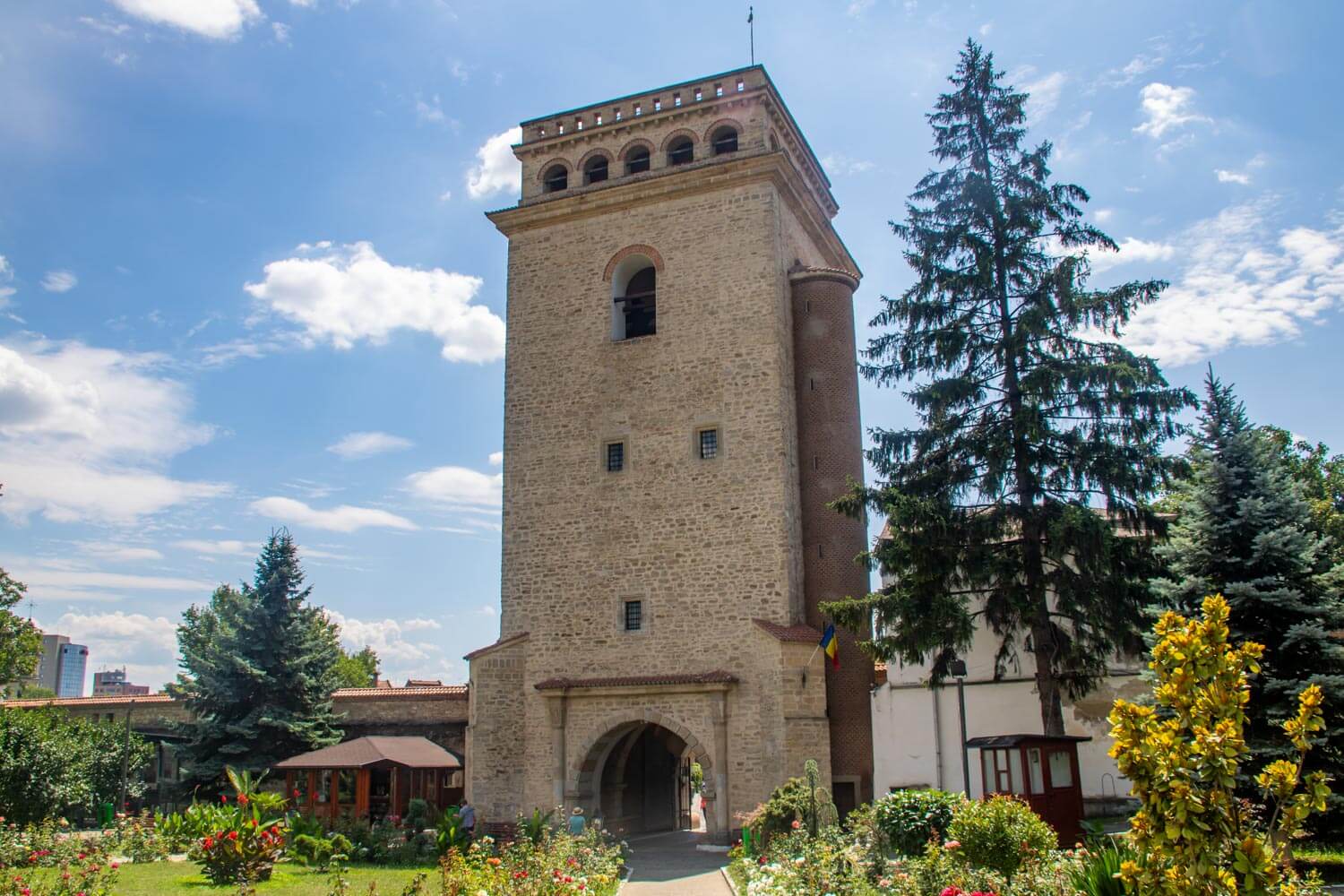
Beyond the church, the courtyard preserves several buildings from the monastery’s long history. The most recognizable is the imposing entrance tower, which once served as a bell tower, observation post, occasional prison, and lookout for the city’s fire brigade. In the 19th century, its height was substantially increased, but structural problems led to its reconstruction around 1900. Nearby stands a historic water house with a fountain dating from the reign of Alexandru Moruzi.
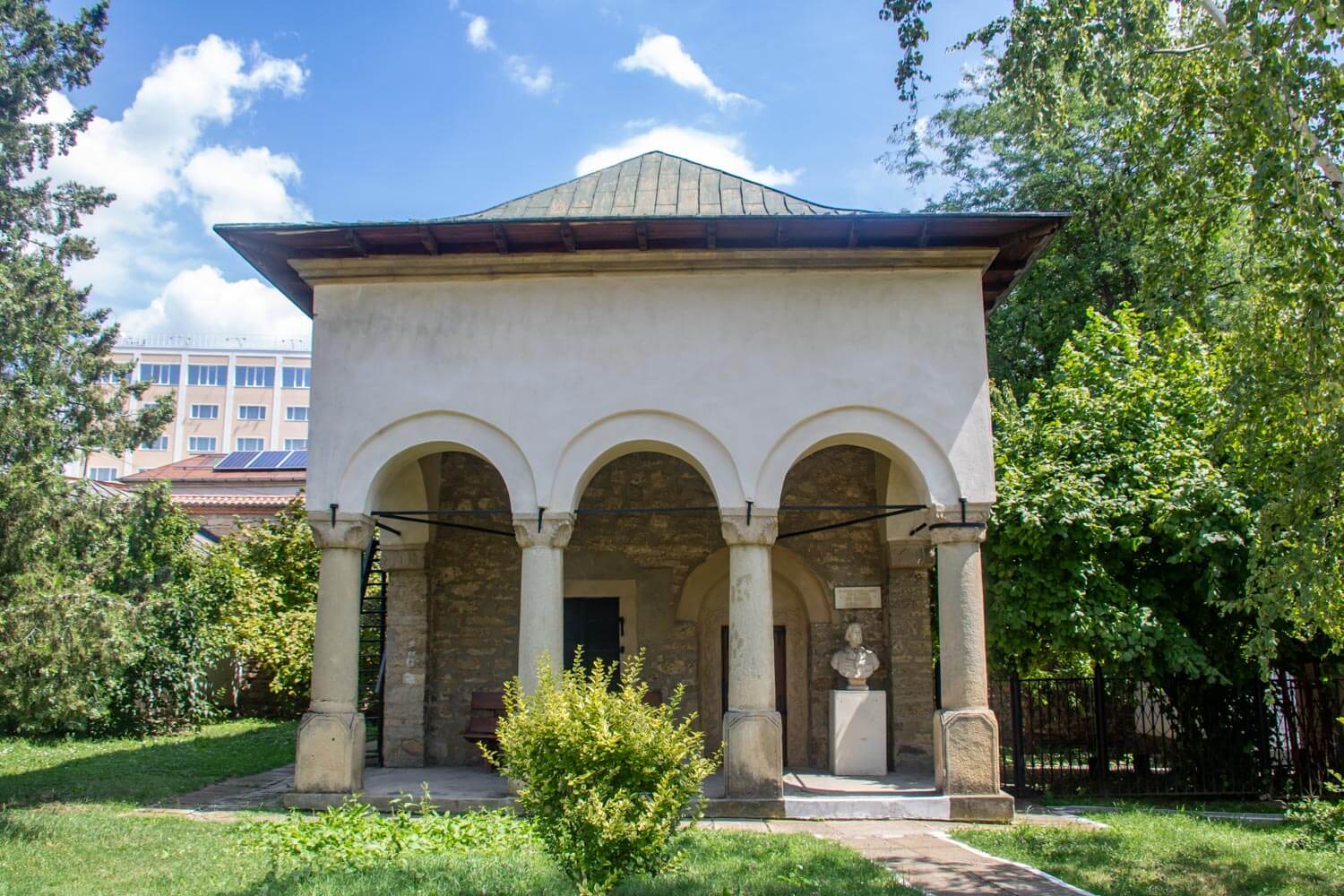
Another surviving building is the old house with columns, where the writer Ion Creangă lived with his family between 1866 and 1871 while serving as a deacon at Golia. The house now contains a small museum devoted to this period of his life, including his original deacon’s vestment. Creangă’s years at the monastery also feature in accounts of his troubled relationship with the clergy, particularly the episode in which he reportedly fired a gun at crows from the monastery tower.
After the secularization of monastery estates in 1863, Golia gradually declined and eventually became a parish church. Monastic life was restored in 1992, followed by repairs to the historic buildings and the development of cultural and visitor facilities within the enclosure.
Visitors can explore the church and courtyard, see the small Ion Creangă museum, and climb the entrance tower for views across Iași. Its upper terrace is reached by approximately 120 steps and stands nearly 30 meters above the ground, providing an elevated view of the monastery’s seven church towers and the surrounding city.