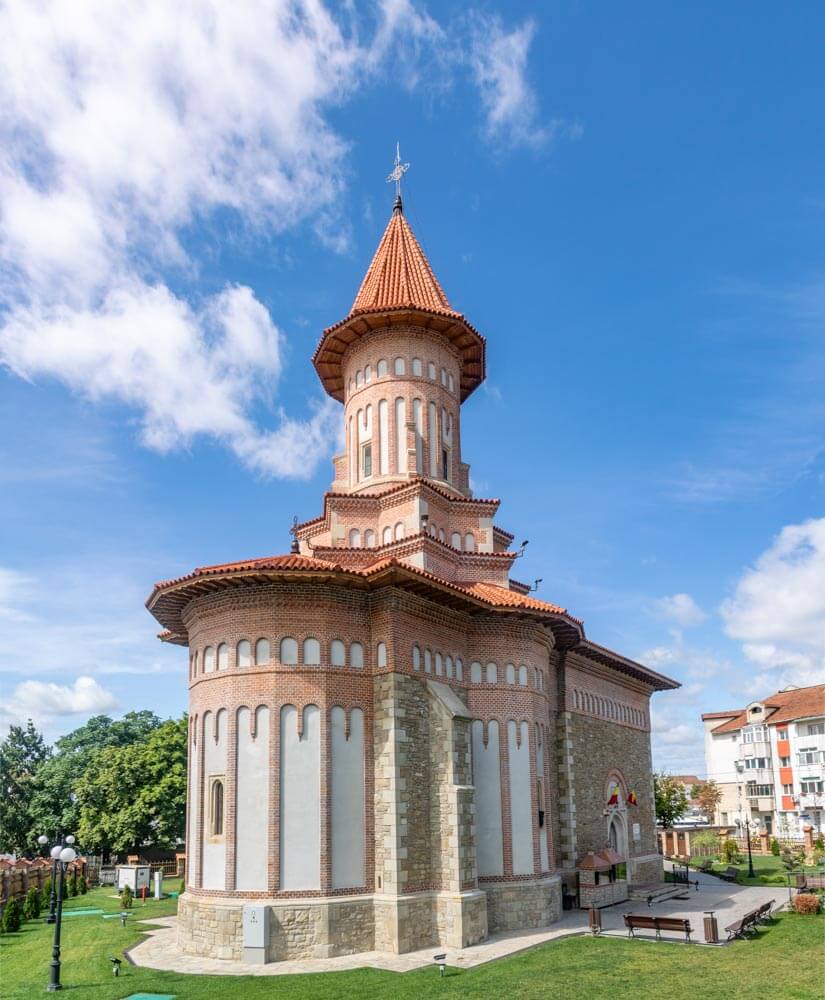
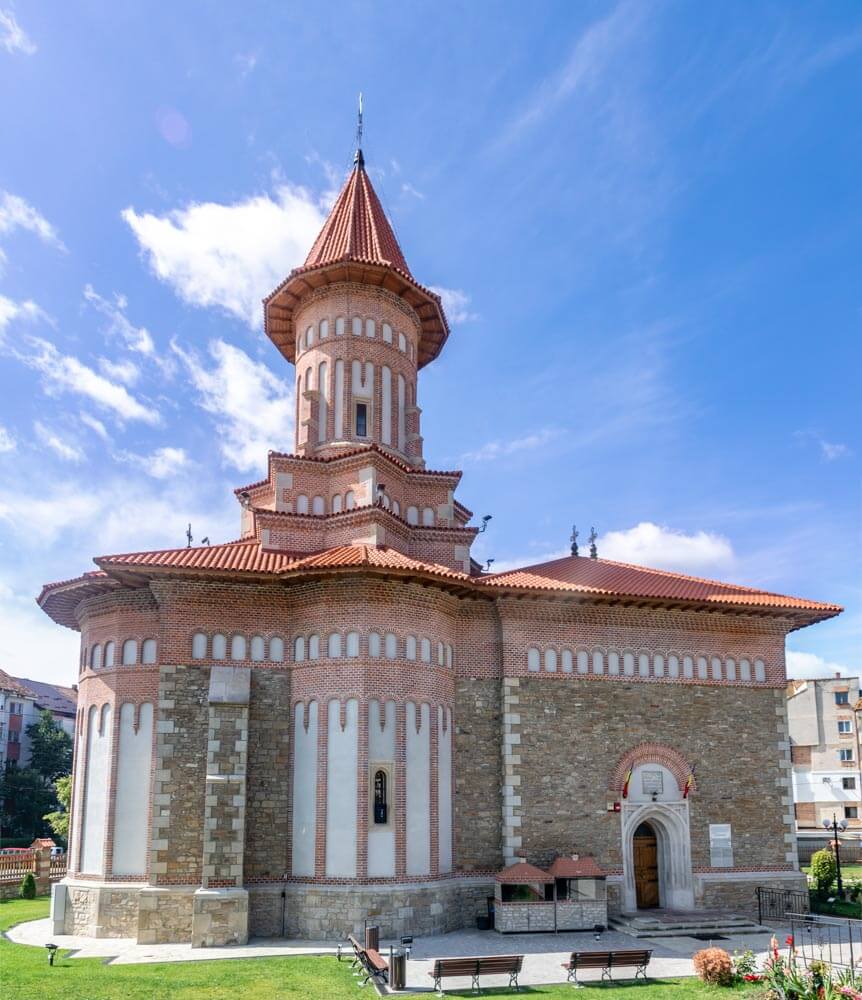
The Saint George’s Church (Biserica Sfântul Gheorghe) is a 16th-century Eastern Orthodox church in Botoșani, founded in 1551 by Elena Rareș, widow of Moldavian prince Petru Rareș. Built during the reign of her son Ștefan Rareș, it is one of the oldest surviving churches in the city, preceded only by the Church of Saint Nicholas at Popăuți.
Elena Rareș founded two churches in Botoșani in quick succession, Saint George in 1551 and Uspenia the following year. An original Slavonic inscription above the entrance records her as the founder and dates the completion of Saint George to October 1551, although an error in the inscribed Byzantine year was later corrected by historians. The church also became closely woven into the identity of the town through its patron saint. An 18th-century seal of Botoșani depicts Saint George on horseback killing the dragon, and Saint George remains the patron saint of the city.
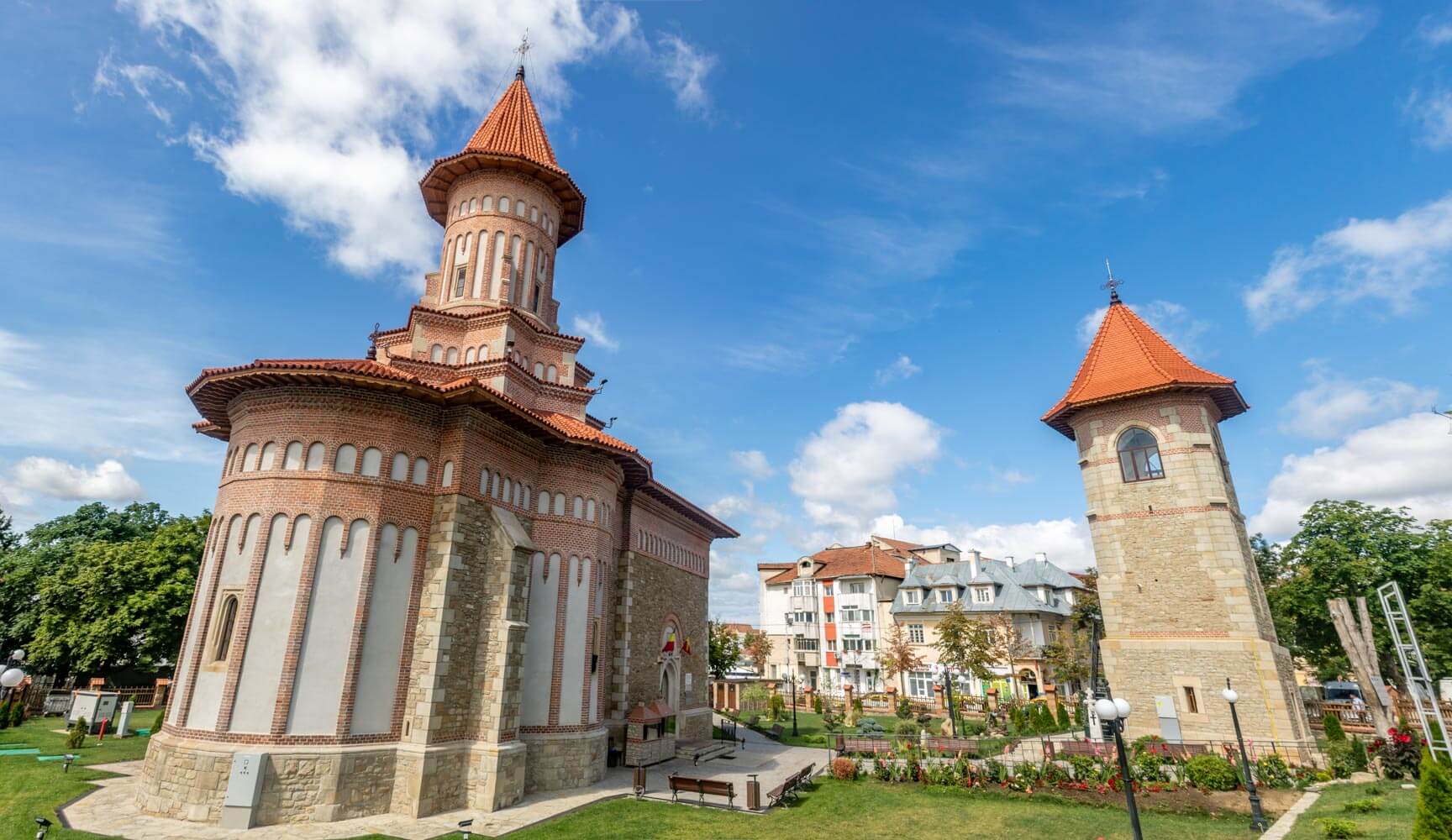
The church was built in the established Moldavian style and follows the model of Stephen the Great’s Church of Saint Nicholas at Popăuți. Its compact triconch plan is formed by a nave with projecting lateral apses, a sanctuary at the eastern end and a broad narthex to the west. Rough stone and brick make up most of the walls, while dressed stone was reserved for the corners, windows and buttresses. Blind niches articulate the apses and upper walls, and the polygonal tower above the nave rises on two star-shaped bases. The exterior was originally enriched with bands of glazed ceramic discs, although these disappeared during later alterations.
Entry is through the northern side, where a Gothic stone portal frames the doorway beneath Elena Rareș’s foundation inscription. The interior was intentionally simple and was not originally covered with wall paintings. Stone paving from the early building survives, while the high vaulting and central tower preserve the spatial arrangement of the 16th-century church.
Repeated fires, earthquakes and repairs gradually altered that original form. Major work was carried out during the reign of Mihai Racoviță in the early 18th century, and by the beginning of the 19th century the walls had been raised, the roof changed and parts of the star-shaped base of the central tower concealed. A large bell tower was attached to the northern entrance in 1817, with its completion recorded by an inscription dated 1819, and a vestry was added beside the sanctuary in 1864.
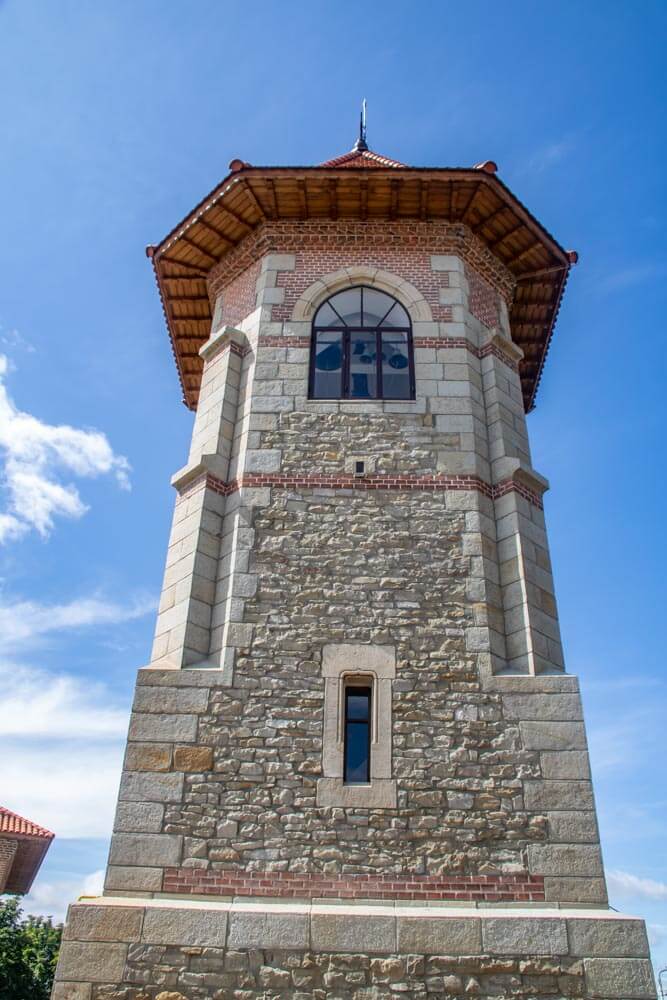
By the early 20th century, these additions had substantially changed the appearance of the medieval church. Architect Nicolae Ghika-Budești led a major restoration in 1911-1912, removing the attached bell tower and the later vestry and reconstructing the façades and roof according to surviving evidence of the 16th-century design. He also designed the separate bell tower that now stands to the north of the church, allowing the main building to recover much of its earlier silhouette.
The present iconostasis was assembled in 1921-1922 from carved wood, although some of the icons incorporated into it are considerably older. Several were painted in 1733 by Grigore Zugravu and have gilded backgrounds. The church itself retains the comparatively restrained interior established by its original unpainted design, placing greater emphasis on the stone architecture, iconostasis and liturgical furnishings.
Archaeological work in the churchyard has uncovered a medieval cemetery with graves dating back roughly five centuries, confirming that the area around Saint George’s Church was already an important part of Botoșani during the period in which Elena Rareș founded the church.