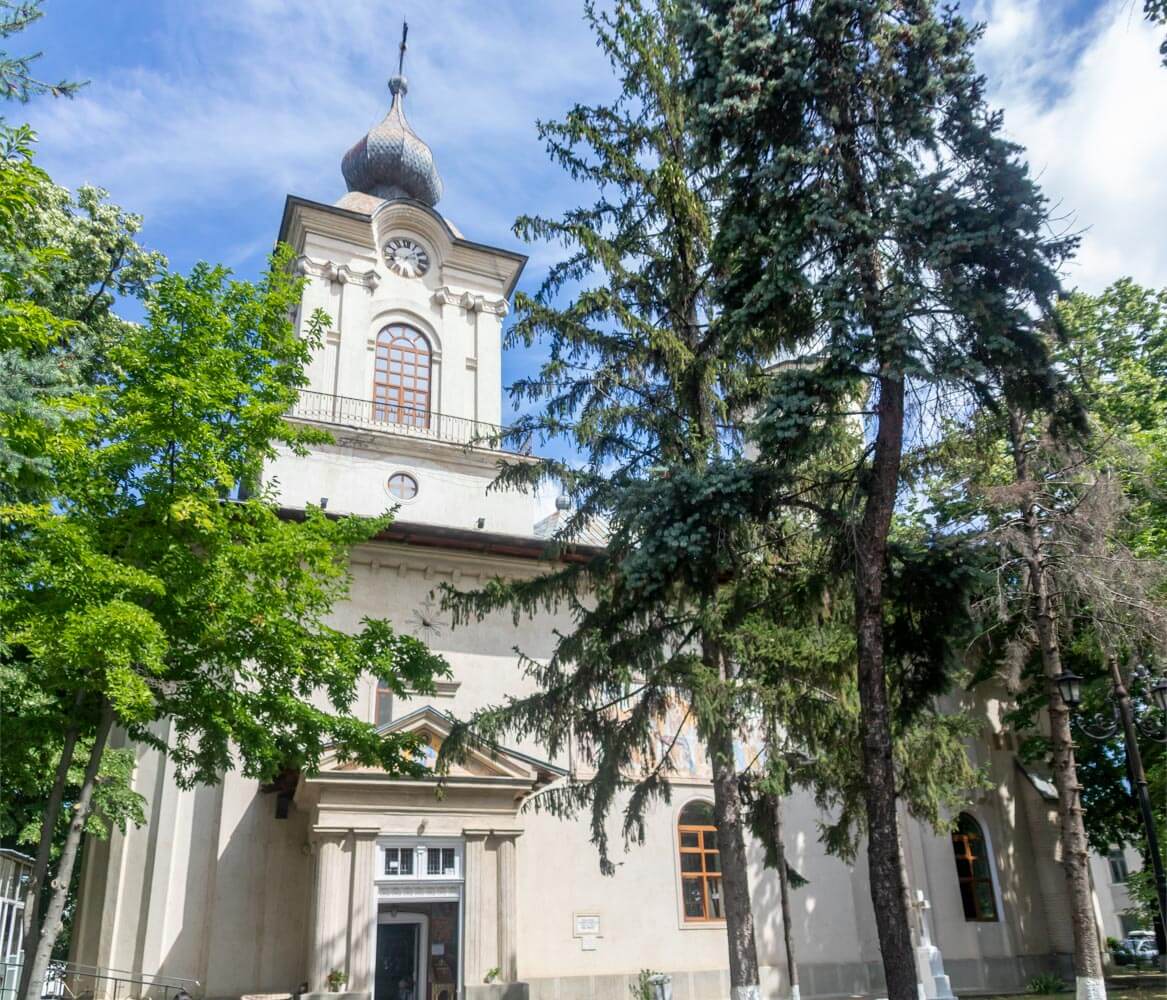
Uspenia Church (Biserica Uspenia) is a historic Eastern Orthodox church in the center of Botoșani, dedicated to the Dormition of the Mother of God. Founded in 1552 by Elena Rareș, wife of Prince Petru Rareș, it is one of the city’s oldest surviving churches and is also known as the place where Mihai Eminescu was baptized in 1850.
Elena Rareș commissioned the church during the reign of her son Ștefan Rareș, and an inscription records its completion on August 15, 1552. Its builders closely followed the model of the Church of Saint Nicholas at Popăuți, founded by Stephen the Great in 1497. The two churches share the same basic plan and system of vaulting, including a tower raised above the nave on a double star-shaped base. Niches, small blind arches and colored glazed ceramic discs originally provided much of the exterior decoration.
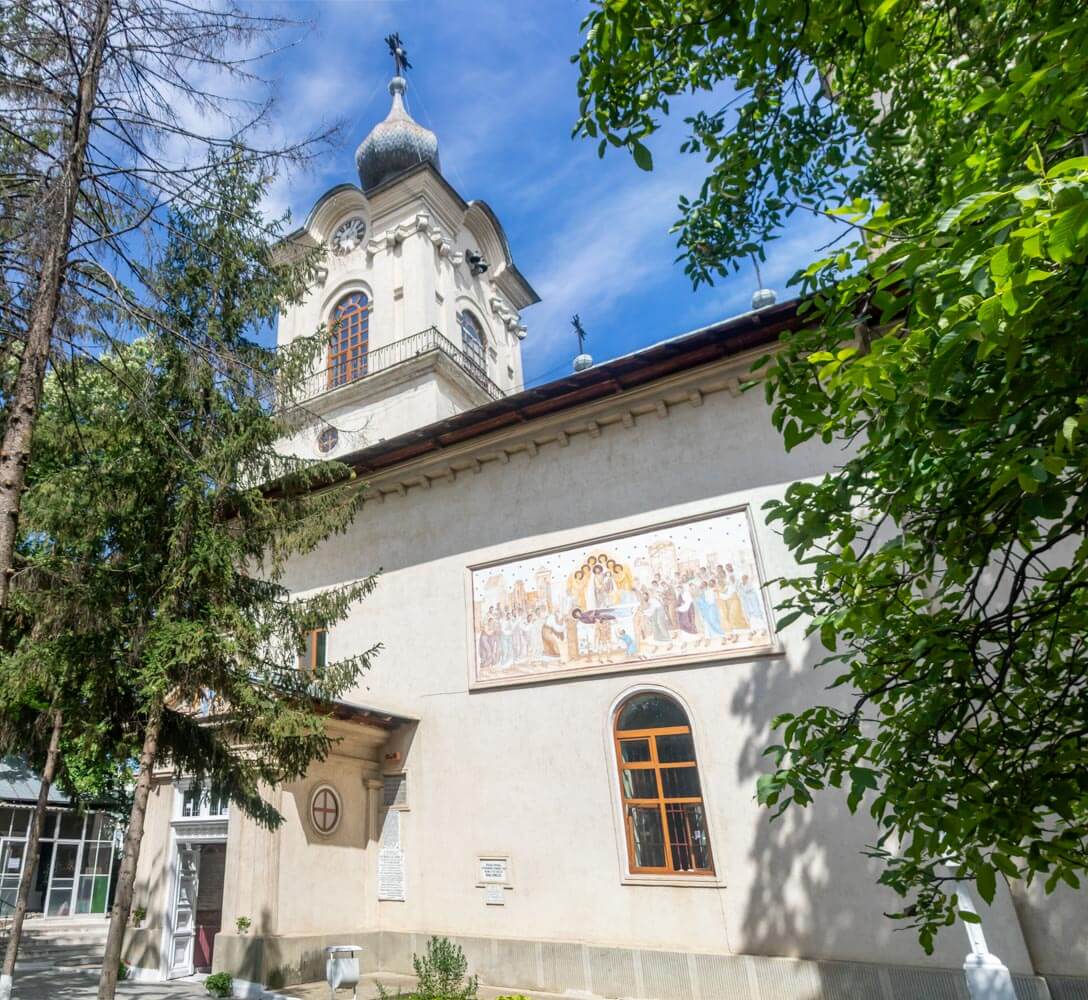
The 16th-century church was altered repeatedly as Botoșani grew around it, beginning with repairs financed by Prince Mihai Racoviță in 1724-1725 and culminating in a major rebuilding in 1819. During that work, a tall Classical bell tower was added at the western end and the older walls were raised to a common cornice, tying the enlarged building together visually. The changes also partly concealed the lower star-shaped base of the original central tower, so much of Uspenia’s present exterior combines the Moldavian structure of 1552 with the additions of the early 19th century.
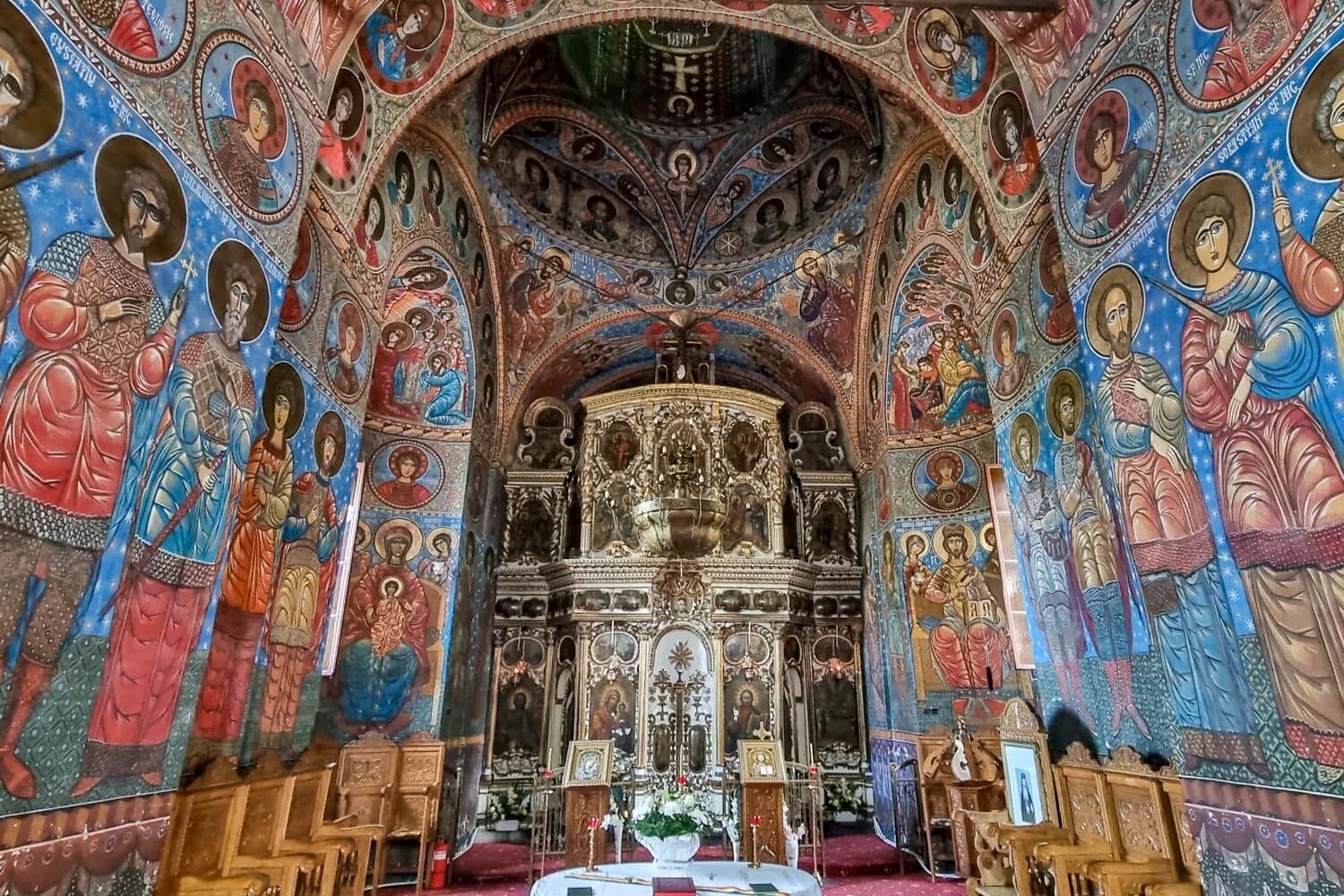
The bell tower later acquired an important civic role when the first public clock in Botoșani was installed there in 1872. The church precinct had already served an educational function from 1793, when a princely school operated in a building within the grounds. A fire in 1888 destroyed shops and clergy residences around the church, and further restoration followed in 1912. Major repairs and restoration were again carried out toward the end of the 20th century, with the interior repainted between 1995 and 1998.
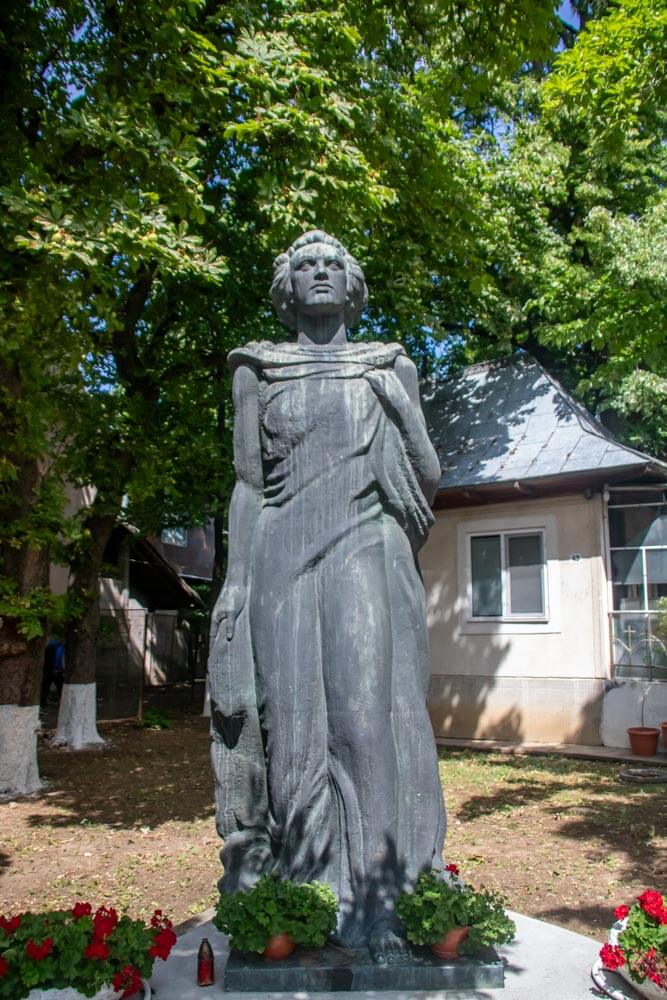
Uspenia is particularly important in the biography of Mihai Eminescu, whose family lived nearby at the time of his birth. He was baptized here on January 21, 1850, six days after his recorded birth on January 15, by priest Ion Stamate, the confessor of the Eminovici family. The church register preserved both dates, making it one of the key documentary sources for Eminescu’s early life. Nicolae Iorga later transferred the register, together with other historical documents from the church, to the Romanian Academy.
The present building retains the triconch plan and central tower of the 1552 church, framed at its western end by the much taller 1819 bell tower. The exterior is relatively restrained, with white walls articulated by shallow niches and a continuous cornice, while the steep roofs and two towers give the church its recognizable silhouette. Inside, the walls and vaults are covered with modern religious painting, while the iconostasis, liturgical furnishings and older objects preserved by the parish continue the interior arrangement of the active church.