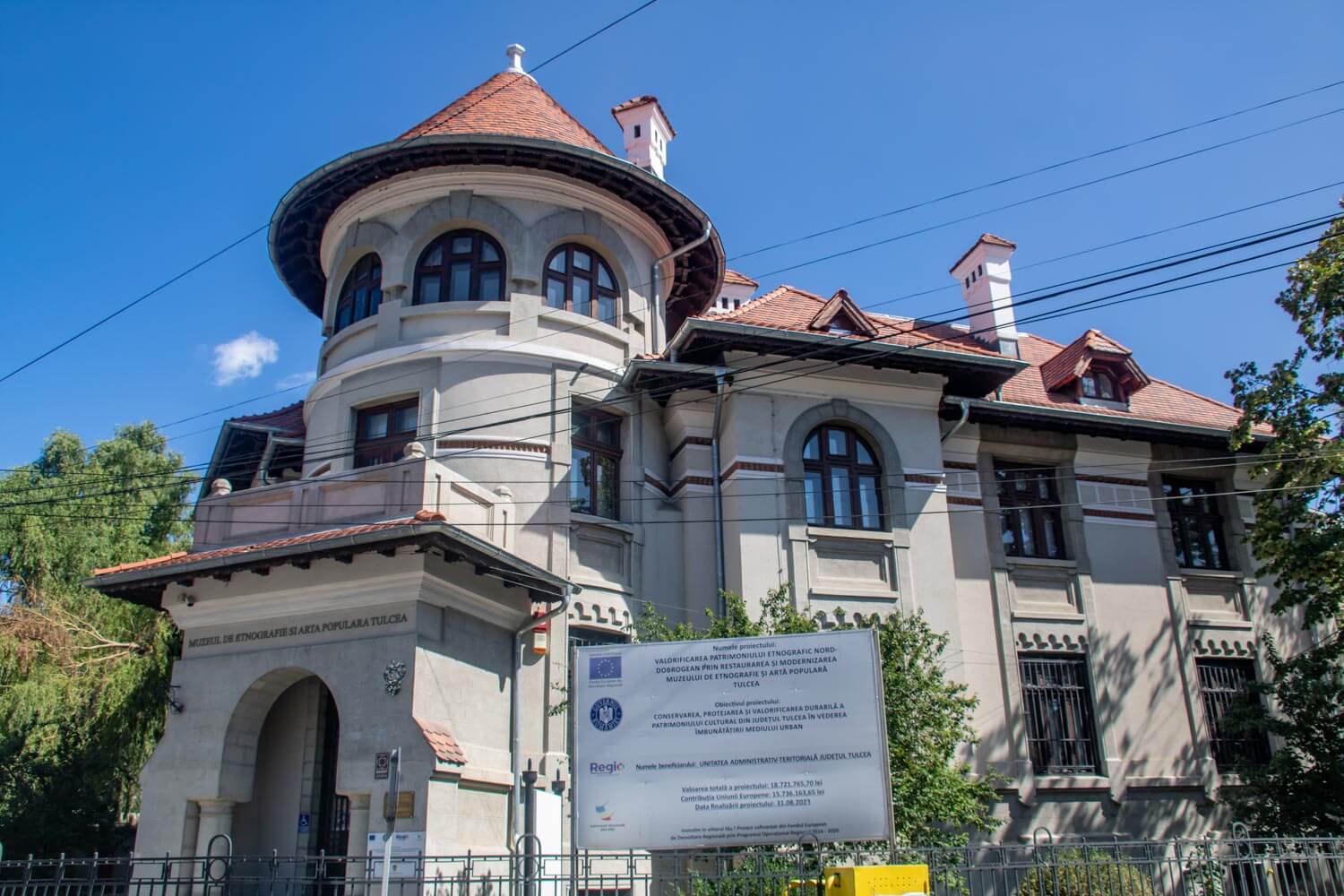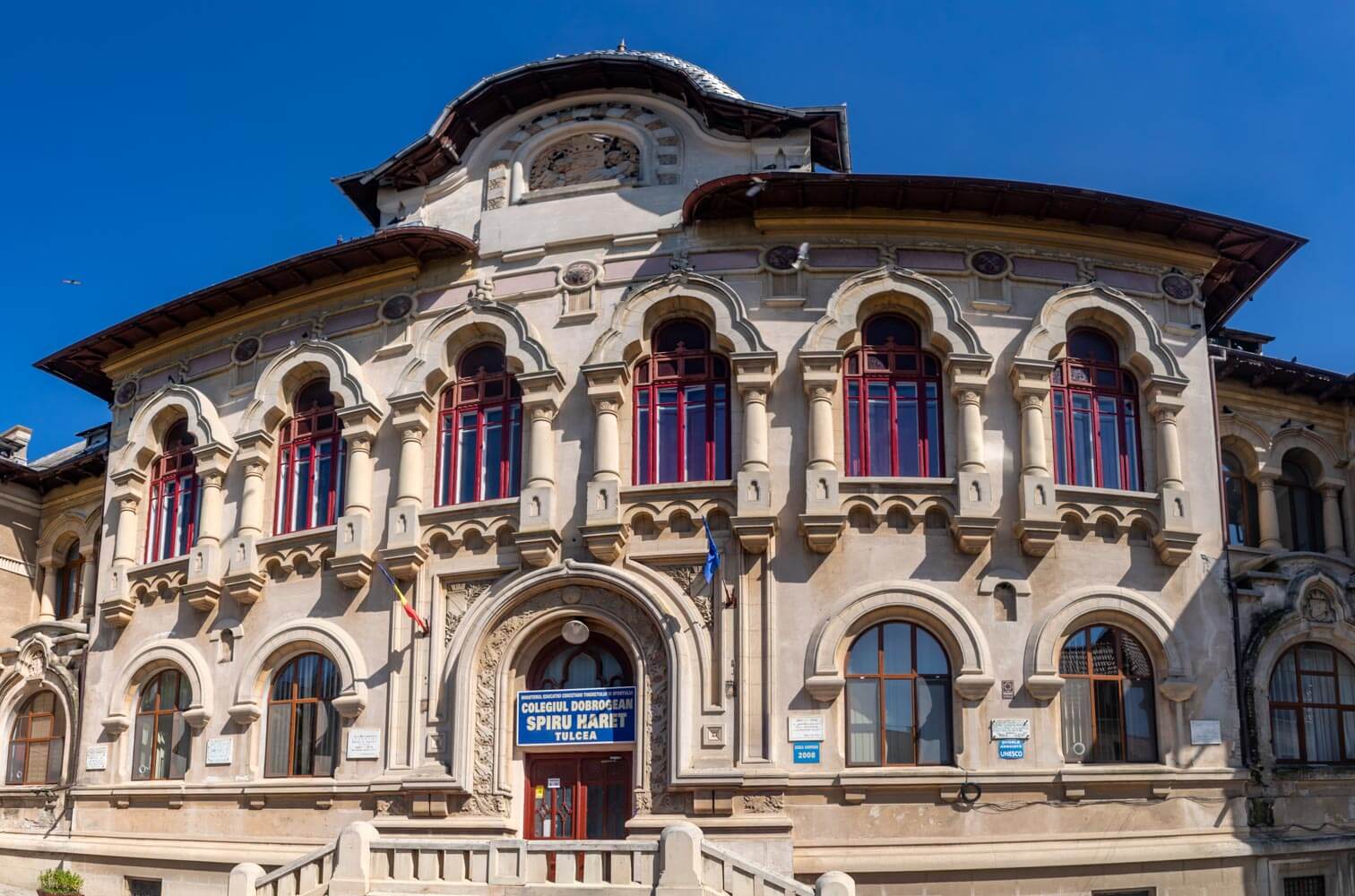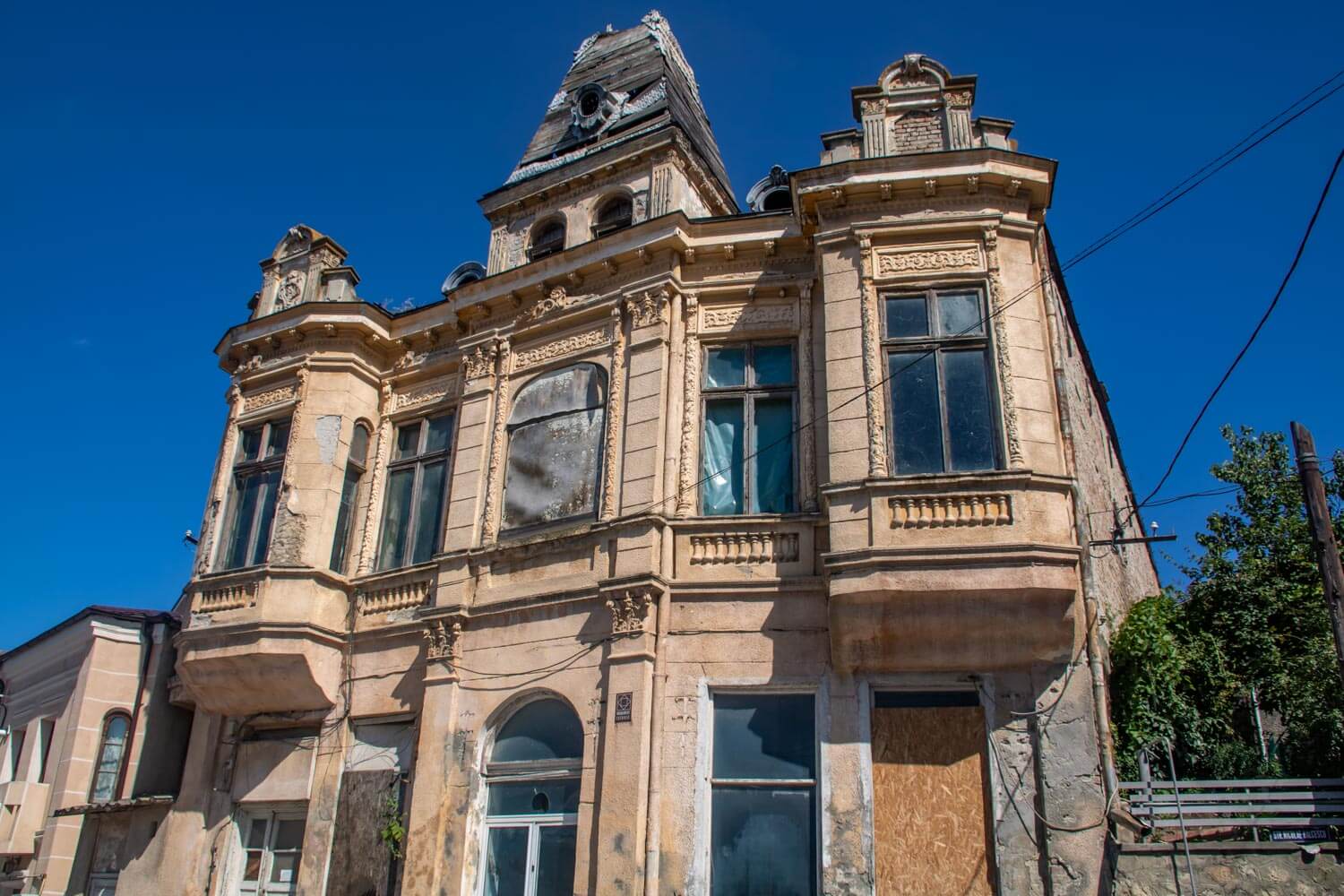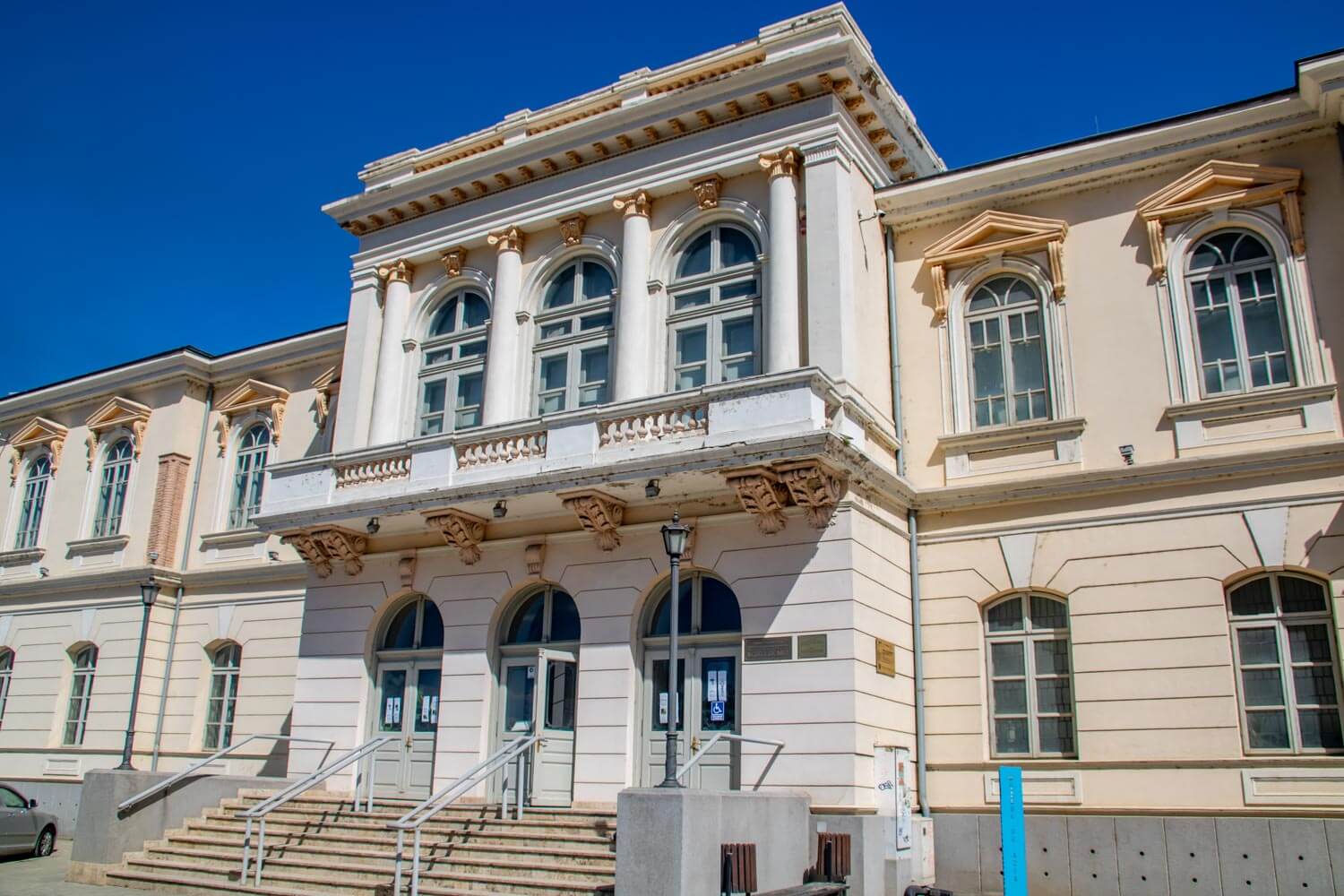
The Tulcea Art Museum (Muzeul de Artă Tulcea) is the principle art museum of Tulcea, housed in the former Ottoman administrative palace known as the Pasha’s Mansion (Conacul Pașei). Its collections include Romanian painting, sculpture and graphic art alongside icons, decorative art and works reflecting the Ottoman and other cultural influences that shaped Dobrogea.
History And Architecture Of The Building
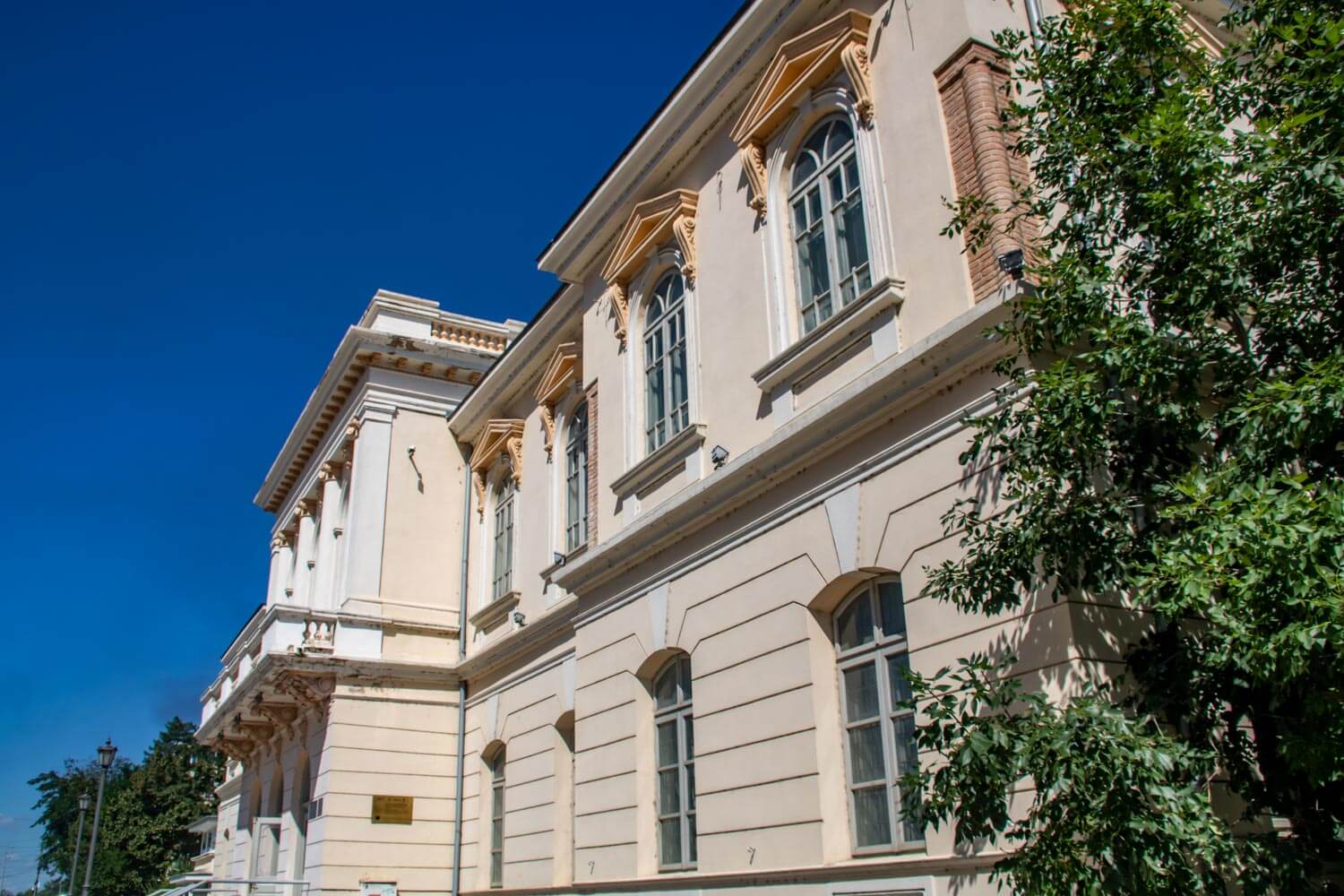
The museum occupies one of Tulcea’s most important surviving 19th-century civic buildings. Constructed between 1863 and 1865, it originally served as the Administrative Palace of the Tulcea Sanjak during Ottoman rule and became known locally as the Pasha’s Mansion. Its restrained Neoclassical design reflects its original role as the seat of regional government rather than as a private residence.
After northern Dobrogea became part of Romania in 1878, the building was converted into the Tulcea County Prefecture. The upper floors housed the prefectural administration, while the ground floor accommodated the County Tribunal, the bailiffs’ office and the jury court. Between 1950 and 1970 it served as the headquarters of the Tulcea District People’s Council before being reassigned for cultural use. The Art Museum opened here on 23 August 1982.
Museum And Collections
The museum’s art collections had begun developing decades before they moved into the present building. In the early postwar years the collection was extremely small and initially centered on works by Tulcea painter Geo Cardaș, whose subjects included the Danube Delta, Sulina and everyday life around the river. During the following decades the collection expanded considerably as Tulcea and the Danube Delta attracted Romanian artists interested in the region’s landscapes, light and communities. Works by local and locally active artists such as Constantin Gavenea, Vasile Pavlov, Gheorghe Sârbu, and Stavru Tarasov became part of this developing regional strand.
Today the museum holds more than 7,000 works divided among seven main collections. These include modern and contemporary painting and sculpture, graphic art, engraving plates, Orthodox icons, decorative art, and Oriental art. The graphic collection is by far the largest, while the museum is especially unusual for its collection of original engraving plates, including linocut, woodcut, metal engraving and lithographic matrices. ICEM describes it as the only Romanian museum institution that systematically collects such plates.
Romanian modern and contemporary art forms a major part of the display. The sculpture collection includes works by artists such as Ion Georgescu, Dimitrie Paciurea, Frederic Storck, Oscar Han, Milița Petrașcu, Constantin Baraschi, Romul Ladea and Ion Jalea. Painting and graphic art likewise range from established Romanian artists to artists whose work is closely connected with Dobrogea and the Danube Delta.
Religious and decorative art broaden the collection beyond modern Romanian fine art. The icon collection contains several hundred works, including Russian-school and Lipovan icons dating mainly from the 18th and 19th centuries, while the Oriental and decorative-art holdings reflect the long Ottoman presence and cultural exchanges of Dobrogea. Among these are ceramics, metalwork and other objects from the eastern Mediterranean and Ottoman world.
The permanent exhibition, “Arts and Influences in Dobrogea” (Arte și influențe în Dobrogea), brings these different collections together around the artistic traditions and cultural influences found in the region. Rather than presenting only a chronological survey of Romanian art, it places painting, sculpture, icons and decorative objects within the wider cultural history of Dobrogea.