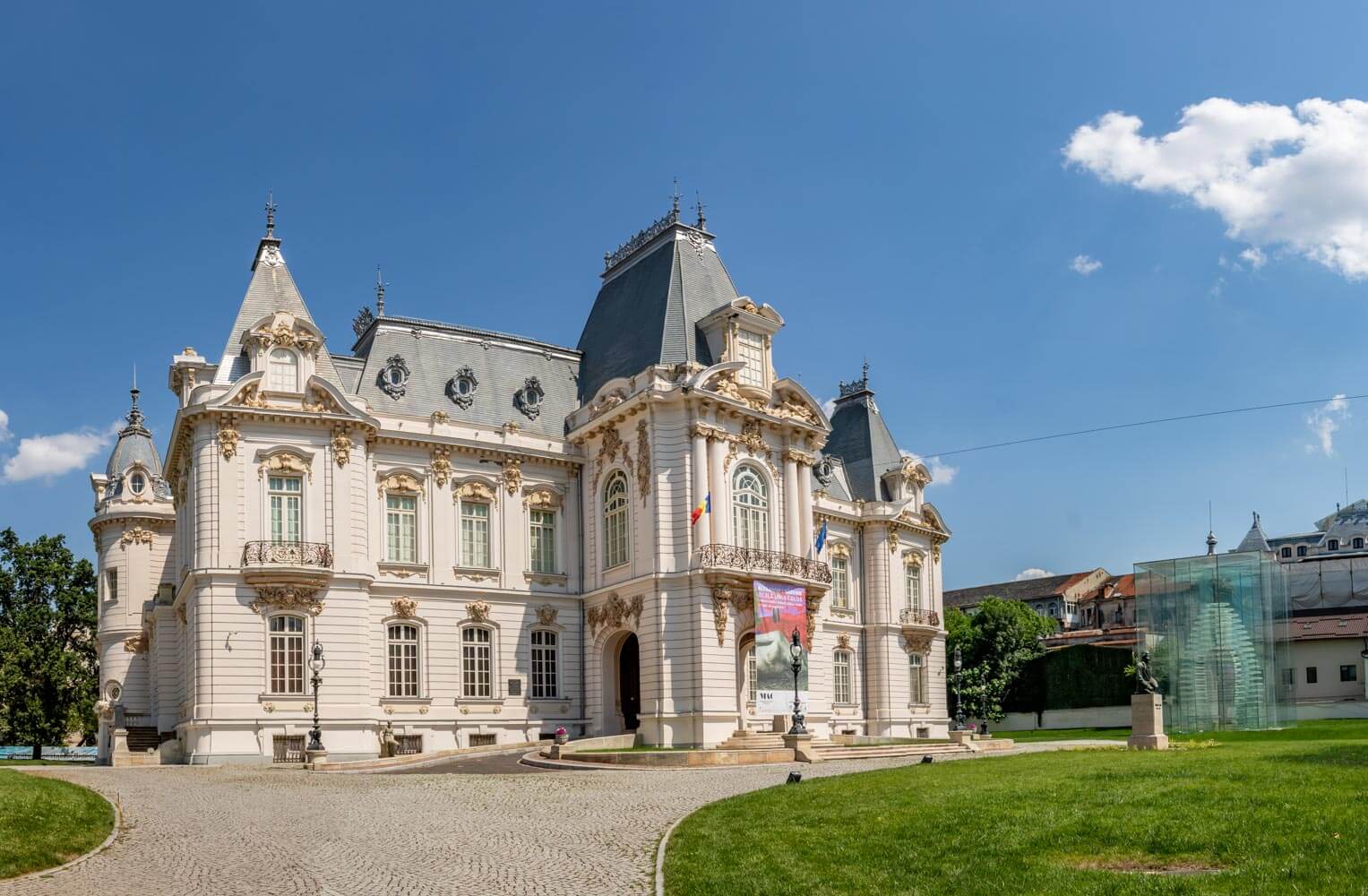

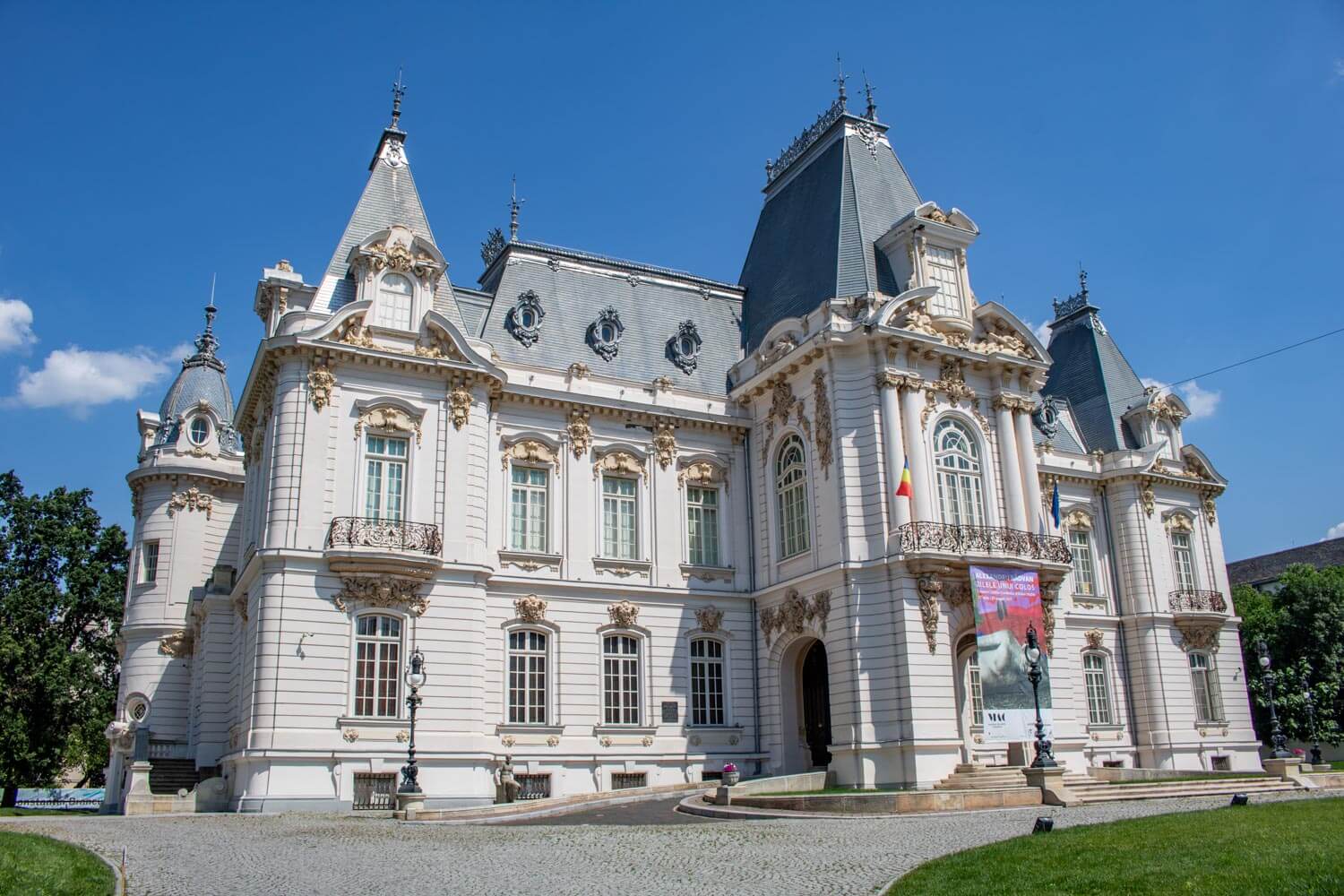
The Craiova Art Museum (Muzeul de Artă Craiova) is an art museum housed in the magnificent Jean Mihail Palace (Palatul Jean Mihail) in central Craiova. Built at the beginning of the 20th century as the residence of one of Romania’s wealthiest families, the palace is an outstanding example of French-inspired eclectic architecture, with lavishly decorated interiors that are an attraction in their own right. The museum houses an extensive collection of Romanian and European art, including six sculptures by Constantin Brâncuși, one of the pioneers of modern sculpture.
History Of The Building
The Jean Mihail Palace was commissioned by Constantin (Dinu) Mihail, a wealthy landowner and politician from an influential family in Oltenia. Designed by French architect Paul Gottereau, who had also worked on several royal and public buildings in Bucharest, the palace was constructed between 1898 and 1907. Its architecture combines French academic classicism with Baroque and Rococo influences, drawing inspiration from aristocratic residences such as the Château de Cheverny in the Loire Valley.
The imposing façade features elaborate stone ornamentation, richly framed windows, wrought-iron balconies, and a symmetrical arrangement centered on the main entrance. The interior is even more elaborate, with marble staircases, gilded stucco decoration, Venetian mirrors, Murano crystal, and richly decorated ceilings. The grand reception rooms were furnished with luxurious materials imported from across Europe, including Carrara marble and silk from Lyon. The most impressive interior is the Hall of Mirrors (Sala Oglinzilor), while the palace’s 29 rooms also include former salons, dining rooms, and private apartments. Electricity and central heating were installed during construction, providing a level of comfort that was exceptional for a private residence in Romania at the time.
Constantin Mihail died in 1908, shortly before the palace was officially inaugurated by his sons Nicolae and Jean in 1909. The residence subsequently hosted members of the Romanian royal family, including King Carol I in 1913 and King Ferdinand in 1915. Jean Mihail eventually inherited the family fortune and became known for his considerable wealth, which he used in part to guarantee Romanian government loans during the economic crisis of the early 1930s. When he died without direct heirs in 1936, he bequeathed his estate to the Romanian state, and the palace acquired the name by which it is known today.
The building subsequently witnessed several important events in European history. In 1939, following the German invasion of Poland, it accommodated Polish President Ignacy Mościcki and military commander Edward Rydz-Śmigły during their exile in Romania. The following year, the palace hosted Romanian-Bulgarian negotiations concerning the transfer of Southern Dobrogea to Bulgaria. During the Second World War, it also accommodated Yugoslav leader Josip Broz Tito. After the war, the palace was used by communist political organizations before being converted into an art museum in 1954.
History Of The Museum
The origins of the Craiova Art Museum date to 1908, when the Alexandru and Aristia Aman Picture Gallery (Pinacoteca Alexandru și Aristia Aman) was established through a donation from the Aman family. The collection initially included European paintings, works by Romanian artist Theodor Aman, graphic art, furniture, and decorative objects. During the following decades, the gallery expanded through acquisitions and donations from prominent Craiova families, including the Mihail, Romanescu, Cornetti, and Glogoveanu families.
In 1954, the collection was transferred to Jean Mihail Palace, which opened as the Craiova Art Museum. Further acquisitions, donations, and transfers from national collections considerably expanded its holdings. The palace suffered damage during the earthquake of 1977 and subsequently underwent restoration work. A major renovation between 2009 and 2015 restored the historic interiors and modernized the museum’s exhibition facilities.
Collections And Exhibitions
The museum’s collections comprise more than 8,000 works of painting, sculpture, graphic art, and decorative art, covering several centuries of Romanian and European artistic development. The Romanian galleries include works by Constantin Lecca, Theodor Aman, Nicolae Grigorescu, Ștefan Luchian, Nicolae Tonitza, Gheorghe Petrașcu, Theodor Pallady, Iosif Iser, Eustațiu Stoenescu, Ion Țuculescu, and Corneliu Baba. The exhibitions illustrate the development of Romanian painting from the 19th-century academic tradition to Impressionism, Post-Impressionism, and modern artistic movements.
The European art collection includes paintings from the Dutch, Flemish, Italian, and French schools, primarily dating from the 16th to the 19th centuries. Many of these works originated in the private collections of the Aman and Mihail families, providing an insight into the artistic tastes of wealthy Romanian collectors during the 19th and early 20th centuries. The museum also preserves historical furniture, decorative objects, and religious art.
A major highlight is the collection of sculptures by Constantin Brâncuși, who studied in Craiova before continuing his artistic education in Bucharest and Paris. Among them are Vitellius, Pride (Orgoliu), Child’s Head (Cap de copil), Torso Fragment (Fragment de tors), Miss Pogany (Domnișoara Pogany), and The Kiss (Sărutul). Together, they illustrate the development of his sculptural language, from the naturalistic modeling of his early works to the simplified forms that became characteristic of his mature art. Particularly notable is The Kiss, created in 1907, in which two embracing figures are reduced to a compact geometric composition.
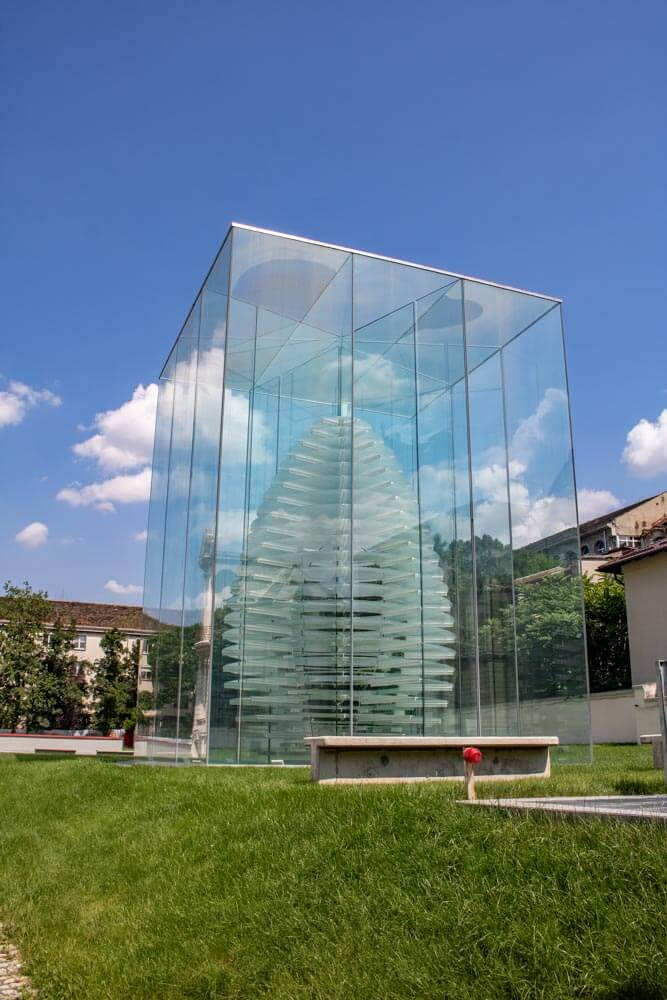
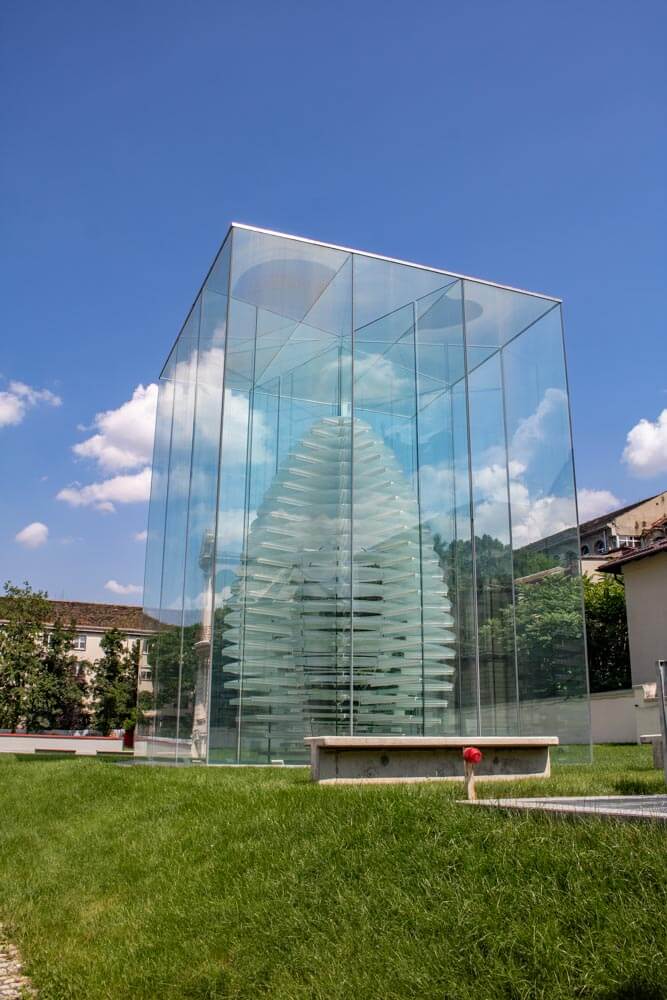
The museum also operates the Constantin Brâncuși Center in the palace grounds, a separate exhibition complex dedicated to the sculptor’s life and work. Inaugurated in 2022, it features an underground gallery and a monumental glass installation, with free admission.
The museum also organizes temporary exhibitions devoted to Romanian and international artists, alongside cultural events and educational programs.