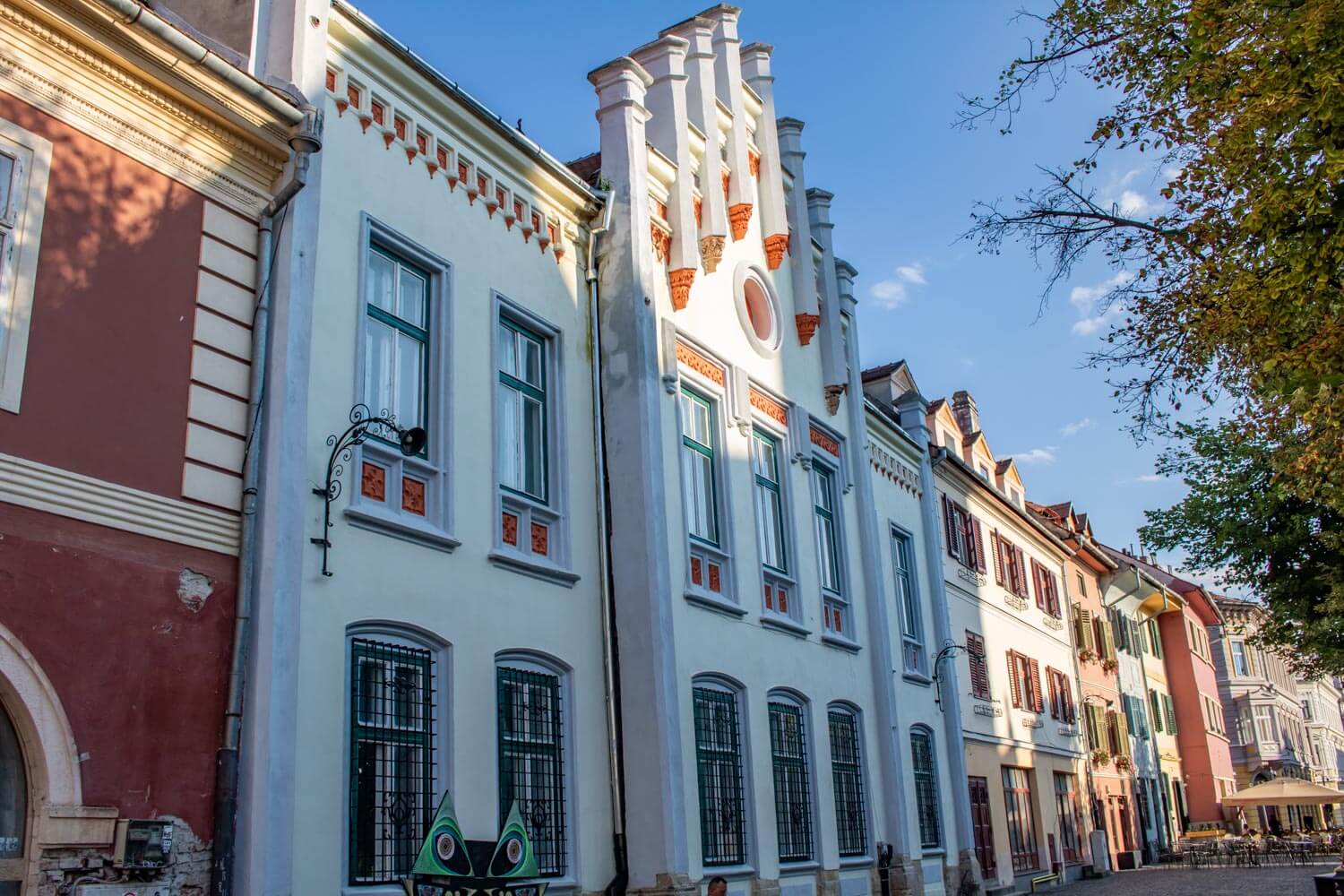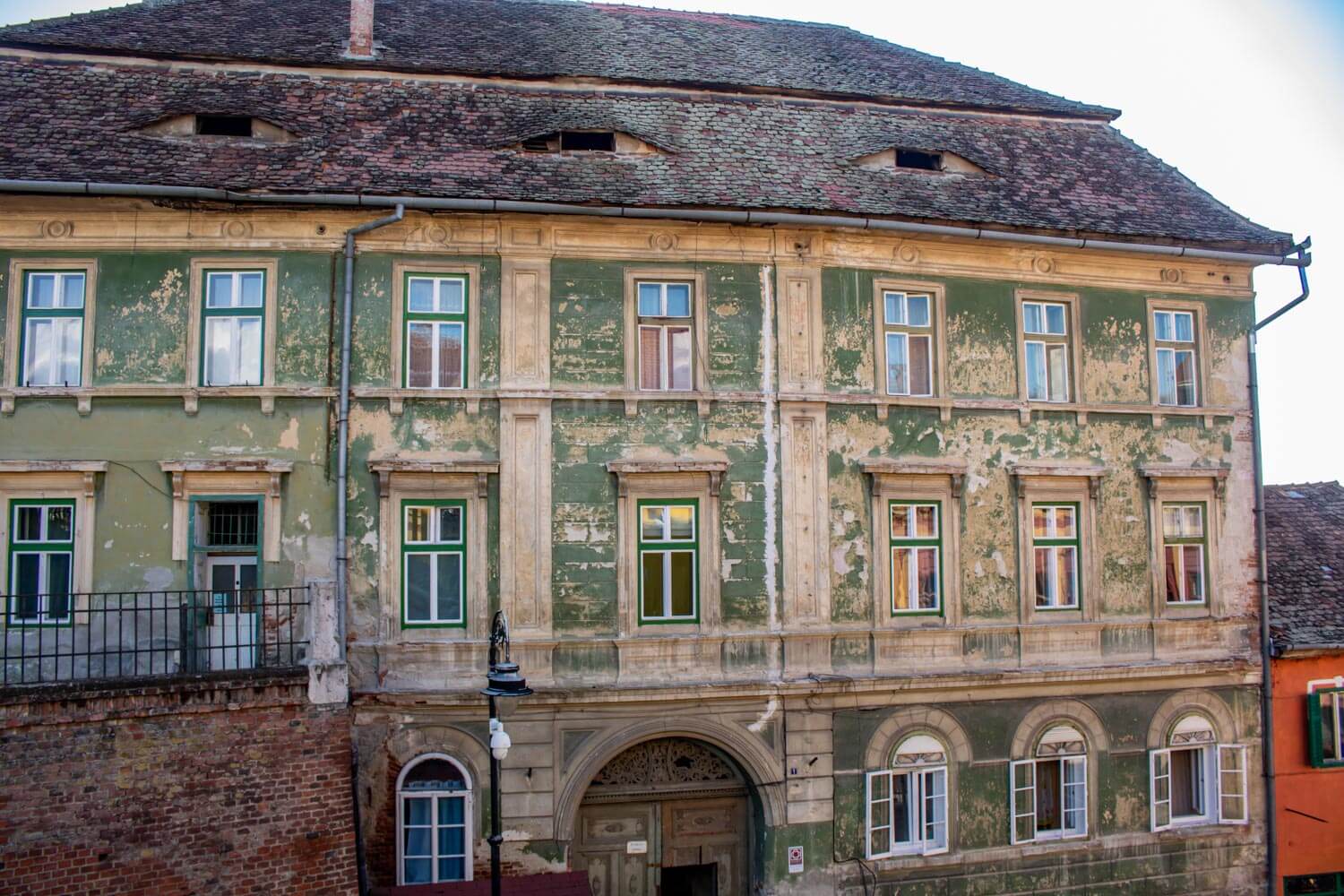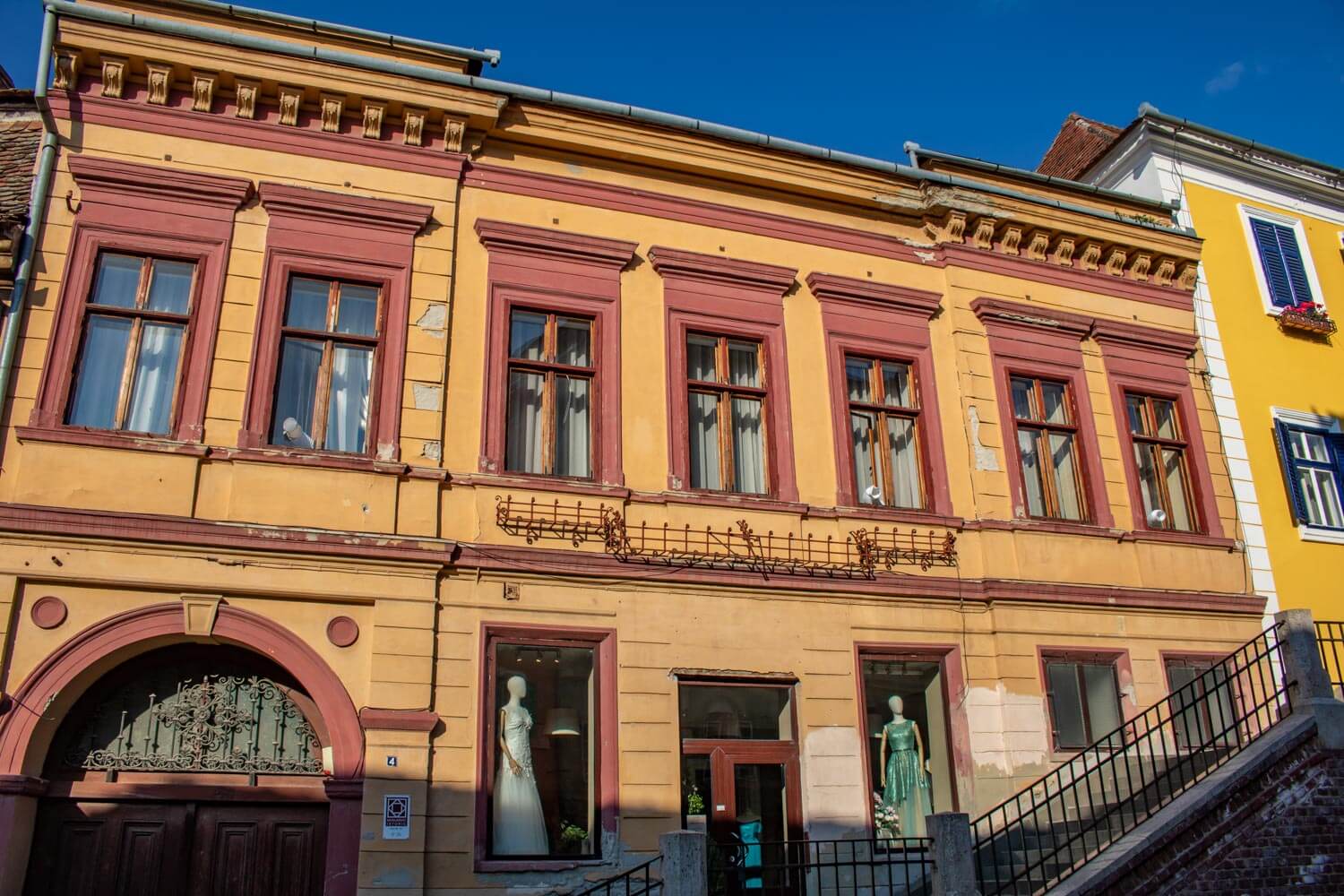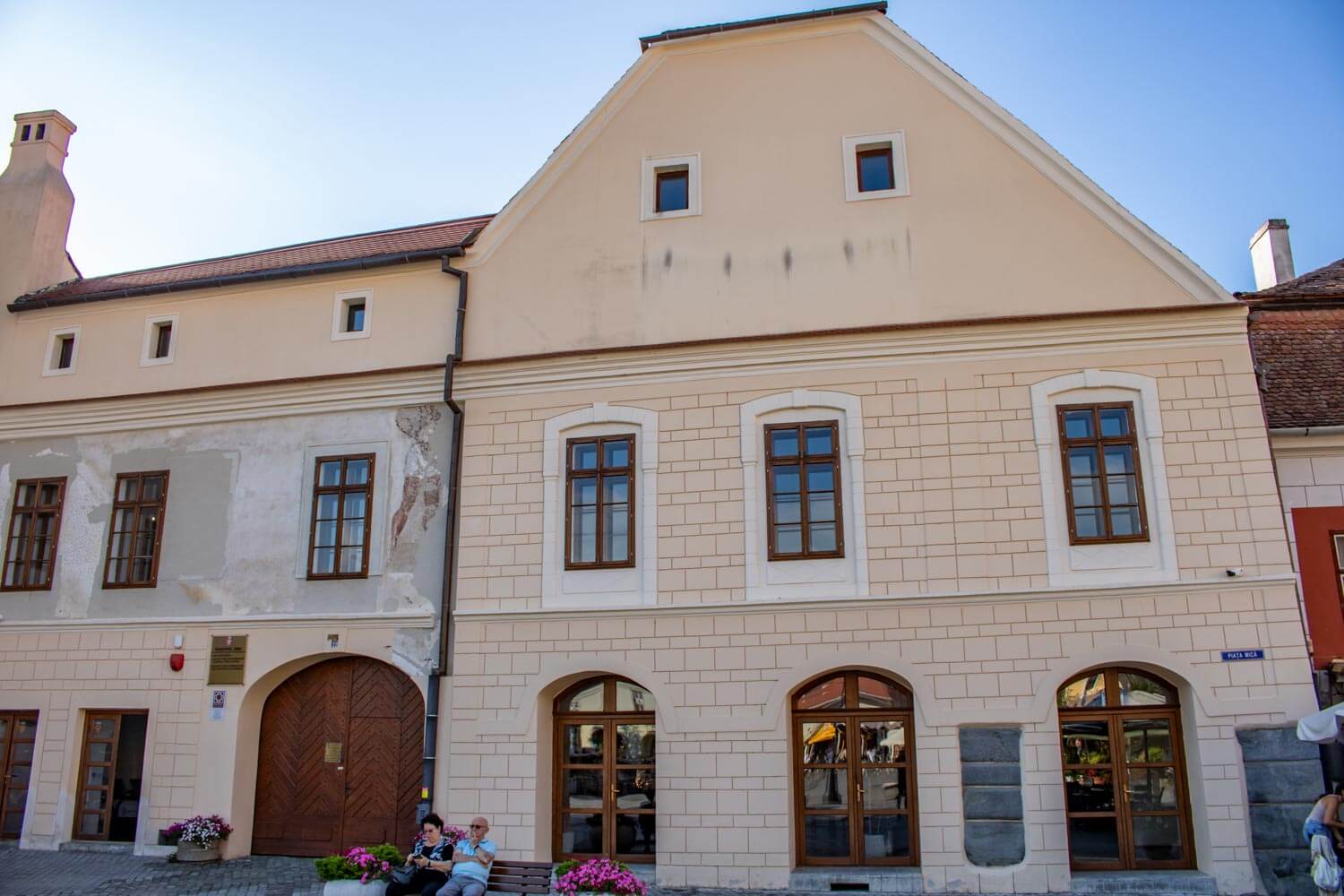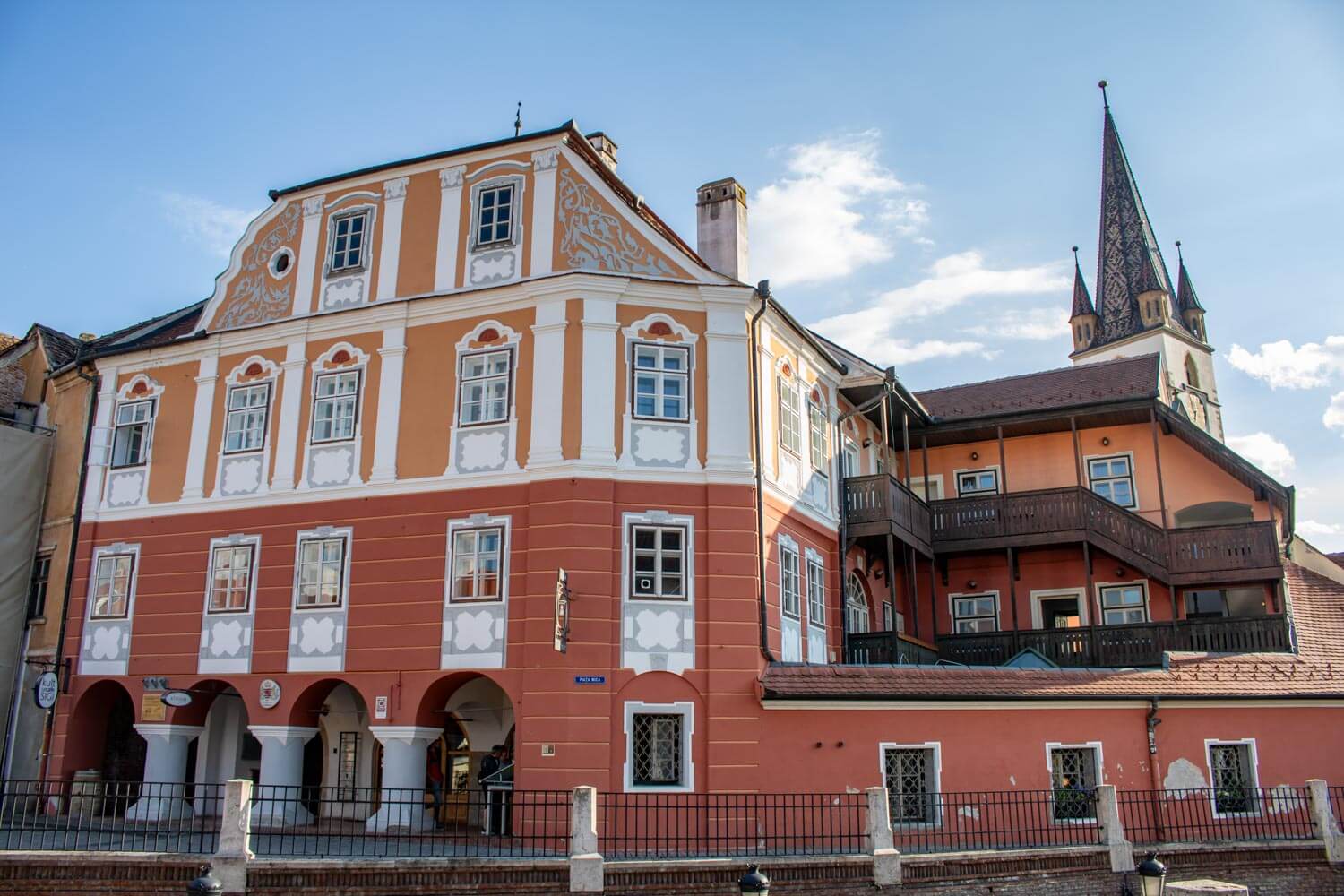
The Luxembourg House (Casa Luxemburg) is a historic townhouse on the Small Square in Sibiu, formed from two medieval houses and later remodeled in Baroque style. Its present name dates from the early 2000s, when the building was restored with support from Luxembourg and became one of the symbols of the cultural ties between Sibiu and the Grand Duchy.
The property developed from two separate 15th-century houses, one facing the Small Square and the other Huet Square. They were joined during the 16th century, creating a larger building that incorporated part of Sibiu’s early fortifications. A mansard level was added in the 18th century, when the façades also received much of their Baroque character.
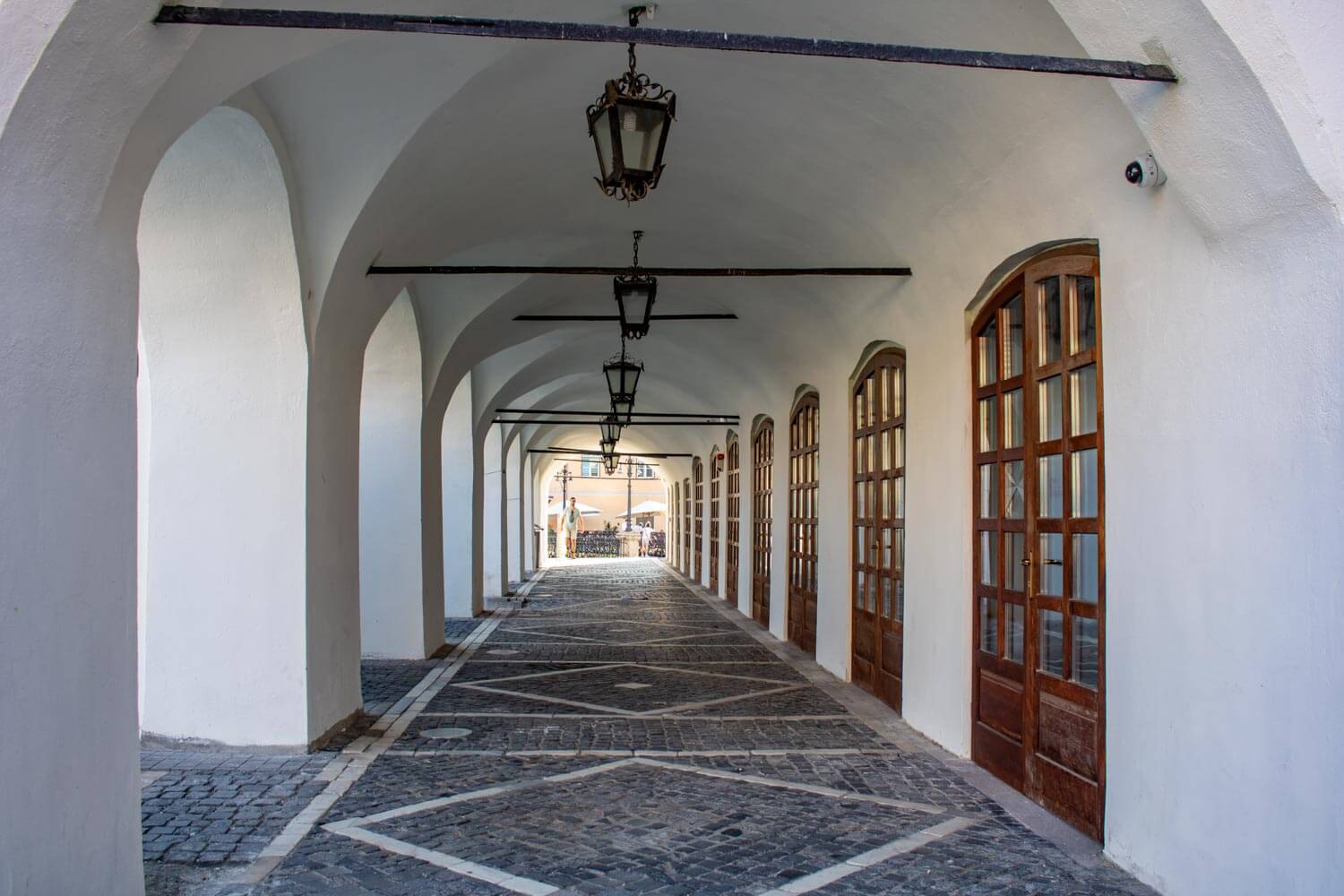
Several older features survive behind the later exterior. The ground floor facing the Small Square has a cross-vaulted loggia with three arches, while a 15th-century Gothic wooden door and a Gothic stone frame survive inside. Rooms toward Huet Square preserve Baroque ceilings and woodwork, showing how the medieval house continued to be adapted over several centuries.
During the 19th and early 20th centuries, the property belonged to the Schaser family and became known as the Schaser House, while the ground floor also housed several butcher shops. It later passed to the Brukenthal Foundation and was widely known for a time as the Red House.
A major restoration between 1999 and 2003 gave the building its present appearance and brought renewed attention to its medieval and Baroque features. The work was supported by Luxembourg, reflecting the historical connection between Transylvanian Saxon settlers and the Moselle region, including areas that are now part of the Grand Duchy. The restored house was inaugurated in 2004 during a visit by Grand Duke Henri and Grand Duchess Maria Teresa and subsequently took the name Luxembourg House.
The building later housed the Honorary Consulate of Luxembourg and a regional center of the European Institute of Cultural Routes, while much of the property was adapted as a hotel and restaurant. Its Luxembourg identity also gained wider relevance when Sibiu and Luxembourg shared the title of European Capital of Culture in 2007. Today the house is still used for accommodation and hospitality, while its restored façades and medieval structure make it one of the most recognizable buildings beside the Bridge of Lies.