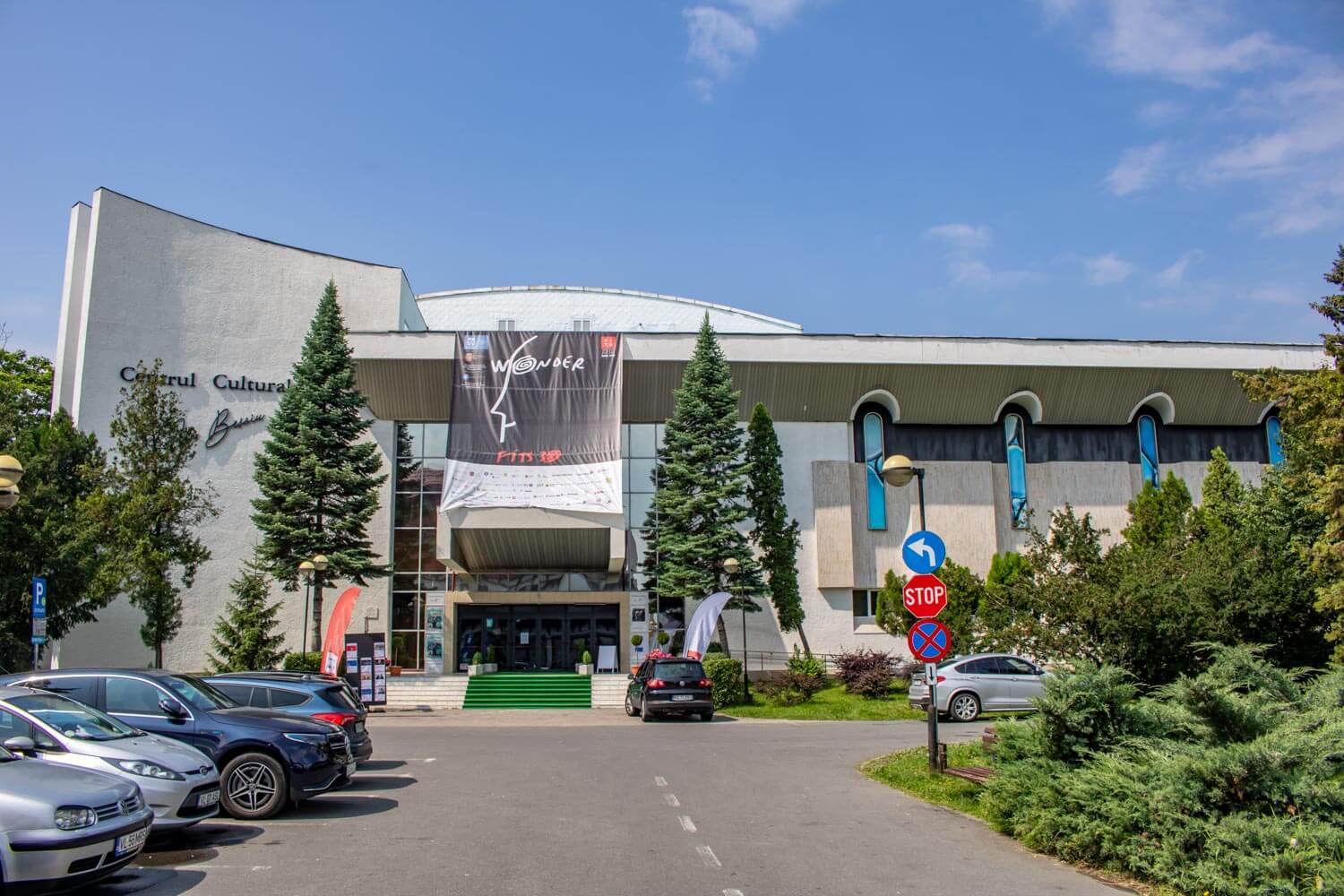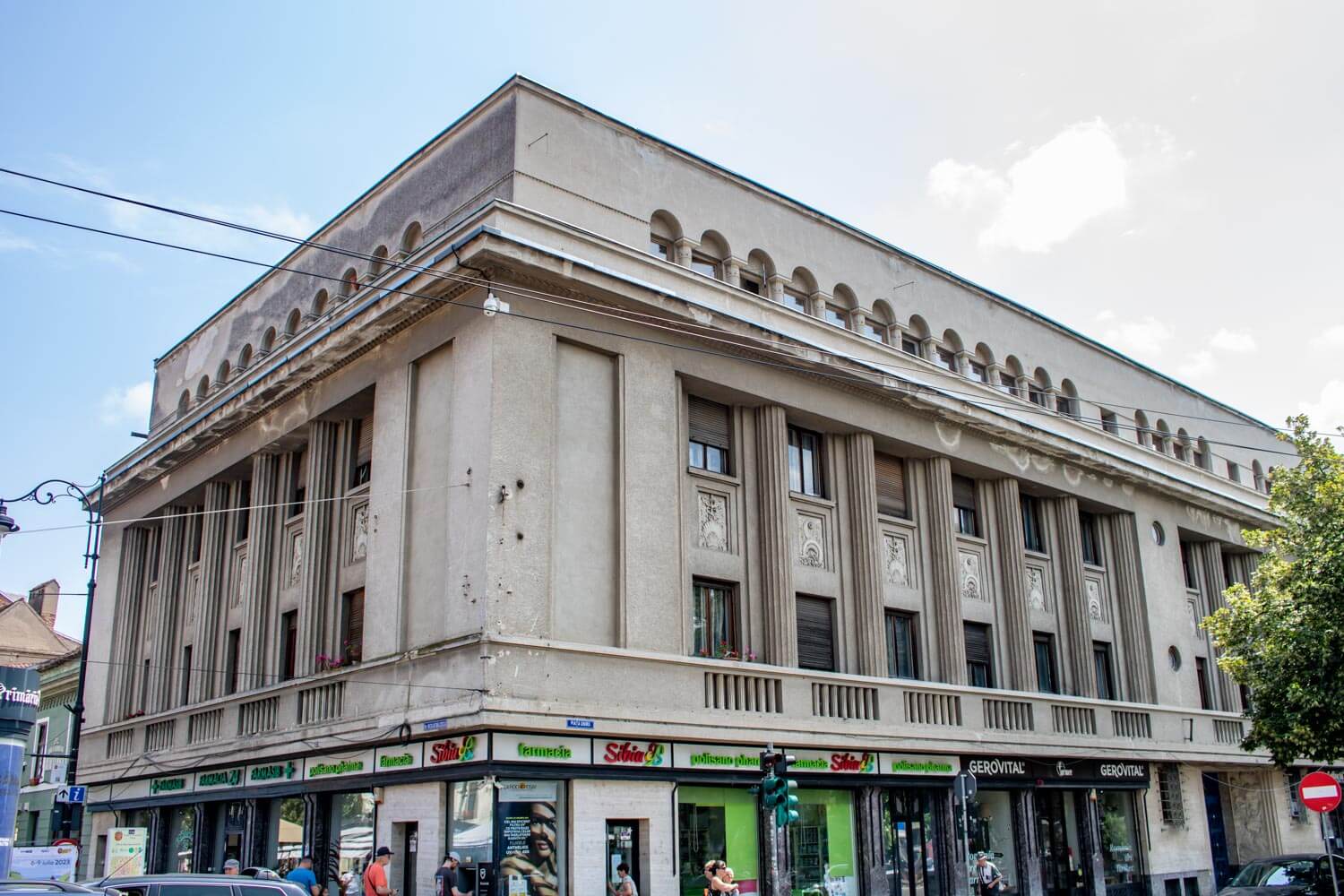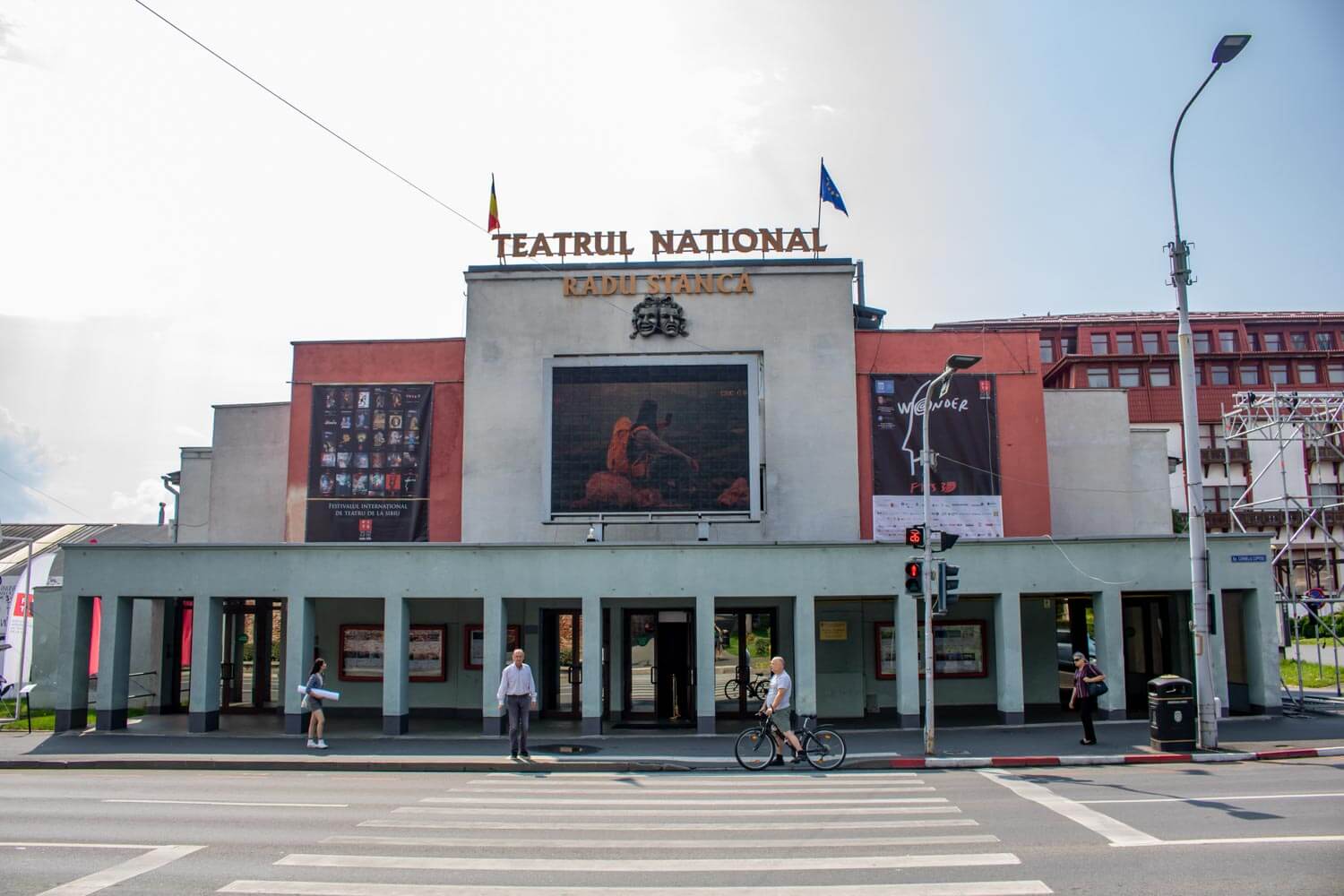
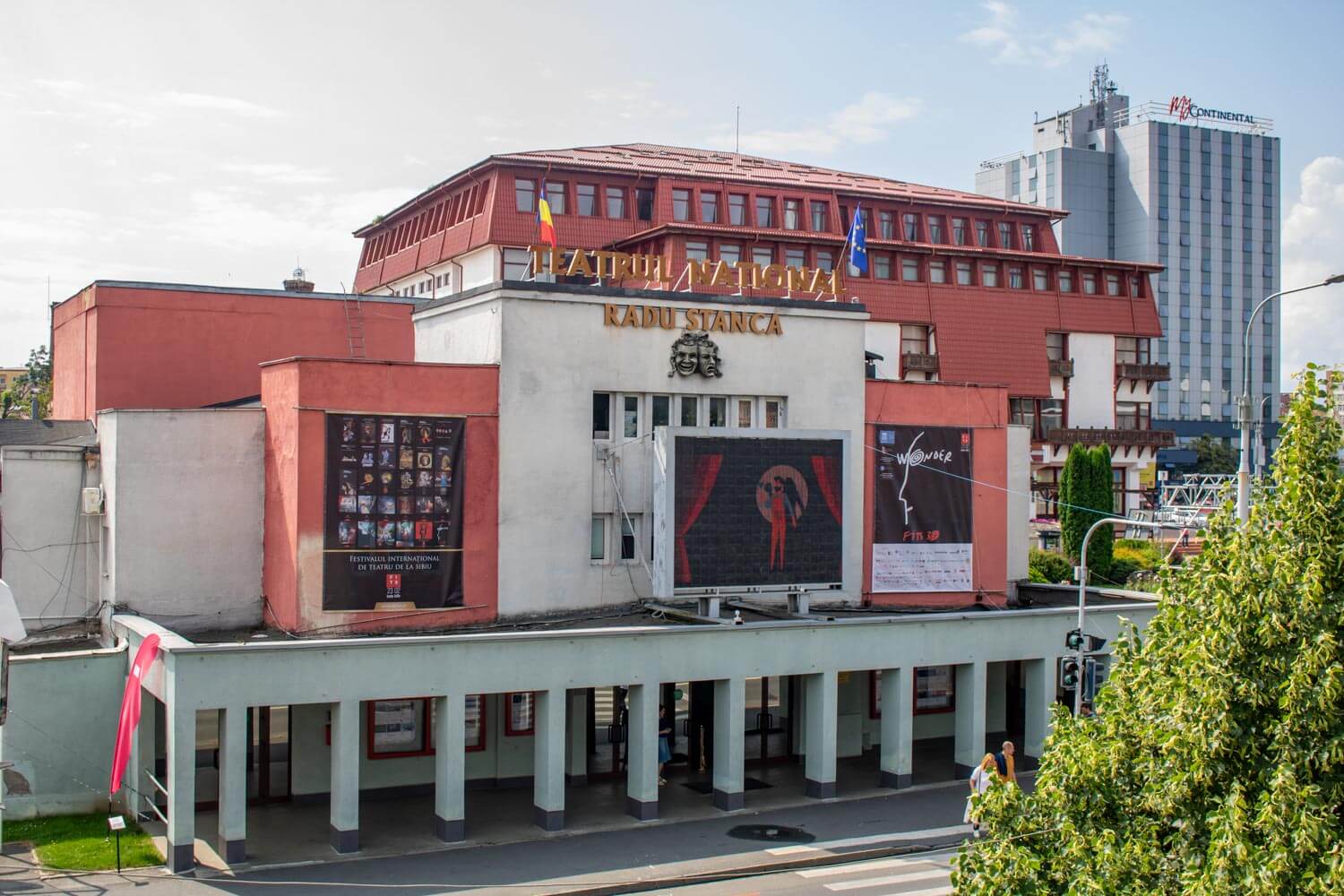
The Radu Stanca National Theater (Teatrul Național Radu Stanca) is the principal repertory theater in Sibiu, with its main hall on Bulevardul Corneliu Coposu.
Its roots reach back to Sibiu’s long theatrical tradition, which began in the 18th century with performances by traveling companies and the opening of the city’s first purpose-built theater in the Thick Tower in 1788. That building remained central to theatrical life in Sibiu for generations, but after it was badly damaged by fire in 1949, the company moved into the former Apollo Cinema on Piața Unirii. The present main hall developed from that conversion and was rebuilt again in the 1950s.
The modern theater company itself took shape after World War II. A permanent season opened in 1948, and Radu Stanca soon became one of the defining figures in its development. The poet, playwright, actor and director worked in Sibiu from the late 1940s until 1961, directing numerous productions and helping shape the ensemble that would later take his name. A German-language section was added in 1956, creating the bilingual structure that remains an important part of the theater today.
The institution grew considerably after 2000 under director Constantin Chiriac, building an international profile through collaborations with major Romanian and foreign directors and through the expansion of the Sibiu International Theatre Festival. In 2004 it received national-theater status, becoming the Radu Stanca National Theater Sibiu. Its repertoire now includes Romanian- and German-language productions ranging from classical drama to contemporary and experimental theater, presented both in Sibiu and on international tours.
The main hall is a relatively intimate space with just over 300 seats, reflecting its origins as a converted cinema rather than a monumental historic theater. The institution also uses several other performance spaces around Sibiu and plays a central role in the annual Sibiu International Theatre Festival, one of the city’s largest cultural events.