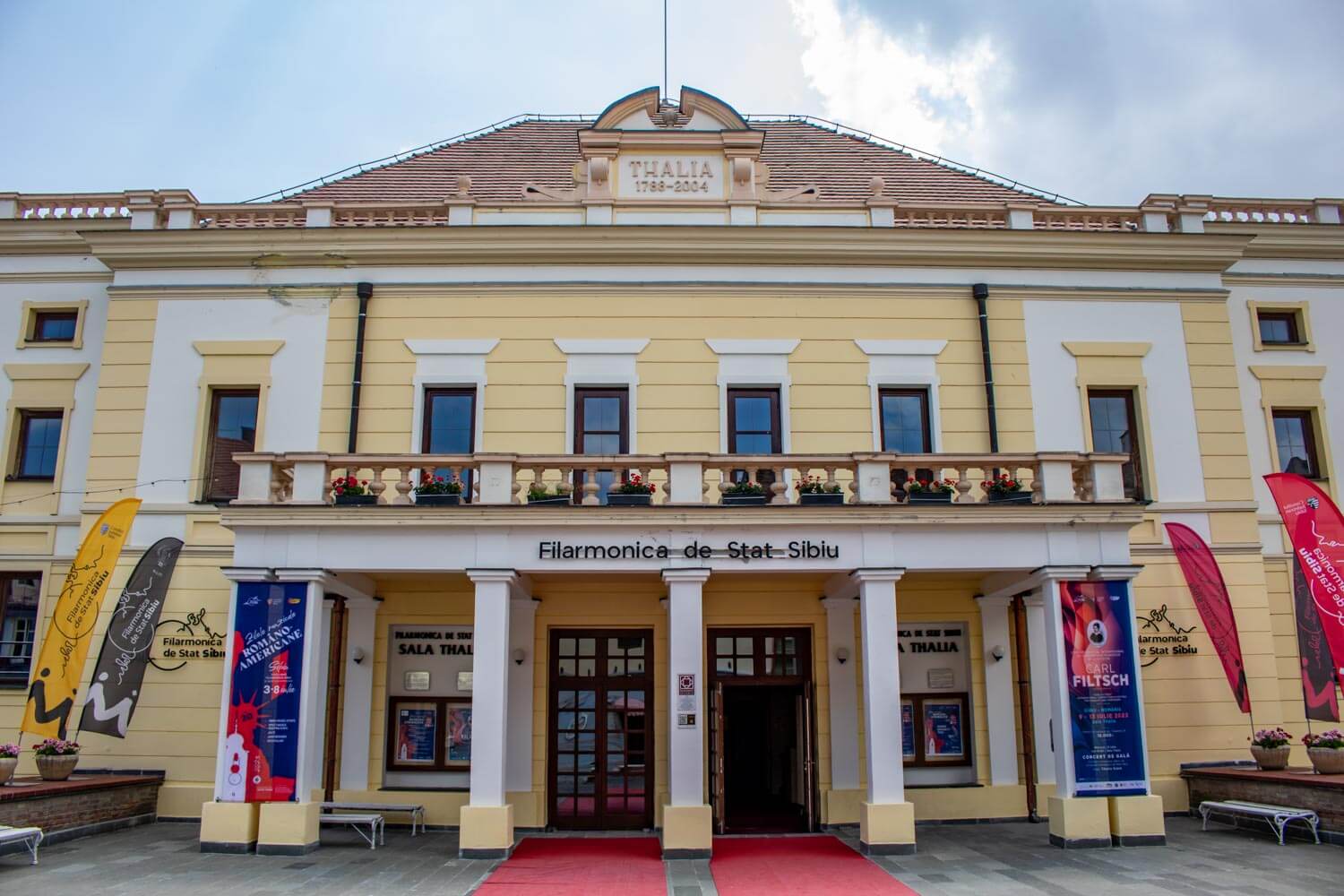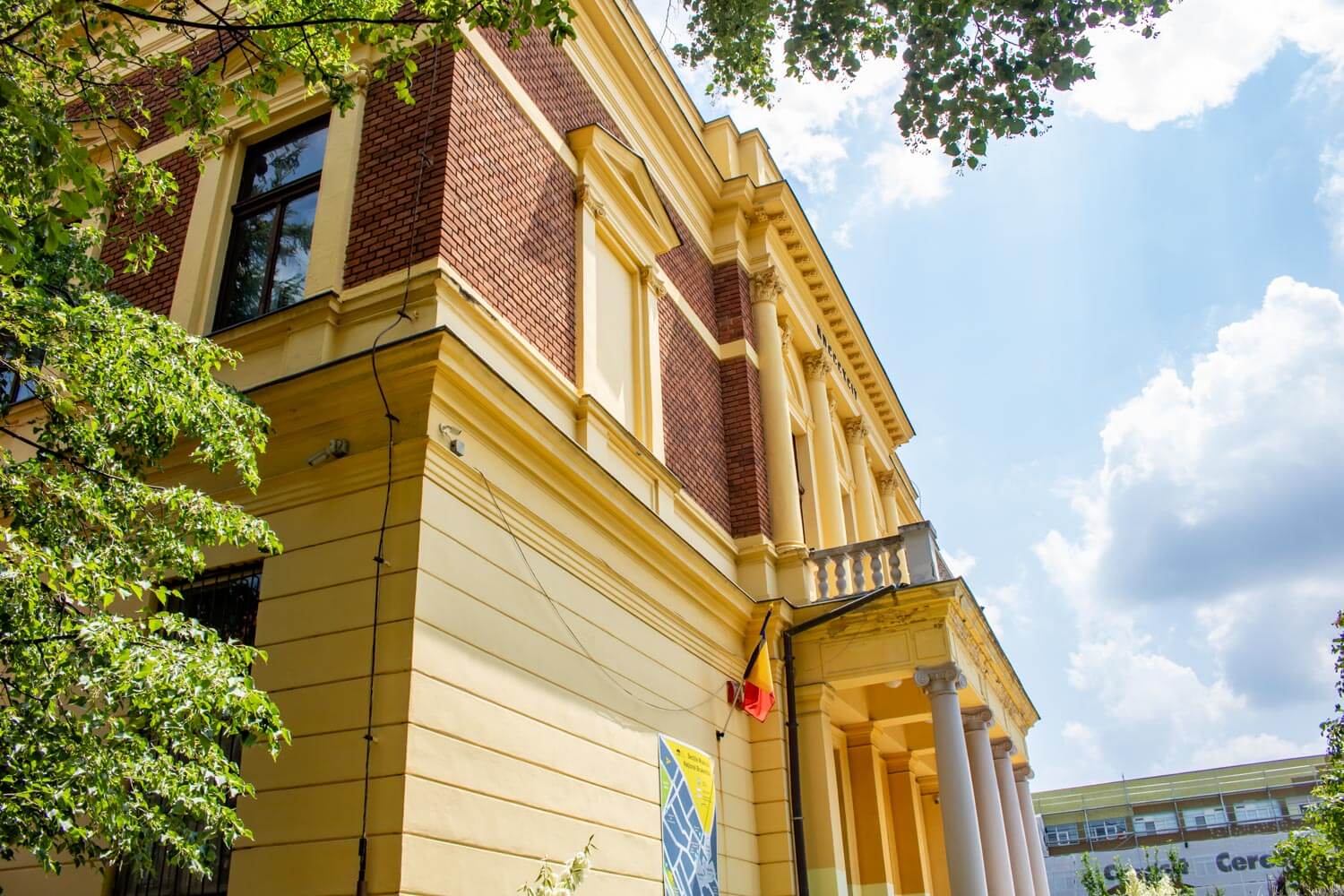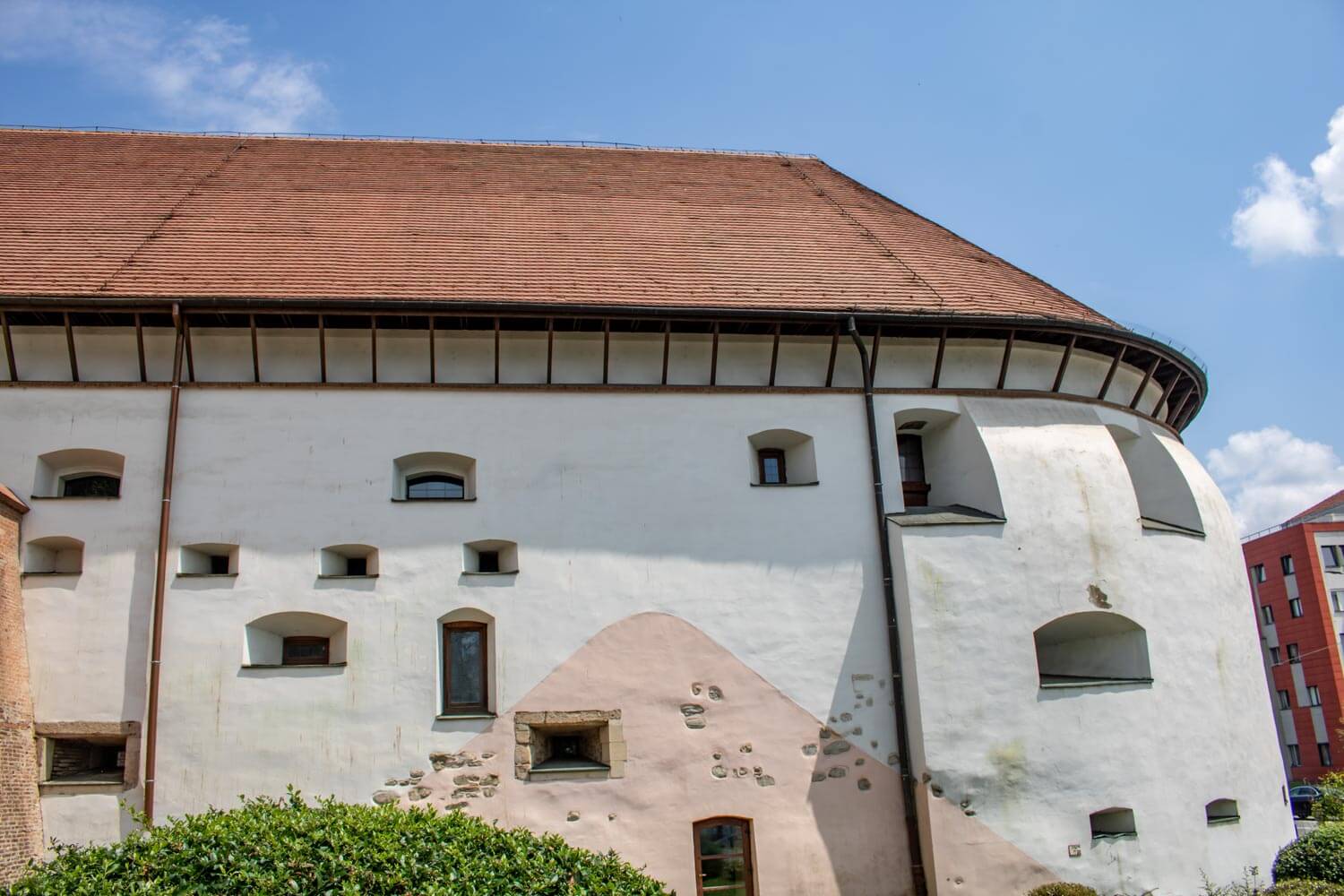
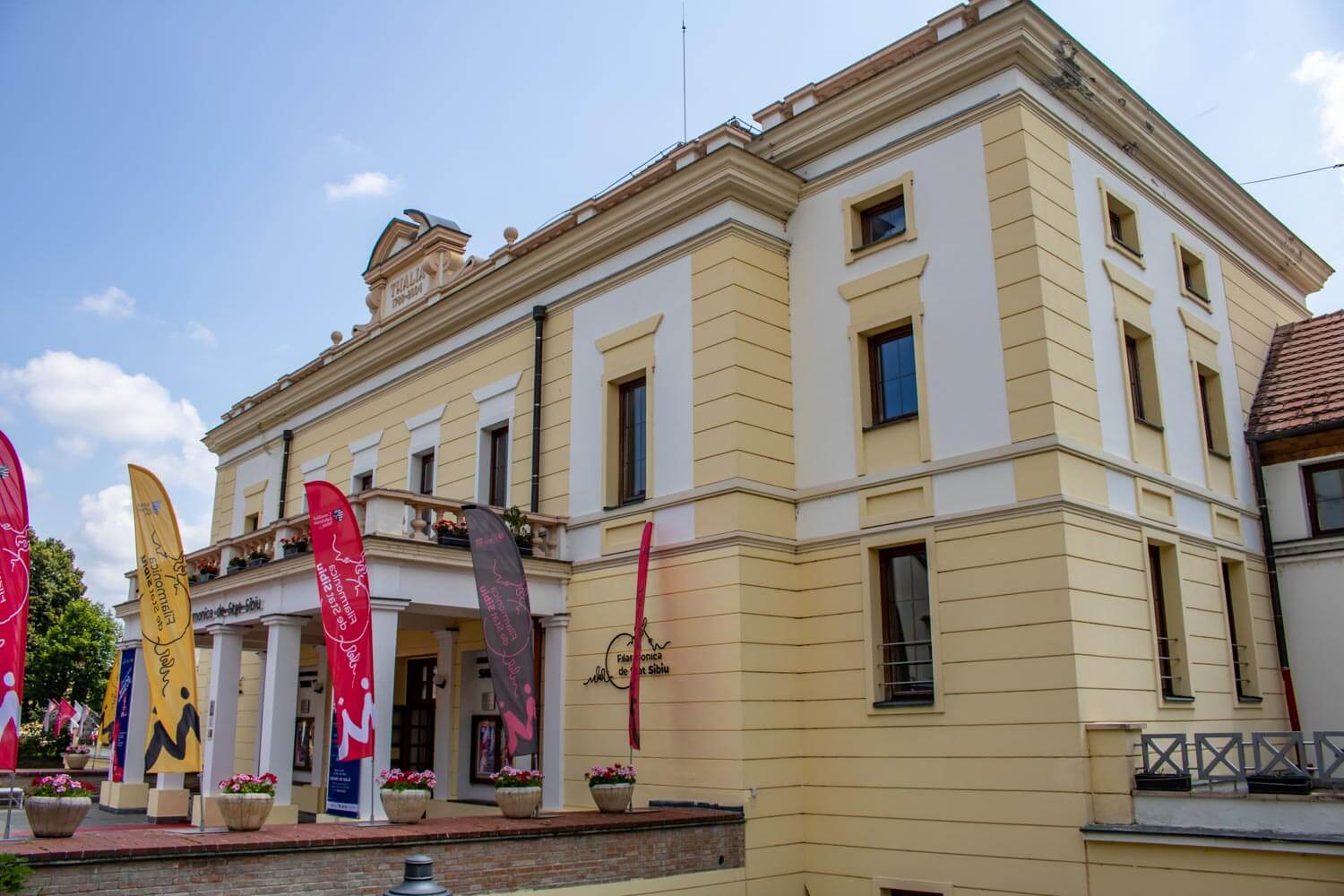
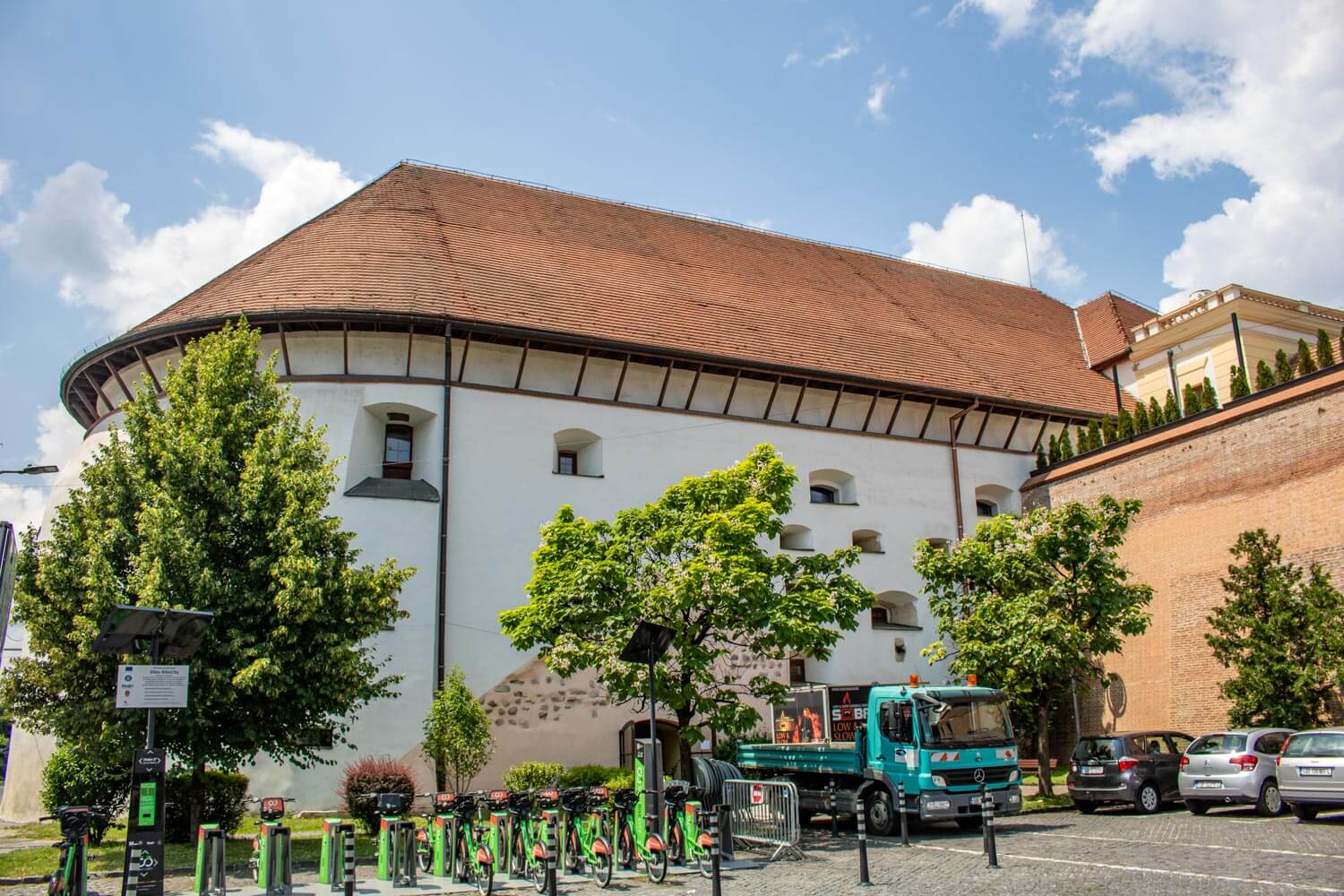
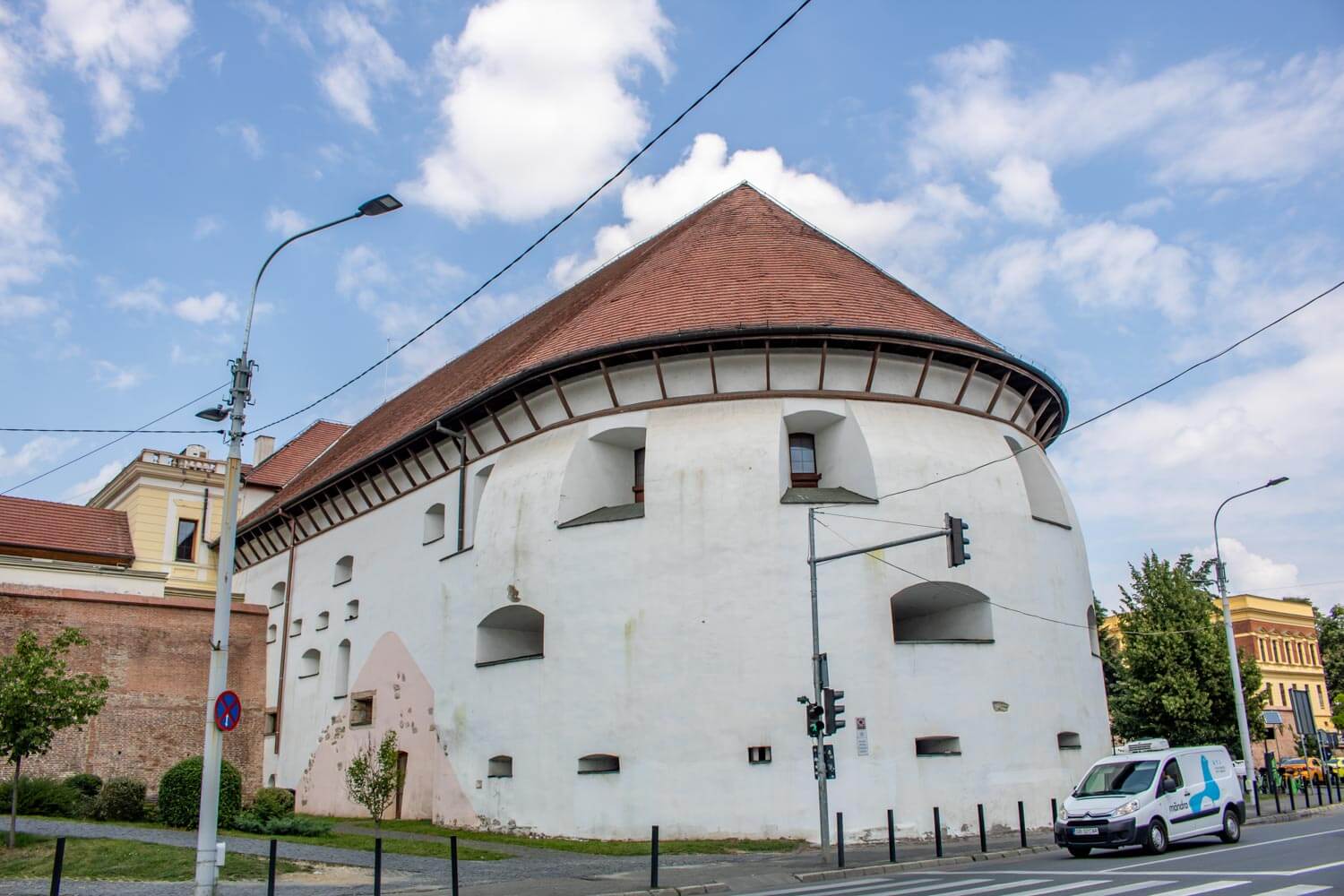
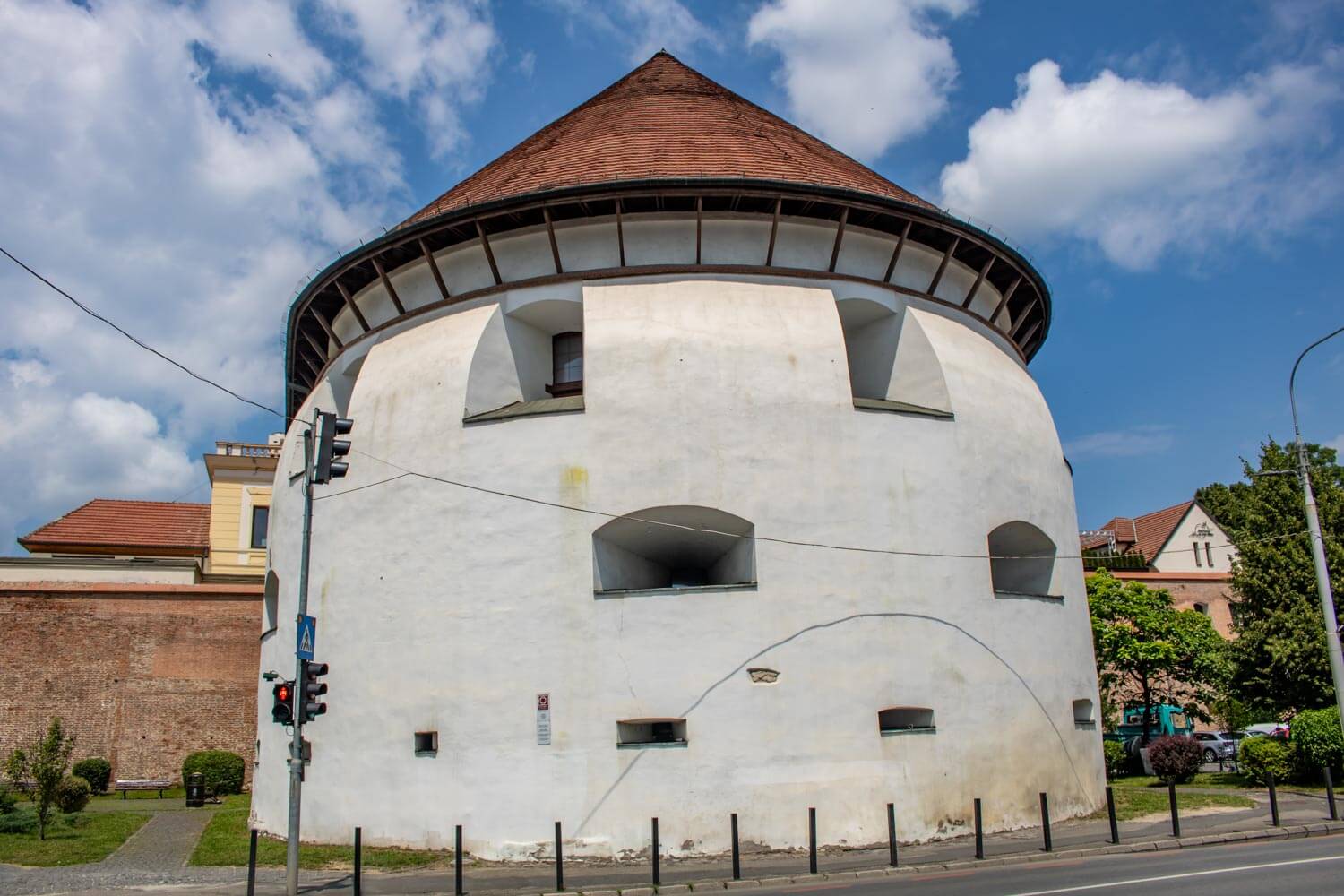
The Thalia Hall (Sala Thalia) is a historic theater and concert hall in Sibiu, built inside the 16th-century Thick Tower and now used as the main venue of the Sibiu State Philharmonic.
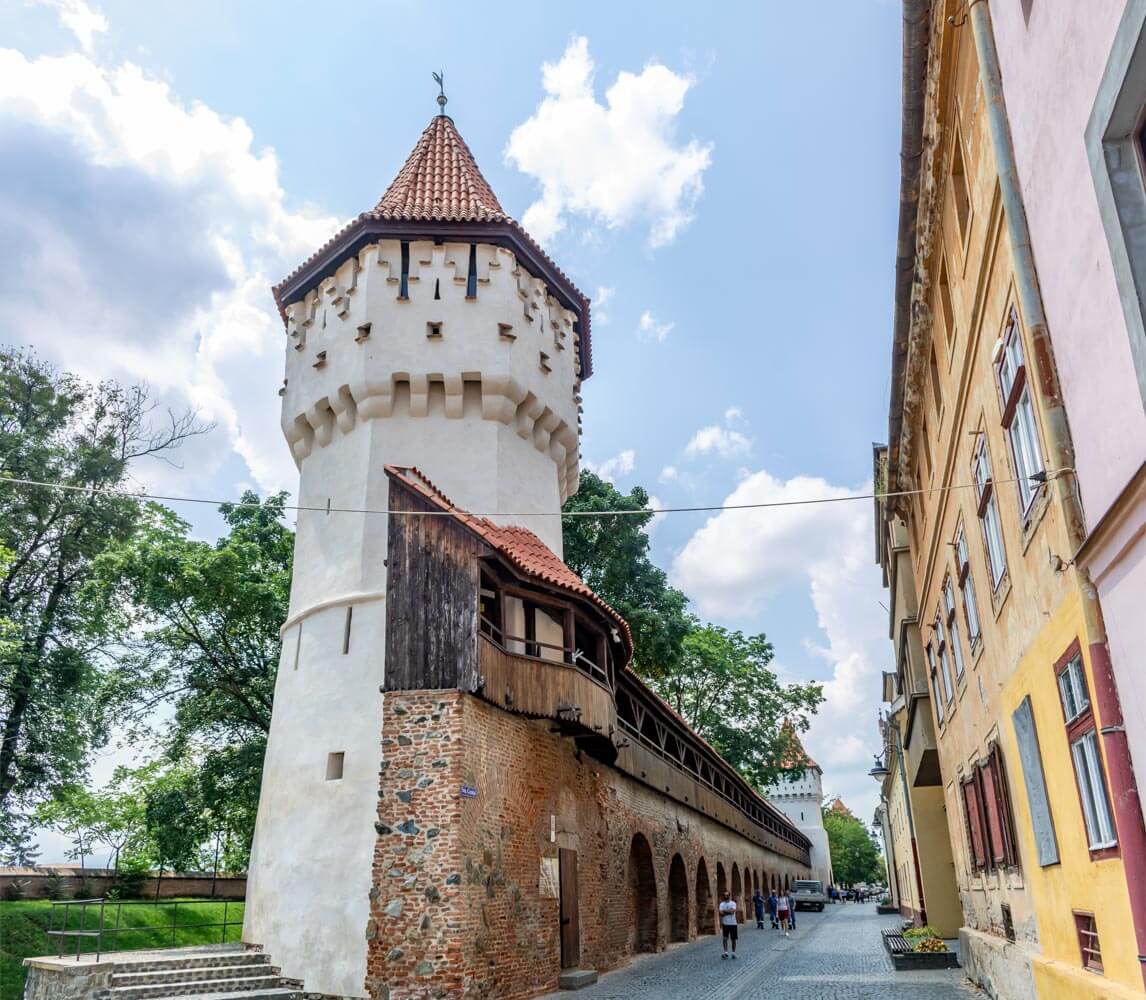
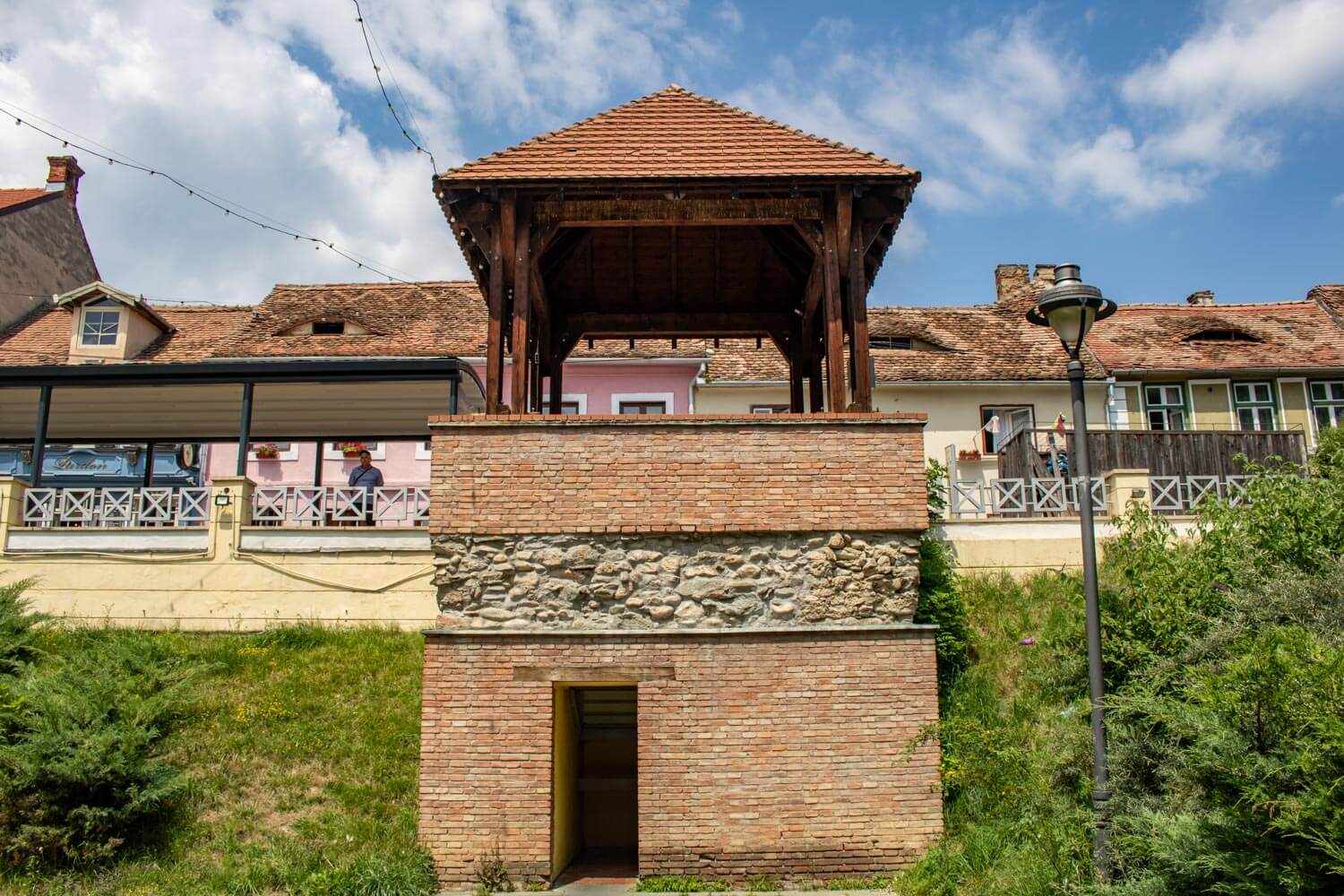
The story begins with the Thick Tower (Turnul Gros), a massive artillery work built around 1540 as part of Sibiu’s southern defenses. Its semicircular body projected about 25 meters beyond the outer wall and contained several defensive levels beneath a platform for cannons. By the late 18th century the tower had lost its military role, creating an unusual opportunity to reuse one of the city’s largest fortifications for a completely different purpose.
In 1787, printer and bookseller Martin Hochmeister received permission to build a permanent theater inside the tower, financing the project himself. The new theater opened on June 1, 1788 and became the first purpose-built theater building on the present territory of Romania. Designed with two balconies and a separate box for the governor of Transylvania, it quickly developed into one of Sibiu’s principal cultural venues, hosting plays, opera, balls and concerts. Johannes Brahms and Joseph Joachim performed here in 1879, while the first Romanian-language opera performance in the hall followed in 1886. Mihai Eminescu had also appeared here earlier as a prompter with Mihai Pascaly’s theatrical company.
The building survived two major fires. Damage from the first, in 1826, was repaired relatively quickly, but the fire of 1949 devastated the theater and forced performances to move to the former Apollo cinema, now home to the Radu Stanca National Theater. Reconstruction of the old Thalia building only began in 1990 and was completed in 2004, restoring the historic theater within the Thick Tower while adapting it for modern performances.
Thalia Hall now serves as the main venue of the Sibiu State Philharmonic, while also hosting theater, opera, ballet, film screenings, conferences and other cultural events. The auditorium has around 480 seats, including unusual seating beside and behind the stage, while acoustic improvements added in 2013 reshaped the performance area with wooden panels designed to improve sound for both musicians and audiences.
The original Thick Tower can also be visited independently of performances, allowing visitors to explore the surviving fortification as well as attend events in the historic hall.