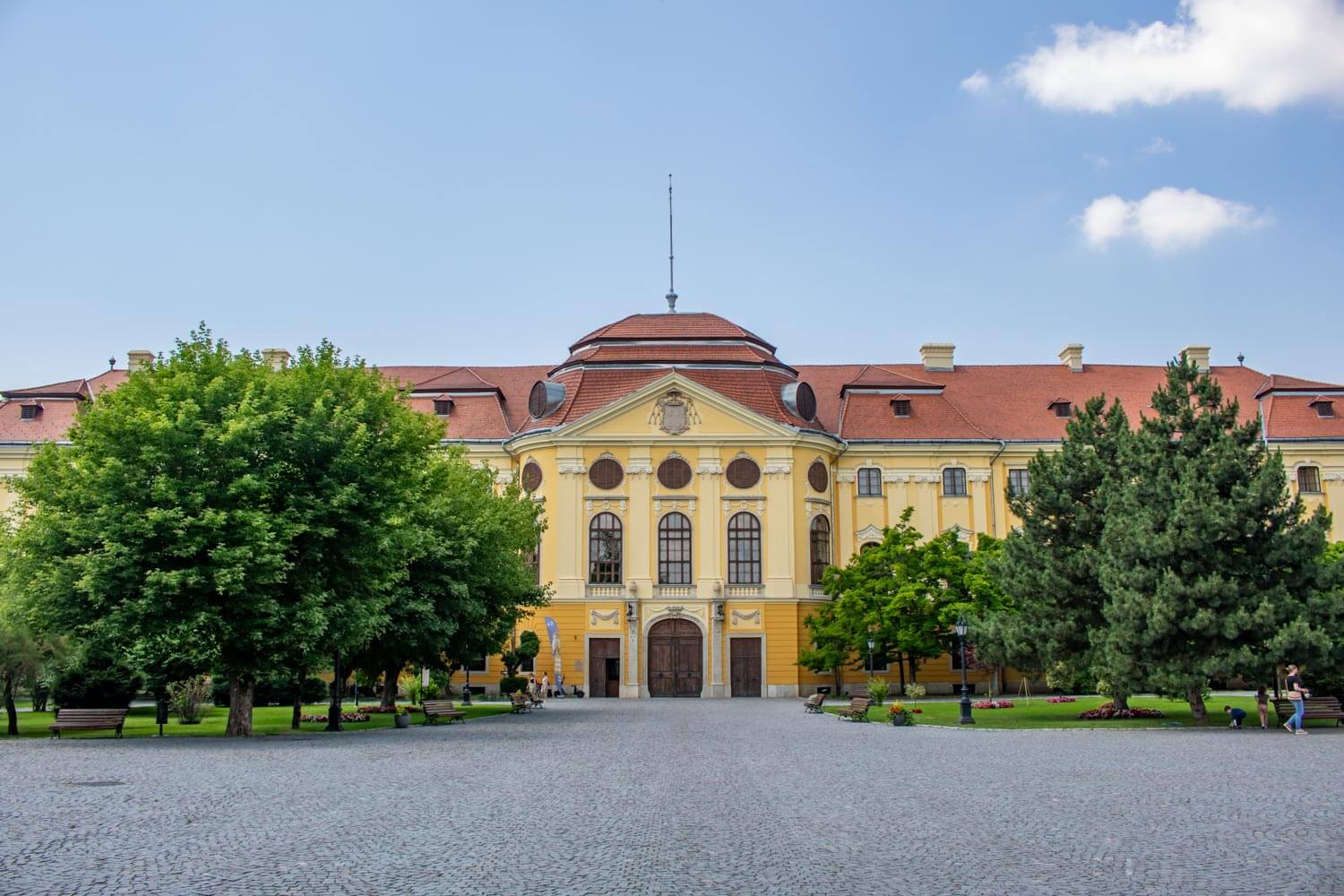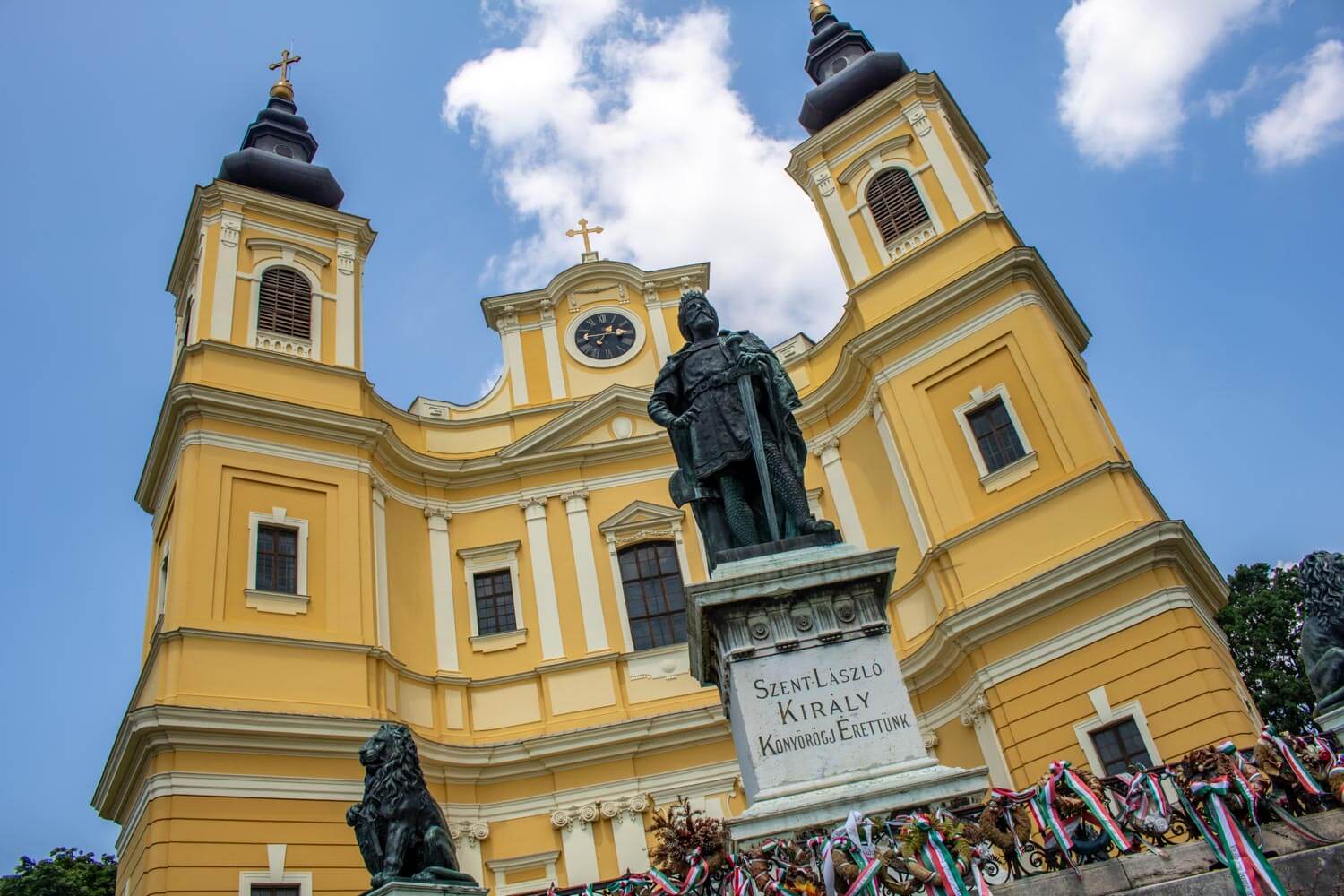
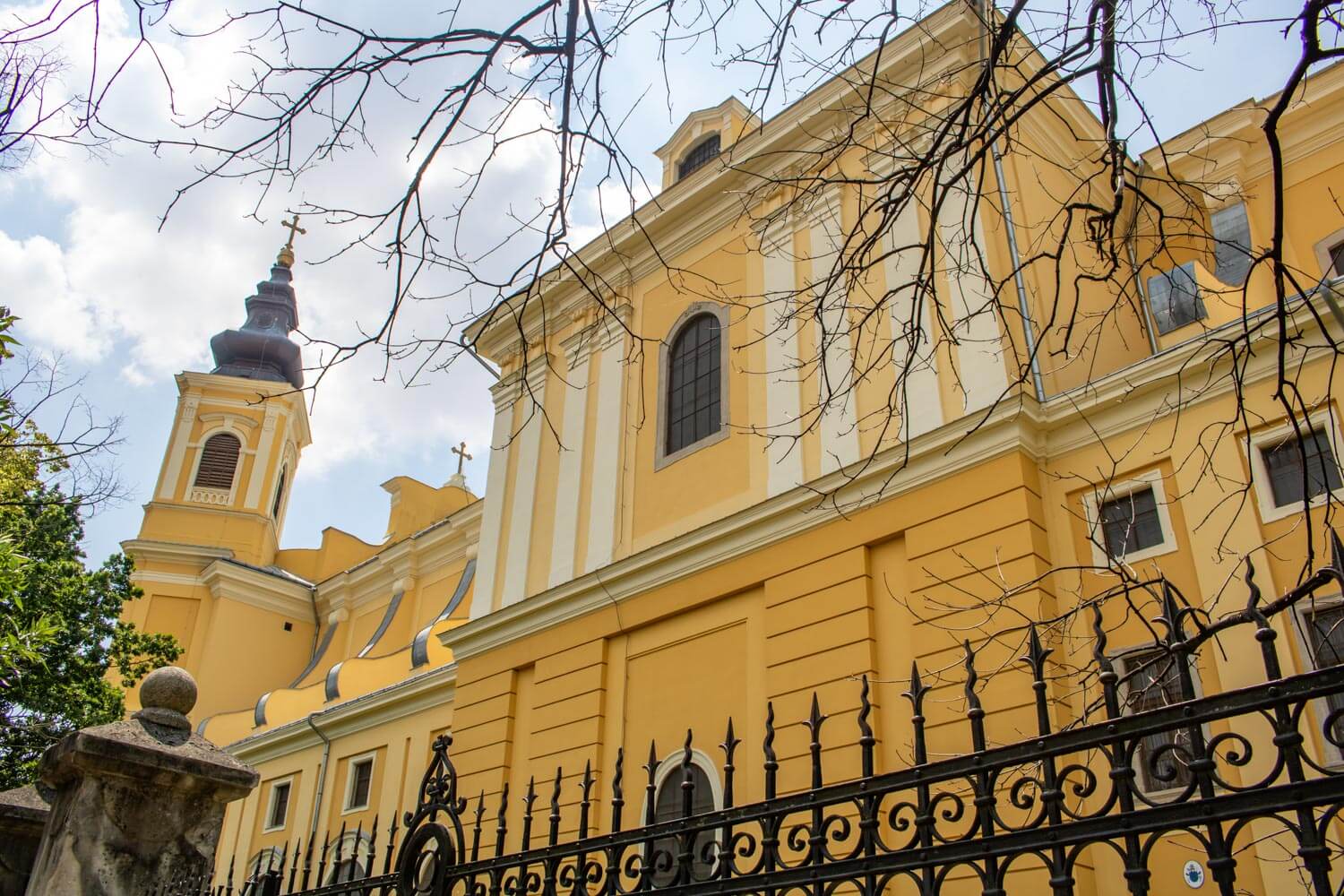

The Roman Catholic Cathedral of Oradea (Catedrala Romano-Catolică din Oradea) is a minor basilica dedicated to the Assumption of the Virgin Mary, located in Oradea, Bihor County. Together with the Roman Catholic Episcopal Palace and the Row of Canons, it forms the largest Baroque complex in Romania.
The church is thought to have been founded in the 11th century by Saint Ladislaus I, King of Hungary, who was probably also buried in the church. Over time the church has been destroyed several times by invasions of the Tatars and Ottomans and by an earthquake.
The current church was designed by the Austrian architect Franz Anton Hillebrandt, who also designed the Roman Catholic Episcopal Palace. On 1 May 1752, the foundation stone was laid by Bishop Pál Forgách, but the construction was halted by the death of the Italian engineer Giovanni Battista Ricca in 1757. The job was taken over by Domenico Lucchini and construction finally resumed in 1762 and was finished in 1779. On 25 June 1780, the church was consecrated and took over the function of the Episcopal Cathedral from the Saint Ladislaus Church. In 1991, Pope John Paul II granted the cathedral the rank of minor basilica.
The Roman Catholic Cathedral of Oradea has a Baroque style with two side aisles and two bell towers. The central nave has a length of 70 meters and a 30-40 meter width. The fresco painting in the dome was completed by Johann Schopf in 1778 and represents the ‘Heavenly Triumph of Christ’. The other paintings were done by Francisc Storno between 1878 and 1880.
The main altar was designed by Stefan Toth and sculpted by the Italian artist Triscornia in 1897. It is made of Carrara marble and has a neo-Renaissance style. The artist Francisc Eberhardt also sculpted two statues representing Saint Stephen and Saint Emeric.
Every year, the church celebrates Saint Ladislaus on the 5th Sunday after Easter and Saint Mary on August 15th.