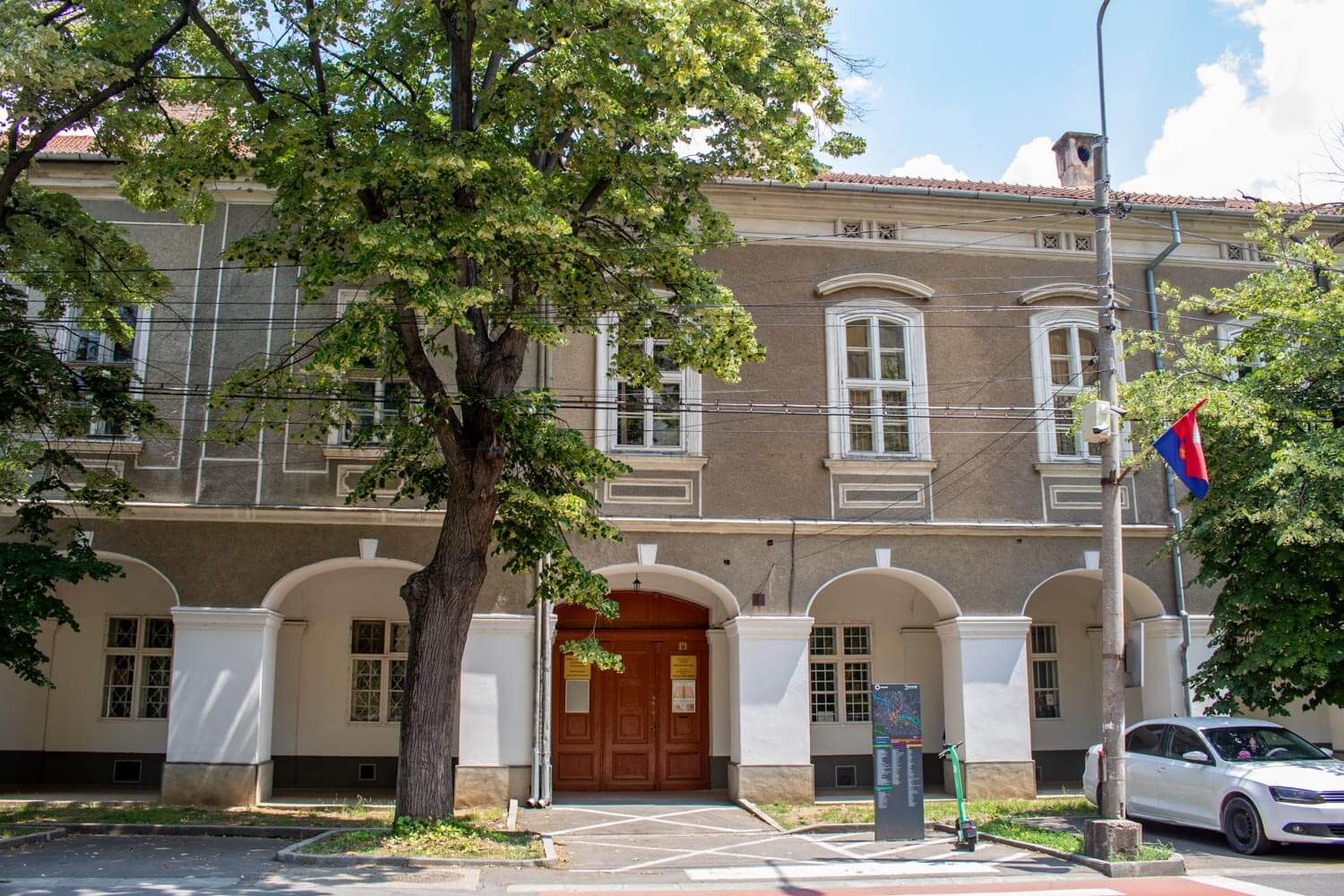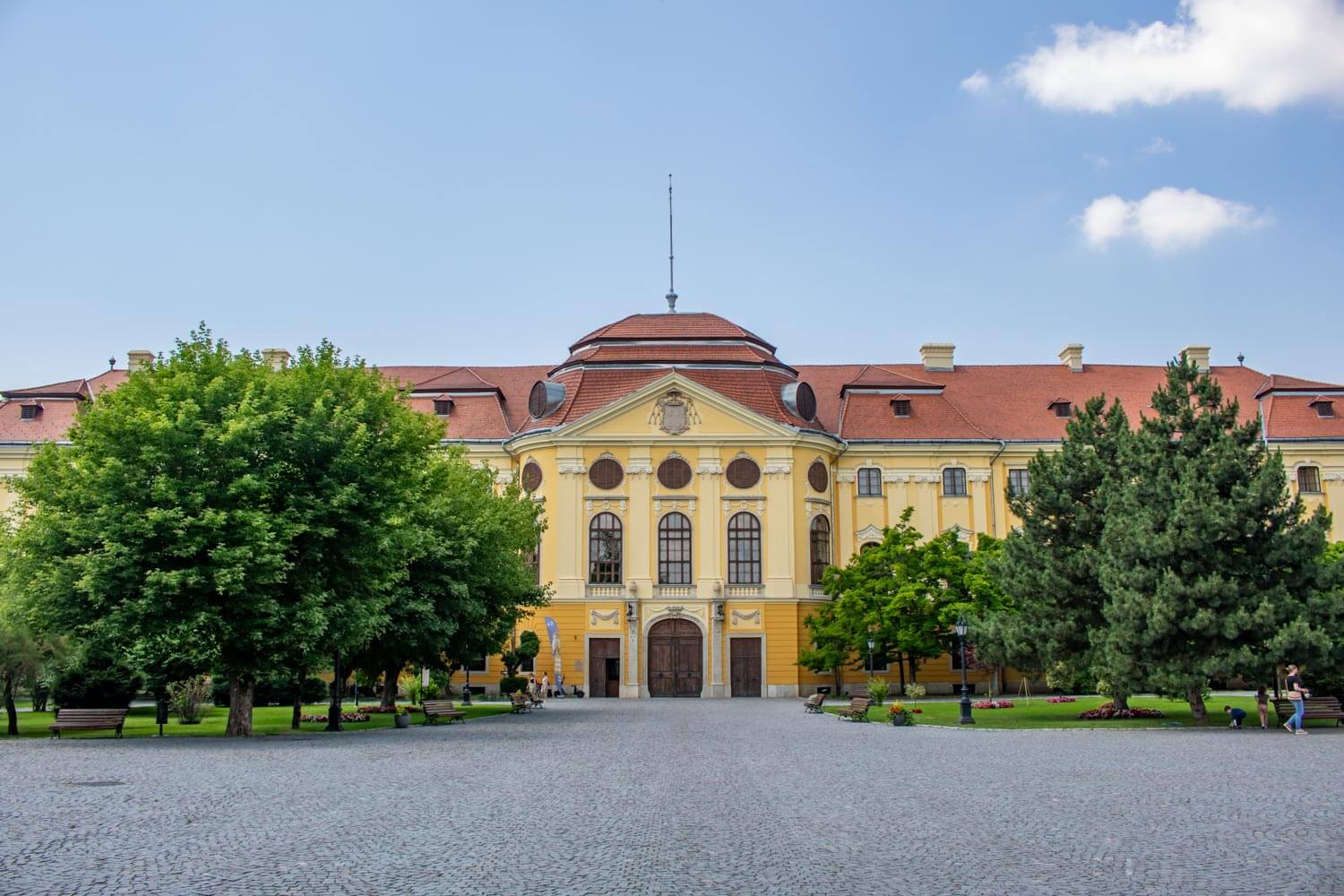
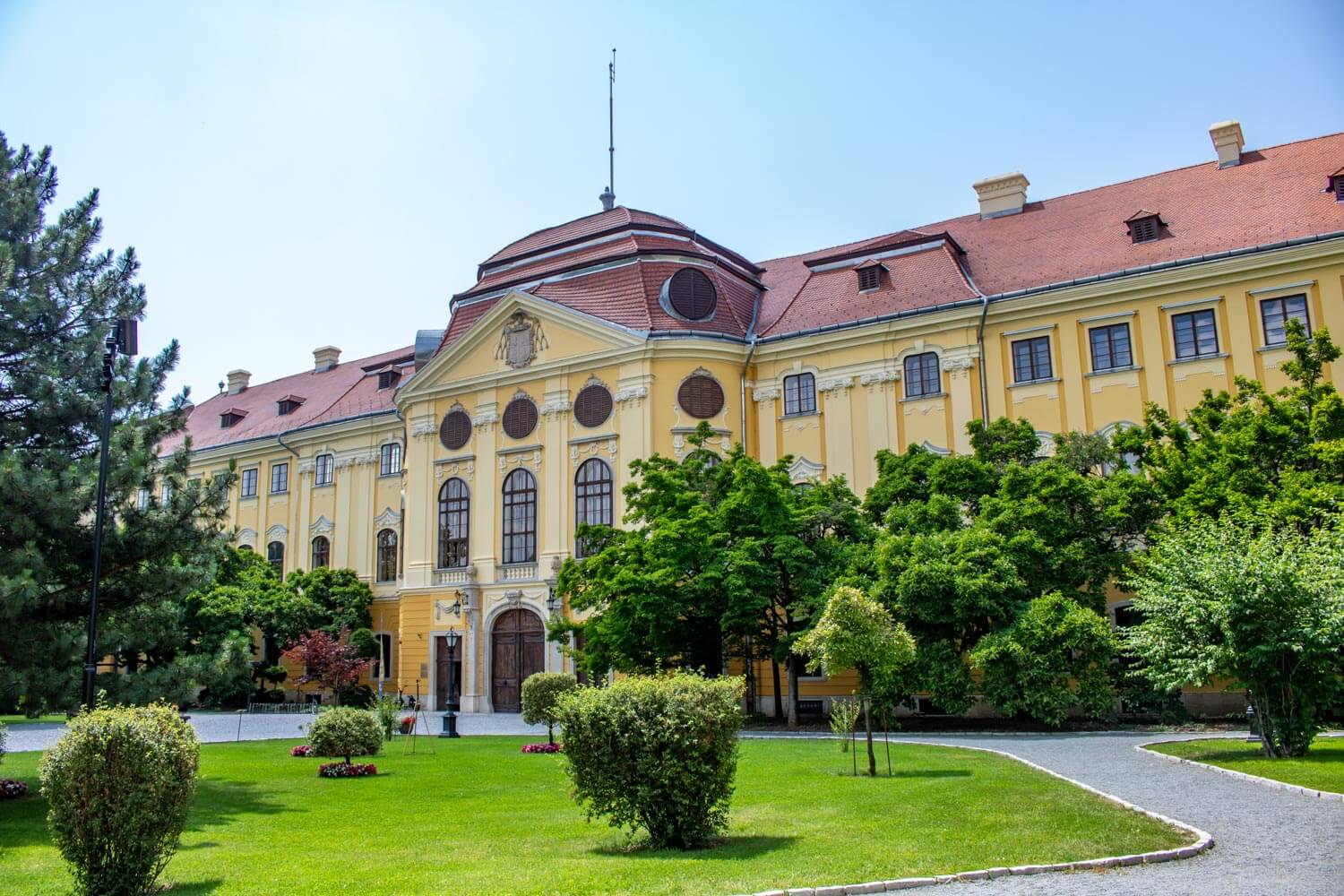
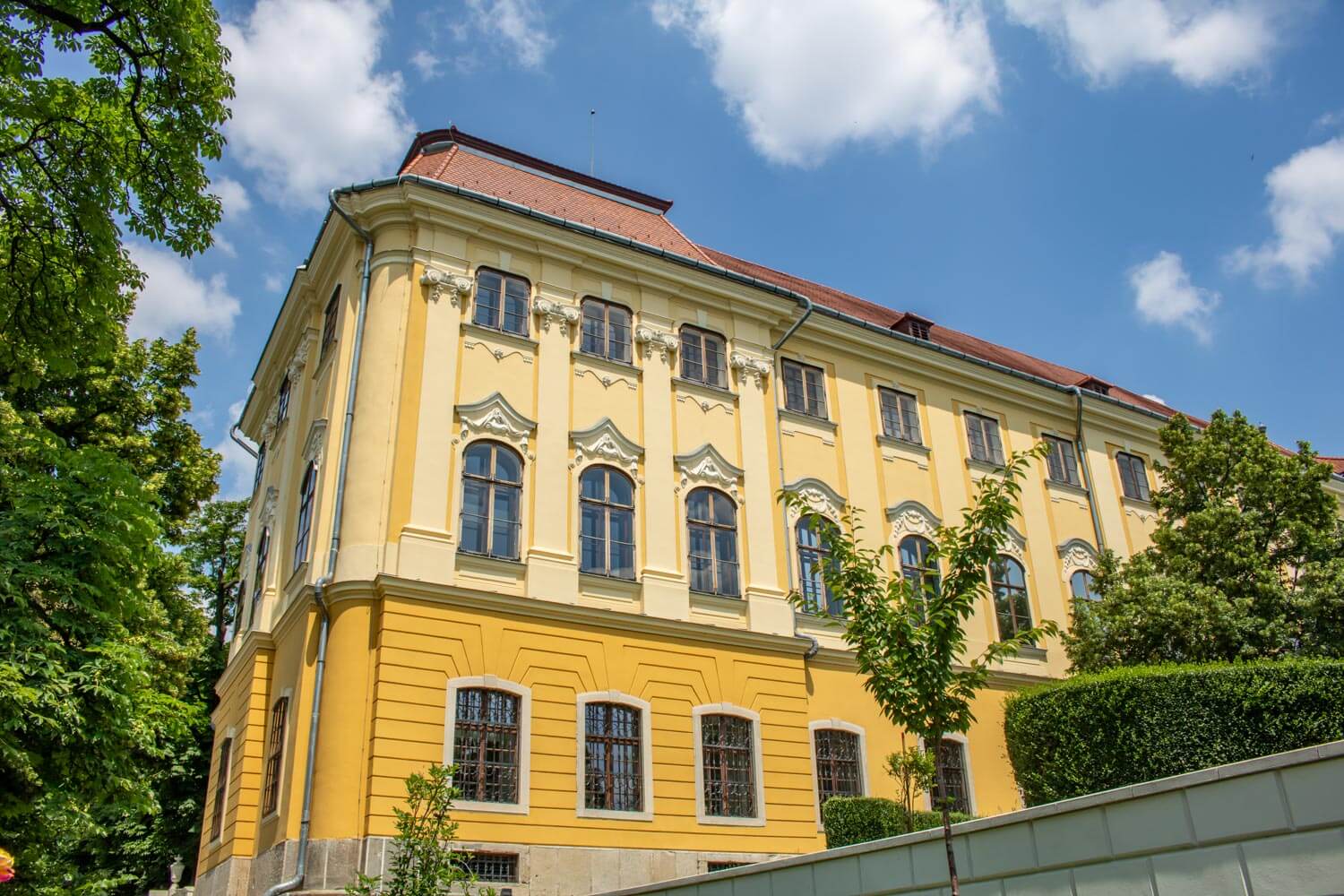
The Roman Catholic Episcopal Palace of Oradea (Palatul Episcopiei Romano-Catolice din Oradea), also known as the Baroque Palace of Oradea (Palatul Baroc din Oradea), is a historical monument in Oradea, Bihor County. Together with the adjacent Roman Catholic Cathedral and the Row of Canons, it forms the largest Baroque complex in Romania.
The palace was commissioned by Baron Bishop Adam Patačić in 1762 as the bishopric seat for the Roman Catholic Diocese of Oradea. The massive building was designed in an Austrian Baroque style by the Viennese architect Franz Anton Hillebrandt, who also designed the cathedral, and the construction was realized under the supervision of the engineer A.J. Neumann.
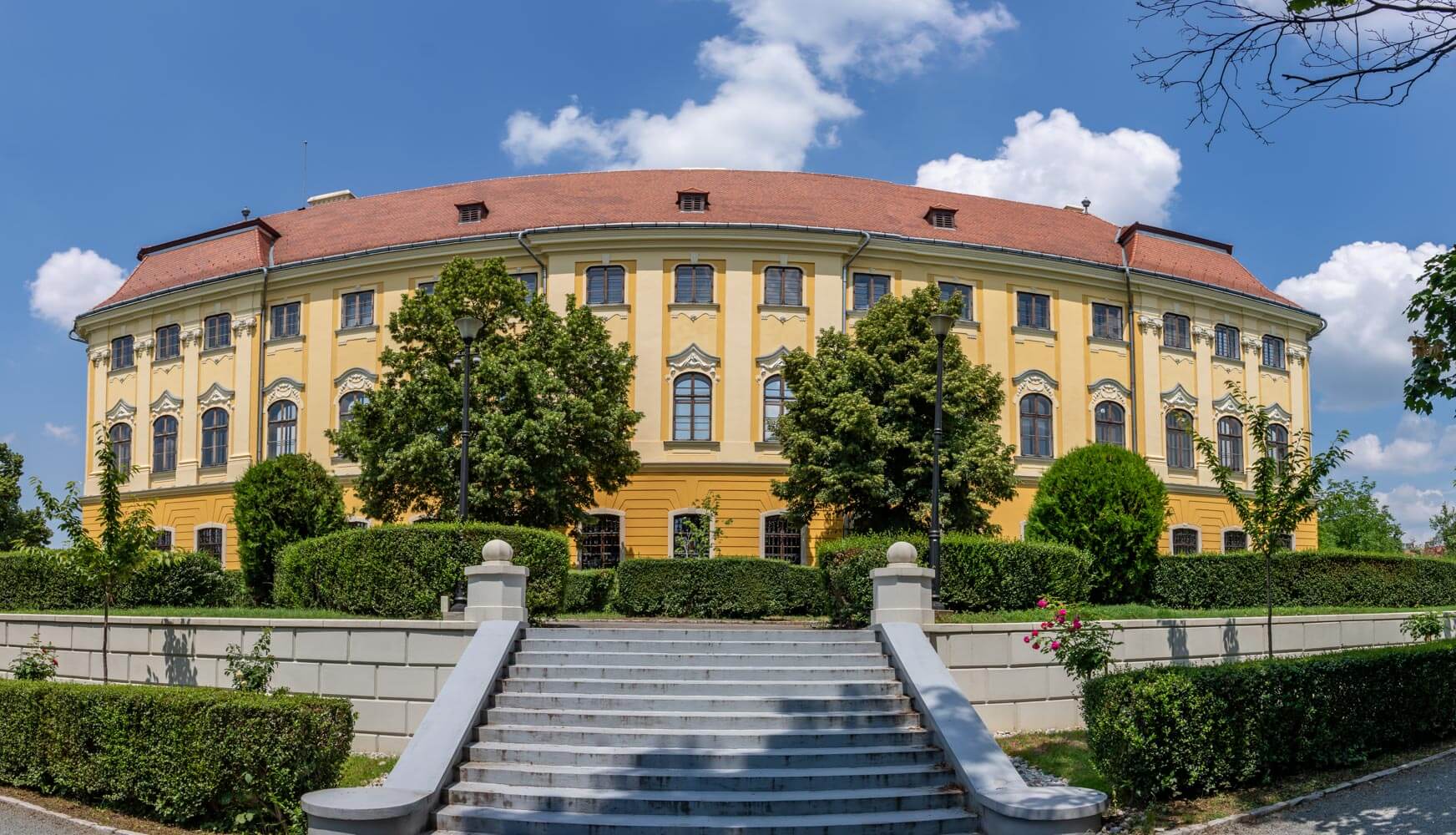
The Roman Catholic Episcopal Palace of Oradea was built on a U-shaped plan and had 120 large rooms and 365 windows resembling the number of days in a year. The palace resembled a lot of similarities with Schloss Belvedere in Vienna, which might have been one of the reasons why Empress Maria Theresa had its founder Adam Patačić transferred to another Diocese.
In 1773, the palace burned down but was reconstructed immediately afterward. In 1855, a new wing and entrance with a grandiose staircase were built in line with the initial architectural plan.
After World War II, the post-war communist regime nationalized the building, and in 1971 it was used to house the Țării Crișurilor Museum. In 1996, the Roman Catholic Church began a long legal process to reclaim the building and in 2004 a judge ruled that it should be returned to the church. After the museum had moved out years later, the Roman Catholic Episcopal Palace was renovated in 2017.
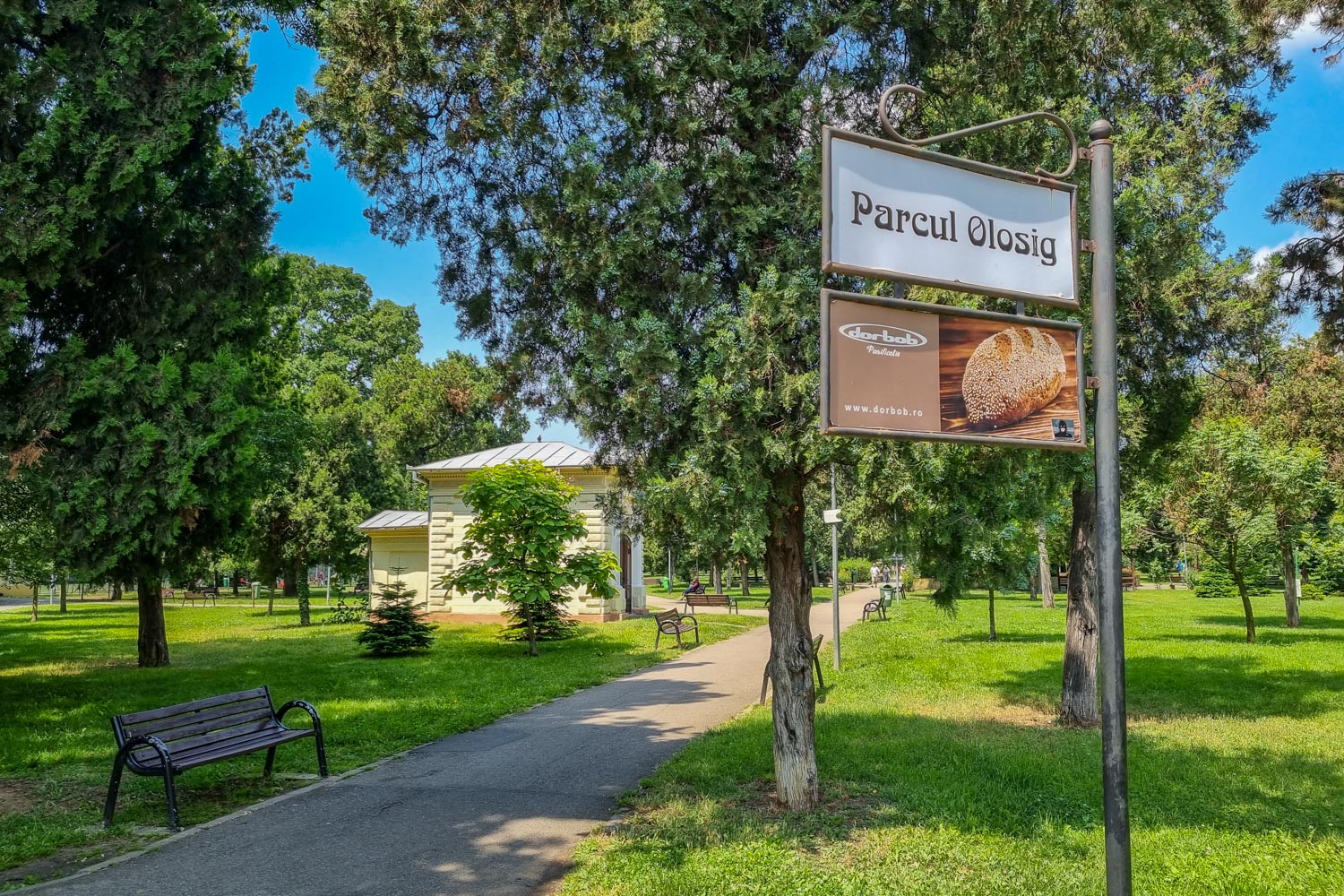
Nowadays, the Roman Catholic Episcopal Palace of Oradea houses several religious art exhibitions that can be visited. The building is surrounded by the Episcopal Park, which is a beautiful English-style landscaped park with several different types of plants and flowers. The park is a popular green oasis among locals, especially during spring and summer.