
The Vovidenia Church (Biserica Vovidenia) is a historic Romanian Orthodox church in Galați, founded in 1790 by ban Ion Cârjă and dedicated to the Entry of the Mother of God into the Temple. One of the oldest surviving buildings in the city, it served as Galați’s cathedral church until 1863 and later became an important setting in the local history of Alexandru Ioan Cuza and the movement for the union of Moldavia and Wallachia.
The present church was built and consecrated in 1790, replacing an earlier place of worship made from wattle and daub. During the fighting between Ottoman forces and the Greek Eterists in 1821, it was burned along with several other Orthodox churches in Galați, leaving little beyond its walls. Repairs allowed it to be reconsecrated in 1823, followed by further restoration during the 19th century.
The church also played a role in the events preceding the 1859 union of Moldavia and Wallachia. After Alexandru Ioan Cuza and Costache Negri were elected as Galați representatives to the Moldavian Ad hoc Divan in September 1857, they came to the Vovidenia Church and swore to remain faithful to the demands of those who had elected them. Cuza returned as ruler with Elena Cuza for the Easter service in 1863, and in May 1865 his mother, Sultana Cuza, was buried in the churchyard. Her remains were transferred to the Cuza family estate at Ruginoasa in 1873.
Vovidenia ceased serving as the city’s cathedral in 1863, shortly before the Diocese of the Lower Danube was established in 1864 with its seat at Ismail. When the diocesan institutions later moved to Galați in 1878, the Saint Nicholas Church became the new episcopal cathedral instead.
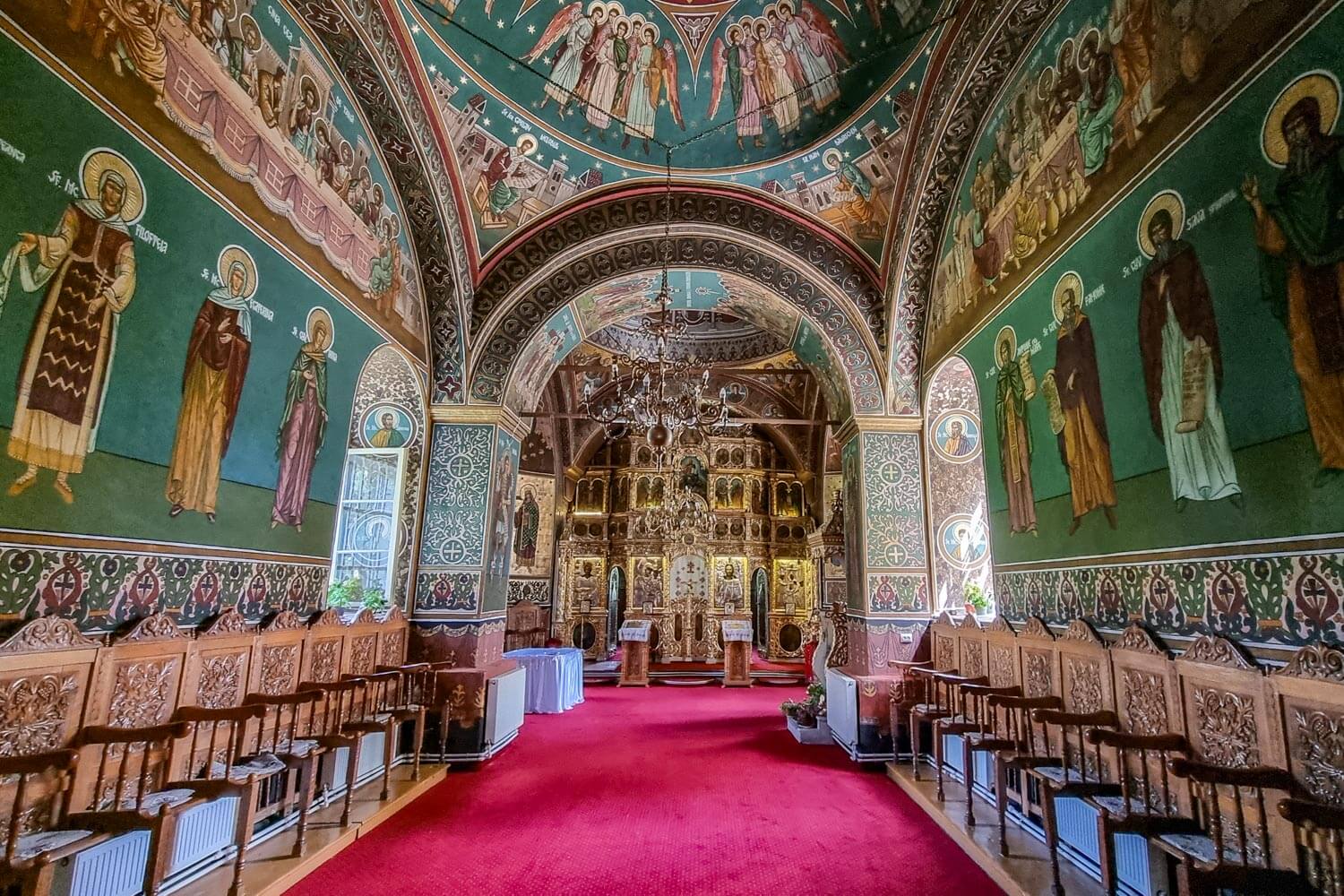
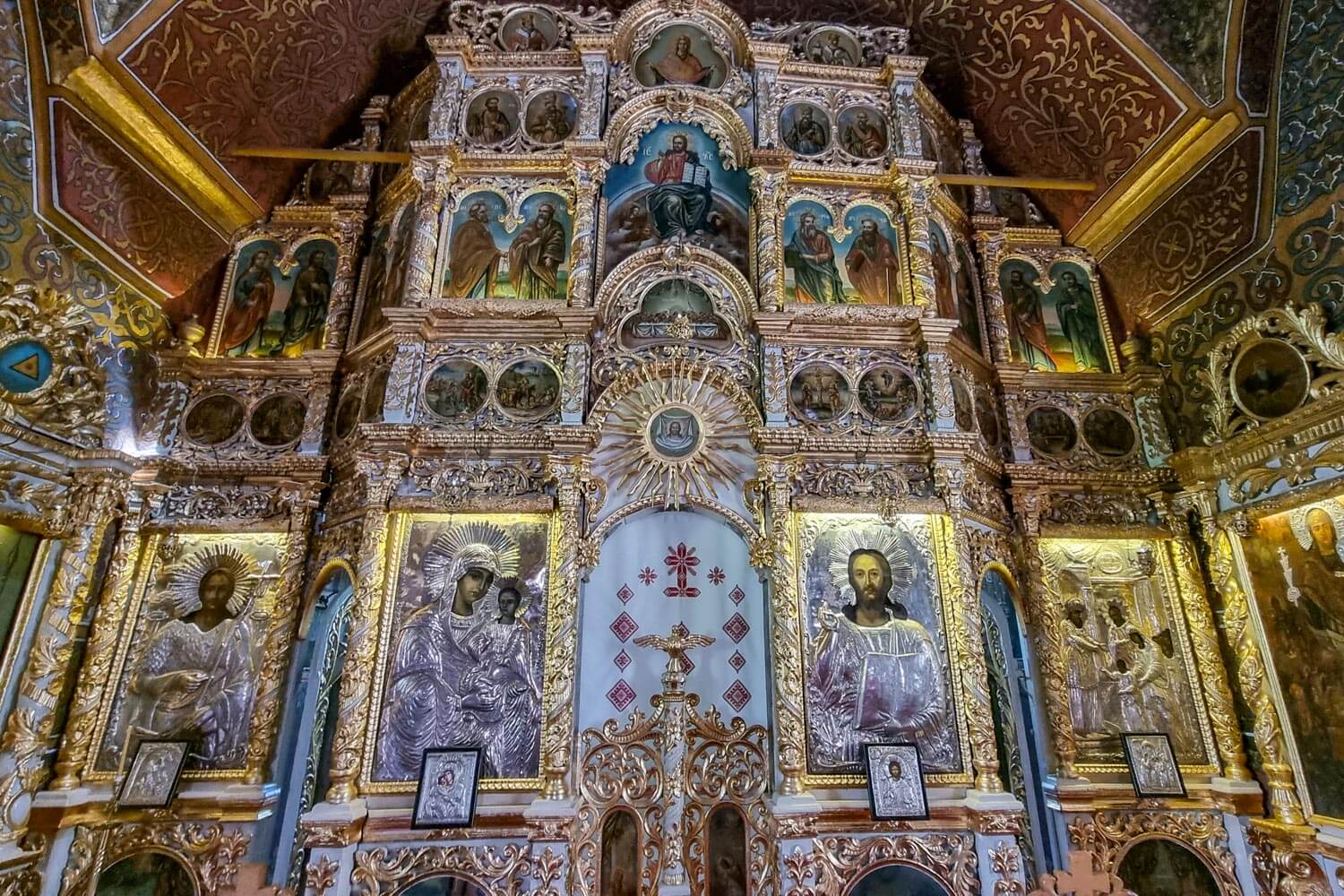
The church has a triconch plan characteristic of Moldavian religious architecture, with semicircular apses and a dome rising above the nave. A decorative brick belt runs around the exterior beneath rows of small recessed arches at the cornice, while the bell tower above the entrance was added in 1901. Inside, the pronaos is covered by a barrel vault and the nave by the central dome, while a carved cherrywood iconostasis dating from the 19th-century restoration separates the nave from the altar.
Damage from the 1940 earthquake led to structural reinforcement in 1951-1952, and the main dome was reconstructed in 1986. Later restoration preserved the church as an active parish while retaining the form and architectural details of one of the few surviving buildings from 18th-century Galați.


