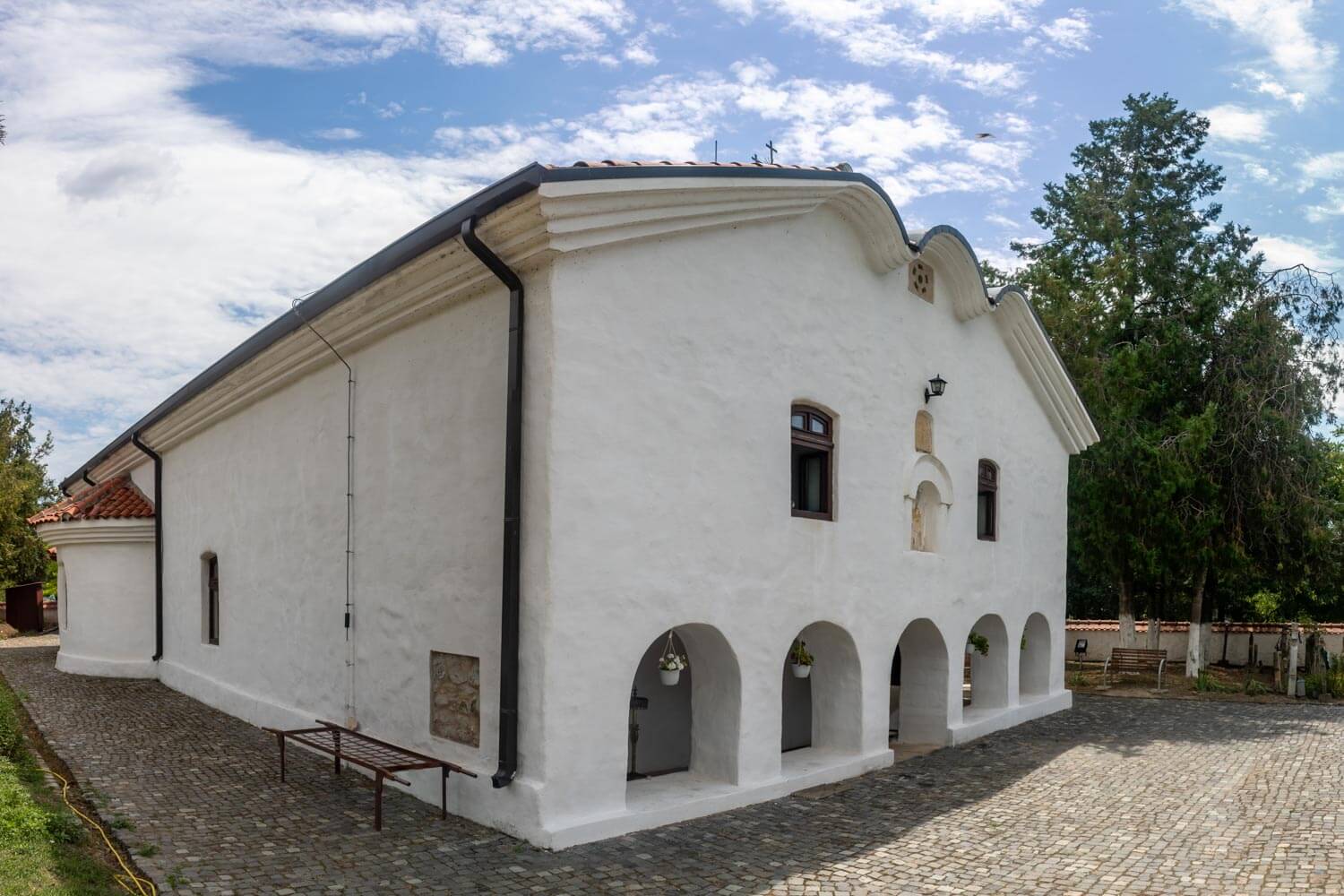
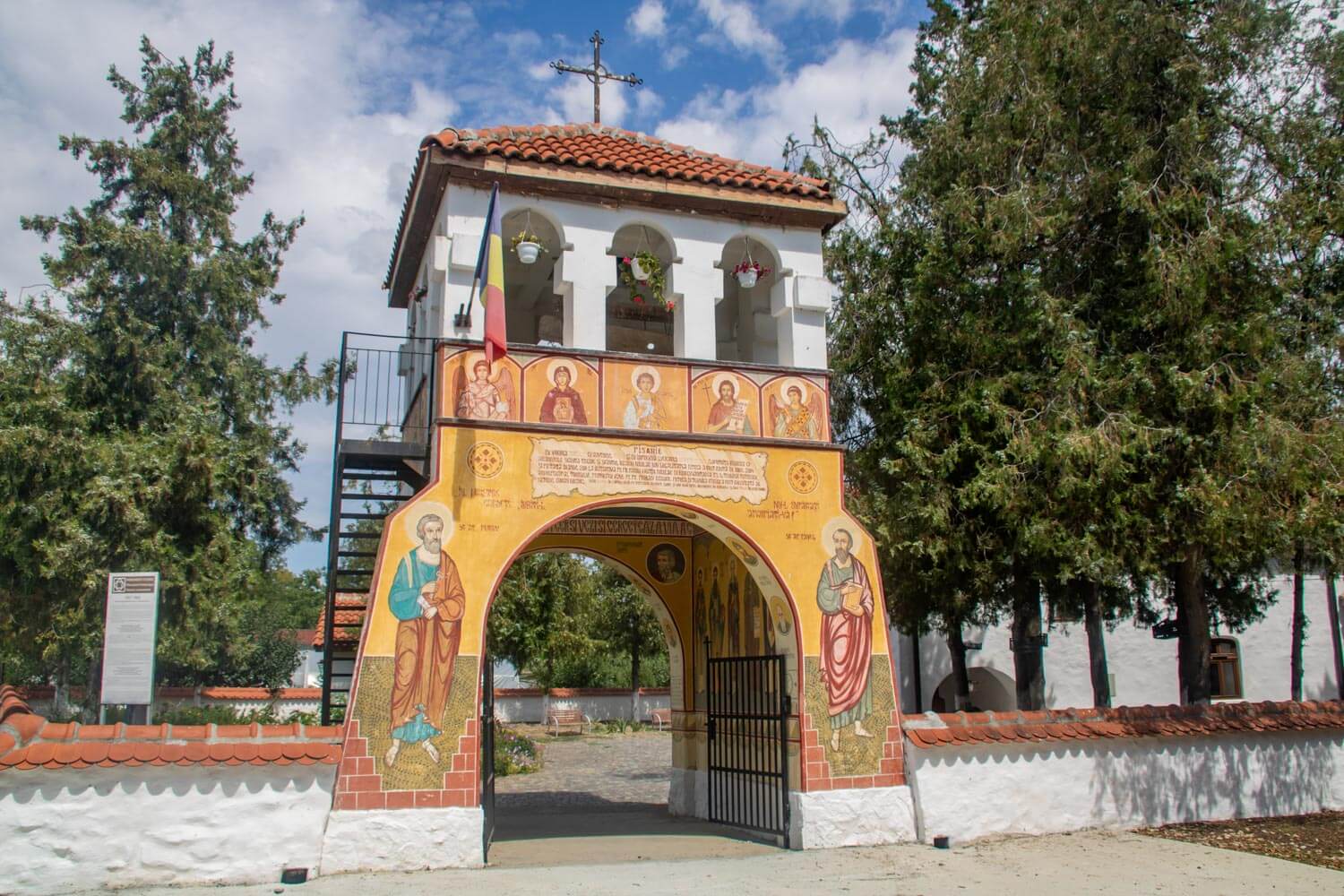
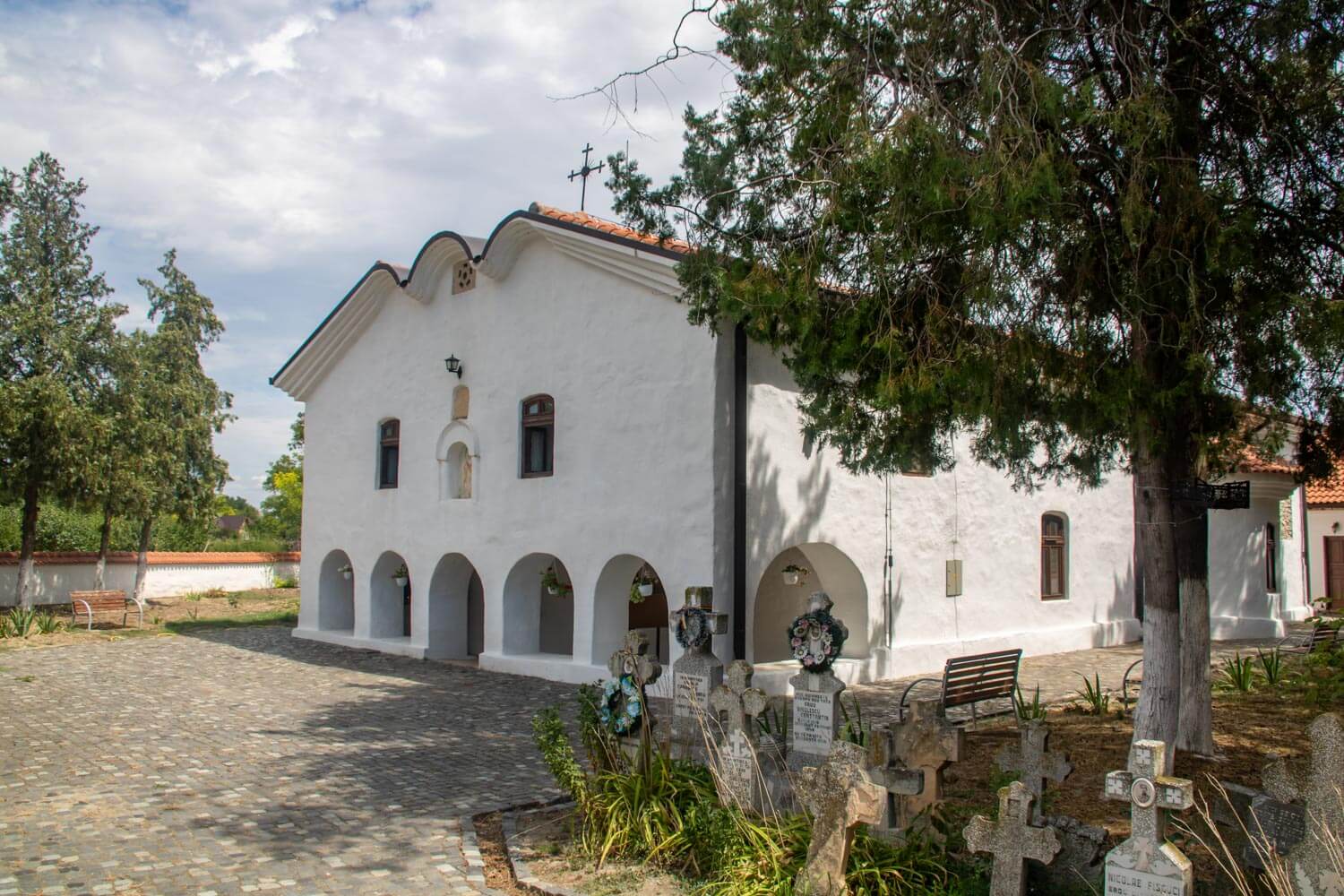
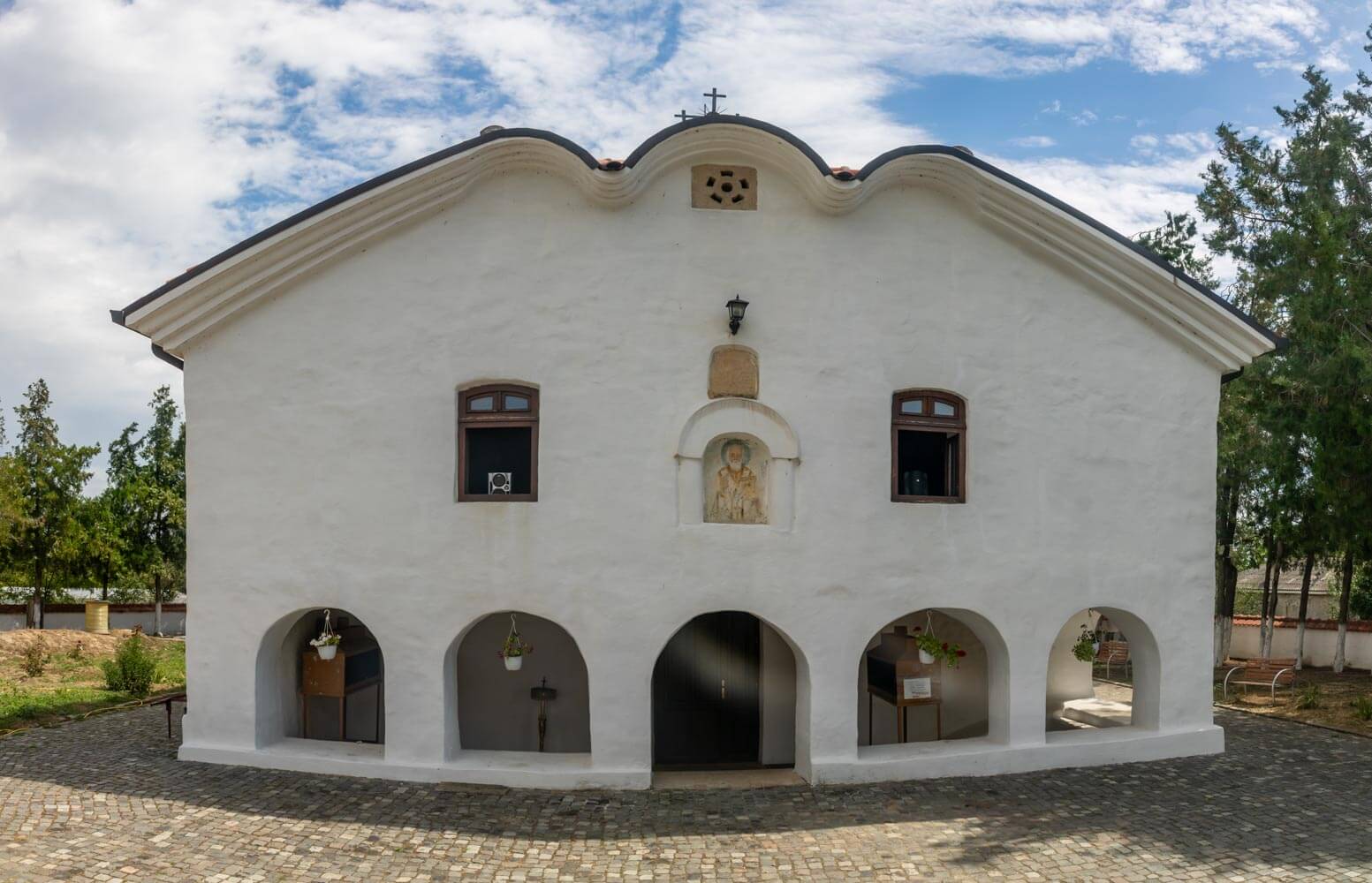
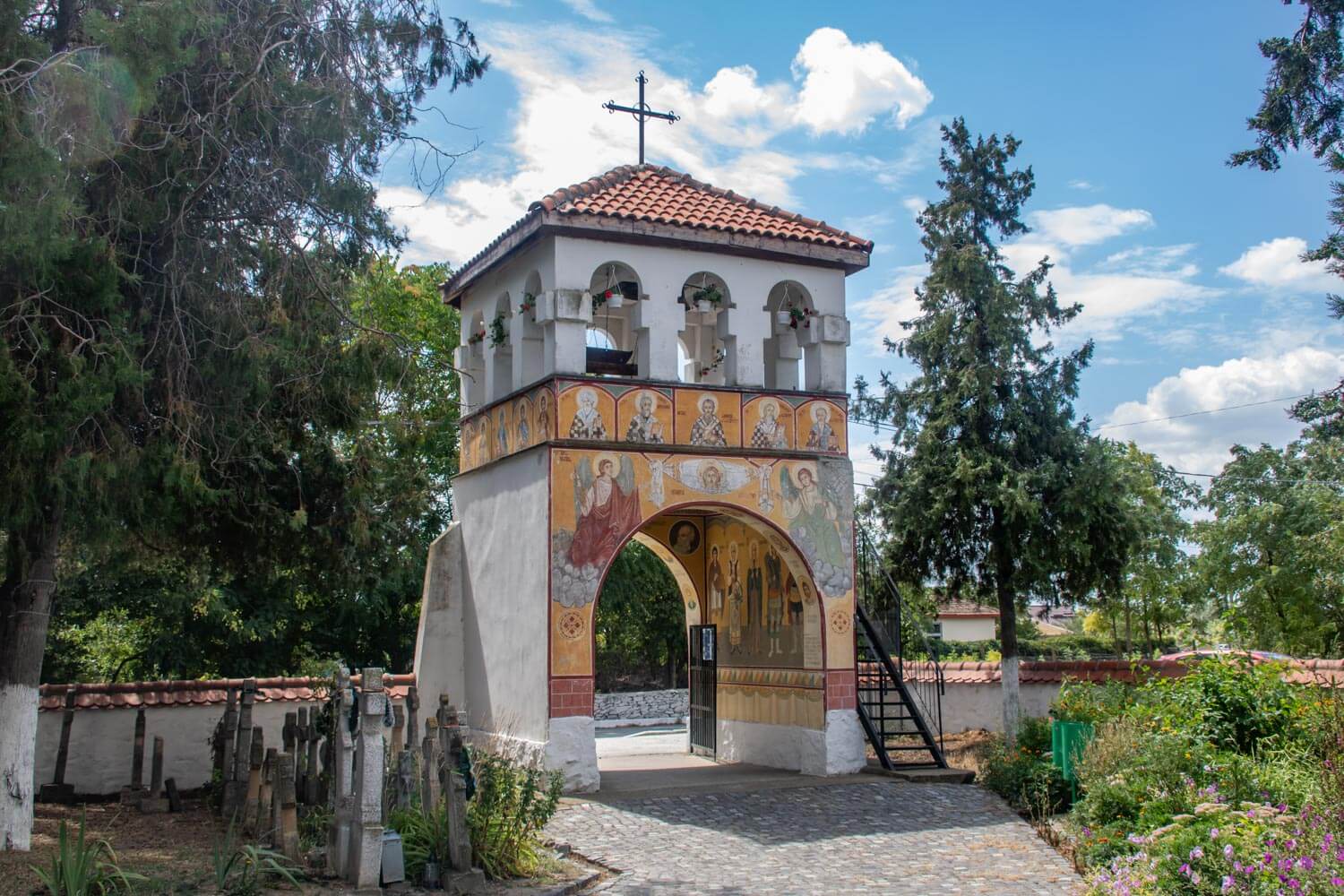
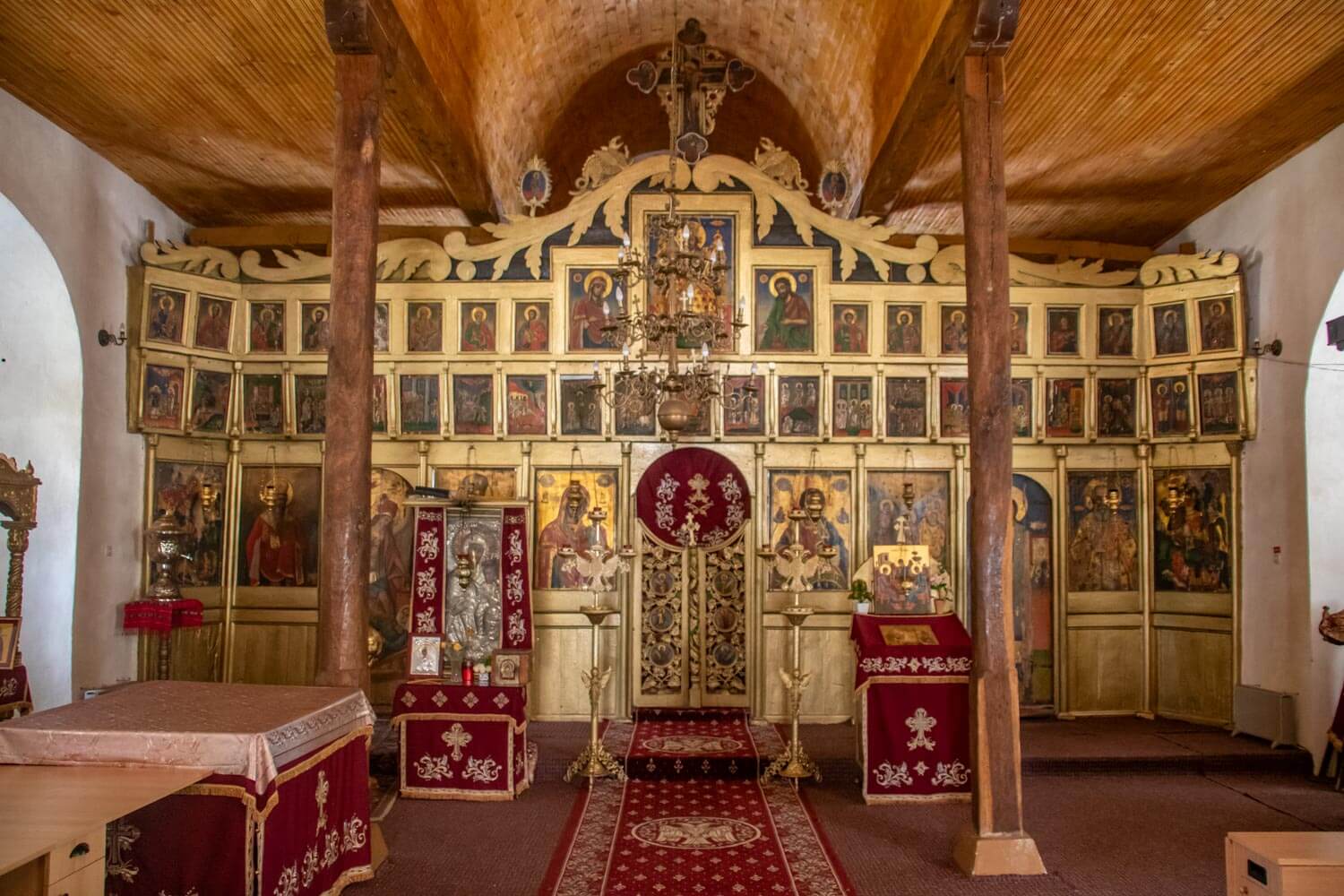
The Buried Church of Istria (Biserica Îngropată din Istria) is a 19th-century Orthodox church in Istria, in Constanța County, dedicated to the Holy Trinity and Saint Nicholas. Its unusual low profile dates from the Ottoman period, when Christian churches in Dobrogea were subject to restrictions on their height and appearance.
The church was built between 1857 and 1860 by the Bulgarian Orthodox community then living in the village, which was known as Caranasuf. Permission from the Ottoman authorities came with strict conditions: the building was not to rise above the surrounding houses and could have neither towers nor a bell tower. To create enough interior height without making the church more prominent outside, the floor was lowered below ground level, giving rise to the name by which it is still known today.
Its simple exterior hides several unusual construction details. Much of the masonry was built with stone taken from the ruins of ancient Histria, while ancient architectural pieces were also reused inside. The ceiling is supported by oak trunks resting on Greek column capitals brought from the archaeological site, and clay amphorae were built into the thick walls to improve the acoustics in the absence of a dome. Sources differ slightly on the number of amphorae, usually giving 52 or 53.
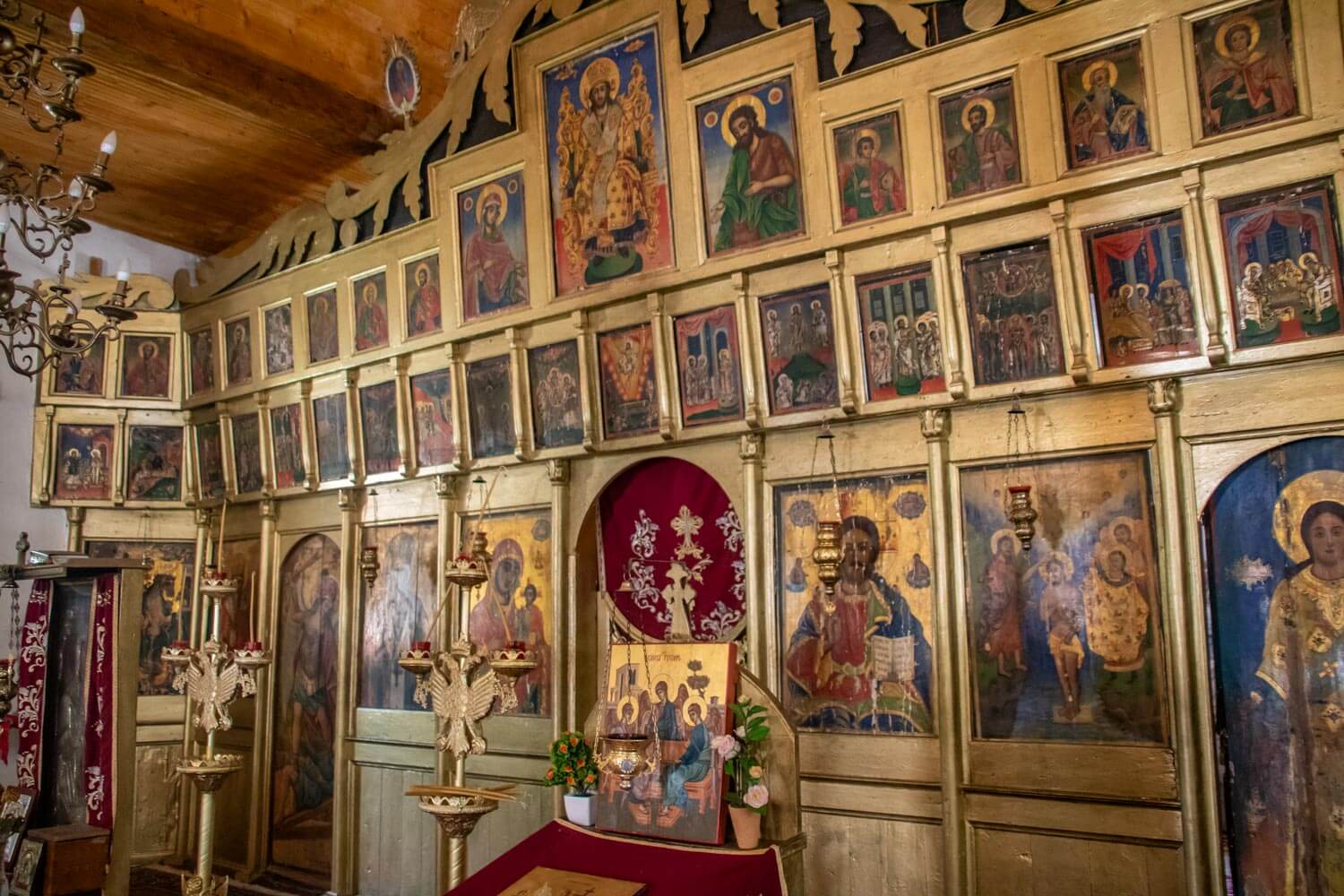
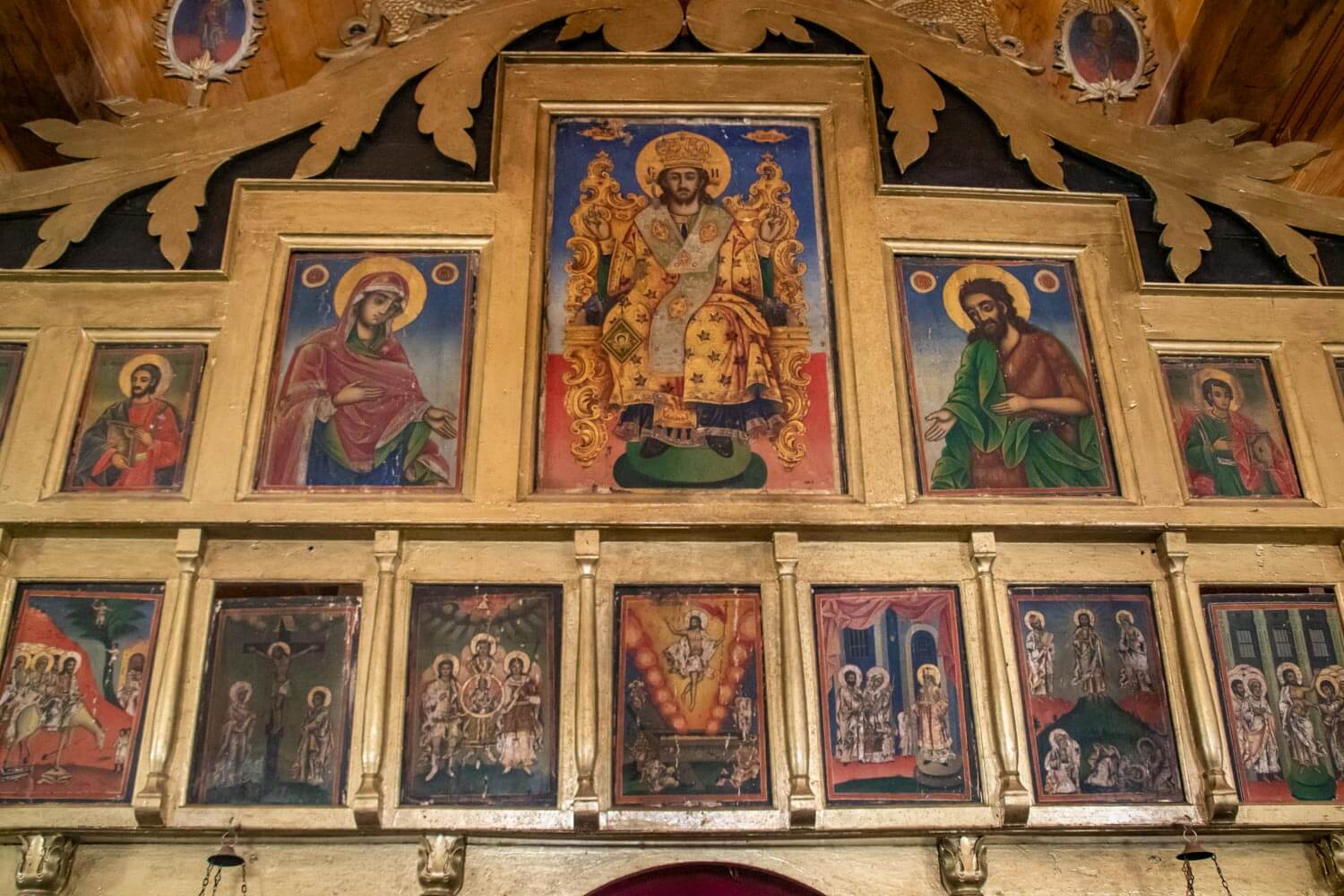
The interior preserves a wooden iconostasis made from oak and fir, together with 19th-century icons. The Slavonic inscription above the entrance records the completion of the church in 1860, while the consecration followed in 1864 under Bishop Dionisie of Tulcea.
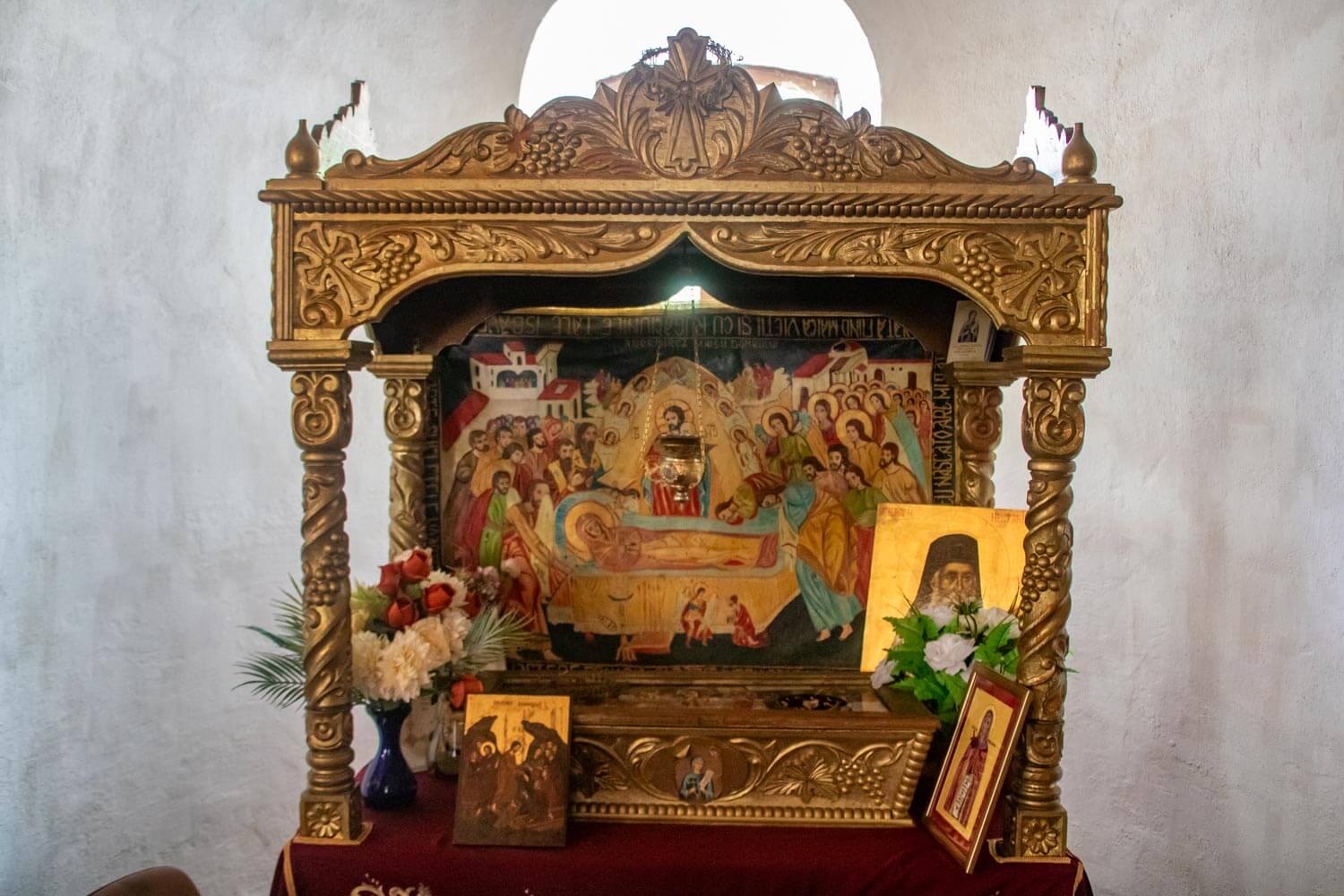
A small religious-art museum beside the church displays historic icons, liturgical books, vestments and other objects belonging to the parish, including pieces dating from the mid-19th century. The church remains an active place of worship as well as one of the most distinctive surviving examples of an Ottoman-period Orthodox church in Dobrogea.