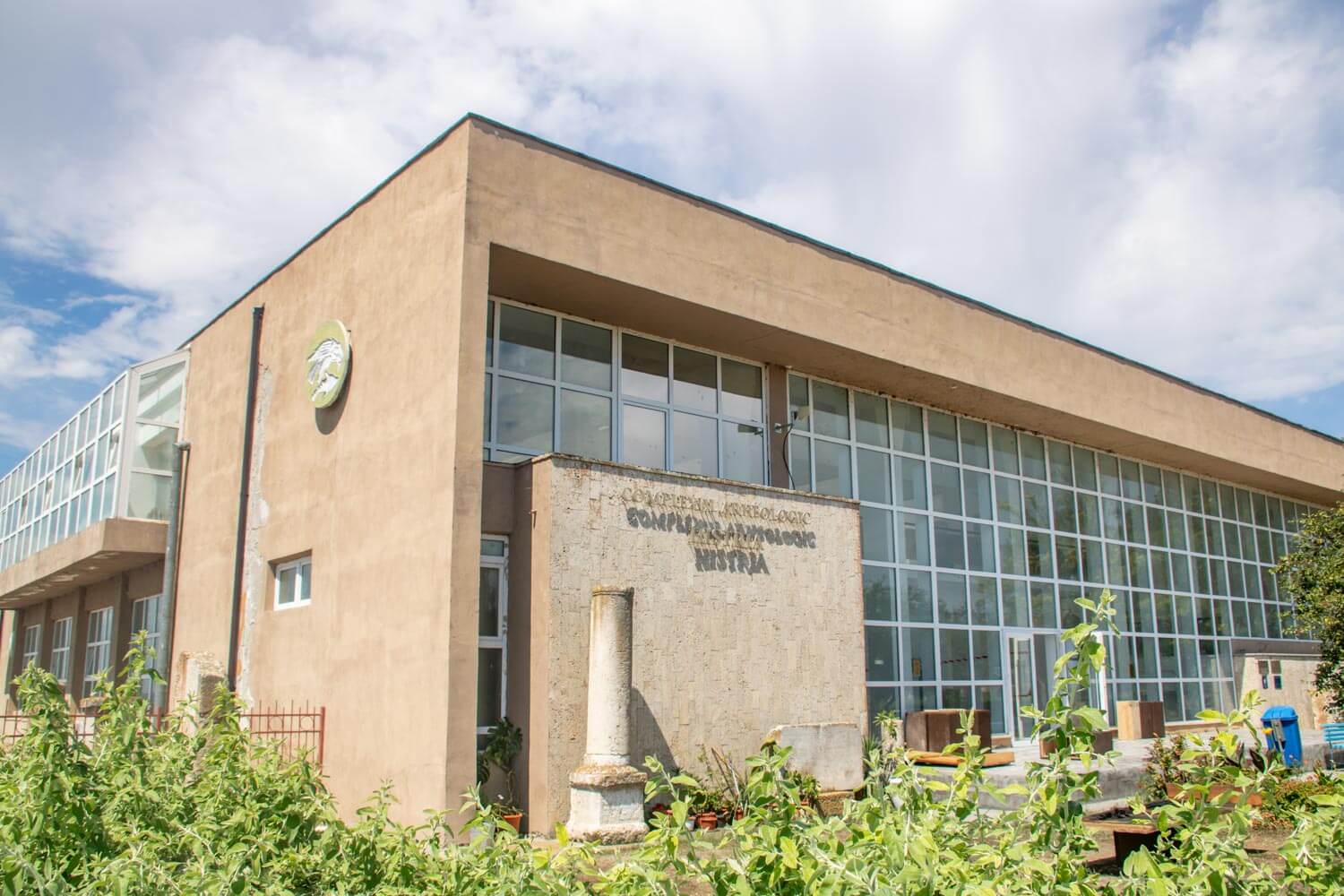
The Histria Museum (Muzeul Histria) is an archaeological museum beside the entrance to the Ancient City of Histria in Constanța County, displaying finds recovered from more than a century of excavation at the Greek, Roman and early Byzantine city. Its collection brings together the objects that are difficult to understand from the ruins alone, from pottery and coins to sculpture, inscriptions and architectural fragments.
History
Systematic excavations at Histria began in 1914 under Vasile Pârvan, and the growing number of finds soon created a need for a museum at the archaeological site itself. The first museum building was erected in 1920, but unstable ground caused it to collapse only a few years later and it was subsequently demolished.
The present museum was built in the early 1980s and opened to visitors in 1983 as part of the Histria Museum Complex. Since then, it has served as the main site museum for discoveries from Histria and its surrounding territory, while archaeological work has continued outside.
The Collection
The exhibition follows the long development of Histria from its foundation as a Greek colony through the Roman period and into late antiquity. Archaeological finds are arranged chronologically, allowing the material culture of the city to change gradually from one period to the next rather than appearing as an isolated collection of ancient objects.
Among the displays are painted and plain ceramics, amphorae, oil lamps, glass vessels, jewelry and other personal or household objects, together with sculptures, reliefs, inscriptions and fragments from ancient buildings. Pieces recovered from the Greek Sacred Area include architectural elements from the temples, while later objects document the Roman city and its early Christian period.
One of the most striking pieces stands near the entrance: a marble relief showing a group of major Greek deities accompanied by representations of Helios. Another important inscription records the members of Histria’s Gerousia, or council of elders, in AD 138, preserving 157 names as well as a decree honoring its president Artemidoros for supporting the annual Rosalia celebrations.
Coins are another important part of the collection, including issues produced by Histria itself. Together with inscriptions and imported pottery, they show how widely the city was connected through trade and how its civic institutions developed over the centuries. Everyday objects such as lamps, vessels and ornaments add a more personal layer, showing aspects of domestic life that survive only faintly in the foundations outside.
Visiting
The museum stands beside the parking and entrance to the archaeological site and forms a natural addition to a visit of the Ancient City of Histria. Seeing the collection first can make the ruins easier to read afterward, particularly the Sacred Area and the successive Greek, Roman and early Byzantine phases of the city.
The museum and archaeological site are parts of the same Histria Museum Complex but require separate admission tickets. Both are administered by the Museum of National History and Archaeology Constanța, which publishes the latest opening hours and ticket prices on its website.