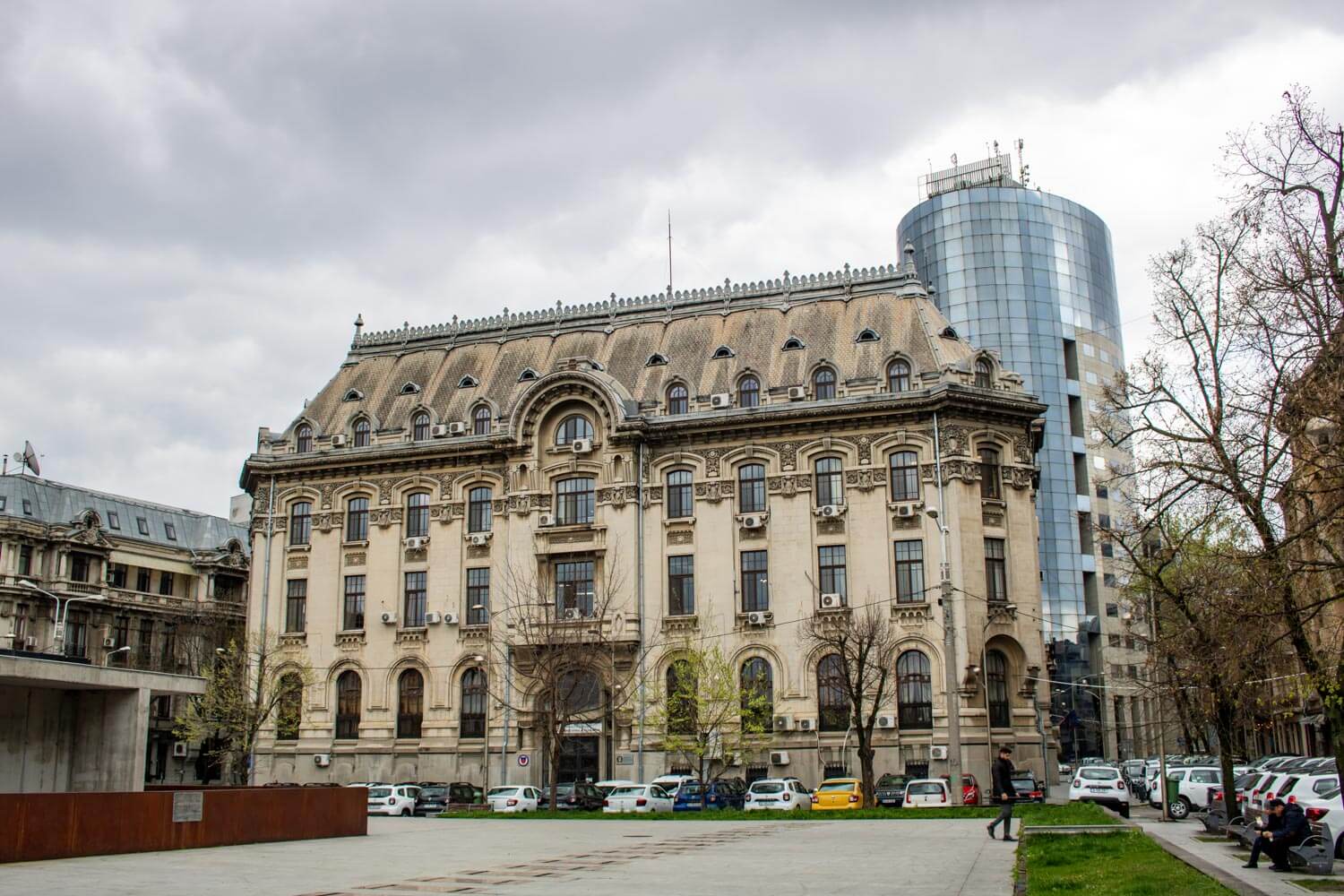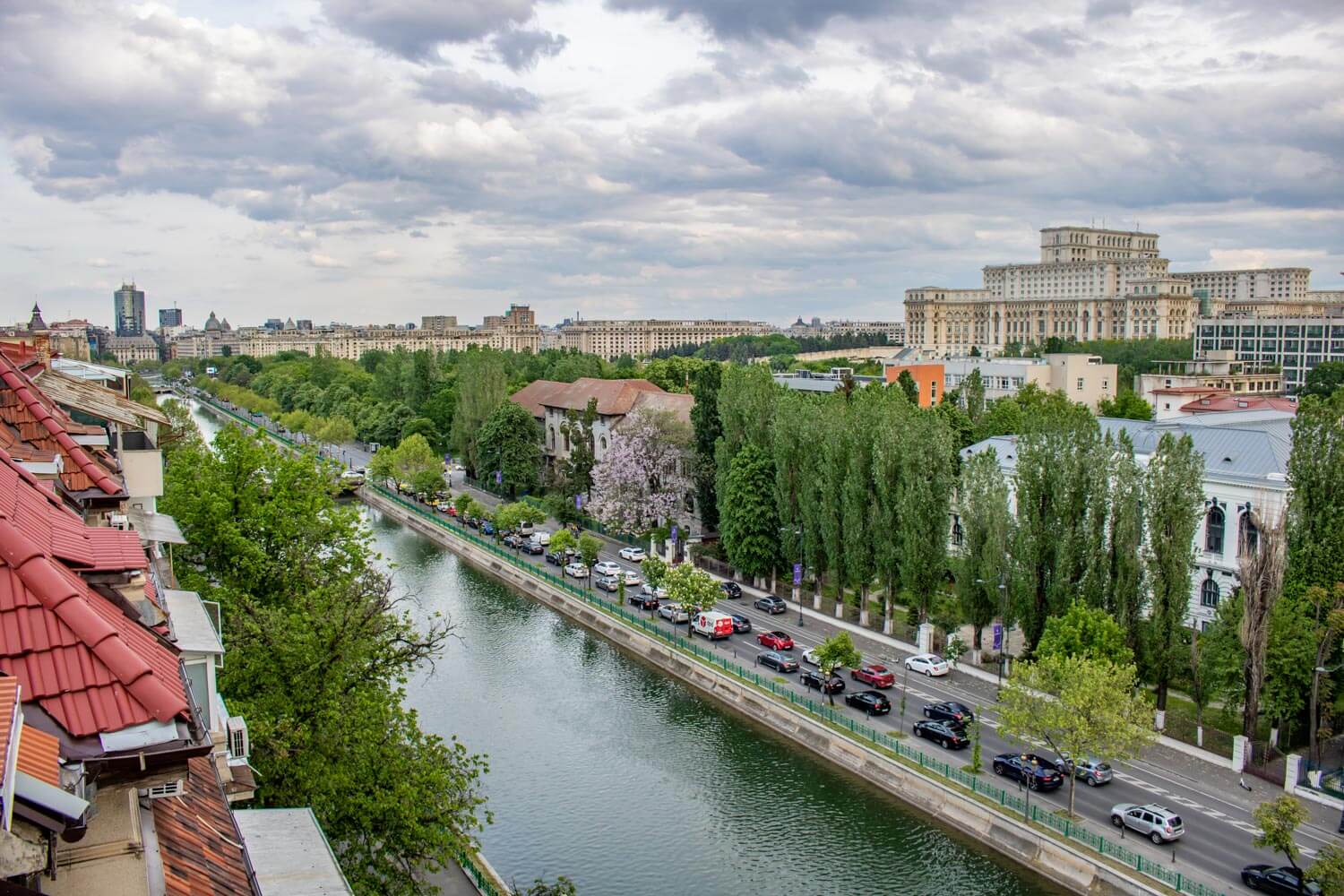


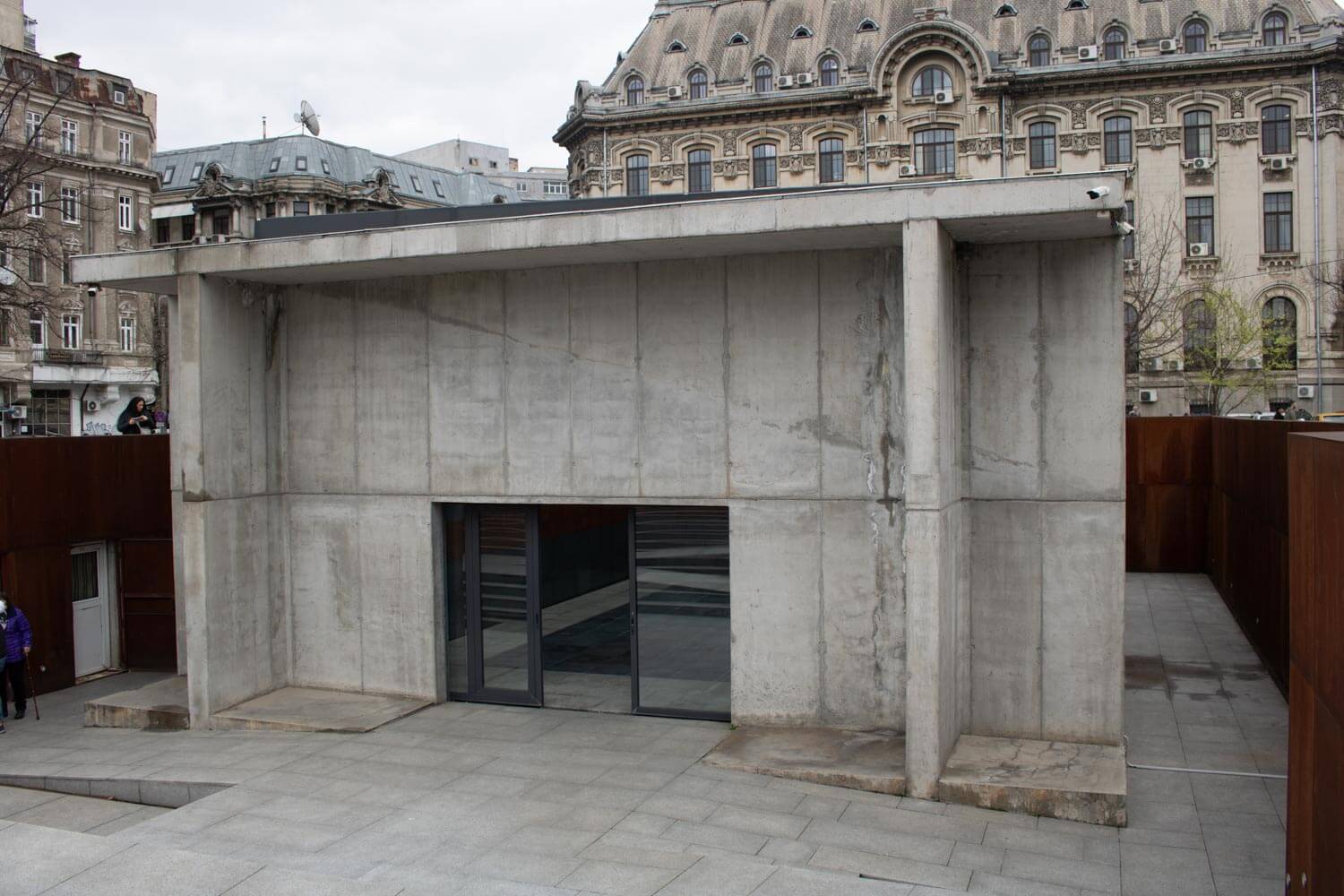
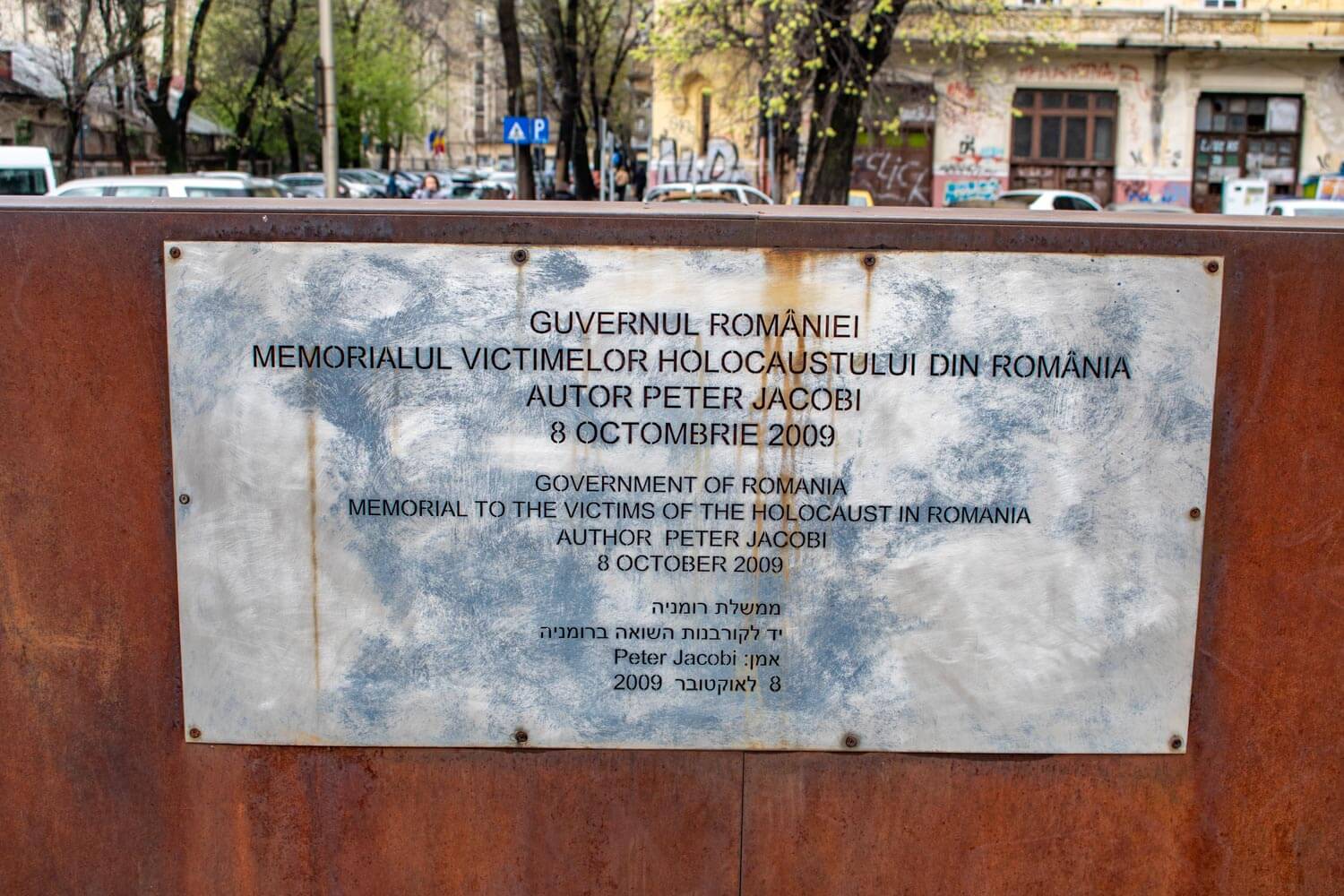
The Holocaust Memorial is a monument that commemorates the Jewish victims of the Holocaust during World War II. It is located on the banks of the Dâmbovița River in front of the building of the General Police Inspectorate in central Bucharest.
Between 1940 and 1944, when Romania was occupied by Nazi Germany, hundreds of thousands of Romanian Jews and Roma fell victim to systematic persecution by the Romanian authorities. Many of them died after they were deported to concentration or extinction camps.
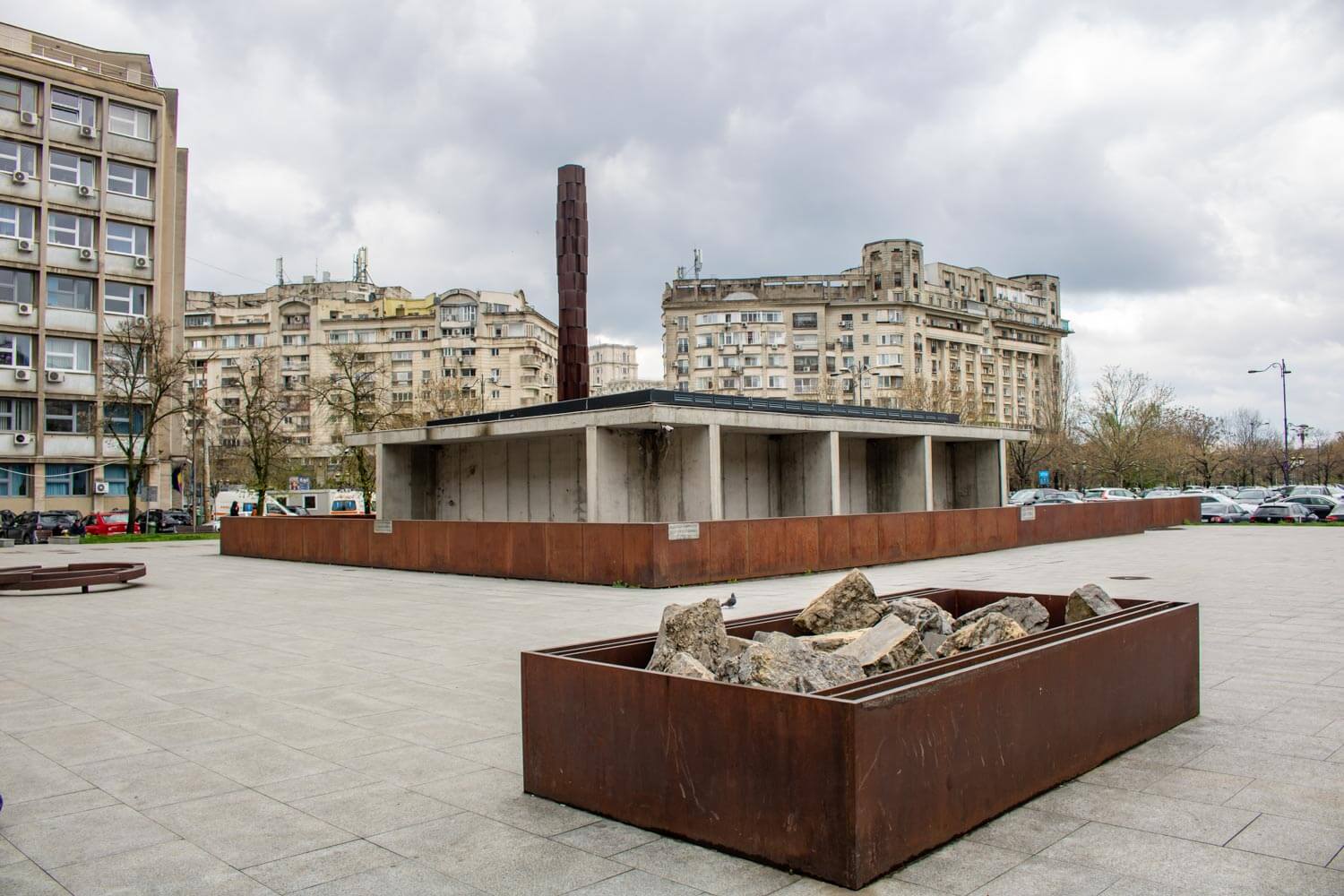
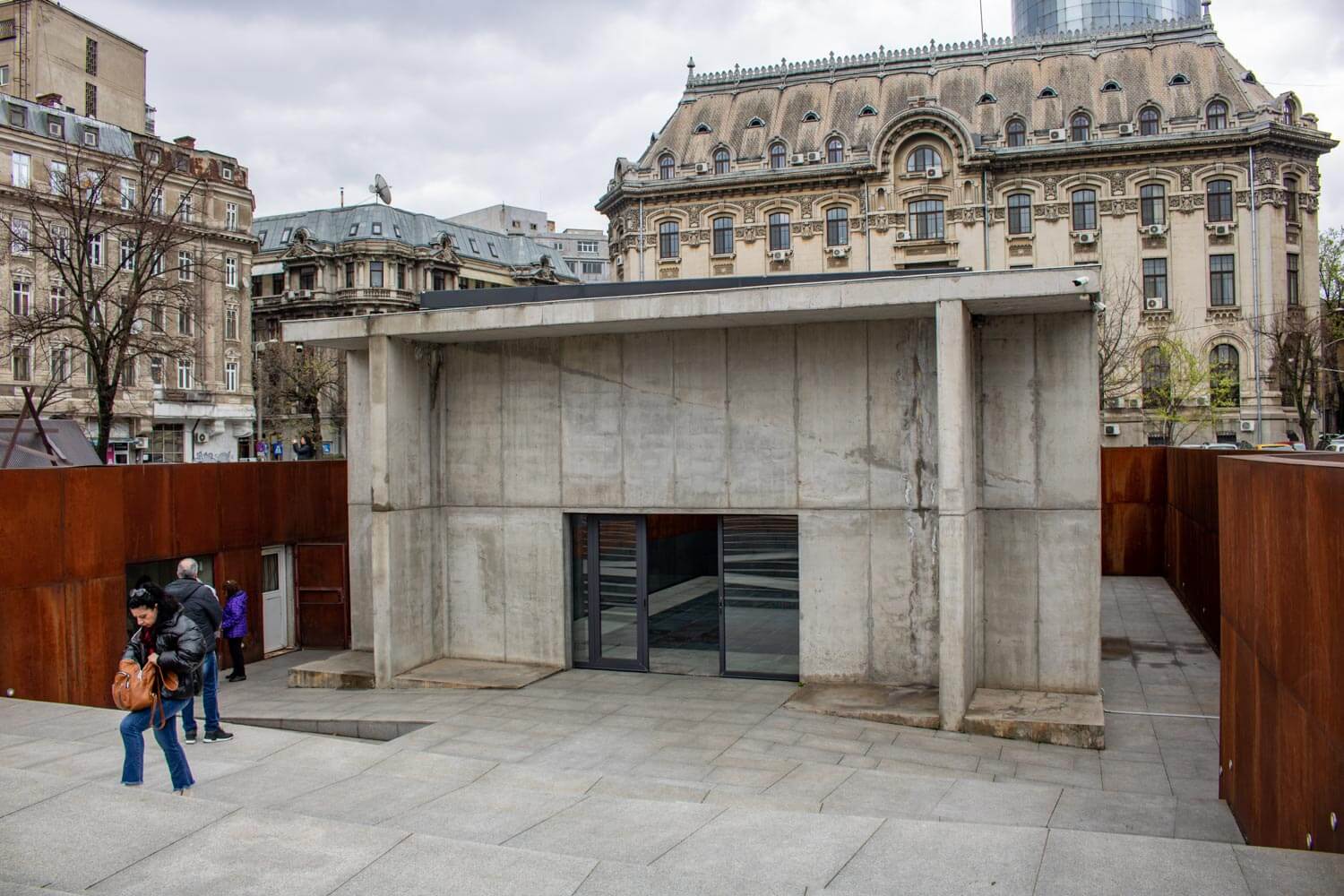
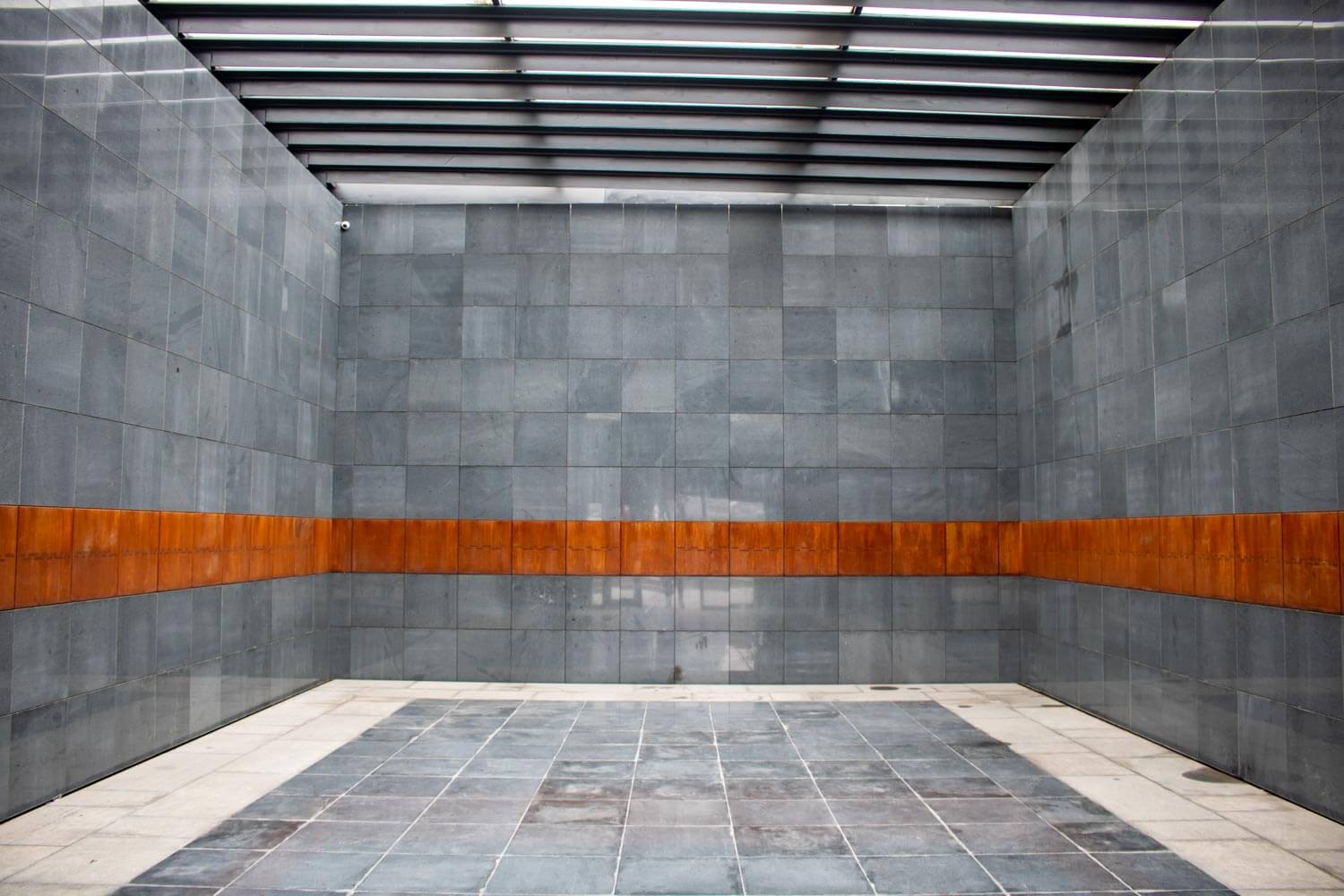
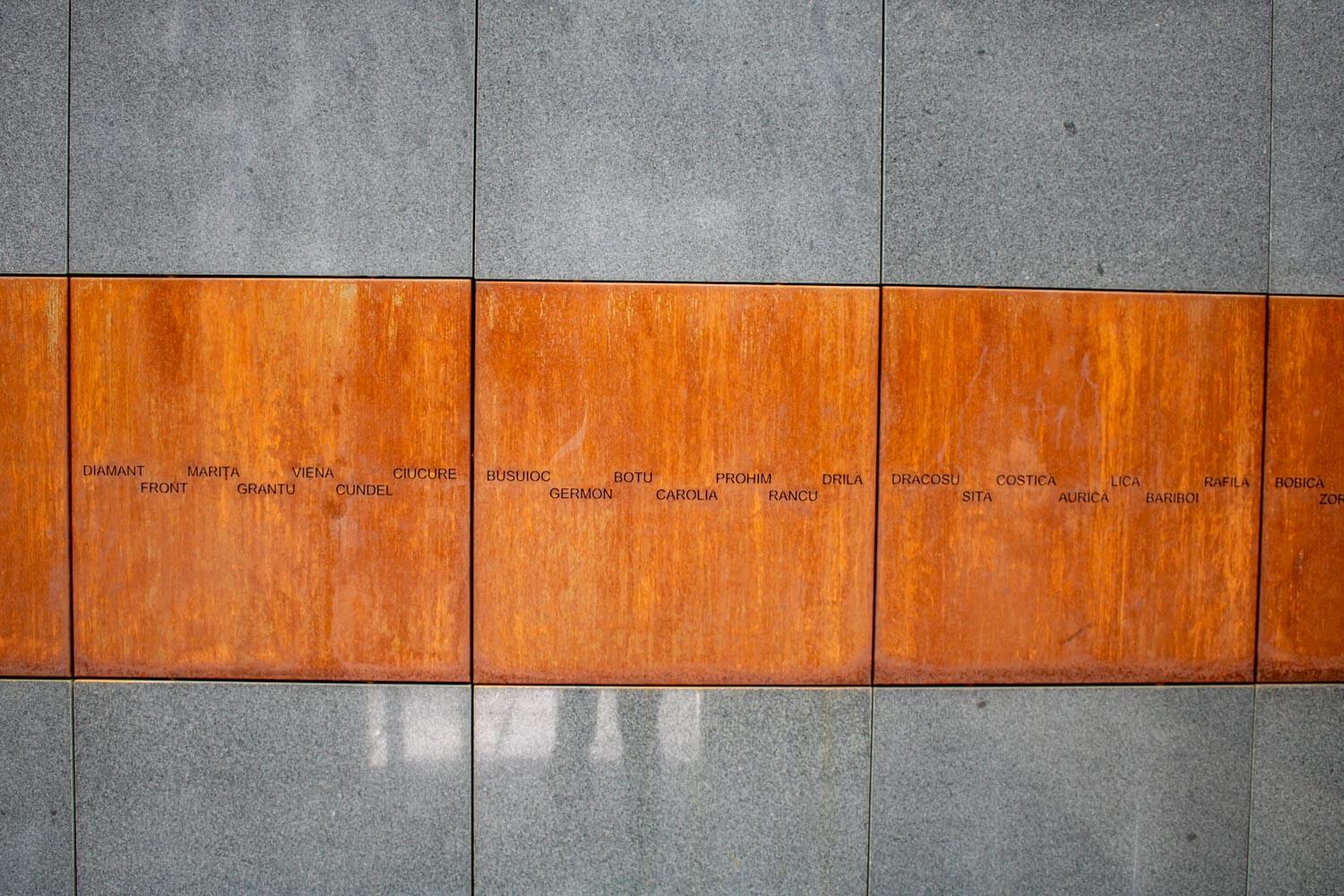
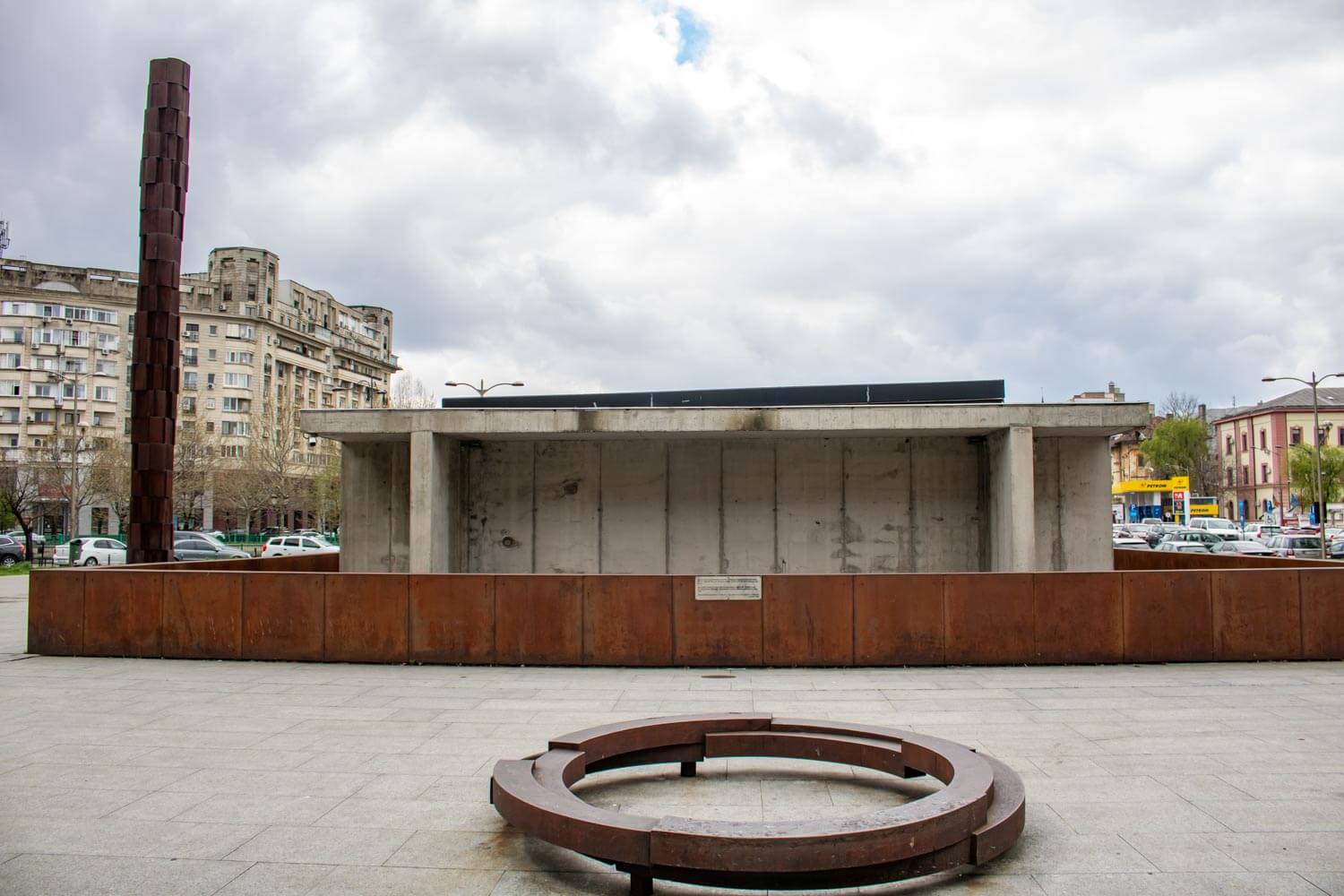
The Holocaust Memorial was unveiled in October 2009 and has an area of around 3000 square meters. In the center is the Central Memorial, a sober concrete structure that makes you shiver by resembling the harsh conditions of a concentration camp or gas chamber. The interior walls are covered with rusty metal plates with the names of Jewish victims.
Next to the concrete building is a 17-meter-high Memorial Column. The iron column carries the letters of the word ‘zachor’ which means remember. Next to it is Via Dolorosa, which resembles a railway used for transporting Jews to concentration camps in Poland and Transnistria.
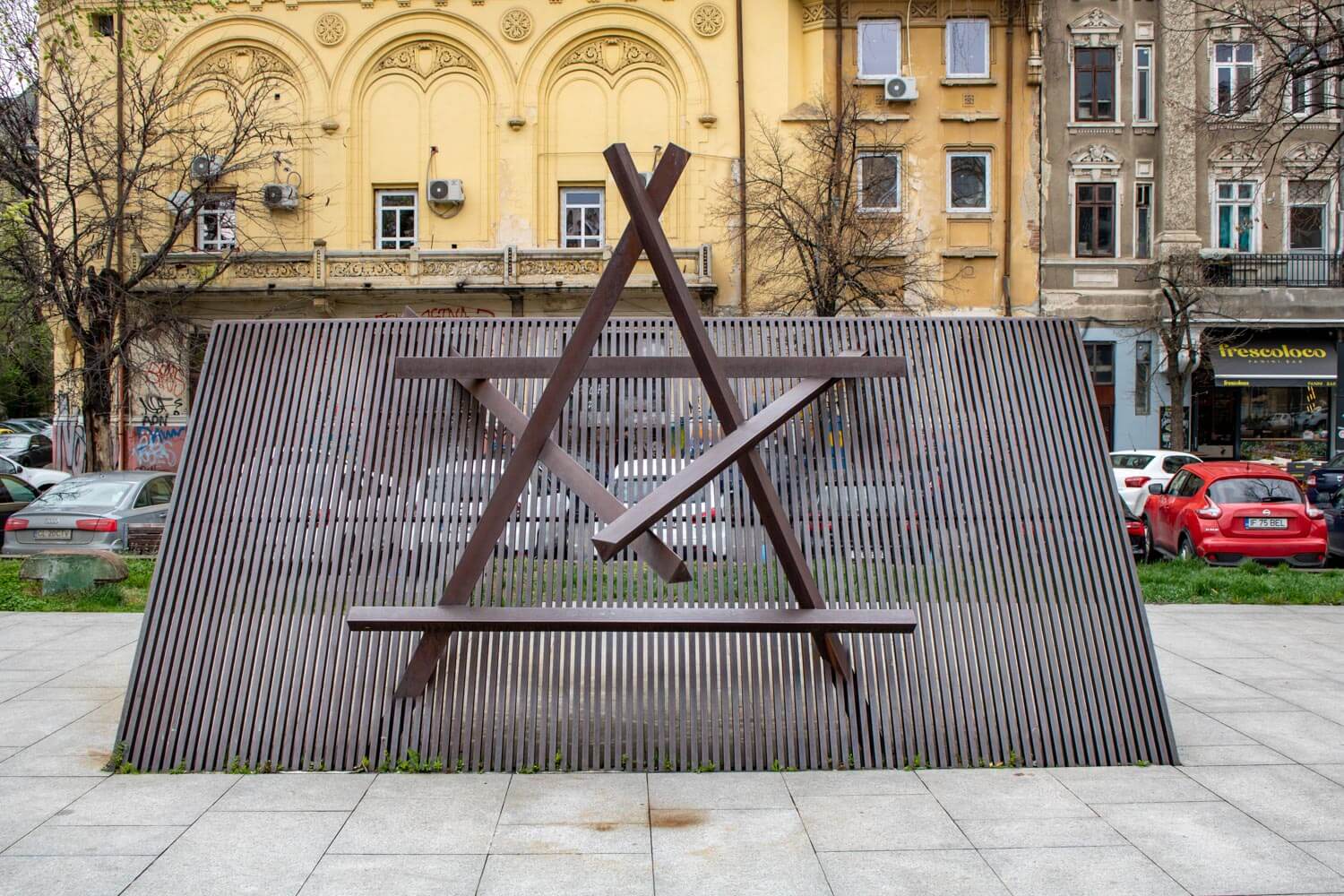
On the square you can also find the Roma Wheel with the Romani flag, which symbolizes travel and fire. Another memorial is the Epitaph, which comes in the form of a rectangle iron box filled with rocks and stones. It is meant to symbolize how buldozers pushed the corpses of deceized Jews into anonymous mass graves to be forgotten. Lastly, you can see the Star of David memorial, a reference to the yellow star with which Jews were marked by the Nazis to identify and separate them from the rest of the population.
Another small Holocaust memorial in the form of a menorah can be found in front of the Choral Tempel in the Jewish quarter of Bucharest.