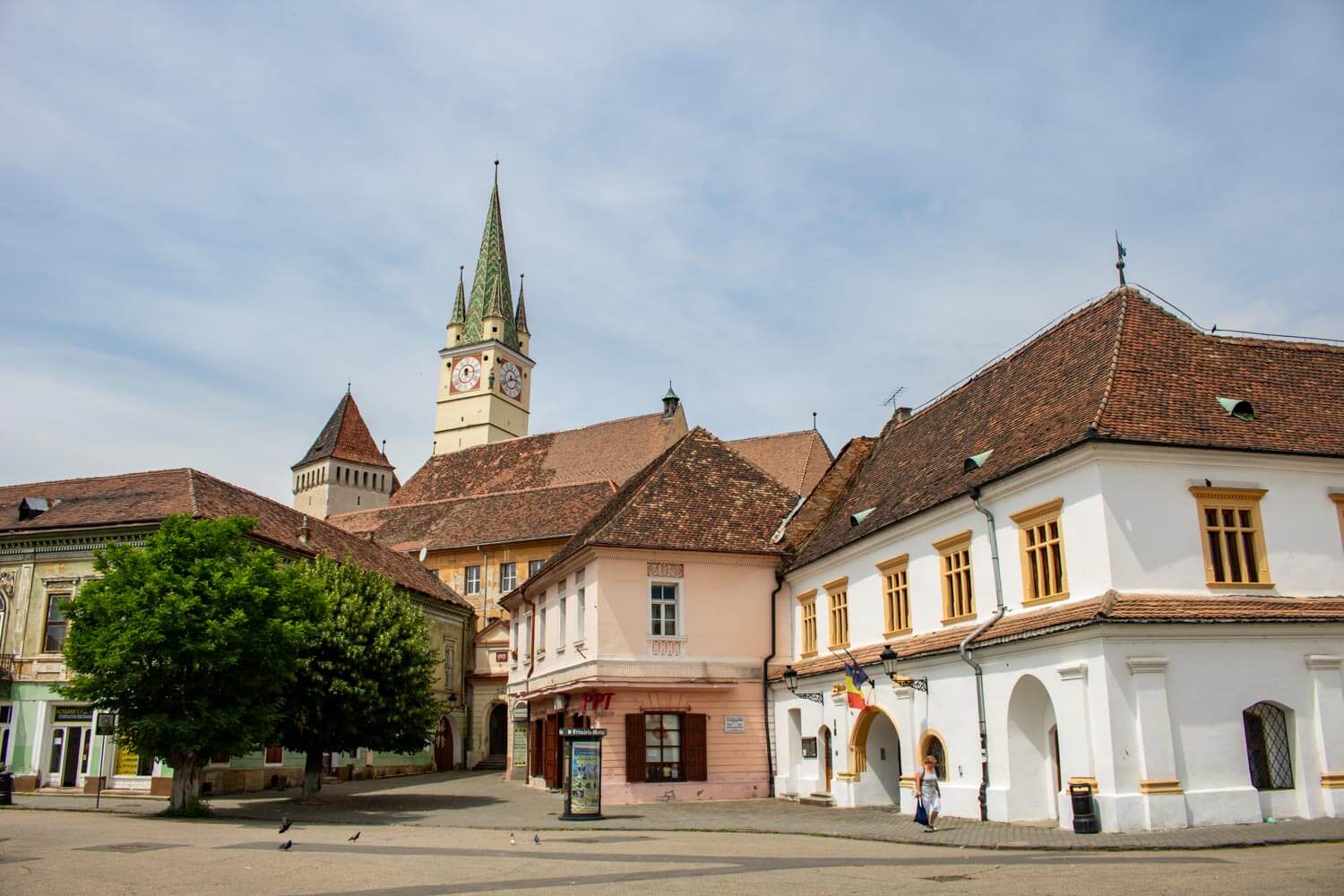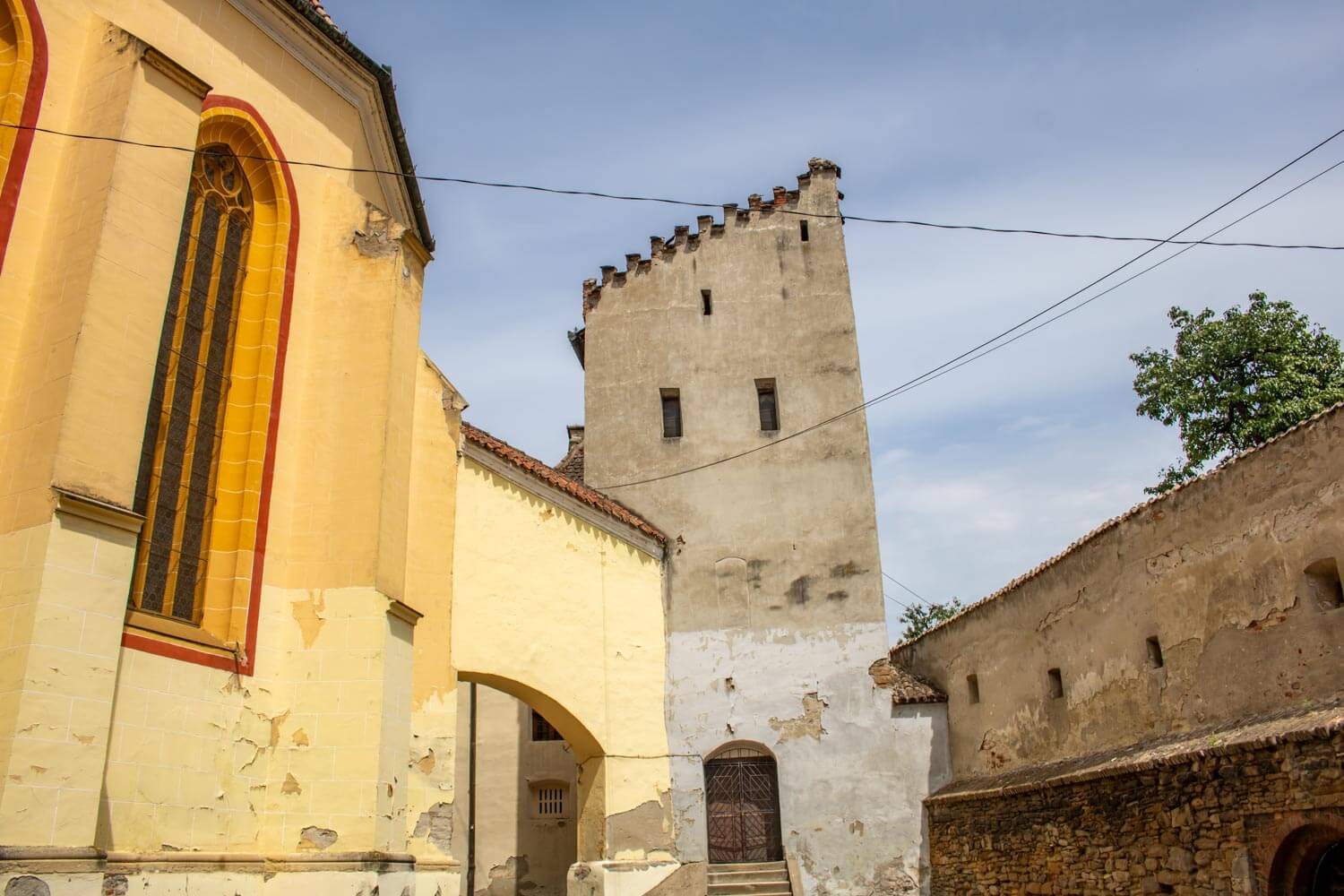
The Saint Margaret’s Church (Biserica Sfânta Margareta) is a large Gothic Lutheran church in the historic center of Mediaș, surrounded by the surviving walls and towers of the town’s original fortified church complex. Together with the enclosure traditionally known as the Castelul, or Castle, it formed the religious and defensive center of medieval Mediaș before the expanding town was later surrounded by a much larger circuit of outer fortifications.
A church already stood on the site by the late 13th century, when Mediaș was developing as an important Saxon settlement in southern Transylvania. During the 14th century, walls were raised around the church and the buildings gathered beside it, creating a protected center that could serve as a refuge in times of danger. The defenses were strengthened further during the 15th century with additional walls, towers and protected passages, while the enclosure came to include the school, parish buildings and other structures used by the local community.
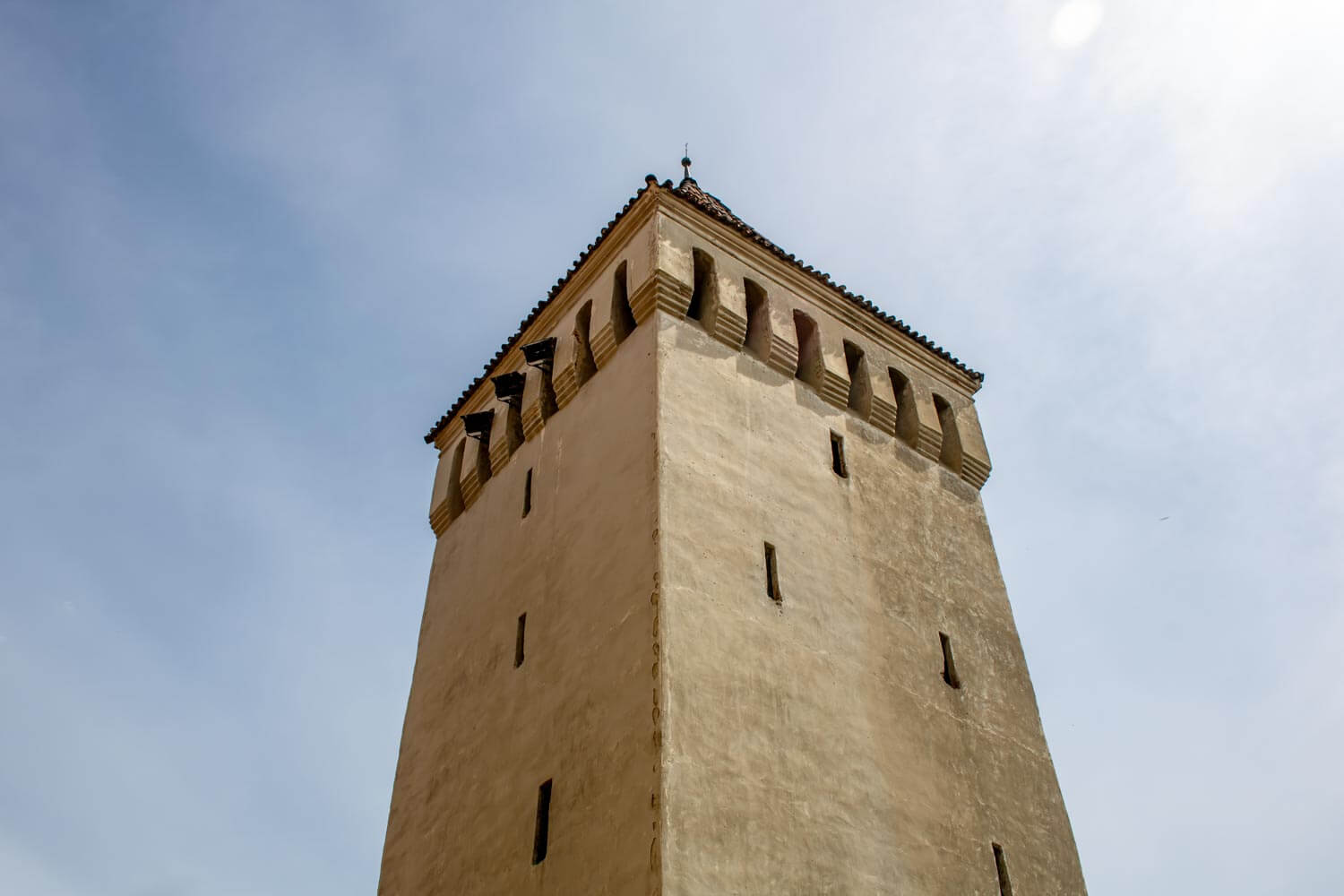
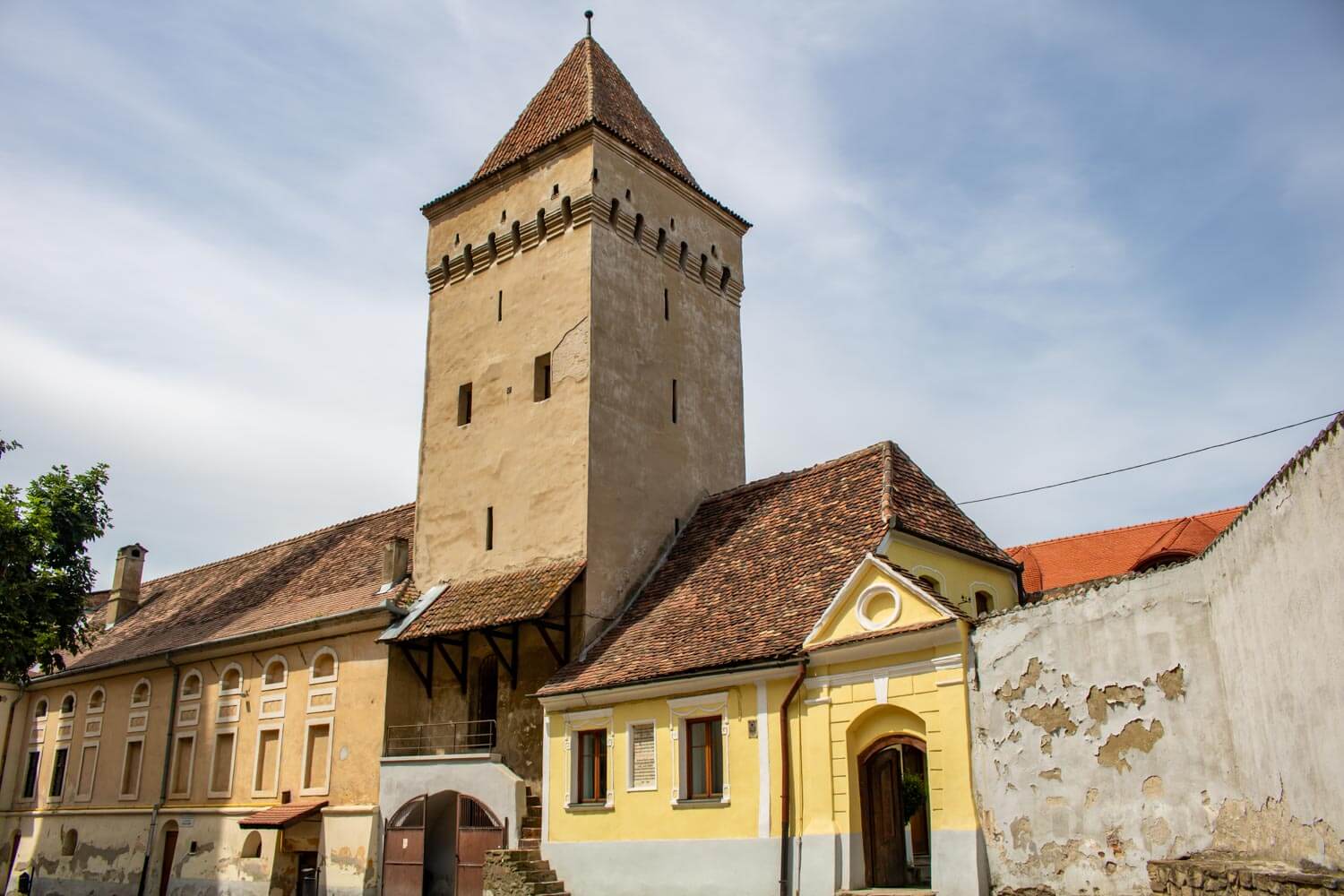
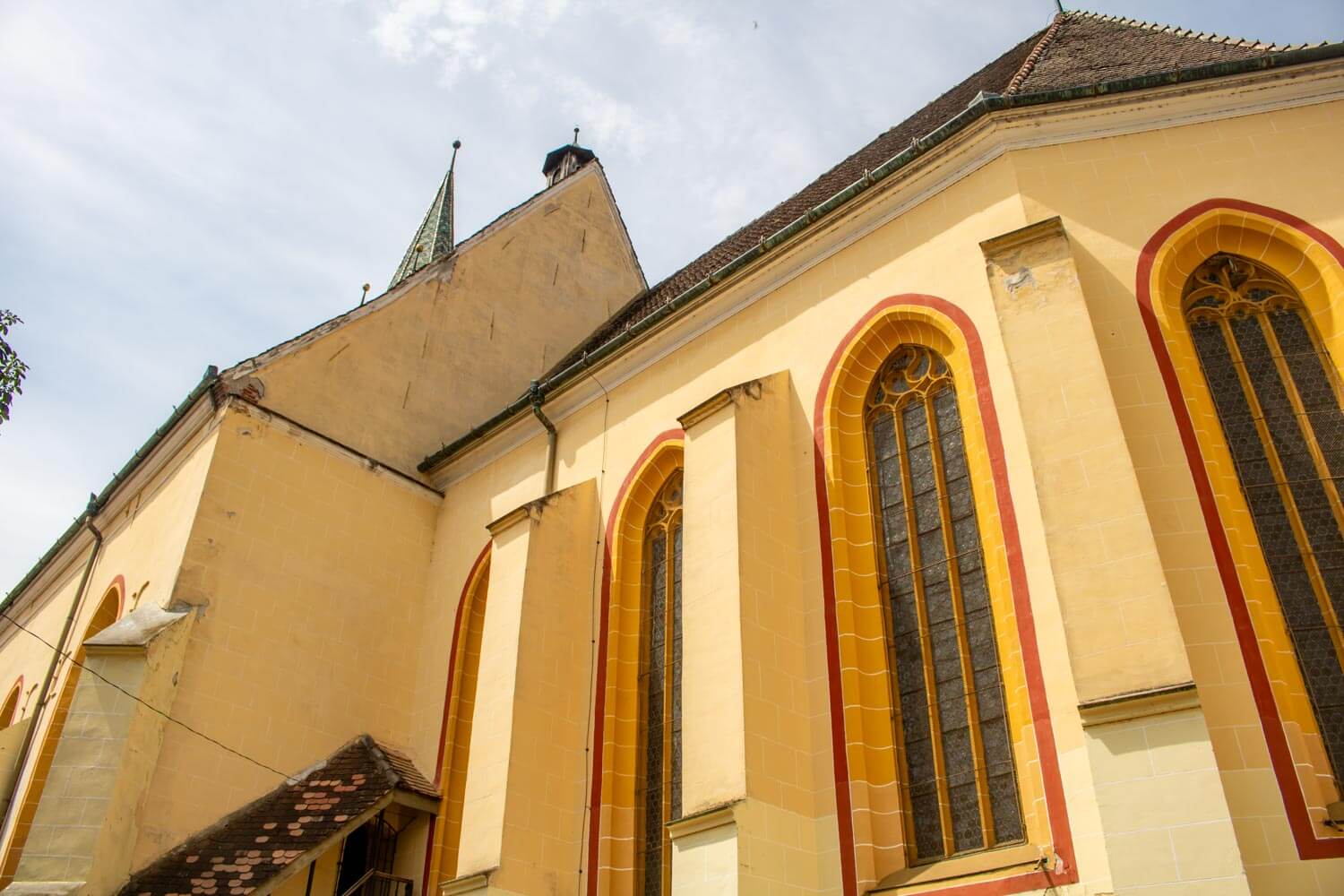
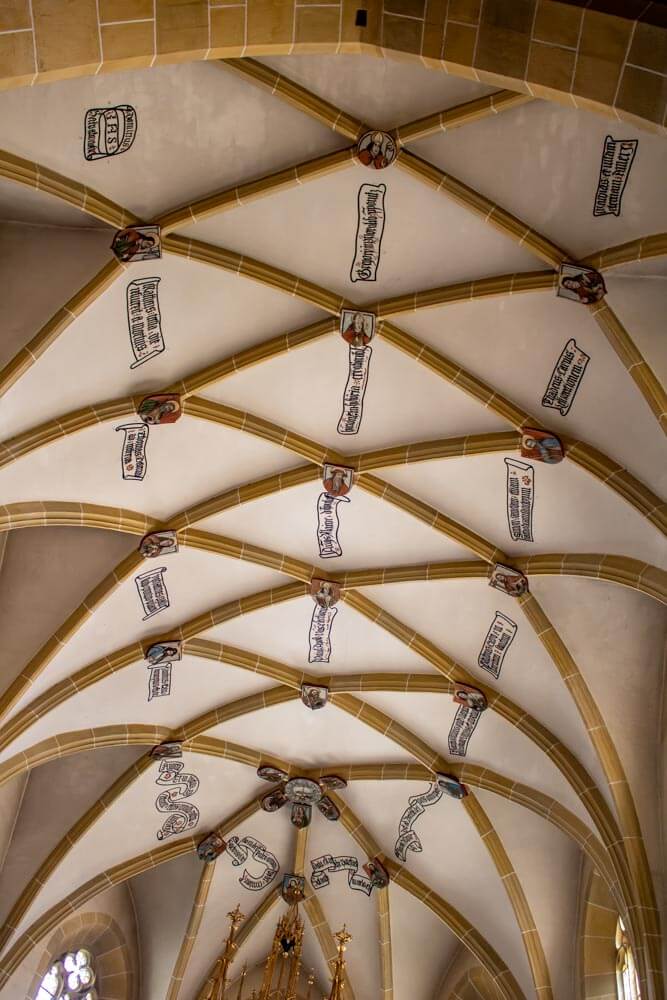
The church itself was substantially rebuilt during the 15th century and had taken on much of its present Gothic form by the 1480s. The new building received a polygonal choir, ribbed vaulting and a spacious interior, while the fortified enclosure around it continued to develop. Four of its defensive towers survive still survive today: the Bell Tower, Ropemakers’ Tower, Tailors’ Tower and Mary’s Tower.
As Mediaș expanded beyond this compact inner fortress, the town began constructing a much larger system of city walls, gate towers and guild bastions during the late 15th and early 16th centuries. Those outer defenses gradually took over the main military role, but the older Castelul remained intact around Saint Margaret’s Church at the center of the town.
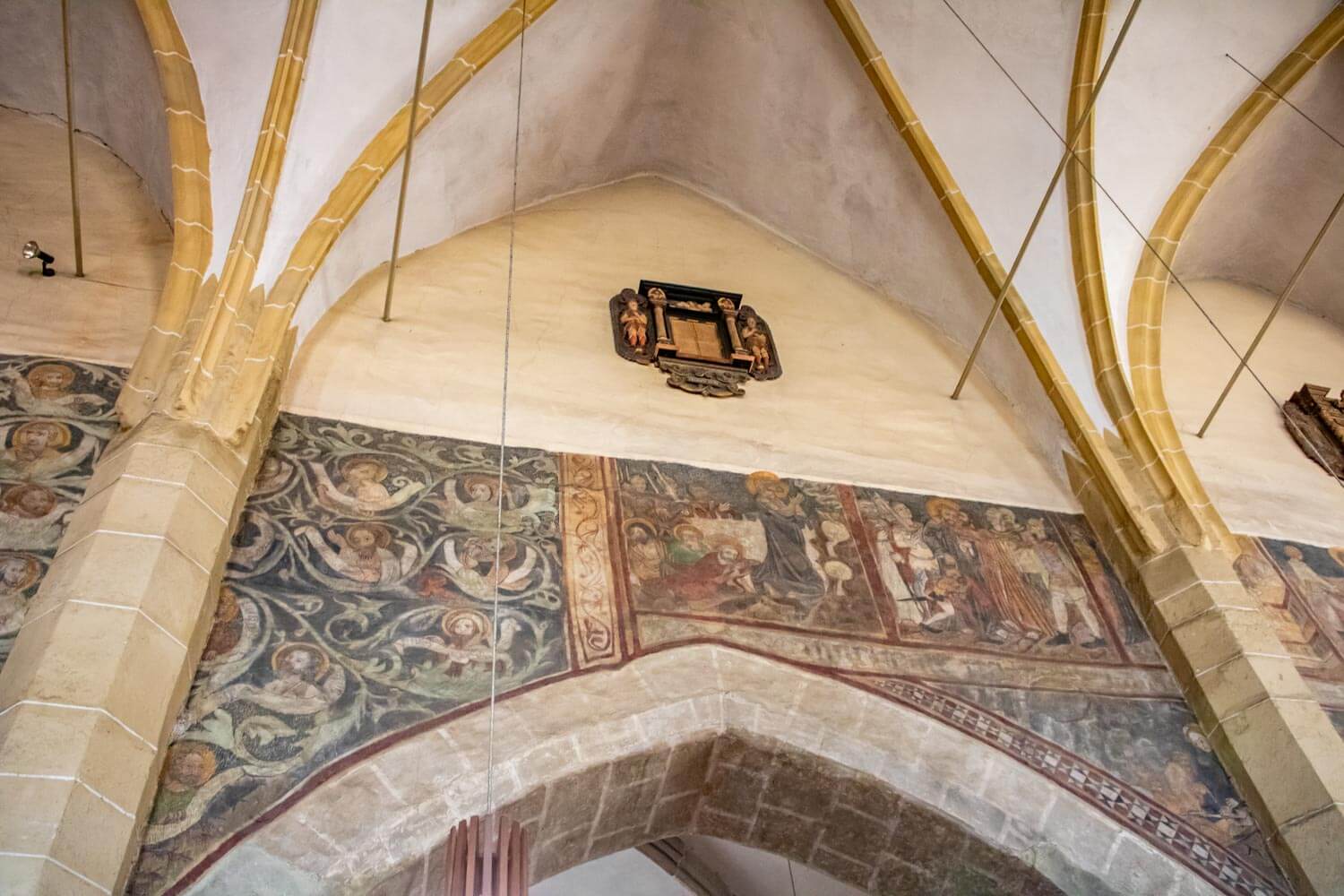
The Reformation changed the church again in the 16th century. Mediaș became an important center of Lutheranism among the Transylvanian Saxons, and the first Evangelical Synod of Transylvania was held here in 1545. The interior was adapted for Lutheran worship, with Catholic altars and images removed or covered, while many of the medieval wall paintings disappeared beneath whitewash and were only rediscovered centuries later.
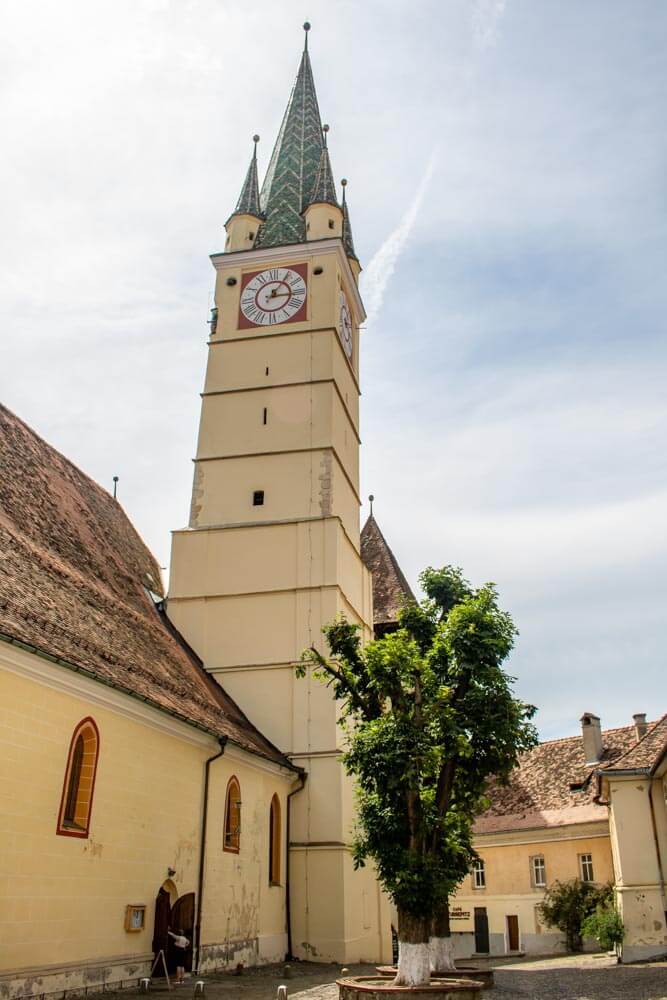
Beside the western end of the church rises the Trumpeters’ Tower (Turnul Trompeților), the church’s own tower and the most prominent landmark of the complex. Raised to almost 70 meters during the 16th century and crowned by four small corner turrets, it developed the noticeable lean that remains visible today after the additional height placed pressure on its foundations.
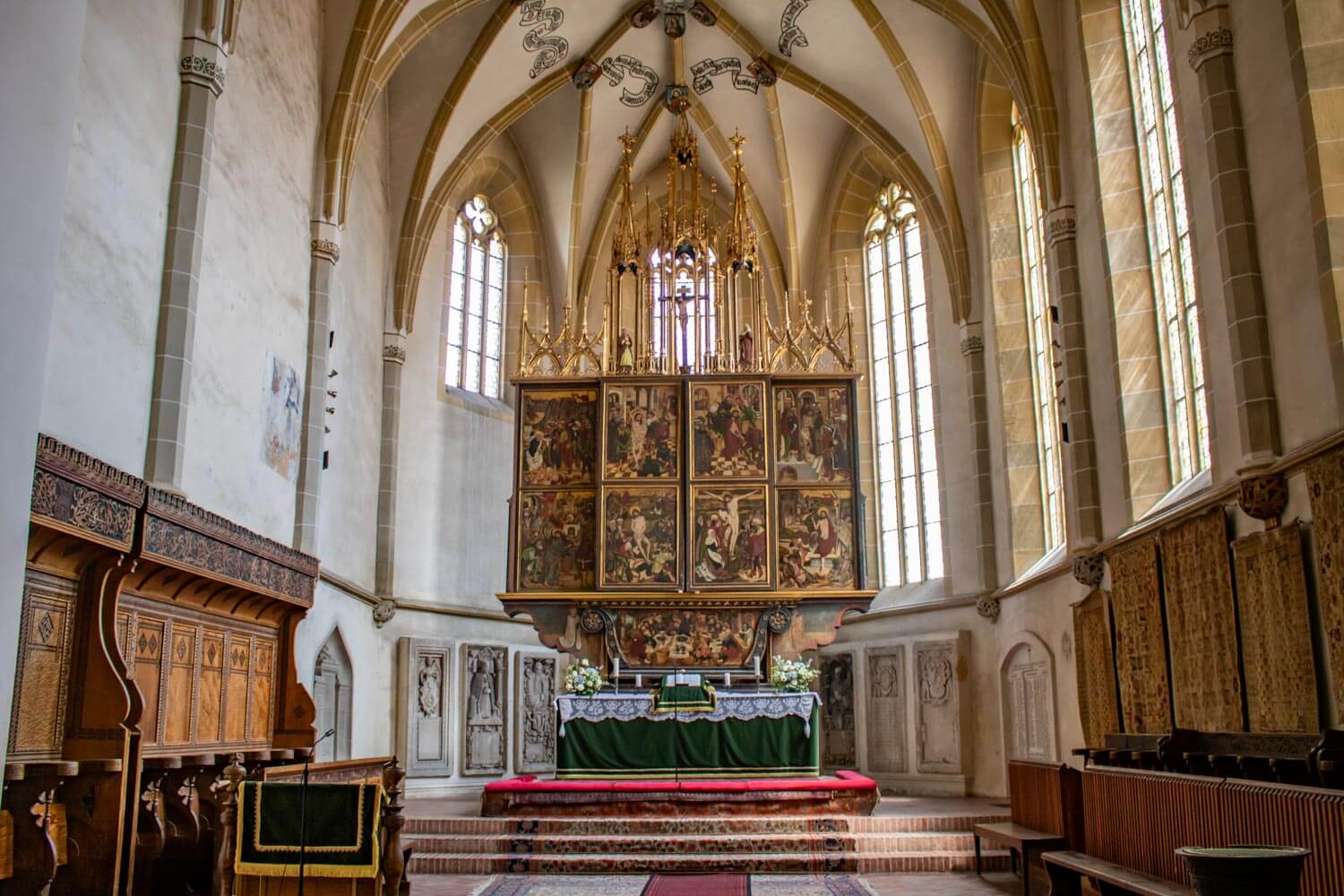
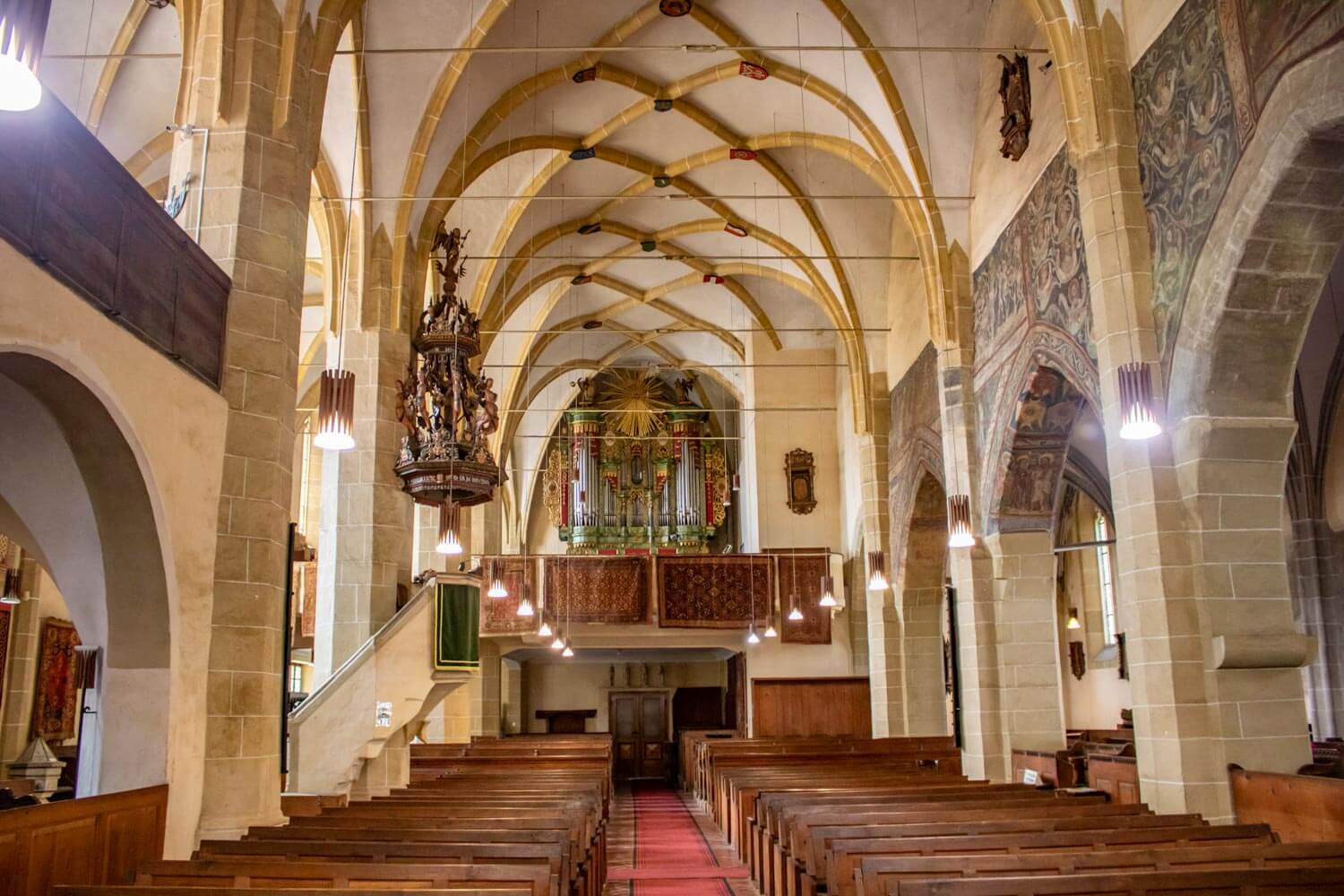
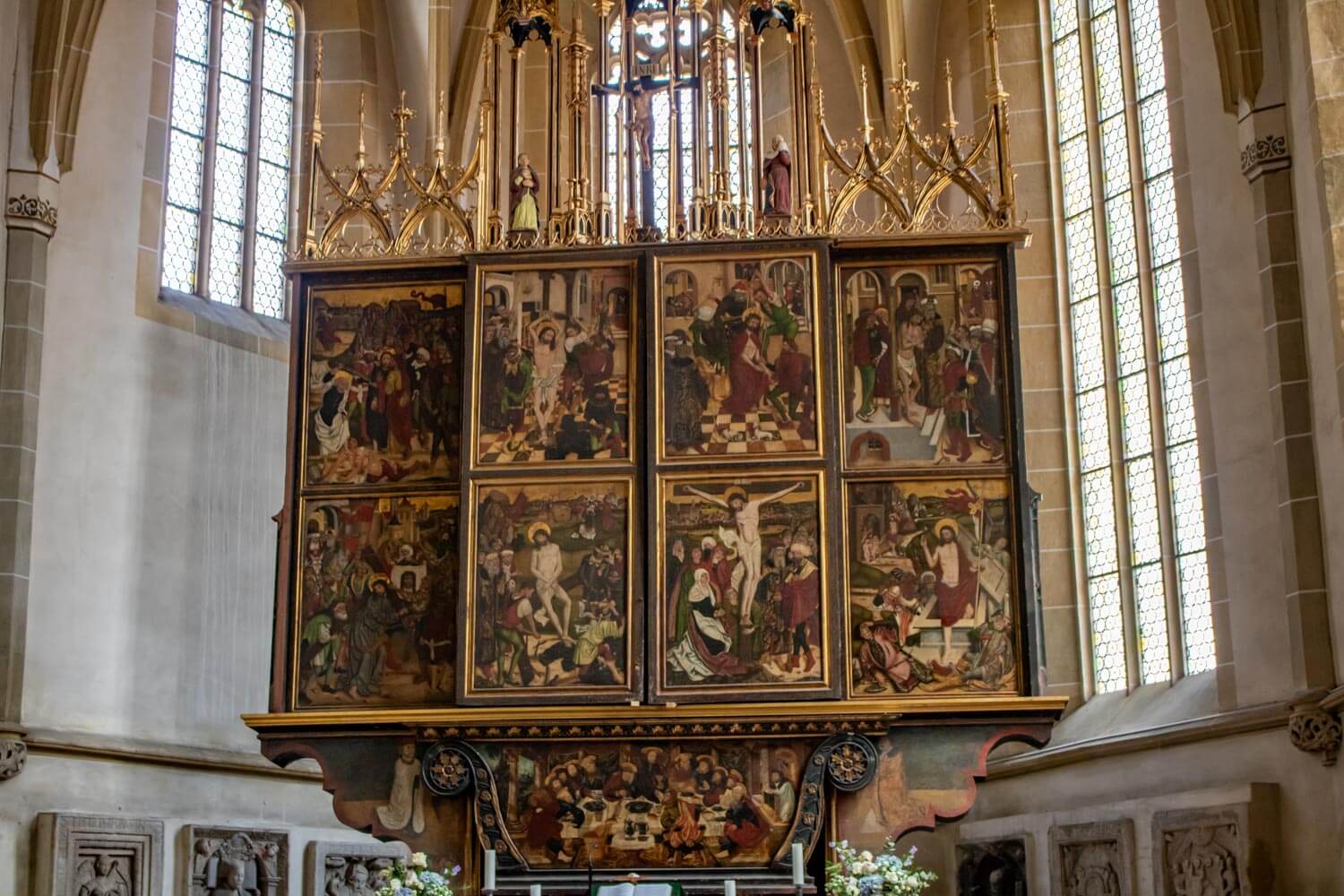
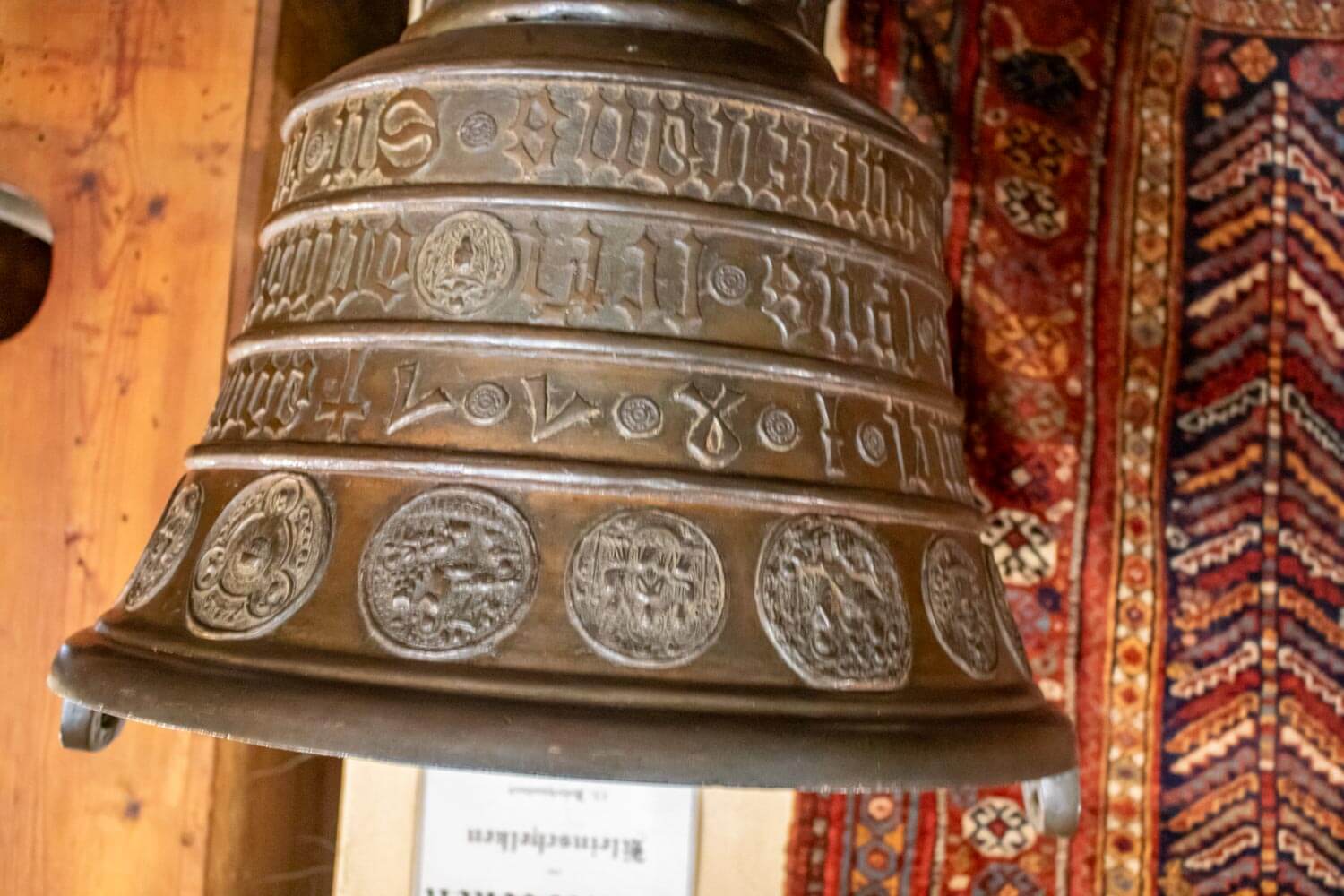
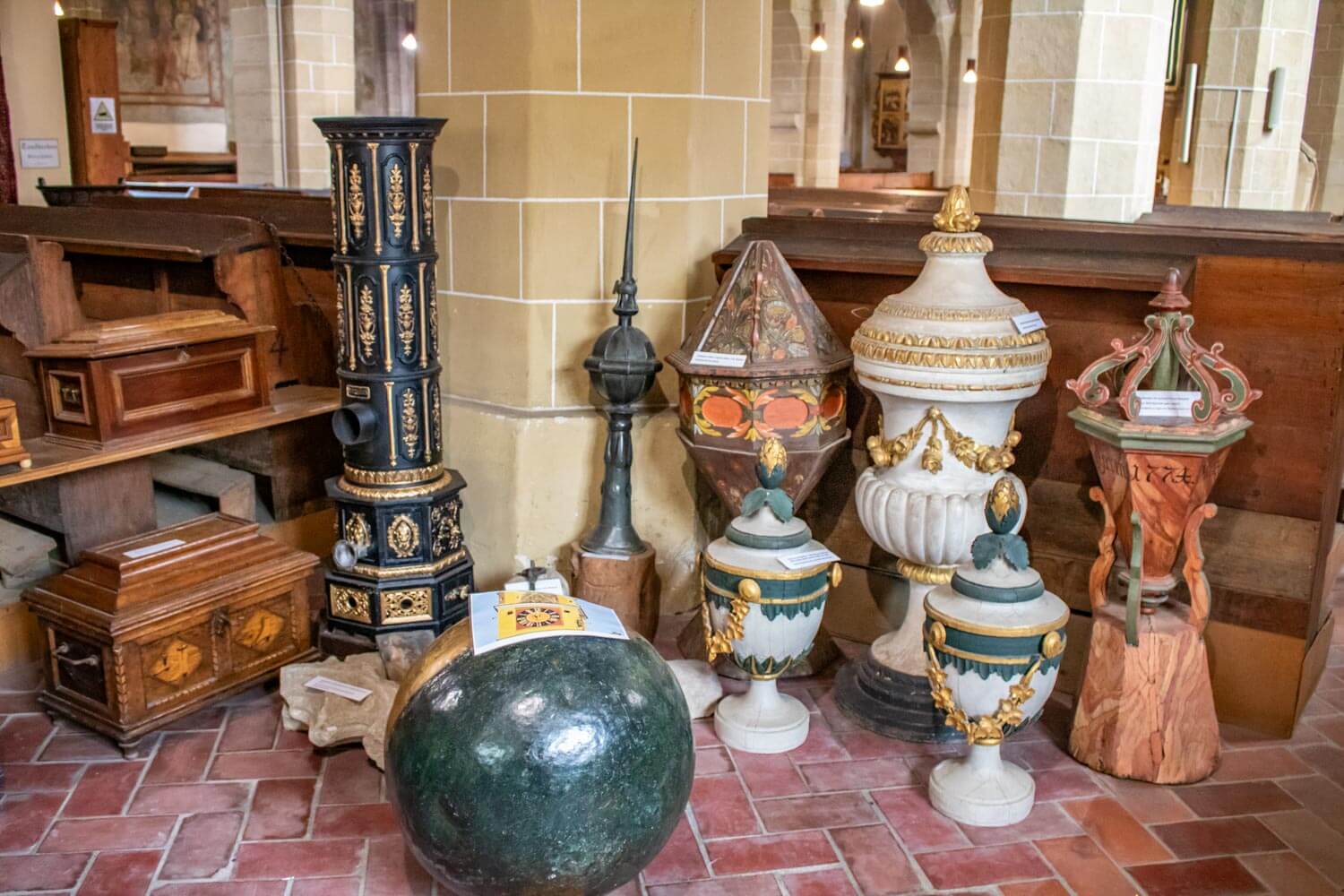
Inside, the church preserves one of its most important medieval works in the late Gothic winged high altar from the 1480s, with painted panels centered on scenes from the Passion of Christ. Sections of medieval fresco painting from the 14th to 16th centuries also survive, together with a bronze baptismal font dating from around 1370. Later Lutheran furnishings include historic choir stalls, memorial stones and the large organ built by Sibiu organ maker Johannes Hahn in 1755-1756.
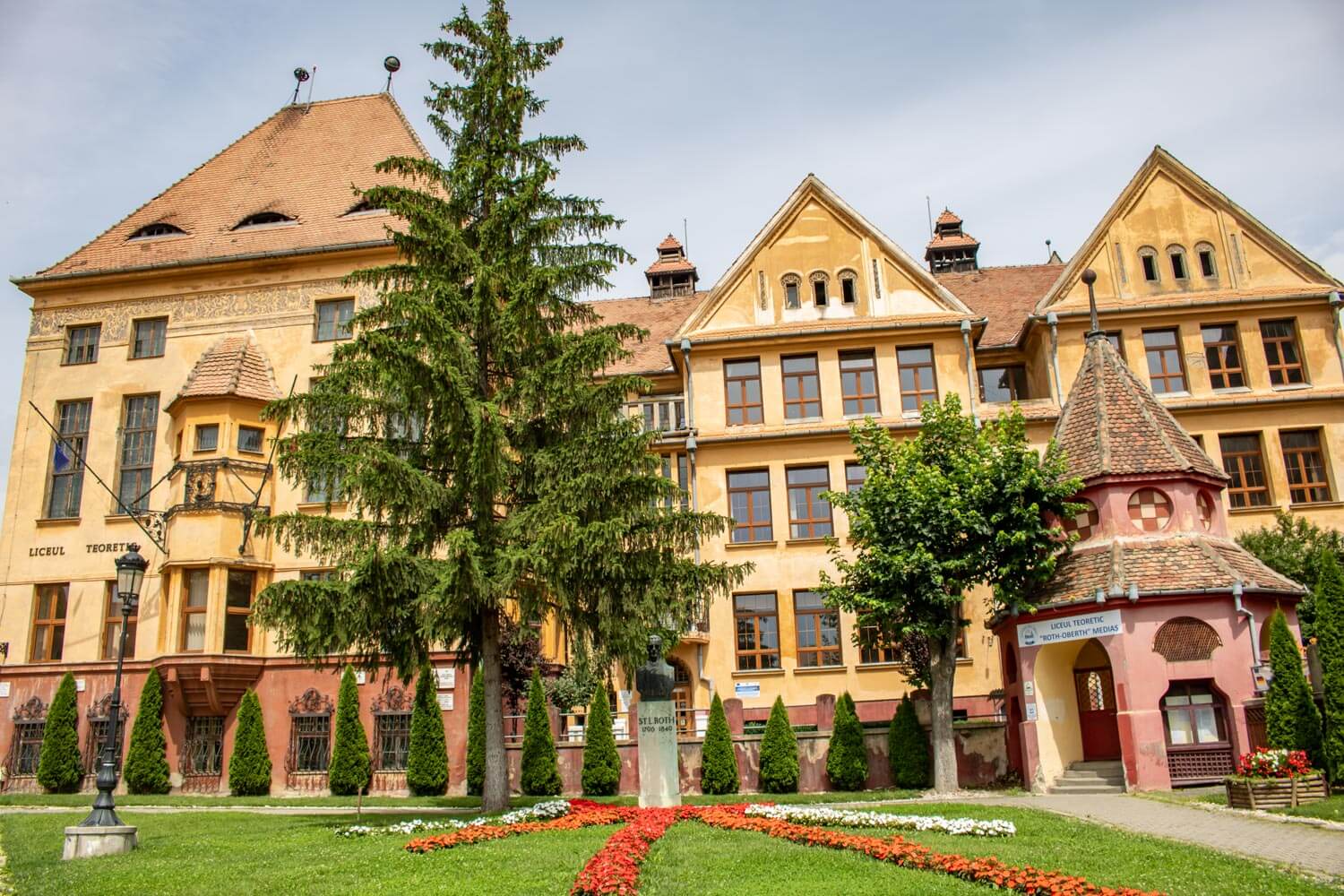
Saint Margaret’s also forms part of the story of Stephan Ludwig Roth, one of the most prominent Saxon figures of 19th-century Transylvania. He was born in a house within the fortified enclosure beside the Ropemakers’ Tower and later returned to the church as city preacher from 1834 to 1836. Saint Margaret’s remains active today within the surviving walls and towers of the medieval citadel.