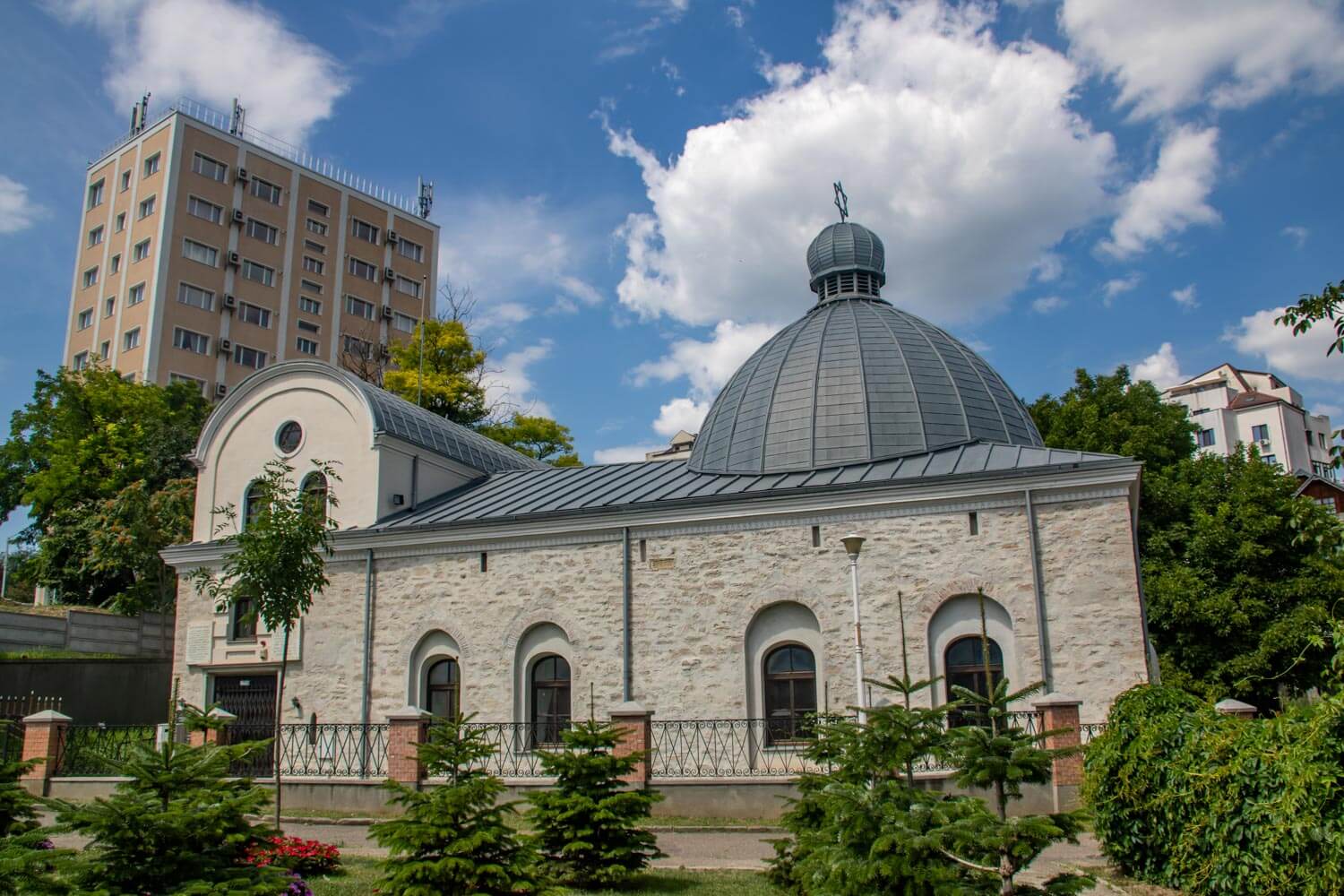


The Great Synagogue (Sinagoga Mare) is a historic Jewish house of worship in the former Târgu Cucului district of Iași and the oldest surviving synagogue in Romania. Built in the 17th century, it served as a principal religious center for a Jewish community that eventually established more than a hundred synagogues and prayer houses across the city.
Its origins date to the middle of the 17th century, when the Jewish community acquired land for a permanent place of worship. Rabbi Nathan Nata Hanover, a Jewish scholar and historian who settled in Iași after fleeing persecution in Eastern Europe, played an important role in its establishment. The synagogue was completed around 1671, replacing an earlier place of prayer, although much of the building seen today reflects subsequent rebuilding. It was renovated in the 1760s, damaged by a major fire in 1822, and reconstructed during the following decades.
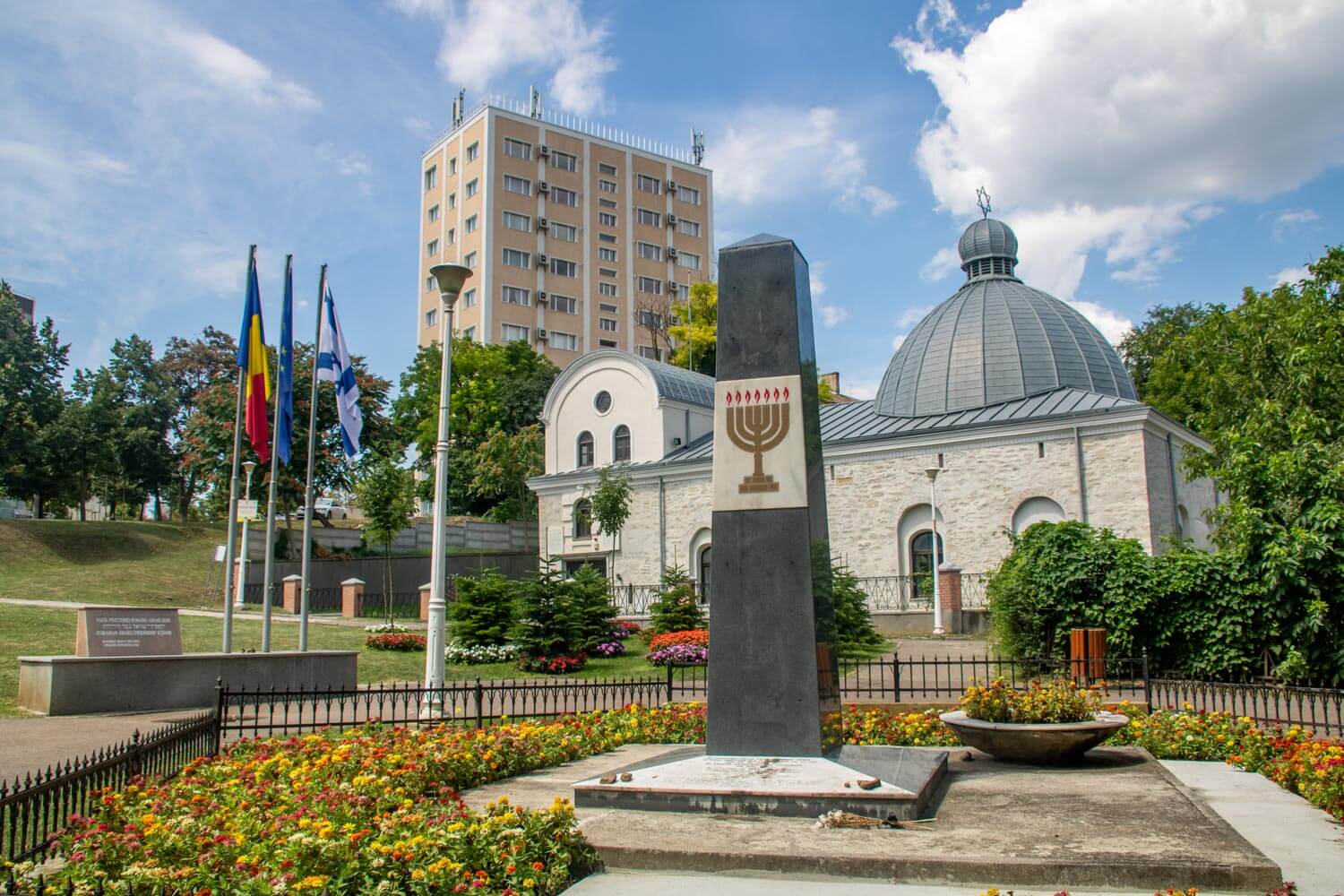
The synagogue has a distinctive elongated form, combining a western section beneath a high roof with a large dome at its eastern end. The dome, added in 1914, measures approximately ten meters in diameter and is crowned by the Star of David. Its restrained exterior, thick stone and brick walls, and narrow arched windows give little indication of the more elaborate interior. The prayer hall lies below street level and is reached by descending several steps, reflecting historical restrictions on the height of Jewish places of worship.
Inside, the Baroque-influenced hall has vaulted ceilings, a broad central arch, large chandeliers, and a former women’s gallery above the entrance. Its outstanding feature is the monumental Torah ark (Aron Kodesh), which fills much of the eastern wall. Dating from the 1860s, this richly carved wooden structure combines painted and gilded ornament with small columns, floral motifs, and sculpted birds. It houses the sacred Torah scrolls and forms the visual centerpiece of the sanctuary.
The Great Synagogue survived the destruction of Iași’s Jewish community during the Holocaust and the subsequent demolition of much of the old Jewish quarter under communism. Most of the city’s former synagogues disappeared, leaving the Great Synagogue and the Apple Merchants’ Synagogue among the few surviving places of Jewish worship. In the small square outside stands the Monument to the Victims of the Iași Pogrom, originally established in 1976 and replaced by the present memorial in 2011.
A lengthy restoration began in the 2000s, with particular attention given to the severely deteriorated Torah ark. Conservators dismantled its fragile wooden components, repaired and treated them individually, and reassembled the elaborate structure inside the restored sanctuary. The synagogue was ceremonially reopened during Hanukkah in December 2018, allowing the Jewish community to resume worship in its historic building.