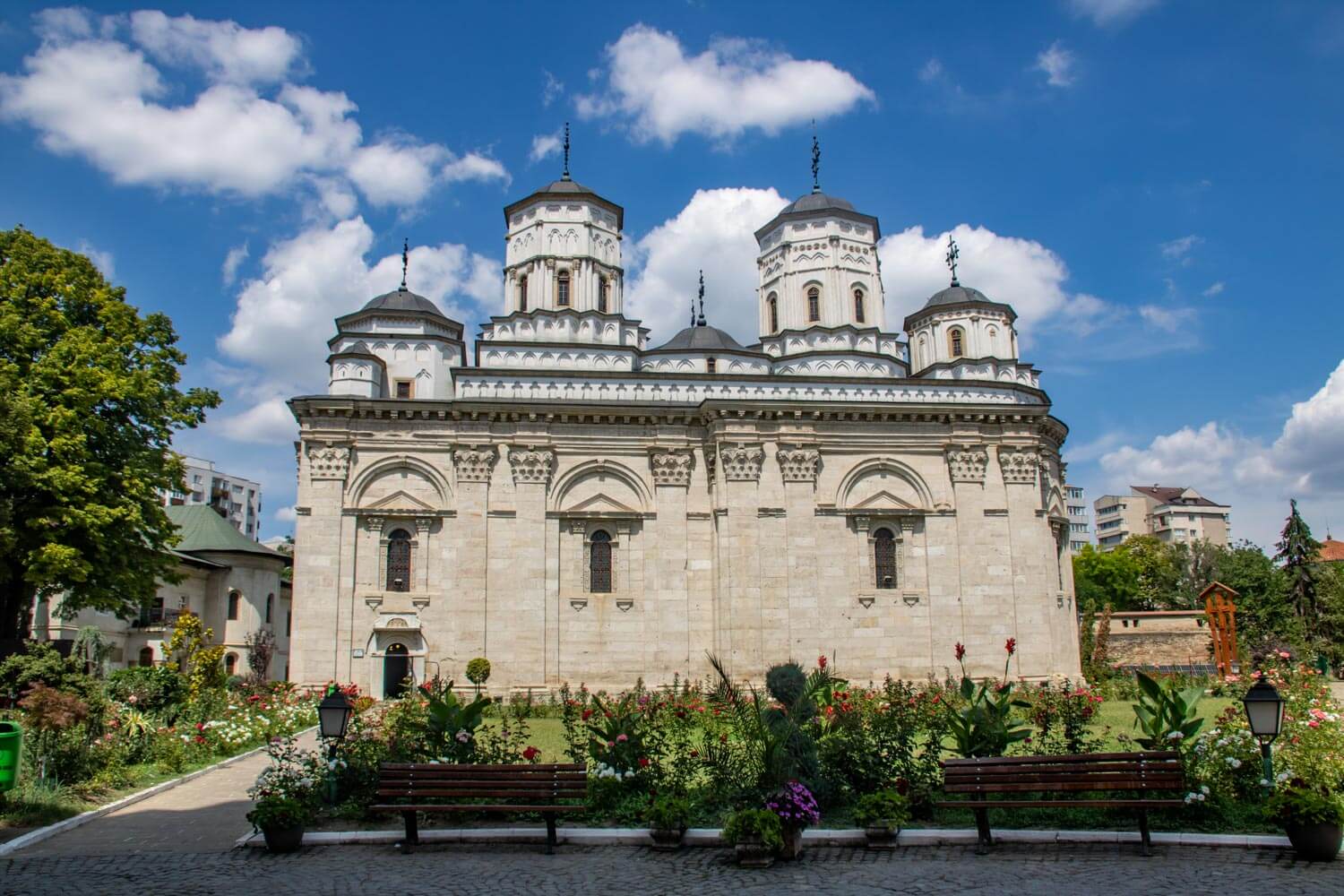
The Armenian Church of Saint Mary (Biserica Armenească Sfânta Maria) is a historic Armenian Apostolic church in central Iași, rebuilt in 1803 on the site of an older church whose origins remain the subject of historical debate.
Its origins may reach back to the late 14th century, when Armenian merchants were establishing themselves in Moldavia‘s trading towns. A stone inscription preserved inside the church records a foundation date of 1395 and names several early benefactors, including priest Hagop and merchants from Sis and Djugha. Although historians have questioned the authenticity and dating of the inscription, its existence has attracted particular attention because 1395 precedes the first surviving documentary mention of Iași in 1408. The presence of an Armenian church dedicated to the Virgin Mary is more securely documented by a foreign traveler who visited the city between 1583 and 1586.
Over the following centuries, earthquakes and repeated repairs substantially altered the original building. The Armenian community financed its reconstruction from the foundations in 1803, following the destructive earthquake of the previous year. An inscription above the southern entrance commemorates the work while also preserving the names and foundation date recorded in the earlier inscription. After a second Armenian church, dedicated to Saint Gregory the Illuminator, was destroyed by fire in 1827, Saint Mary became the city’s only remaining Armenian church.
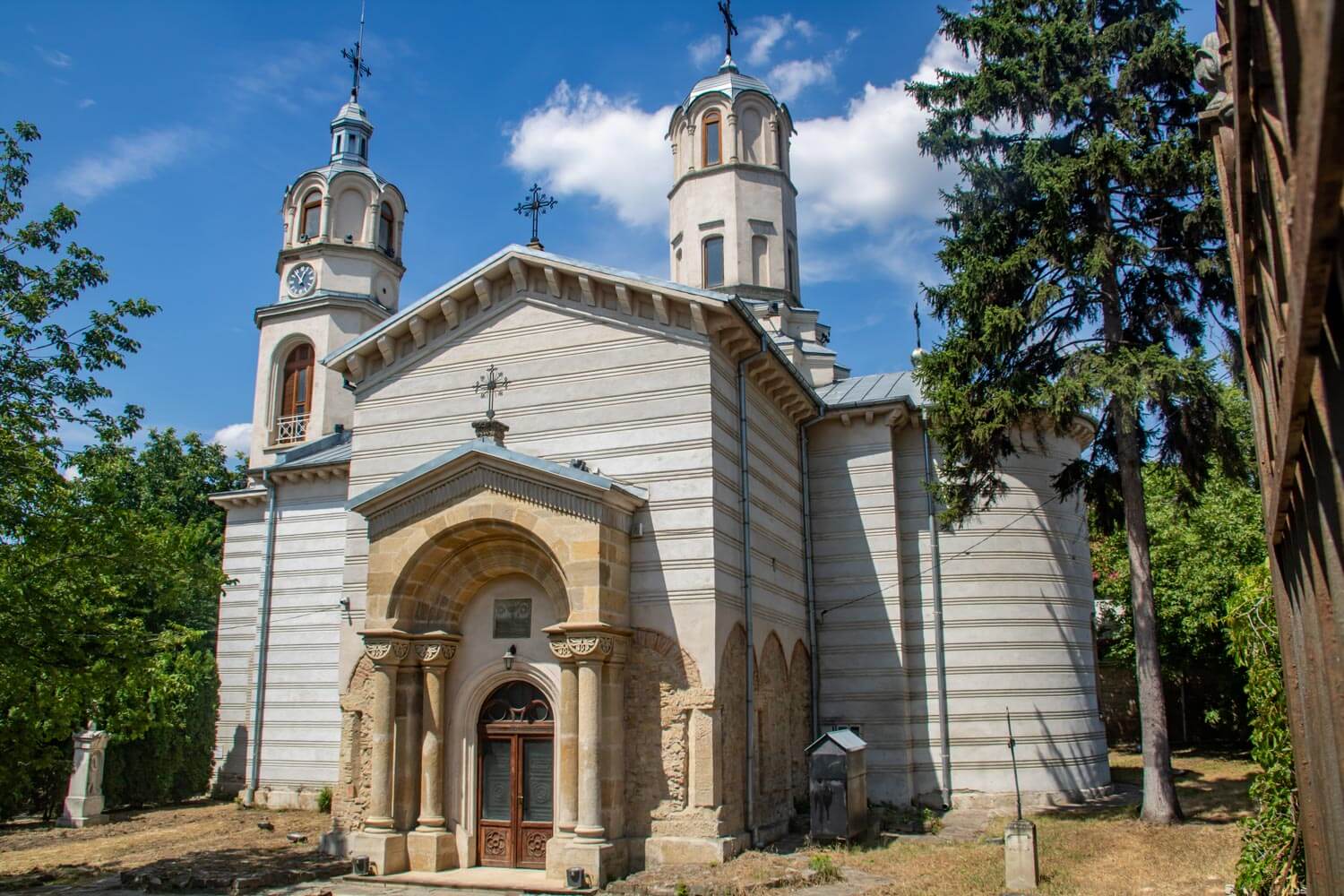
The present stone-and-brick building has a trefoil plan, with two slender towers rising above its white exterior and a monumental southern entrance framed by carved columns. Its architecture has acquired several features characteristic of Moldavian churches through successive reconstructions, while the interior retains the arrangement of an Armenian sanctuary. Broad arches support the vaulted ceilings, and a wooden choir gallery stands above the entrance. The ornamented wooden iconostasis features gilded floral carvings, while the altar is elevated above the prayer hall and separated from it by a curtain. Beneath the main altar is a white-marble floral decoration dating from 1817.
The church underwent further repairs in the early 20th century and after damage sustained during World War II. The earthquake of 1977 seriously weakened its two towers, which had to be temporarily secured together to prevent their collapse. A comprehensive restoration between 2005 and 2008 repaired the structure, and the church was reconsecrated by Karekin II, the supreme head of the Armenian Apostolic Church.
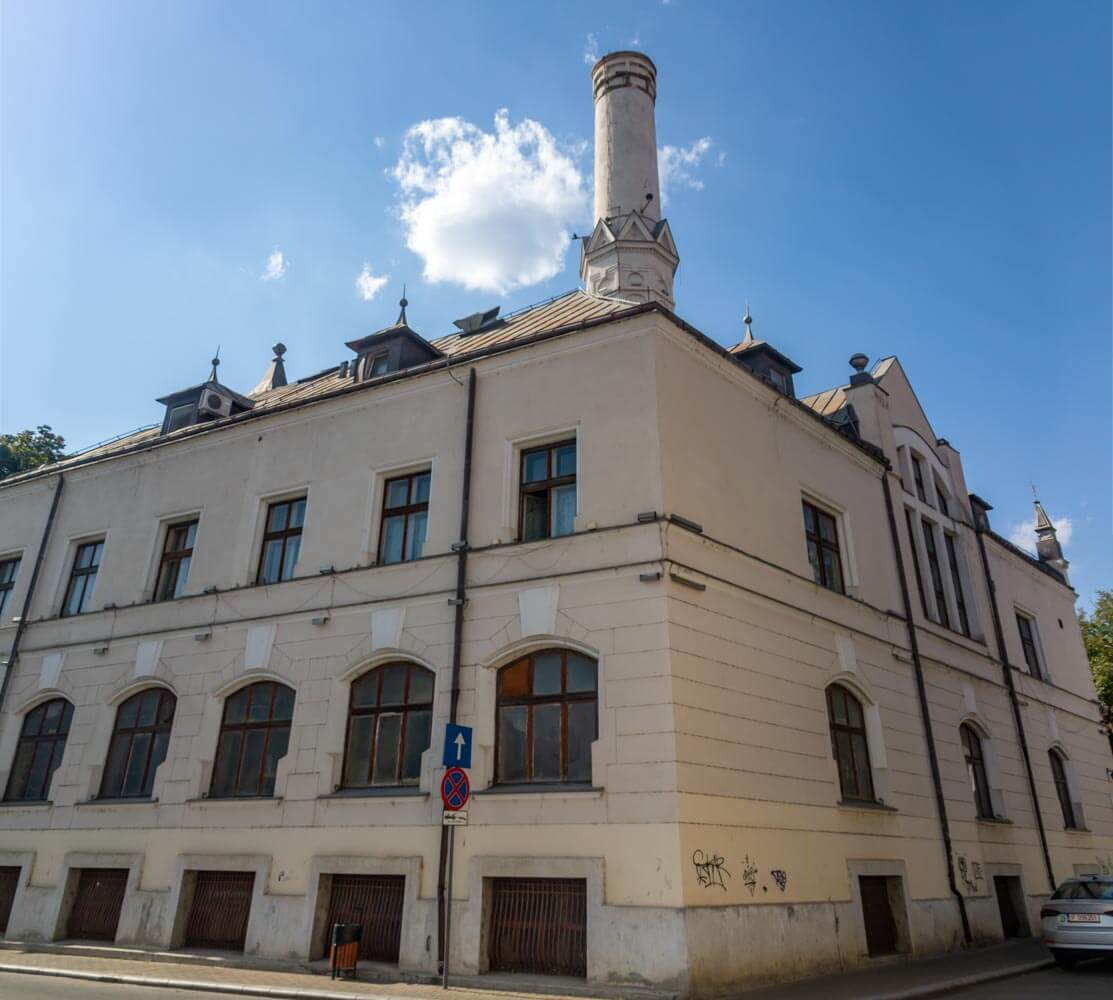
The courtyard contains old Armenian gravestones and the former Armenian Athenaeum, built in 1932 and subsequently adapted as the parish house. Together with the historic inscriptions preserved in the church, these provide further evidence of the successive generations who built, maintained, and worshipped here.