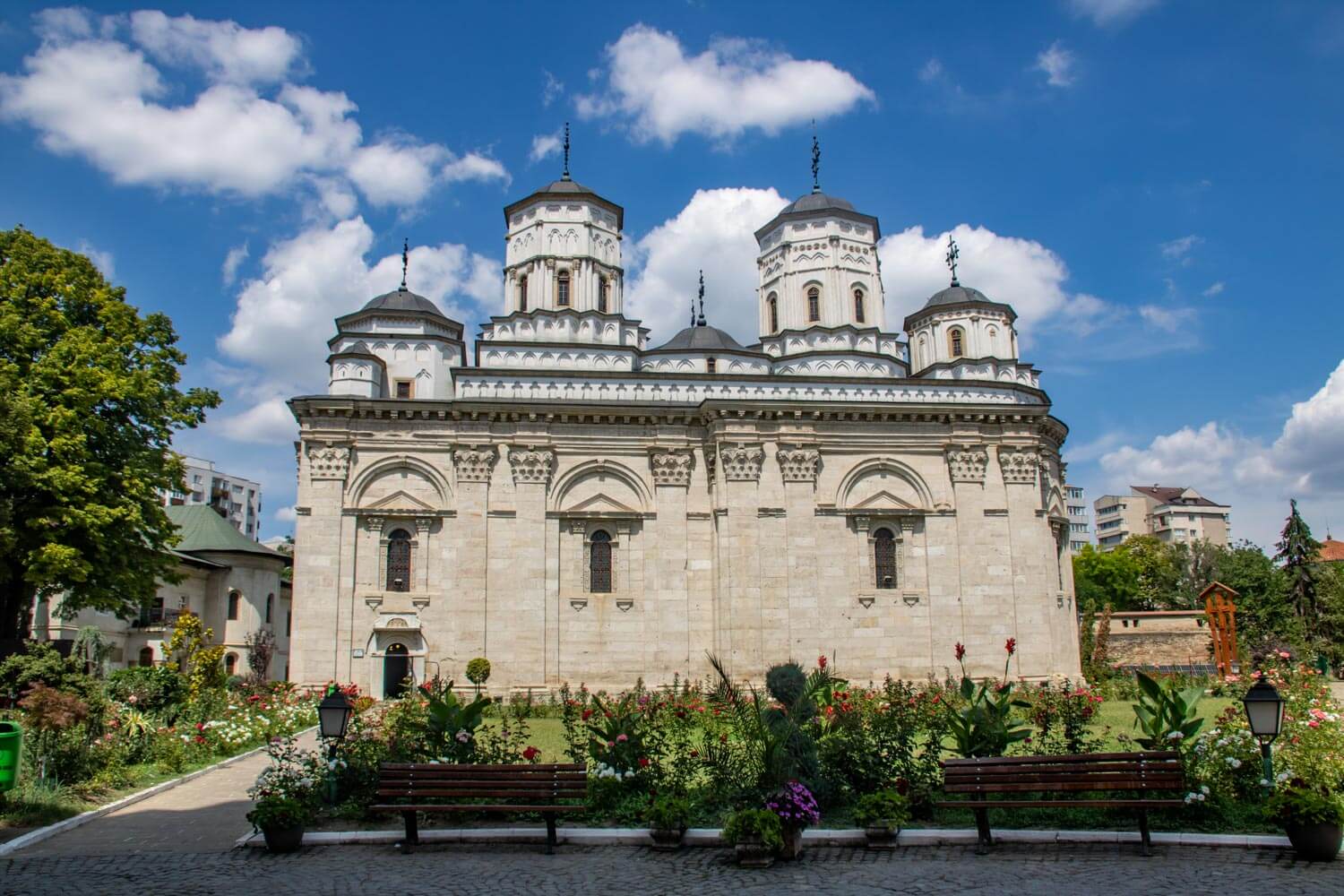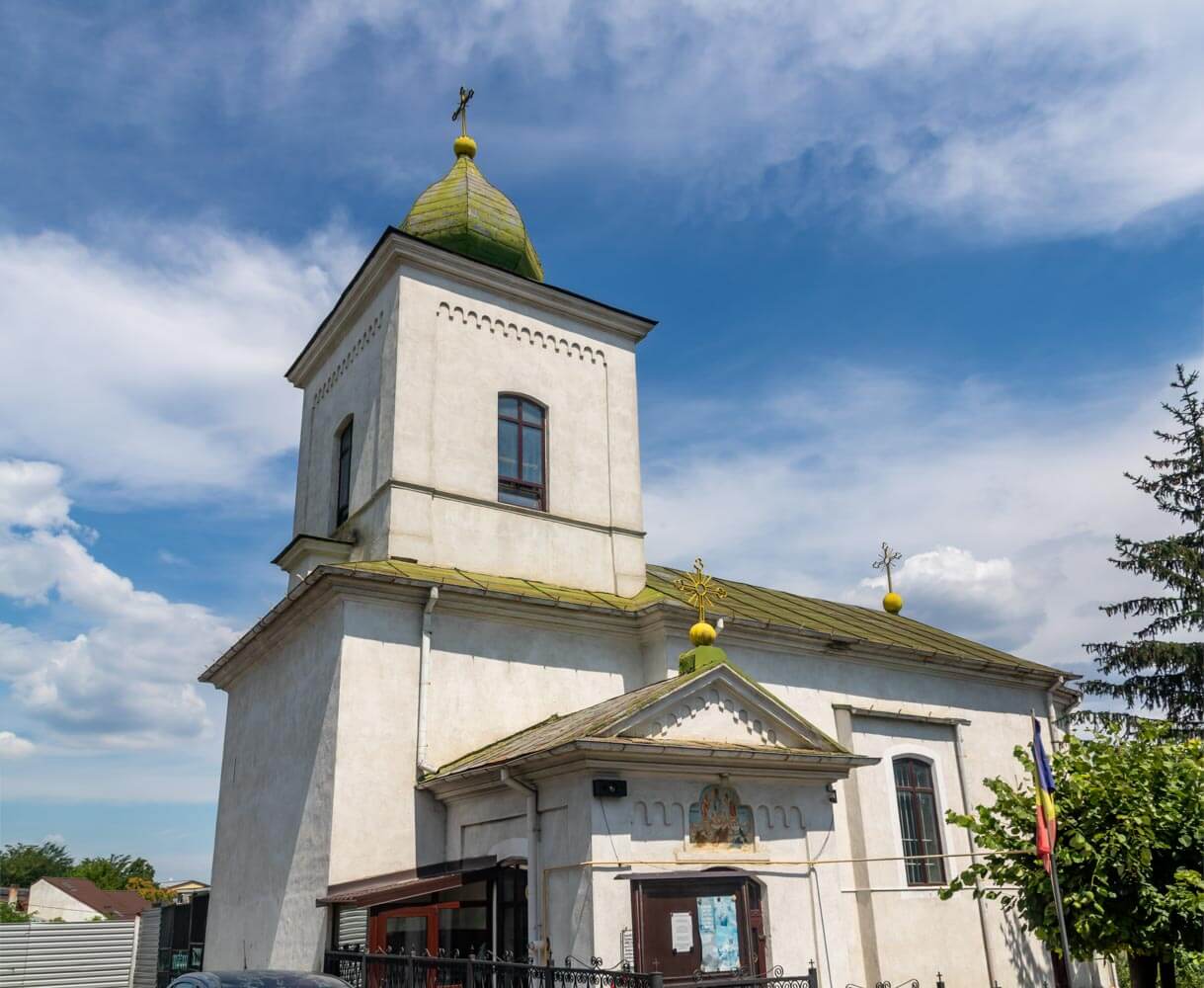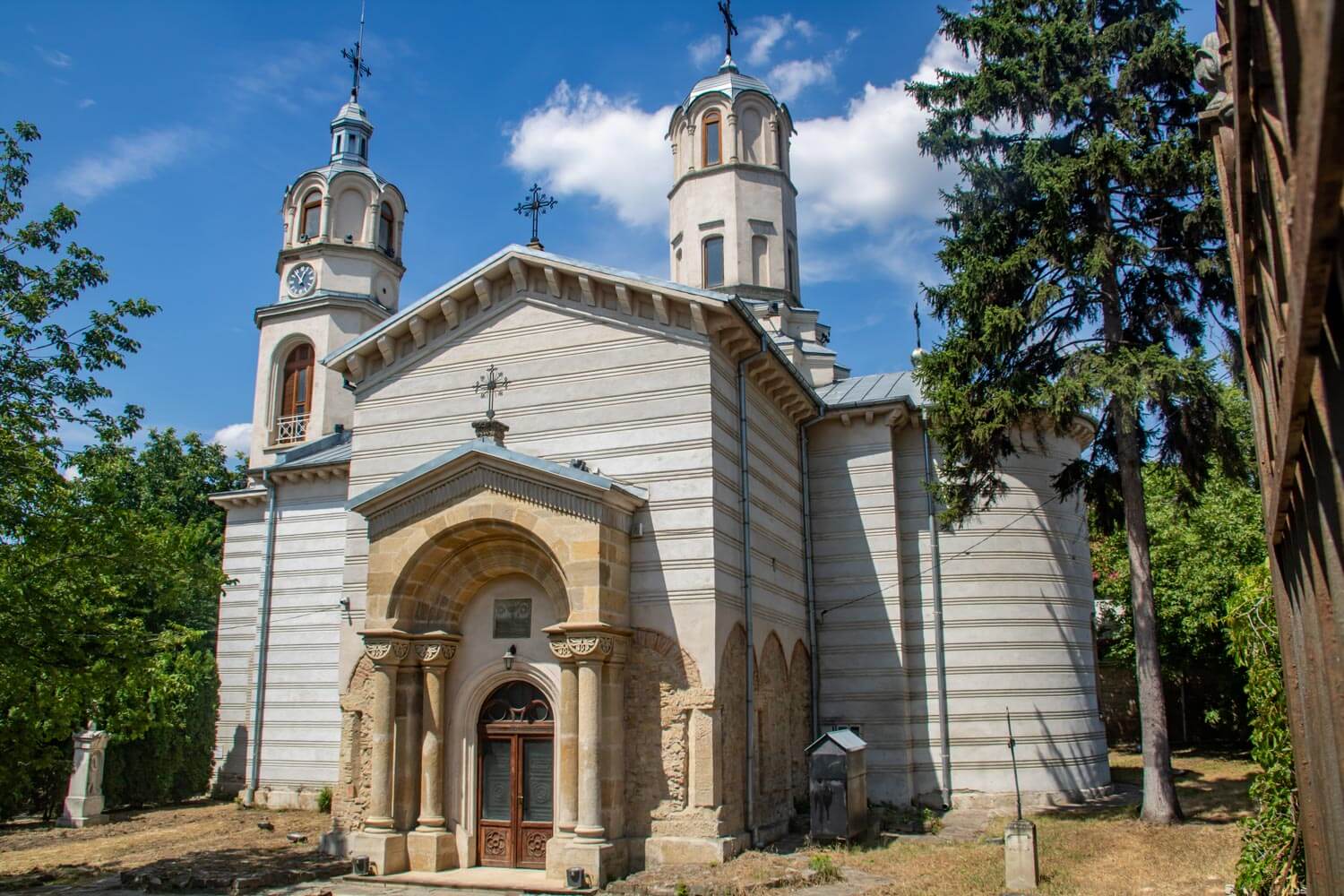
The Saint Panteleimon Church (Biserica Sfântul Pantelimon) is a historic Orthodox church in the former Târgu Cucului district of Iași, built by the city’s guilds of physicians, pharmacists, and barbers. Dedicated to Saint Panteleimon and Saint Charalambos, both venerated as healing saints, it reflects the close relationship between religious devotion and the medical professions in the old commercial neighborhood.
An earlier wooden church was erected here in 1762 by local merchants, on land that had previously served as a cemetery. Dedicated to Saint Charalambos, it stood near the old Flour Market (Târgul Făinii) at a time when outbreaks of plague were a recurring danger in Moldavia. In 1805, the guilds of physicians, pharmacists, and barbers replaced it with the present stone and brick church, choosing Saint Panteleimon as its principal patron while retaining the earlier dedication. Barbers were included among the medical trades because their work also encompassed bloodletting and minor surgical procedures.
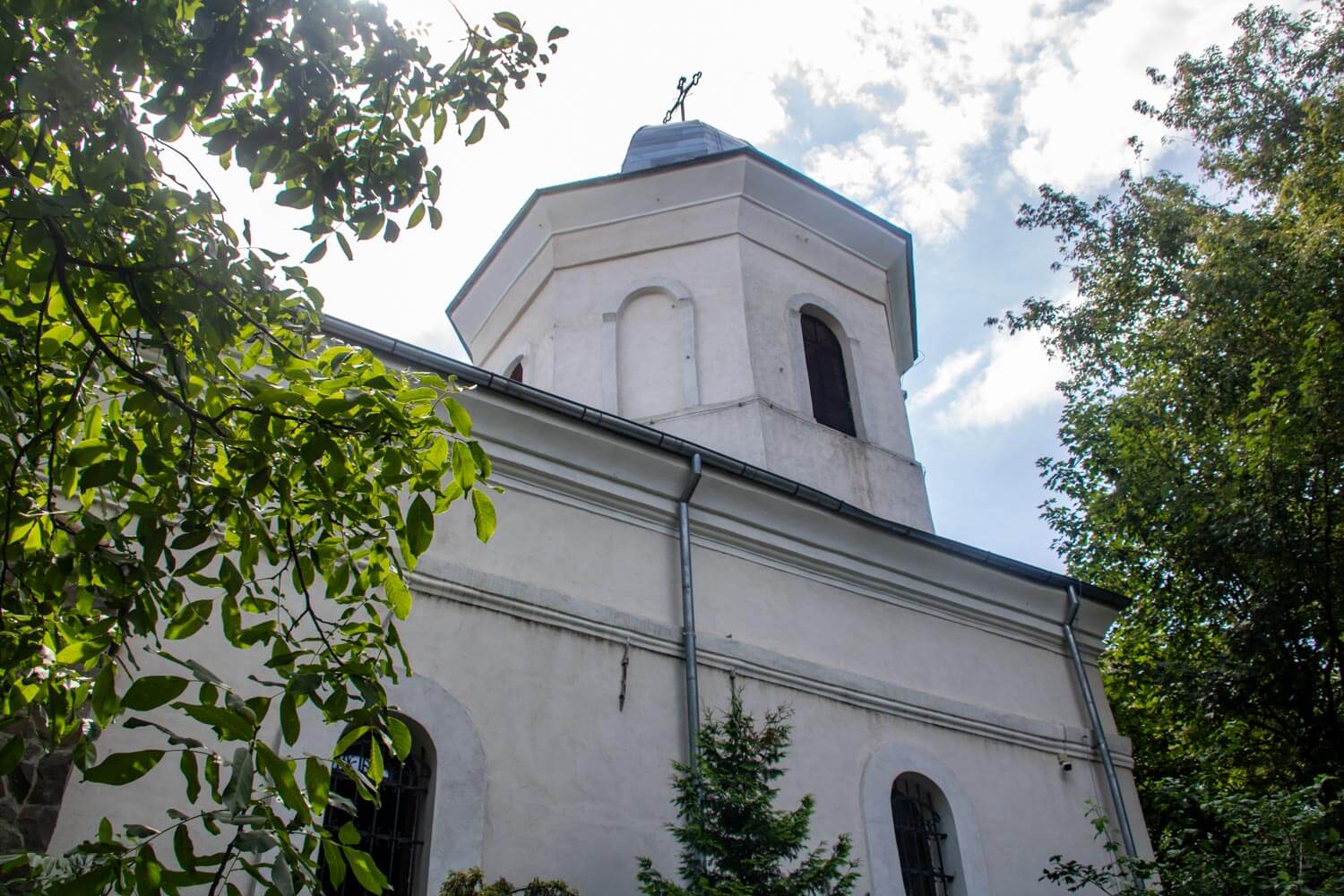
The church has a compact trefoil plan, with a bell tower rising above its western end and a porch added to the southern entrance in 1927. Built on sloping ground, its walls are supported by five external buttresses, while a simple decorative band runs around the plastered exterior above the windows. Inside, three shallow domes cover the prayer hall and entrance area. The church has no extensive fresco decoration, although traces of an earlier tempera painting were discovered beneath successive layers of whitewash during repairs in 1955.
Its most notable historic furnishing is the carved wooden iconostasis, decorated with oil-painted icons from the late 19th century. Restoration revealed an older image of Saint Panteleimon beneath the later painting, executed in the traditional Romanian style of the second half of the 18th century. The iconostasis underwent a lengthy conservation process before being reinstalled in 2010. The church also preserves a large silver liturgical plate decorated with images of its two patron saints.
Repeated earthquakes weakened the building during the 20th century, eventually making extensive structural repairs necessary. Religious services were suspended in 1999 because of the danger of collapse, but consolidation and restoration allowed the church to reopen. Its historic relationship with the medical professions was renewed through the involvement of the Romanian Association of Orthodox Physicians and Pharmacists, and it resumed its role as a parish church in 2007.