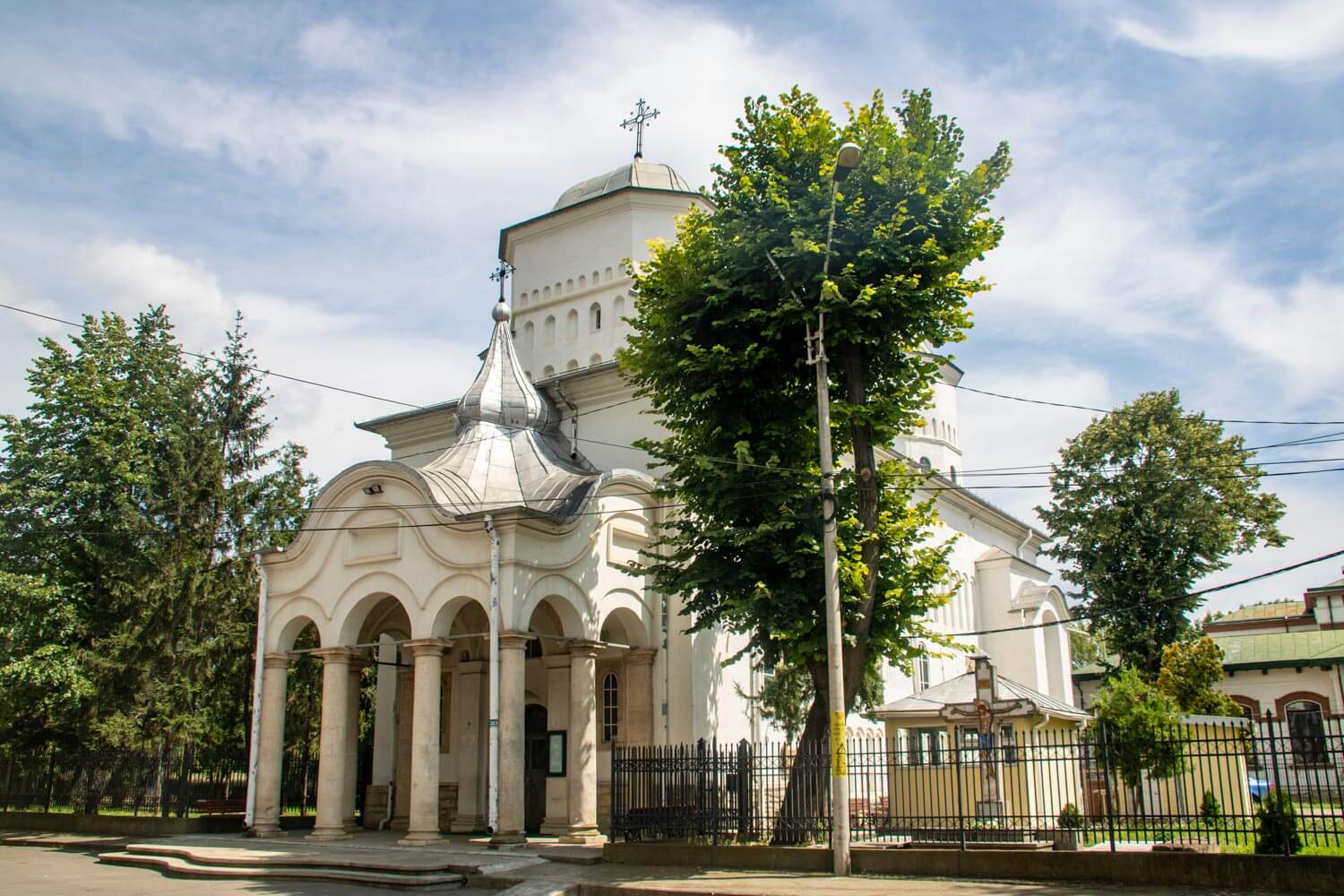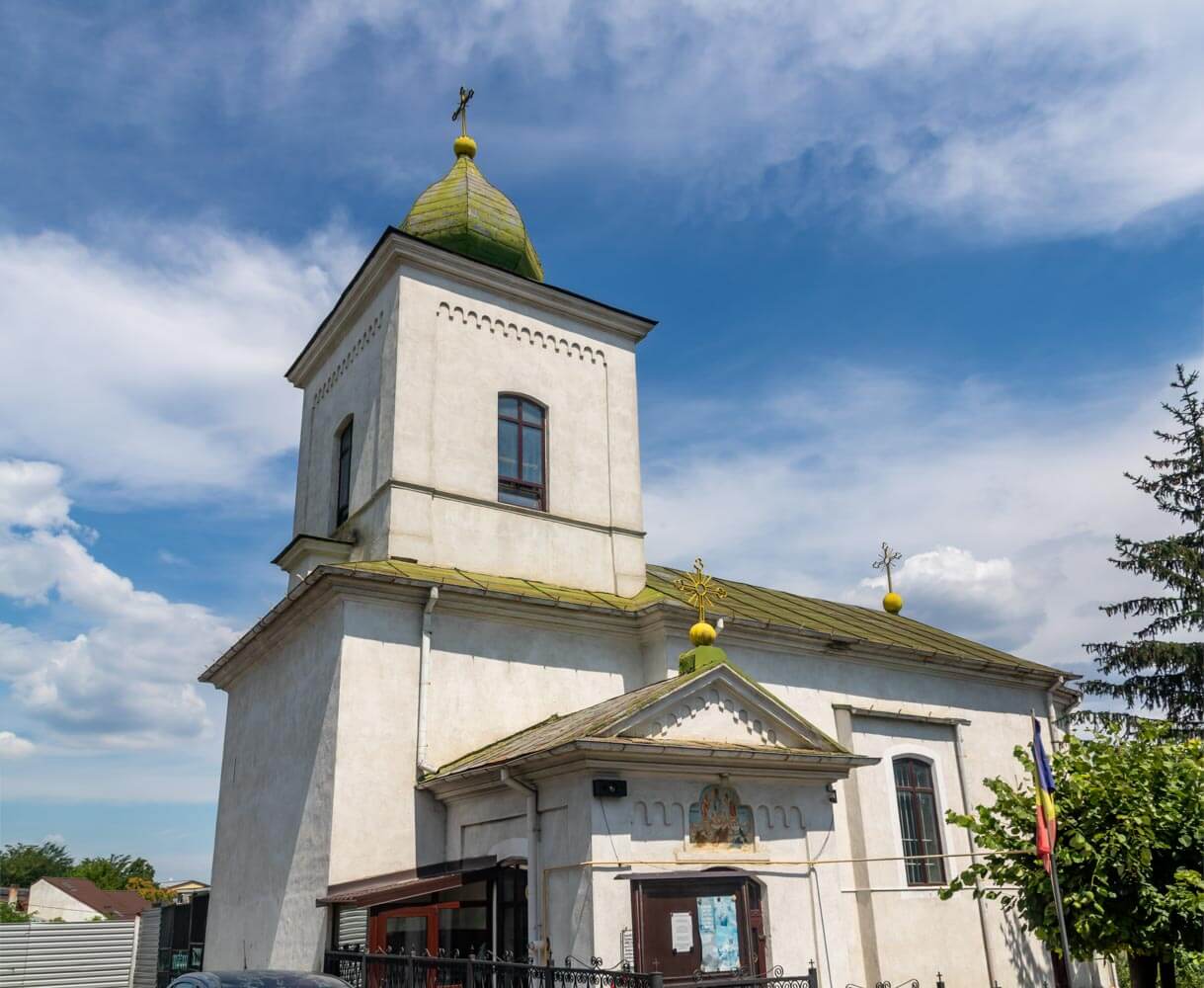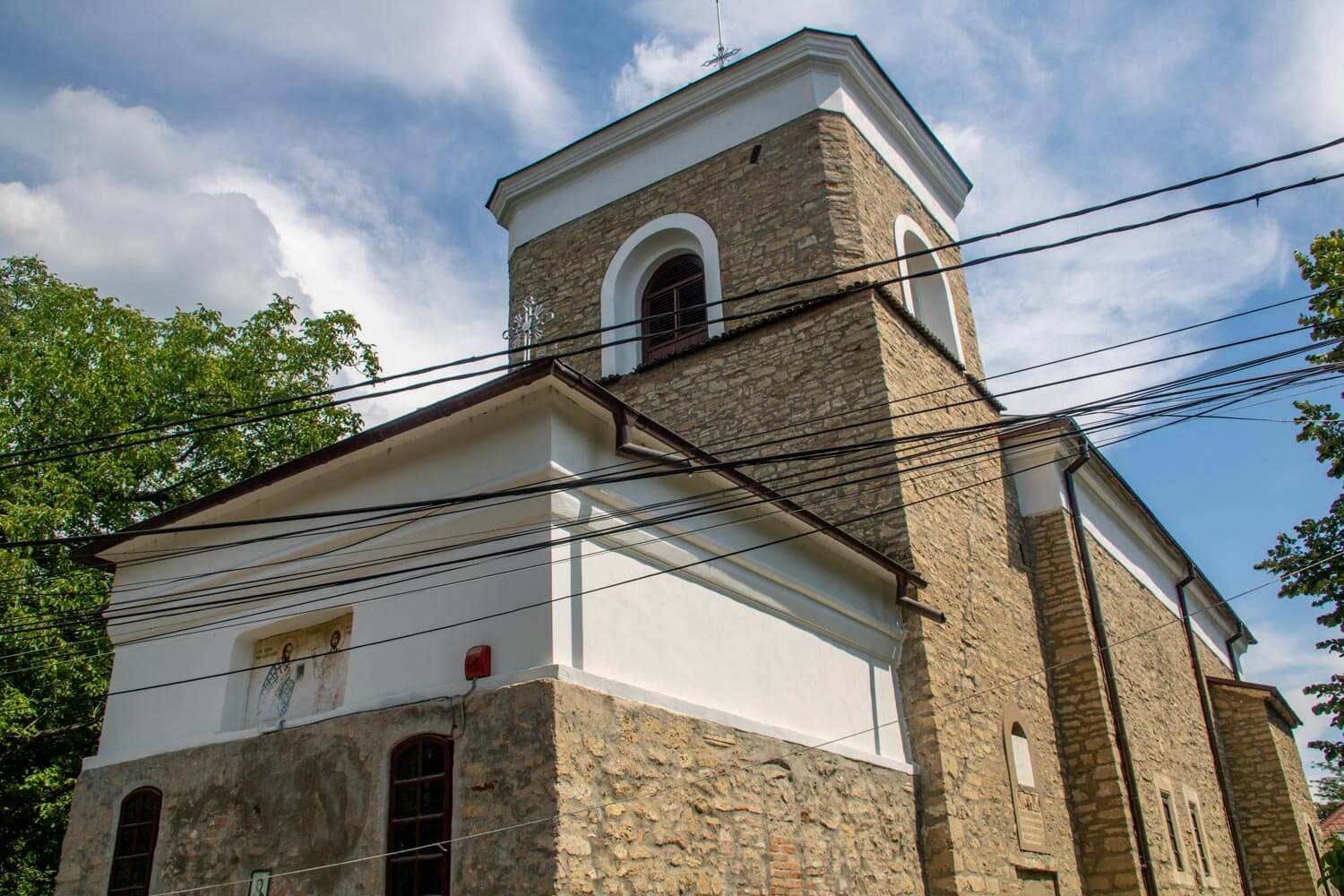
The Zlataust Church (Biserica Zlataust) is a historic Orthodox church in Iași, dedicated to Saint John Chrysostom and Saint Theodore of Amasea. Its name comes from the Slavonic word Zlataust, meaning Golden Mouth, a translation of Chrysostom. The church is distinguished by its exposed stone masonry, tall bell tower, and old burial ground.
The first church on the site was a small wooden building with stone foundations, erected in 1563-1564 by Prince Ștefan Tomșa. It was replaced during the third reign of Gheorghe Duca, who built the present masonry church in 1683. According to the foundation inscription, construction took only 30 days. Duca subsequently placed the church under the authority of a Greek monastery as part of an arrangement involving Hlincea Monastery, which he had transferred to his newly founded Cetățuia Monastery.
The church was enlarged in 1855, giving it much of its present appearance. Its tall bell tower rises above the entrance porch and contains a concealed space that was intended for safeguarding religious objects during periods of danger. Inside, the old votive painting depicts Gheorghe Duca holding a model of the church, accompanied by his wife Anastasia and their children.
For centuries, the churchyard served as an important burial ground in Iași, and several historic tombstones survive both outside and within the church. Among them are the graves of members of the Romalo and Burchi families. During archaeological excavations in 1968, the grave of Barbu Lăutaru, the celebrated 19th-century musician and cobza player, was discovered beside the northern wall.
The surrounding Zlataust neighborhood also entered Romanian literature through writer Ionel Teodoreanu, who grew up in a neighboring house. Its streets and childhood memories inspired several of his works, including Fata din Zlataust and Ulița copilăriei.