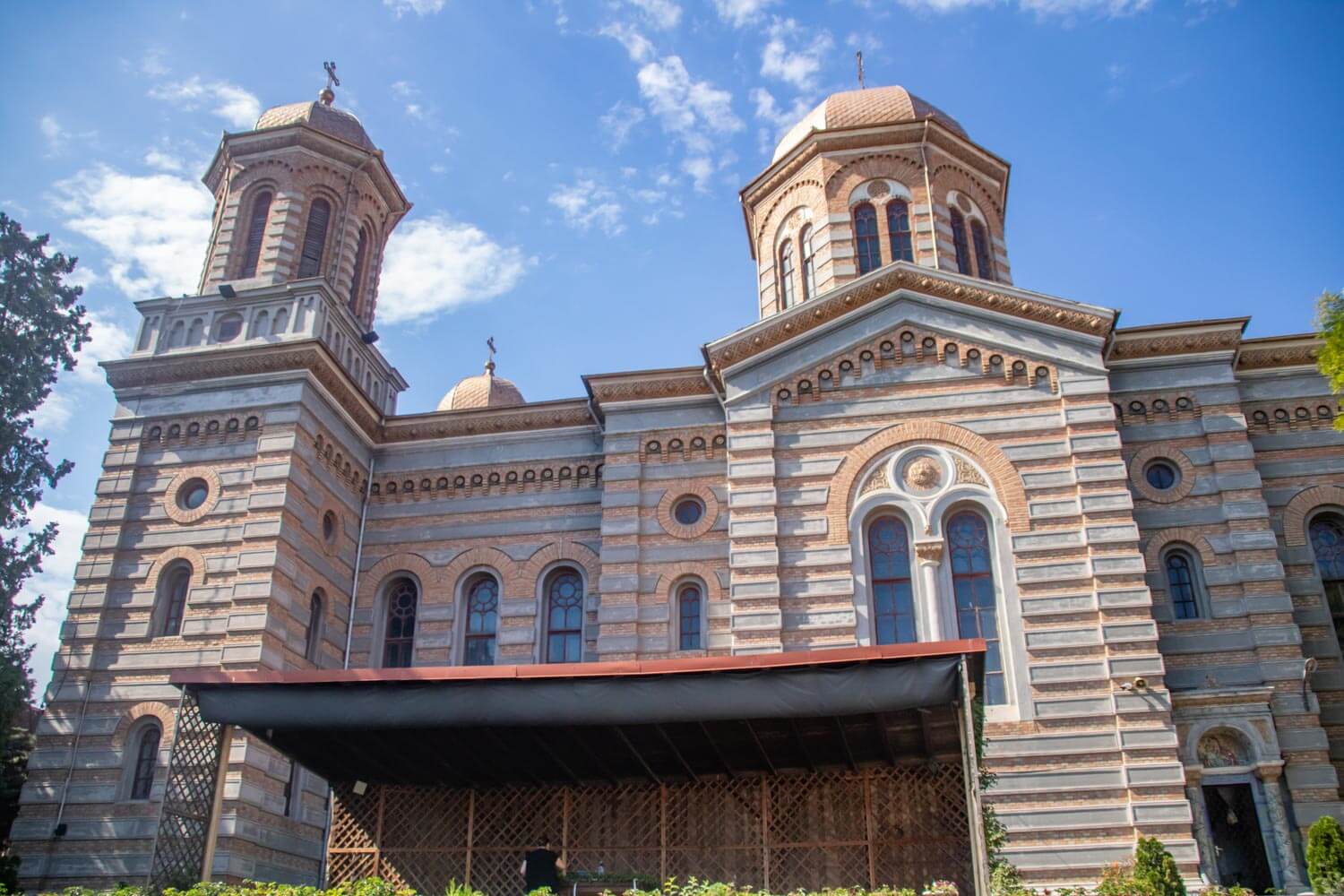
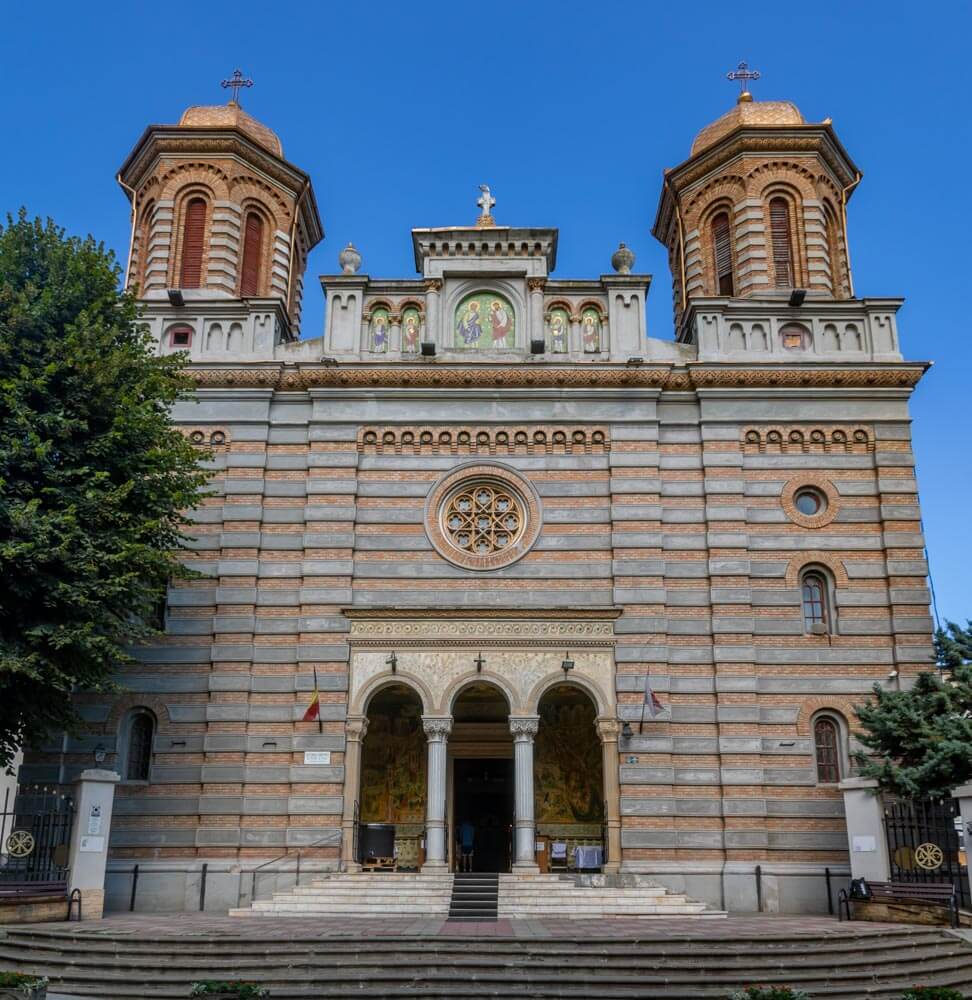
The Cathedral of Saints Peter and Paul (Catedrala Sfinții Apostoli Petru și Pavel) is the Romanian Orthodox cathedral of Constanța, standing near the seafront in the historic peninsula. It is the seat of the Archdiocese of Tomis and also serves as the church of the Saints Peter and Paul Monastery.
The cathedral was the first Romanian Orthodox church built in Constanța after Dobrogea became part of Romania in 1878. Construction began in 1883 and the building was largely complete within a few years, but its opening was delayed by controversy over the interior paintings. Between 1885 and 1888, George Demetrescu Mirea decorated the church in a realistic style that departed from traditional Orthodox iconography, even using contemporary people as models for some of the sacred figures. Church authorities considered parts of the work inappropriate and required Mirea to alter the paintings before the cathedral could be consecrated. The changes were eventually made, and the church was formally consecrated on 22 May 1895.
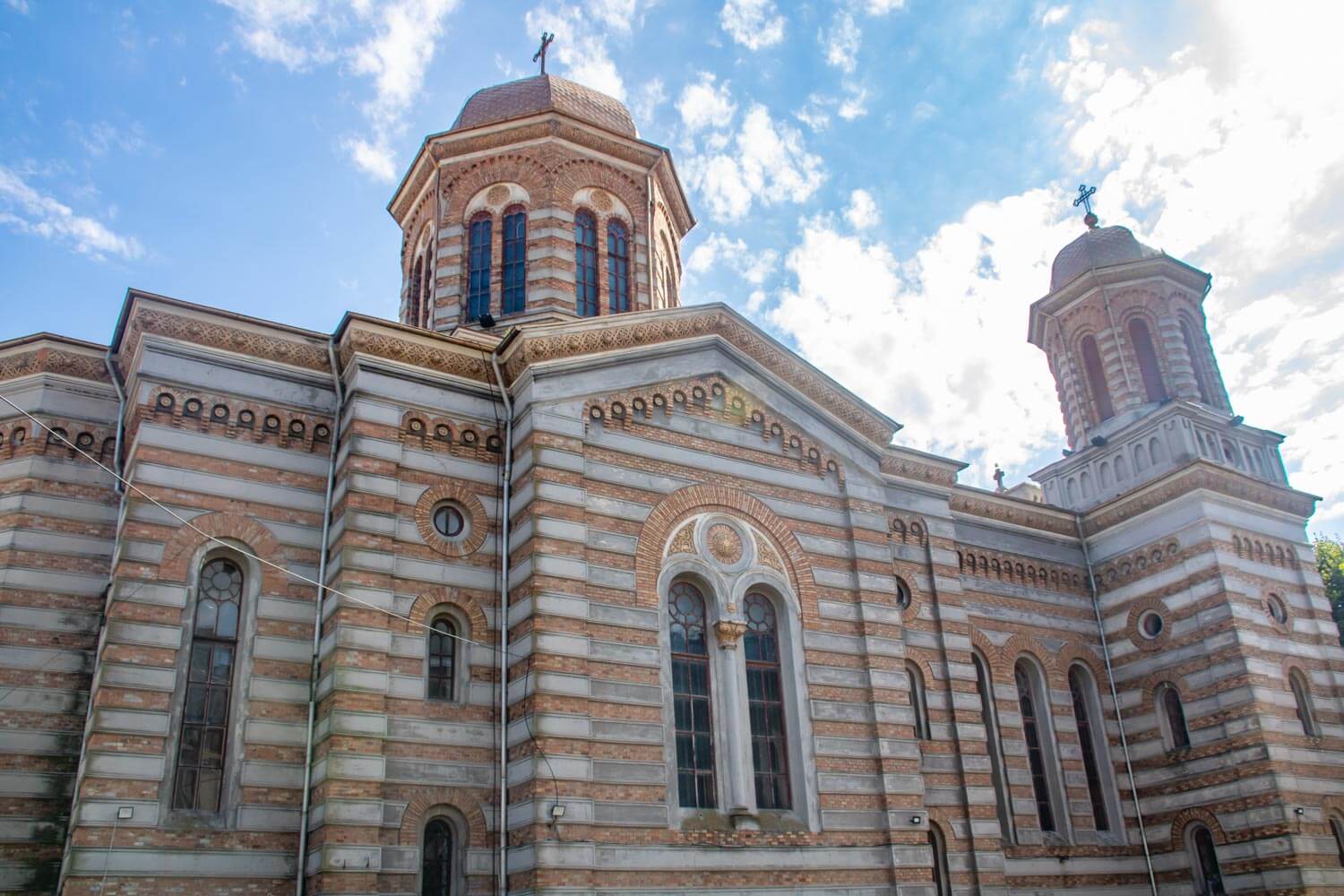
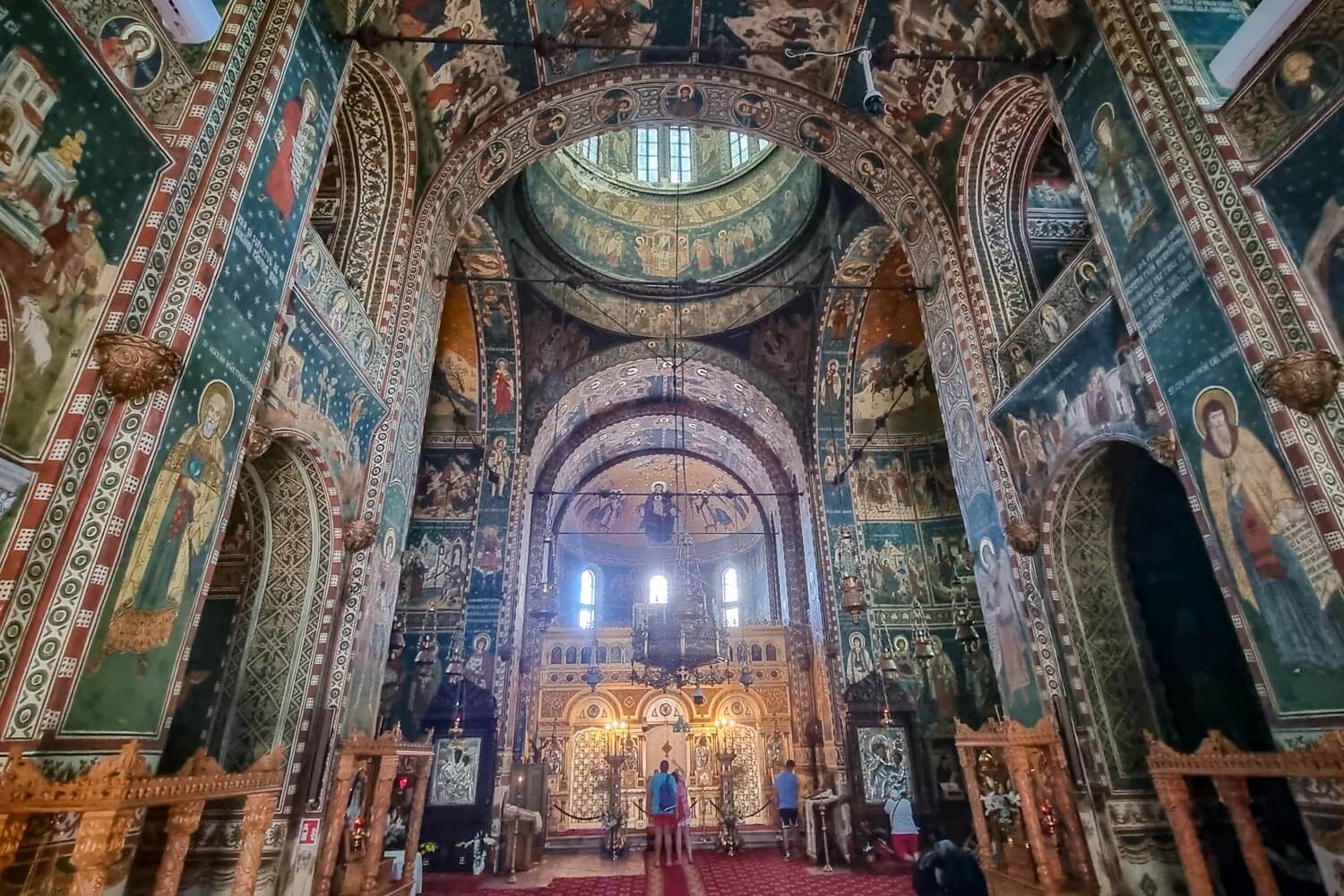
Built from pressed brick in a Neo-Byzantine style, the cathedral has a trefoil plan dominated by three towers, with the main tower rising to about 35 meters. The entrance porch rests on marble columns with carved vegetal capitals, while bands of brickwork, arched windows and decorative cornices continue around the exterior. Ion Mincu designed much of the original interior furnishing, including the carved oak choir stalls, chandeliers, candlesticks and iconostasis, which were produced in Paris by the André Dorea workshops.
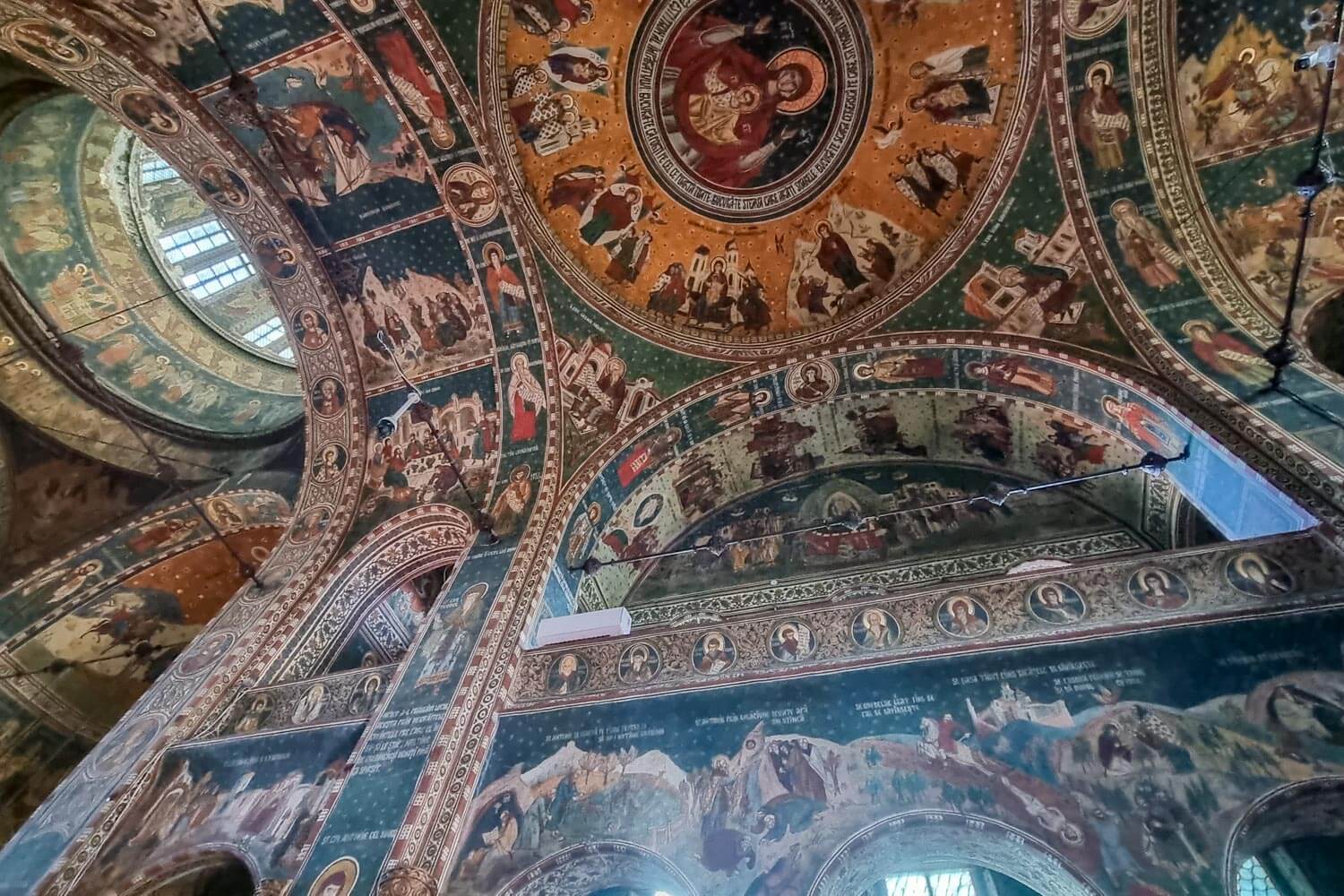
The church became the cathedral of the Diocese of Tomis in 1925, but suffered severe damage during a Soviet air raid on 3 August 1941. The eastern part of the building was hit, and the altar, iconostasis and Mirea paintings were partly destroyed. Reconstruction followed between 1946 and 1950, allowing the cathedral to be reconsecrated in 1951. The present murals were painted in fresco between 1959 and 1965 by Gheorghe Popescu and Niculina Dona-Delavrancea, who returned the interior to a Neo-Byzantine style while incorporating scenes from the early Christian history of Dobrogea and martyrs of ancient Scythia Minor.
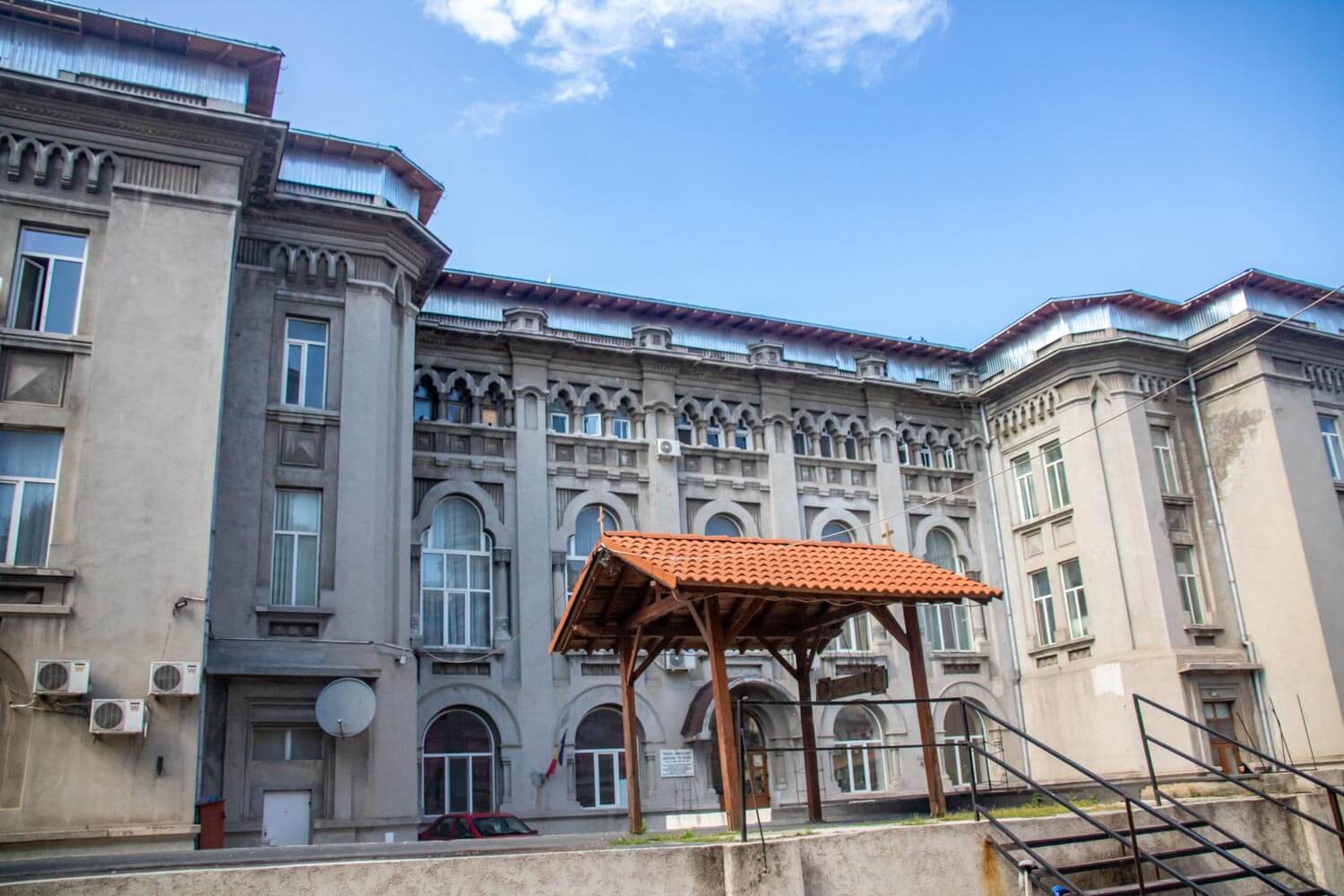
Among the devotional objects kept inside are relics of Saint Panteleimon and of Saints Epictetus and Astion, two early Christian martyrs whose remains were discovered at Halmyris. The cathedral also preserves an icon of the Virgin Mary painted at Durău Monastery after the Prodromița icon on Mount Athos. Since 2002, the cathedral has additionally held monastic status, with the Archbishop’s Palace standing immediately beside it.